Inspiration
The inspiration was Chevron being a potential sponsor of said event. Project was created specifically if Chevron staff were to see the project.
What it does
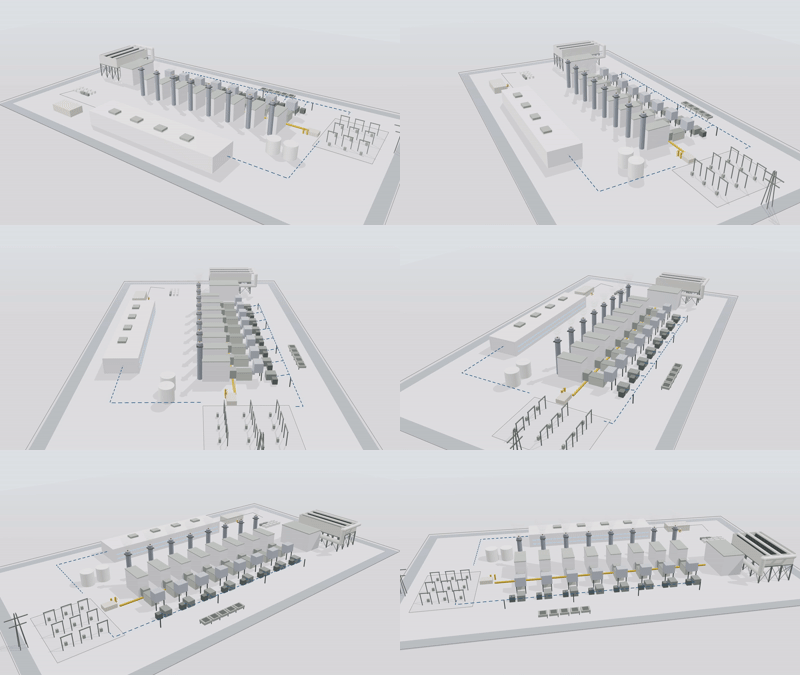
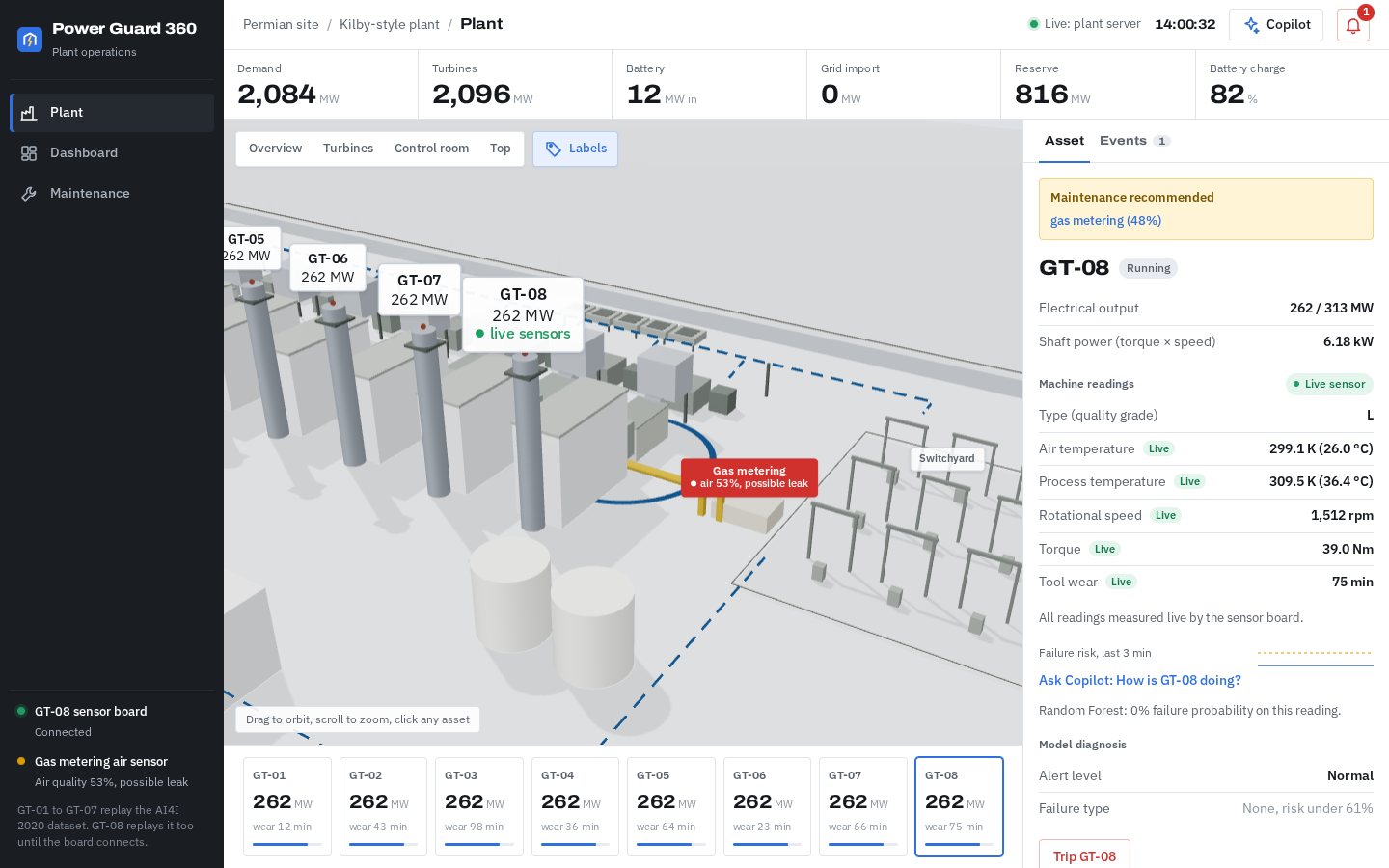
Power Guard 360 is an AI-powered predictive maintenance system designed to monitor power plant turbines, detect potential equipment failures, and alert maintenance teams before problems become serious
How we built it
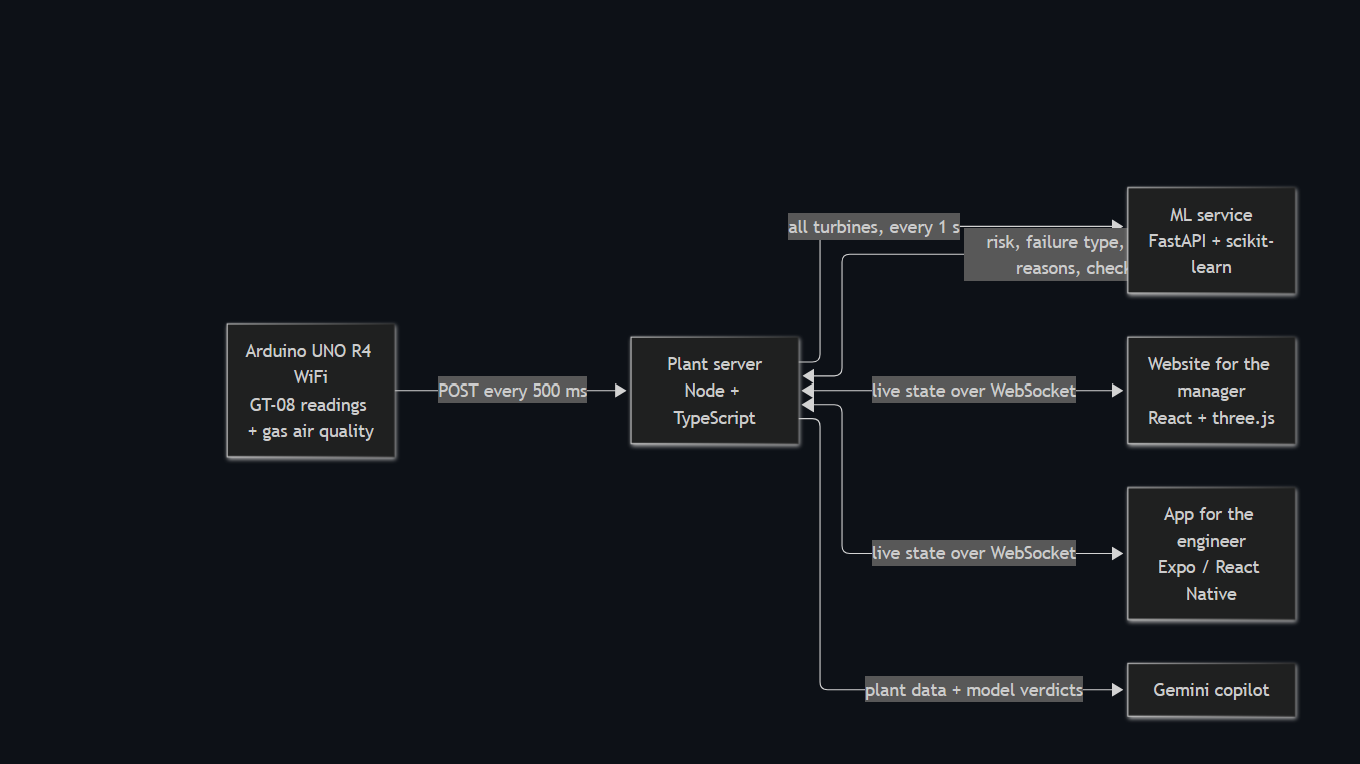
We developed Power Guard 360 using Python for machine learning, Arduino and C++ for sensor integration, TypeScript and Node.js for the backend, React for the website, and React Native with Expo for the mobile application.
Challenges we ran into
Some of our biggest challenges involved connecting the Arduino sensors, integrating multiple programming languages and frameworks, and ensuring the machine learning predictions could communicate properly with the server and applications.
Accomplishments that we're proud of
We're proud of developing a system that brings together AI, physical sensors, turbine simulations, and web and mobile applications. We also established a shared simulation engine that allows the website and mobile app to use consistent equipment information.
What we learned
We gained experience with machine learning, IoT sensor integration, full-stack development, and API communication. Most importantly, we learned how different technologies can work together to solve real-world engineering problems.
What's next for Power Guard 360
Our next steps include improving prediction accuracy, testing the complete system with live sensor readings, expanding equipment monitoring capabilities, and enhancing maintenance notifications. Eventually, we hope to adapt Power Guard 360 for real-world industrial environments.


Log in or sign up for Devpost to join the conversation.