-
-
Powerdeck elite
Inspiration
Two years ago, I purchased a commercial power bank that died within a year. I replaced it with the exact same model, only to have it fail again within another year. This recurring frustration and the experience of people with Nigerian power banks made me realize the fundamental limitations of existing portable power solutions. I thought, "Why keep buying these things when I could build a very powerful and almost perfect one myself?" What initially seemed like a simple solution evolved into an ambitious vision: creating an incredibly versatile power bank that could power almost anything from phones and laptops to cameras and tech gadgets, while also functioning as a standalone adjustable power supply. By the way, I also had it in mind to make a power bank that rivals commercial companies and even foreign power bank companies.
What it does
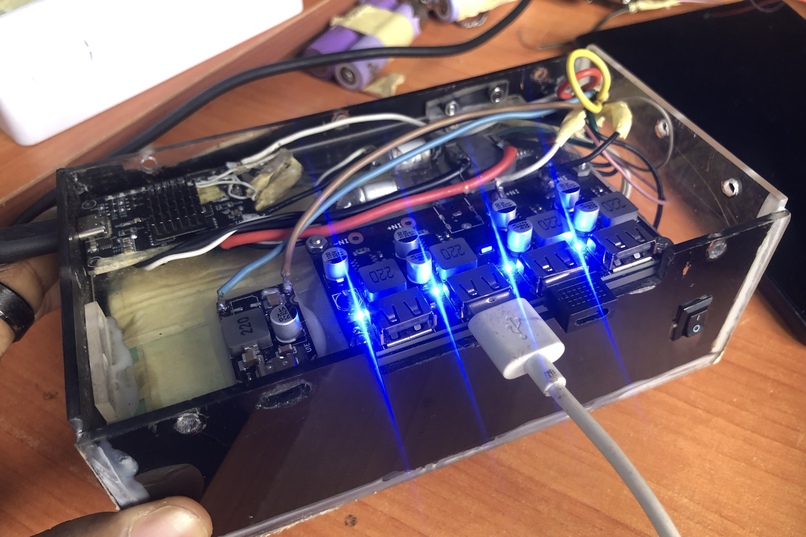
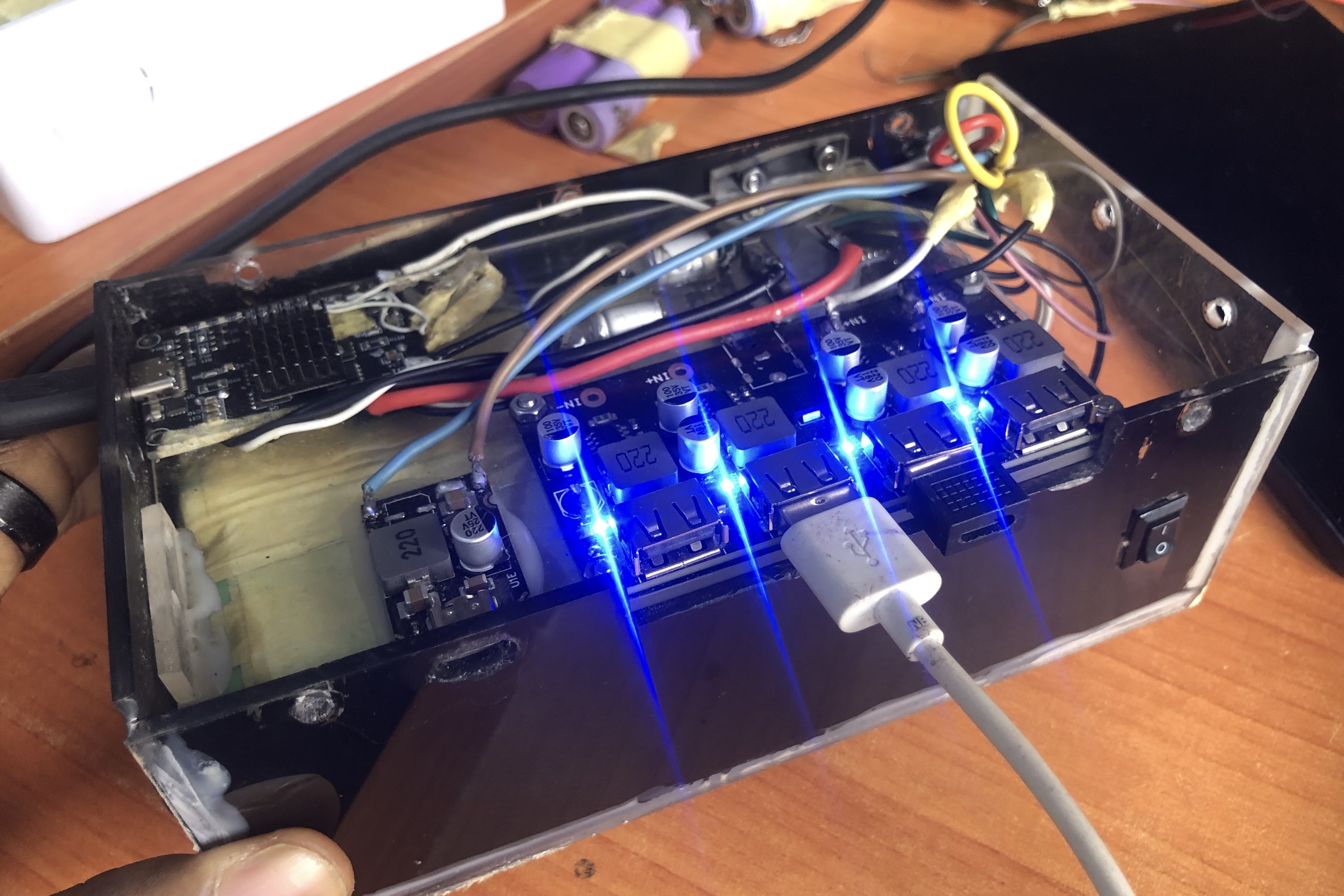
The system features dual 100W USB-C ports with multiple voltage outputs (5V, 9V, 12V, 15V, and 20V) through automatic negotiation, plus bidirectional charging capability for versatile power management. It features multiple charging options: four USB-A ports delivering 25W fast charging each for your mobile devices, plus two USB-C ports providing 100W and 65W respectively for rapid laptop charging a combined output capacity of 265W. It also features two power outputs, with a XT-60 connector and a dc jack for high power devices like an inverter..
How we built it
The PowerDeck Elite was built using a 4S configuration of 21700 lithium-ion batteries with four cells in series, each having 20,000mAh capacity, providing 14.8 volts at approximately 296 watt-hours (or 80,000mAh in layman terms). This configuration delivers power equivalent to roughly 8 standard 10,000 mah power banks in a single system.
The heart of the system is an IP2368 bidirectional USB-C PD controller board capable of true 100W power delivery, supporting even power-hungry laptops. I implemented a comprehensive Battery Management System to balance cell voltages and provide essential protection features. The system features dual 100W USB-C ports with multiple voltage outputs (5V, 9V, 12V, 15V, and 20V) through automatic negotiation, plus bidirectional charging capability for versatile power management. The system is also integrated with a fast charge feature that lets you charge it super fast at 100 watts limiting the charging time to a maximum of 7 hours as rivaling commercial power banks rated at that capacity(80,000 mah ).
Challenges we ran into
The biggest challenge was battery chemistry selection and safety management. Initially working with salvaged lithium polymer cells, I encountered the harsh reality of their instability. I experienced firsthand the dangers of LiPo batteries when one actually exploded while I was sleeping, teaching me the critical importance of proper battery selection and safety protocols.
I faced significant integration challenges between the IP2368 controller and different types of battery chemistries to determine the most efficient and reliable combination. Each battery chemistry presented different voltage characteristics, charging profiles, and safety considerations that had to be carefully balanced with the controller's capabilities.
Accomplishments that we're proud of
Despite all the challenges and difficulties faced, I was able to complete the project into a fully functional project and successfully figured out all the power delivery functions with everything working perfectly now. The power bank is completed and actively charging laptops and phones. From my testing, I was able to charge a 30,000mAh power bank two times and a laptop more than 3 times, demonstrating the exceptional capacity and efficiency of the PowerDeck Elite system. The system also charges very fast with a supply of 100 watts, which gives it the capability to charge very fast under 7 hours rivaling commercial power banks at that capacity.
What we learned
This project has been an intensive learning experience in battery chemistry and power management systems. I gained extensive knowledge about lithium battery technologies, particularly understanding the differences between various chemistries and their practical applications. The project taught me about power density considerations, safety protocols for high-energy systems, and the critical importance of proper battery selection and matching.
I learned about USB Power Delivery protocols, bidirectional charging systems, and the complexities of managing multiple voltage outputs through automatic negotiation. Working with the IP2368 controller expanded my understanding of advanced power management ICs and their integration with battery systems. Most importantly, I developed deep practical knowledge about Battery Management Systems and their crucial role in maintaining system safety and longevity.
What's next for PowerDeck Elite
The next phase focuses on transitioning from prototype to market-ready product through safety certification, professional enclosure design, and comprehensive testing protocols. I plan to conduct user validation with power users and off-grid communities while developing a companion mobile app for advanced battery monitoring and management. The goal is to scale into a consumer product that competes with international brands while addressing local power challenges.
Built With
- nil

Log in or sign up for Devpost to join the conversation.