-
-
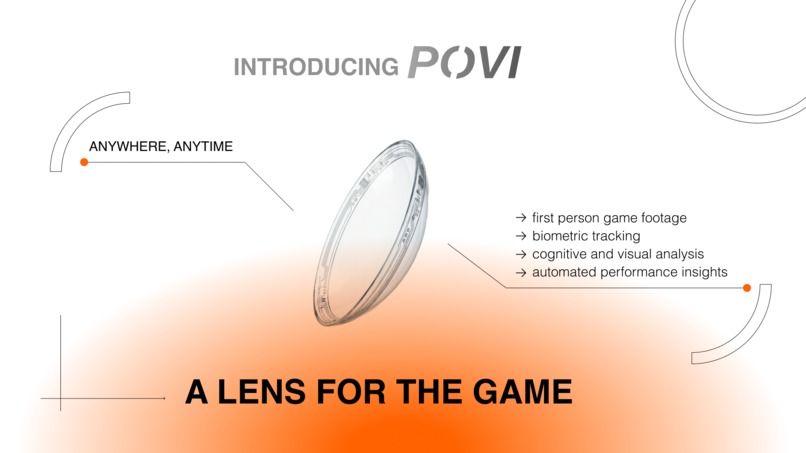
POVI Lens
-
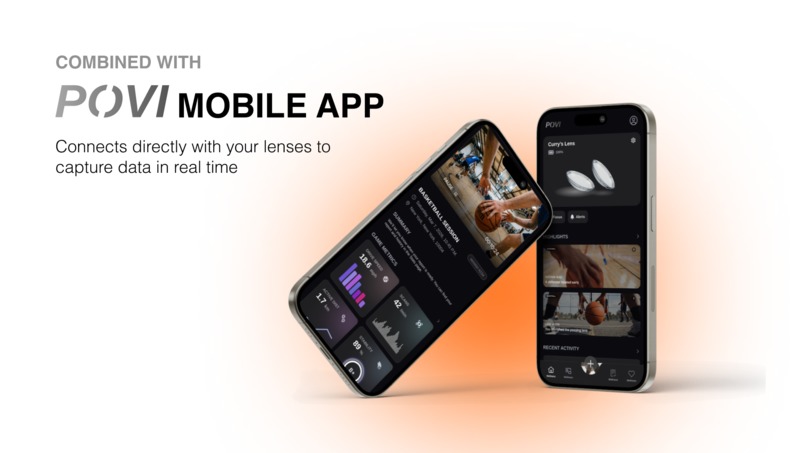
POVI Mobile App
-
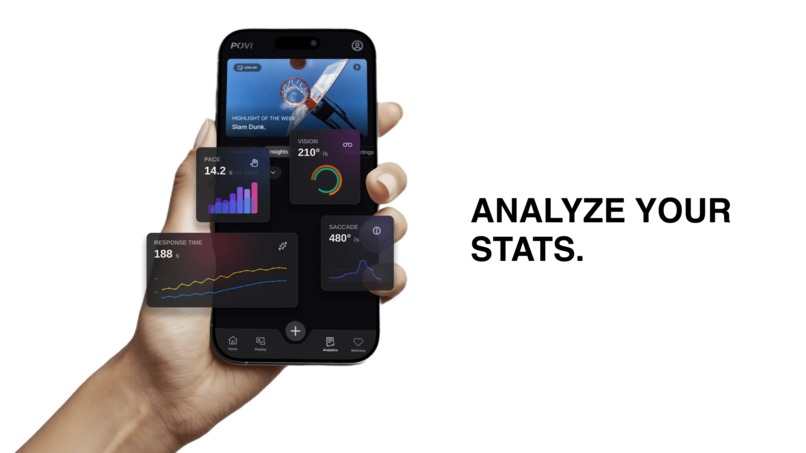
POVI analyzes your stats
-
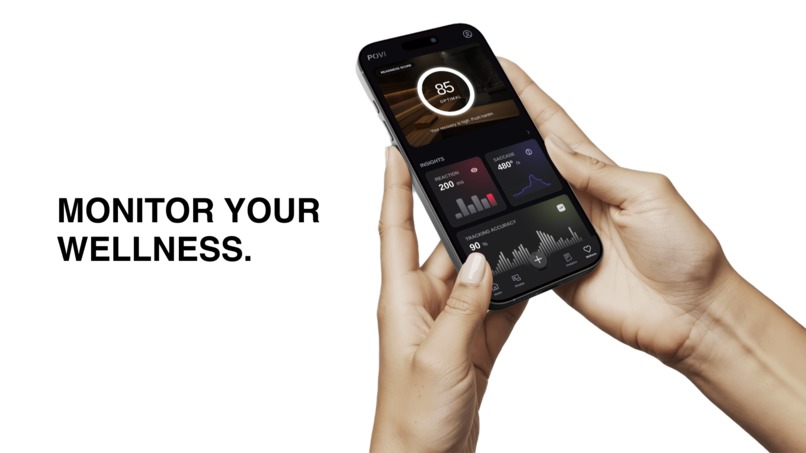
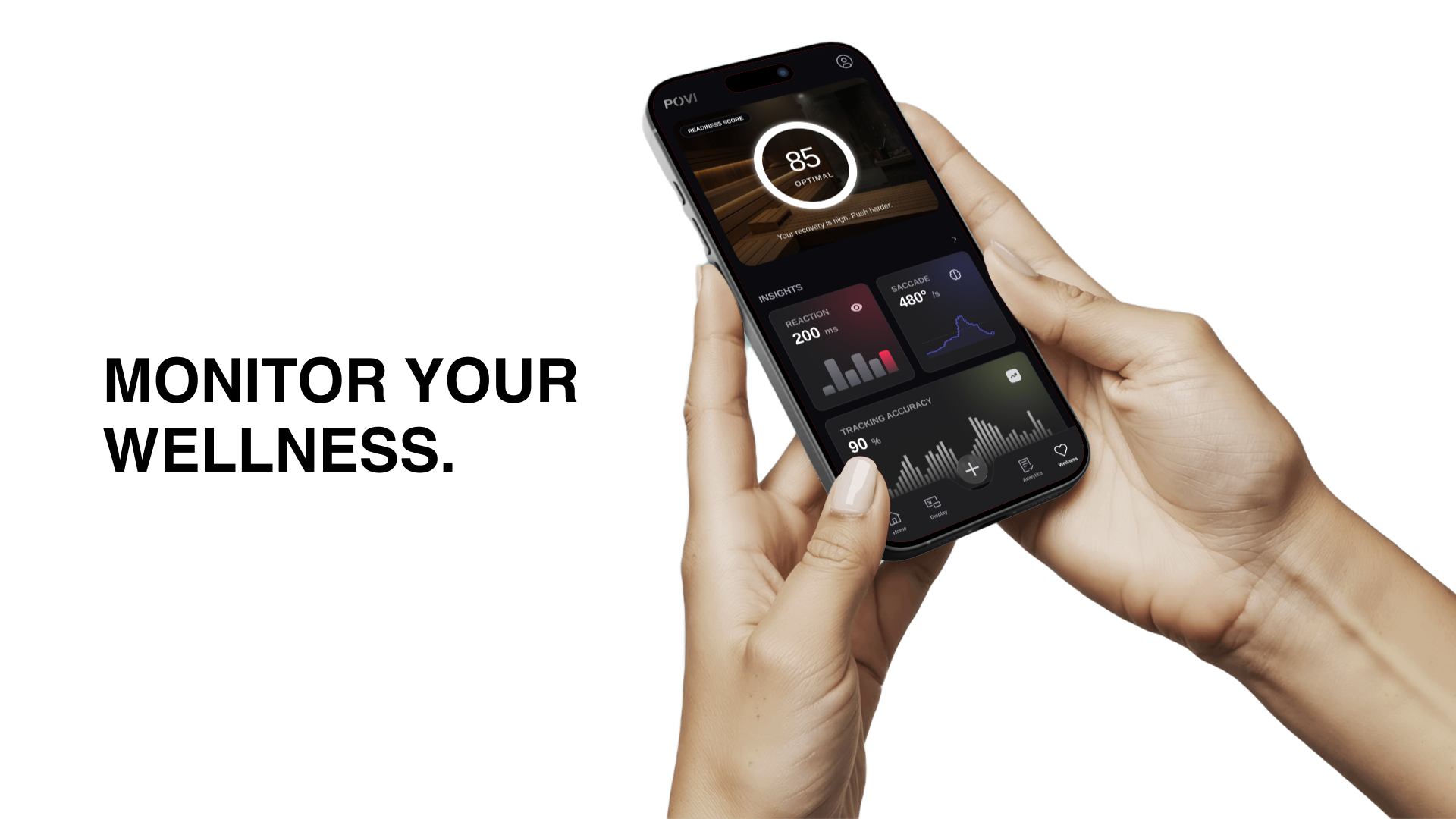
POVI monitors your wellness
-
Behind the scenes
Inspiration
POVI was inspired by three main ideas. Our initial idea took place when we saw a new company working on research and development in the contact lens field, where new contact lenses can display simple UI elements. We combined this with inspiration from one of our own teammate's experiences with sport trauma and recovery, which led us to ask the question: how can we create a product that not only tracks and enhances athletes' external visual senses, but also tracks internal senses to help with athlete recoveries?
What it does
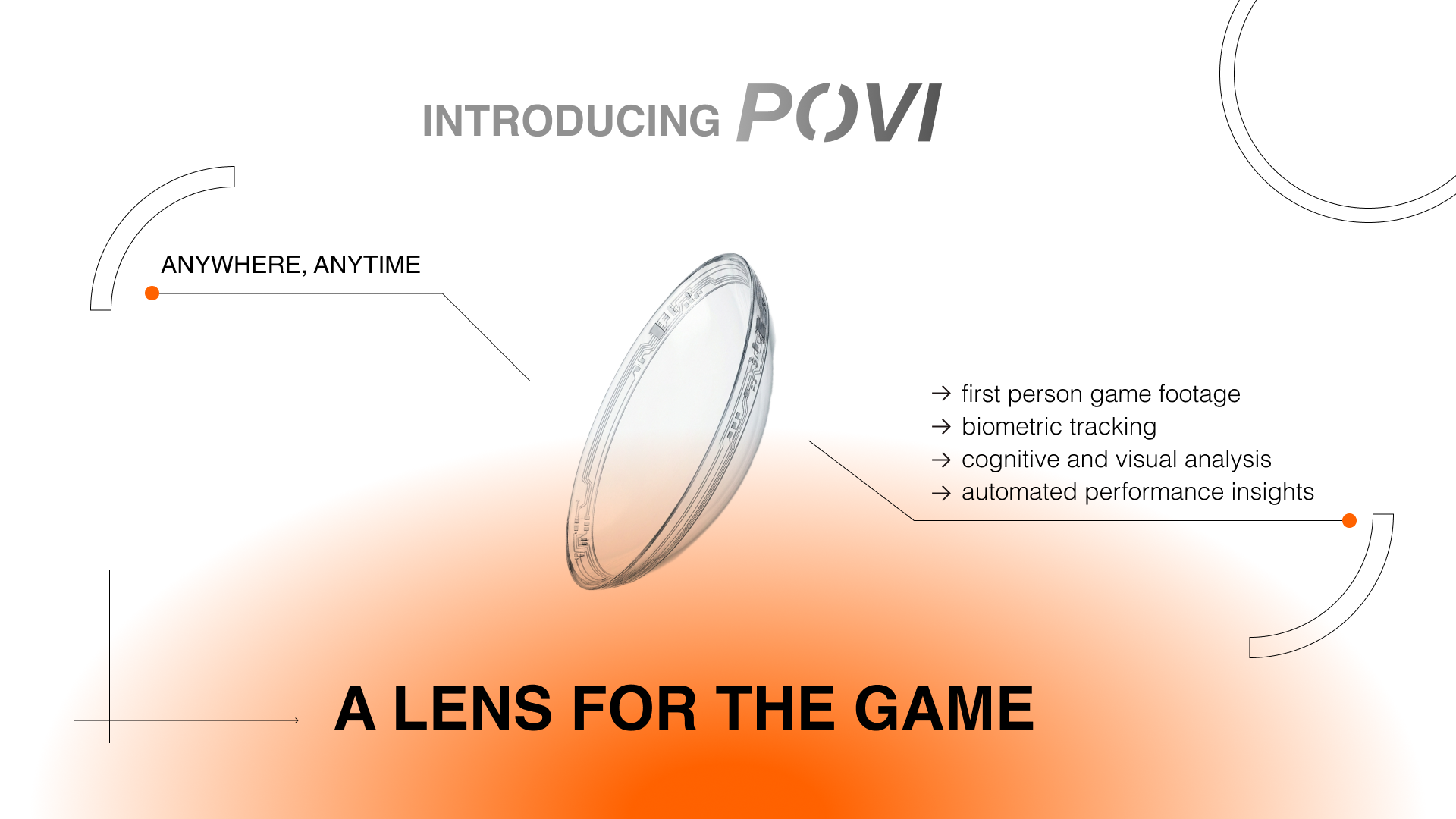
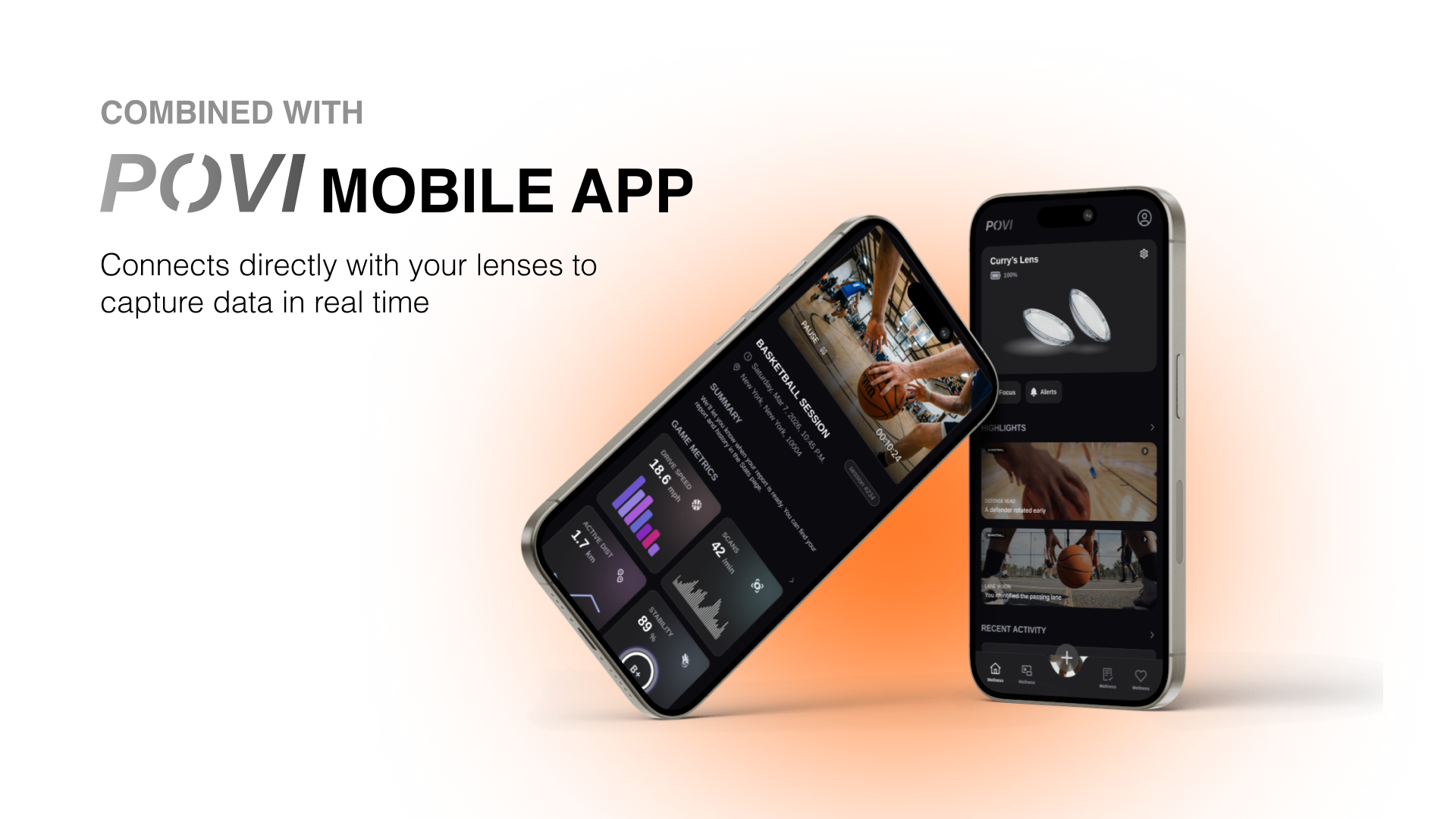
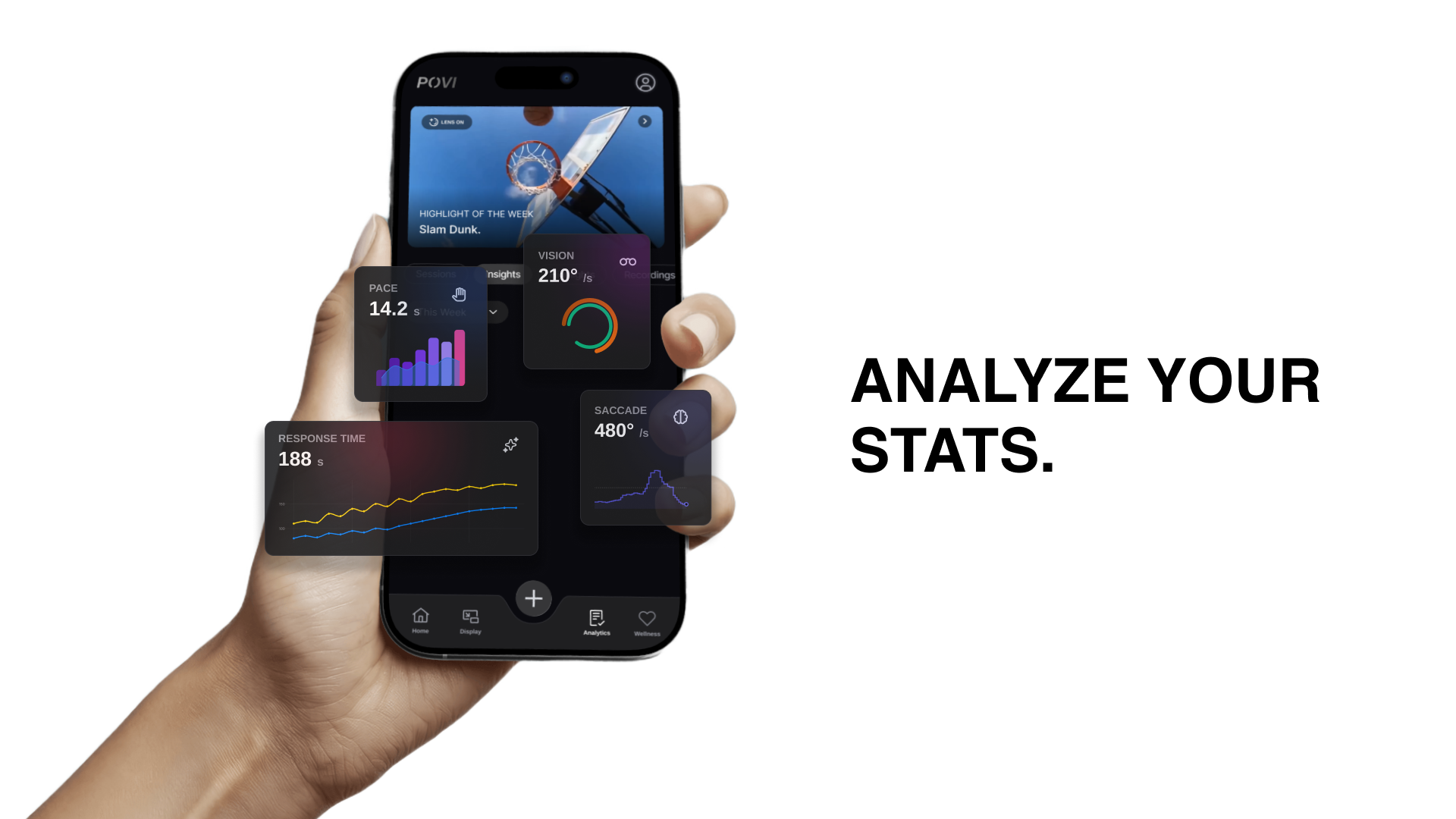
POVI is a smart contact lens built for athletes. It records first-person gameplay while tracking signals like focus, stress, and visual attention through pupil dilation, gaze direction, and blink rate. The companion app turns this data into insights, stats, and real-time performance feedback while also allowing users to modify what they see.
How we built it
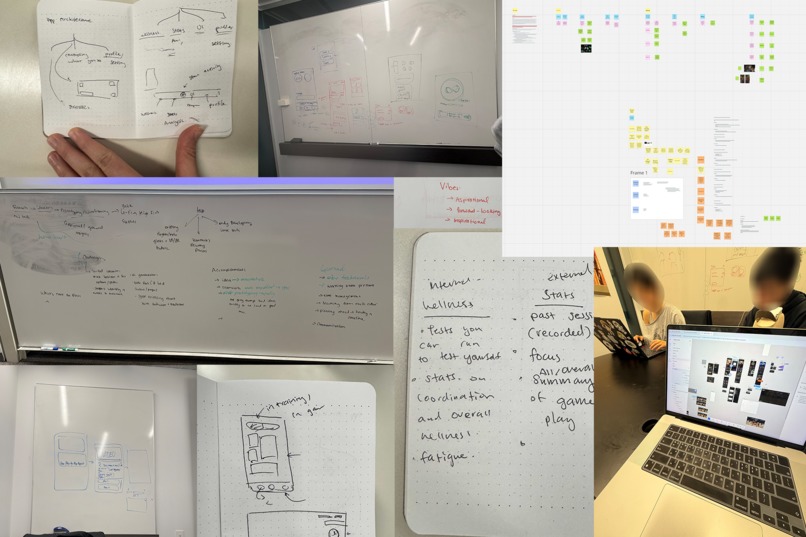
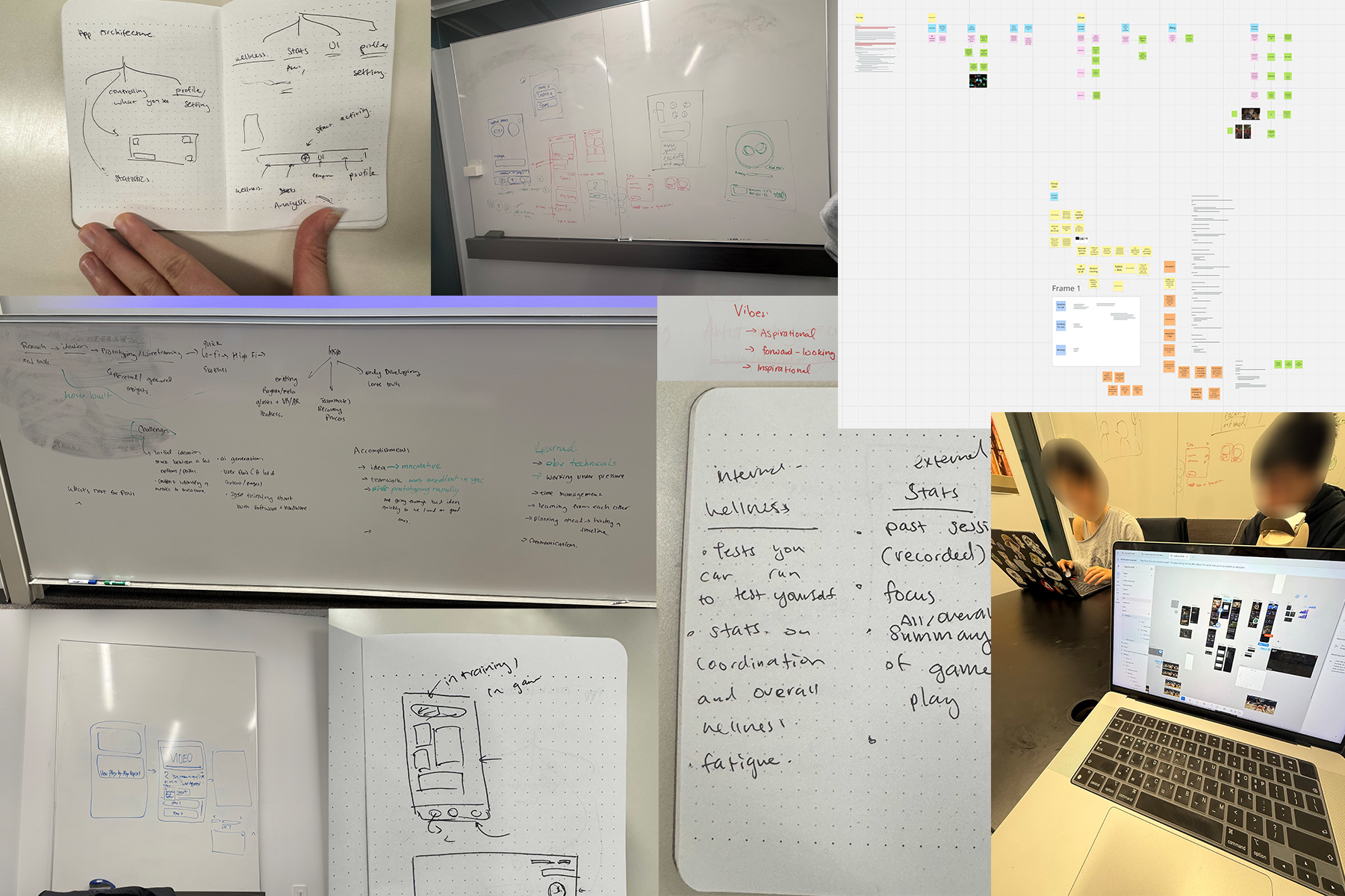
The project followed a rapid design process: research → ideation → wireframing and prototyping → low-fidelity → high-fidelity designs. Insights were also gathered from five basketball players, three college athletes and two hobby players, to better understand training needs and behaviors.
Challenges we ran into
Early ideation was one of the biggest challenges. It was difficult to determine what the lens should measure and which signals would be meaningful for athletes. Generating basketball visuals with AI tools was also difficult, and designing user flows with large amounts of information made layout decisions challenging. The project also required thinking about both the hardware product and the software experience at the same time, which was difficult but also exciting since it allowed us to imagine without constraints.
Accomplishments that we're proud of
We are proud that we were able to quickly refine the concept. We moved forward with a clear direction and intention. We maintained strong communication throughout the entire project, which was what made the experience incredibly smooth and enjoyable, despite this being the first time that we worked with one another. We shared honest and open feedback with one another, but also genuine praises and encouragement. Overall, this collaborative approach helped the team iterate quickly and develop a cohesive design in a short amount of time.
What we learned
Beyond technical skills, the project highlighted the importance of strong communication and planning under time pressure. We learned how to have good time management, clear responsibilities, and constant collaboration, all of which helped us stay organized and move efficiently through the process. Most importantly, we learned from one another, learning from each other's strengths and improving our own technical abilities.
What's next for POVI
Our future versions of POVI expand beyond basketball, which is our primary focus right now. We can see this tool being incredibly helpful in other fields like football, soccer, tennis, and eventually expanding to personal fitness and wellness, even in surgical and emergency training settings. Athletes could share first-person game footage with teammates and coaches, creating new ways to analyze and experience sports. Down the line, we imagine that fans will be able to experience the game in a new first-person POV, developing a new relationship with the game. Further development could also include deeper analytics, expanded training tools, and community features that allow athletes to learn from each other, eventually developing game plans that can be shared across the team.
Built With
- artlist
- capcut
- figma
- google-docs
- higgsfield
- miro
- notion
- photoshop
- premiere-pro
- screen-studio


Log in or sign up for Devpost to join the conversation.