Where the idea came from
Every morning I boil water and make coffee by hand: ground coffee in the glass, hot water on top, stir. I never measure the water. I pour, watch the colour, and stop when it looks right. Sometimes I want more water and sometimes less, so the taste is different.
While pouring hot water I cannot hold a phone or look away. That is the moment glasses can help: the information has to be where my eyes already are, on the glass.
What it does
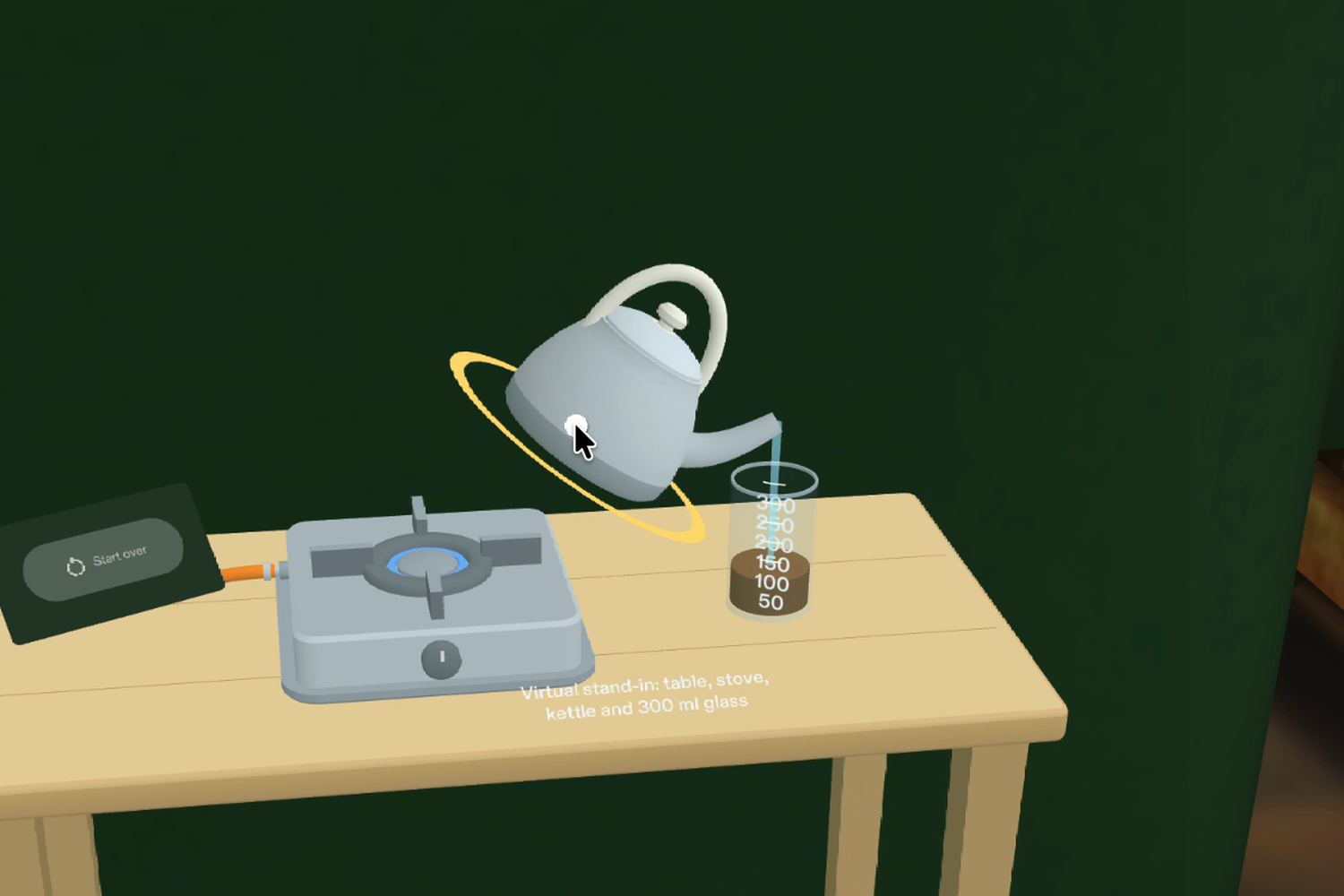
- Pinch the kettle and drag it to the glass. It snaps into place and a column of numbers from 50 to 300 ml appears on the front of the glass, like a measuring glass.
- Keep the pinch and drag up to pour. The level rises against the numbers, and the coffee goes from dark brown to a lighter brown.
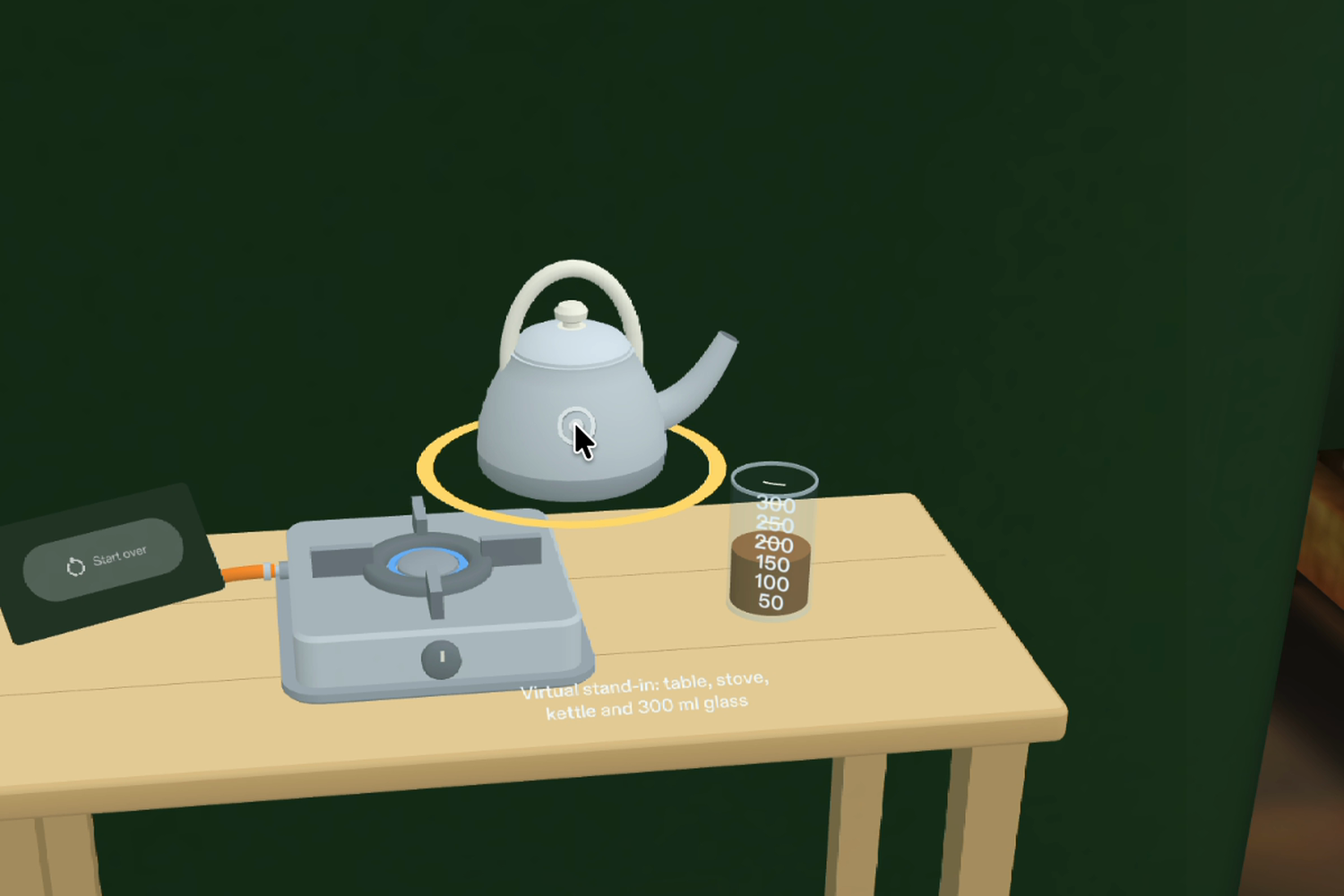
- Release and the water stops. The scale stays for 3 seconds so I can check the amount. If it is not enough, I pinch again and add more. It continues from the same level.
- There is no fixed target. The Lens shows the amount and I decide.
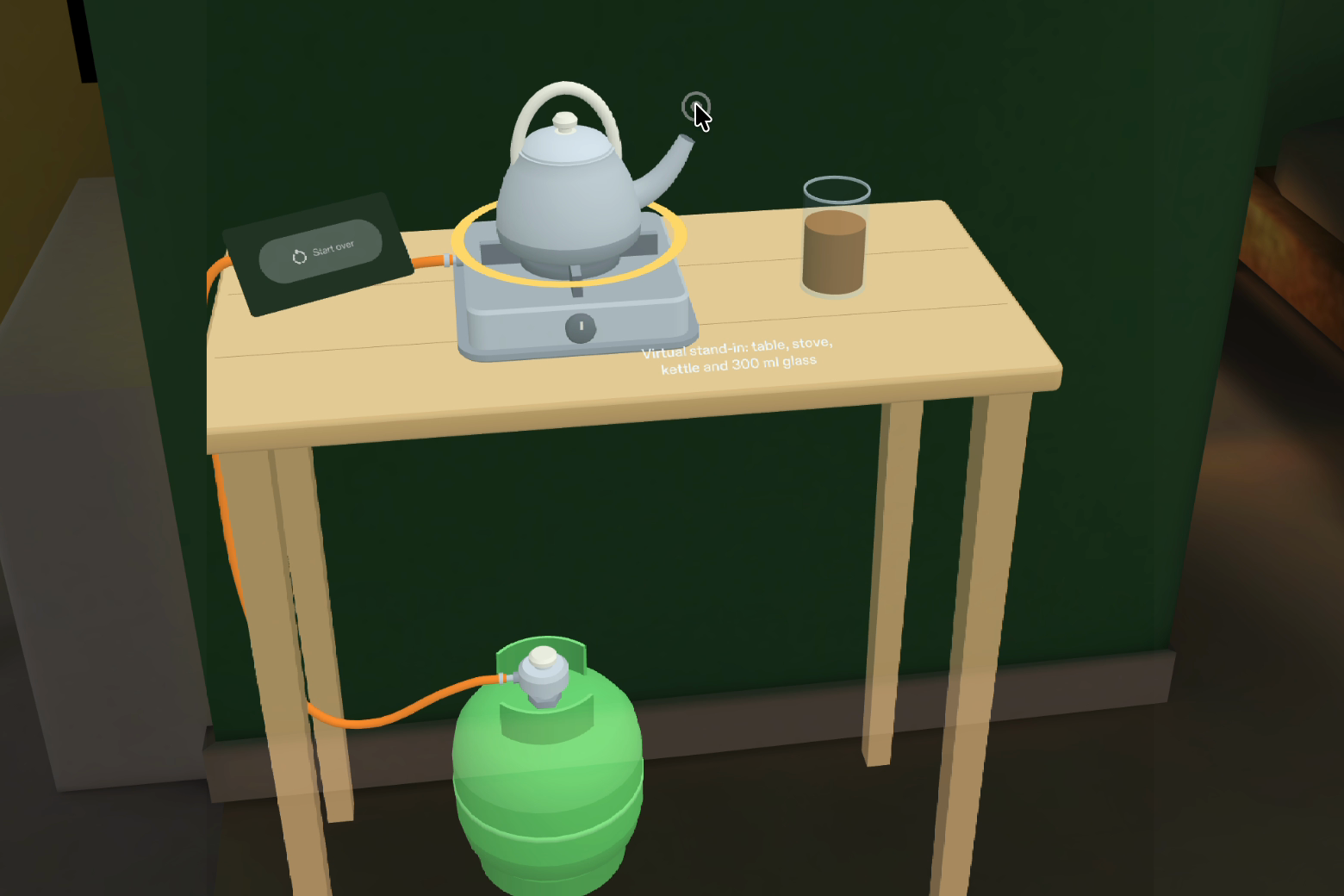
- After 3 seconds the kettle goes back to the middle of the burner by itself and the scale fades. Nothing stays in view that is not needed.
Why it belongs on glasses
- It draws in the world. The scale sits on the glass itself, not on a panel floating in front of my face.
- It leaves the body free. Both hands stay on the kettle and the glass, and my eyes stay on the pour.
- It shows up only when needed. The scale appears when the kettle is over the glass and gets out of the way afterwards.
What is real and what is a stand-in
I do not have SPECS glasses. Everything was built and recorded in the Lens Studio preview.
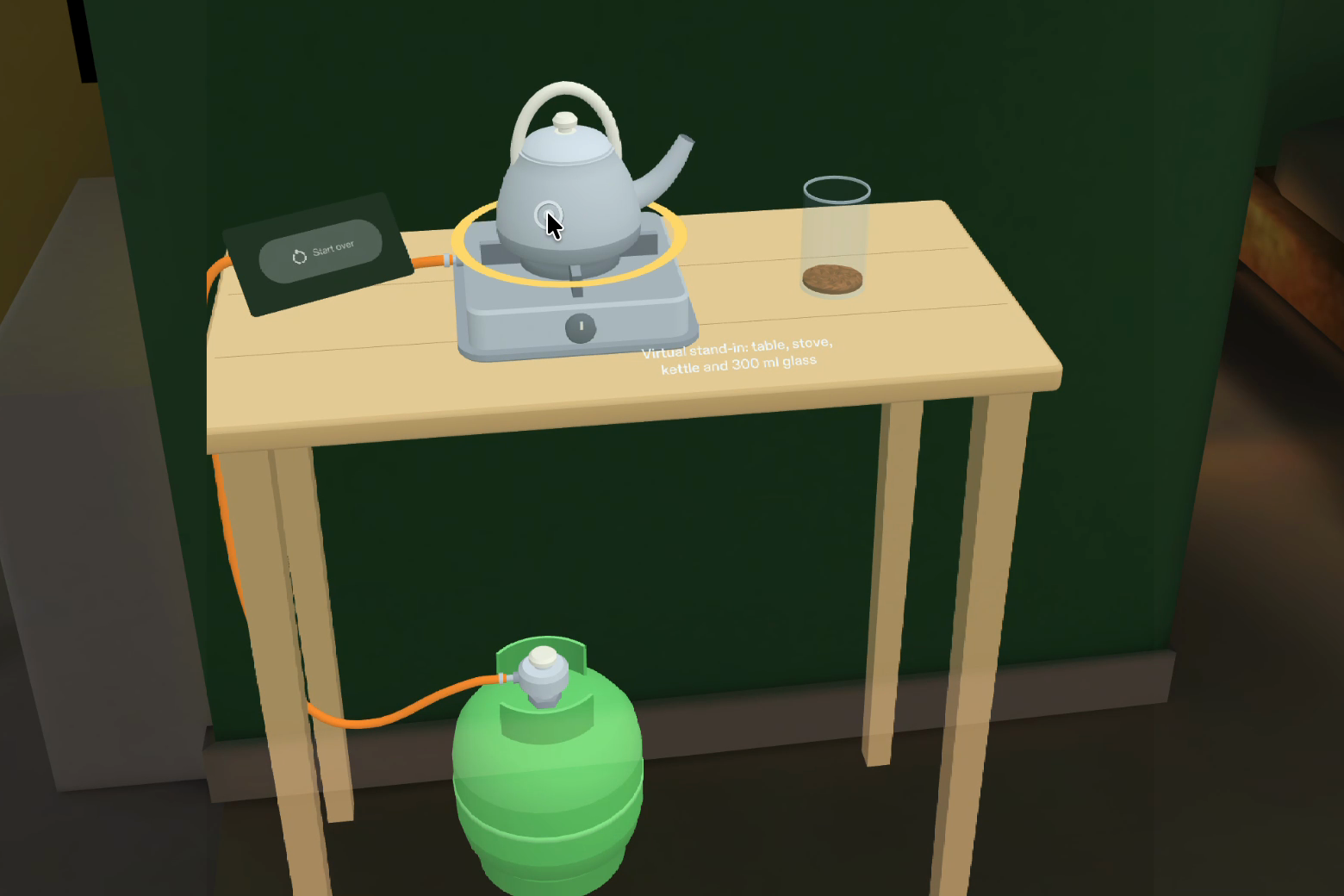
On real glasses the Lens would have to find a real glass and sense the level of the liquid. The preview cannot recognise real things, so the Lens provides its own table, stove, kettle and 300 ml glass, and a caption on the table says so. What happens after the sensing is built for real: the scale, the colour, and the timing.
How I built it
- Design: the
plan-lensskill interviewed me and wrote the design brief. I had never used Lens Studio before this hackathon. The questions about where things live and when they show are what turned "numbers on a glass" into something specific. - Build: Claude Code with Snap's CLAD plugin and the Lens Studio MCP server built the Lens from the brief, as separate steps: plan, sounds, models, UI, scripts, scene assembly, audits.
- Models: I was not signed in to Lens Studio, so AI model generation was not available. Every model is geometry written in TypeScript with MeshBuilder: table, stove, kettle, glass, liquid, water stream, scale ticks, gas cylinder and hose. That suited this Lens, because the liquid, the stream and the ticks have to change while it runs.
- Then I tried it and changed it. After each build I used it with the mouse and asked for changes in design terms: legs on the table, the kettle in the middle of the burner, the kettle going back to the stove by itself instead of hanging beside the glass, the table against a wall instead of blocking the walkway, and a gas cylinder with a hose to the stove so it reads as a kitchen. All of these are recorded in the brief.
Challenges
- The first build could not be pinched at all. A direct pinch landed at the kettle's origin, deep inside its grab box, where the fingertip test reports nothing. A small extra collider at that point fixed it.
- The planned pouring position put the spout 4.35 cm from the centre of a glass with a 3.5 cm inner radius, so the water would have missed. The position is now computed from the real spout.
- I said the kettle looked "off" on the stove three times before the real cause was found: the model's origin was the centre of its full width including the spout, so the body sat 3 cm away from the burner. Showing a screenshot worked better than describing it.
- In the room I chose for the video, the floor was 24 cm higher than the build assumed, and the table legs were sinking into it.
Tests
Six LEAF scenarios cover the five done criteria in the brief, plus Start over. Each ran twice in the Lens Studio preview and all 12 runs passed. Measured: snap in 0.37 s, pouring at 30.00 ml/s, level unchanged after release, scale fade starting at 3.05 s, and adding more going 0 → 72 → 157 → 244 ml.
The tests check values inside the Lens, not rendered pixels. Looks were checked by eye.
What I learned
- A good description comes from decisions, not from a long prompt. "Put a number on the glass" was not enough. "Where do I look, when does it show, how do I stop" was.
- Showing things only when they are needed is most of the design.
- Trying the build myself found things no test did: a kettle that is technically level but looks wrong, and a table in the middle of a walkway.
What is not proven
- How it feels on real glasses: real hand tracking, comfort, and whether the scale stays readable on a real glass.
- Sensing a real glass and a real liquid level. Not attempted.
- Seen from above, the liquid surface looks slightly higher than the number beside it, as on a real measuring glass.
Built With
- clad
- claude-code
- interactionkit
- leaf
- lens-studio
- lens-studio-mcp
- specs
- typescript
- uikit
