-
-
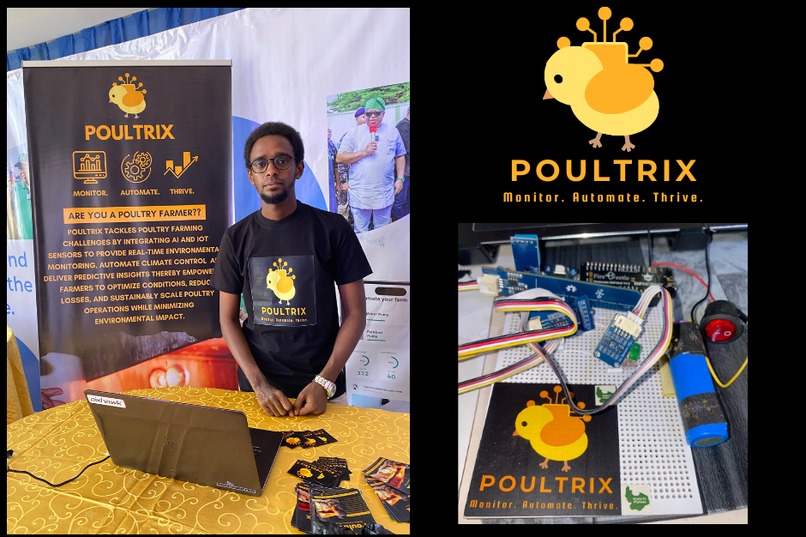
CEO, LOGO, POULTRIX
-
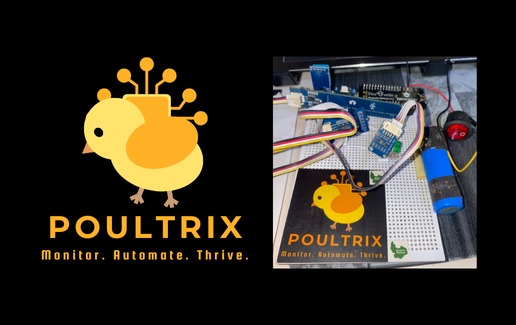
LOGO, POULTRIX
-
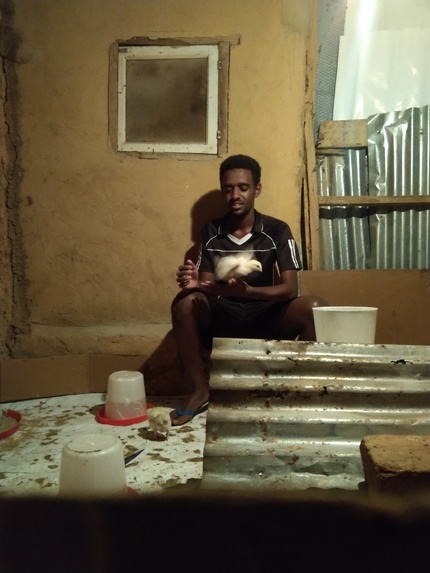
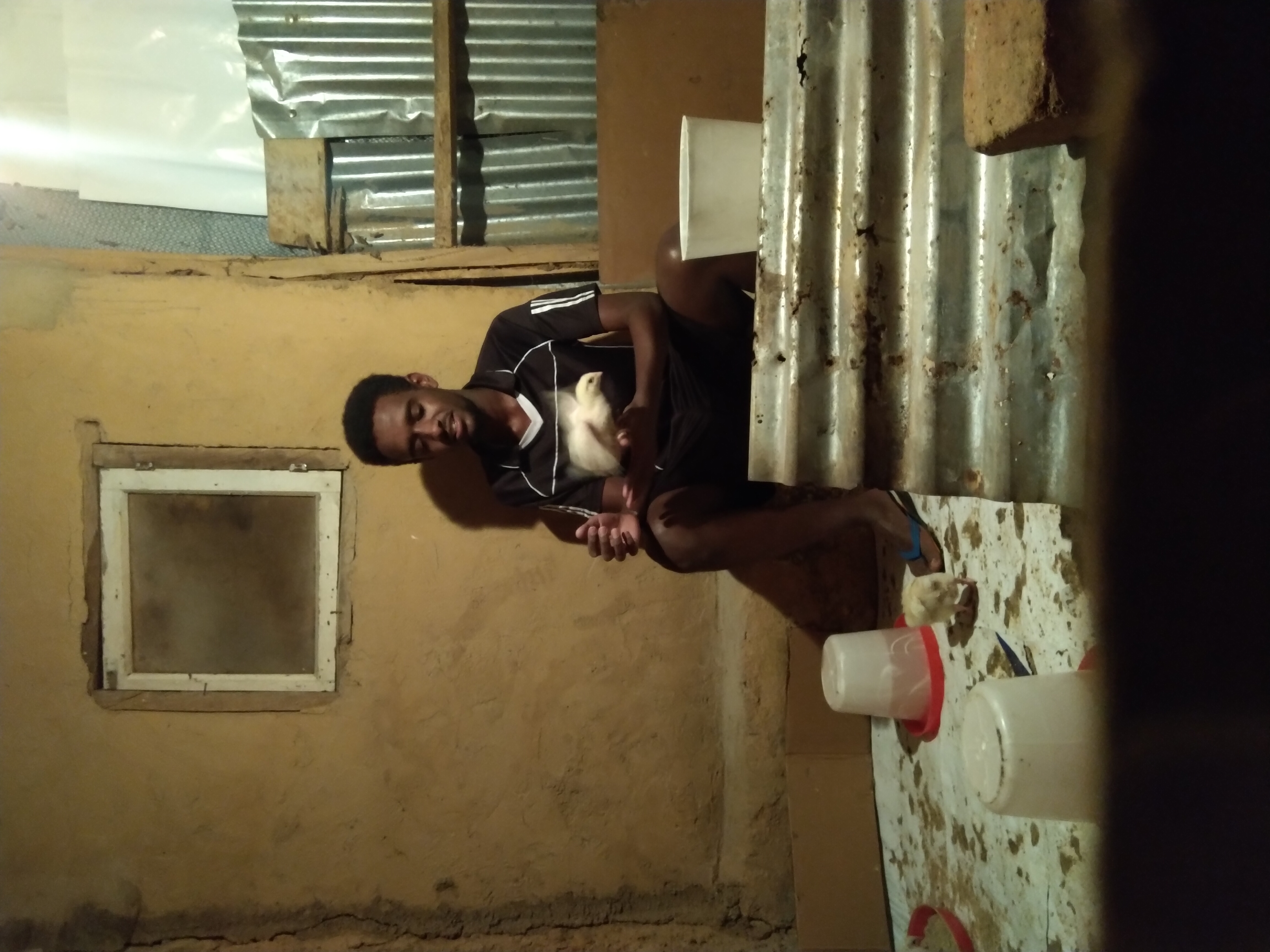
inspiration when my poultry farm failed
-
LOGO
-
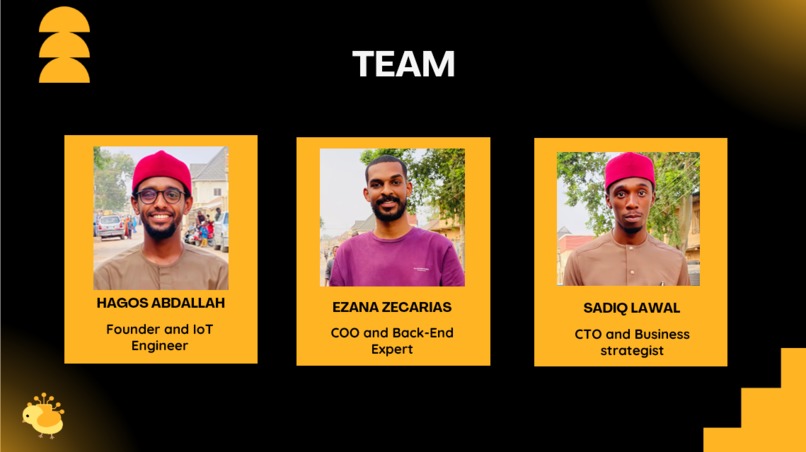
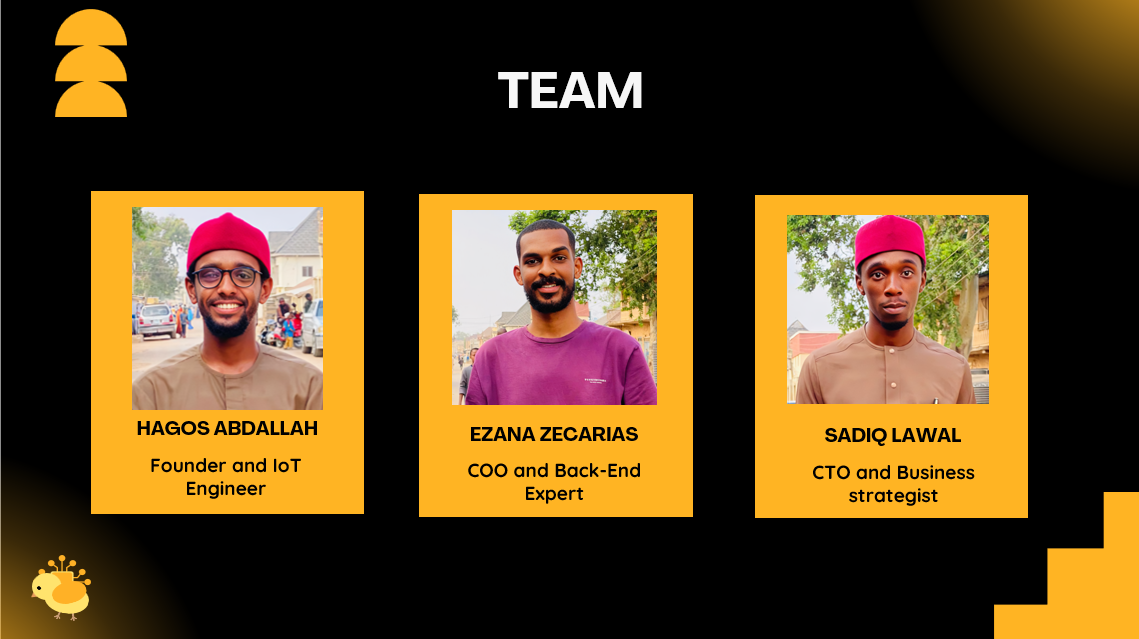
TEAM
Inspiration
Growing up in Nigeria, I witnessed smallholder farmers struggle with poultry losses due to poor environmental monitoring, unreliable electricity, and limited capital. These challenges, rooted in resource constraints, inspired Poultrix, an affordable, IoT and AI-powered system to optimize poultry farming. My background in Electrical and Electronics Engineering and experience with IoT projects like NomaBot fueled my vision to create a scalable solution that leverages familiar technologies like WhatsApp to empower farmers, reduce mortality, and boost food security.
What it does
Poultrix is an IoT and AI-powered poultry monitoring system designed for smallholder farmers in Nigeria, addressing high poultry mortality in resource-constrained settings. Using low-cost Grove sensors (temperature, humidity, gas, ultrasonic) connected to an ESP8266 microcontroller, it collects real-time environmental data, logged locally for offline use and sent to a cloud dashboard when connected. A solar-powered module ensures off-grid reliability, while a WhatsApp-based LLM chatbot delivers actionable insights (e.g., “Temperature: 30°C, adjust ventilation”) in simple English, with plans for Hausa support. By enabling rentals and cooperative-based brooding, Poultrix reduces financial barriers. Future plans include a Google Form platform to connect farmers to markets and data-driven disease control, boosting productivity and food security.
How we built it
Poultrix is a modular system designed for resource-constrained environments:
Hardware: Grove sensors (temperature, humidity, gas, ultrasonic) connect to an ESP8266 microcontroller, selected for low power consumption (~80 mW) and local availability. A solar-powered module with a 12V battery ensures off-grid operation.
Software: Data is stored locally for offline functionality and uploaded to a cloud dashboard when connected. A WhatsApp-based LLM chatbot provides real-time insights (e.g., “Temperature: 30°C, adjust ventilation”) in simple English, with Hausa support planned.
Before/After Decisions: a. Microcontroller: Initially targeted Raspberry Pi for more processing power but chose ESP8266 to cut costs and power by over 75%. b. Business Model: Moved from one-time purchases to rentals and cooperative-based brooding to lower financial barriers for farmers. c. Power: Switched from unreliable grid power to solar due to frequent rural outages, ensuring consistent operation.
Future Plans: Location data from standalone brooding pens will power a Google Form platform, linking farmers to restaurants and buyers. Sensor data will enable disease monitoring, improving poultry health.
Challenges we ran into
- Funding: Limited resources delayed Hausa AI integration and full testing.
- AI Integration: Awaiting advanced models like LLaMA 4 for multilingual support.
- Hardware Limits: The ESP8266’s 80 MHz processing required optimized code, extending development time.
- Power Issues: Grid unreliability necessitated a solar pivot, demanding new battery management skills.
- Testing: The poultry pen and PID-controlled heating system (target: 32°C) are still under construction, delaying validation.
We overcame some of these by iterating rapidly, sourcing locally, and incorporating farmer feedback to ensure real-world impact.
Accomplishments that we're proud of
We’re happy with Poultrix’s progress so far in addressing poultry mortality for Nigerian smallholder farmers:
- Functional Prototype: Built a working IoT system using Grove sensors (temperature, humidity, gas, ultrasonic) and an ESP8266 microcontroller, optimized for low power (~80 mW) and local sourcing, ensuring affordability.
- Solar-Powered Design: Integrated a solar module with a 12V battery, enabling off-grid operation in rural Nigeria, overcoming unreliable grid power.
- WhatsApp Integration: Developed a WhatsApp-based LLM chatbot that delivers real-time insights (e.g., “Temperature: 30°C, adjust ventilation”) to non-technical farmers, leveraging a familiar, low-bandwidth platform.
- Economic Accessibility: Pivoted from one-time purchases to a rental and cooperative-based brooding model, making Poultrix accessible to cash-strapped farmers and fostering community collaboration.
- Local Impact: Assembled with components from Nigerian markets, supporting local economies and ensuring relevance for smallholder farmers.
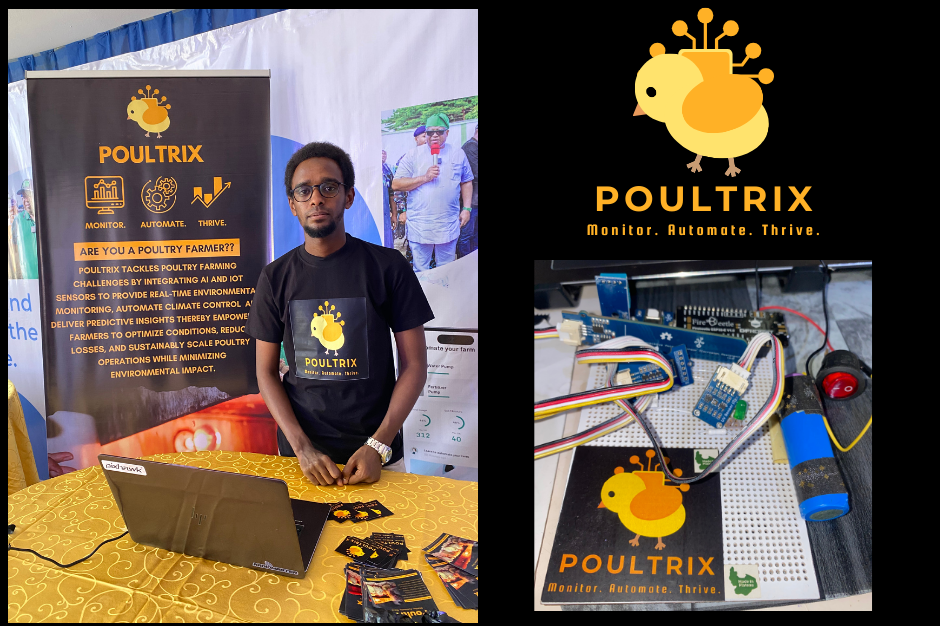
- Recognition Potential: We were at the groundbreaking agritech makerspace event in Jos where we showcased out product to the UNDP resident representative and also the governor of the state but we were not given any form of support.
What we learned
Building Poultrix deepened our understanding of resource-constrained innovation:
- Hardware Optimization: Switching from a power-hungry Raspberry Pi (3 W) to the ESP8266 (80 mW) taught us to balance cost, power, and performance for rural deployment.
- User-Centric Design: Using WhatsApp, a platform farmers already use, ensures accessibility in low-bandwidth areas, highlighting the value of familiar tech.
- Economic Adaptation: Shifting to rentals and cooperatives addressed financial barriers, showing how business models can enhance inclusivity.
- Sustainability: Adopting solar power due to grid outages underscored the need for renewable energy in off-grid settings, aligning with Africa’s infrastructural realities.
- Iterative Development: Overcoming funding and AI integration hurdles taught us to iterate quickly, leveraging local resources and farmer feedback.
- Technical Growth: We improved skills in embedded systems, AI chatbot development, and solar energy management, navigating trade-offs for scalability.
What's next for Poultrix
Poultrix is poised to scale and transform poultry farming:
- Prototype Completion: Finalize the PID-controlled heating system (target: 32°C) and conduct full testing to validate performance (e.g., sensor accuracy, power efficiency).
- Multilingual Support: Integrate Hausa and other local languages into the WhatsApp chatbot, pending advanced AI model access, to enhance inclusivity.
- Market Access Platform: Use location data from standalone brooding pens to launch a Google Form platform, connecting farmers to restaurants and buyers, boosting income and market reach.
- Disease Control: Analyze sensor data (e.g., ammonia levels > 25 ppm) for predictive disease monitoring, enabling early intervention to reduce poultry mortality.
- Scalability: Expand the rental and cooperative model across Nigeria, leveraging modularity to support small and large farms.
- Ecosystem Growth: Create jobs in assembly, installation, and training, while partnering with agri-cooperatives and investors to drive food security and economic empowerment in Africa.

Log in or sign up for Devpost to join the conversation.