See our pitch deck at https://drive.google.com/drive/folders/1WBwquJrO0hPiZcpXMYnaZObM7DsNwCio?usp=drive_link
Inspiration
In Canada, the government controls the production of chicken. Chicken farmers own a right and an obligation to produce a certain amount of chicken; however, producing outside of their allotment results in harsh penalties. Farmers regulate production through diligent control of the chickens' feed; nonetheless, this process is prone to error and time-consuming. We can change this: by leveraging data reporting systems already present in most barns, we can predict chicken weights and feed consumption to save farmers tens of thousands of dollars annually.
What it does
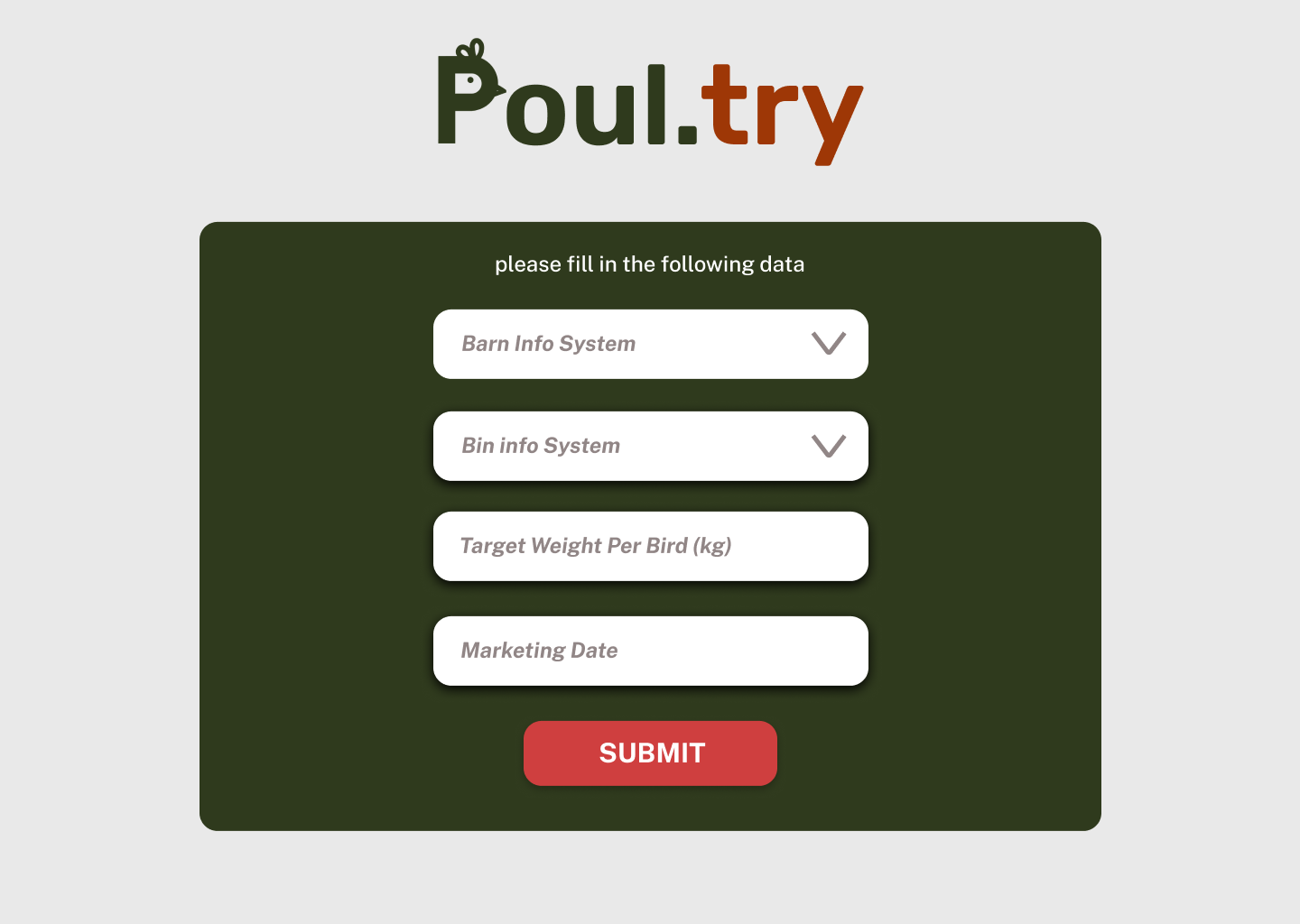
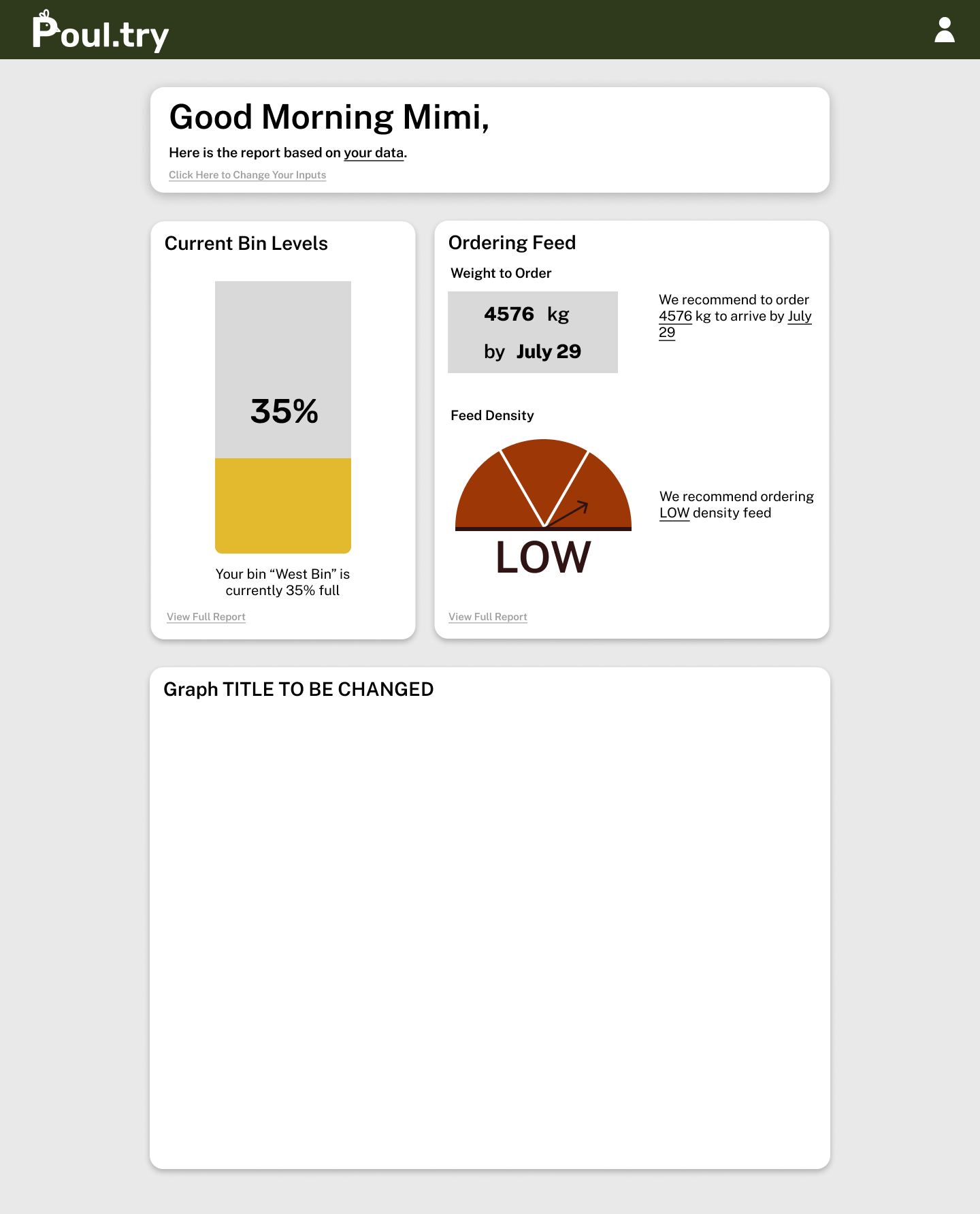
POUL.TRY scrapes data from barn and bin systems used by farmers, compares the data with the chicken marketing regulations and guidelines provided by the Canadian government, and outputs corresponding reports and recommendations for farmers to modify their chicken diet and feeding schedule.
How we built it
Backend: We scraped the data for chicken weights and farm feed, cleaned up data, and used Pandas to create a series of data corresponding to each crop of chicken. Lastly, used Scikit-learn to fit a model against the data. Frontend: We brainstormed fonts and colour palettes, then utilized Figma to design the webpage, buttons, and text boxes. We focused on simplicity, considering the use of contrasting colours (for colour blindness) and graphics that represent the data. Lastly, we used Next.js to develop the web app's framework.
Challenges we ran into
Connecting the backend and front end.
Accomplishments that we're proud of
We learned how to use Next.js
What we learned
We learned how to use components and creating instances in Figma that allowed for a more dynamic prototype. Figma's auto layout feature was also a new thing we learnt that let us create a more responsive prototype. We were able to learn how to use Next.js for front end.
What's next for POUL.TRY
We could report more statistics like feed conversion rates, expand the platform to accommodate data from more barn systems, and partner with barn data reporters to directly access the data through an API rather than scraping.
Built With
- figma
- matplotlib
- next.js
- pandas
- python
- scikit-learn


Log in or sign up for Devpost to join the conversation.