Inspiration
I play poker with my two brothers a lot, even with our own set of poker chips and nice, neat cards. After attending the Mathematica Summer Camp 2014, I realized I could use my skills to make a game of poker; this version of poker is called "Pot-Limit Omaha."
How it works
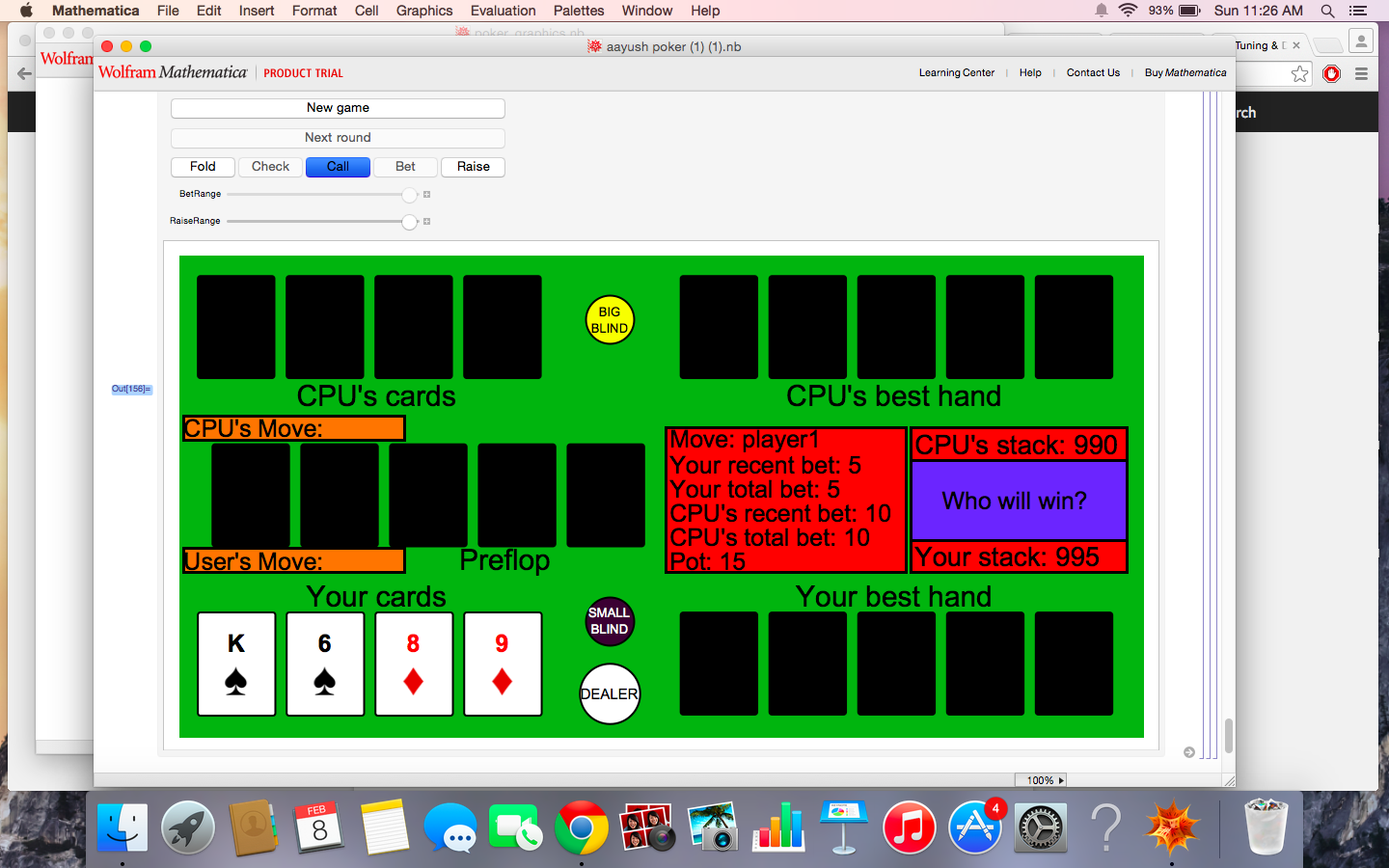
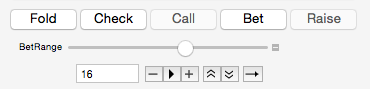
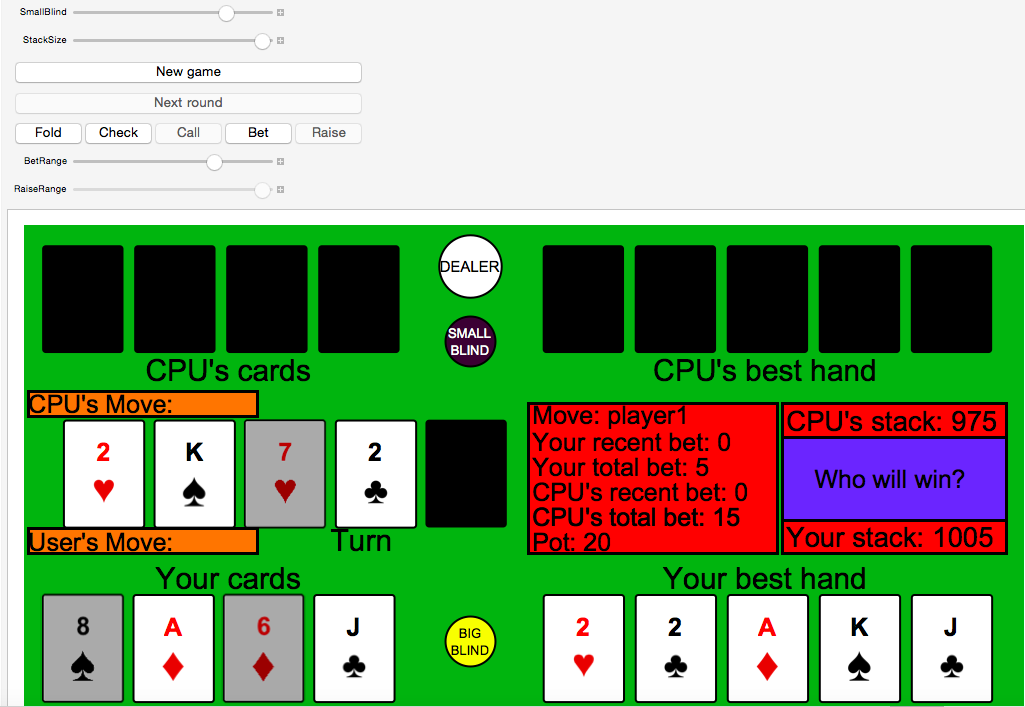
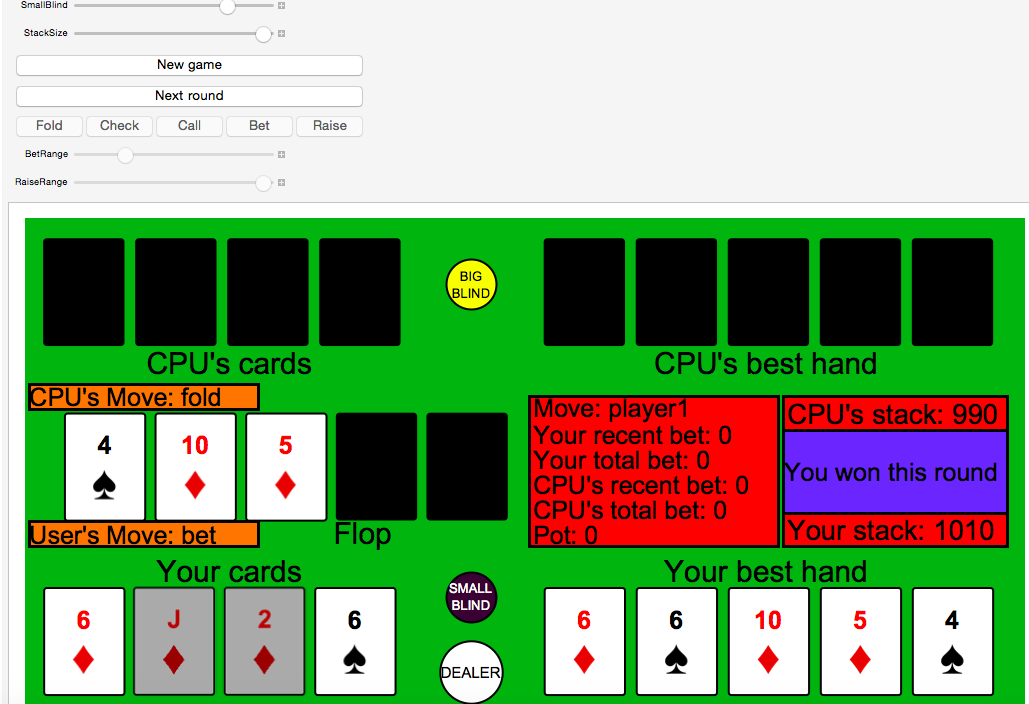
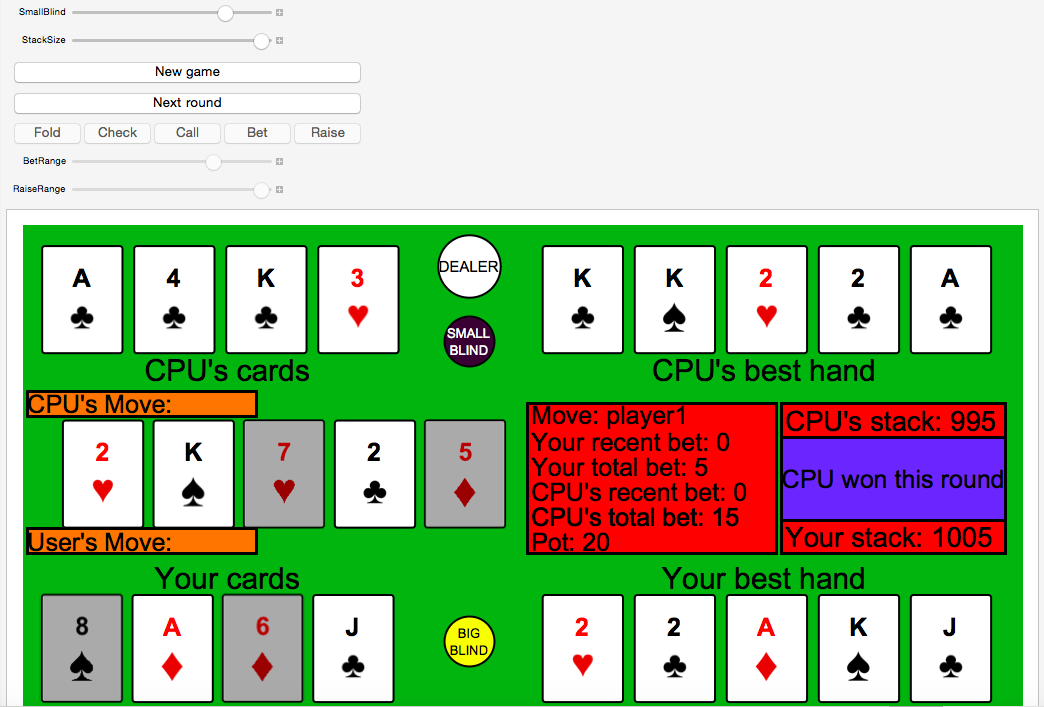
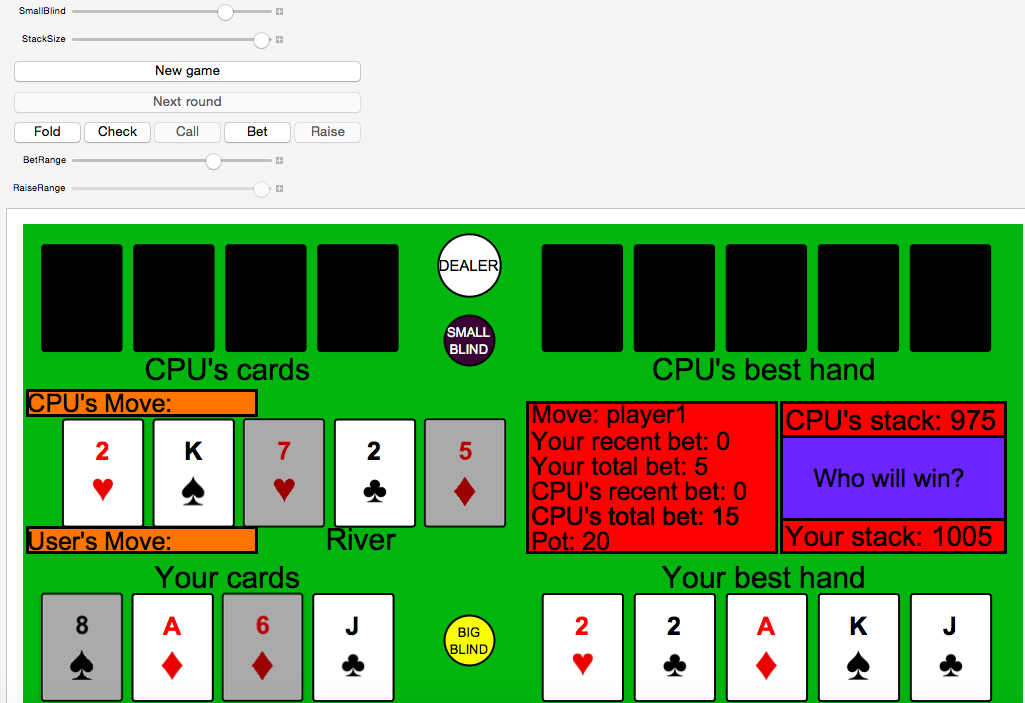
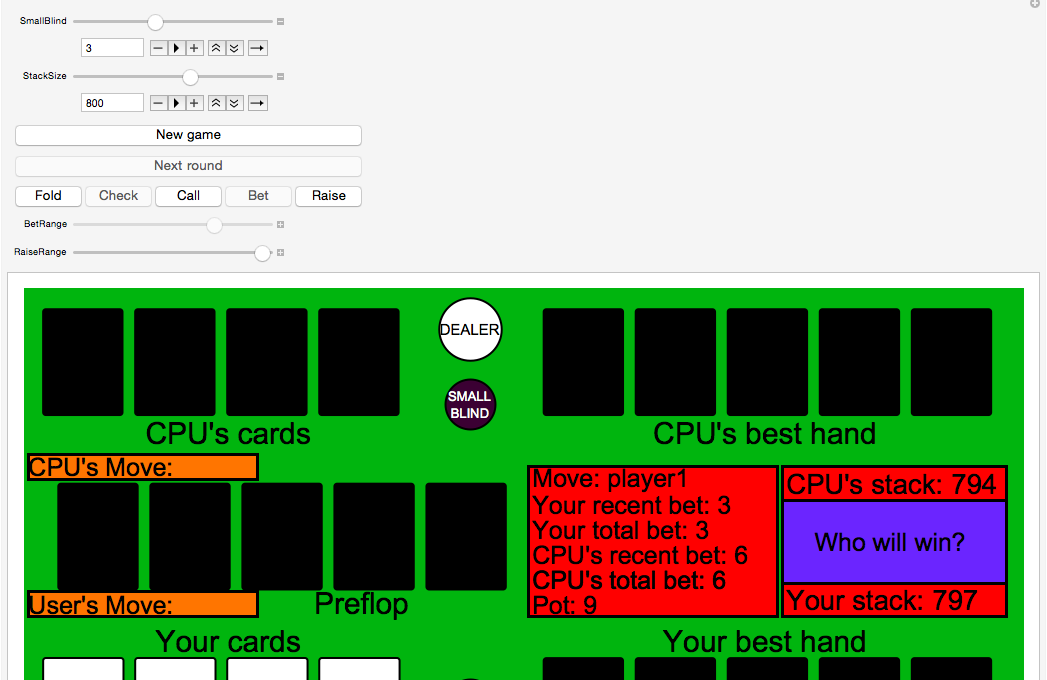
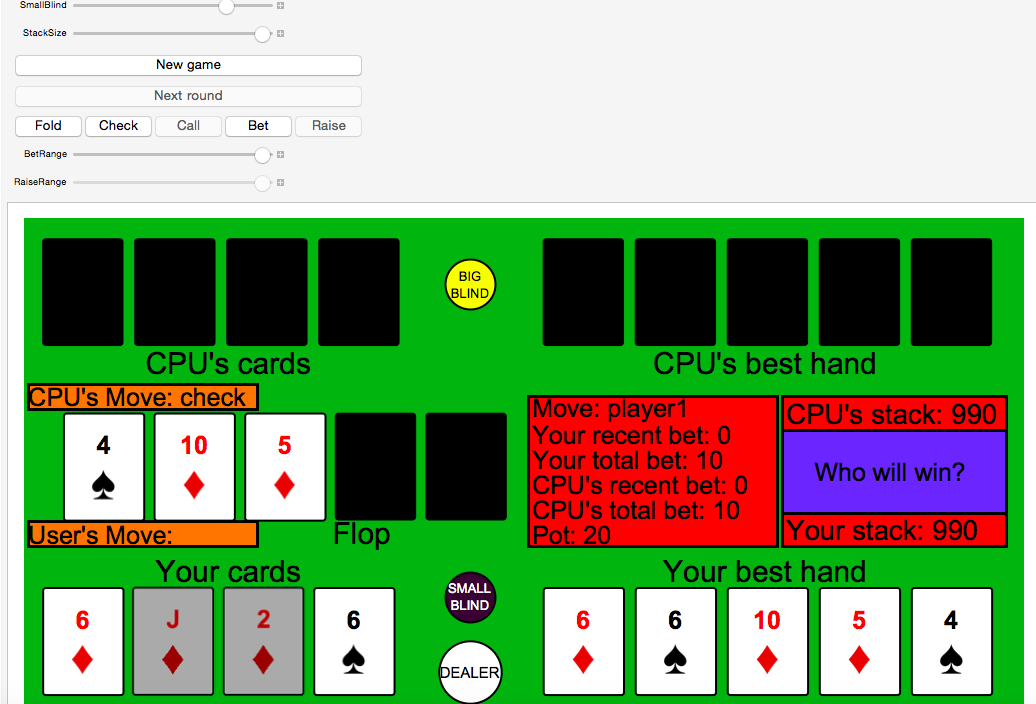
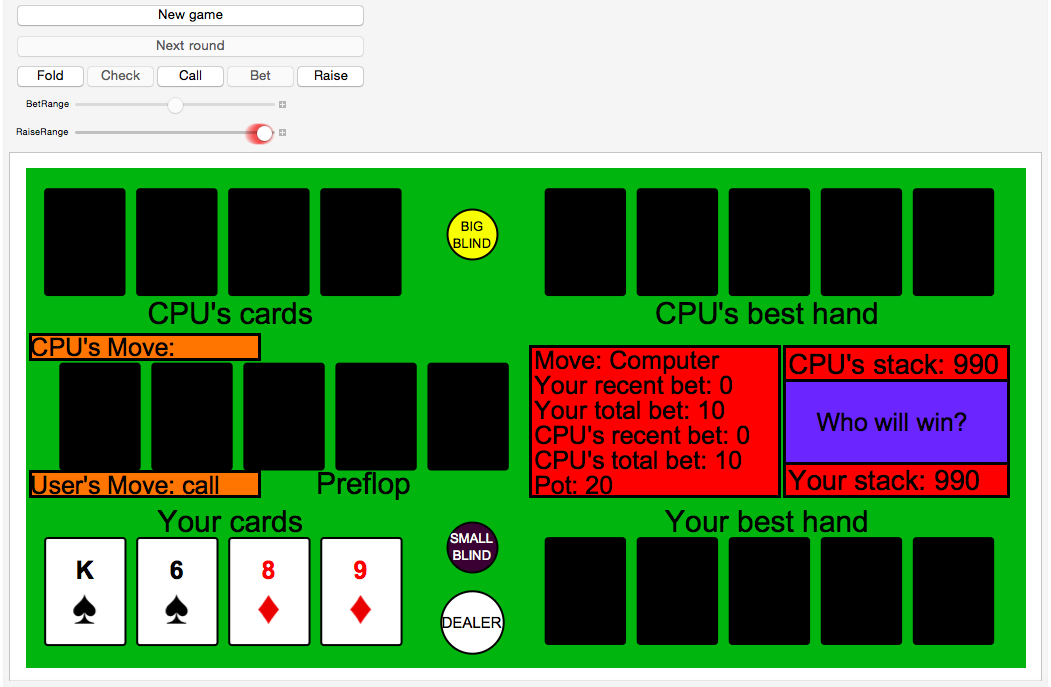
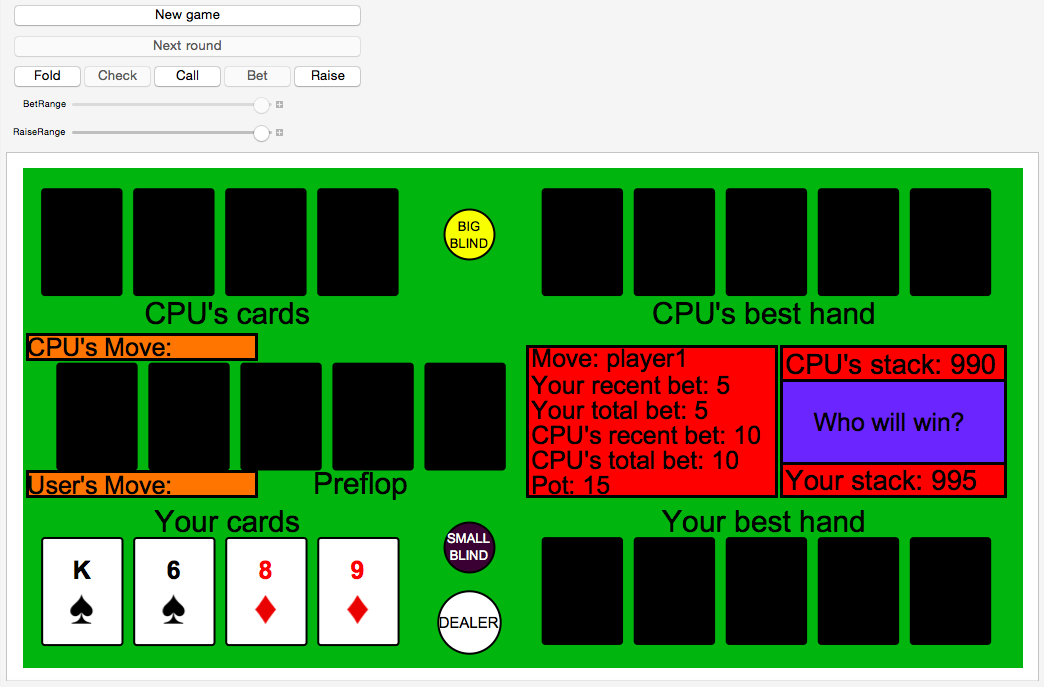
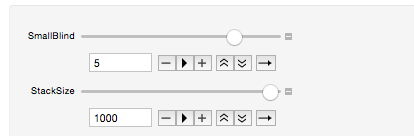
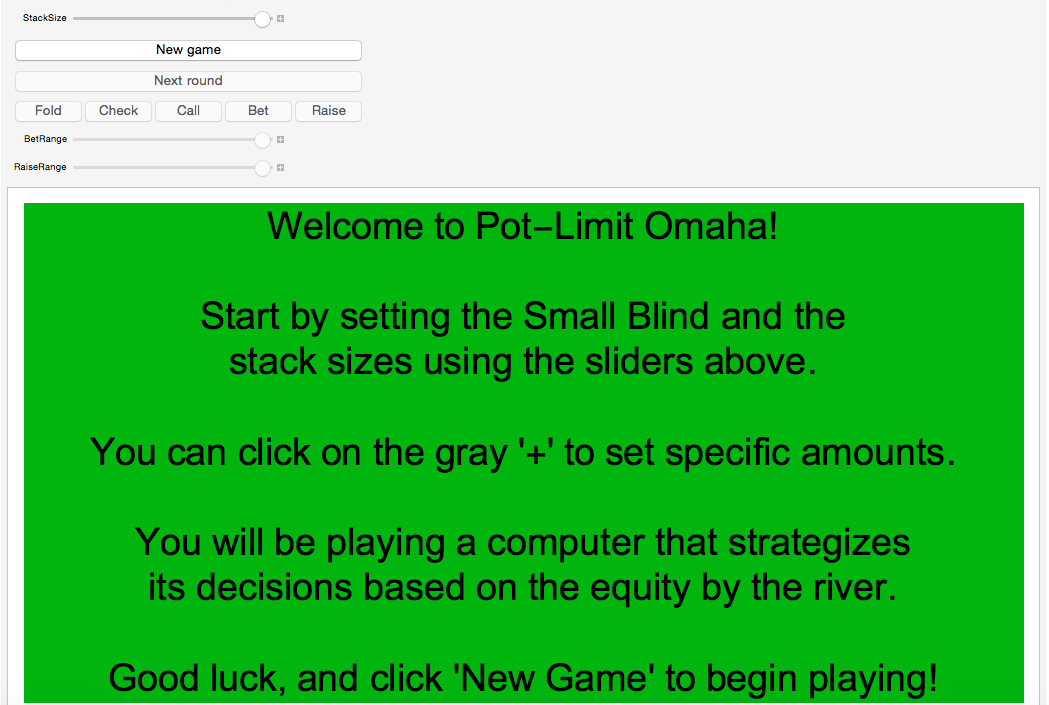
When initializing the cells, you are taken to the welcome page, where you set the sizes of stack per person (user and computer), and the small blind. After clicking "New Game," you are taken to another screen that shows the "playing area" in which you see the computer's moves, what the computer bets, and who wins the round. You click on the "Fold", "Check", "Call", "Bet" or "Raise" buttons, and use sliders to set your desired bets or raises.
Challenges I ran into
The computer makes its decisions based off of the equity, or probability of winning the round. The calculations were hard to accomplish; there may even be a few errors in the calculation done in the project as opposed to calculations done through online poker demos. Additionally, the graphics of the board and of the cards were difficult to work with.
Accomplishments that I'm proud of
Poker is a game I truly enjoy, and to know that I have made an actual simulation of what I love playing makes me feel proud.
What I learned
I knew this before I started the project, but it was still something I had to be more aware of: calculations in a poker game is hard. I knew how to estimate equity in a regular poker game, but to implement an equity calculation in the project that has to be in exact value was the part I had to learn more about.
What's next for Pot-Limit Omaha
My next idea would probably be another card/poker game. Pot-Limit Omaha calculations are easier than Texas Hold'em calculations, so going for a harder project such as Texas Hold'em would be another task I would look forward to.
Built With
- mathematica

Log in or sign up for Devpost to join the conversation.