-
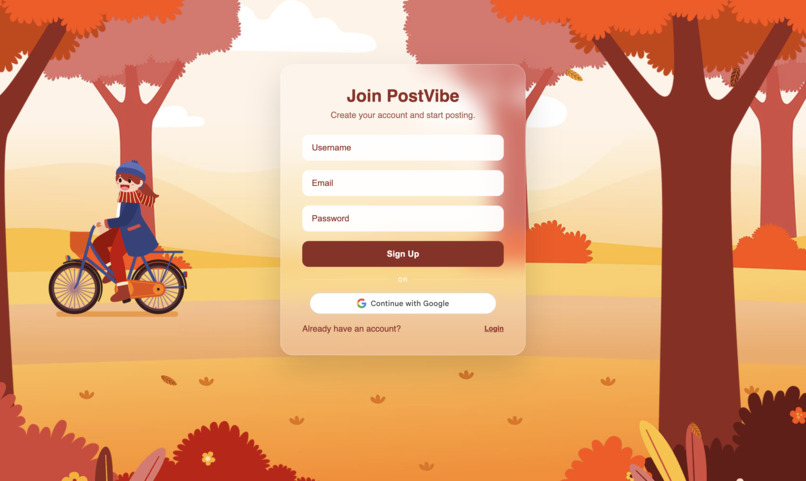
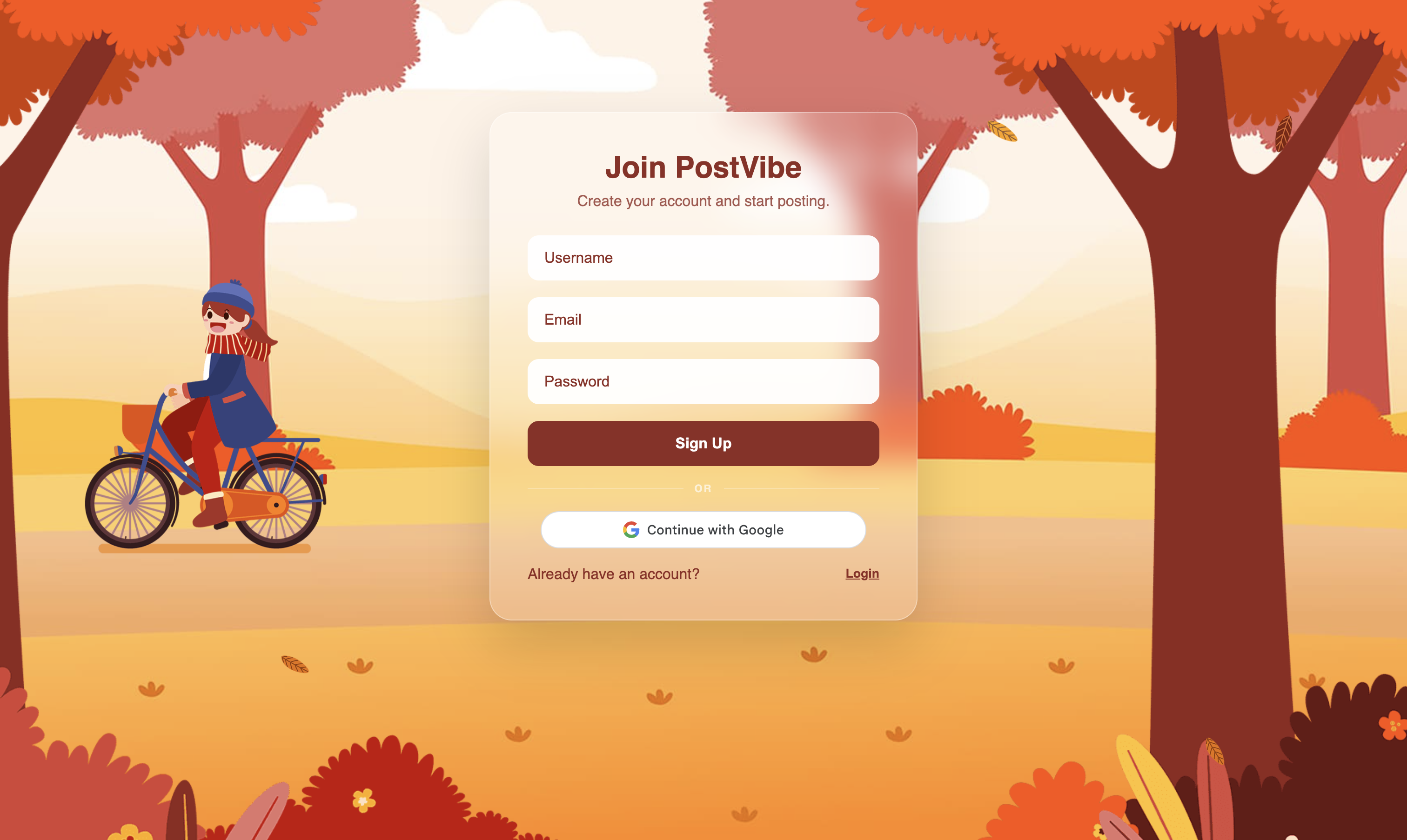
Register Page
-
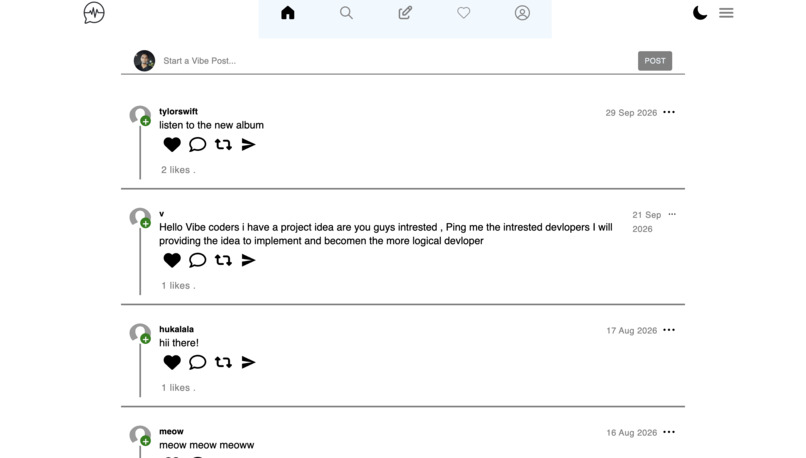
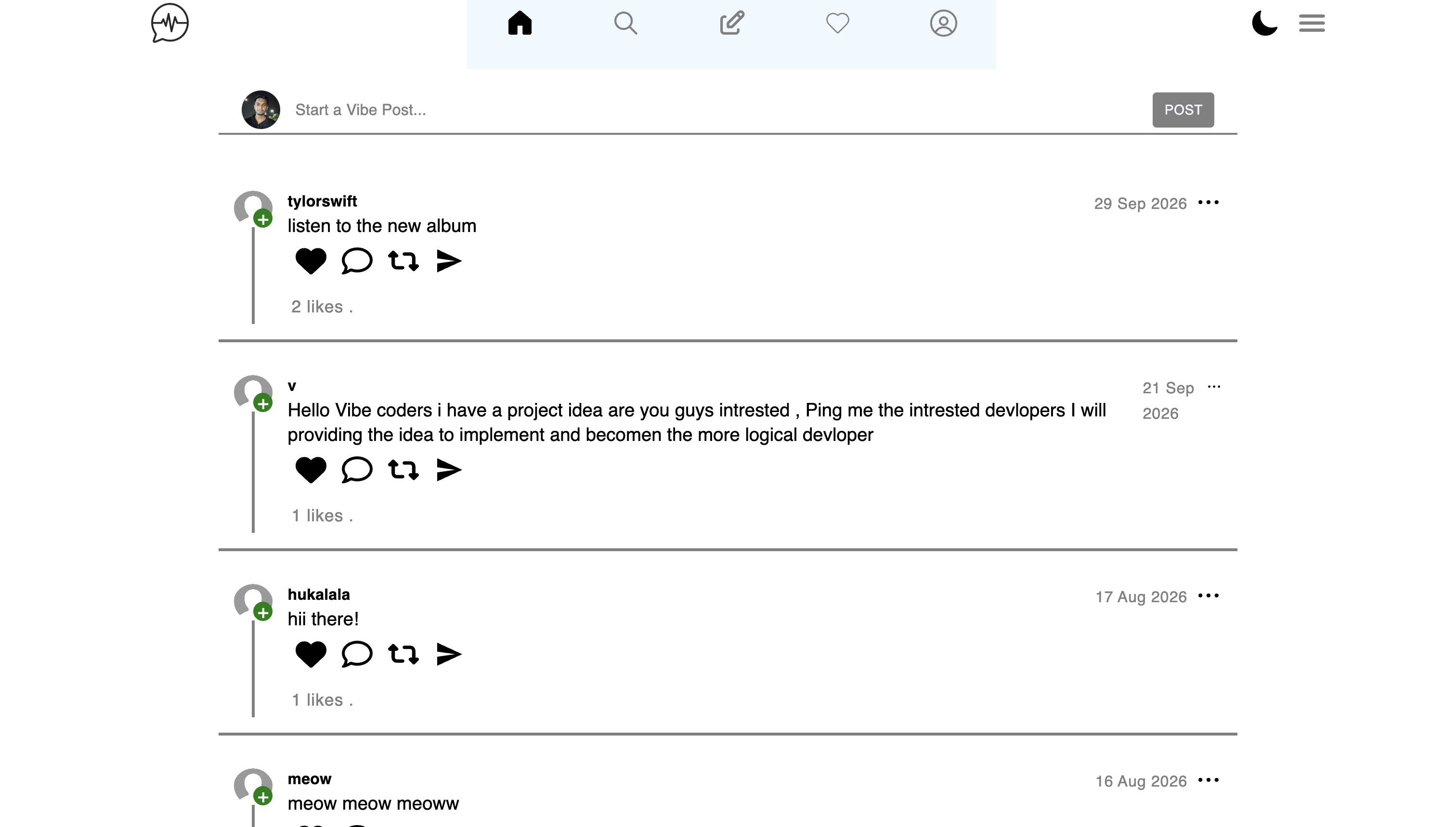
Feed
PostVibe — Share Your Thoughts. Find Your People.
Inspiration
Social media has become an important part of how we communicate, express ourselves, and stay connected. However, building a social platform from scratch involves more than creating a feed — it requires authentication, user profiles, social interactions, and a reliable backend.
I built PostVibe to explore how a modern social networking platform works end to end and to create a space where users can share their thoughts, discover people, and interact with content.
What it does
PostVibe is a full-stack social networking web application that enables users to:
- Create and share posts: Express ideas and share content with others.
- Like and comment: Engage with posts and participate in conversations.
- Repost content: Share posts with your own network.
- Follow users: Connect with people and discover their content.
- Explore profiles: View user profiles and their posts.
- Search for users: Find people on the platform.
- Manage profiles: Update profile information and personalize your presence.
- Authenticate securely: Register, log in, and log out of user accounts.
How I built it
I developed PostVibe using a full-stack architecture, separating the frontend from the backend.
Frontend
- React for building a component-based user interface.
- Material UI for interface components and styling.
- Redux Toolkit and RTK Query for application state management and API integration.
Backend
- Node.js and Express.js for the server and REST API.
- MongoDB and Mongoose for data storage and database modeling.
- Cookie-based authentication and JWT verification for protected routes.
The frontend communicates with the backend through API endpoints, while RTK Query helps manage API requests, cached data, and updates following user interactions.
Challenges I faced
One of the main challenges was coordinating authentication between the frontend and backend, particularly when managing login sessions, protected routes, and logout behavior.
I also worked on synchronizing application state with server responses so that actions such as liking posts, following users, and updating profiles are reflected correctly in the interface.
Another challenge was structuring the application into reusable components and API endpoints while keeping the codebase maintainable as new features were added.
Working through these challenges helped me better understand full-stack architecture, API integration, state management, authentication, and debugging real-world web applications.
What I learned
Building PostVibe strengthened my understanding of:
- Designing and integrating REST APIs.
- Managing application state with Redux Toolkit and RTK Query.
- Connecting a React frontend to an Express backend.
- Modeling application data with MongoDB and Mongoose.
- Implementing authentication and protecting user-specific routes.
- Debugging frontend/backend integration issues.
- Deploying and maintaining a full-stack application.
What's next?
I want to continue improving PostVibe by enhancing the user experience, optimizing performance, strengthening security, and exploring features such as notifications, real-time interactions, and more personalized content discovery.
Final thoughts
PostVibe has been an opportunity to turn an idea into a working full-stack application while learning how individual technologies come together to build a complete product.
I'm excited to keep improving it, learn from the developer community, and explore new ways to make online interactions more engaging.
Built With
- css
- express.js
- html
- javascript
- jwt-authentication
- material-ui
- mongodb
- mongoose
- node.js
- react
- redux-toolkit
- rest-api
- rtk-query
- social
- web-development

Log in or sign up for Devpost to join the conversation.