-
-
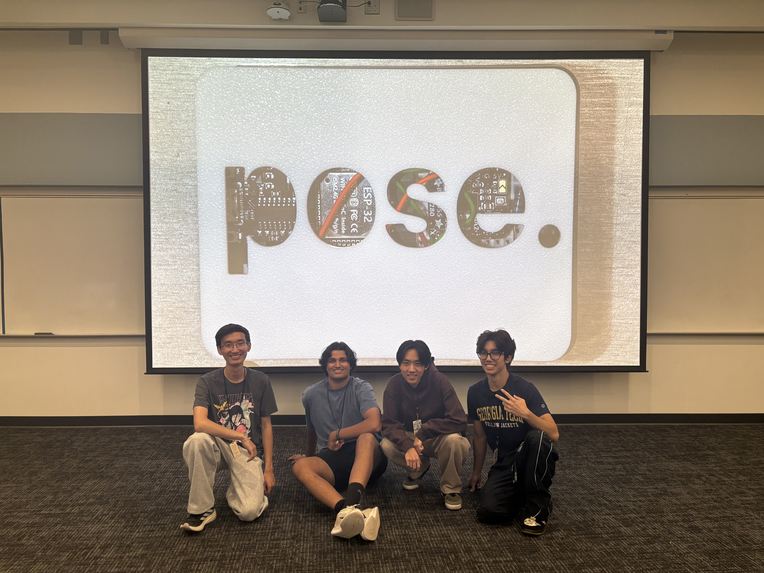
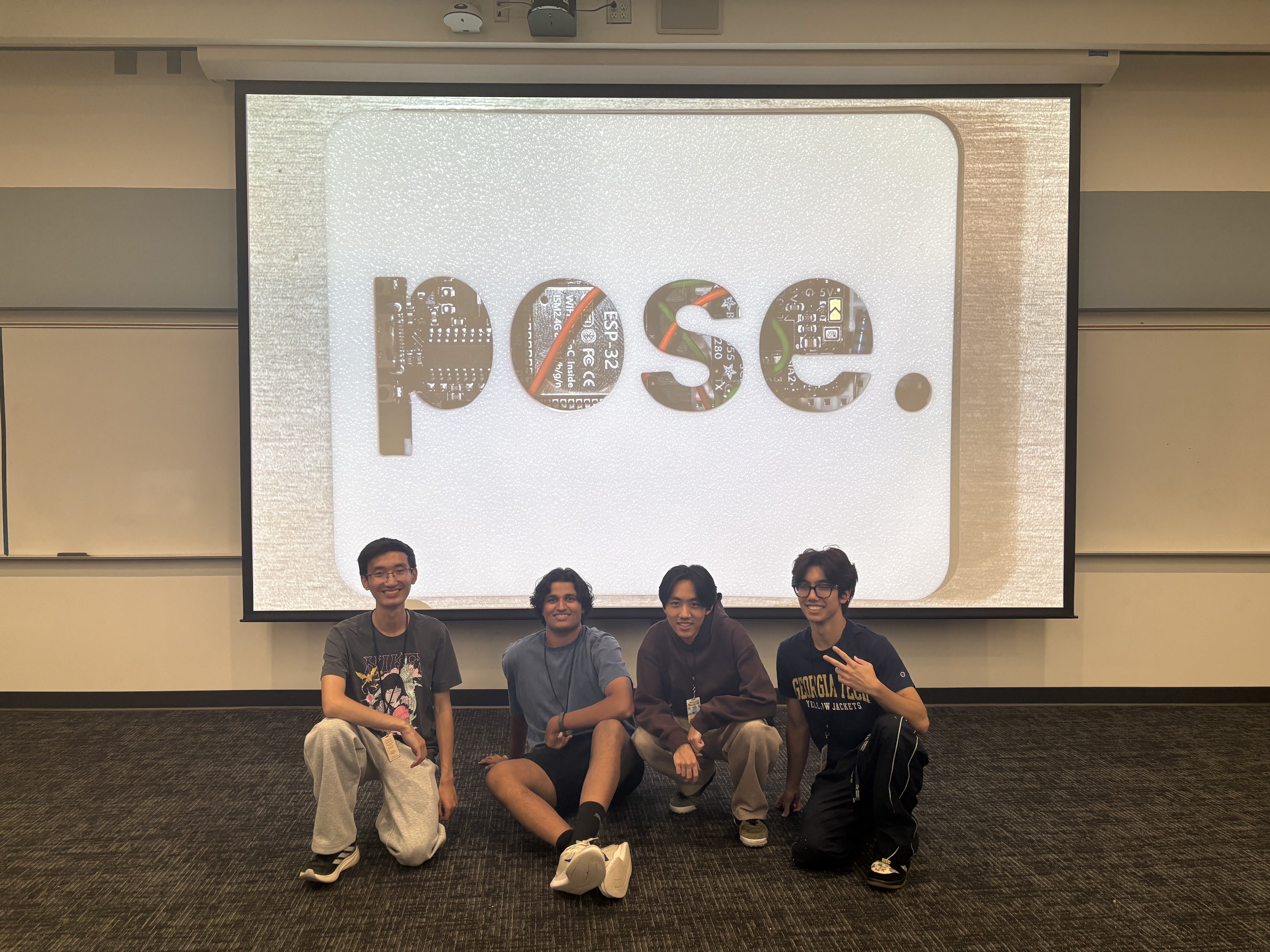
Group Photo
Inspiration
As technology students, long study sessions and late-night coding make it easy to forget how we’re sitting. We wanted to make posture awareness part of everyday desk life, with clear feedback and encouragement from friends. That idea became pose.
What it does
Pose pairs a posture-tracking wearable with a web dashboard and leaderboard. It detects sustained slouching relative to a calibrated upright baseline and displays live posture, tracked time, and slouch duration.
Users can review their history, create friend groups, and compete in weekly rankings based on the percentage of tracked time spent slouching. The most-improved member is highlighted and celebrates personal progress among a group.
How we built it
We developed firmware for an ESP32 and BNO055 sensor, keeping calibration, posture classification, and episode timing on the wearable. Bluetooth Low Energy sends calculated results to the browser.
Ruby on Rails handles accounts, saved sessions, and group rankings. Tiger Data’s PostgreSQL, hypertable, and TimescaleDB support session storage and snapshot history.
Challenges we ran into
Connecting hardware, Bluetooth, and persistent storage required careful coordination. We had to distinguish brief movement from sustained slouching, prevent repeated uploads from double-counting activity, and show when readings became stale or disconnected.
Another challenge was making the dashboard useful without overwhelming users with measurements.
Accomplishments that we're proud of
We built firmware, browser Bluetooth integration, authenticated storage, and a social dashboard around a shared data contract. We’re especially proud of combining friendly competition with recognition for individual improvement.
Automated tests cover timing, upload handling, and account isolation; physical end-to-end verification remains a next step.
What we learned
Reliable wearable experiences depend on more than sensor readings. Calibration, connection failures, data consistency, and clear feedback all shape whether users can trust what they see.
We also learned to distinguish live posture from sustained episodes and to measure progress only against recorded tracking time.
What's next for Pose
We plan to improve the form factor by refining sensor placement and testing with students during real study sessions. We also want to improve offline recovery and improve Muse integration for conversational workspace guidance.
Built With
- assembly
- bluetooth
- bno055
- claude
- codex
- esp32
- meta
- muse
- ruby
- ruby-on-rails
- tigerdb


Log in or sign up for Devpost to join the conversation.