-
-
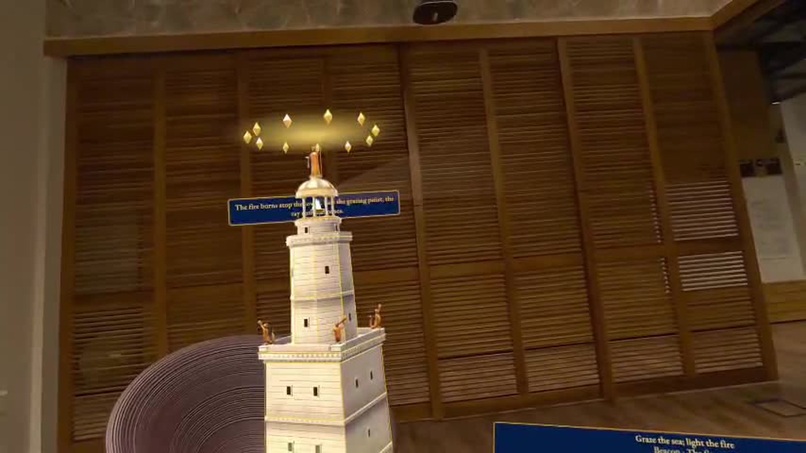
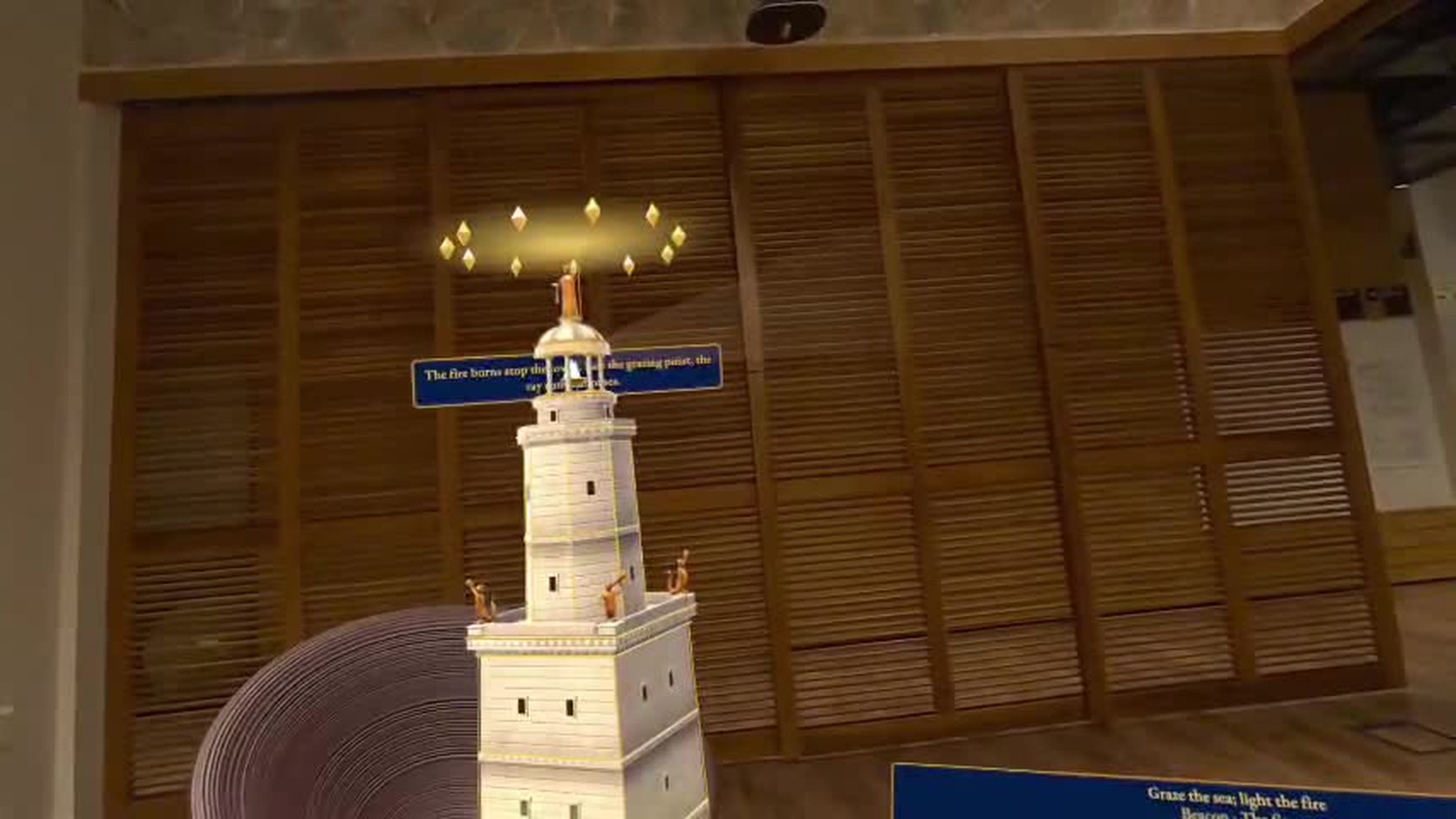
Lighthouse of Alexandria
-
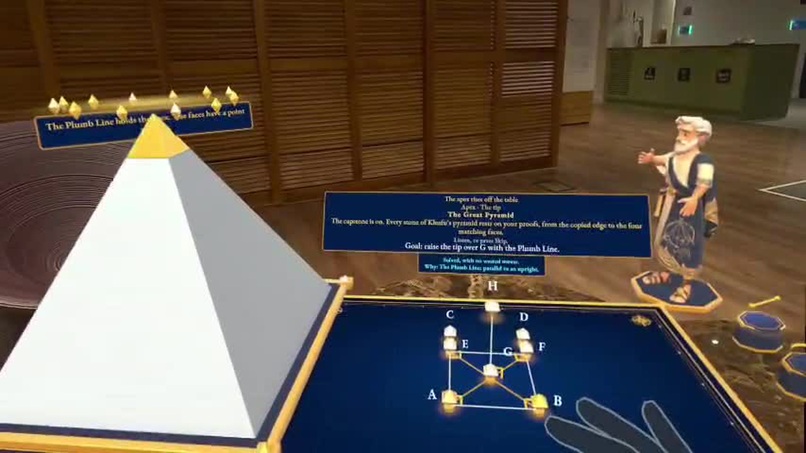
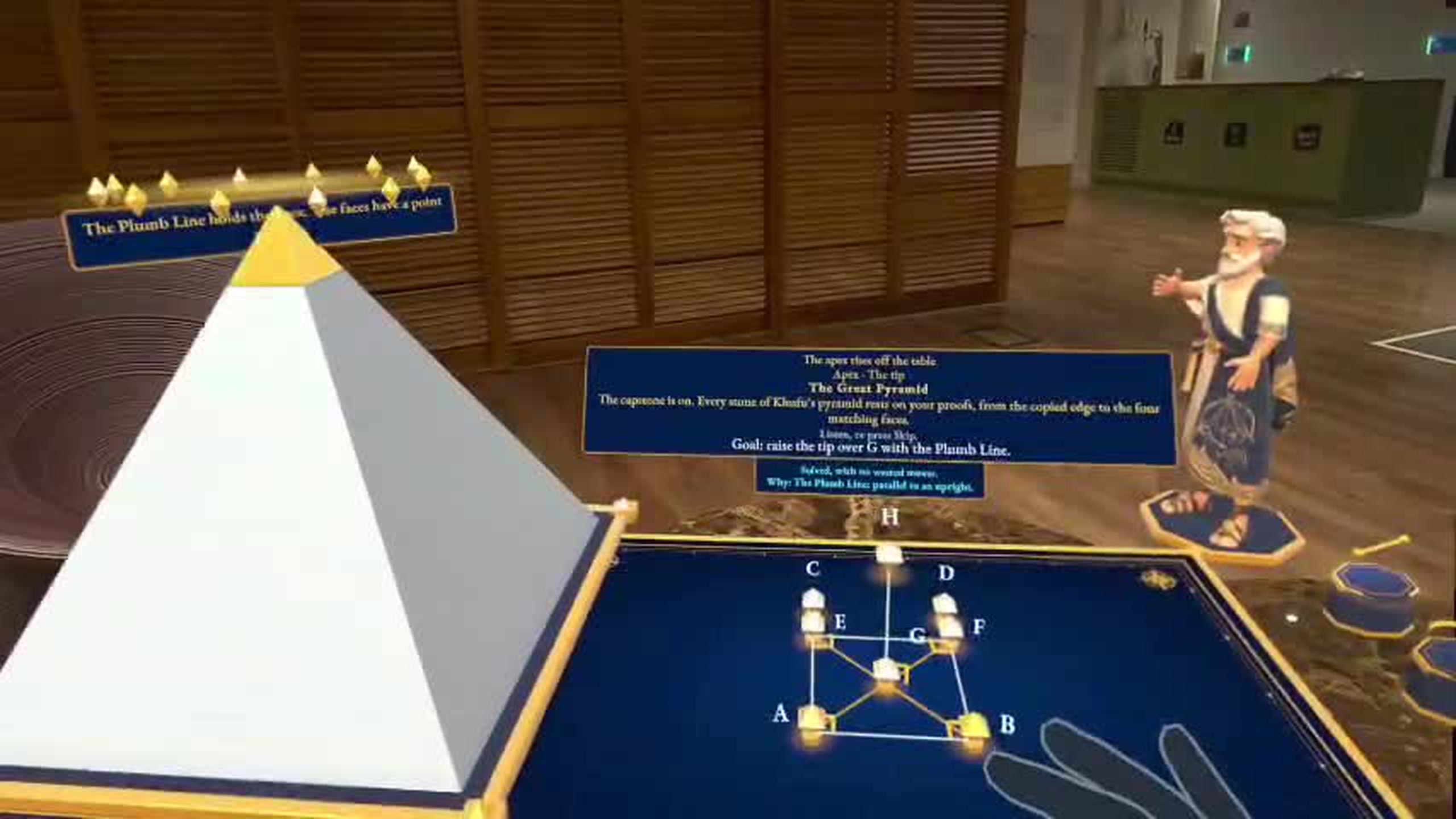
Great Pyramid of Giza
-
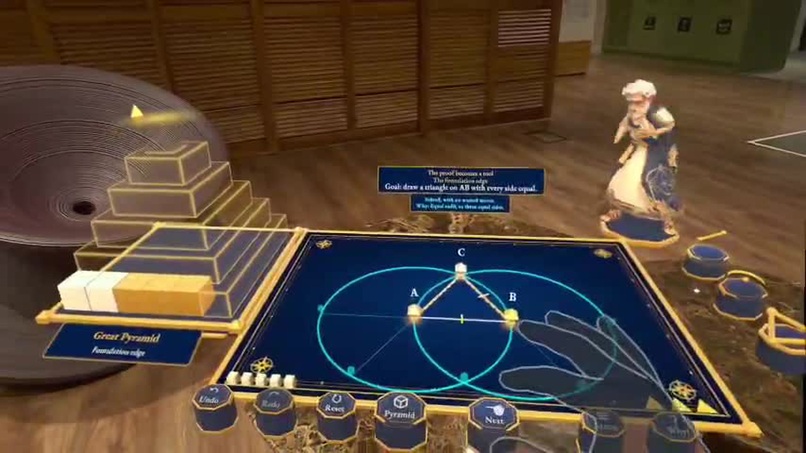
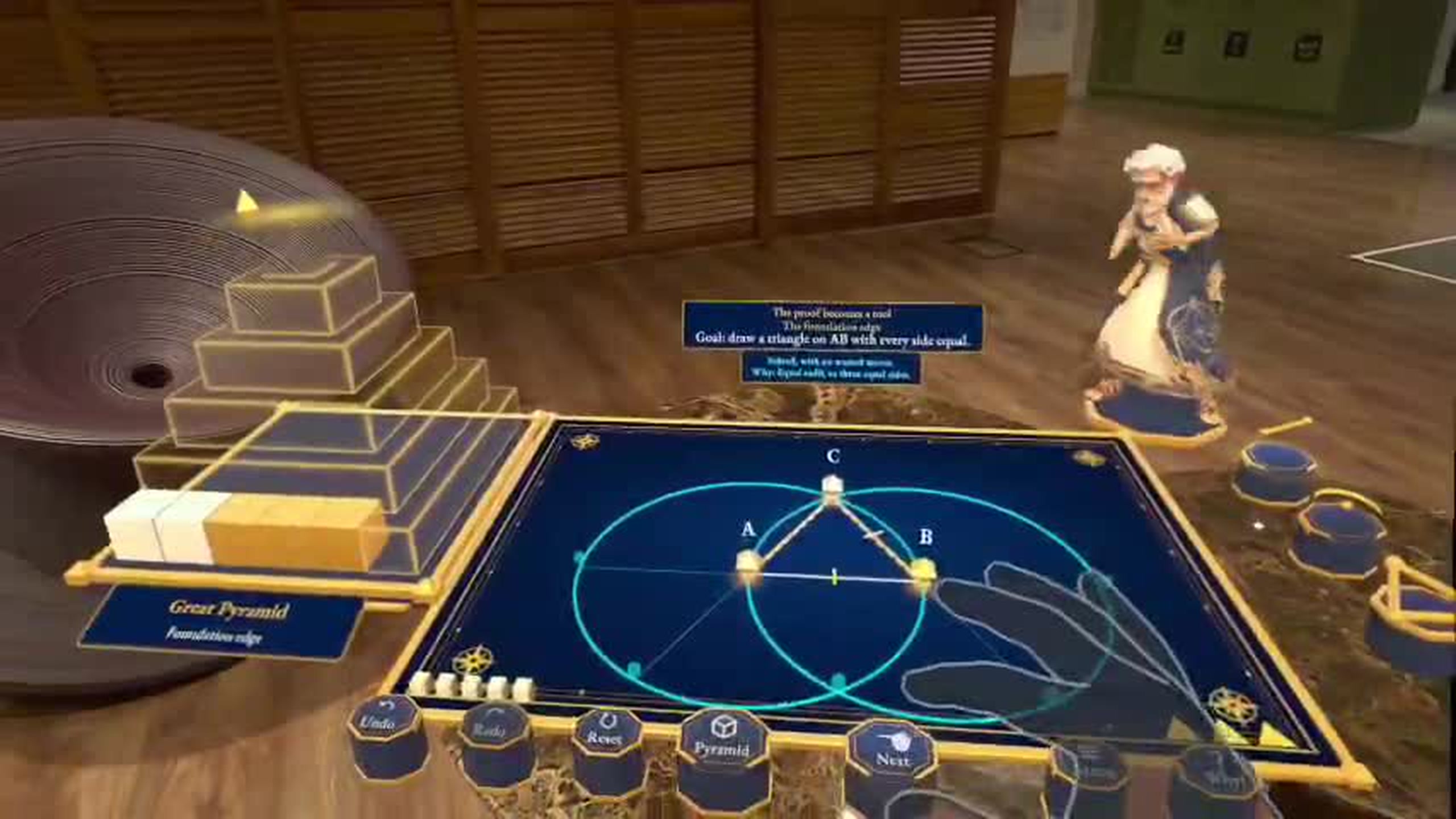
Constructing an Equilateral Triangle
-
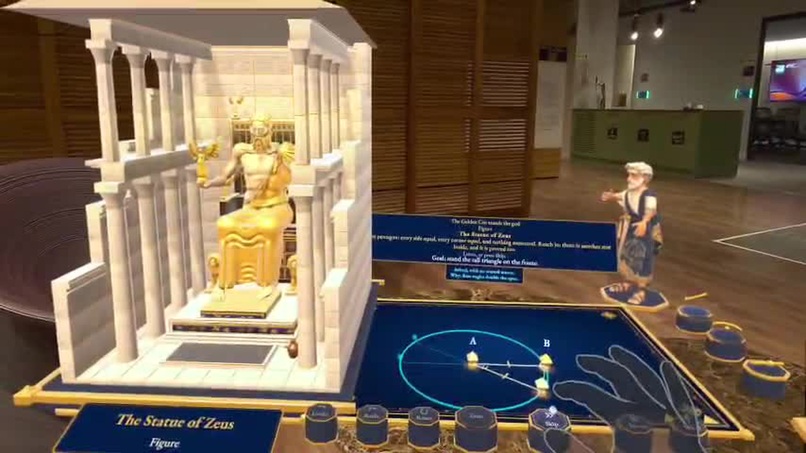
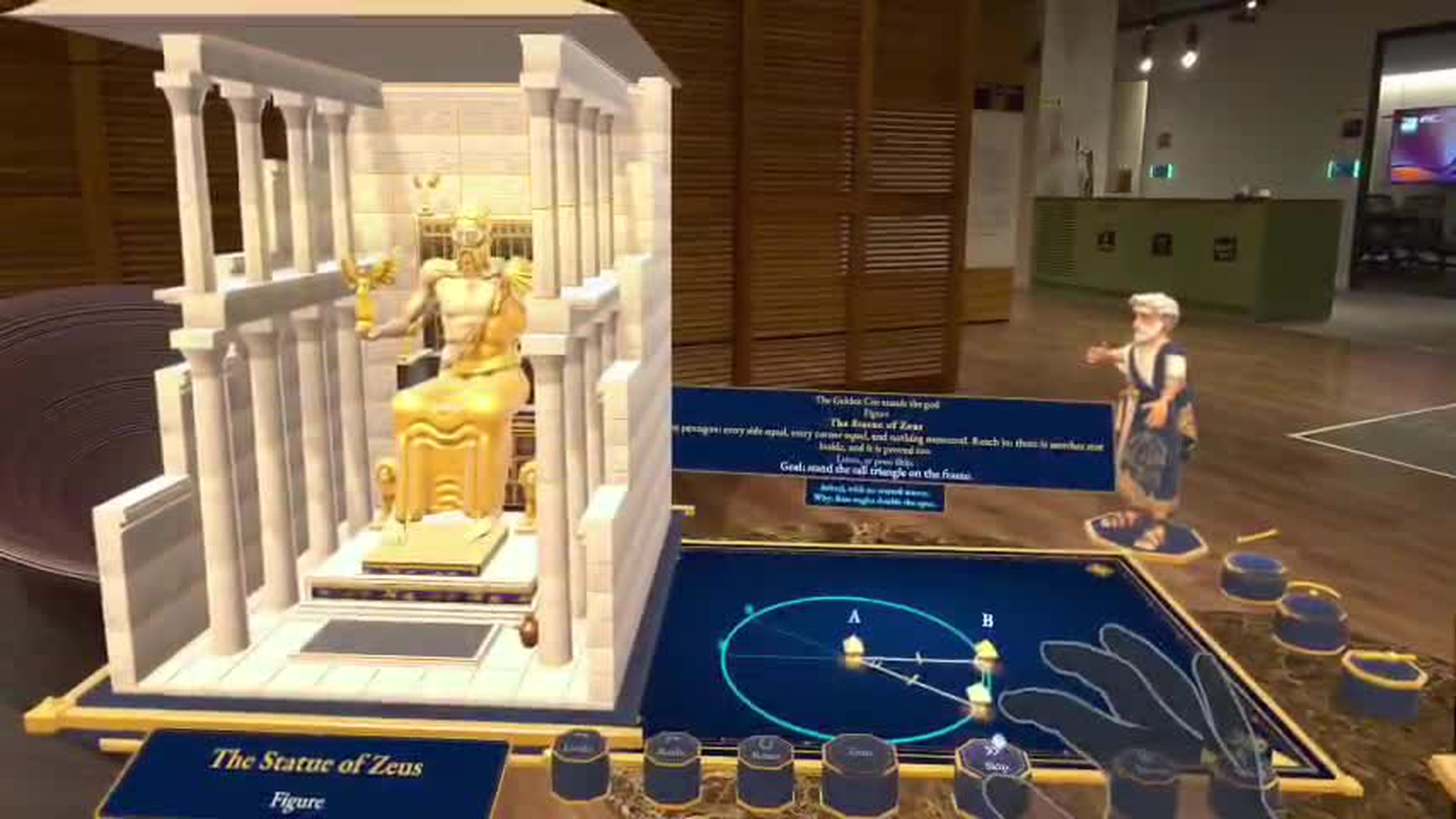
Temple of Zeuss
-
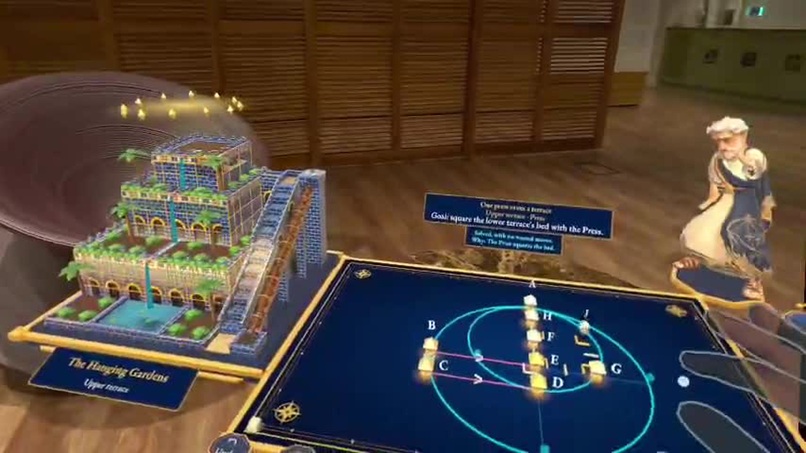
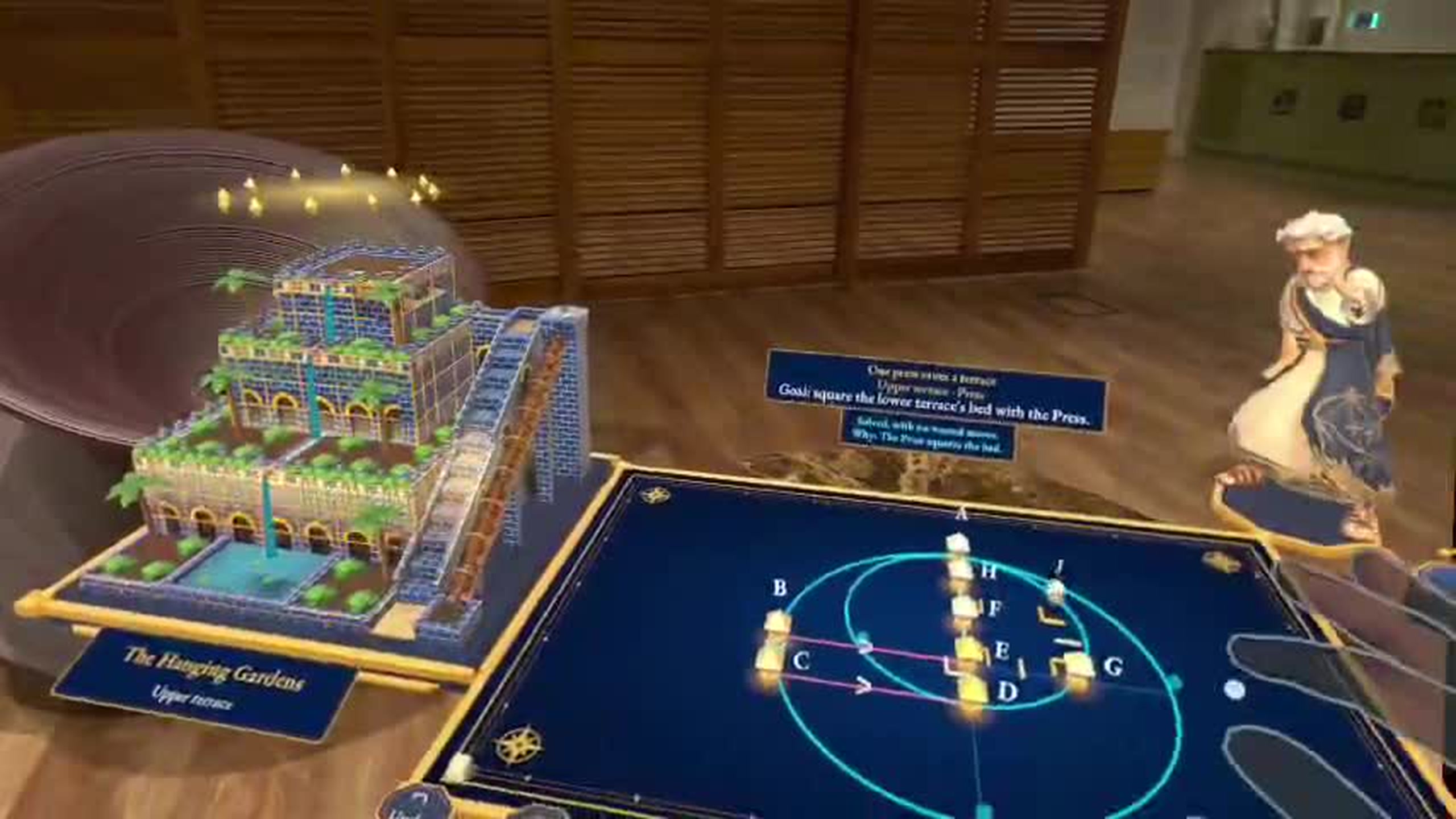
Hanging Gardens of Babylon
Inspiration
In high school, geometry was taught as a jumble of axioms, disconnected proofs and Cartesian equations. It never fully clicked. Years later, while researching a book on the foundations of mathematics, I discovered Euclid's Elements. It shaped thinkers from Archimedes and Newton to Einstein, Russell, Kant and even Abraham Lincoln. Working through its constructions myself, I was amazed by how much can be built from a handful of postulates. For the first time I understood how beautiful mathematics could be, and I felt cheated that I'd never experienced it this way in school.
I want players to rediscover what people achieved for thousands of years with a straightedge, a compass and careful reasoning.
What it does
Postulate is a seated, hands-first mixed-reality puzzle game. You begin with a peg and a cord on your own table, discover Euclid's constructions with your hands, and forge each one you prove into a tool. With those tools you rebuild the Seven Wonders of the Ancient World as miniatures that rise on your table.
This is not a homework simulator.
Three rules shape the design:
- No numbers, only relations. Nothing is measured; everything is constructed.
- Every tool is a theorem you proved. A proof doesn't end with the puzzle; it becomes an instrument you use later.
- The tutorial is the game. Controls appear one at a time, when you first need them, inside the first six puzzles.
Three difficulty modes let you choose how much help you get: Guided, Assisted (hints with a short wait) and Independent (no solution hints).
How we built it
Postulate is built in Unity for Meta Quest 3, using hand tracking, passthrough, depth sensing that finds your real table, spatial anchors that keep the workbench where you left it, and a layout tested against several field-of-view profiles.
Underneath is a proof checker I wrote in C#. It checks how a figure was constructed, never how it looks. Two lines aren't equal because they appear to match; they're equal because the construction proves it. About a hundred of Euclid's propositions, across Books I–VI and XI, are proved inside the game, backed by more than a thousand automated tests.
I built it as one developer working with AI coding agents (GitHub Copilot and Meta's developer tools). To keep the quality bar high:
- the proof checker is a separate, trusted component that every proof must pass;
- simulated hands play every Wonder at three levels of hand steadiness before it ships;
- AI reviewers critique every puzzle, with planted mistakes to check that they catch real problems;
- real play sessions on the headset are logged and analysed.
Challenges we ran into
Making the mathematics rigorous without turning it into chocolate covered broccoli . Two circles that look like they cross still need a reason the crossing exists.
Hands shake and tracking isn't perfect. The geometry has to be exact while the interaction stays forgiving.
Accomplishments that we're proud of
- 146 puzzles across all seven Wonders, from the Great Pyramid to the Colossus of Rhodes, ending in a campaign celebration.
- The Tour: a complete taste of the game in under five minutes.
- Measured iteration from real playtests:
- stalls over 150 ms went from 400 in one session to none in our headset performance runs, at a steady 72 Hz.
What we learned
A mathematically correct puzzle isn't necessarily a good game puzzle. And explanation must leave room to think: a short prompt and a useful response beat a speech.
What's next for Postulate
- More testing: more headset playtests with first-time players, and classroom trials.
- A narrated guide: a guide who feels like a master craftsman sharing your workbench.
- Release: we're targeting the Meta Horizon Store in 2027, followed by more future eras (Renaissance wonders for Projective Geometry, The Age of Reason for Cartesian coordinates, The Second Industrial Revolution for Non Euclidean Geometry).
Built With
- huggingface
- mcp
- unity
