Inspiration
As a team of developers and mental health advocates, we saw the gap in accessible, non-clinical support for new mothers navigating postpartum mental health. Many struggle to track emotional changes or access local resources—we wanted to create a tool that meets them where they are, with warmth and practicality.
What it does
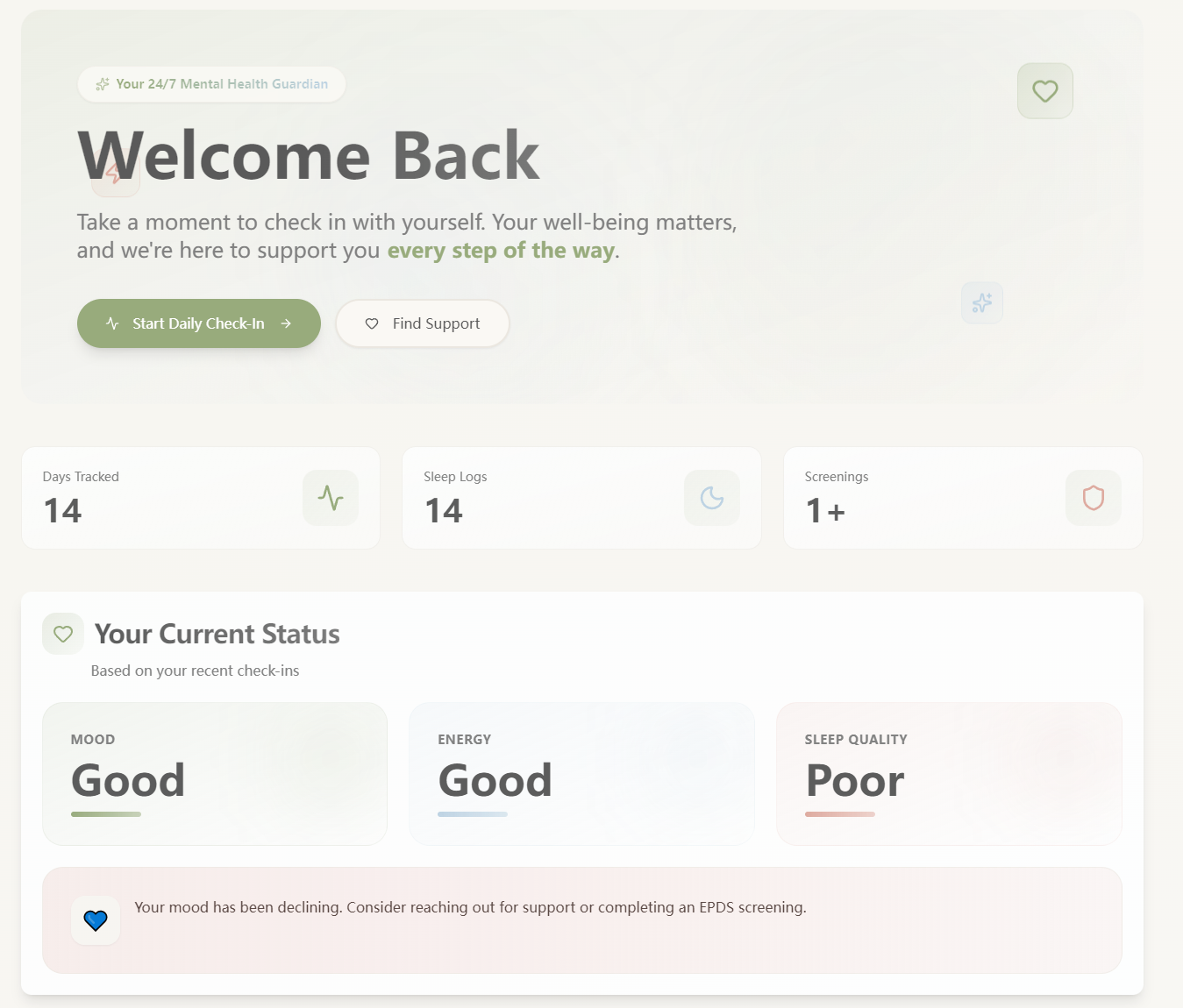
PostpartumWell lets new moms complete 2-minute daily mood check-ins, take validated EPDS screenings for depression/anxiety, track sleep patterns, and share simplified updates with partners. It connects users to licensed local therapists, support groups, and hotlines, with tiered access to AI-driven insights and long-term trend analysis.
How we built it
We combined ReactNative for cross-platform mobile development with Firebase for real-time data storage and AWS for AI model hosting. We integrated GoogleMapsAPI for geolocation filtering and StripeAPI for subscription management, prioritizing a tap-based, low-cognitive-load interface for tired users.
Challenges we ran into
Balancing clinical accuracy (EPDS scoring) with compassionate, non-alarmist messaging was tough—we worked with mental health professionals to avoid stigmatizing language. Ensuring privacy for partner access also required robust permission controls, and geolocation edge cases (sparse rural resources) demanded creative fallback to national hotlines.
Accomplishments that we're proud of
We created a tool that’s both clinically valid and emotionally supportive—users complete check-ins in under 2 minutes, and the AI accurately identifies risk trends without overwhelming moms. We also built a privacy-first partner access system that keeps sensitive data secure while fostering connection.
What we learned
We deepened our understanding of postpartum mental health disparities and the critical role of "gentle design"—reminders that don’t guilt, language that doesn’t alarm, and interfaces that work at 2 AM. We also learned to center user trust: every feature was tested with new mothers to ensure it felt helpful, not intrusive.
What's next for this project
We plan to expand language support, explore integration with telehealth platforms for virtual care connections, and refine the AI to identify more nuanced mood-sleep triggers. We’re also working on partnerships with postpartum support organizations to expand resource listings and make premium features accessible to low-income users via subsidies.

Log in or sign up for Devpost to join the conversation.