-
-
TITLE
-
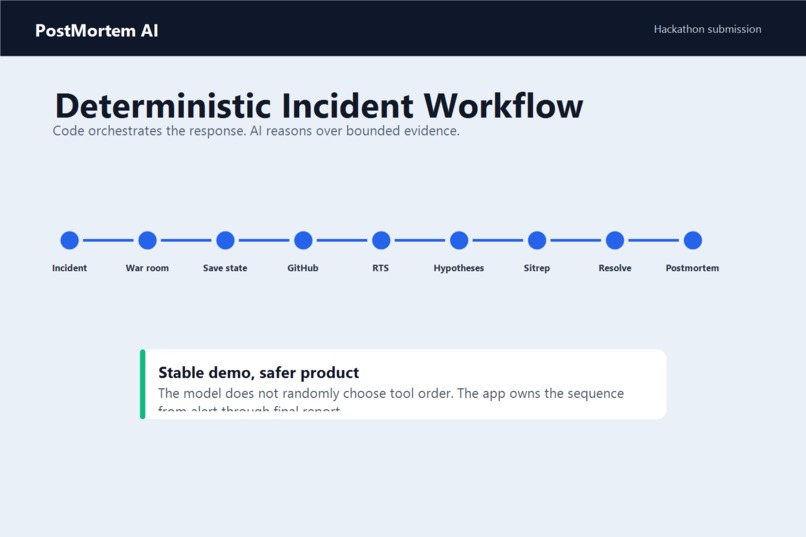
WORKFLOW
-
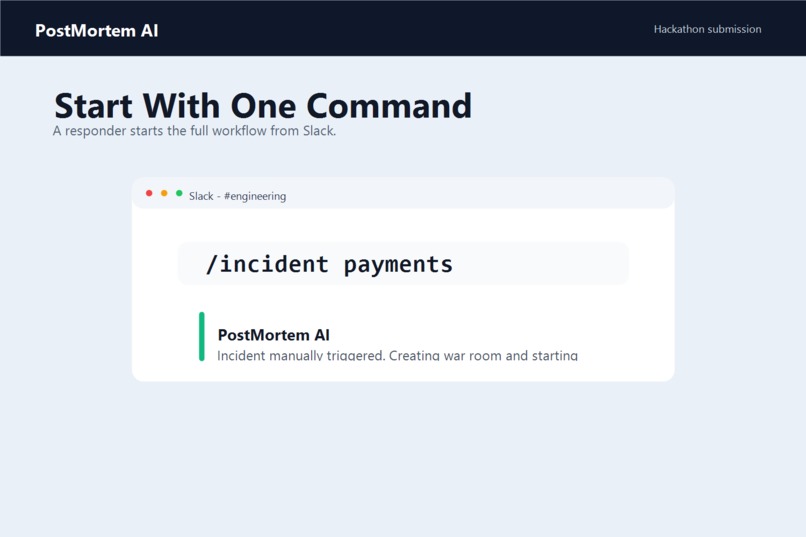
COMMAND
-
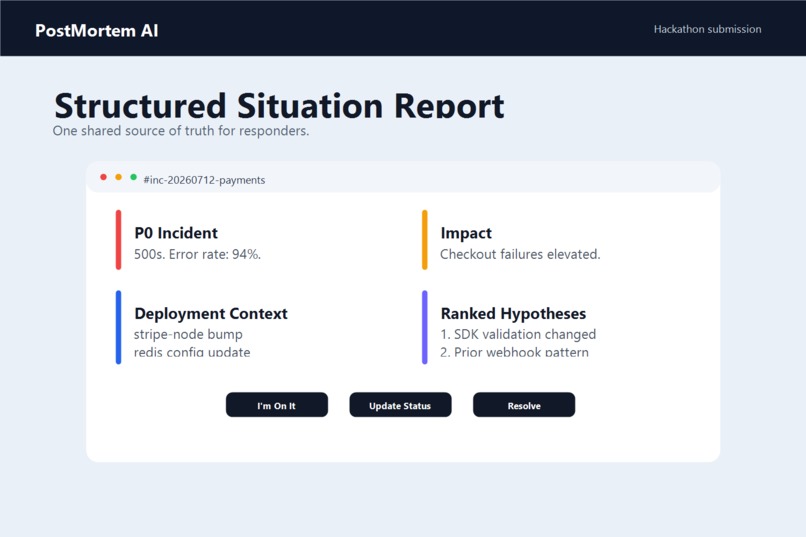
SITREP
-
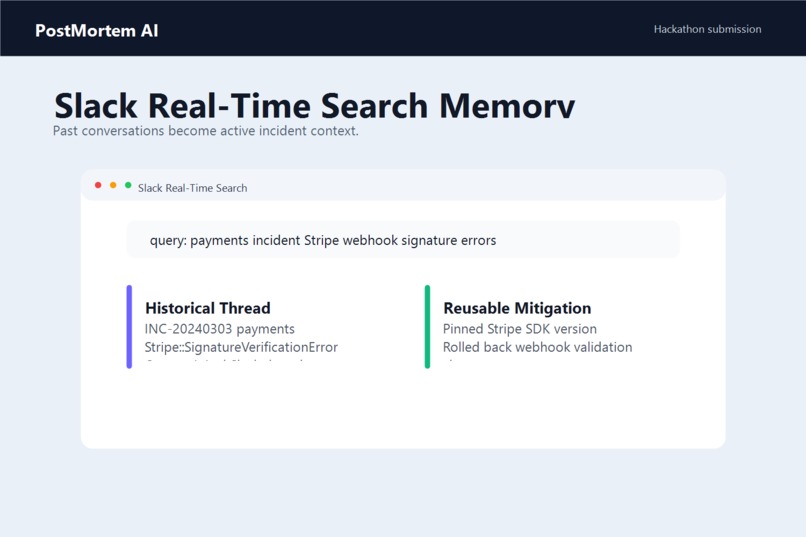
RTS MEMORY
-
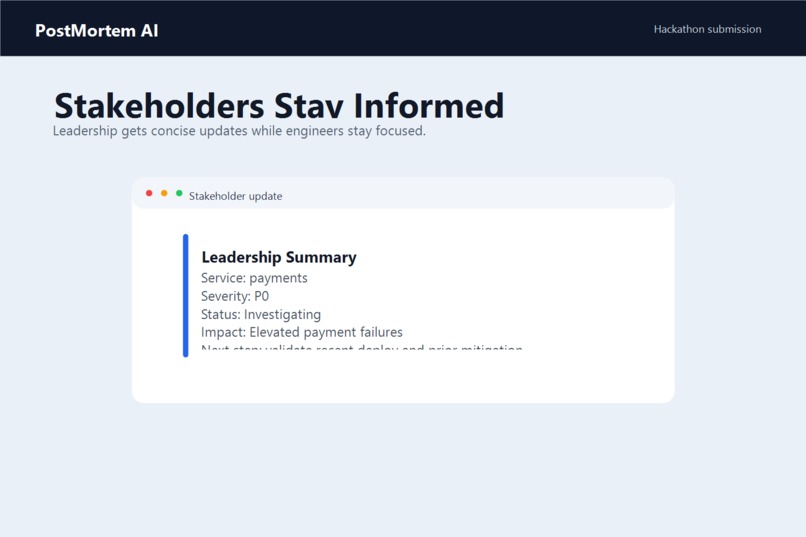
STAKEHOLDER
-
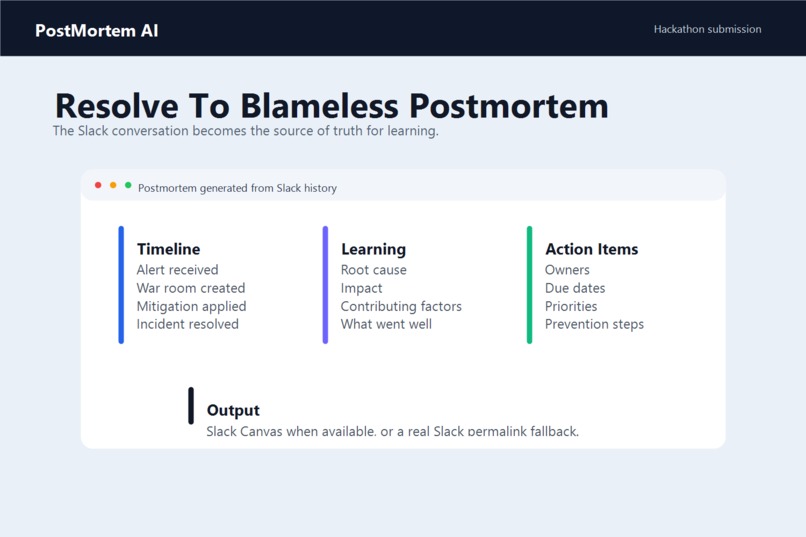
POSTMORTEM
-
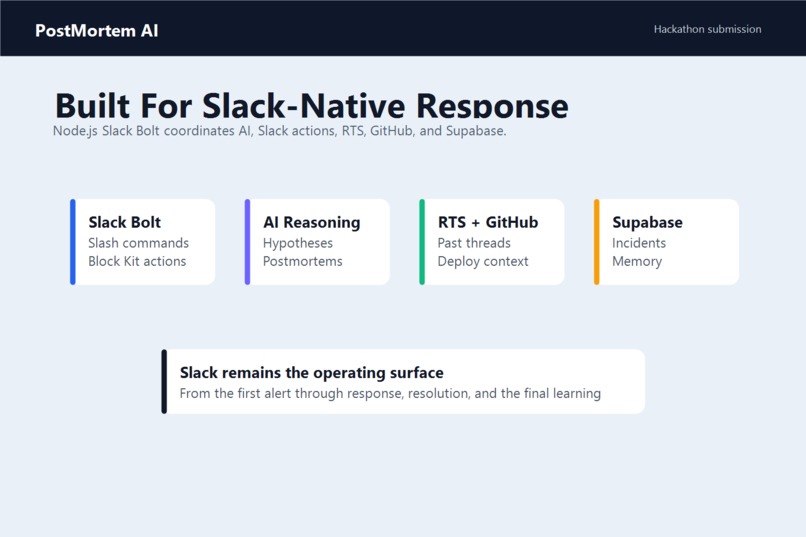
ARCHITURE
About PostMortem AI
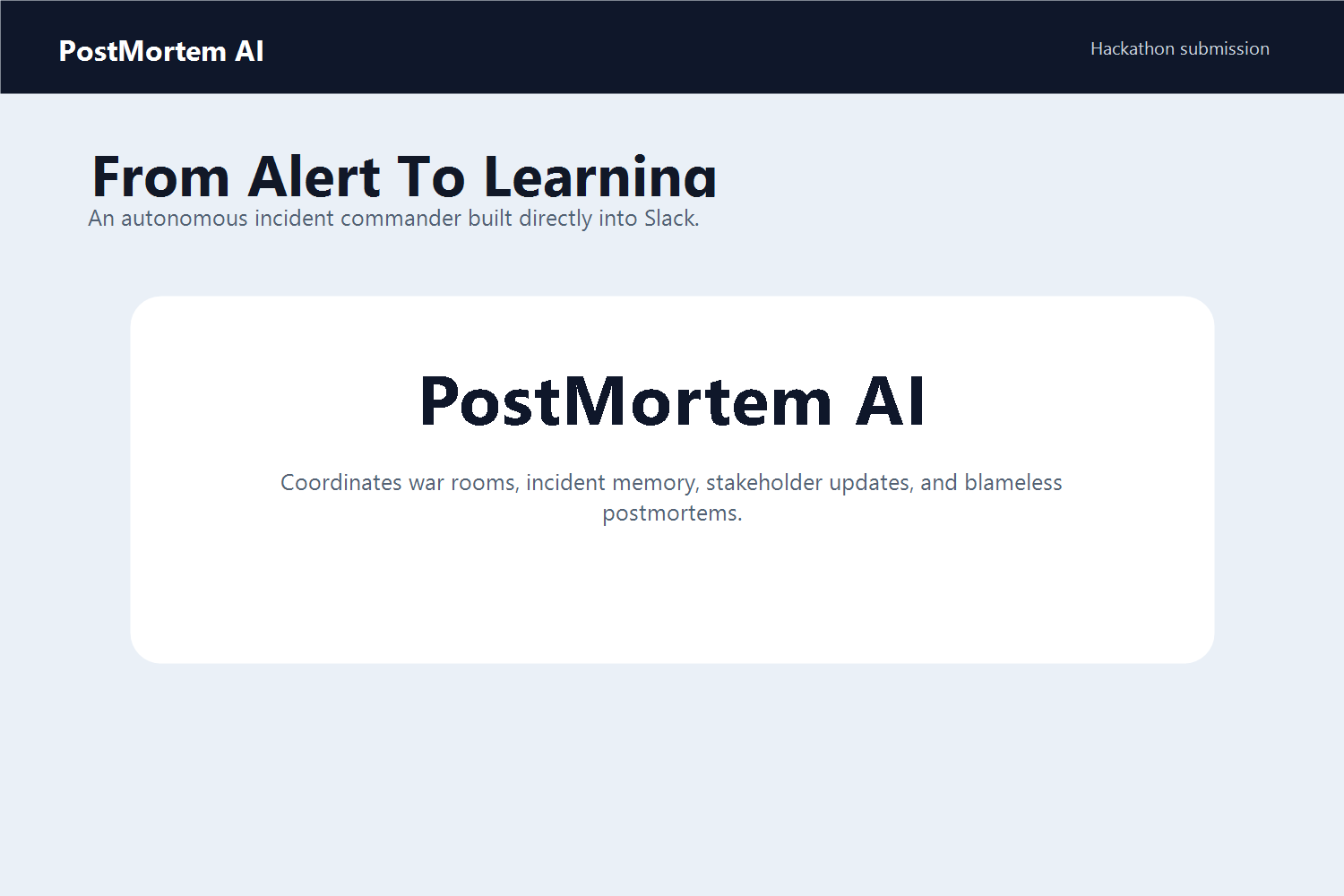
PostMortem AI was inspired by a familiar incident-response problem: when production breaks, engineers often spend the first critical minutes doing coordination work instead of recovery work. Someone has to create the Slack channel, summarize the alert, search old conversations, update stakeholders, track hypotheses, and later reconstruct everything into a postmortem.
We built PostMortem AI to make Slack the operating surface for the full incident lifecycle: from alert, to response, to learning.
What It Does
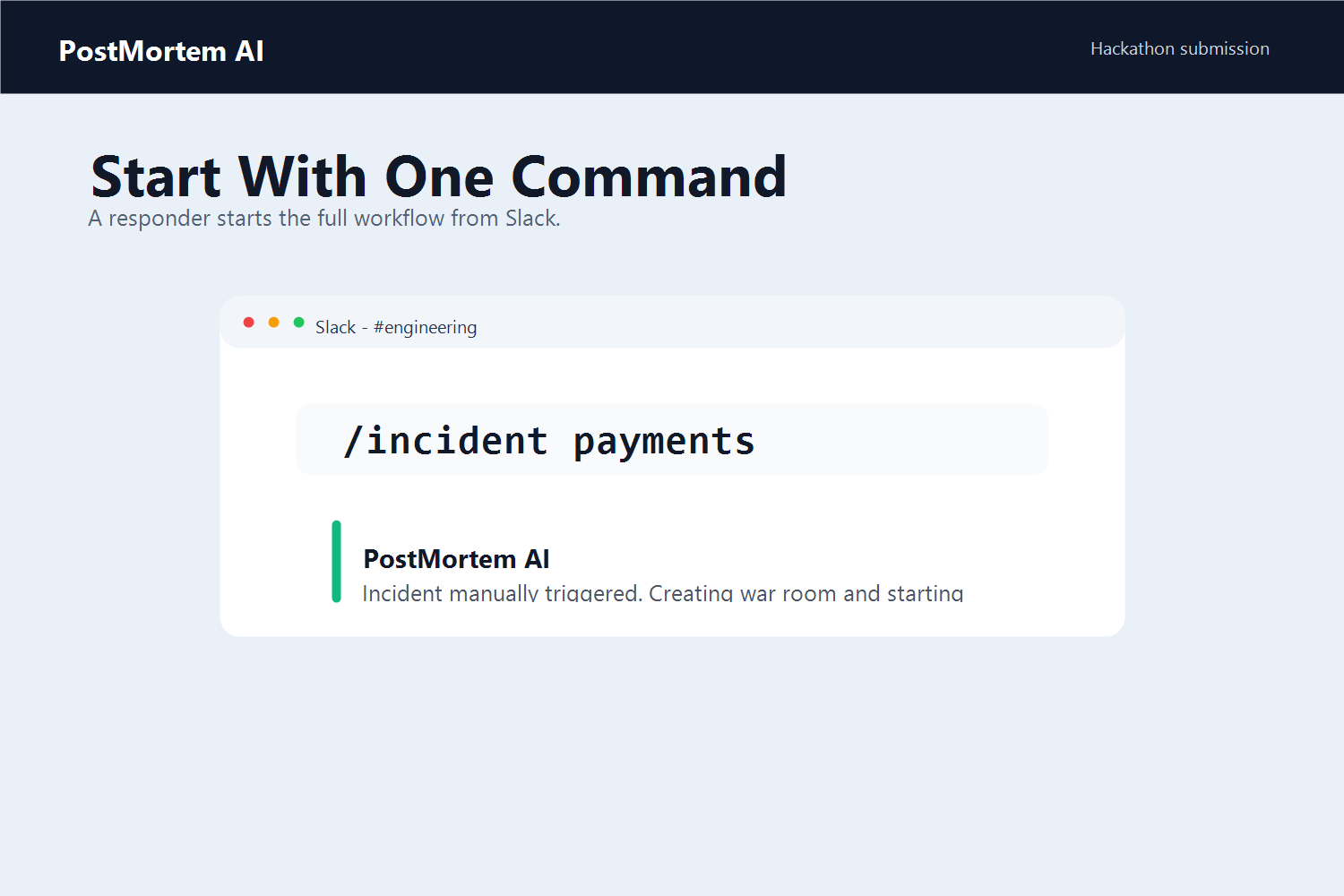
PostMortem AI is an autonomous incident commander inside Slack. A responder can run:
/incident payments
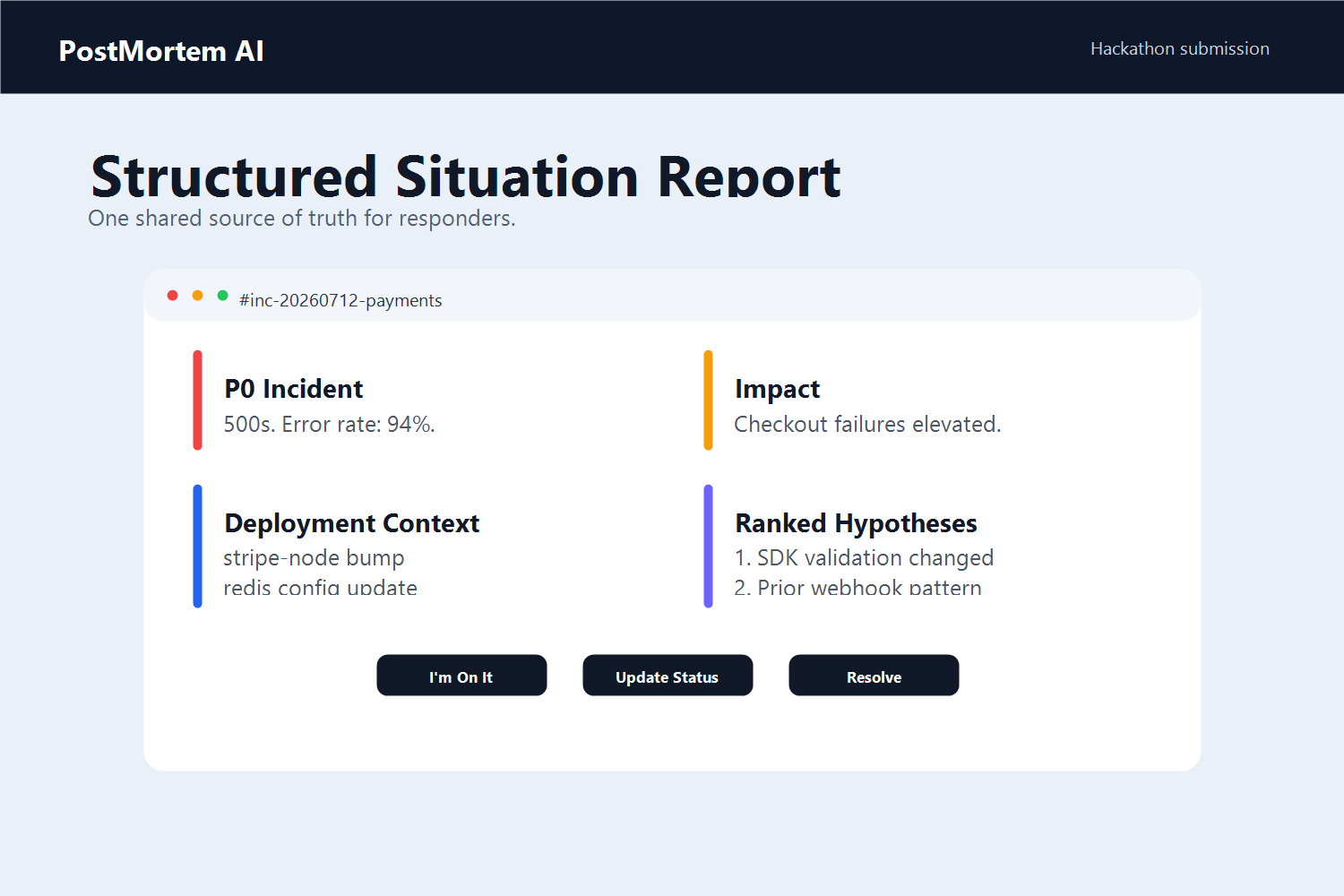
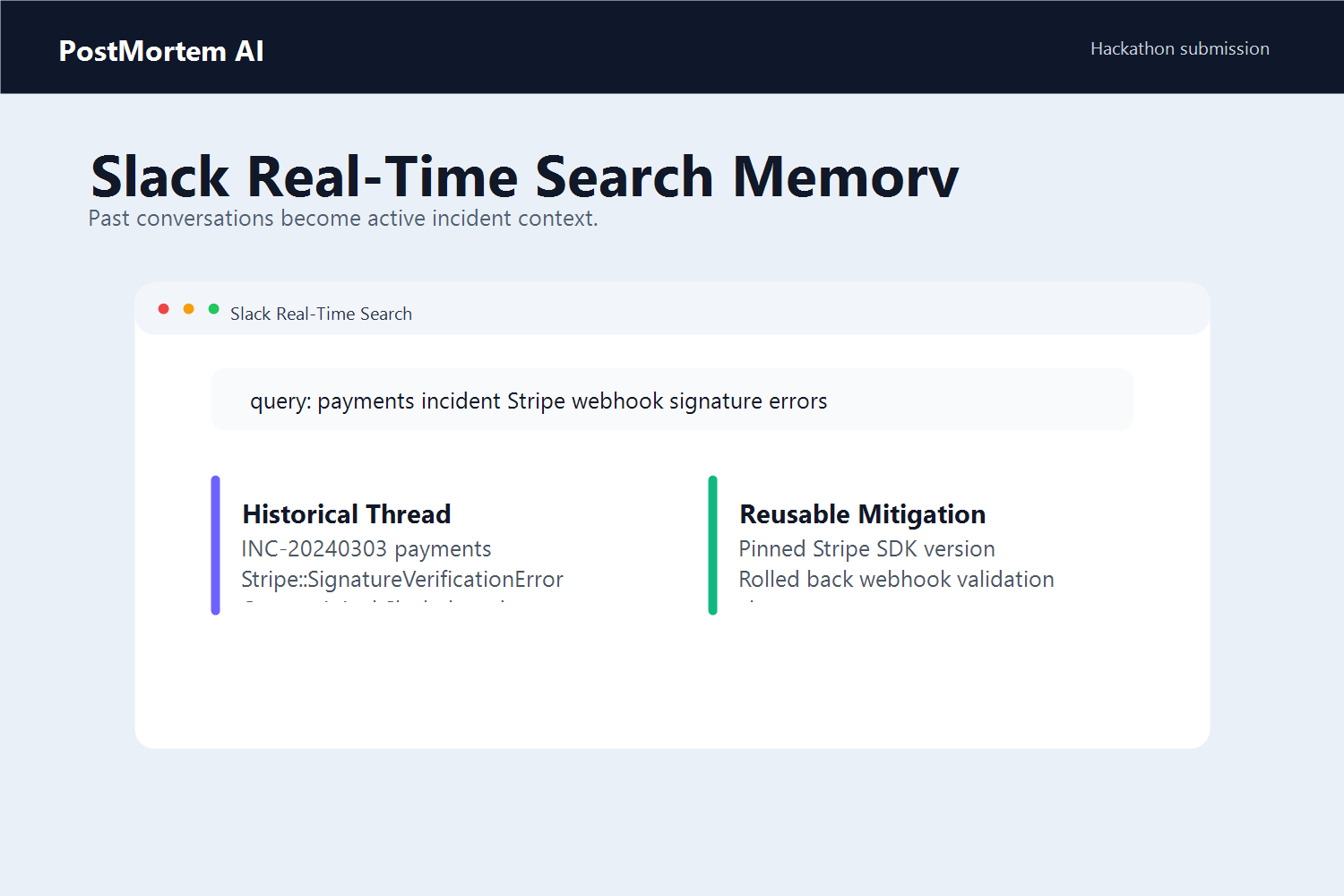
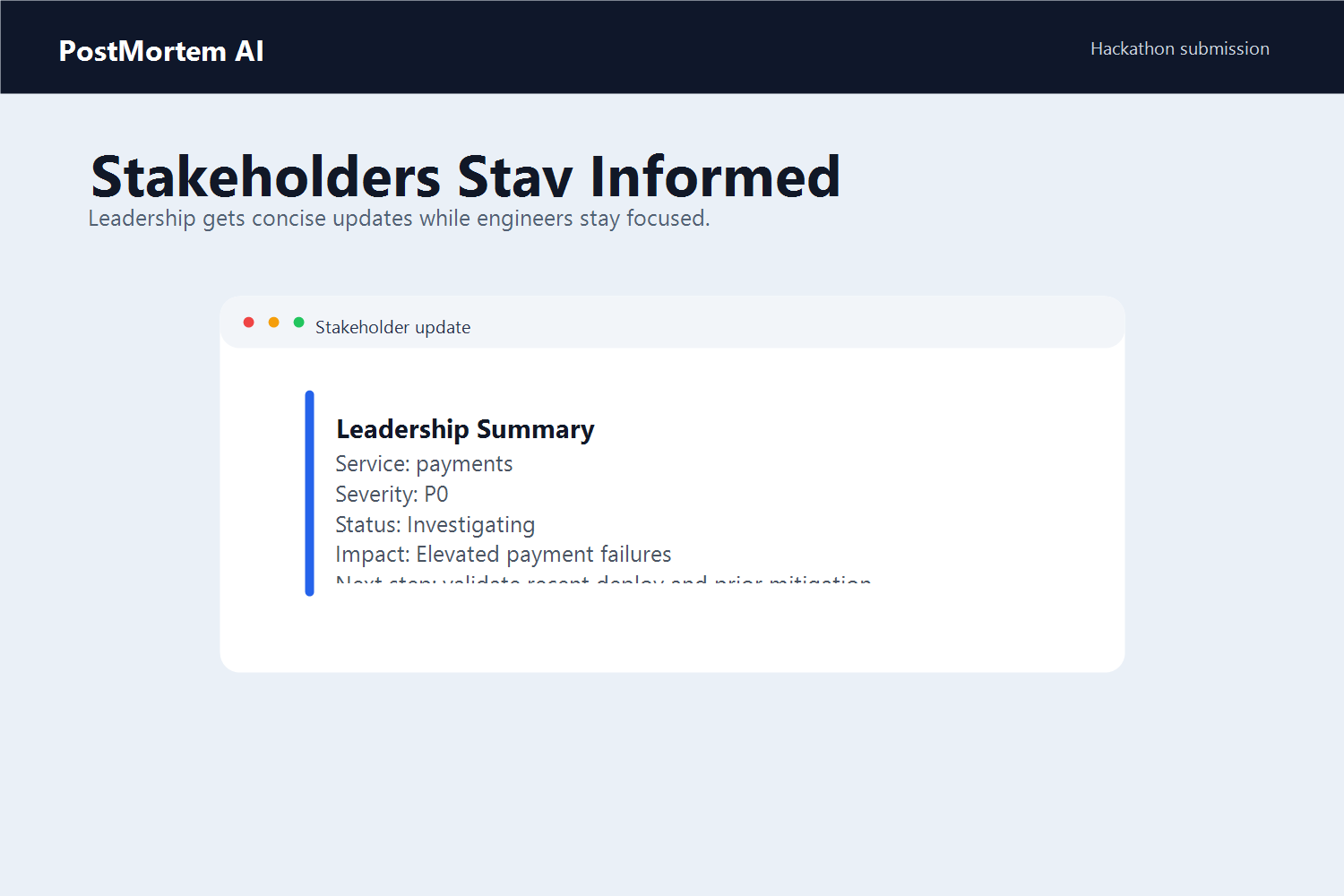
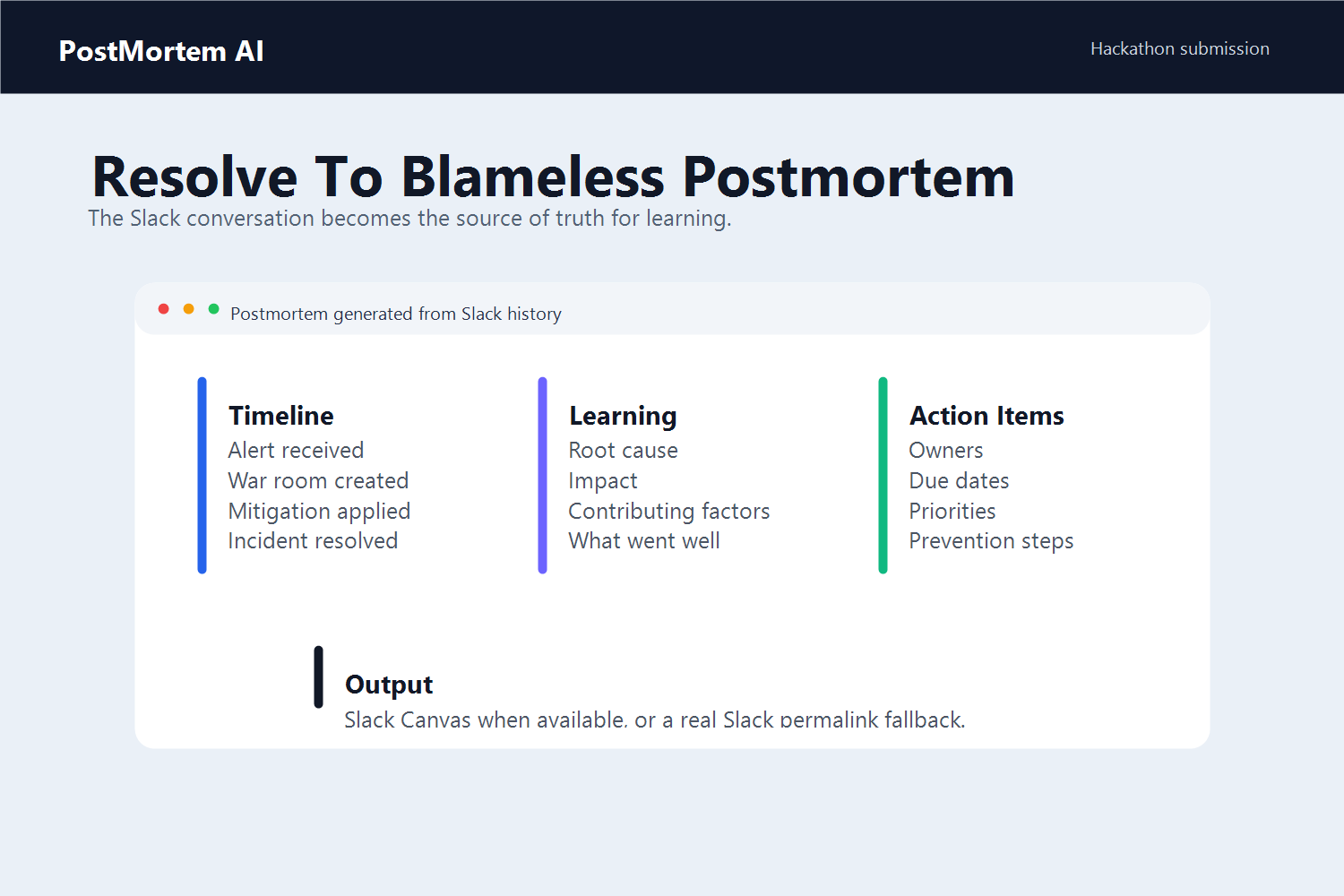
The app then creates a war room, posts a structured situation report, pulls in GitHub deployment context, searches related historical incidents through Slack Real-Time Search, sends stakeholder updates, and generates a blameless postmortem when the incident is resolved.
The key idea is:
$$ \text{Incident Response} = \text{Coordination} + \text{Context} + \text{Learning} $$
PostMortem AI automates the repetitive coordination so engineers can focus on fixing the system.
How We Built It
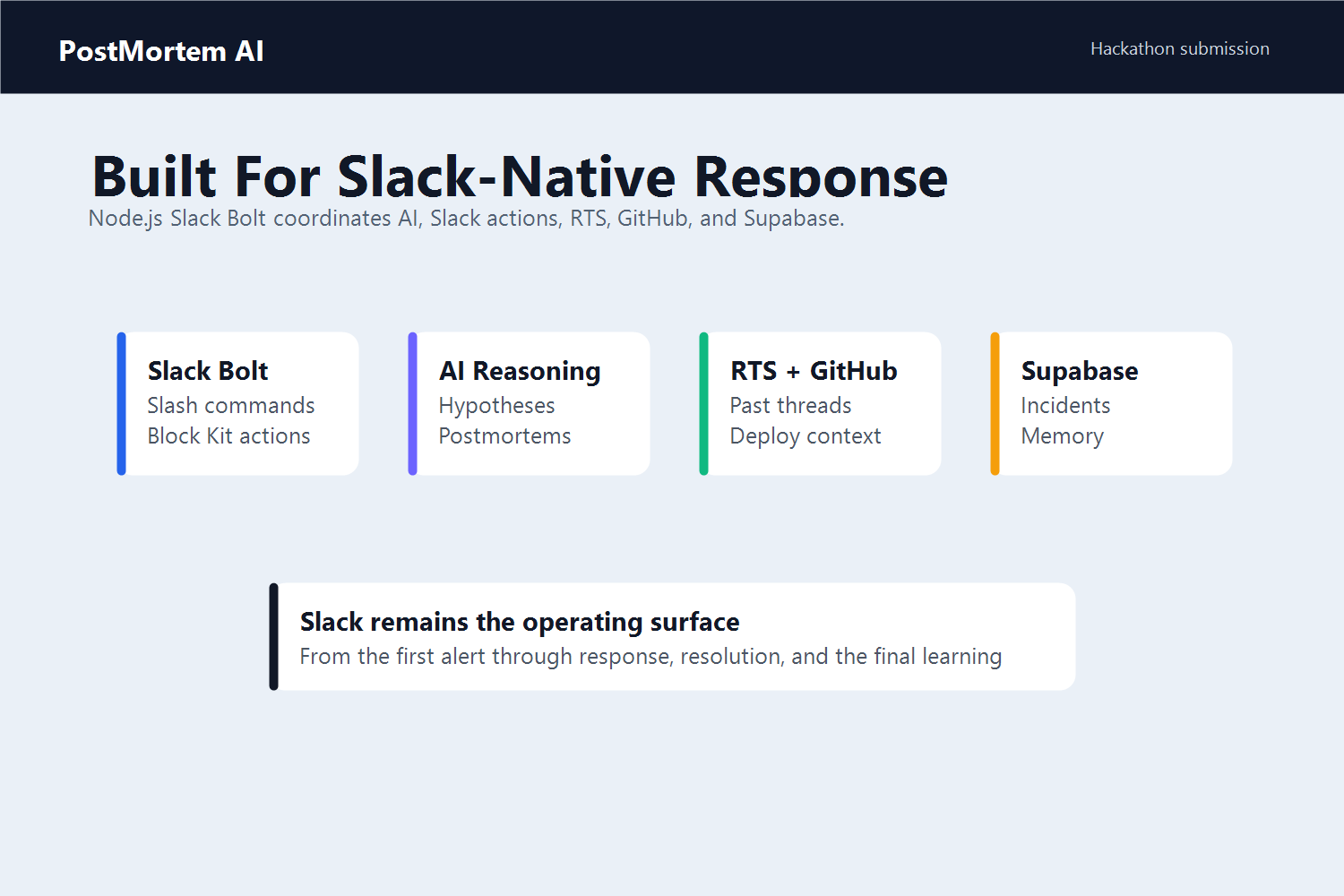
We built the project with a Node.js Slack Bolt application. The backend coordinates Slack slash commands, Block Kit actions, GitHub context, Supabase incident memory, Slack Real-Time Search, and AI-generated summaries.
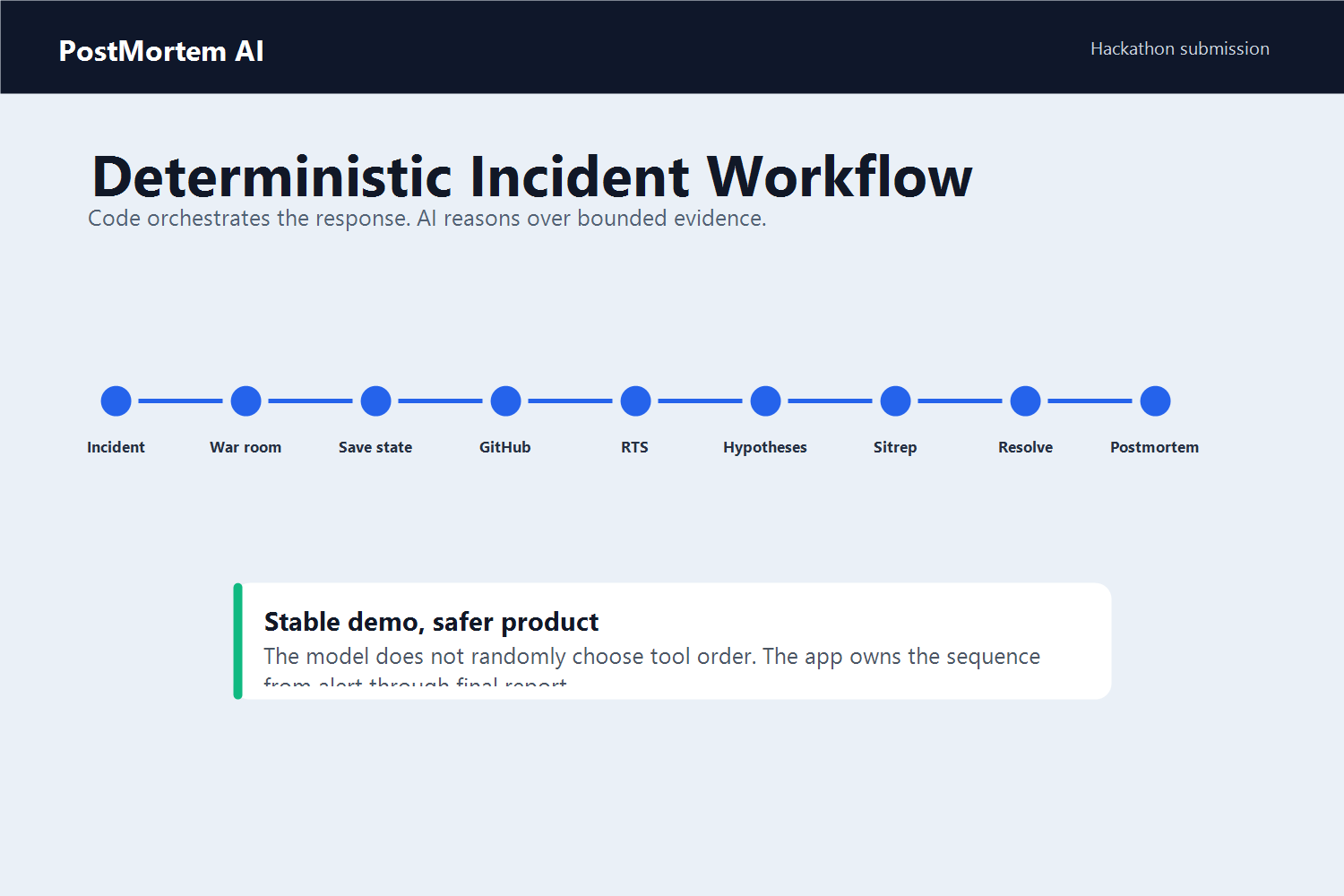
The architecture is intentionally deterministic. The AI reasons over evidence, but the code controls the workflow order:
- Create incident
- Create war room
- Save incident state
- Fetch GitHub context
- Search past incidents
- Generate hypotheses
- Post the sitrep
- Notify stakeholders
- Resolve incident
- Generate postmortem
This keeps the demo stable and makes the product safer for real incident response.
What We Learned
We learned that AI agents are strongest when they are bounded by reliable product workflows. Instead of letting the model randomly decide which tools to call, we made the application orchestrate the response and used AI for judgment-heavy tasks like hypotheses, summaries, and postmortems.
We also learned how important institutional memory is during incidents. Old Slack threads often contain the fastest path to mitigation, but they are rarely easy to find under pressure. Slack Real-Time Search made it possible to turn past conversations into active incident memory.
Challenges
The hardest challenge was balancing autonomy with trust. Incident response needs speed, but it also needs predictable behavior. We solved this by making the system deterministic, adding graceful fallbacks, and ensuring every Slack button and command responds clearly.
Another challenge was demo realism. Demo mode had to behave like production without pretending external systems were actually called. We mocked only external dependencies like GitHub, Slack search, Supabase, and stakeholder delivery, while keeping the Slack workflow identical.
Why It Matters
PostMortem AI does not replace engineers. It removes repetitive coordination, makes institutional knowledge reusable, and helps teams learn from incidents while the context is still fresh.
From alert, to response, to learning, PostMortem AI keeps the entire incident lifecycle inside Slack.
Built With
- agents
- devops
- express.js
- github
- javascript
- node.js
- octokit
- postgresql
- supabase
- vitest
- webhooks

Log in or sign up for Devpost to join the conversation.