-
-
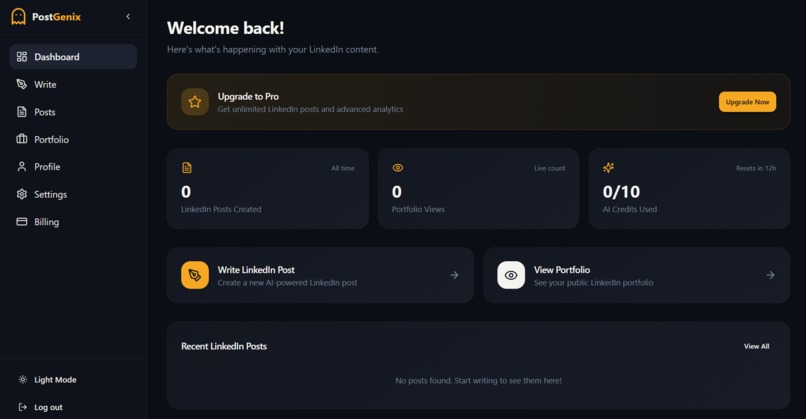
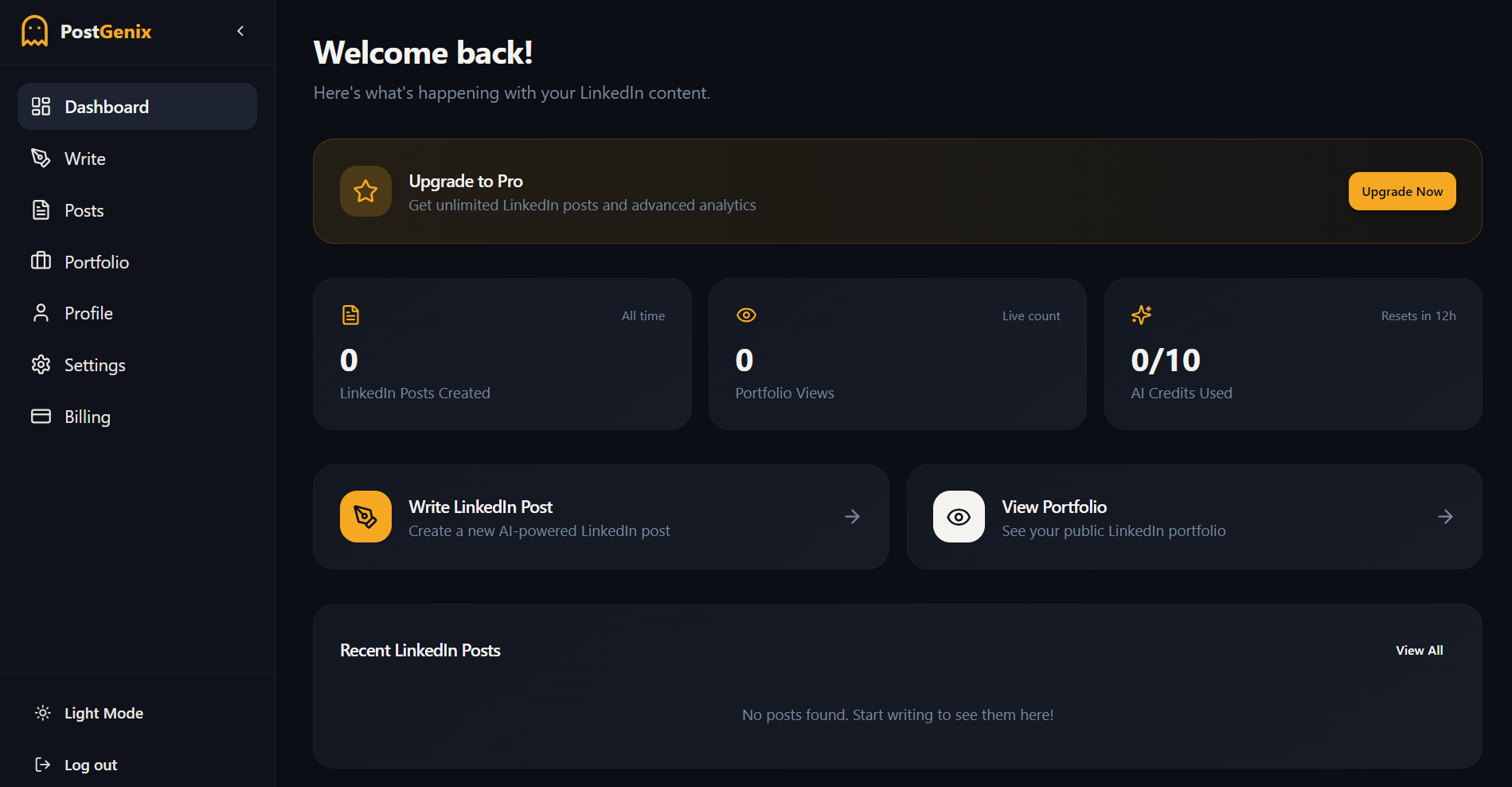
Dashboard
-
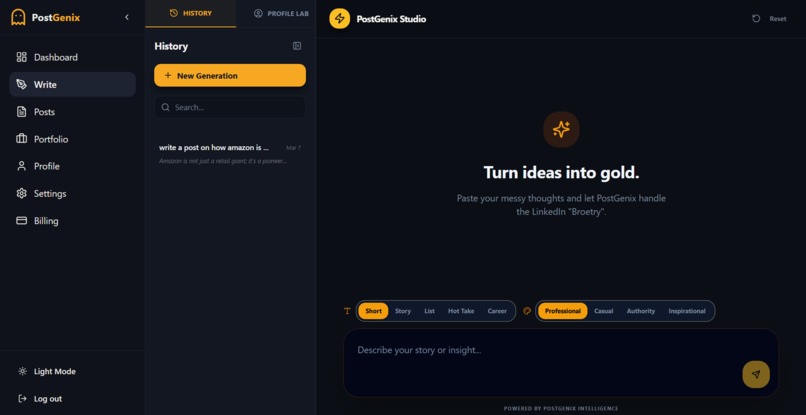
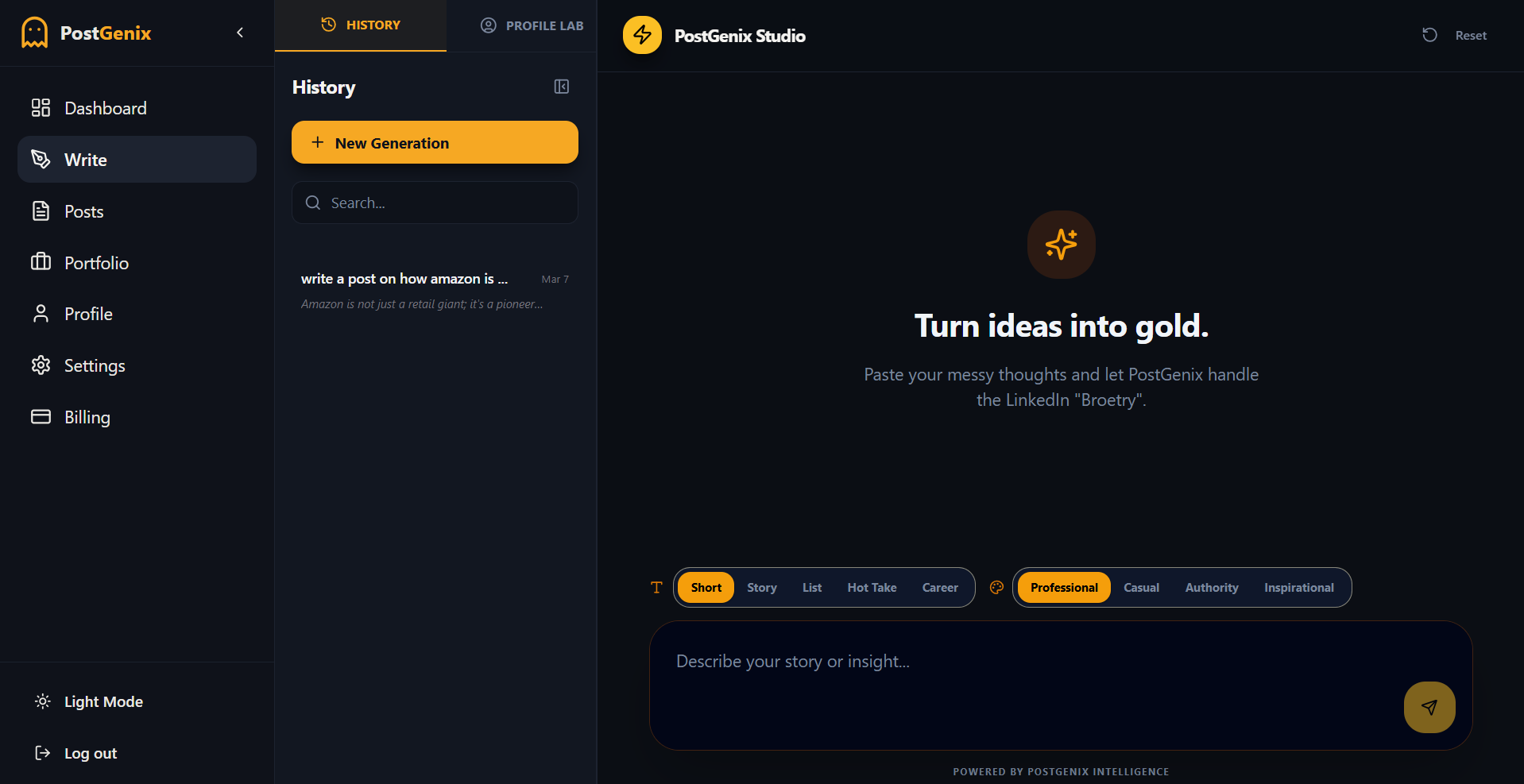
WritePage
-
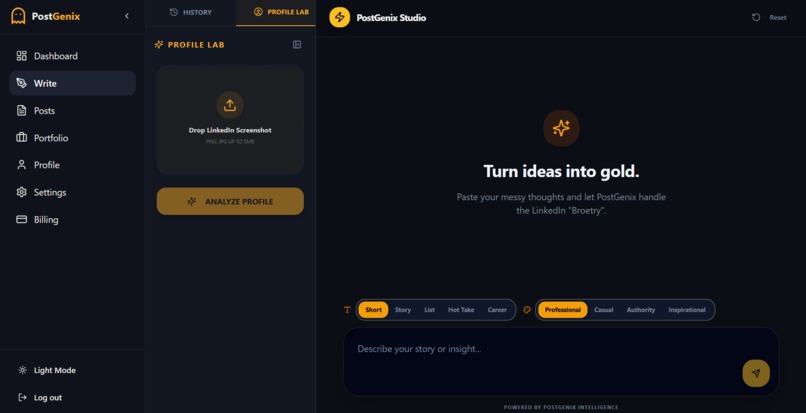
ProfileLab
-
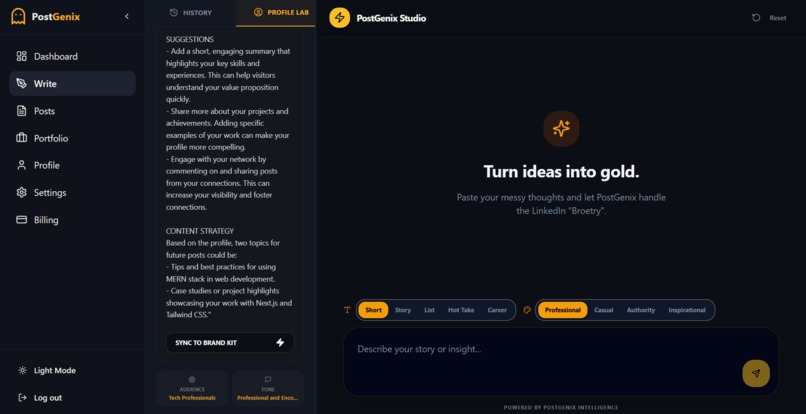
ProfileLab
-
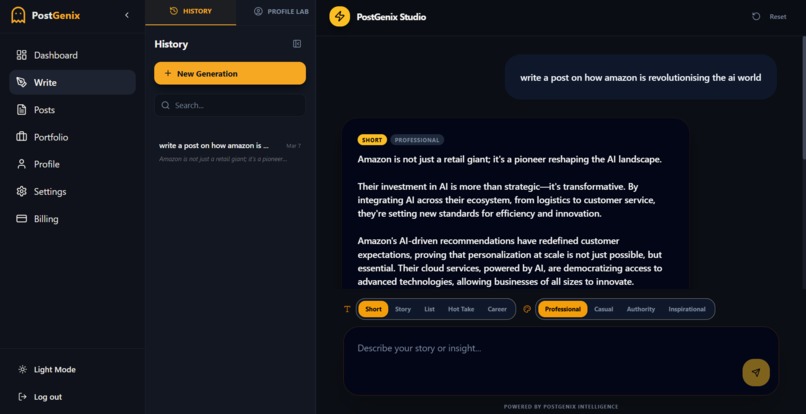
PostGeneration
-
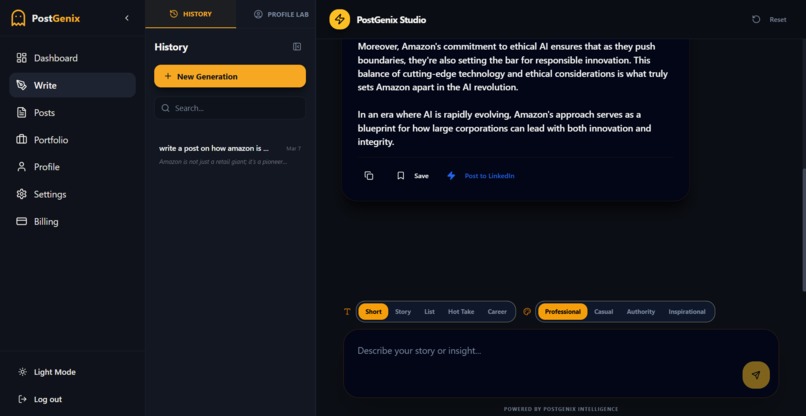
PostGeneration
-

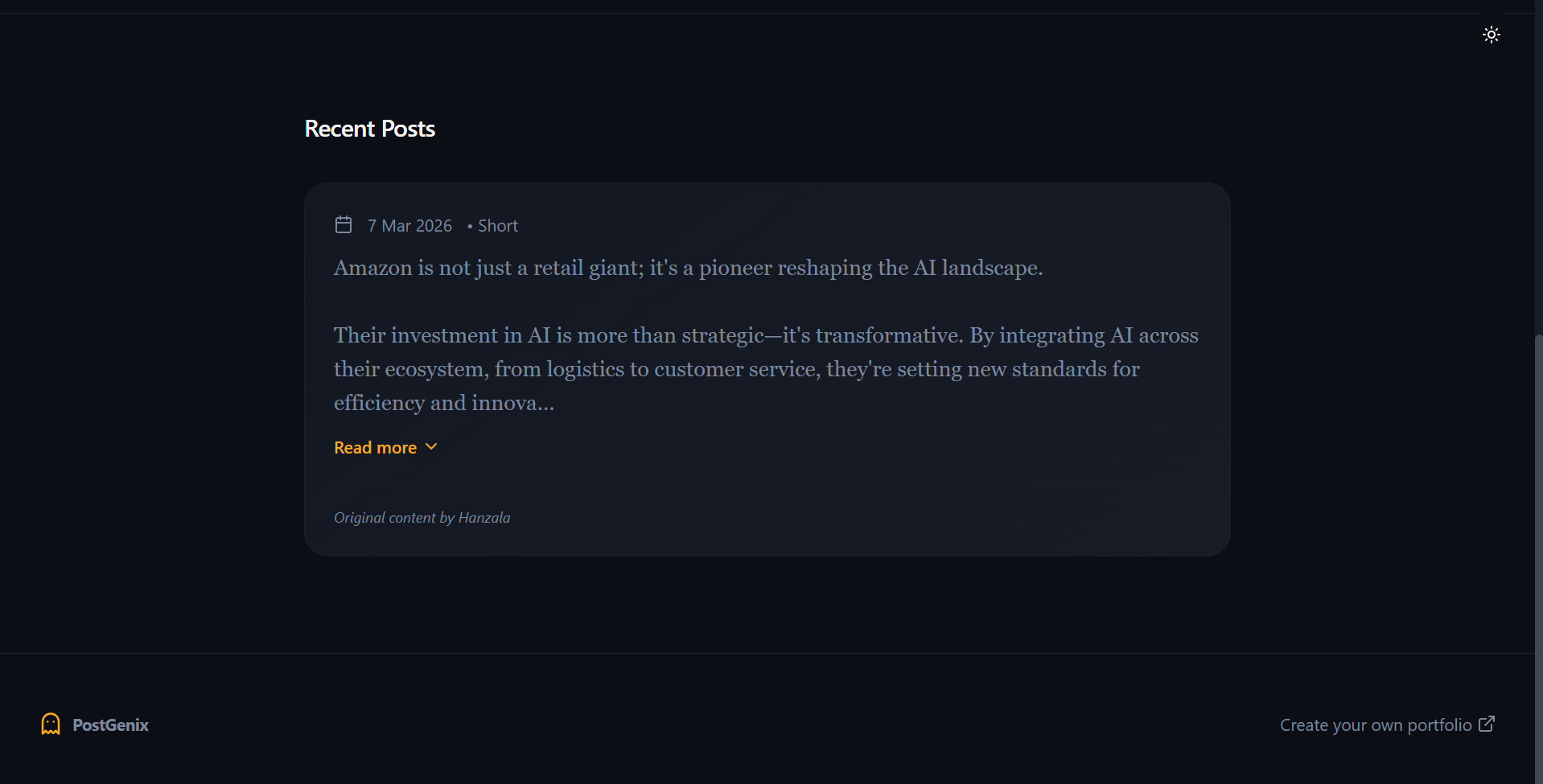
Portfolio
-
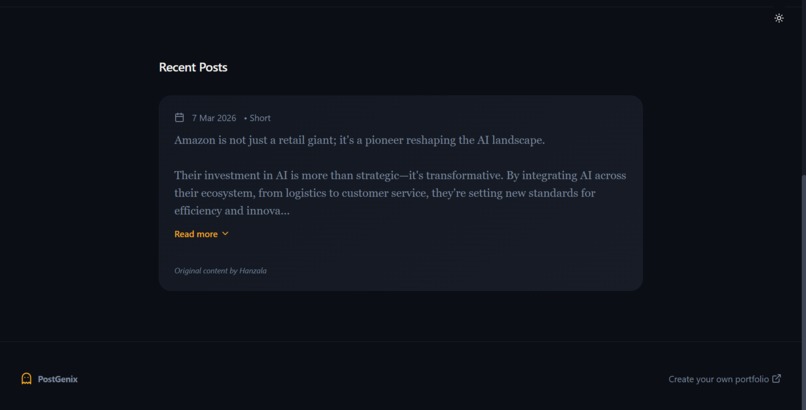
Portfolio
-
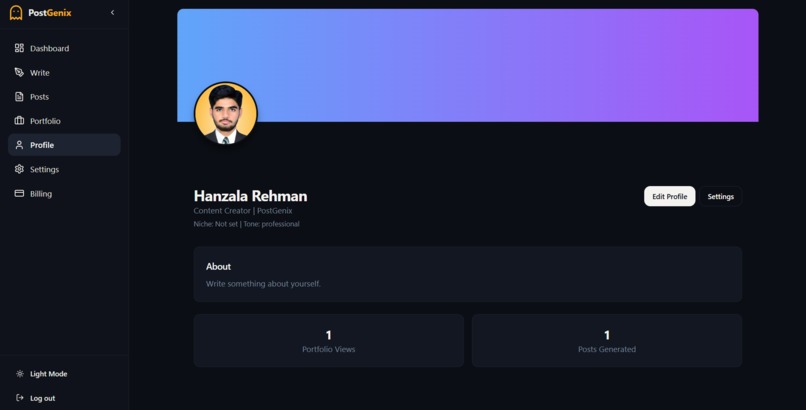
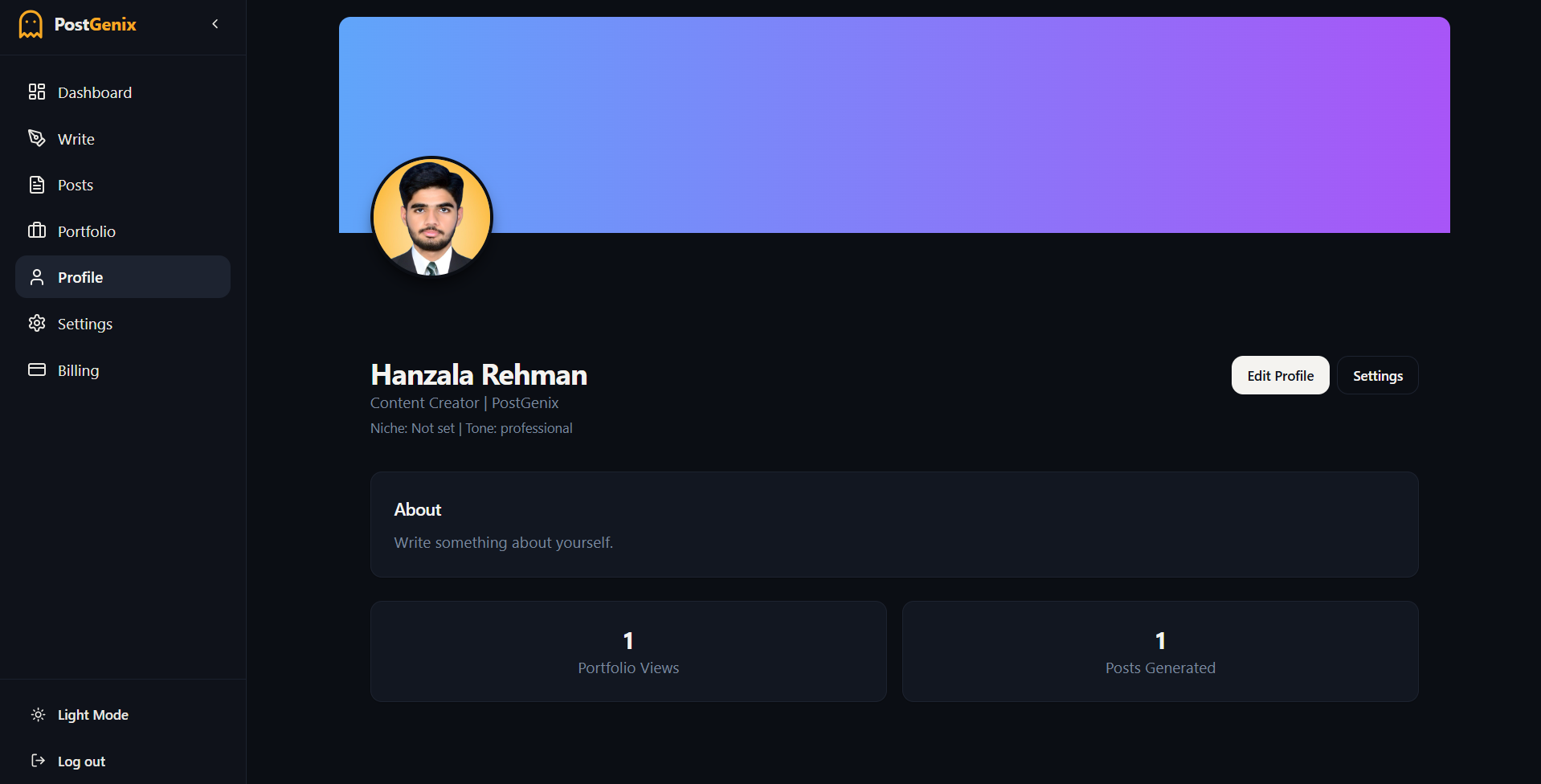
Profile
-
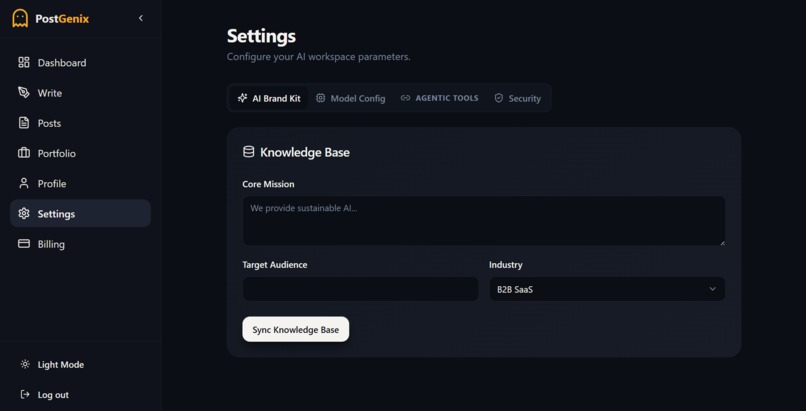
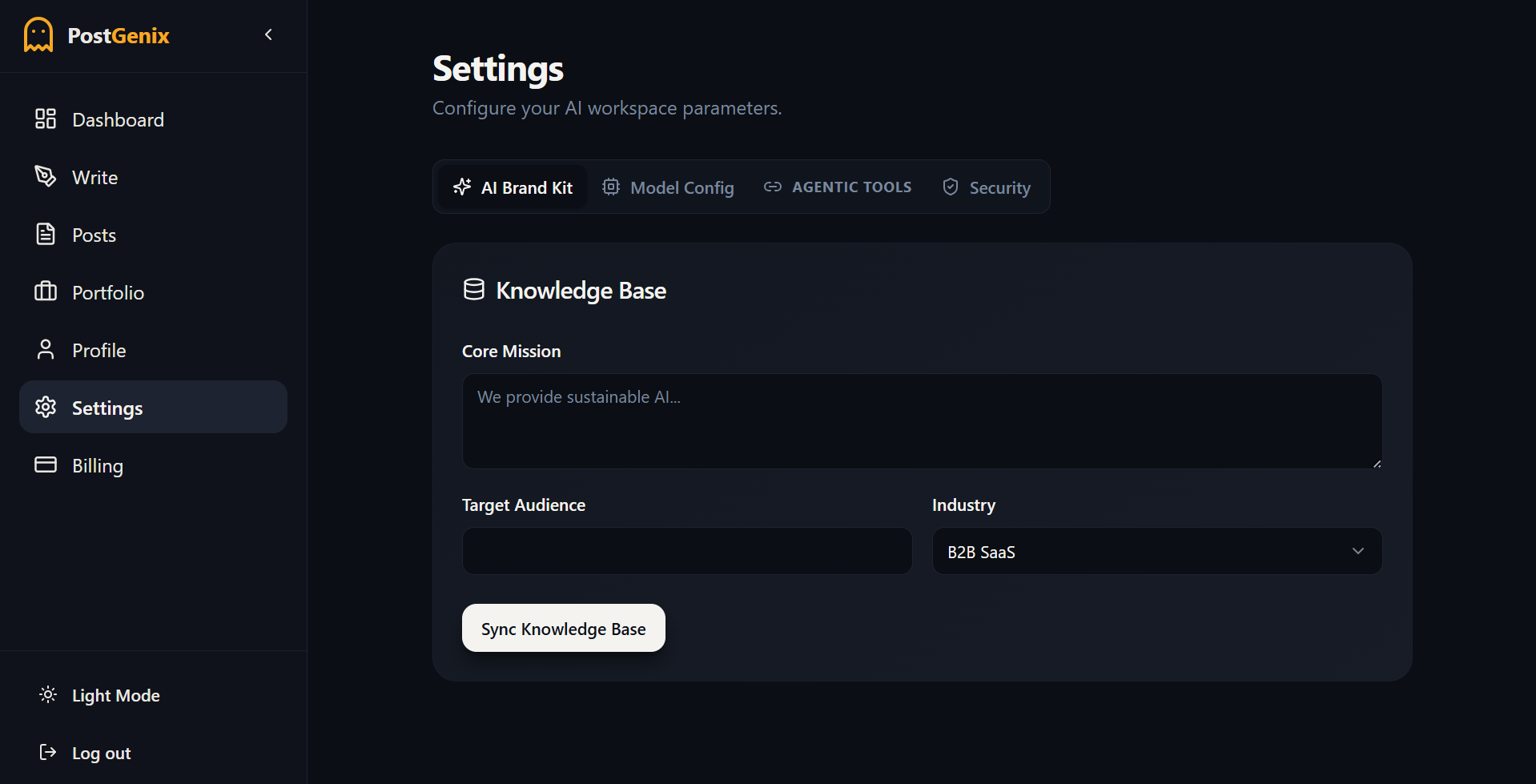
Settings
-
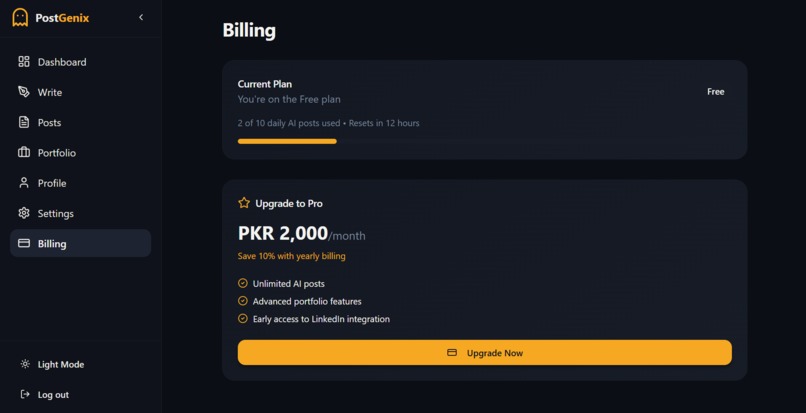
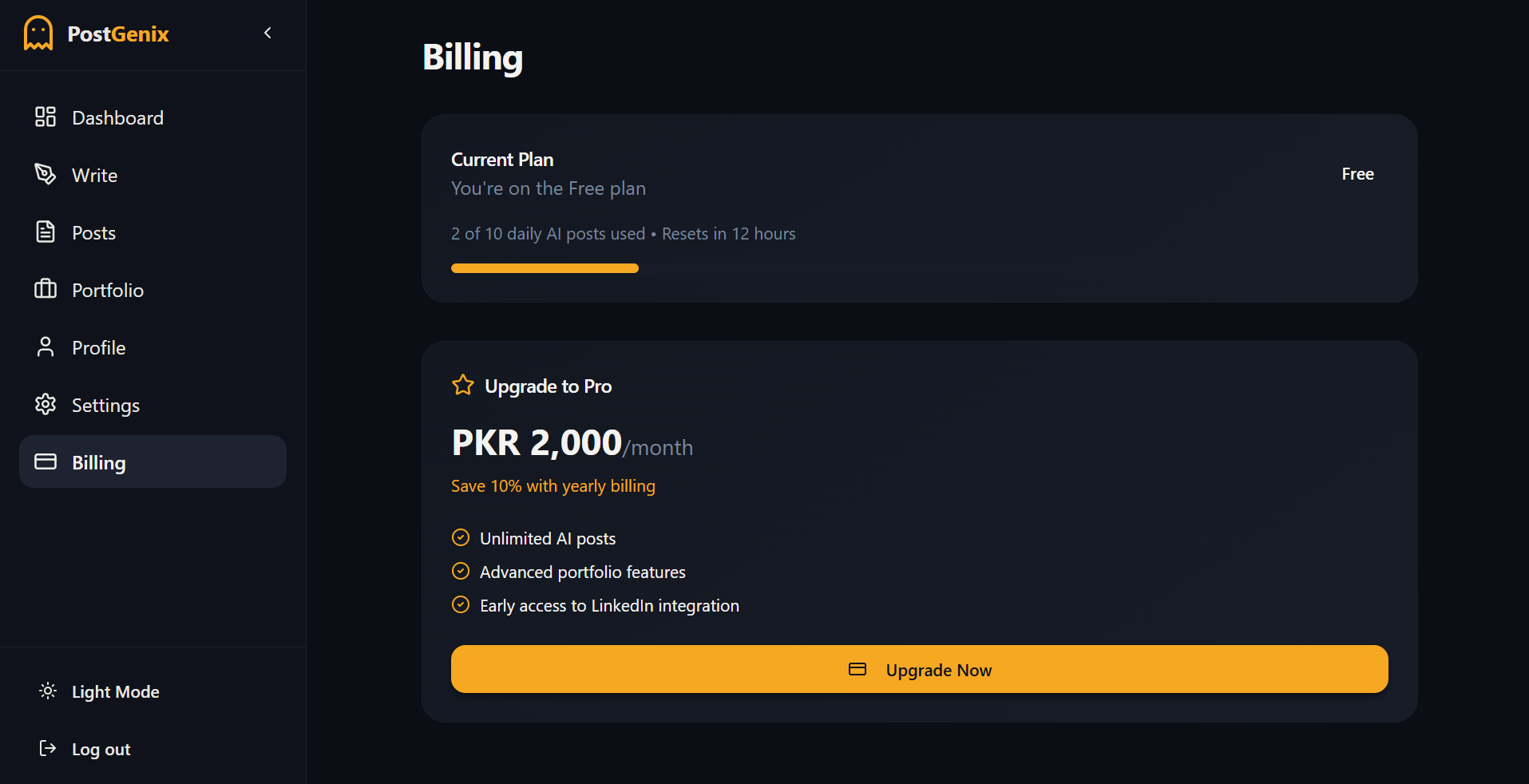
Billing

Inspiration
Building a personal brand on professional platforms like LinkedIn is a "friction-heavy" process. Creators are often stuck in a cycle of manual audits, repetitive data entry, and the constant back-and-forth of copy-pasting AI-generated text. We asked ourselves: What if your AI didn't just write for you, but could see who you are and act on your behalf? That was the spark for PostGenix. We wanted to create a tool that bridges the gap between vision and action using the Amazon Nova model family.
What it does
PostGenix is an Autonomous Professional Branding Assistant. It moves beyond standard chatbots by providing a closed-loop agentic workflow:
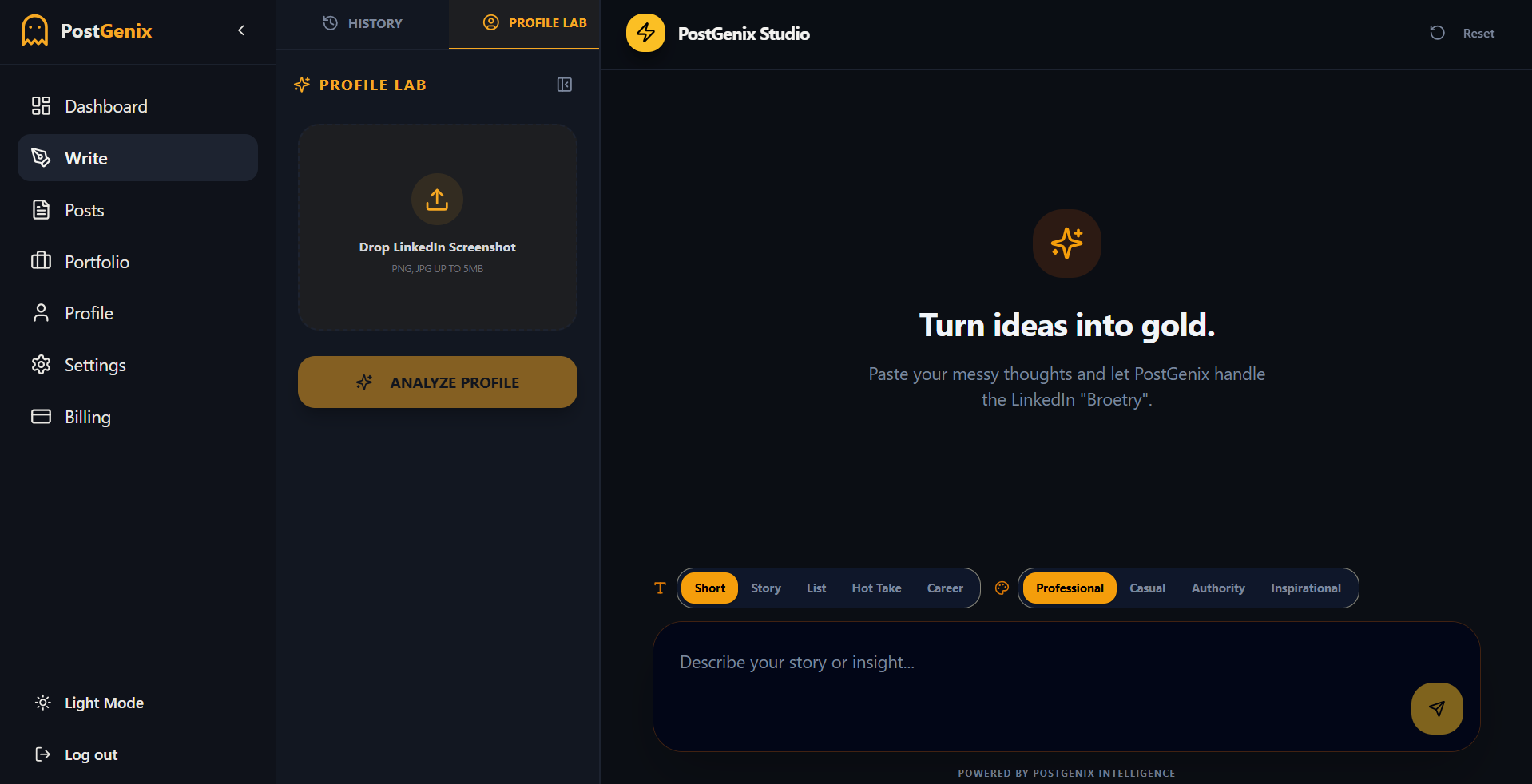
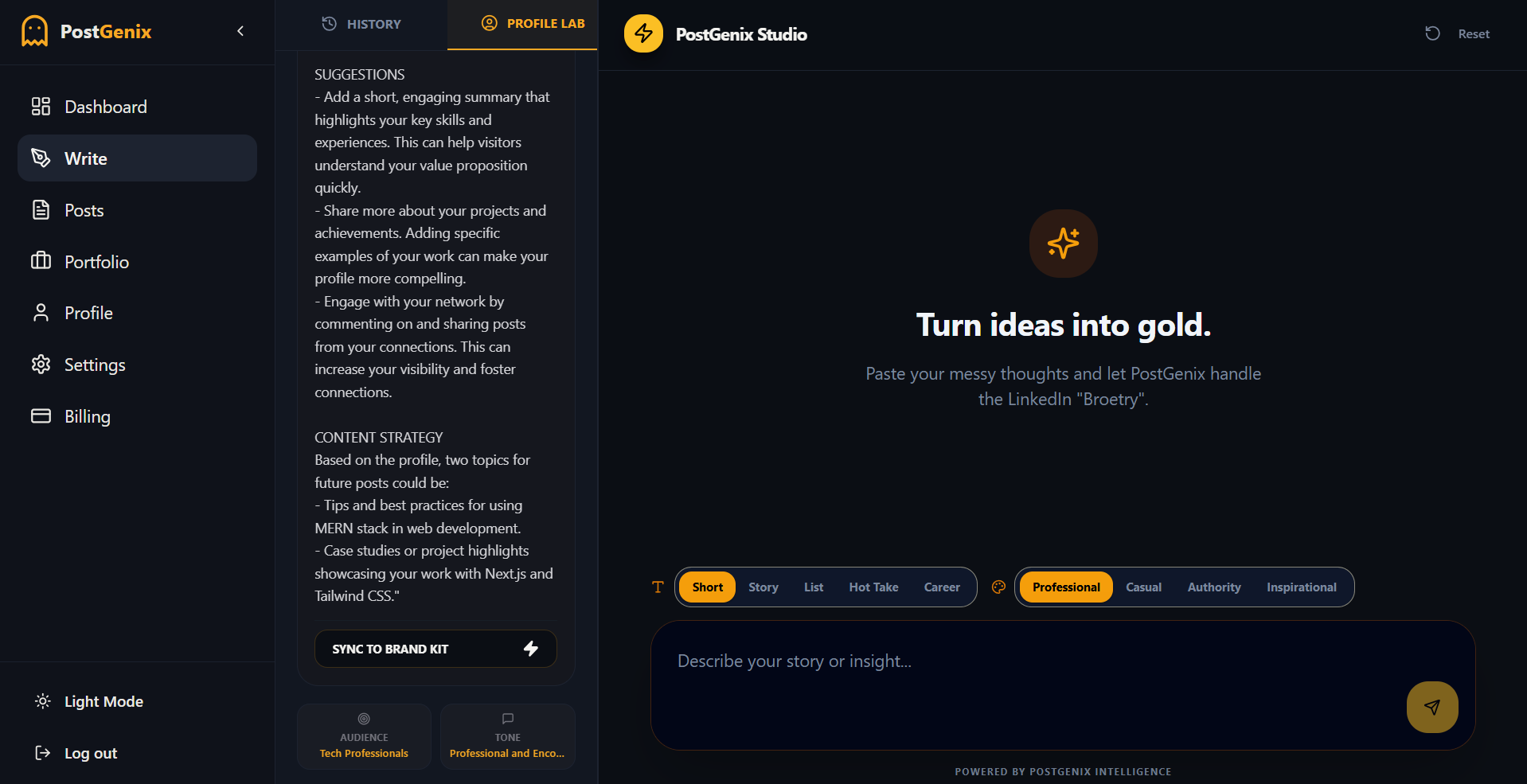
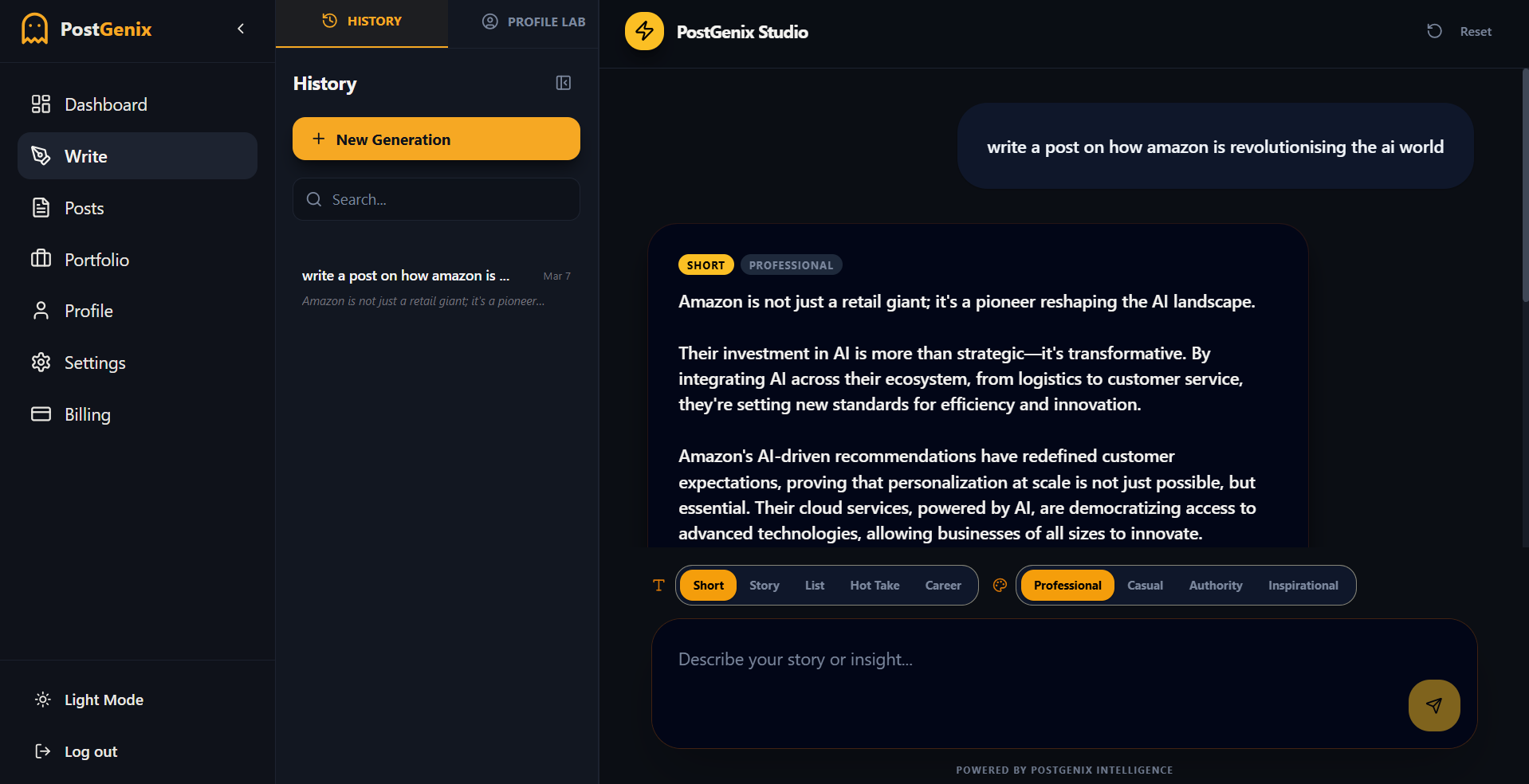
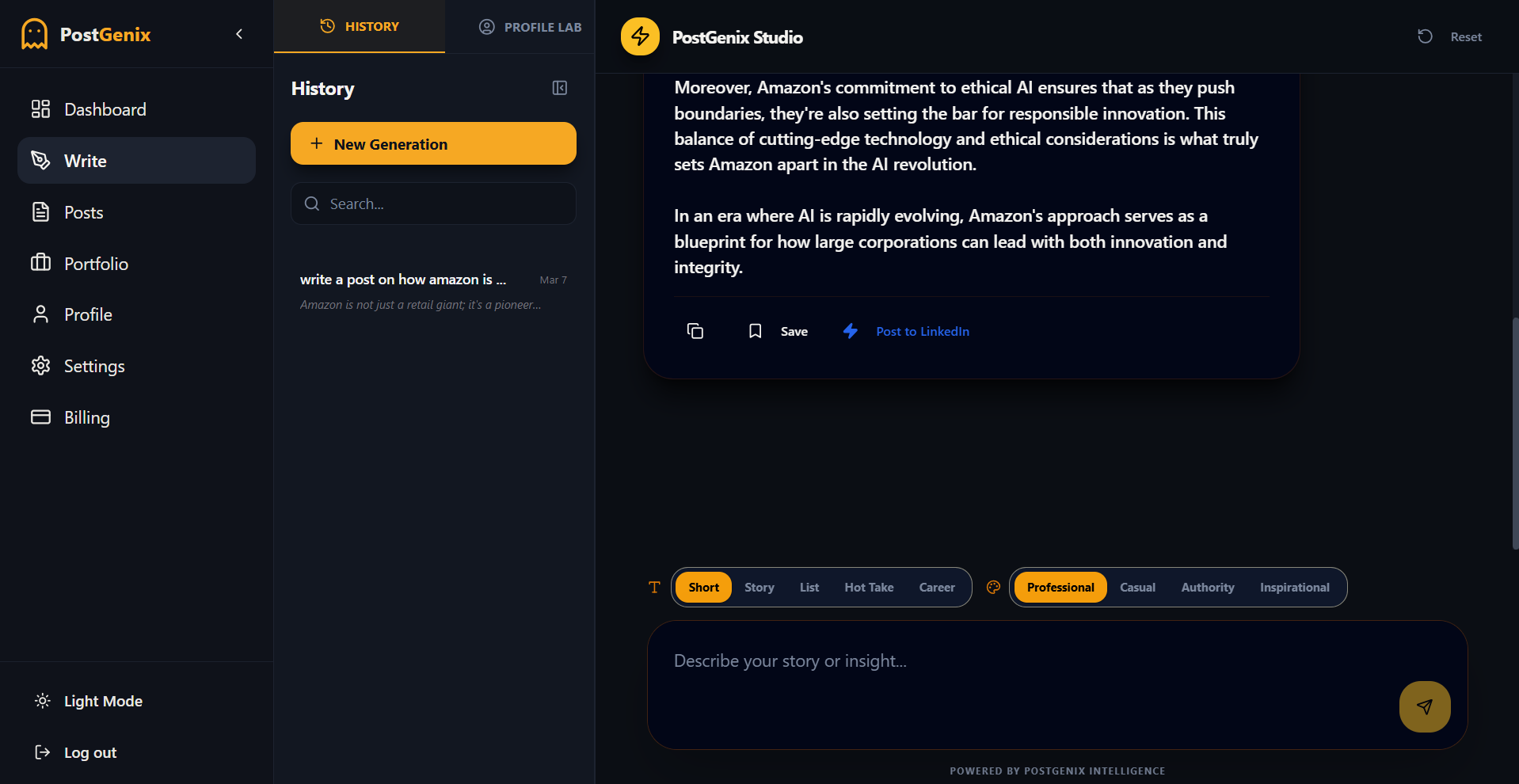
AI Calibration (Vision): Users upload a screenshot of their LinkedIn profile. Using Amazon Nova Lite’s multimodal capabilities, the system "sees" and audits the user's branding, autonomously extracting their niche, tone, and audience. Intelligent Studio: Leveraging the reasoning power of Amazon Nova Pro, PostGenix generates high-quality content that is pre-calibrated to the user's vision-synced Brand Kit. Agentic Dispatch: PostGenix functions as a true AI Agent. With one click, Nova Pro uses Tool-Calling to autonomously format metadata and publish content directly to the LinkedIn API—no copy-pasting required. Public Portfolio: Every creator gets a protected, high-end portfolio that tracks "Content Resonance"—a data-driven metric of impact.
How we built it
The platform is built on the MERN Stack (MongoDB, Express, React, Node.js) and orchestrated through Amazon Bedrock:
AI Orchestration: We used the Amazon Bedrock Converse API to handle multi-turn conversations and model switching. Multimodal Inference: We implemented Amazon Nova Lite to process high-resolution screenshots for our "Profile Lab." Agentic Logic: We defined a specialized create_linkedin_post tool within the Converse API, allowing Amazon Nova Pro to autonomously format commentary and manage API authentication. Authentication: A custom OAuth 2.0 flow with LinkedIn that allows the agent to interact with the user's personal profile securely.
Challenges we ran into
One of our biggest hurdles was the transition from a "text-generator" to a "system agent." Implementing Function Calling (Tool-Use) required highly precise JSON schema definitions to ensure Nova Pro correctly formatted data for the LinkedIn V2 API. We also navigated the complexities of LinkedIn's security scopes, solving the "Scope Ghosting" challenge to ensure the agent had verified w_member_social permissions for autonomous posting.
Accomplishments that we're proud of
We are incredibly proud of the Multimodal-to-Agentic loop. There is a "magic moment" in the app where the AI goes from seeing an image to performing a real-world action (publishing a post) without any manual intervention. Creating a guided onboarding tour that uses AI to "poker" the user in the right direction was another UX win we are excited about.
What we learned
We learned that the Amazon Nova model family offers a unique price-performance ratio for multimodal tasks. Nova Lite is significantly faster and more accurate at visual audits than many previous-generation models, making vision-first onboarding a viable strategy for modern SaaS tools. We also deepened our understanding of building "Human-in-the-loop" agents that assist rather than replace.
What's next for PostGenix
The prototype is just the beginning. Our roadmap includes:
Expanded Agency: Adding tool-use support for Twitter/X and Mastodon. Browser Automation: Integrating Amazon Nova Act to handle more complex, non-API-driven tasks on professional platforms. Deep Analytics: Using Nova to perform sentiment analysis on post comments to further refine the user's brand kit automatically.
Built With
- amazon-bedrock
- amazon-nova-lite
- amazon-nova-pro
- axios
- express.js
- framer-motion
- jwt
- linkedin-api
- mongodb
- node.js
- react
- tailwind-css


Log in or sign up for Devpost to join the conversation.