-
-
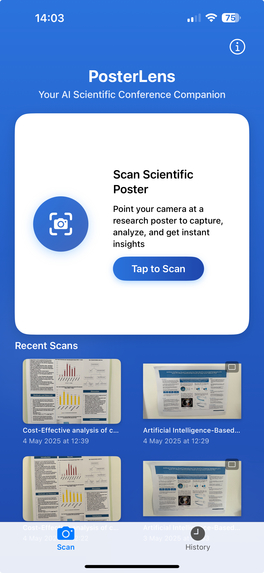
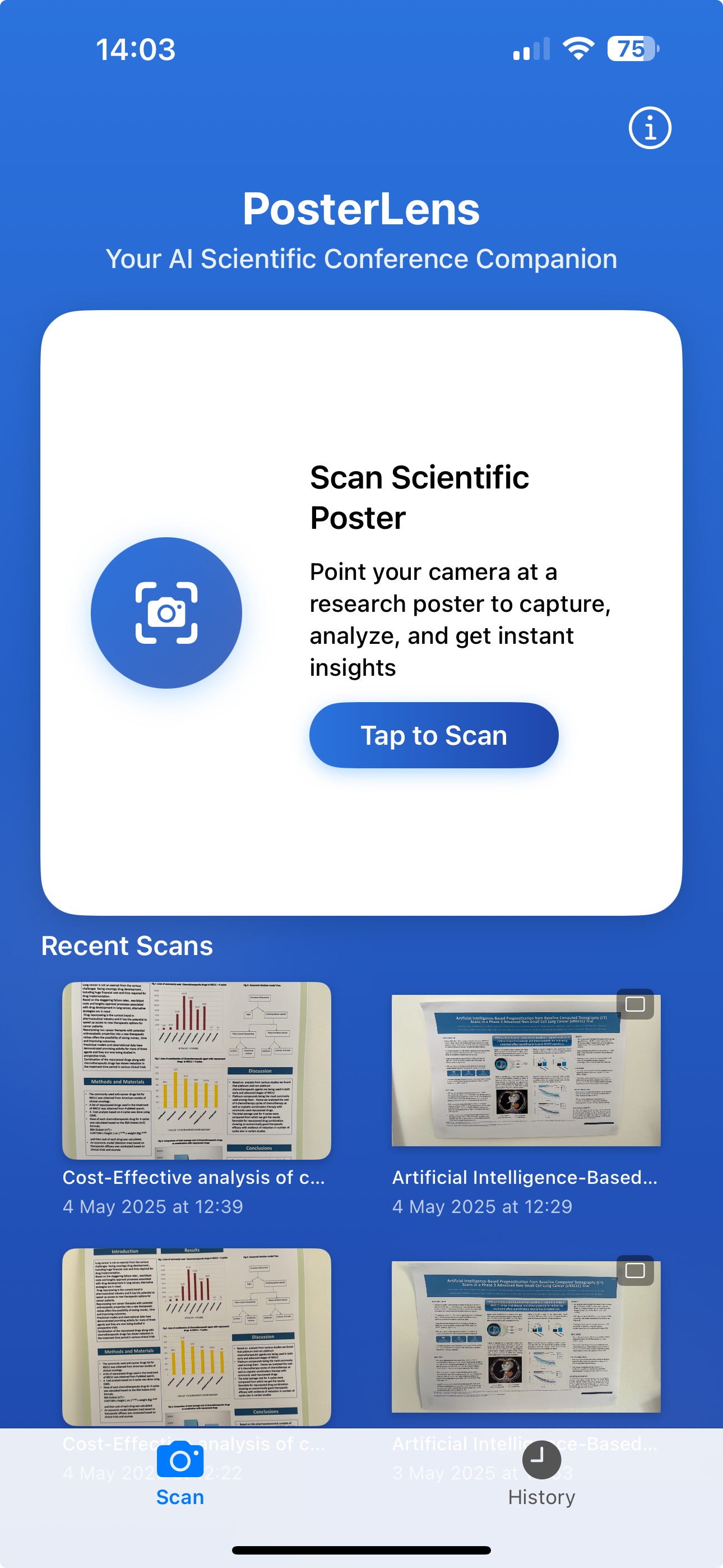
Scan a scientific poster for instant insights
-
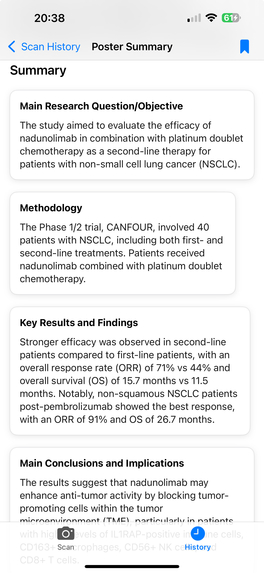
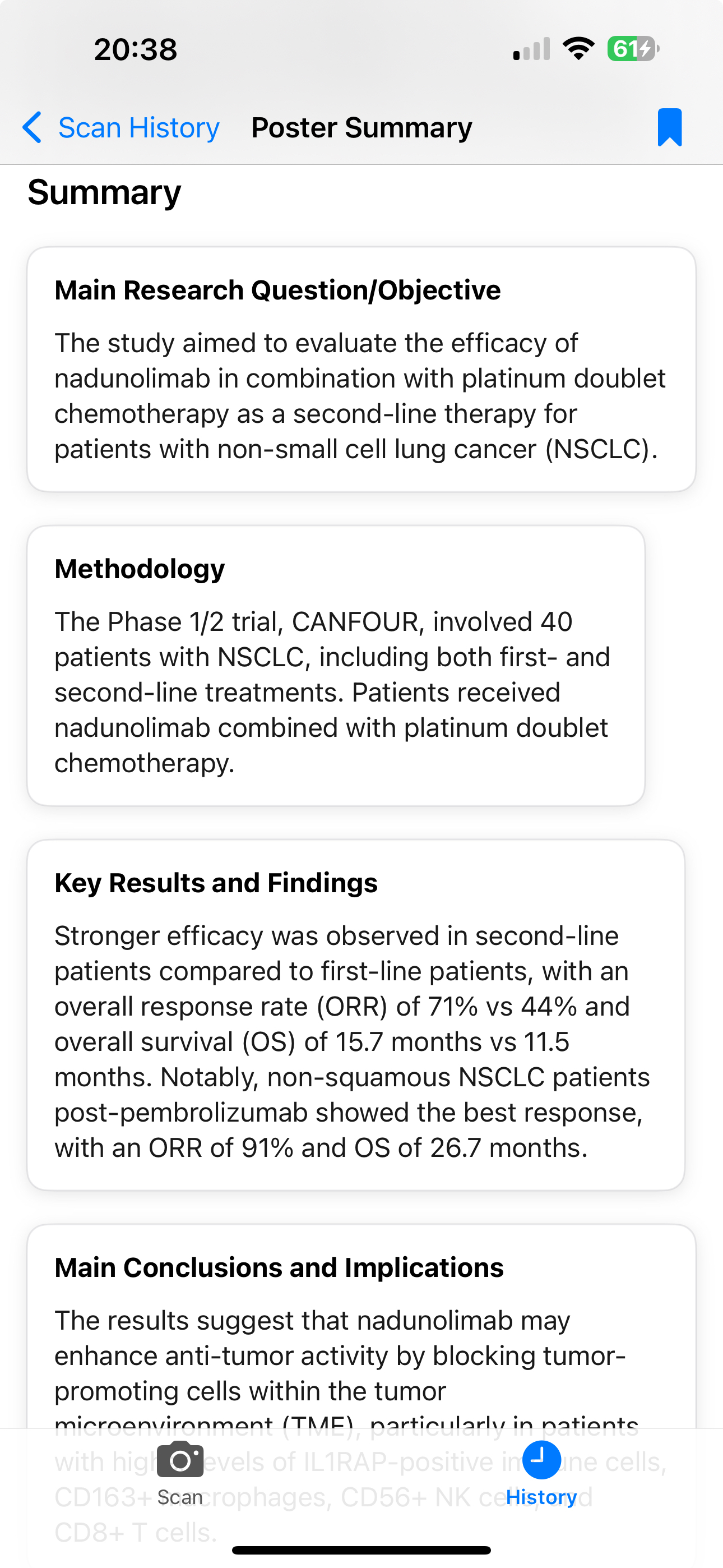
Bite-sized insights
-
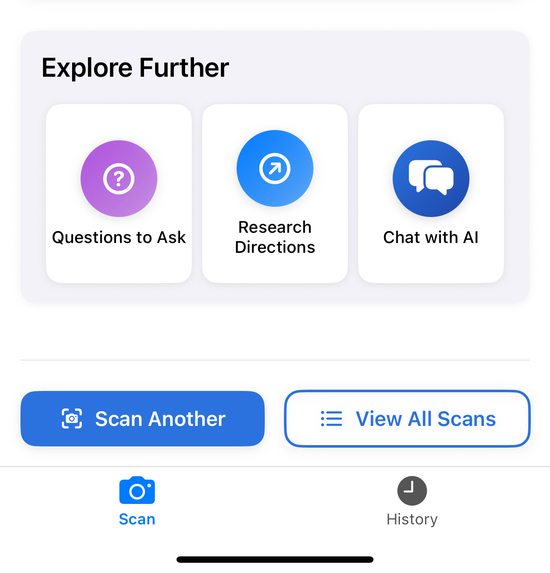
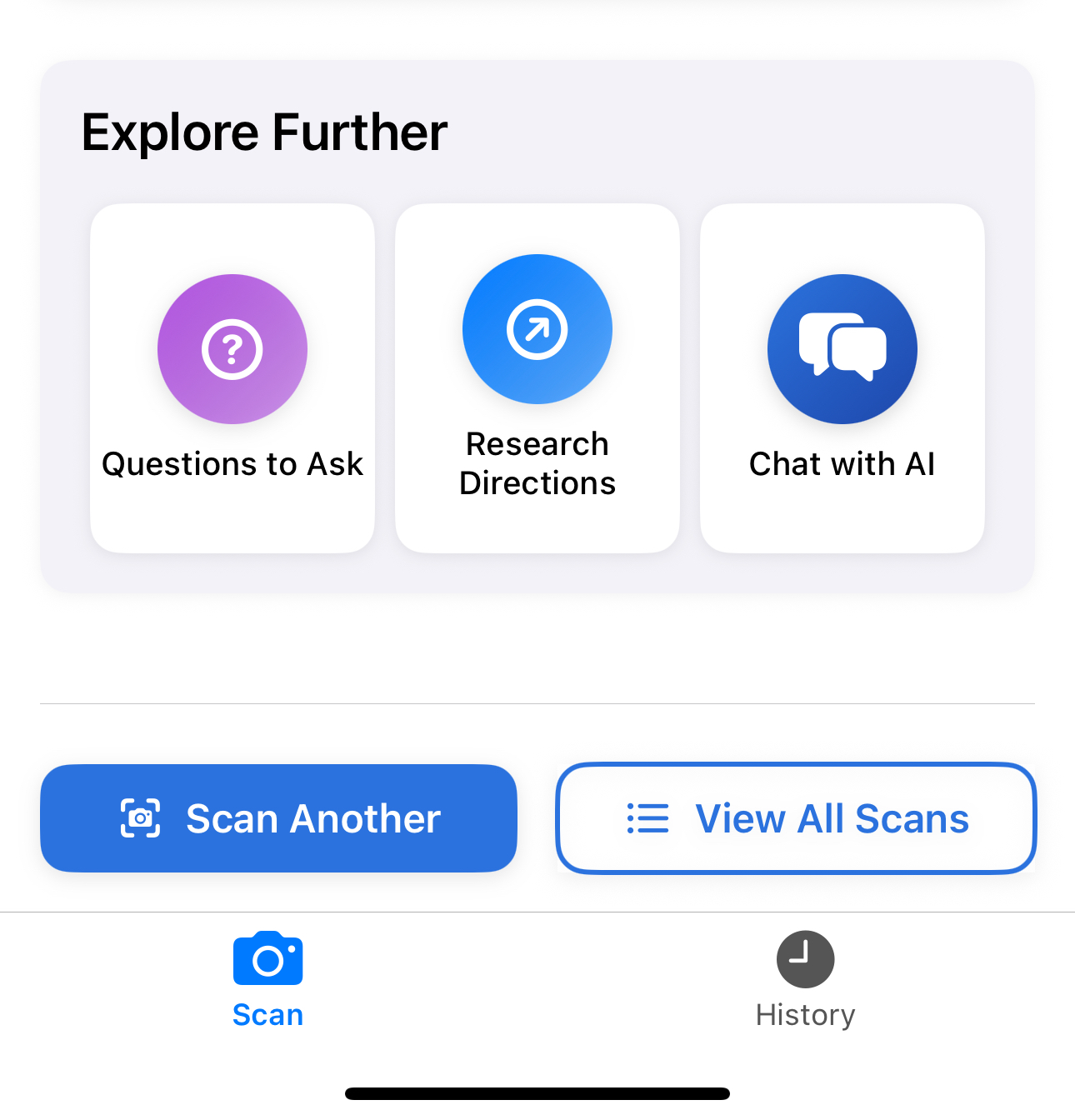
Talk with your poster! Ask questions, find out research directions, and chat with AI
-
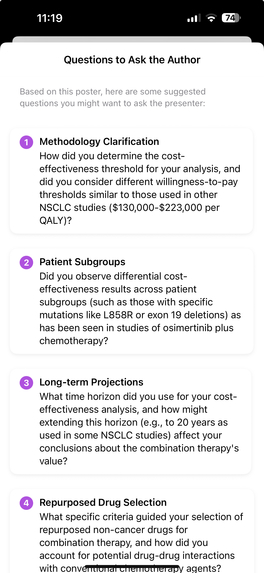
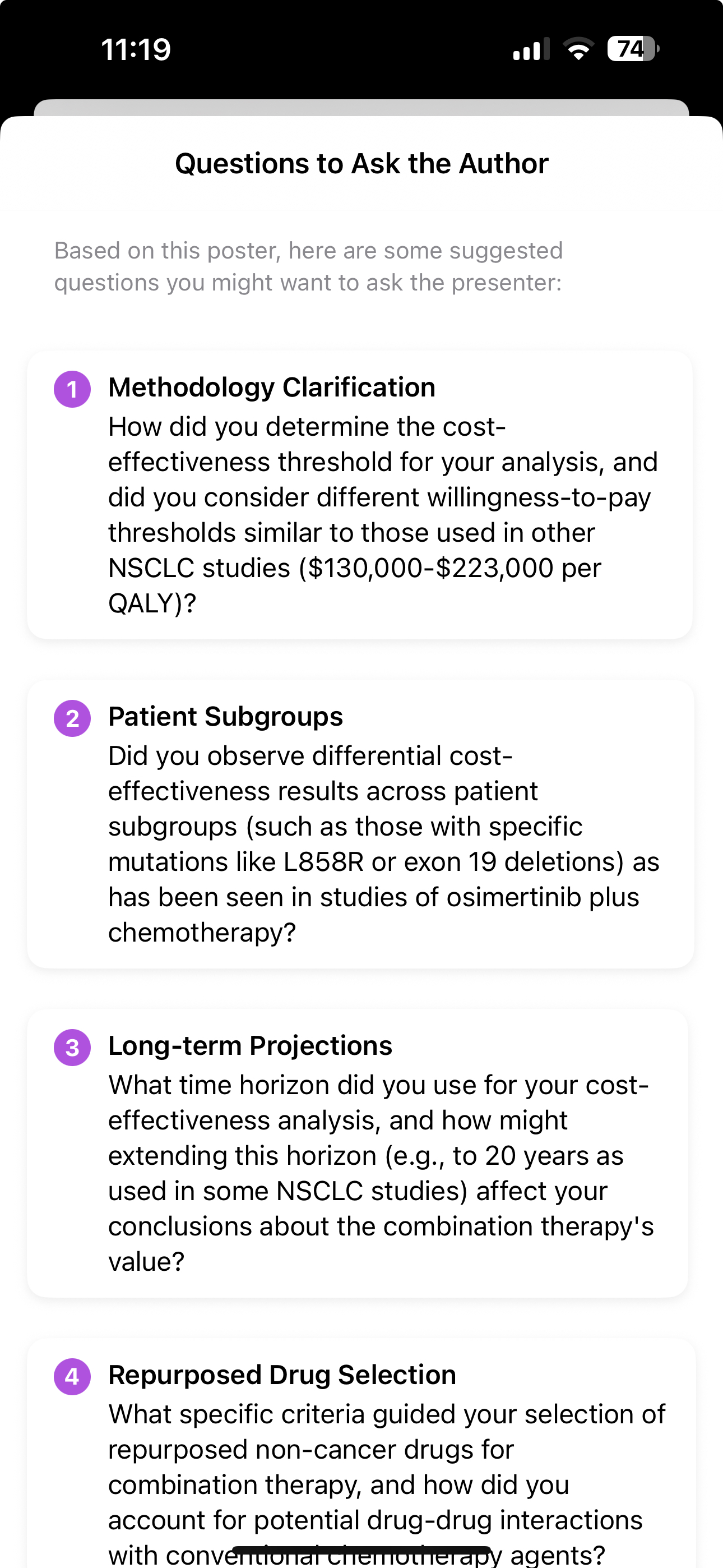
Generate insightful questions to ask the author
-
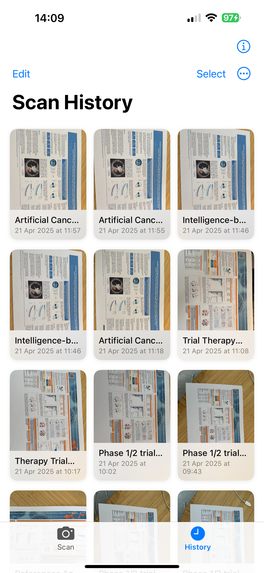
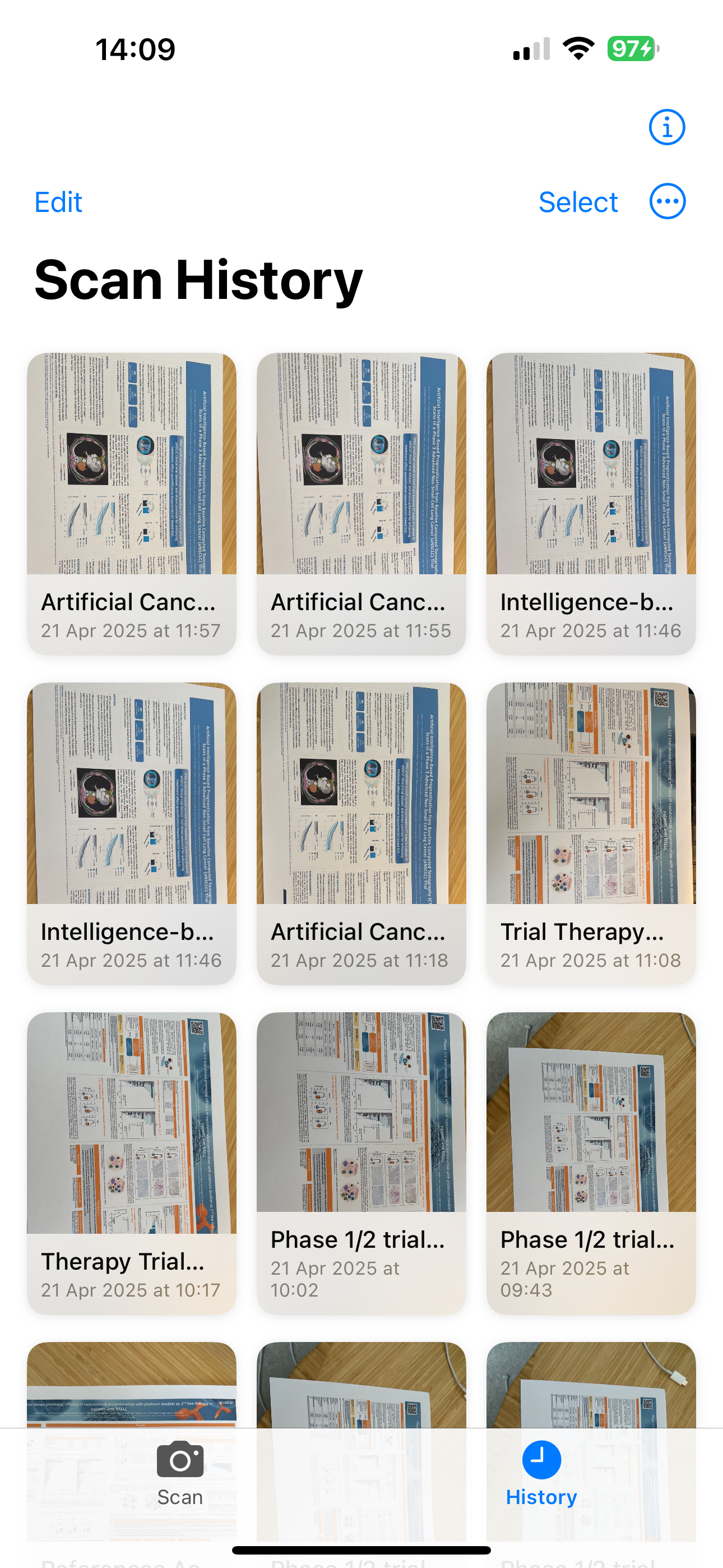
View previous scans - ready for export
-
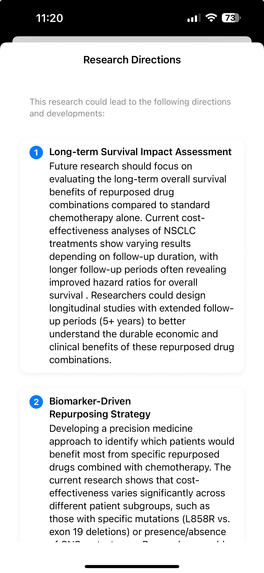
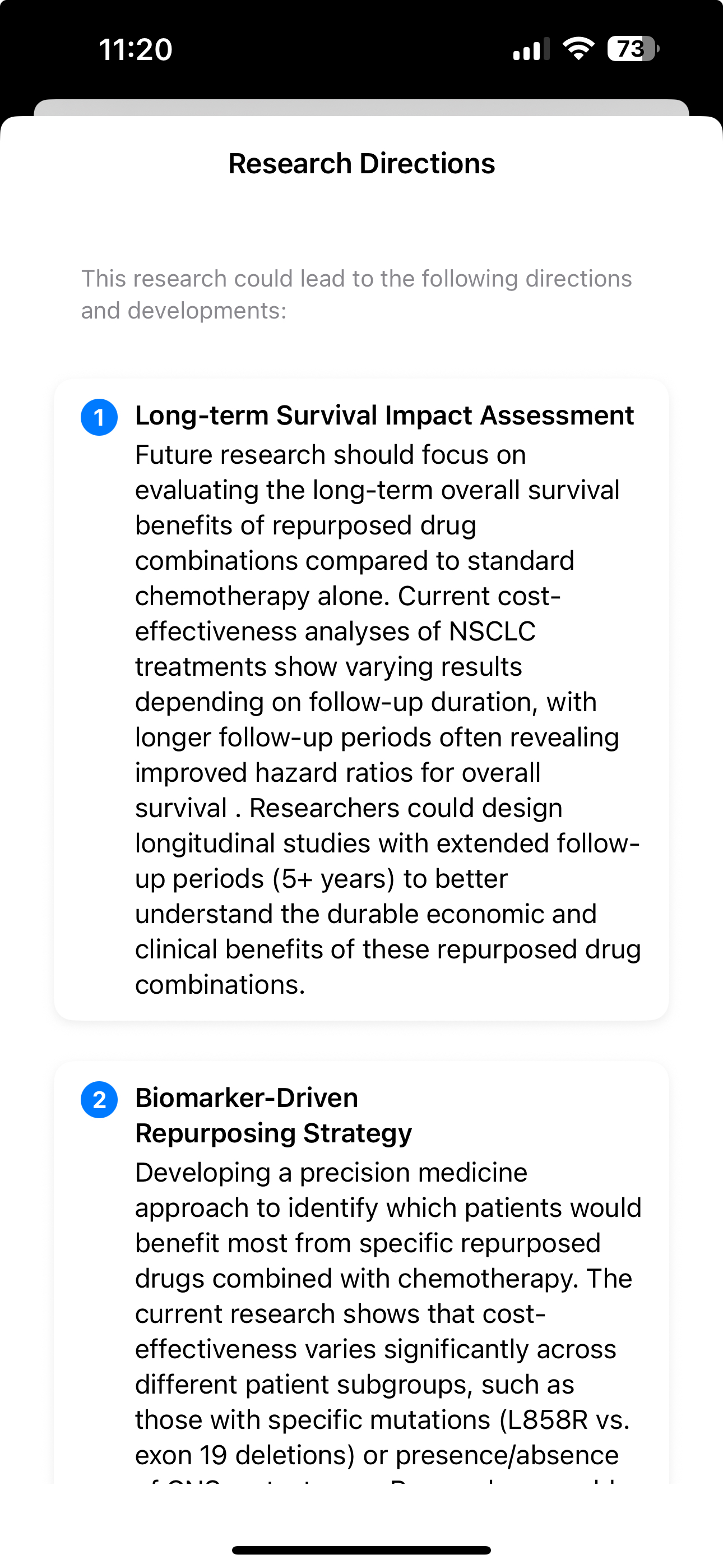
Discover where the research is heading
-
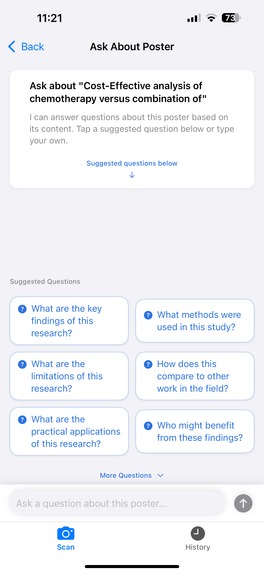
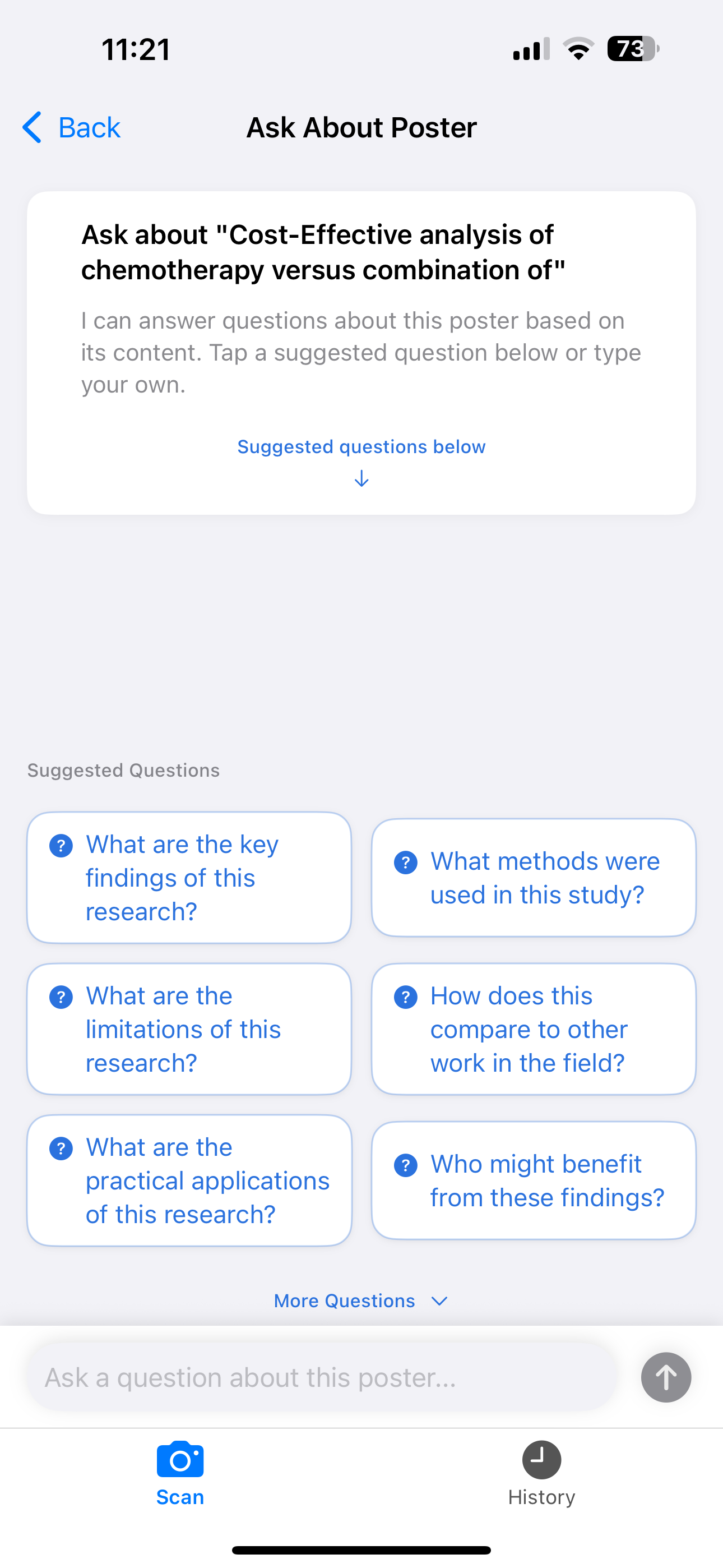
Chat with your poster!
-
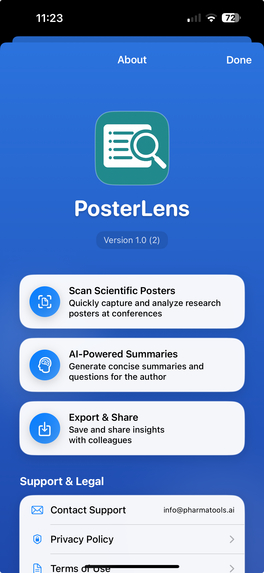
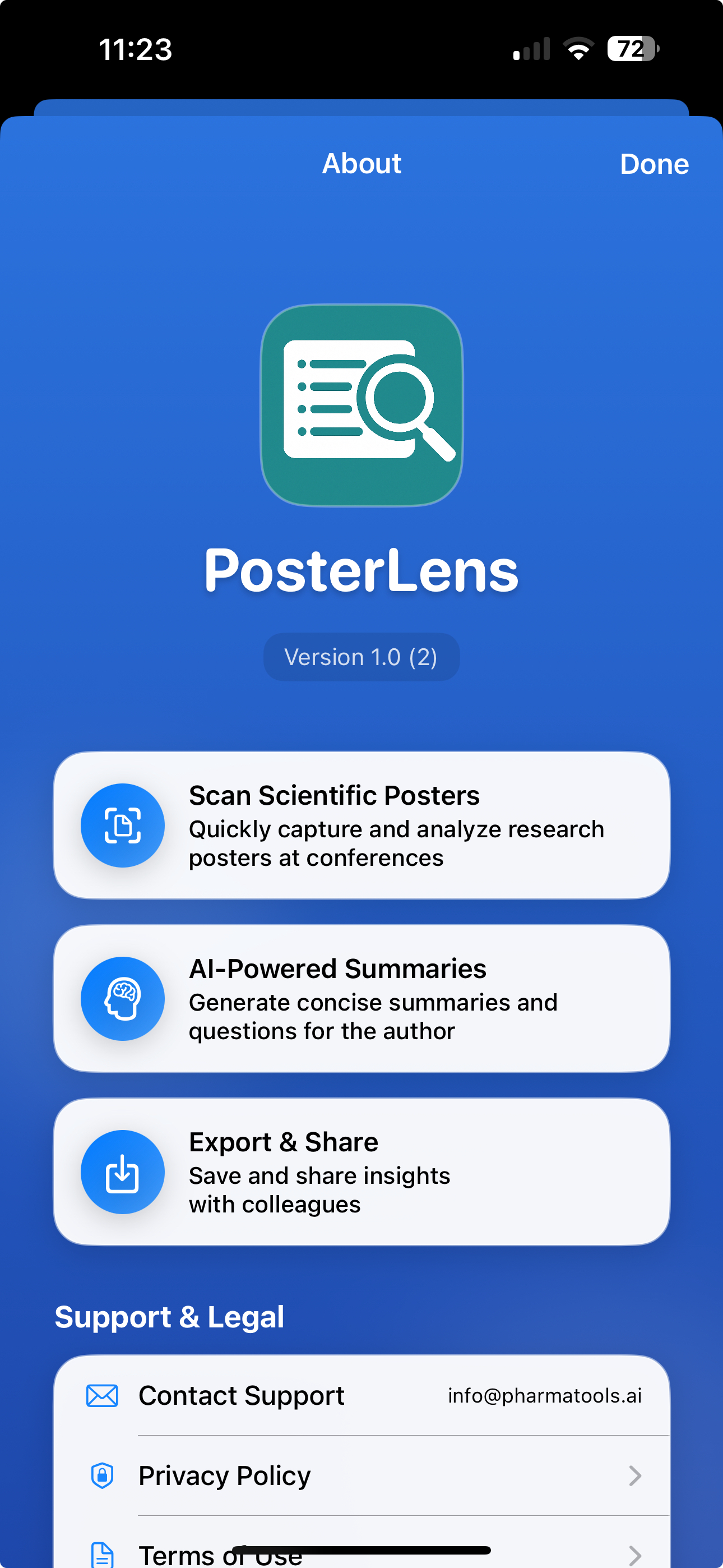
About page - support, privacy policy and terms of use
Inspiration
Scientific conferences can be overwhelming with hundreds of posters presenting complex research in limited time. Attendees struggle to quickly grasp key findings and often miss valuable insights. PosterLens was born from this challenge, creating a bridge between dense academic content and meaningful comprehension through the power of AI.
What it does
PosterLens transforms how attendees interact with scientific posters through a simple three-step process: scan, summarize, and engage. Using your smartphone camera, capture any research poster and watch as Perplexity's Sonar API instantly extracts key findings, generates a concise summary, and creates intelligent questions you can ask the researcher - turning brief poster sessions into meaningful scientific exchanges.
How I built it
I developed PosterLens as a native iOS application using Swift and SwiftUI for a responsive, intuitive interface. The app uses Apple's Vision framework for optical character recognition to extract text from posters, then sends this content to Perplexity's Sonar API for intelligent analysis. This powerful combination enables real-time summarization and question generation while maintaining user privacy and data security.
Challenges I ran into
Extracting text from scientific posters presented unique challenges due to complex layouts, specialized notation, and varying lighting conditions. Crafting effective prompts for the Perplexity Sonar API required extensive experimentation to balance detail with brevity. I also faced the challenge of optimizing API response times while maintaining high-quality summaries and relevant questions for different scientific domains.
Accomplishments that I'm proud of
I successfully created a seamless integration with Perplexity's Sonar API that transforms complex scientific content into accessible insights within seconds. The intuitive user interface masks sophisticated AI processing behind a simple scan-and-read experience. Most importantly, PosterLens bridges the knowledge gap at conferences, democratizing access to cutting-edge research for attendees of all backgrounds.
What I learned
Developing PosterLens taught me valuable lessons in prompt engineering for specialized scientific domains. I discovered techniques to optimize API interactions for mobile environments, balancing response quality with speed. The project reinforced how crucial context is when analyzing scientific content, and how AI can be used to make complex information more accessible without sacrificing accuracy.
What's next for PosterLens
My roadmap includes developing domain-specific models for different scientific fields to improve summarization accuracy for specialized research areas. I plan to add collaborative features allowing conference attendees to share insights and annotations. Future updates will expand language support beyond English and integrate with citation management tools, creating a comprehensive research companion that extends value beyond the conference hall. PosterLens is just getting started!


Log in or sign up for Devpost to join the conversation.