-
-
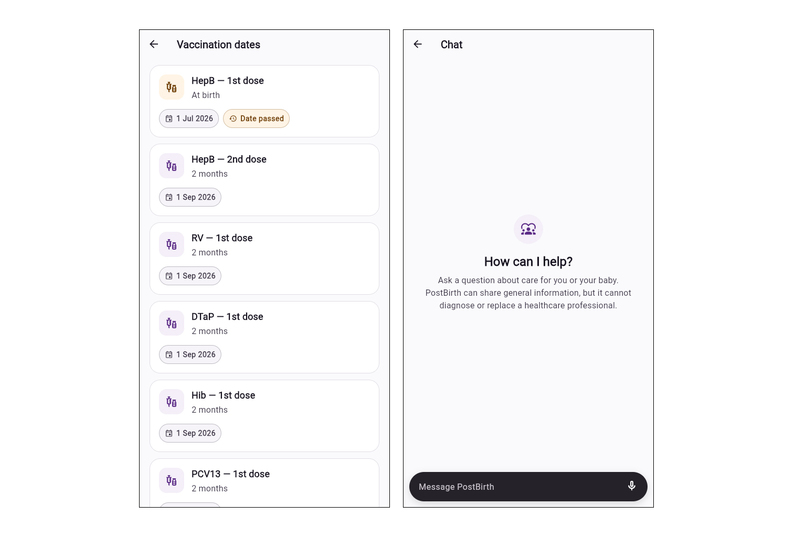
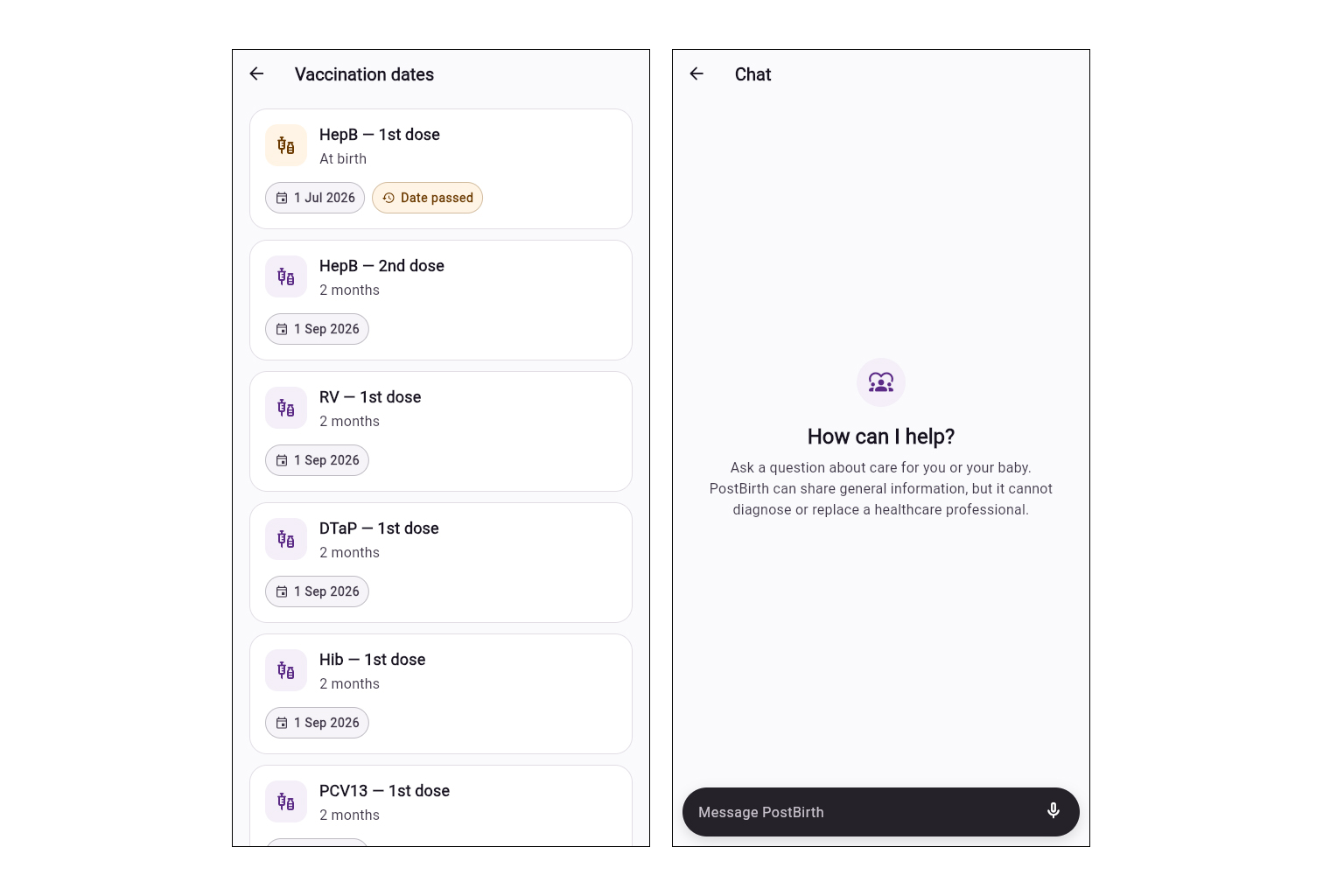
Vaccination tracking and chatting with AI
-
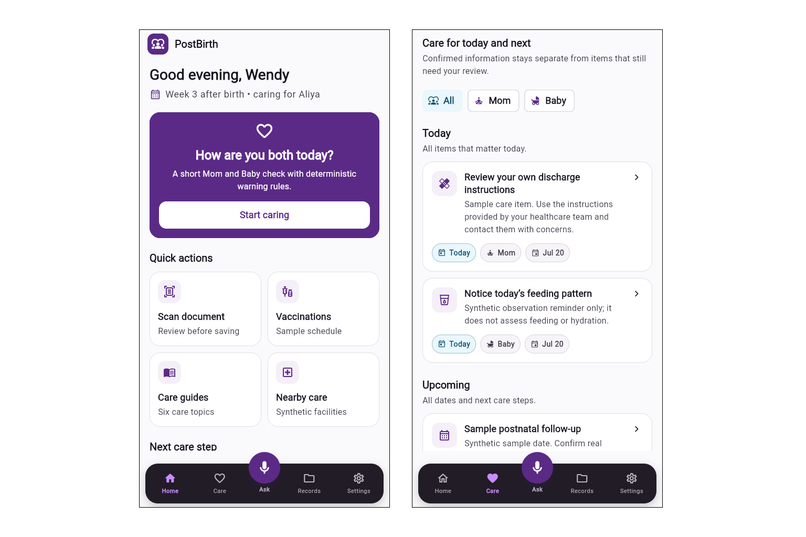
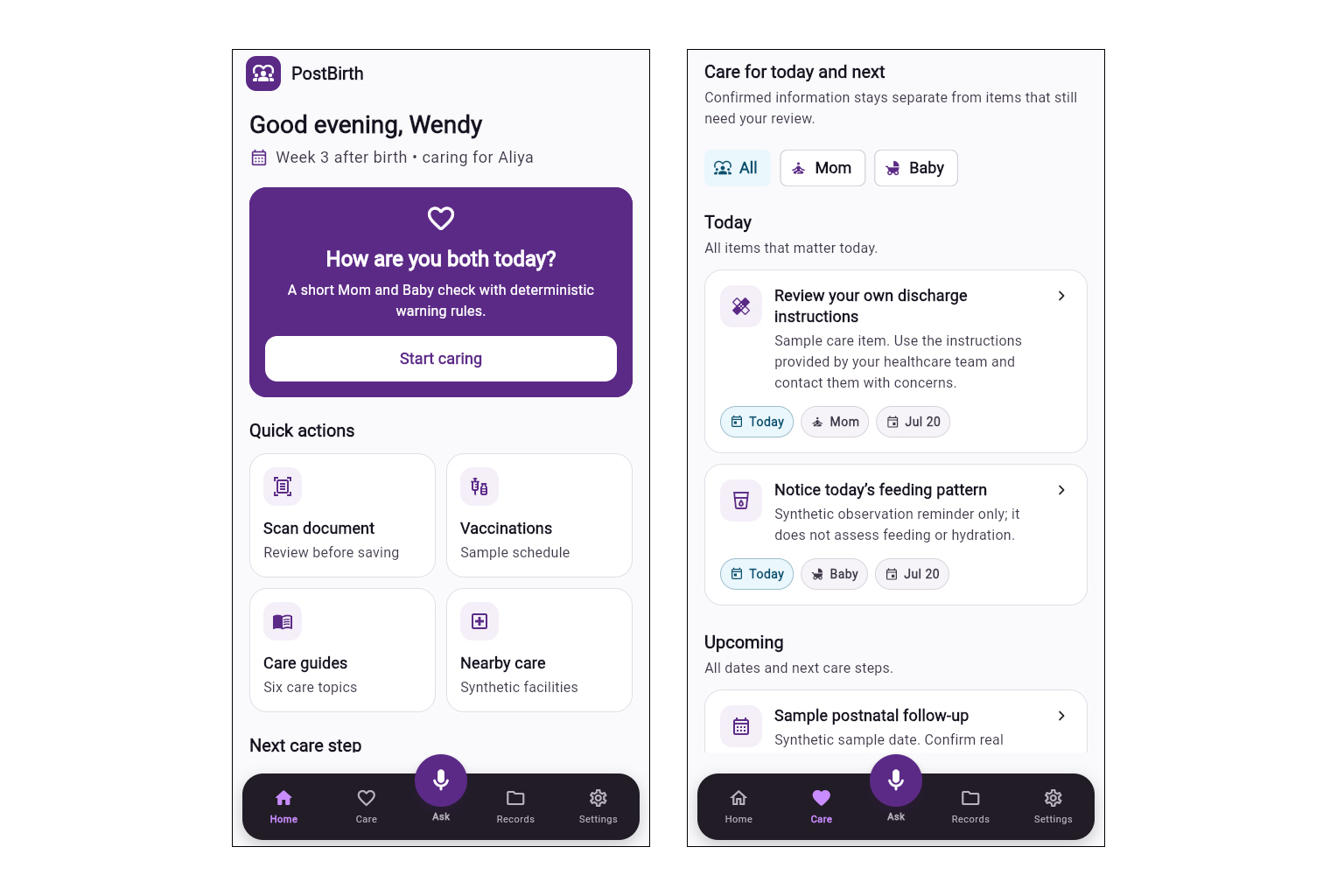
Homepage and care
-
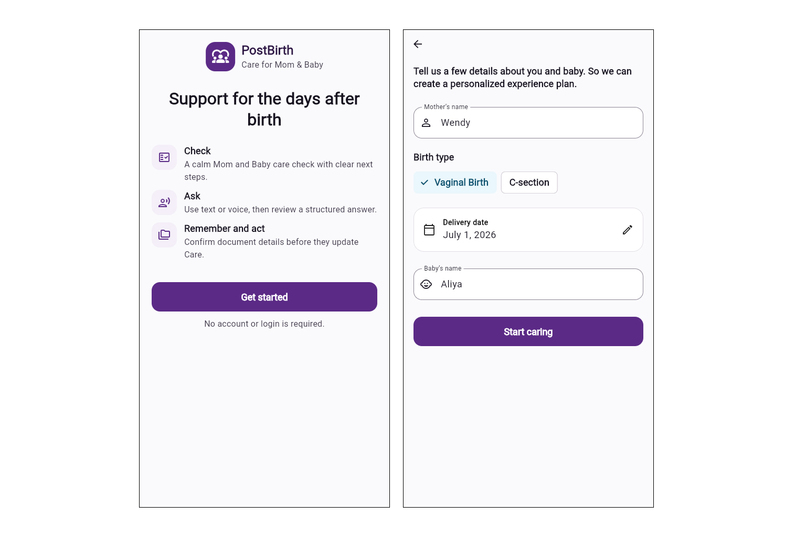
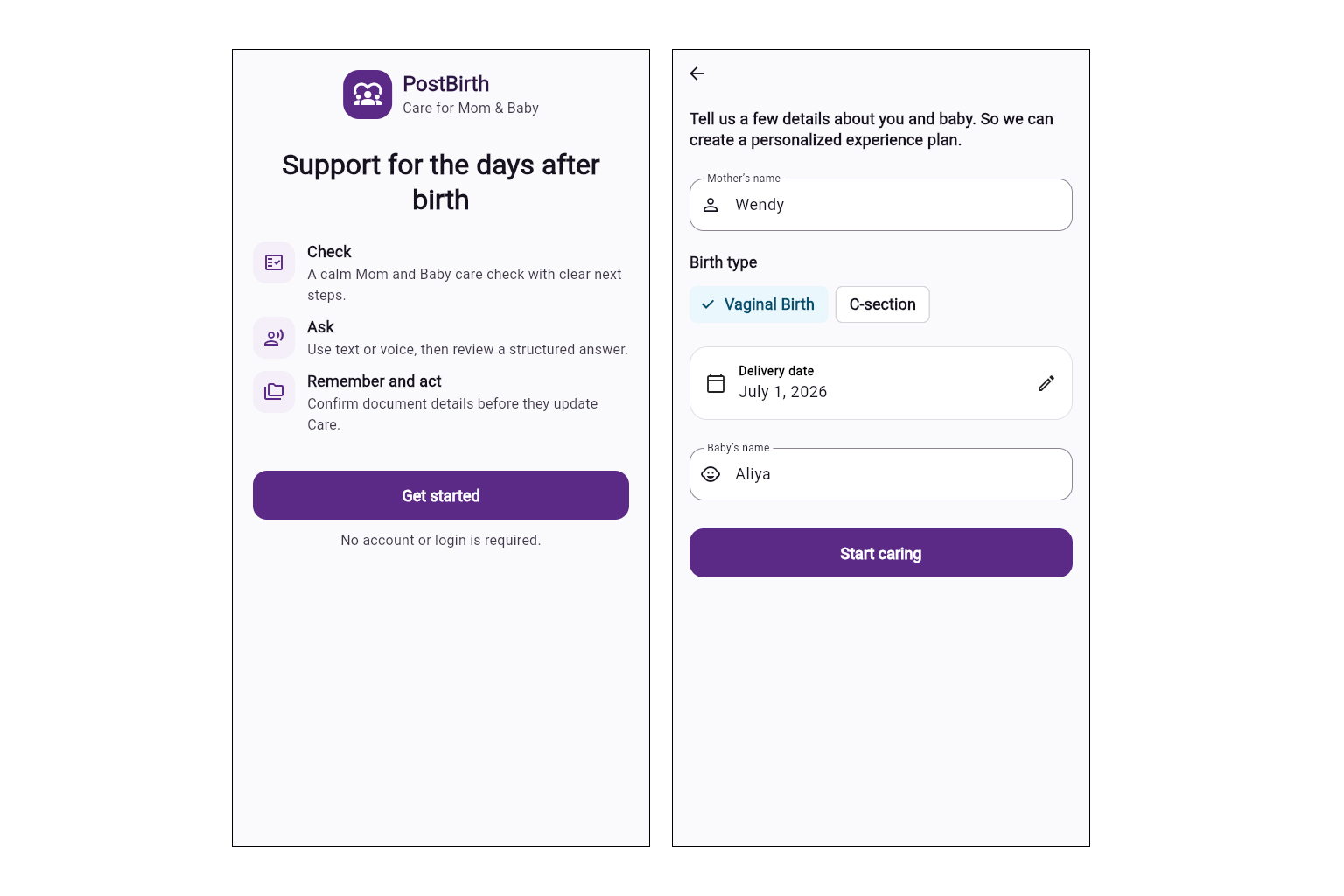
Onboarding screens
-
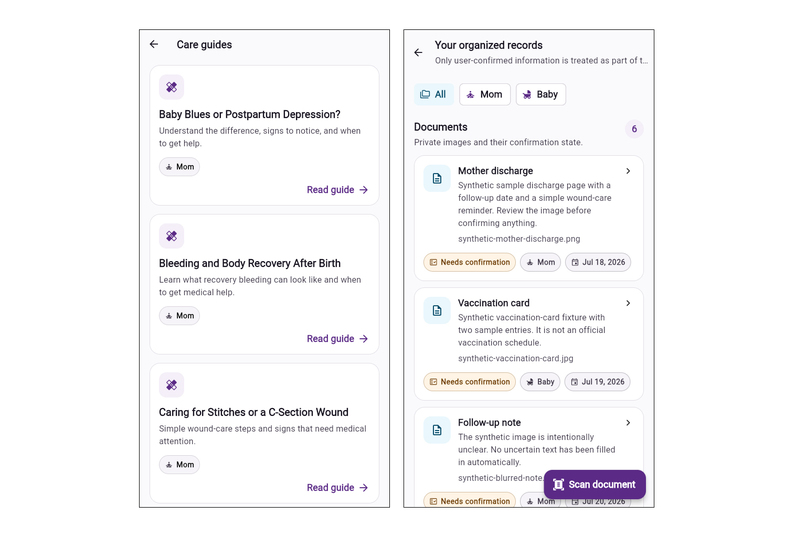
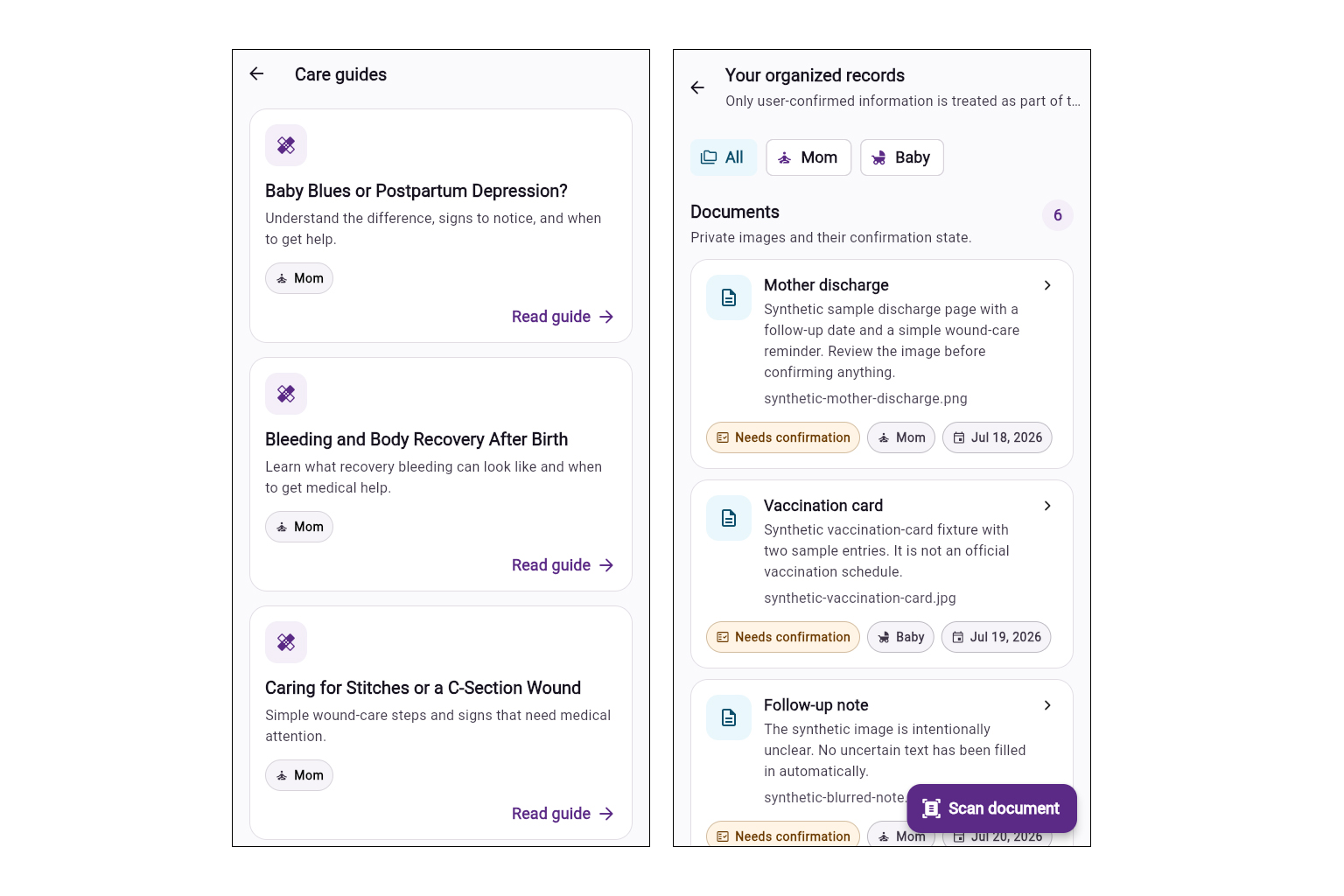
Post birth articles
Inspiration
PostBirth was inspired by a conversation with my wife about a friend who had recently given birth. While everyone focused on the baby, she was exhausted from childcare, household work, sleepless nights, and emotional pressure. At times, she felt depressed, regretted becoming a mother, and experienced frightening thoughts about harming herself or the baby.
This made me realise how easily a mother’s wellbeing can be overlooked after childbirth. I began researching postpartum recovery, maternal mental health, and newborn care, and was shocked to learn that WHO reports at least 40 million women each year may experience long-term health problems caused by childbirth.
That personal story and research led to PostBirth — Care for Mom & Baby, designed to support the mother and baby together.
What it does
PostBirth — Care for Mom & Baby is an Android app that supports mothers and babies together after delivery.
Users can check how Mom and Baby are feeling, ask questions through voice or text, and receive simple guidance about what to observe and when professional care may be needed.
PostBirth also allows users to scan discharge papers, prescriptions, reports, and vaccination cards. It explains the information in simple language and asks the user to confirm every extracted detail before saving it.
The app includes:
- A guided Mom and Baby well-being check-in
- Separate question modes for Mom, Baby, or Together
- Postpartum and newborn warning-sign awareness
- Stage-based care guidance
- Mother and baby health records
- Vaccination reminders
- Nearby hospital and clinic search
PostBirth does not diagnose conditions or replace doctors. It helps families understand concerns, stay organized, and identify the next appropriate step.
How I built it
I built PostBirth as an Android app using Flutter and Dart. I used GPT-5.6 Sol through Codex and ChatGPT for product planning, UX decisions, application architecture, coding support, safety flows, testing, and documentation.
The app uses Supabase Edge Functions and PostgreSQL for backend logic and data management. Cloudflare R2 stores documents privately, while Cloudflare Workers AI supports voice transcription.
I also created a mock-to-real architecture so the complete experience can run with safe synthetic data while external services are configured and tested.
Challenges I ran into
One of my biggest technical challenges was choosing services that were practical for a hackathon. Many APIs required billing setup, account verification, or paid credits before I could test them properly.
I initially planned to use Google Cloud Vision for document reading and Google Places for nearby-care search. During development, their setup requirements became a blocker, so I researched alternatives and changed parts of the architecture midway through the project.
To avoid rebuilding the entire app, I created a mock-to-real provider structure. This allowed PostBirth to continue working with safe demo data while services such as Supabase, Cloudflare R2, and Workers AI were configured and tested separately.
I also had to keep API keys secure, move sensitive operations to backend functions, and make sure service changes did not break the main user experience.
Accomplishments that I'm proud of
I am proud that PostBirth addresses a real but often overlooked problem: after delivery, almost everyone asks about the baby, while the mother may be recovering from pain, exhaustion, sleepless nights, breastfeeding difficulties, anxiety, and emotional distress.
I did not want to build another baby tracker. I created one connected experience that supports Mom and Baby together, because their wellbeing is deeply linked. PostBirth helps families check warning signs, ask questions, understand care information, manage records, and decide when professional help may be needed.
My biggest accomplishment is turning a painful personal story into a working Android product that could help mothers feel seen, supported, and less alone during one of the most vulnerable periods of their lives. I also built the app with safety in mind, avoiding diagnosis and false reassurance while keeping the experience simple, private, and practical.
What I learned
I learned that AI can make postpartum support easier to access by turning complex information into clear, timely guidance for Mom, Baby, or Both.
Voice input helps exhausted parents ask questions quickly, while AI can organize concerns and suggest when professional care may be needed.
Most importantly, healthcare AI must work with fixed safety rules, human confirmation, privacy controls, and clear limits. It should reduce confusion—not replace doctors.
What's next for PostBirth
The next step is to turn PostBirth from a prototype into a trusted care companion for mom and baby after the hackathon with more enhancements.
I plan to add:
-Clinically reviewed MoM and newborn guidance. -More languages, live voice, and audio support. -Personalized recovery and baby-care plans. -Follow-up, vaccination, and medicine reminders. -Partner and family support guidance. -Simple doctor-visit summaries based on confirmed information. -Longer-term support for feeding, milestones, and maternal recovery.
- Connecting with a real psychologist for mental health and Doctors.
To bring PostBirth into real life, I would first test it with mothers and families, then improve it with guidance from obstetricians, pediatricians, mental-health professionals, and breastfeeding experts.
The product could later work with hospitals, maternity clinics, NGOs, and community health workers to reach families after discharge—especially those who may not have regular access to postnatal support.
My long-term goal is to help mothers feel noticed, help families recognize concerns earlier, and make support easier to reach when it matters most.
Built With
- chatgpt
- cloudflarer2
- codex
- dart
- flutter
- gpt-5.6sol
- postgresql
- supabase
- voiceai
- workersai


Log in or sign up for Devpost to join the conversation.