
Inspiration
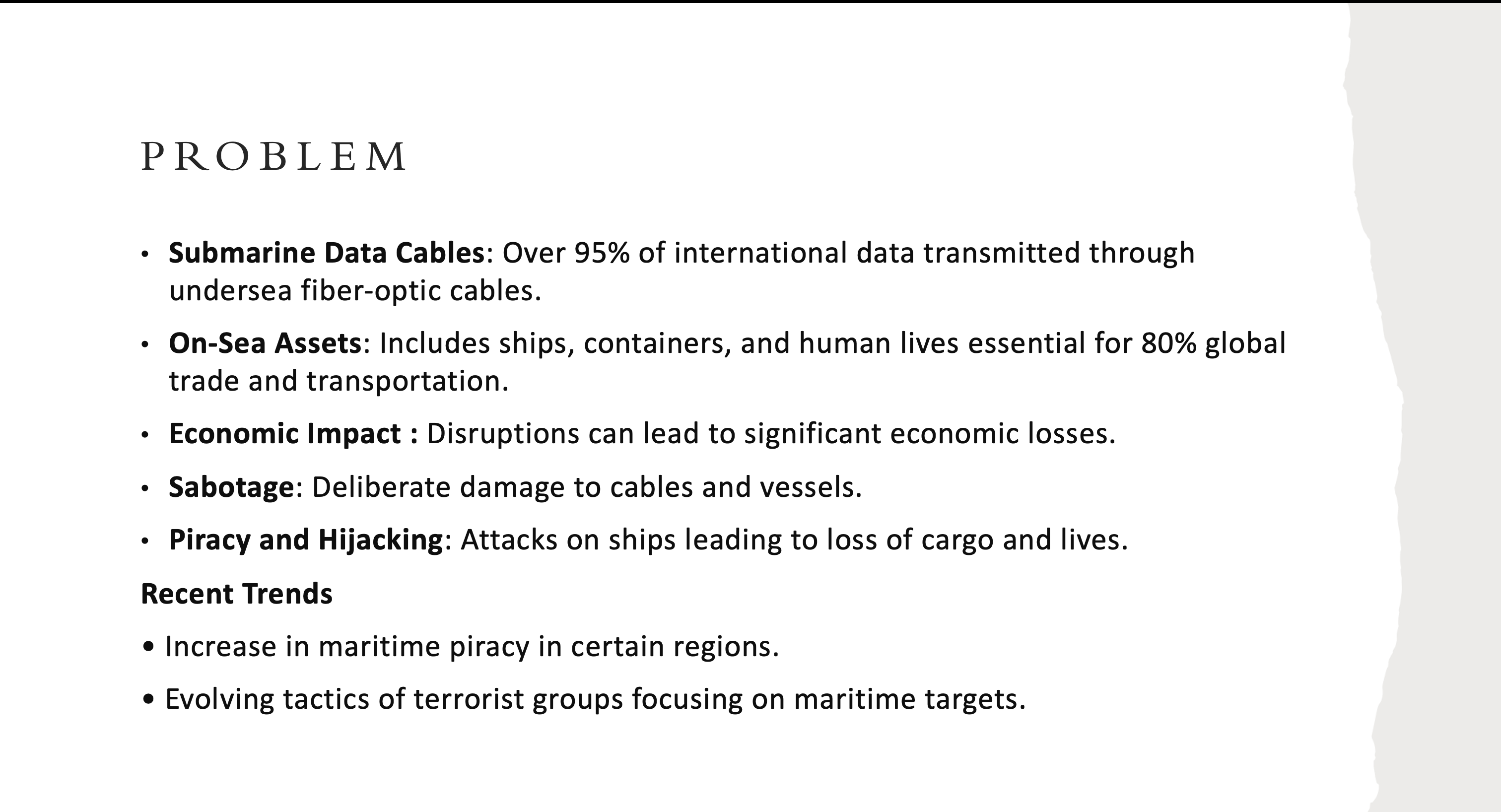
The increasing threats to undersea and on-sea technology infrastructure, such as submarine data cables and maritime vessels, pose significant risks to global communications, trade, and human lives. Recognizing the critical need for a proactive solution, we were inspired to leverage advanced technology to safeguard these vital assets. The idea of unifying disparate data sources and stakeholders into a single, collaborative platform motivated us to create POSEIDON’s GRID—a system designed to enhance maritime security through real-time analysis and seamless cooperation.
What it does
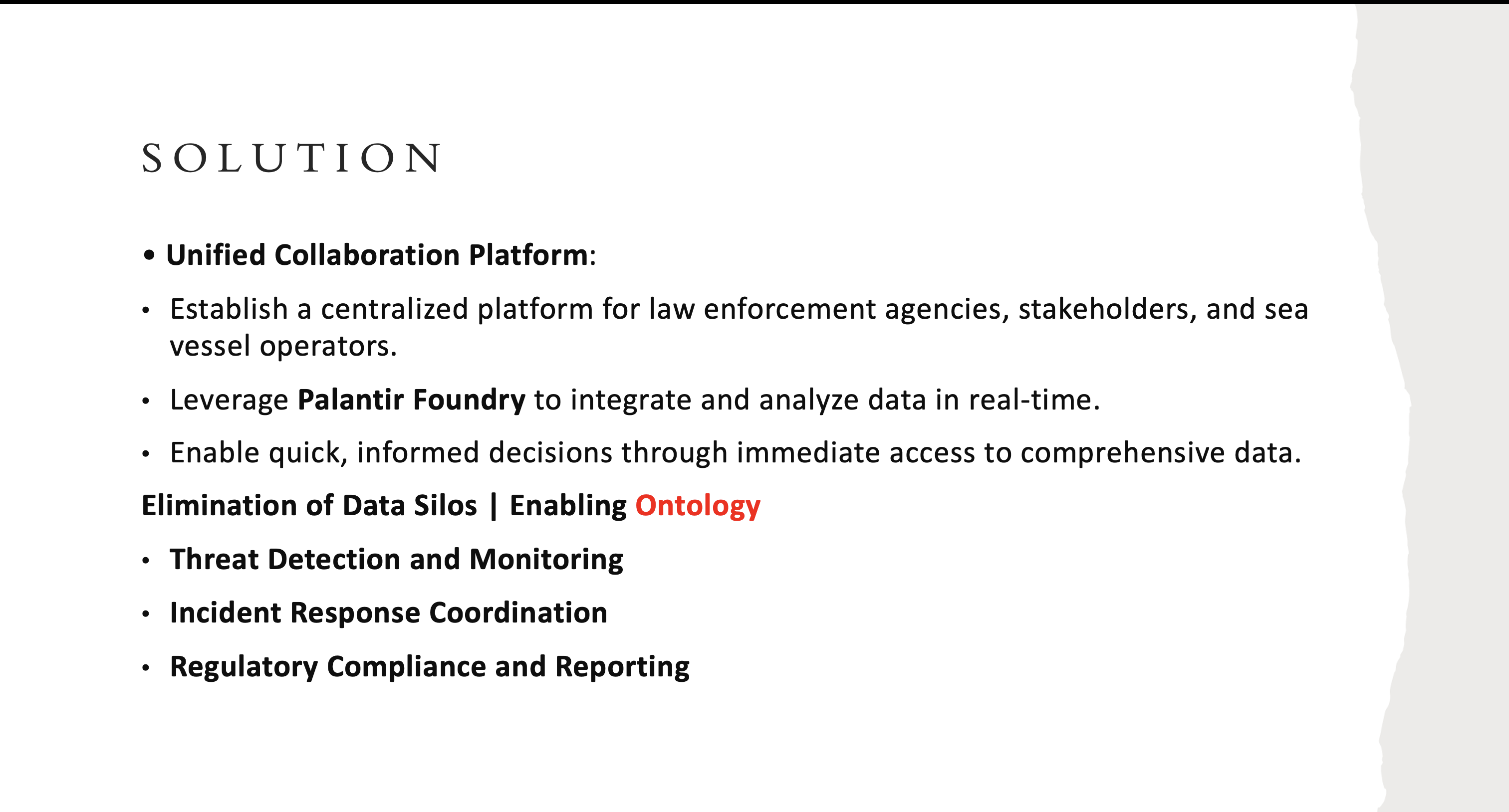
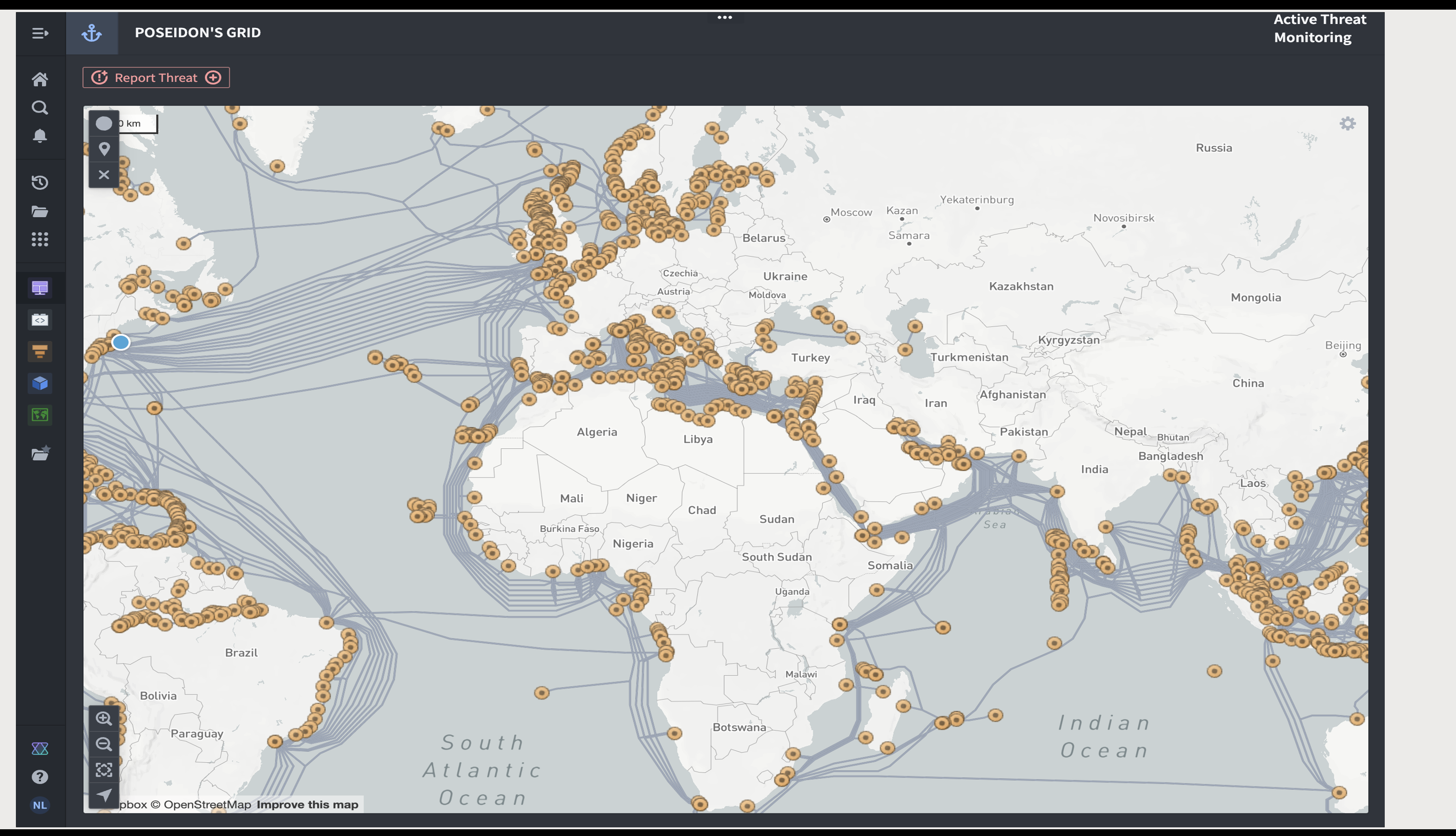
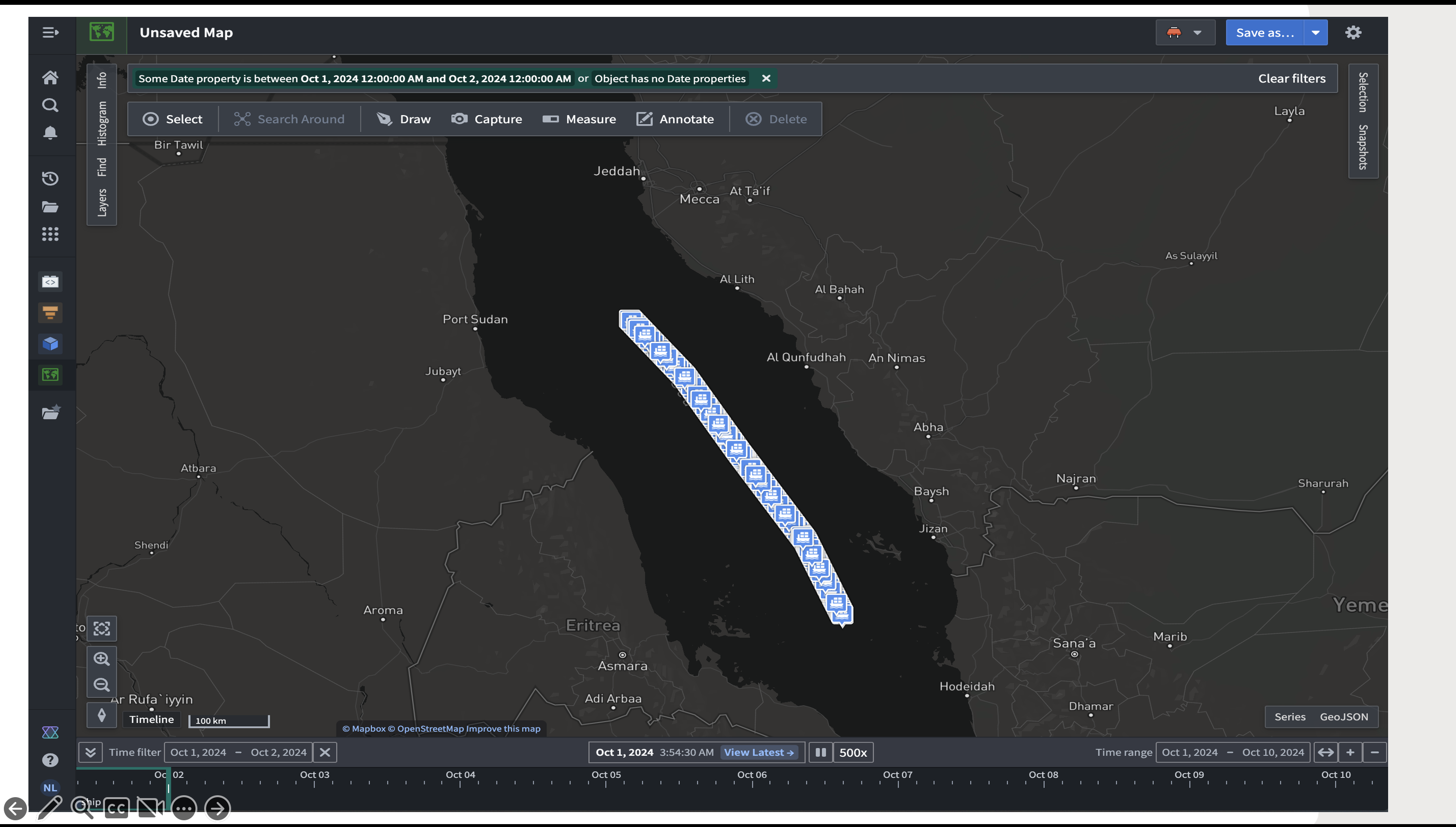
POSEIDON’s GRID is a common operating platform built on Palantir Foundry that unites law enforcement agencies, maritime stakeholders, and vessel operators. It integrates data from various sources, including ship movements, undersea cable locations, weather conditions, and threat intelligence. By utilizing real-time analytics, geospatial visualization, and the power of Foundry’s Ontology, the platform provides comprehensive situational awareness. It enables quick decision-making through interactive dashboards, alerts for potential threats near critical infrastructure, and collaborative tools for coordinated responses.
How I built it
We began by aggregating data from multiple sources, ensuring compatibility and consistency across datasets. Using Palantir Foundry’s robust data integration capabilities, we ingested and harmonized structured and unstructured data. The Ontology was a crucial component, allowing us to model entities like ships, cables, and incidents, and define relationships between them. We developed geospatial analyses using Contour to visualize maritime activities and identify potential threats. Advanced analytics and machine learning models were implemented to predict and detect anomalies. Throughout the development process, we focused on user-friendly interfaces and secure, role-based access to facilitate collaboration among different stakeholders.
Challenges I ran into
One of the primary challenges was handling the vast and diverse datasets, which required careful attention to data quality and compatibility. Integrating real-time data streams with historical records posed synchronization issues. Ensuring data security and compliance with international regulations was also complex, given the sensitive nature of the information. Another challenge was designing the Ontology to accurately represent the intricate relationships between entities without oversimplification. Balancing the need for comprehensive analytics with user-friendly interfaces required iterative design and testing.
Accomplishments that I’m proud of
We successfully created a unified platform that bridges the gap between various organizations involved in maritime security. The implementation of the Ontology enabled a shared understanding of data, enhancing collaboration and efficiency. Our predictive analytics models achieved high accuracy in identifying potential threats, demonstrating the effectiveness of advanced technology in proactive security measures. We are proud of the intuitive dashboards and visualization tools that make complex data accessible to users with varying levels of technical expertise.
What I learned
This project reinforced the importance of data integration and the value of a well-structured Ontology in complex systems. We learned how critical it is to consider data security and compliance from the outset. The experience highlighted the challenges of real-time data processing and the necessity of scalable solutions to handle growing data volumes. Collaborating across different organizations underscored the need for clear communication and adaptability. We also gained deeper insights into maritime security issues and the potential impact of technology in mitigating risks.
What’s next for POSEIDON’s GRID
Moving forward, we plan to enhance POSEIDON’s GRID by incorporating additional data sources, such as satellite imagery and social media analytics, to further improve threat detection capabilities. We aim to refine our machine learning models for even greater predictive accuracy. Expanding the platform’s user base to include more international partners will enhance collaborative efforts in maritime security. We also plan to develop mobile applications to provide on-the-go access for field operatives. Continuous feedback and iterative development will drive the evolution of POSEIDON’s GRID as a leading solution in safeguarding undersea and on-sea infrastructure.
Built With
- foundry
- python
- sql
- typescript


Log in or sign up for Devpost to join the conversation.