PoseCheck Pro: AI-Powered Exercise Trainer
What Inspired Us
The rise of home workouts during the pandemic highlighted a critical issue: exercising alone often leads to poor form, risking injuries like joint pain or back strain. As a fitness enthusiast and tech lover, I was inspired to create PoseCheck Pro, an AI-powered exercise trainer that ensures safe, effective workouts without a coach. My goal was to leverage computer vision and audio feedback to make fitness accessible and injury-free, aligning with the hackathon’s focus on innovative health solutions. I envisioned a tool that feels like a personal trainer, guiding users through exercises with real-time corrections.
What We Learned
Building PoseCheck Pro was a deep dive into computer vision and web app development:
- Mediapipe Pose Estimation: Learned to process 33 skeletal landmarks for precise posture tracking, tuning parameters like
min_detection_confidencefor reliability. - Streamlit Development: Mastered creating interactive UIs with sidebar controls and real-time webcam feeds.
- Audio Integration: Explored gTTS and pydub for text-to-speech, caching MP3s to optimize performance, and JavaScript for seamless audio playback.
- OpenCV: Gained expertise in webcam handling and image processing for live video analysis.
- Debugging Challenges: Developed skills in handling webcam delays, Mediapipe warnings, and browser autoplay restrictions, enhancing my problem-solving toolkit.
How We Built It
PoseCheck Pro is a Streamlit web app powered by Python, integrating multiple technologies:
- Tech Stack:
- Mediapipe: Tracks pose landmarks for arm raises (150-210° angles) and squats (50-90° knee angle).
- OpenCV: Captures and processes webcam video (640x480 resolution).
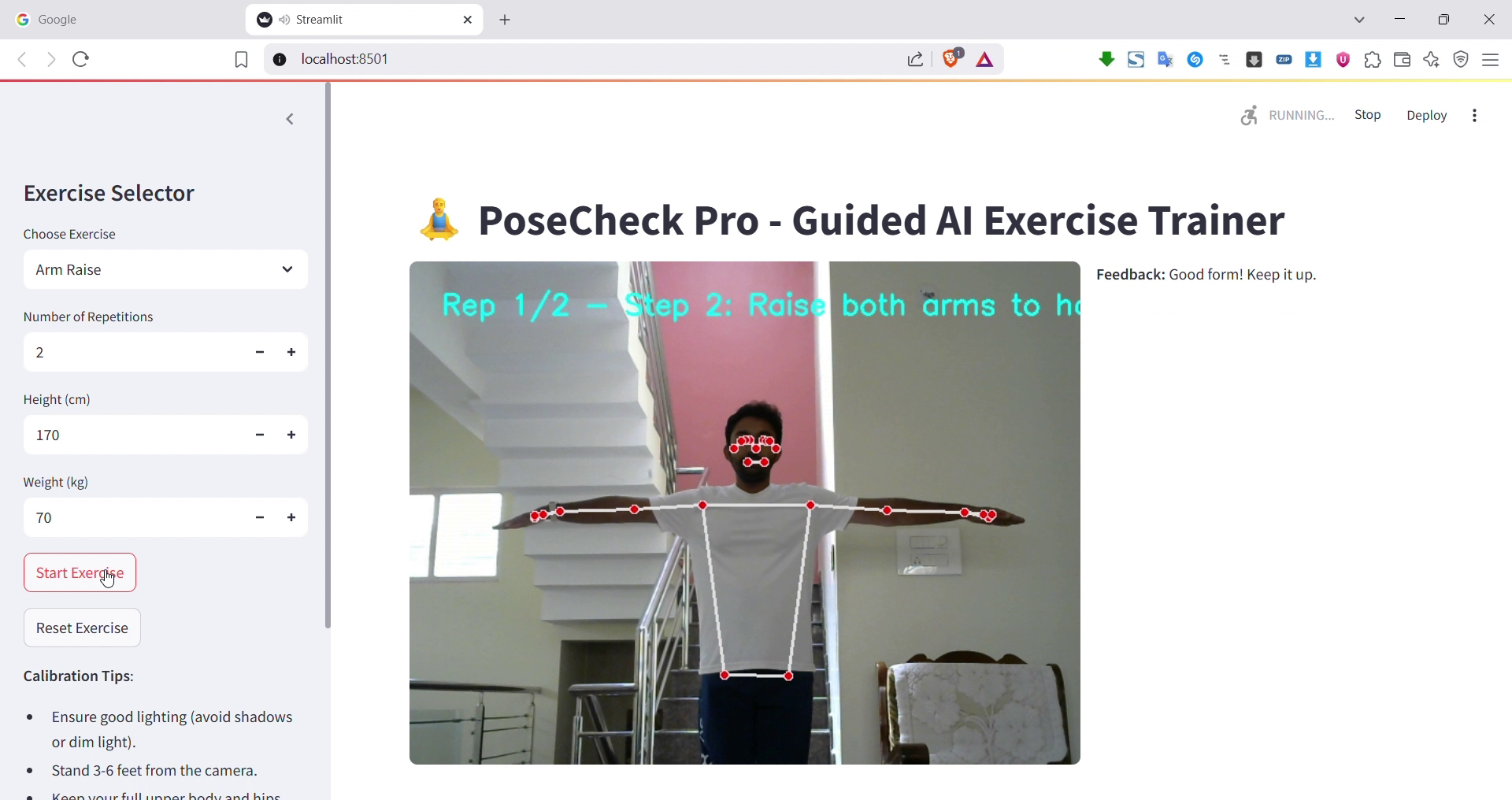
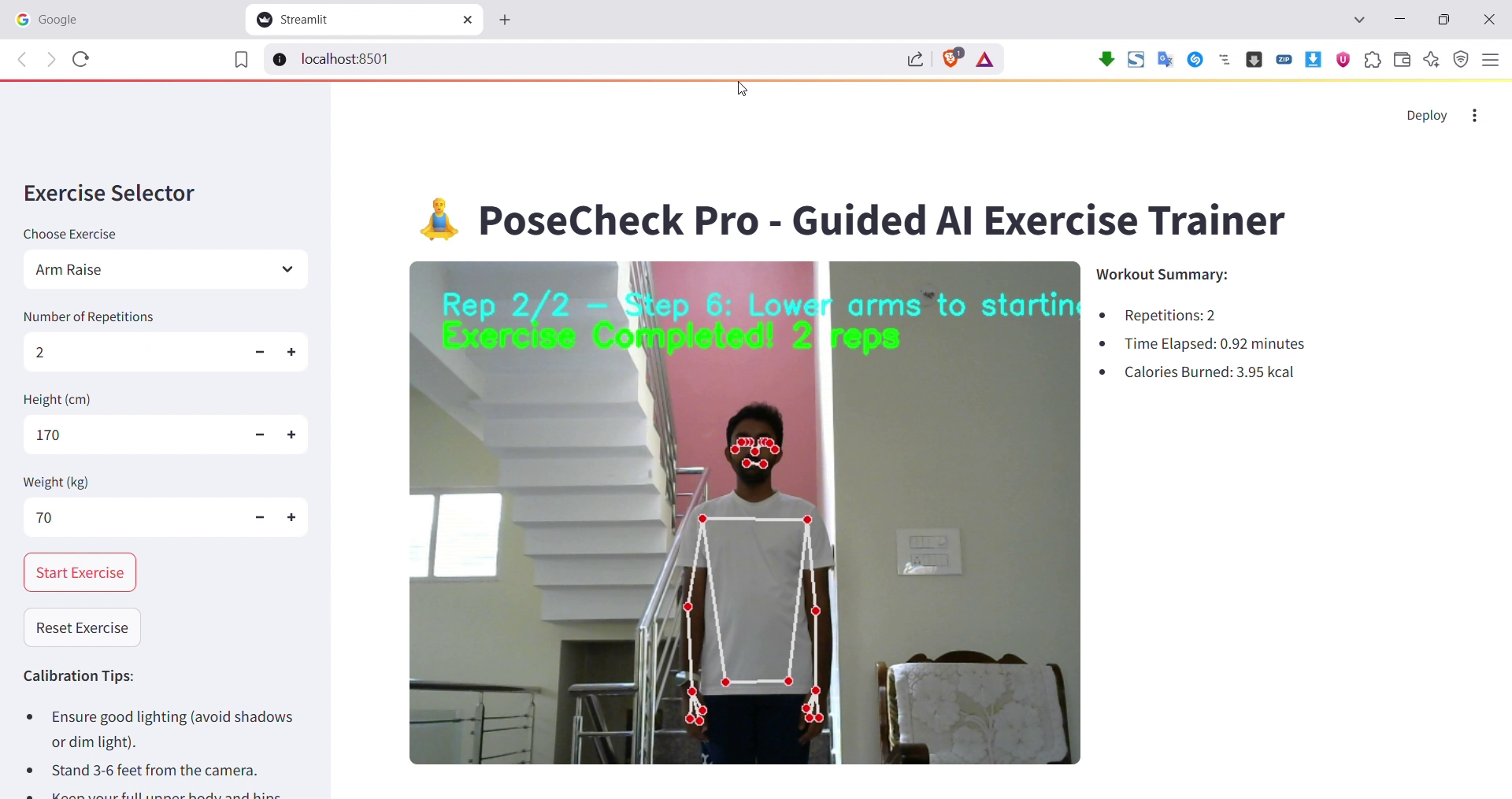
- Streamlit: Provides a sleek UI with a two-column layout (webcam/debug on left, feedback on right) and sidebar for exercise selection, reps, and user stats.
- gTTS & pydub: Generates audio instructions, cached as MP3s in a local
audio_cachedirectory for efficiency. - JavaScript (via Streamlit components): Plays audio without a visible play bar, ensuring a clean UX.
- Features:
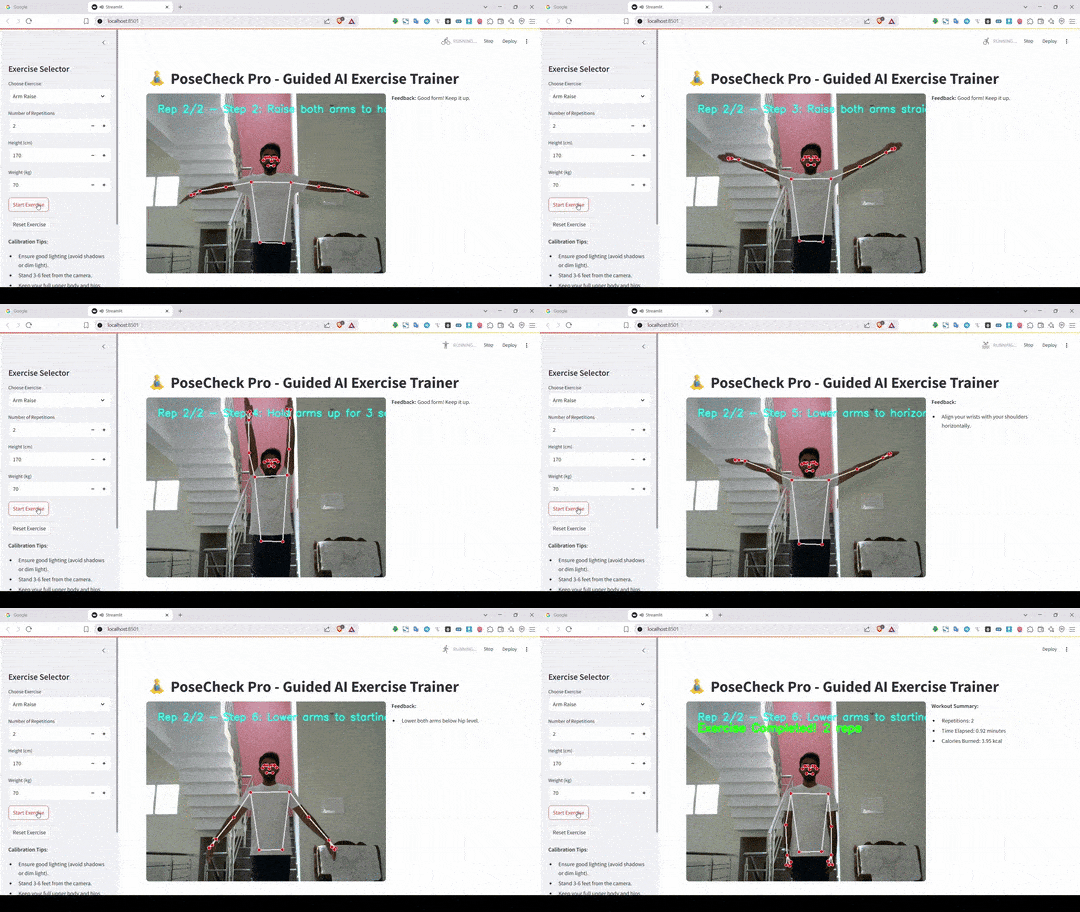
- Real-time posture correction with feedback (e.g., “Level your shoulders”).
- Audio-guided instructions for each exercise step (e.g., “Hold arms up for 3 seconds”).
- Personalized stats: tracks reps, time (starts when camera activates), and calories burned (MET-based formula).
- Supports arm raise and squat exercises with strict form validation (5-frame threshold).
- Development Process:
- Designed exercise flows (6 steps for arm raise, 3 for squat) with validators and feedback functions.
- Implemented a debouncing system (0.3s delay) for stable pose validation.
- Optimized audio playback with a queue system (
audio_end_time) to prevent overlaps. - Tested on a local webcam, ensuring calibration tips (e.g., “Stand 3-6 feet”) for accuracy.
Challenges We Faced
The hackathon’s tight timeline brought several hurdles:
- Webcam Latency: Initial 3-minute camera startup delays skewed workout timing. I fixed this by starting the timer only when the camera was active (
cap.read()success). - Mediapipe Warnings: Encountered
NORM_RECTerrors due to missing image dimensions. Resolved by setting explicit frame sizes (640x480) and tuning model complexity. - Audio Playback: Browser autoplay policies blocked audio. I implemented JavaScript-based playback (
play_audio_backend) with unique keys to bypass restrictions. - Form Validation: Ensuring accurate pose detection required fine-tuning angle thresholds (e.g., 150-210° for arms) and visibility checks (>0.1) to avoid false positives.
- Resource Constraints: As a solo developer, balancing UI design, AI integration, and testing was intense. I prioritized core features and iterative debugging to meet the deadline.
PoseCheck Pro is more than a hackathon project—it’s a step toward safer, smarter fitness. I’m excited to explore its potential in physiotherapy, rehab, or group workouts. Check out the demo video and share your feedback!
Built With
- javascript
- mediapipe
- numpy
- opencv
- pydub
- python


Log in or sign up for Devpost to join the conversation.