-
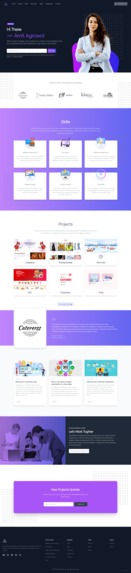
Full page screen shot
Inspiration
The inspiration behind my portfolio website came from a desire to showcase my skills, projects, and experiences in a professional and visually appealing manner. I wanted to create a platform that would effectively communicate my abilities and highlight the work I have done.
What it does
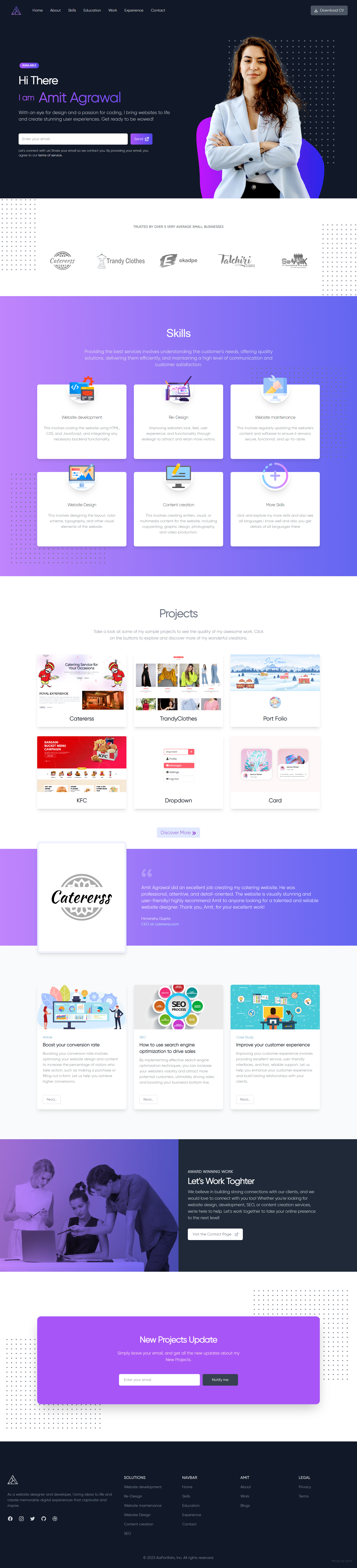
My portfolio website serves as an online platform where I can showcase my projects, skills, and experiences to potential clients, employers, or collaborators. It provides an overview of my background, education, work experience, and relevant skills. Additionally, it includes a portfolio section where I display the projects I have worked on, with detailed descriptions and visuals. The website also features a contact page, allowing visitors to reach out to me directly.
How we built it
To build my portfolio website, I used a combination of HTML, CSS, and JavaScript. I started by creating the basic structure of the website using HTML, defining the different sections and elements. Then, I used CSS to style the website, making it visually appealing and ensuring a cohesive design. I implemented responsive design techniques to ensure that the website looks great on different devices and screen sizes. Finally, I added some interactivity and dynamic elements using JavaScript, such as smooth scrolling, animations, and form validation.
Challenges we ran into
Throughout the development process, I encountered several challenges. One of the main difficulties was achieving the desired design and layout. It required careful planning and attention to detail to ensure that the website looked professional and aesthetically pleasing. I also faced challenges in optimizing the website's performance and making it load quickly, especially when incorporating media files such as images and videos. Additionally, I had to tackle the challenge of ensuring cross-browser compatibility to make sure the website functions correctly on different web browsers.
Accomplishments that we're proud of
I am proud of several accomplishments with my portfolio website. Firstly, I successfully created a visually appealing and user-friendly design that effectively presents my work and skills. I am proud of the smooth scrolling and animations that enhance the overall user experience. Additionally, I implemented a responsive design, ensuring that the website looks great on various devices, including desktops, tablets, and mobile phones. Lastly, I am proud of the attention to detail and the polished look and feel of the website.
What we learned
During the development of my portfolio website, I learned valuable skills and gained experience in web development. I deepened my understanding of HTML, CSS, and JavaScript, improving my ability to create functional and visually appealing websites. I also learned about the importance of user experience design and how small details can greatly impact the overall impression of a website. Additionally, I learned about performance optimization techniques and the challenges of ensuring cross-browser compatibility.
What's next for Portfolio website
Moving forward, I plan to continue updating and improving my portfolio website. I will regularly add new projects and update existing ones to showcase my latest work. I also aim to refine the design and layout further, keeping up with the latest design trends and techniques. Additionally, I intend to optimize the website's performance even further, focusing on faster load times and improved responsiveness. Lastly, I will explore incorporating additional features, such as a blog section or integration with other platforms, to enhance the overall functionality and user experience of the website.


Log in or sign up for Devpost to join the conversation.