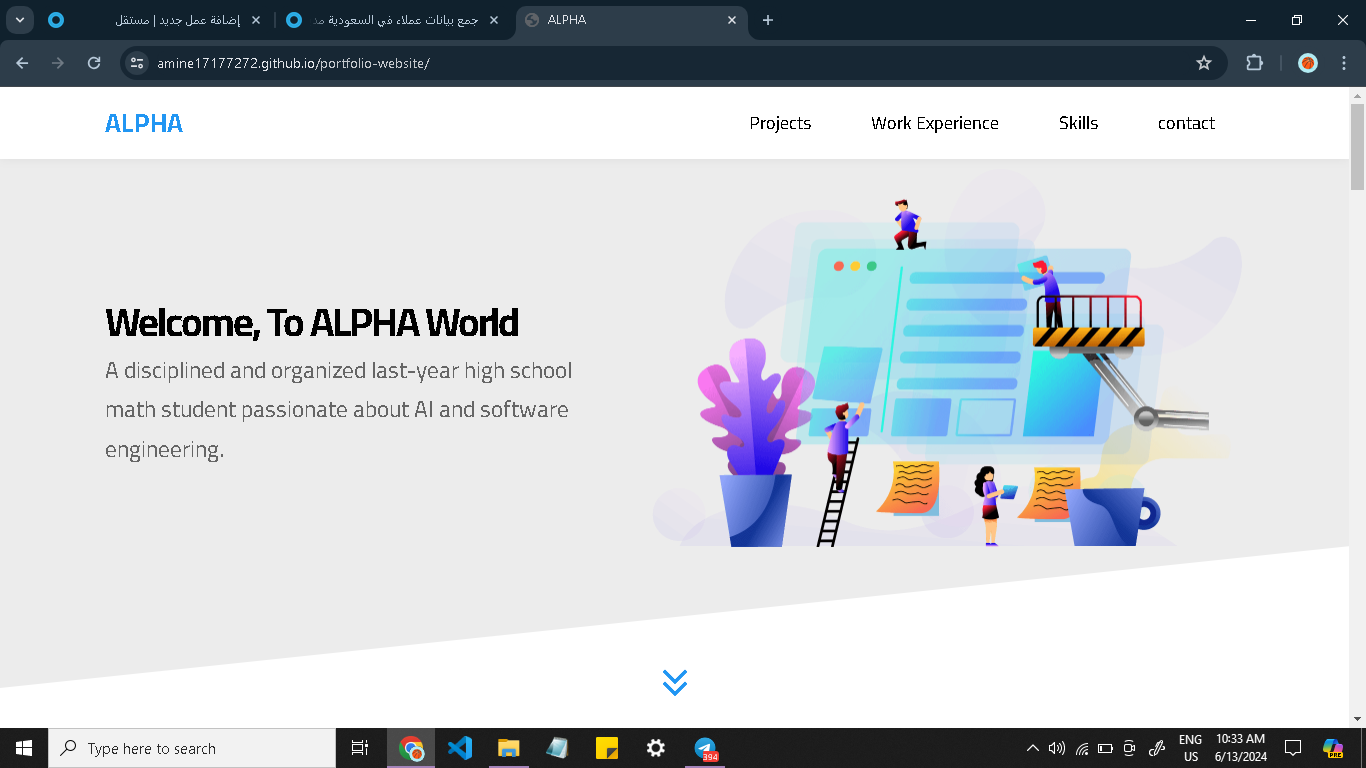
Creating a portfolio website was driven by my desire to have a centralized platform to showcase my work, skills, and professional journey. It serves as a digital resume, offering potential employers and collaborators an easy way to learn about me and my capabilities.
What it does
The website provides extensive information about my work history, projects, skills, and contact details. It includes links to my LinkedIn profile, CV, and Telegram, allowing visitors to connect with me easily.
How I built it
I built the portfolio website using HTML, CSS, and JavaScript for the front end, ensuring a responsive and visually appealing design. I used GitHub Pages for hosting, making it accessible to anyone with the link.
Challenges I ran into
One of the main challenges was ensuring the website is responsive across various devices and screen sizes. Additionally, integrating links and ensuring seamless navigation required careful attention to detail.
Accomplishments that I'm proud of
I'm proud of creating a professional, user-friendly portfolio that effectively showcases my skills and experiences. The integration of interactive elements and smooth navigation enhances the user experience.
What I learned
Through this project, I enhanced my skills in web development, particularly in responsive design and user experience. I also learned the importance of clear, concise content to effectively communicate my professional story.
What's next for Portfolio-Website
The next steps include continuously updating the website with new projects and experiences, optimizing it for better performance, and potentially adding new features such as a blog or portfolio case studies.

Log in or sign up for Devpost to join the conversation.