-
-
Porchlight
-
01 The moment
-
03 The idea
-
Mobile app
-
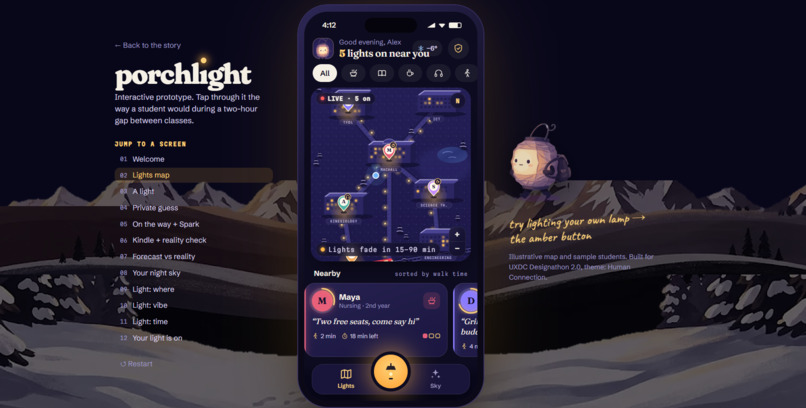
Student map
-
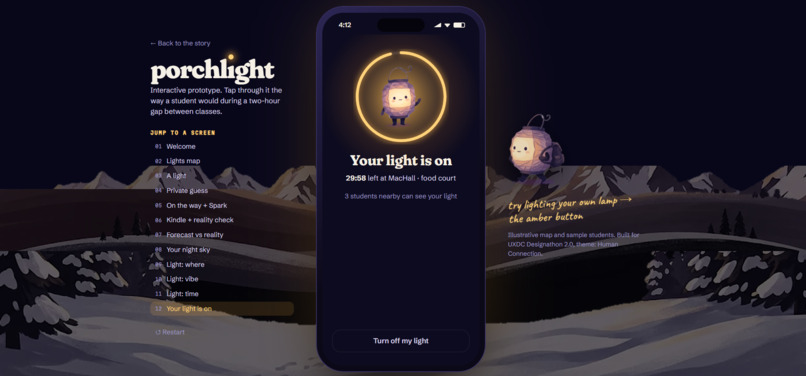
Lights on
Inspiration
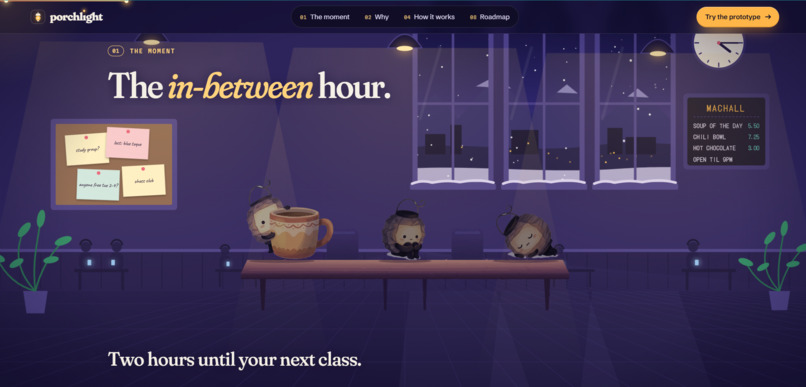
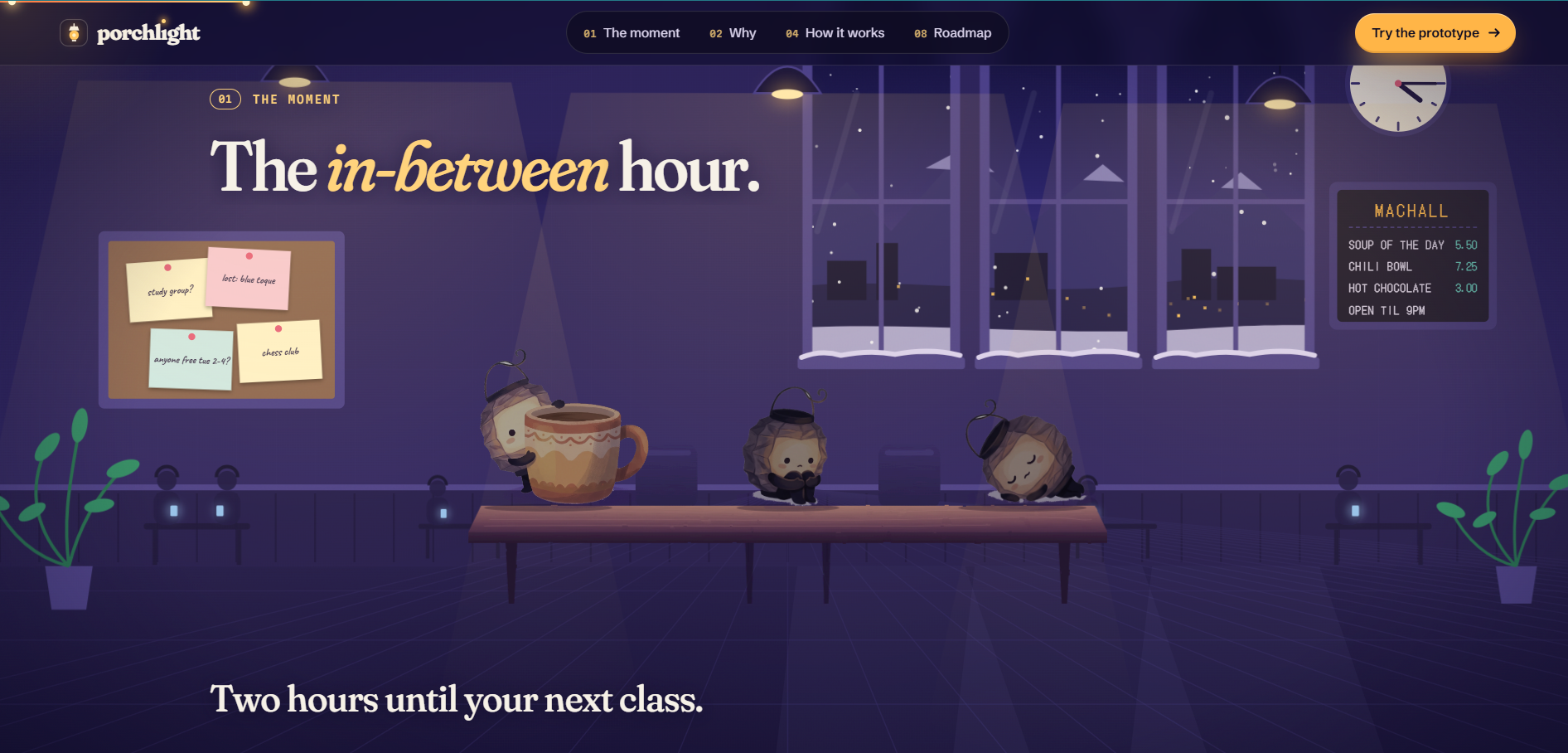
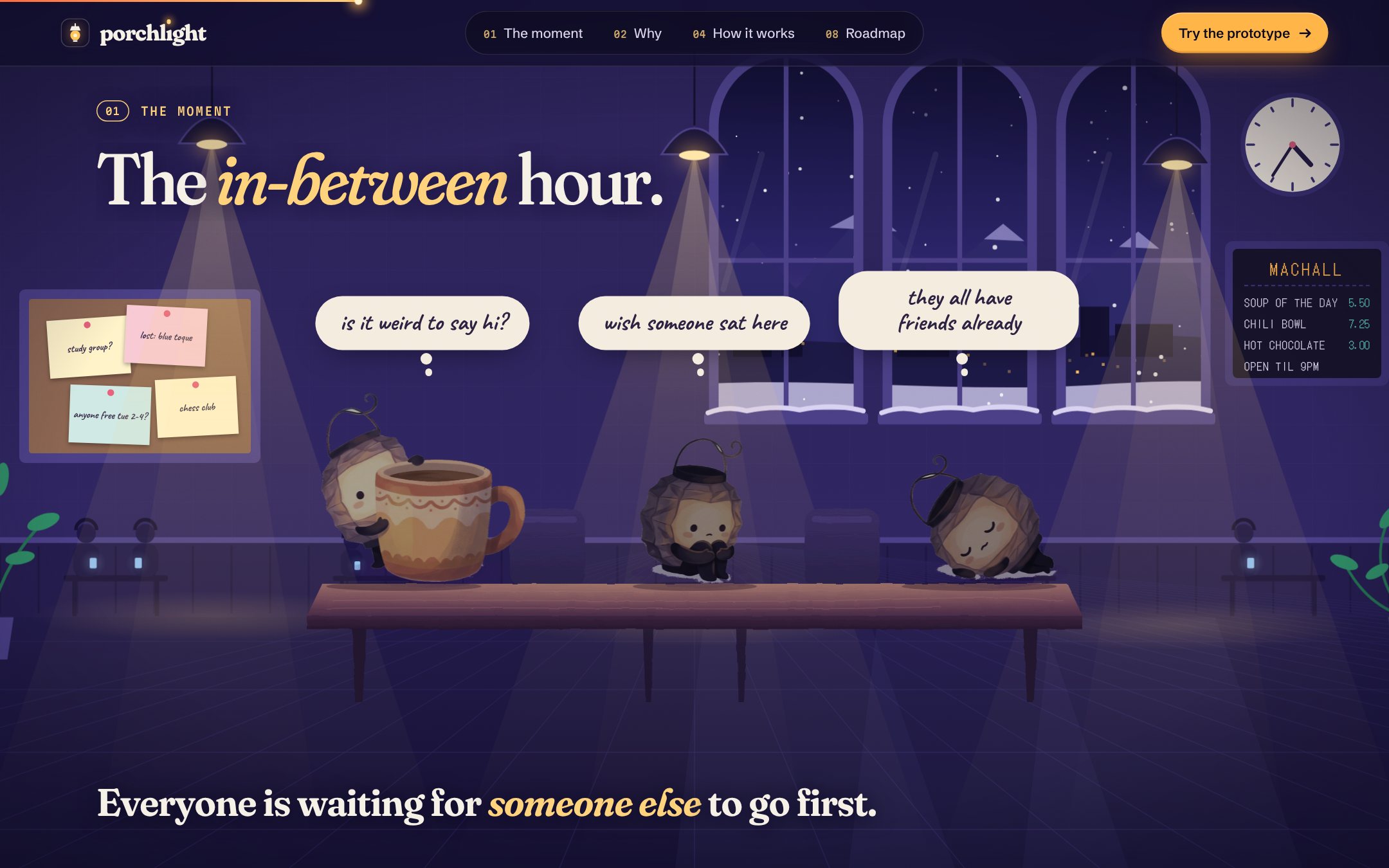
It's 4:10 pm in MacHall. Your next class is at six, home is a 45-minute C-Train ride away, so you stay. Forty people in the room, zero conversations. Everyone has headphones in, and everyone is waiting for someone else to go first.
This isn't rare:
- 69.6% of Canadian post-secondary students felt "very lonely" in the past year, and 31.2% in the last two weeks (ACHA-NCHA II, 2019, n = 55,284).
- 65% of University of Calgary students reported feeling very lonely.
- 1 in 4 Canadians aged 15–24 are always or often lonely, the loneliest age group (Statistics Canada, 2021).
- UCalgary has about 3,000 residence beds, so most students commute and wait out long gaps on campus.
Behavioural science explains why nobody moves. After talking to a stranger, people underestimate how much they were liked (the liking gap, Boothby et al., 2018). Commuters expect talking to a stranger to be unpleasant, but enjoy it more than sitting alone (Epley & Schroeder, 2014). And short chats with acquaintances measurably improve students' days (Sandstrom & Dunn, 2014).
Students don't lack the wish to connect. They lack a signal.
What it does
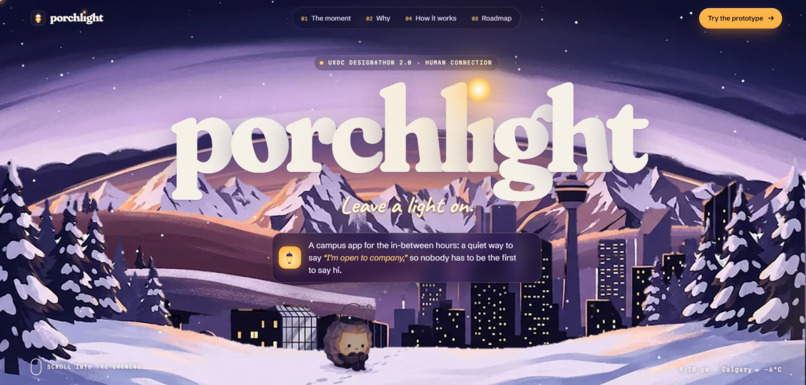
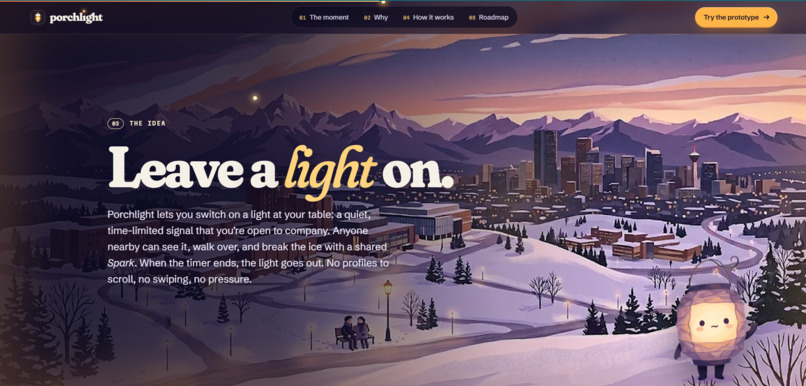
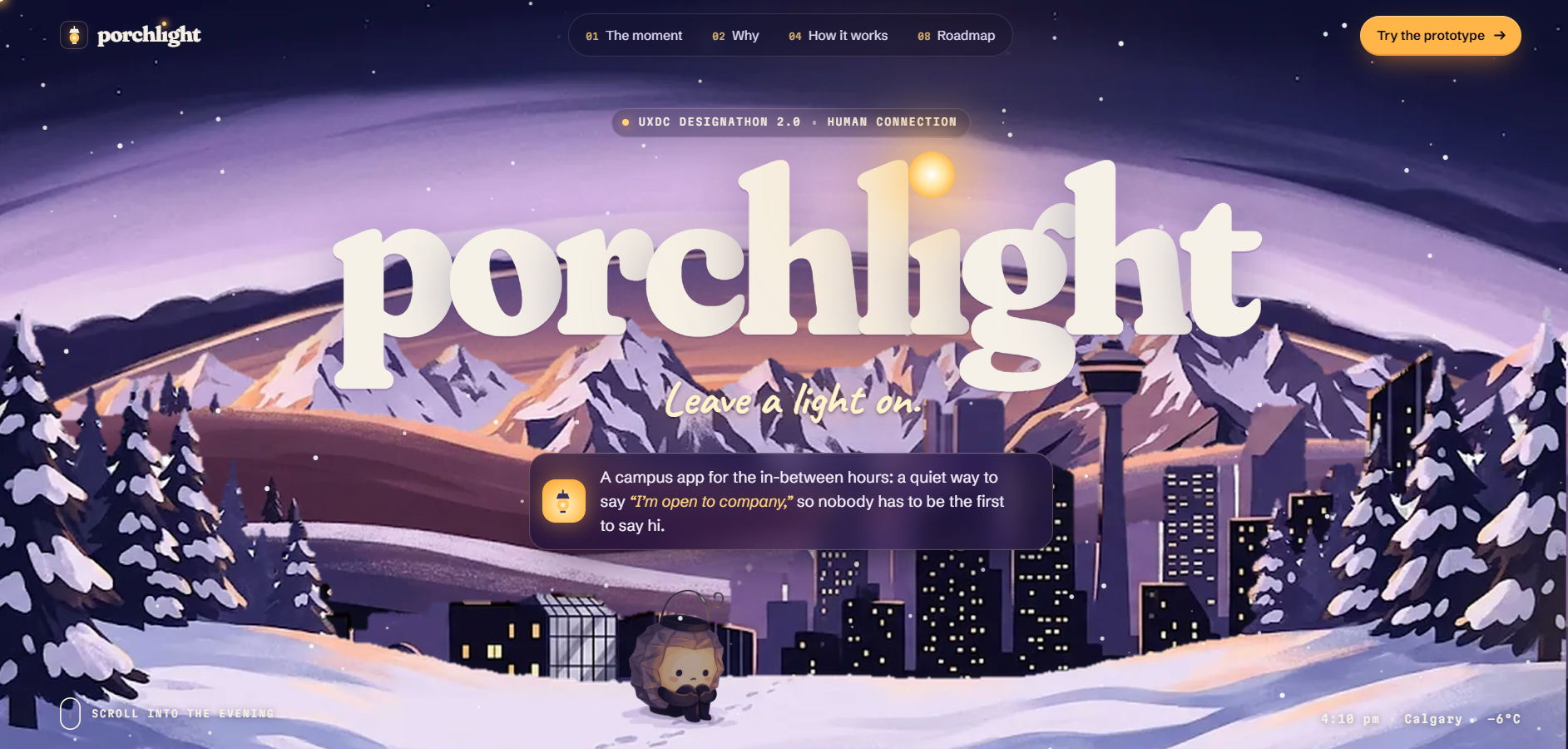
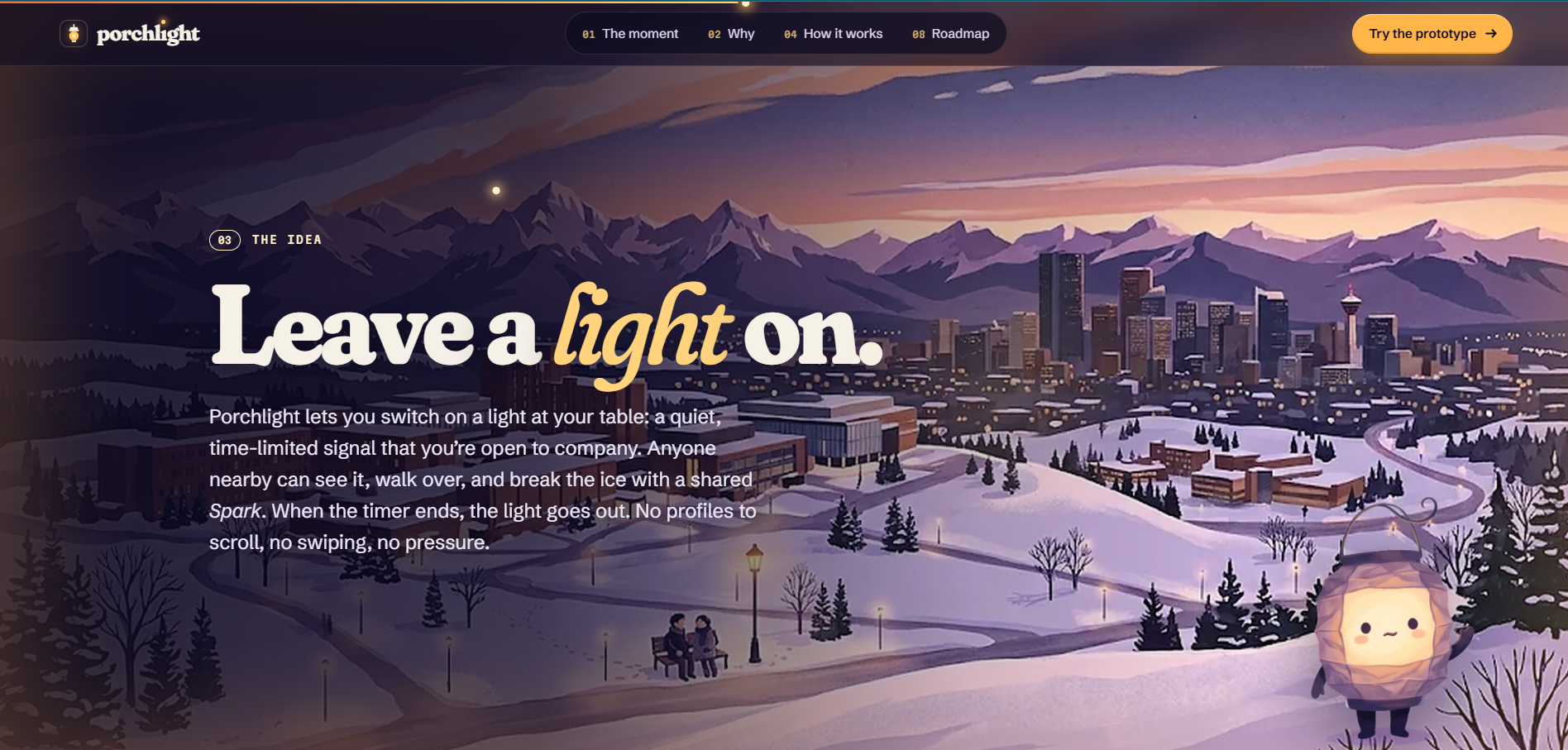
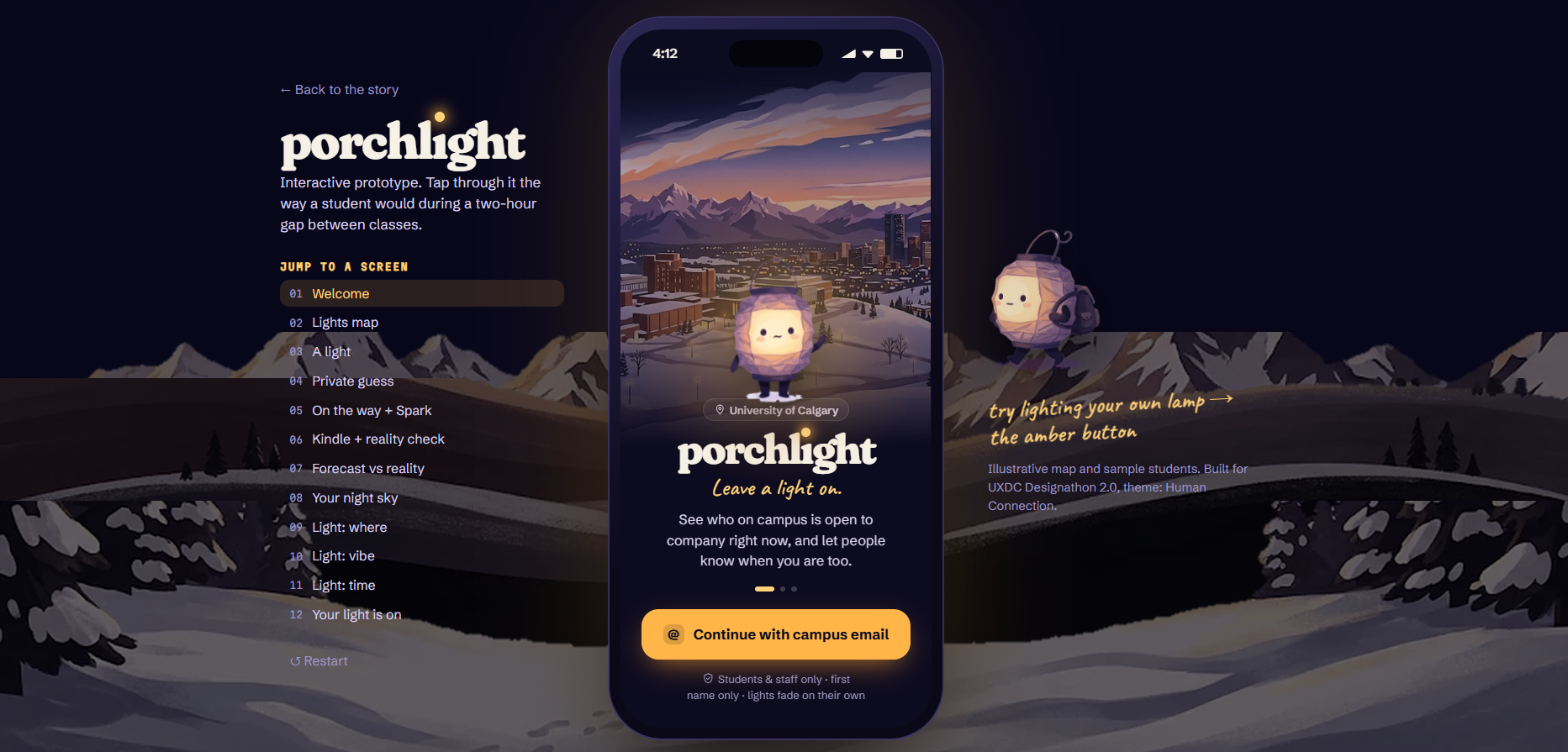
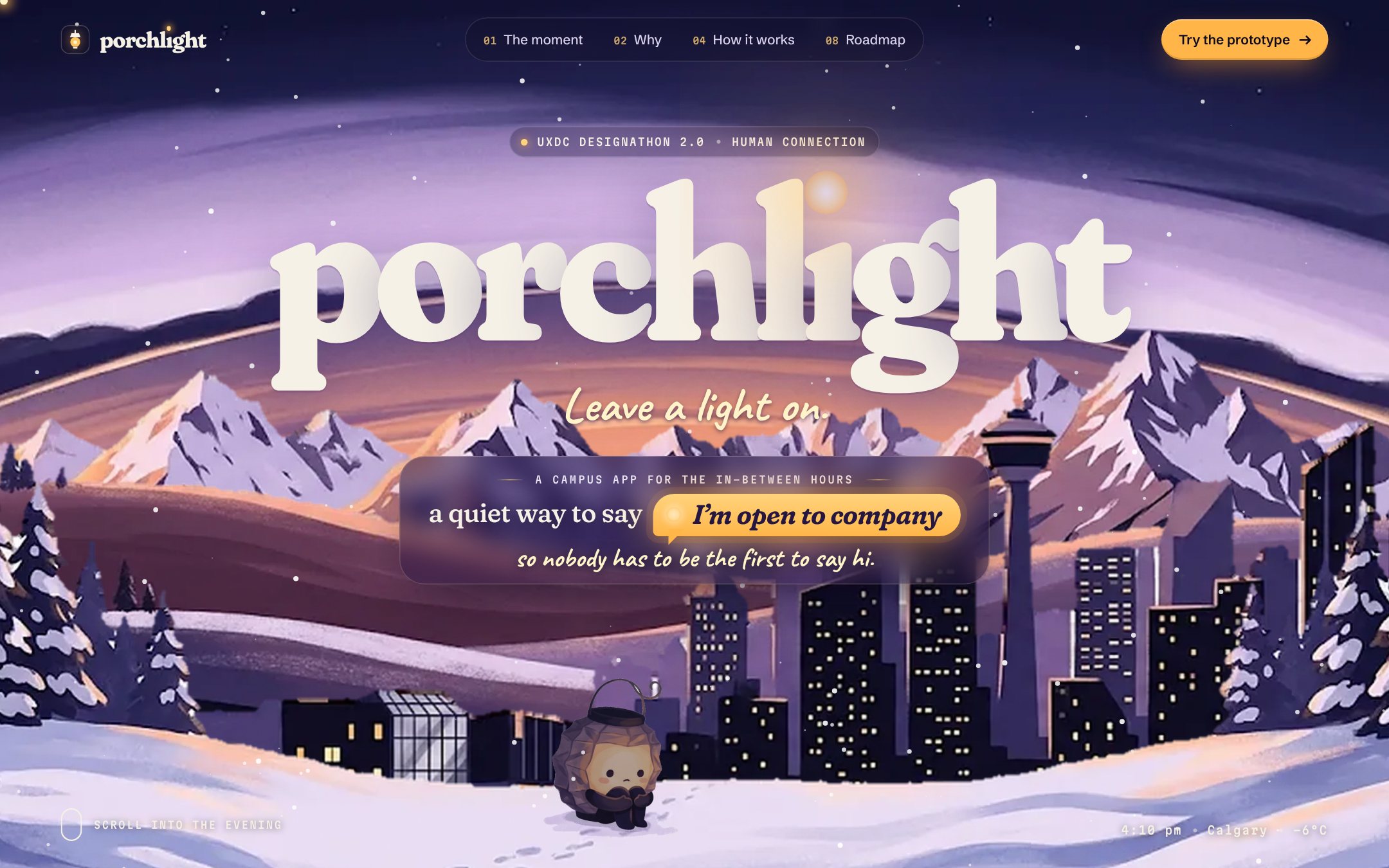
Porchlight lets you leave a light on. You switch on a light at your table: a quiet, time-limited signal that you're open to company.
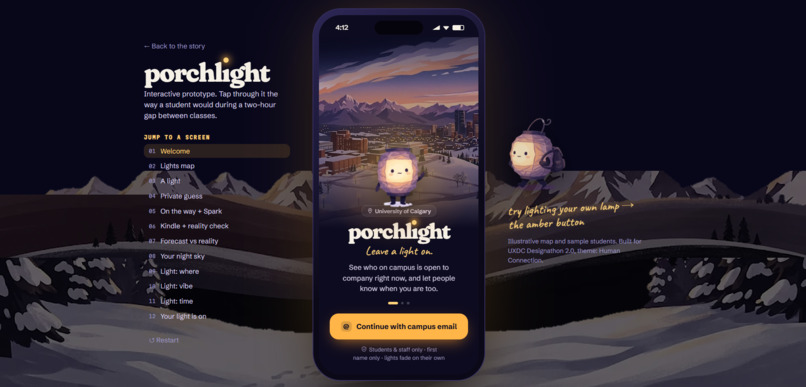
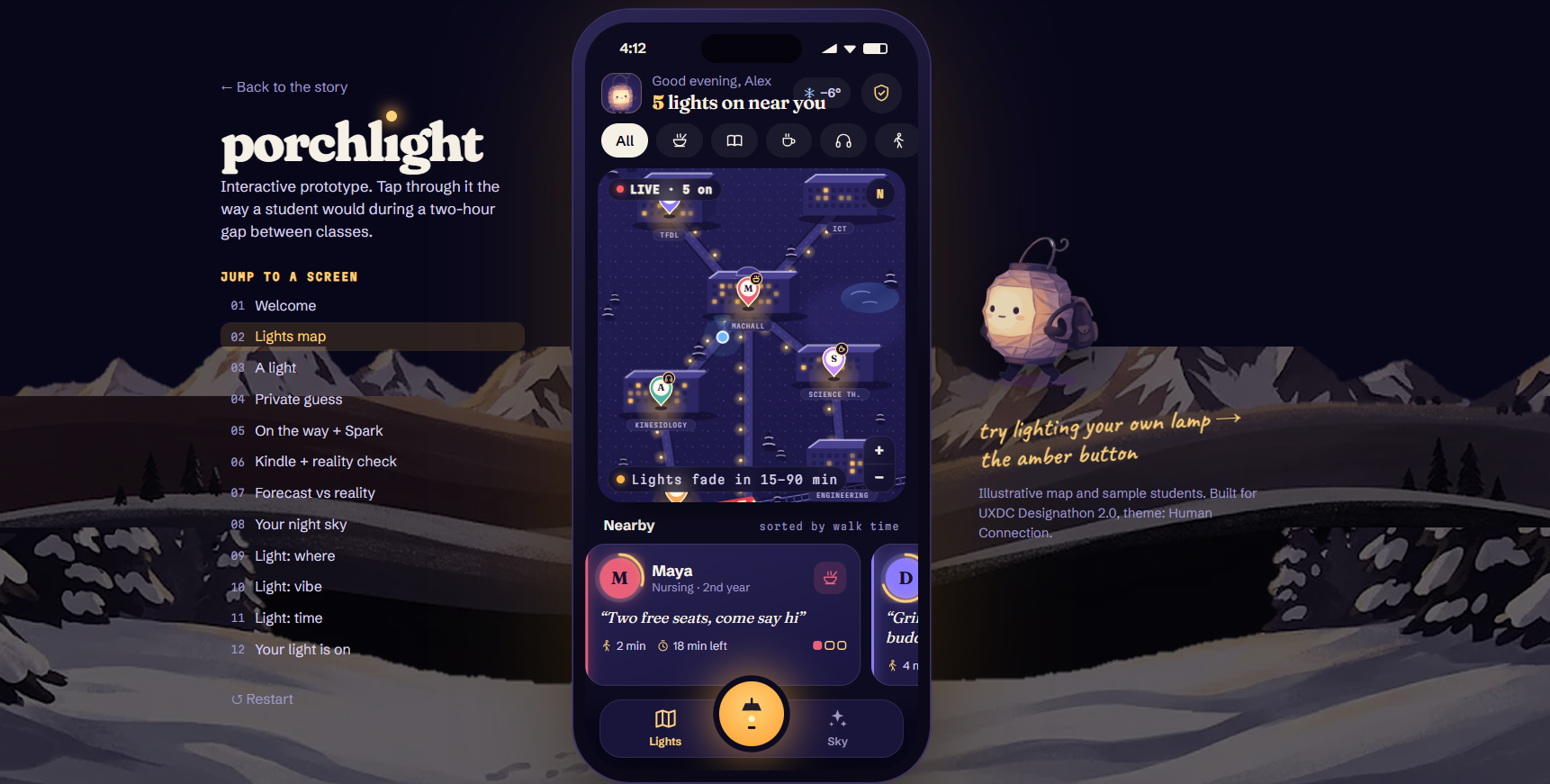
- See who's open: an illustrated campus map glows with every light that's on right now.
- Pick a light: "Maya, MacHall, two free seats. Ask me about my failed sourdough era."
- Make a private guess: how do you think this will go? Only you ever see it.
- Walk over with a Spark: you both get the same conversation starter.
- Compare: after the chat, Porchlight shows your guess next to how it actually went.
Over time, that comparison becomes your own evidence against the fear of going first:
$$\text{liking gap} = \text{how it went} - \text{what you expected}$$
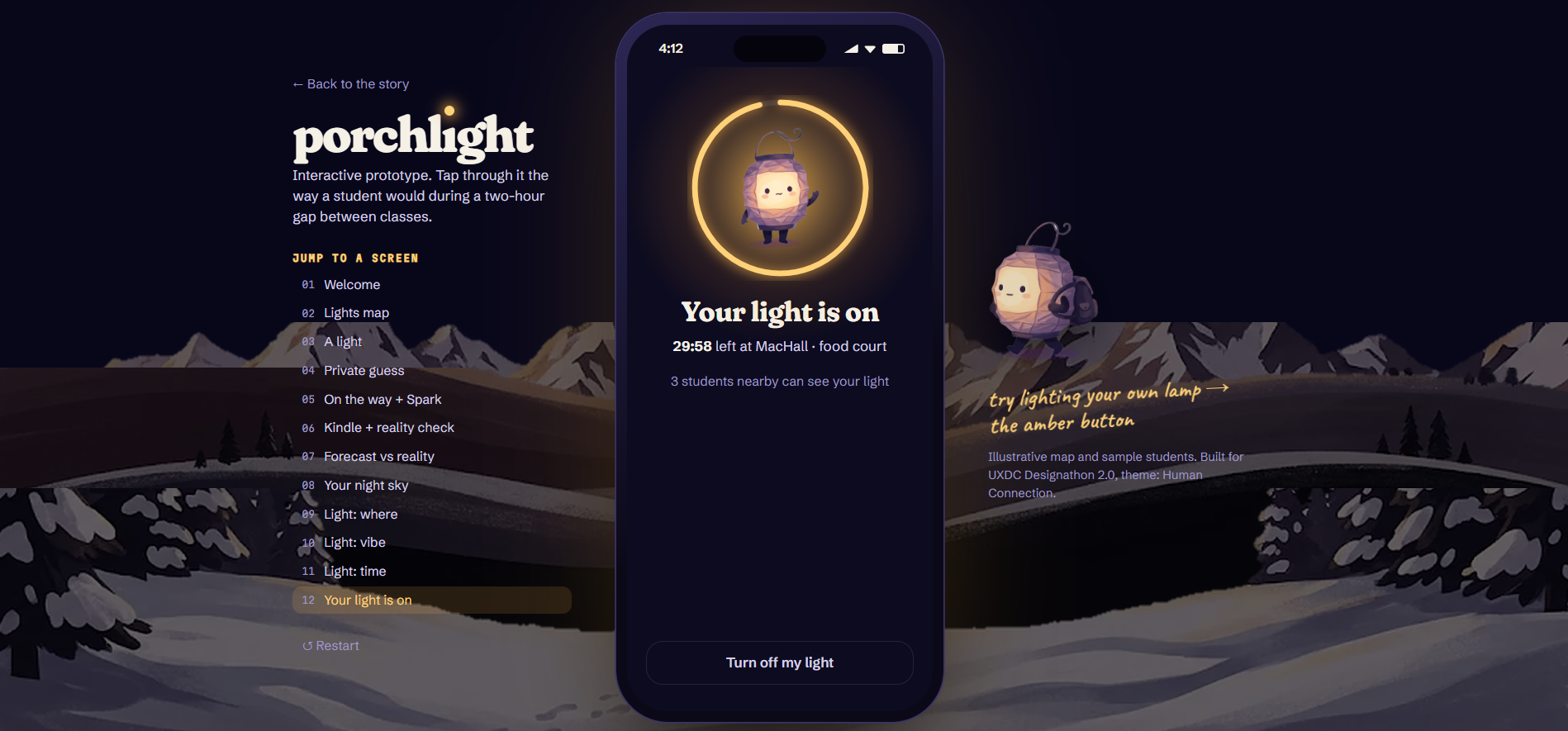
When you want company yourself, it's four taps: lamp, a public spot, what you're up to, how long. The light fades on its own.
It answers all three disconnections in the brief:
- From each other: Lights turn a room of strangers into possible conversations.
- From a place: every chat warms the spot where it happened.
- From yourself: a private forecast-vs-reality record rebuilds trust in yourself.
Safe by design: campus-email sign-in, first name only, lights snap to public spots (never GPS or residences), every light expires, and "I have to run" is one tap away.
How we built it
- Research: desk research on Canadian and UCalgary loneliness data, a literature review, and a competitive analysis of five alternatives (friend apps, Meetup, stranger dinners, clubs, Discord). None of them is right now, in person and commitment-free at the same time.
- Design: a proto-persona (Sam, a 2nd-year commuter), user flows, then a visual language built around one metaphor: light = openness. Our mascot Wick is a shy paper lantern that glows brighter when someone says hi.
- Prototype: a clickable mobile prototype and a scroll-animated story site, built in HTML, CSS and JavaScript with GSAP and Lenis. The illustrations were generated from our own prompts, then cut out and retouched by hand.
- Testing: we walked through every task on a phone, a small laptop and a desktop, and changed the design eight times based on what broke.
Challenges we ran into
- Making a signal that feels warm, never exposed: no photos, public spots only, auto-expiring lights and a graceful exit.
- Turning a psychology finding (the liking gap) into a feature that feels like a gentle habit, not a test.
- Keeping one illustrated world consistent across the site, the app and the presentation.
What we learned
The hardest part of connection isn't the conversation, it's the first step. Designing for that one moment (a signal, a private guess, a shared opener and a way out) mattered more than any social feature.
What's next
A pilot with two student clubs in January, physical Lantern Table tokens with QR codes on cafeteria tables with the Students' Union, and measuring the impact with the 3-item UCLA Loneliness Scale before and after.
Illustrations generated with [AI tool name] from our own prompts.
Built With
- css
- github
- gsap
- html
- javascript
- lenis
- svg

