-
-
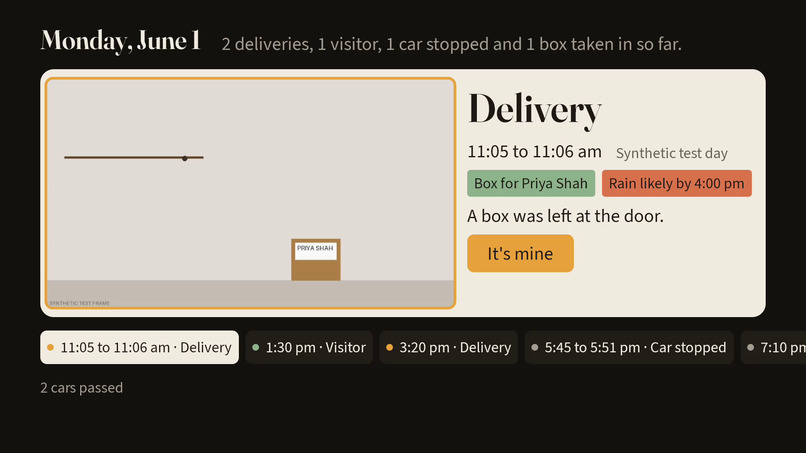
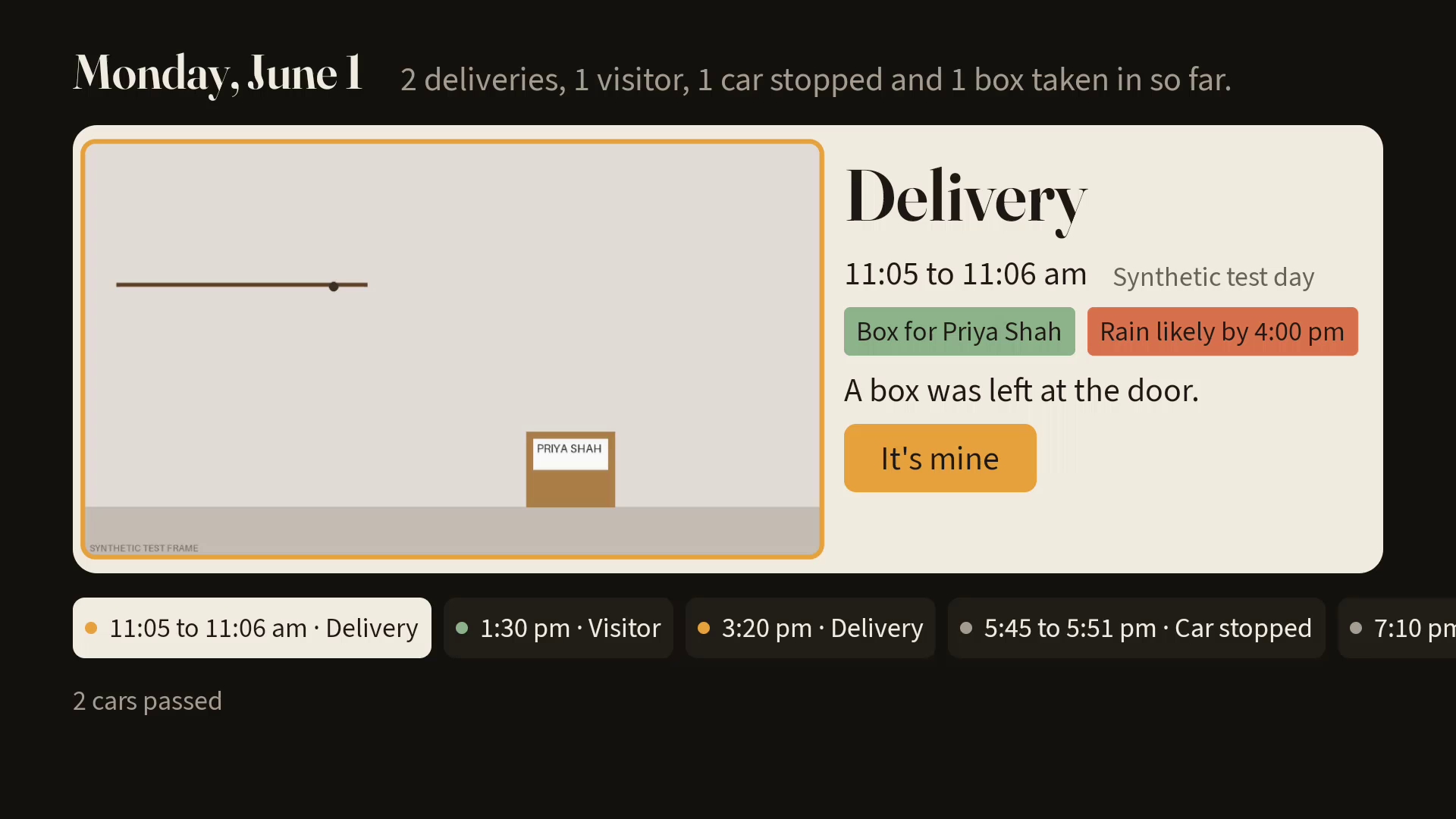
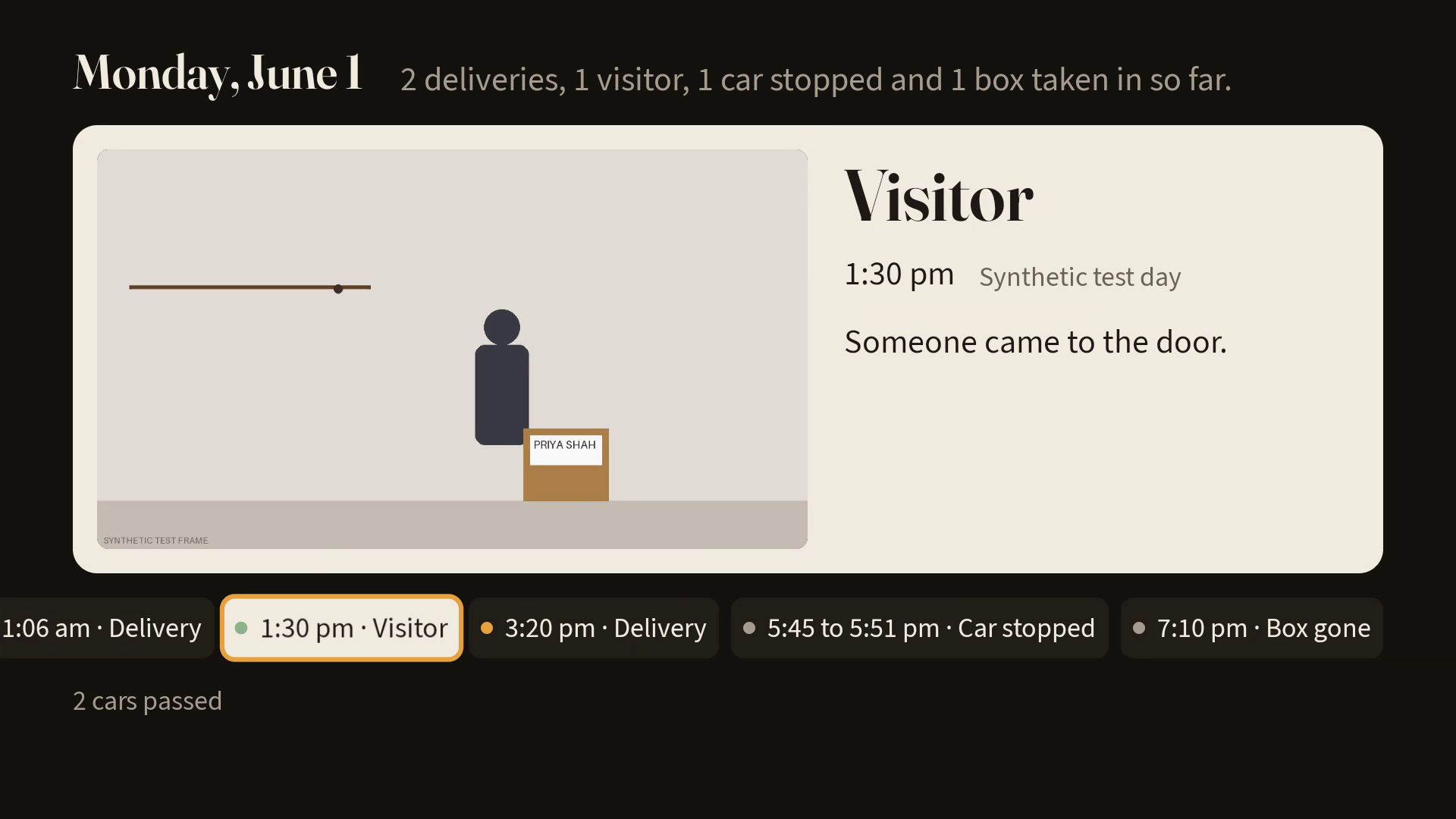
fire tv delivery today
-
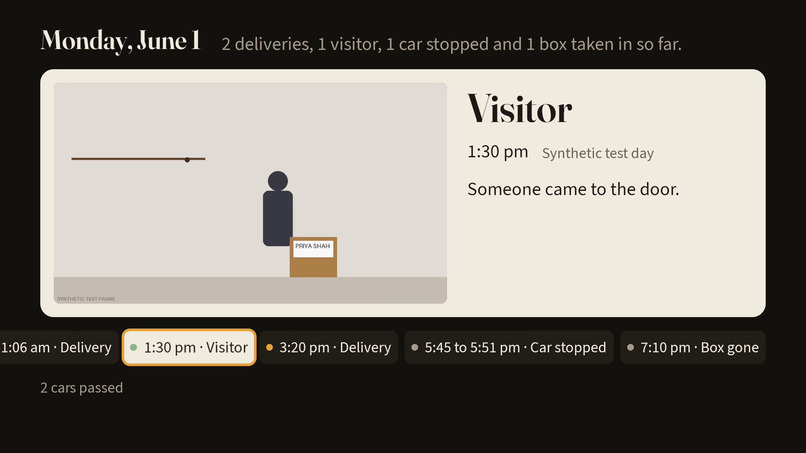
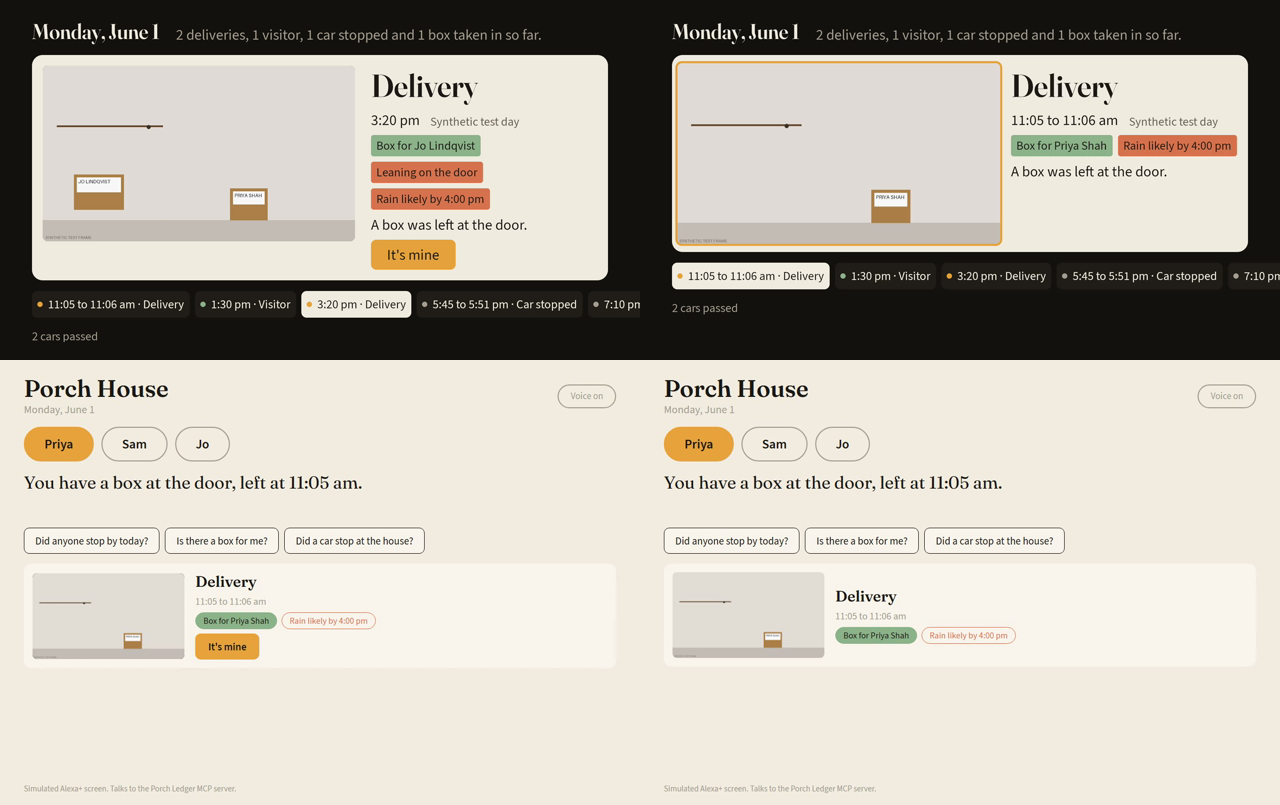
fire tv box on rain
-
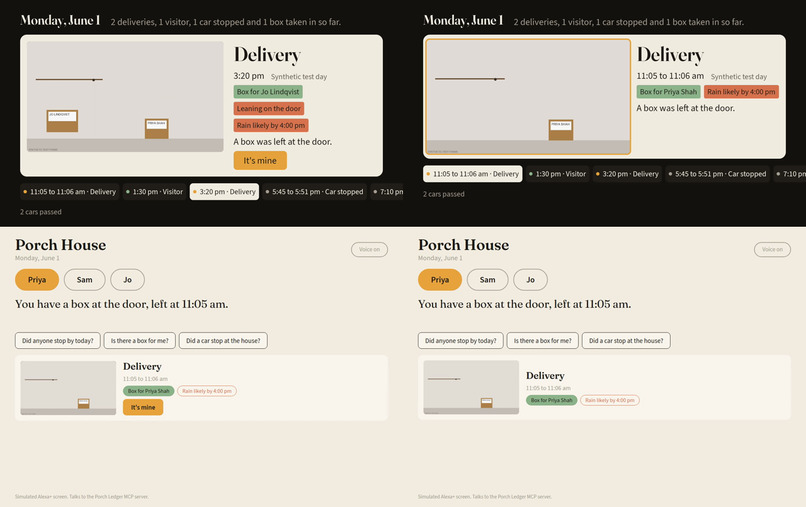
Fire TV and Alexa side by side
-
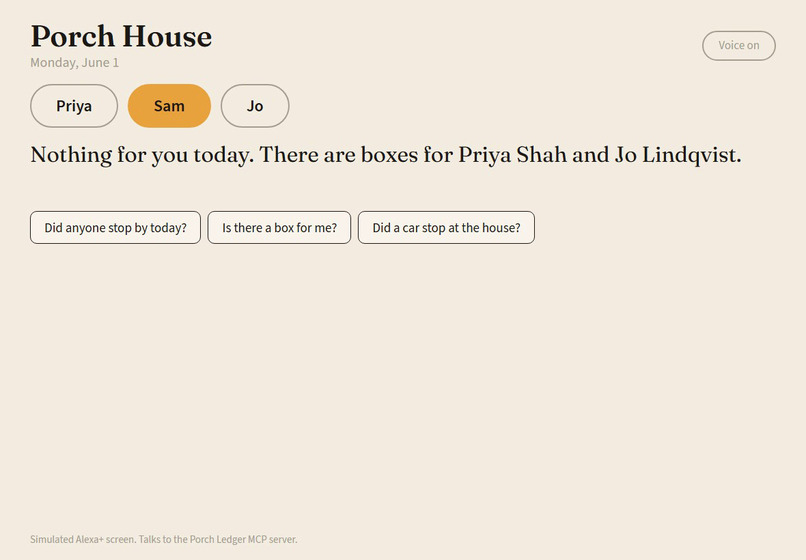
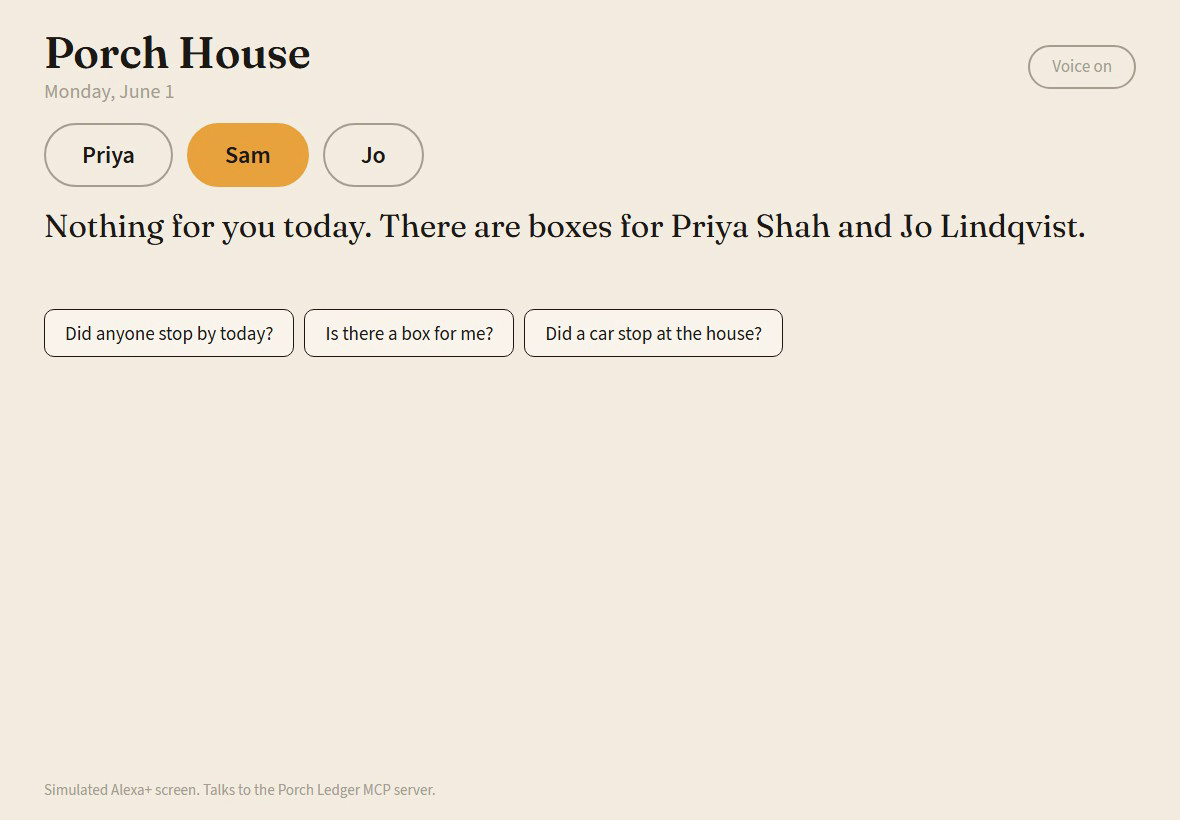
Alexa screen where sam asks
-
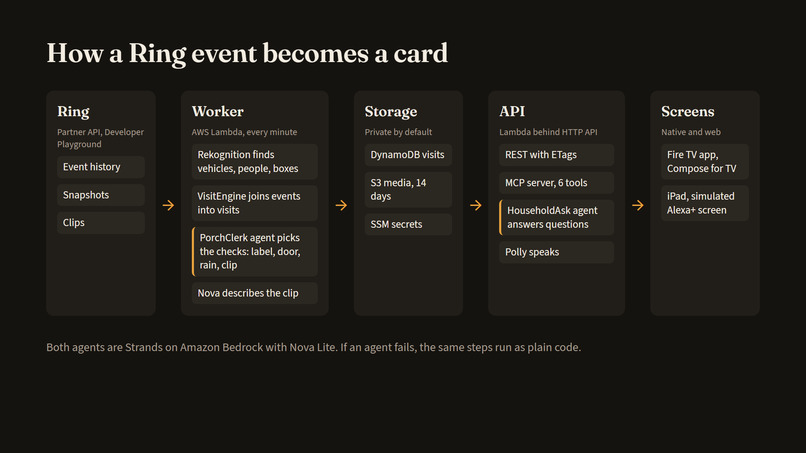
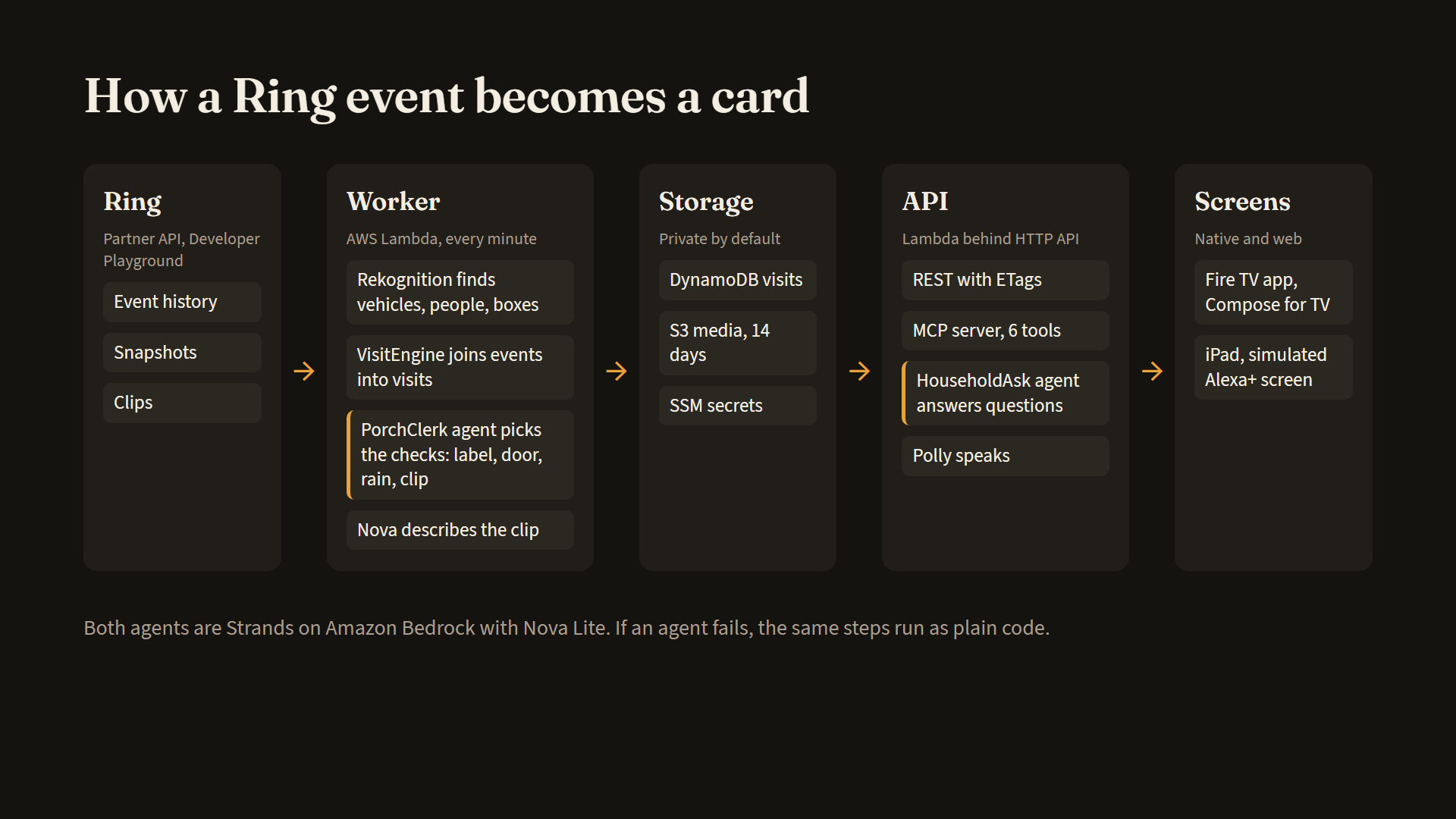
Architecture
-
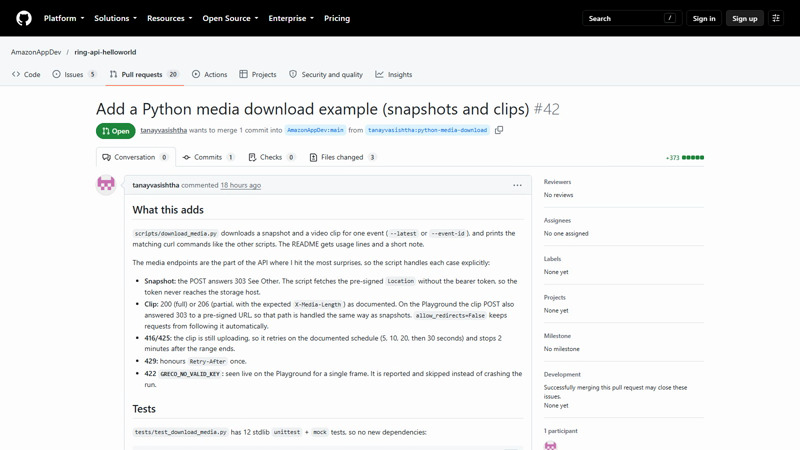
Open Source
-
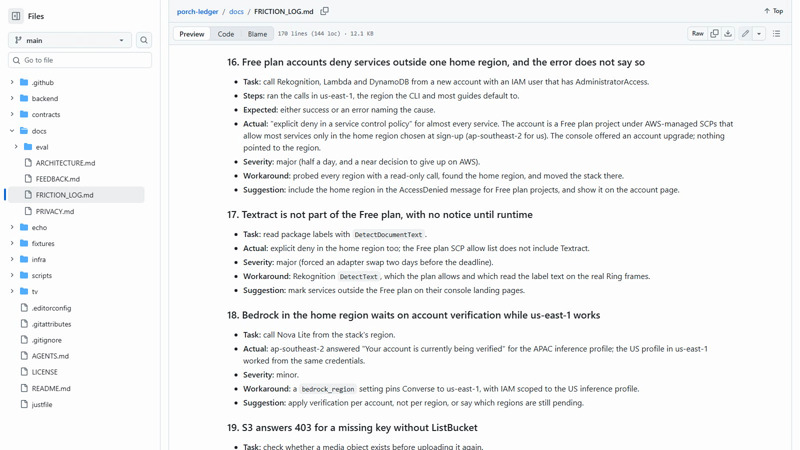
Friction Log
Inspiration
A doorbell camera reports events, and people care about visits. When a van pulls up and the driver drops a box, the camera often catches the van and then the box, but never the driver, so no package alert fires. In a shared house the next questions are whose box it is and whether it is blocking a door that opens outwards. Meanwhile every passing car is another notification.
What it does
Porch Ledger polls the Ring Partner API, joins events into visits, and shows the day on Fire TV as one calm card per visit:
- a vehicle followed by a box becomes one delivery, even with no person on camera
- a car that stopped is told apart from cars that drove past, which fold into one line
- the label is read and matched to the residents, and the label text is thrown away
- a box in the door's swing area gets a warning, and a rain forecast is added while it sits outside
- Amazon Nova describes the whole clip in one sentence
On an iPad styled as an Alexa+ screen, each housemate asks "anything for me?", asks free questions that an agent answers from the saved visits, and claims a box with "It's mine". The TV shows the claim within five seconds.
How we built it
- Ring: a typed client for devices, event history, snapshots and clips, tested against the Developer Playground. It follows the media 303 redirect without leaking the bearer token and skips single frames Ring cannot decrypt.
- Visit engine: a pure Python function that groups events under two minutes apart, tracks boxes by IoU across snapshots and classifies each visit. Property tests check it is idempotent, order independent and gives the same answer incrementally or in one batch.
- Agents: two Strands agents on Amazon Bedrock with Nova Lite. PorchClerk picks the checks a visit needs (label, door, rain, clip description) and every step is timed into a trace shown on the TV. HouseholdAsk answers questions over MCP and may only cite visits its tools returned. If an agent fails, the same steps run as plain code.
- AWS: one SAM template with API and worker Lambdas, HTTP API, DynamoDB, private S3, SSM, EventBridge Scheduler and CloudFront. Rekognition finds vehicles, people and boxes and reads labels; Polly speaks answers.
- Fire TV: Kotlin and Compose for TV, a 3 MB release build that polls with ETags, so an unchanged day costs a 304.
- iPad: a Preact MCP client at protocol 2025-11-25.
- No keys needed to try it: every external call can be recorded and replayed, so
just demoruns the full pipeline offline on a synthetic day.
Challenges we ran into
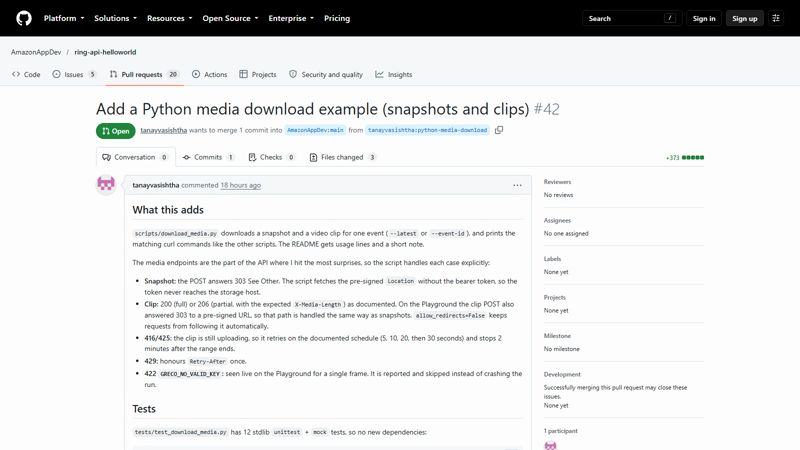
- The Ring clip endpoint answered 303 where the docs show 200 or 206, and one frame returned an undocumented 422. Both are handled, tested and contributed upstream.
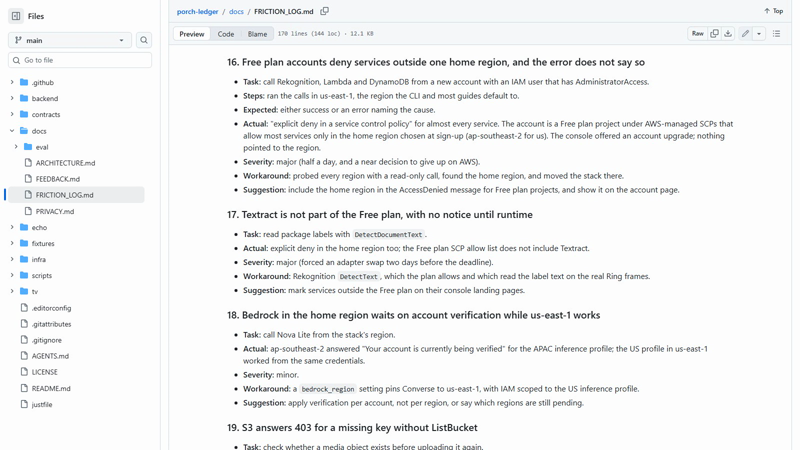
- Our AWS account turned out to be a Free plan project whose managed policies allow services in one home region only, and the plan excludes Textract. We moved the stack to that region, pinned Bedrock to us-east-1 and switched label reading to Rekognition DetectText.
- The first evaluation run scored 76% on clean data and exposed an engine bug: boxes picked up within a single event were missed. The fix took clean accuracy to 100%.
Accomplishments that we're proud of
- A live end-to-end run: Ring Playground events, a Lambda worker, Rekognition and Nova, DynamoDB, the Bedrock agent over MCP and the iPad answer, all on the deployed stack.
- On 50 scripted days (1,200 scenarios per noise level), 62% fewer interruptions than alerting on every event, and 93.8% of scenarios classified correctly under moderate detection noise. These are our scripted scenarios, not a field accuracy figure.
- 278 backend tests at 96% coverage, plus TV unit, focus and screenshot tests and iPad client tests, all in CI.
- An open source contribution to Amazon's official Ring sample: a Python media download example with 12 tests.
What we learned
Events are the wrong unit for people. Joining them into visits, and being honest about what the camera did not see, removes most of the noise. We also learned how much of the Ring media API behaves differently from the docs, and logged 19 friction entries with workarounds.
What's next
Run the label and door evaluation on our own labelled photos, test against a real Ring device and webhooks, and publish the TV app to the Fire TV Appstore.
Built With
- amazon-bedrock
- amazon-nova
- amazon-polly
- amazon-rekognition
- amazon-web-services
- api-gateway
- aws-lambda
- aws-sam
- cloudfront
- dynamodb
- eventbridge
- fastapi
- fire-os
- fire-tv
- jetpack-compose
- kotlin
- mcp
- preact
- python
- ring-api
- ring-developer-playground
- strands-agents
- typescript


Log in or sign up for Devpost to join the conversation.