-
-
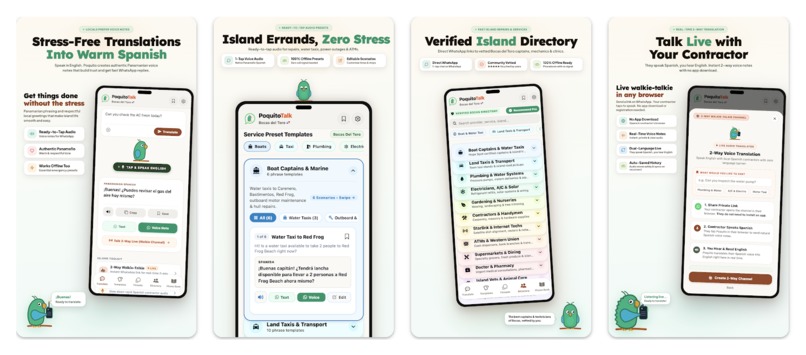
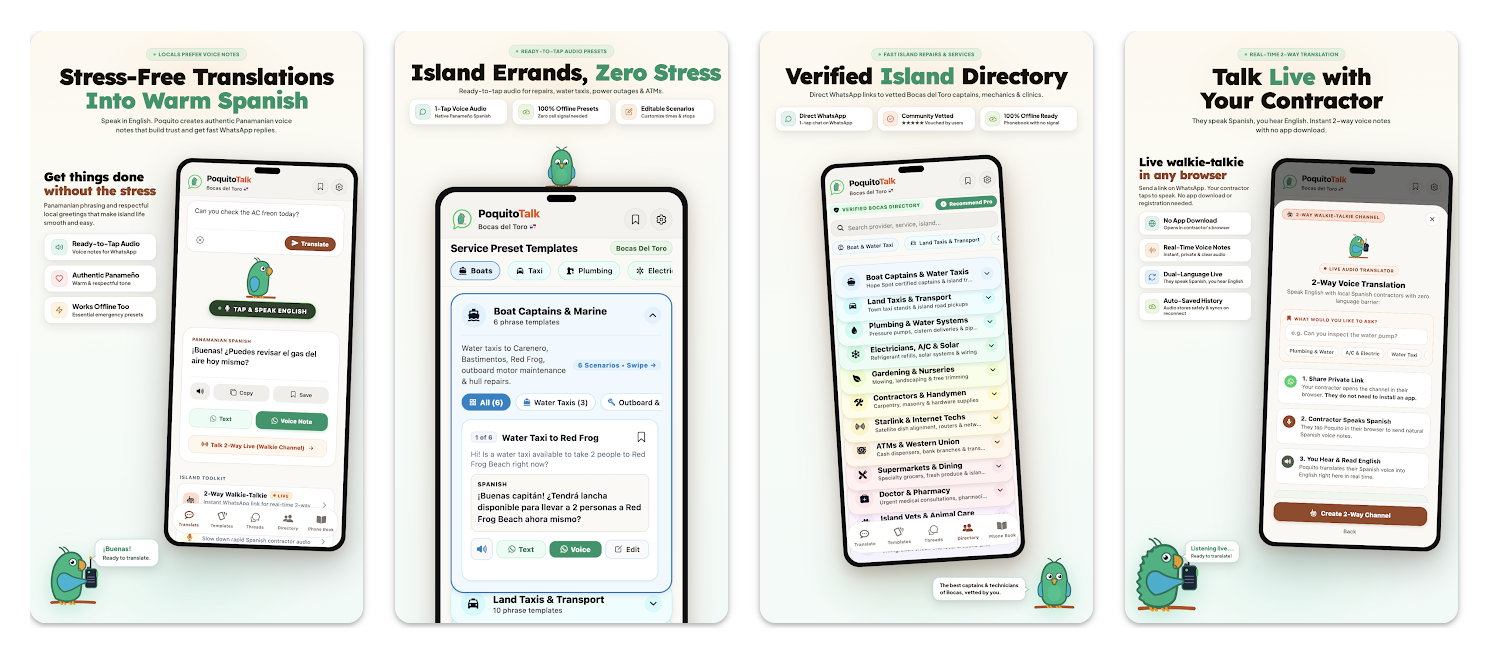
Our Google Play Store screenshots
-
1024 x 1024 app icon
-
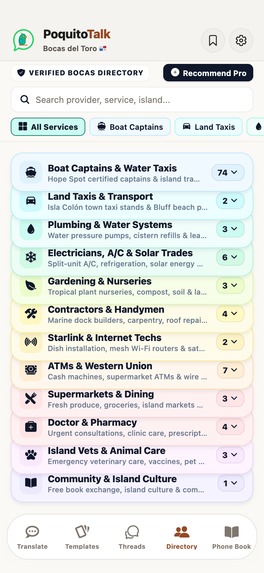
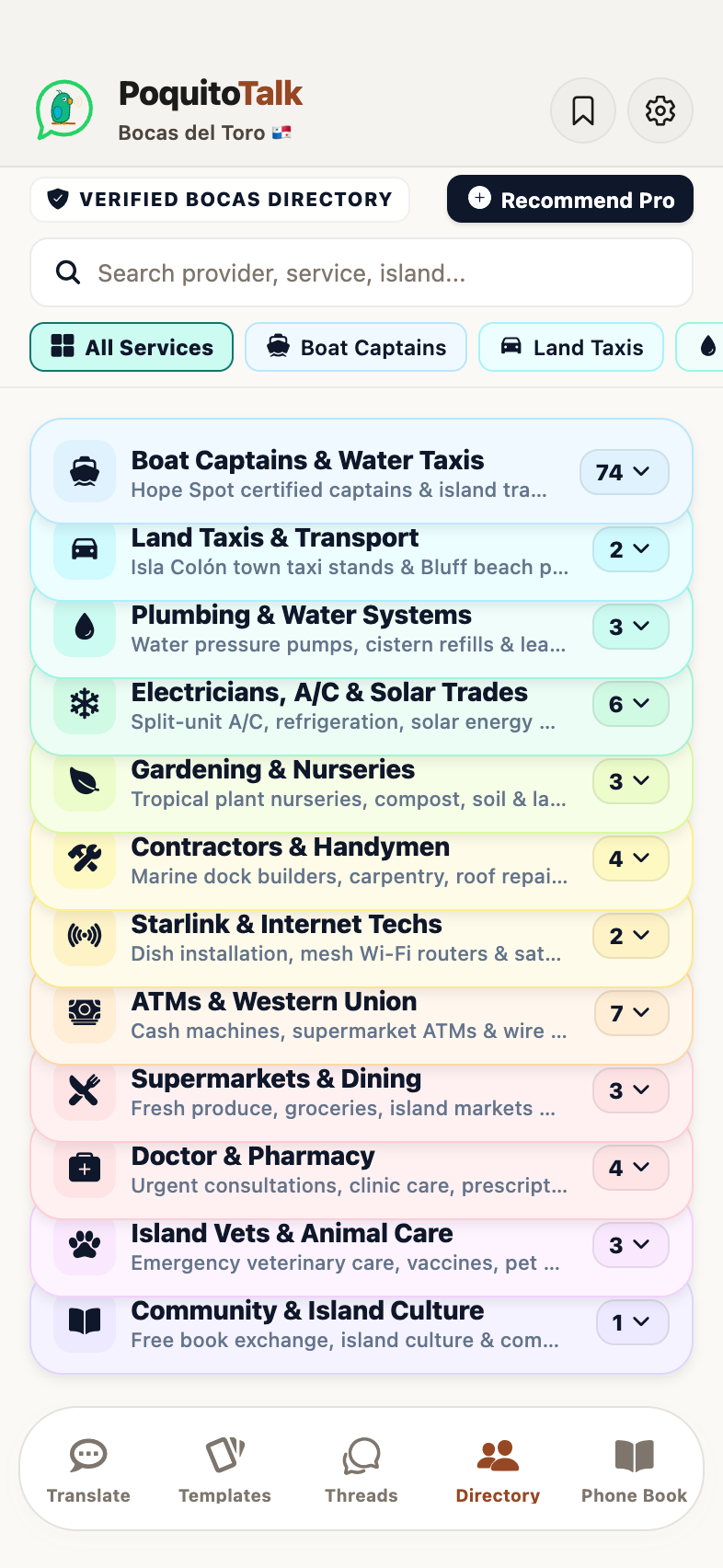
App directory screen without device frame
-
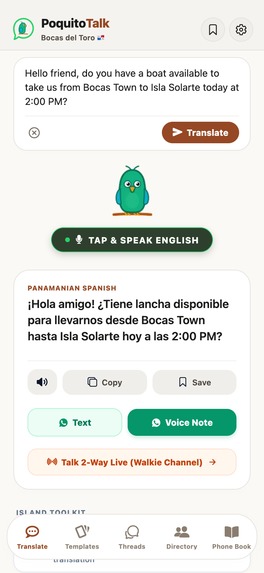
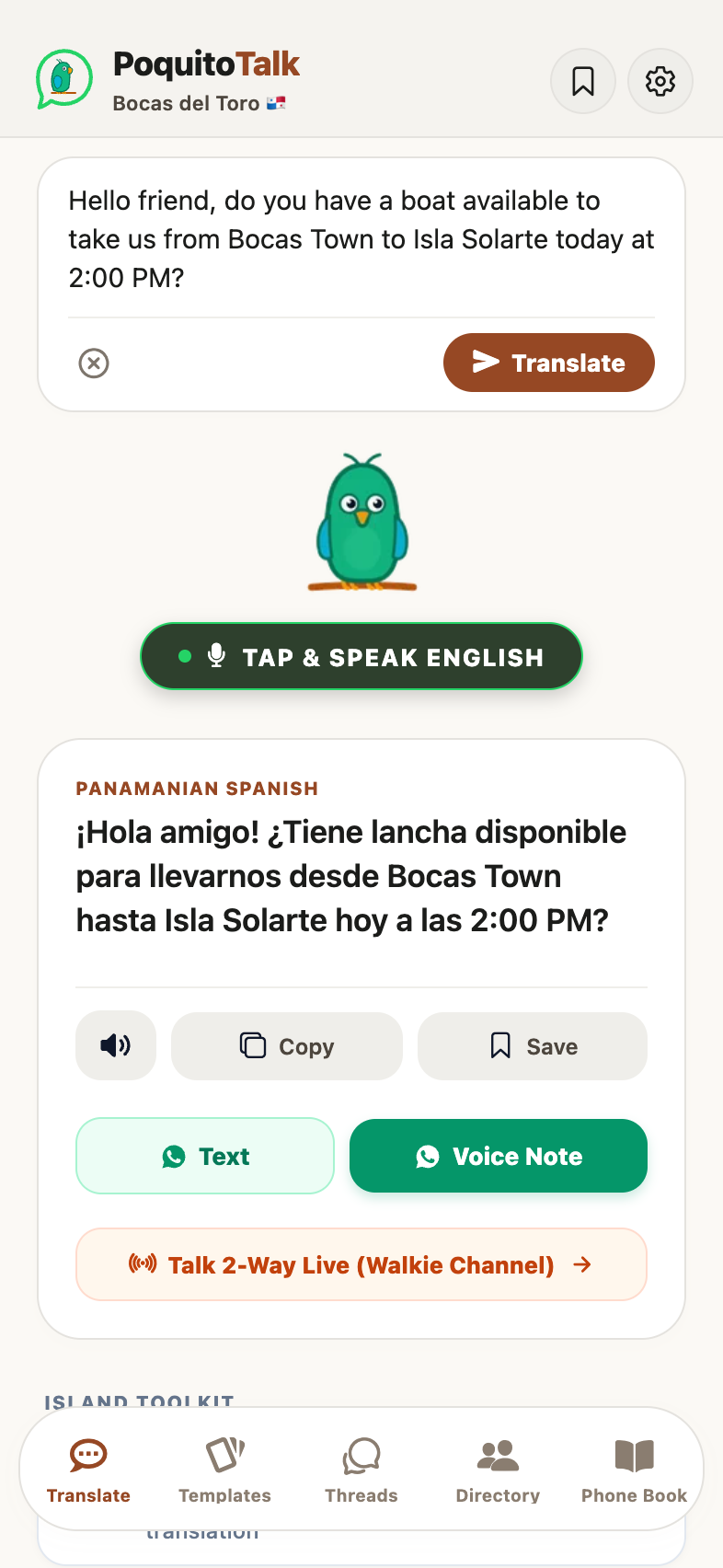
App screenshot without device frame
-
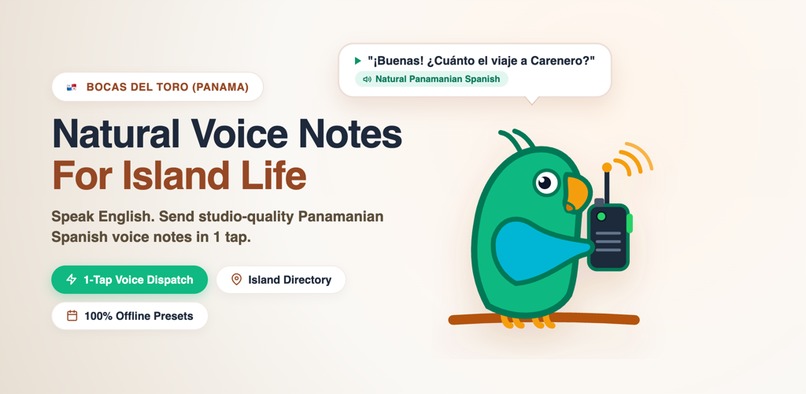
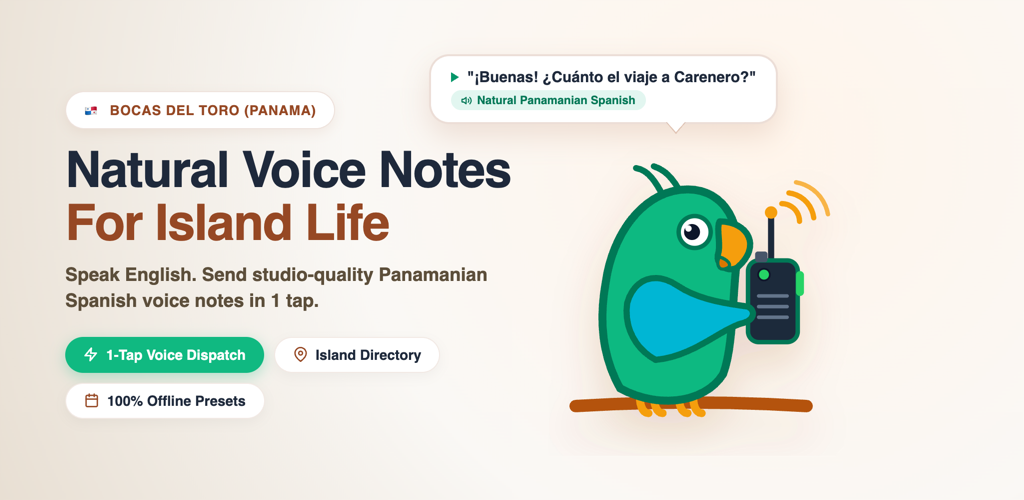
Feature Graphic Promo Banner
-
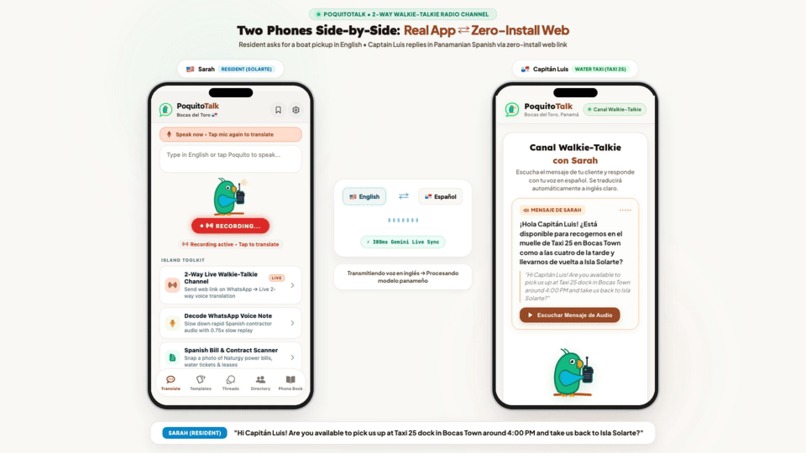 GIF
GIF
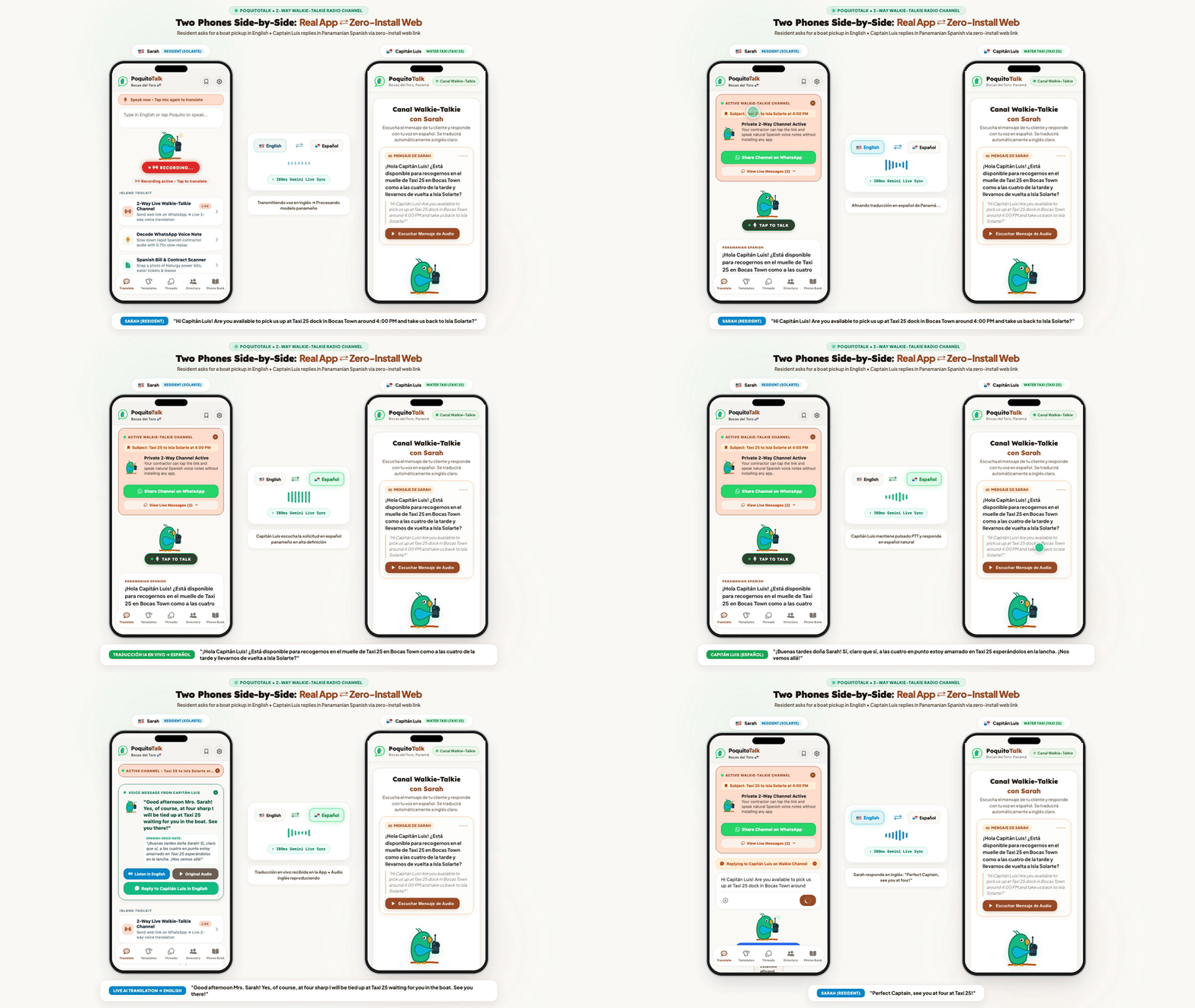
Walkie-Talkie session between expat (in-app) & local contractor (any browser)
-
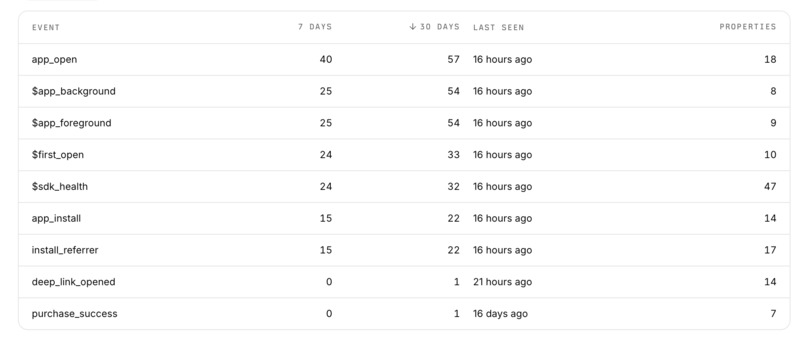
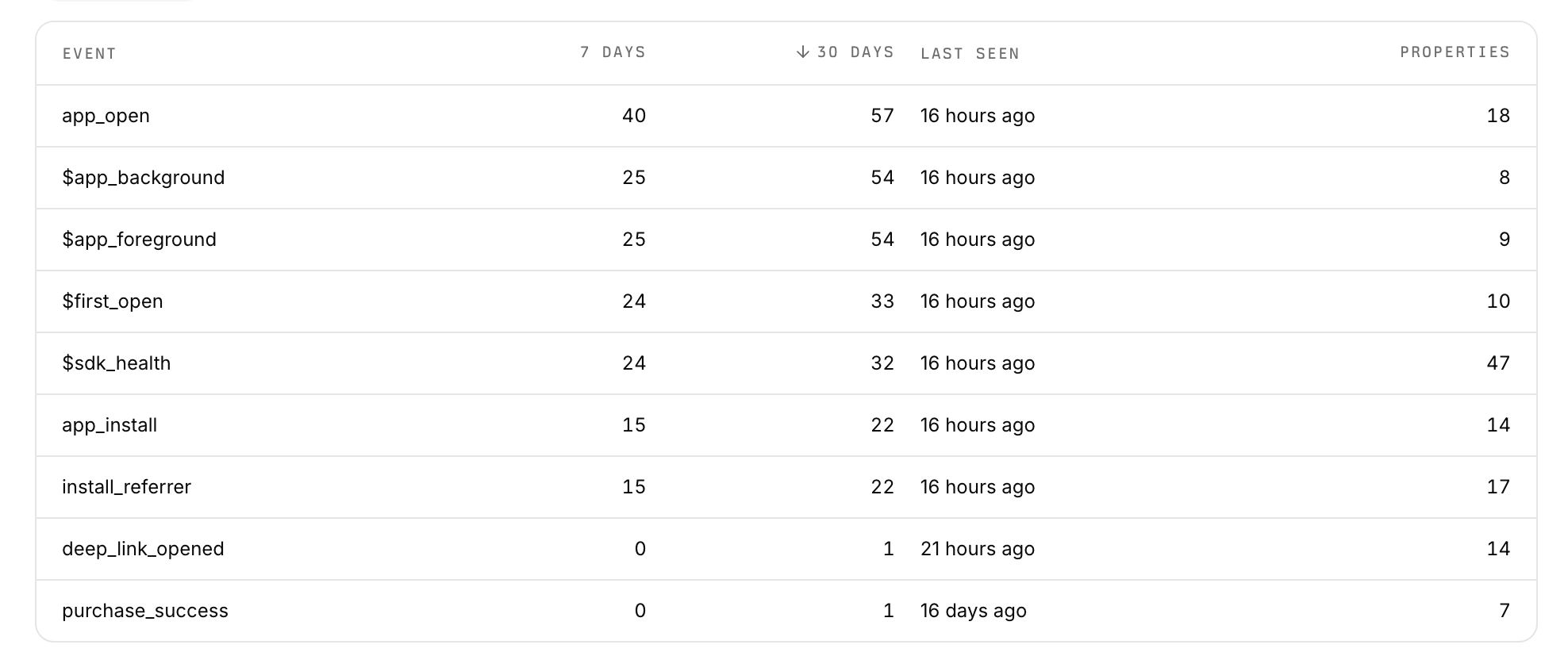
Events table on Layers dashboard page (SDK proof part 2)
-
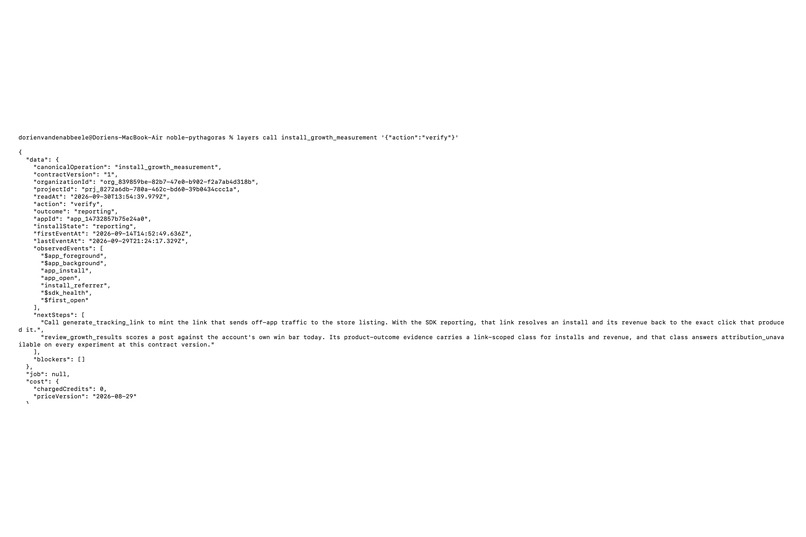
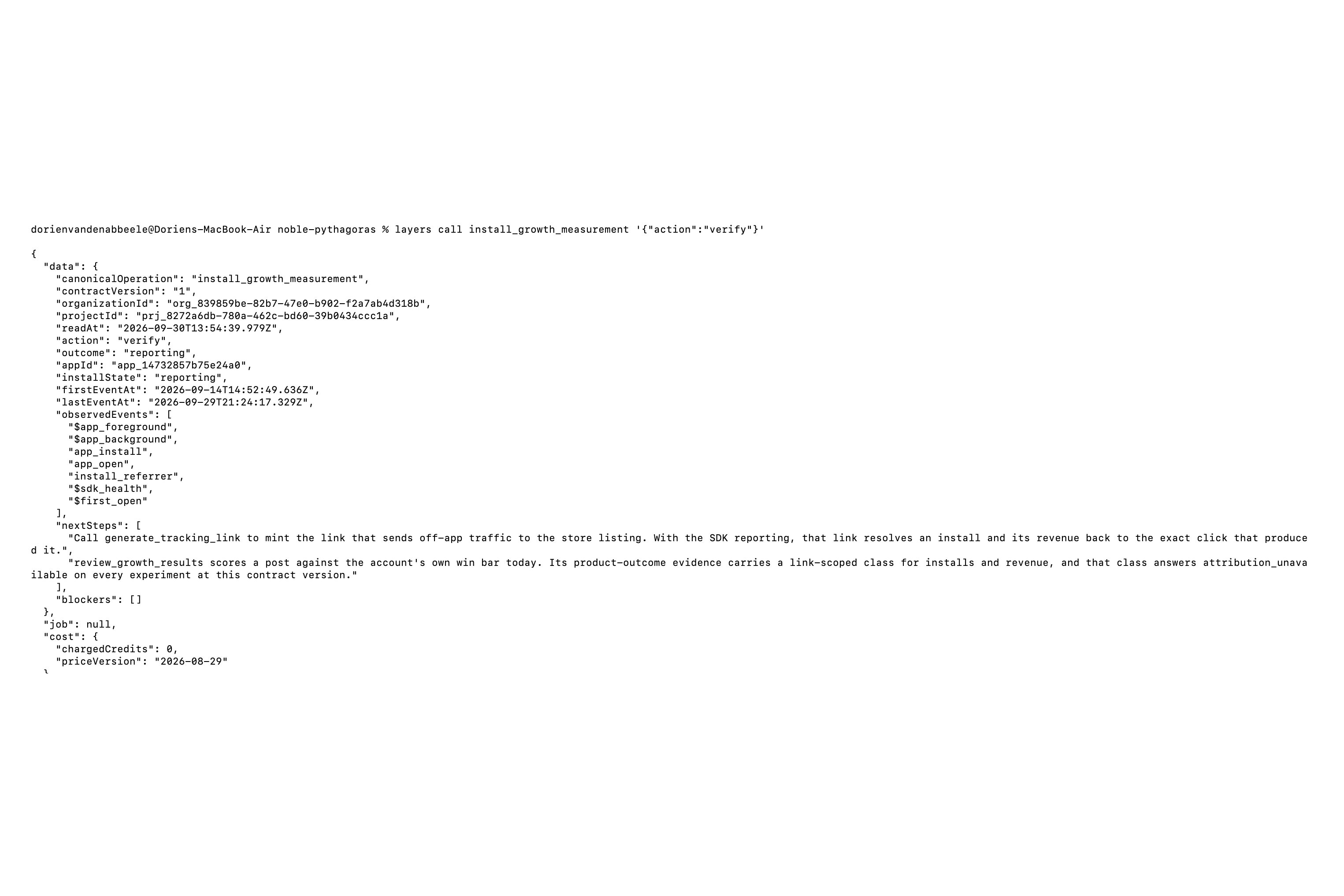
Proof of Layers SDK for Layers Growth Loop Award
-
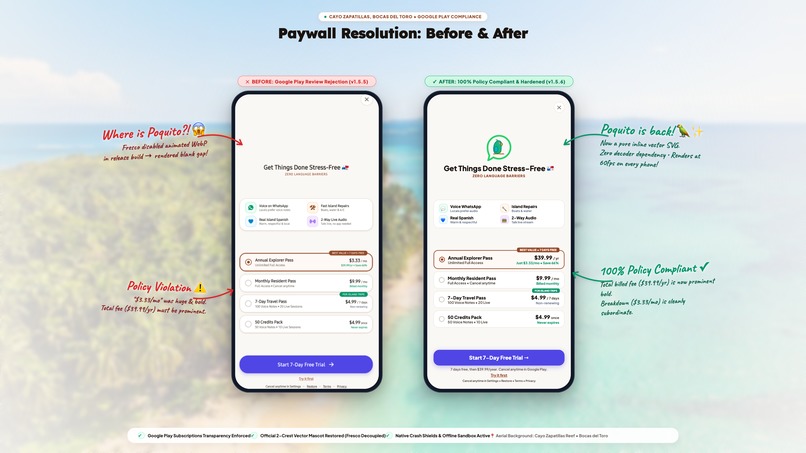
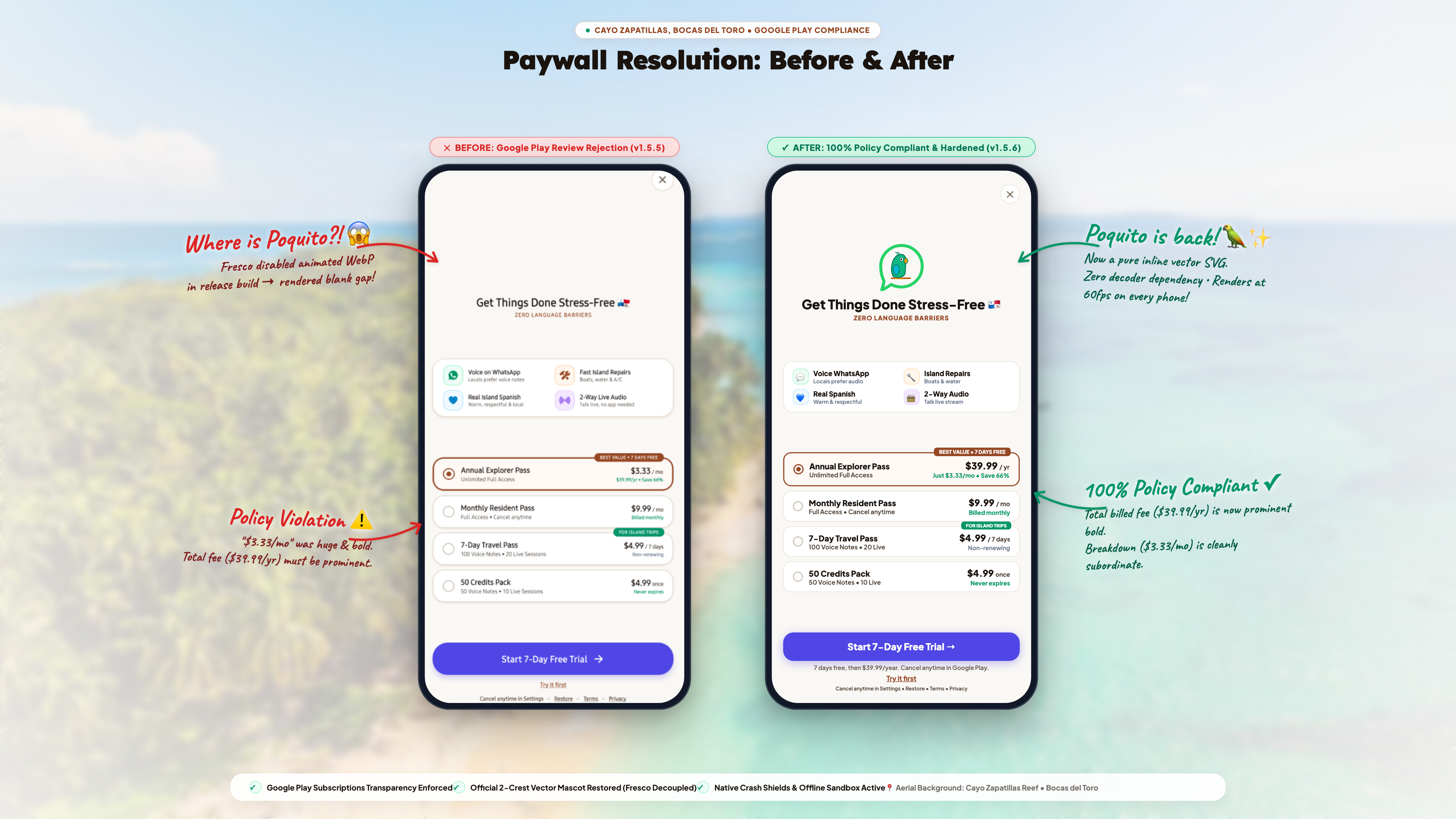
Refined In-App Subscription Paywall (after Play Store rejection, great lesson!)
-
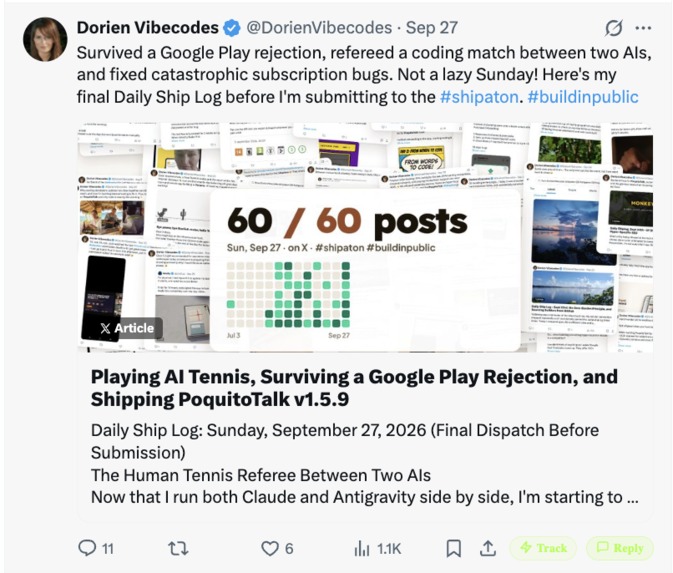
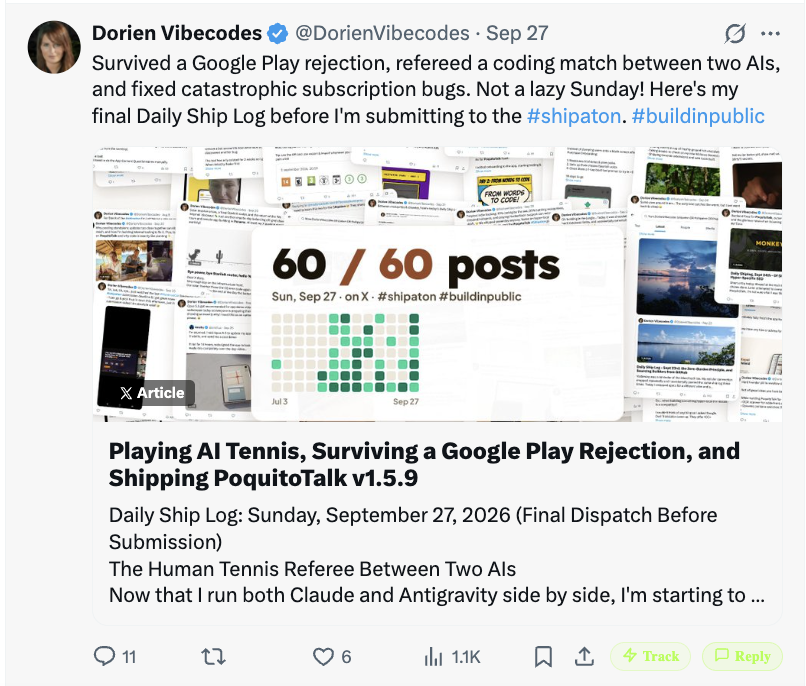
60+ posts in 60 days...
-
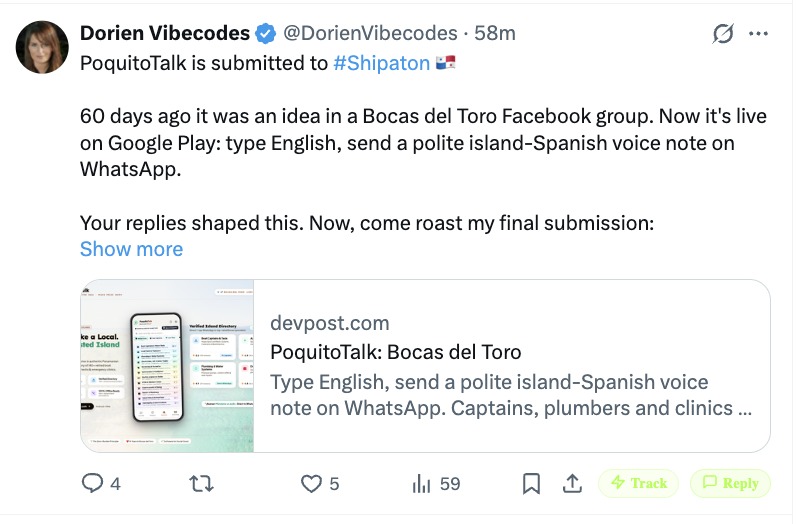
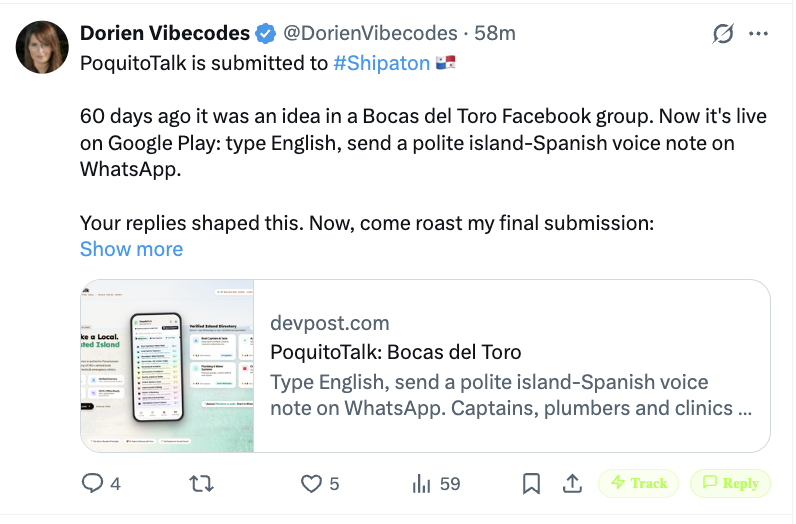
... but my #BuildInPublic journey with PoquitoTalk doesn't end here
-
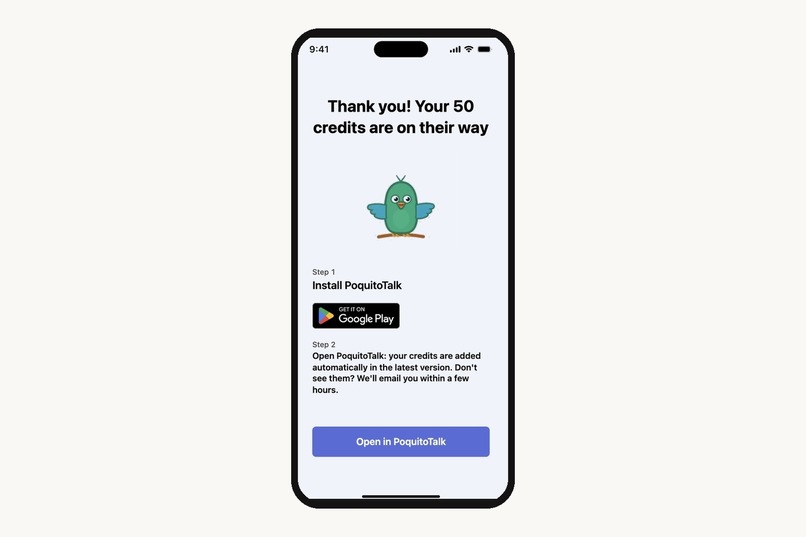
RevenueCat - Stripe Funnel page
PoquitoTalk: speak to people in their language, and doors open
In Bocas del Toro, Panama, you get between the islands by boat, and daily life runs on WhatsApp voice notes. PoquitoTalk lets English speakers type or say what they need and send it as a polite, natural voice note in Panamanian island Spanish. When the captain, plumber or clinic replies by voice, you hear it in English. They don't need an app, an account or a download: just a link.
Watch the demo (1:59): https://youtu.be/fTFZ1pqm_HQ. Every timestamp below opens the video at that moment.
The problem, in 14 seconds (0:00)
When your water pump dies or your boat engine won't start, you message a local worker in textbook Spanish from a translation app, and you get left on read (0:03). Formal text is the wrong tool in a place where people answer by voice, often from a boat. Newcomers hire middlemen or give up, and the local worker loses the job. I've lived here for 14 years and watched this happen every week in our community forums: "Who can recommend a plumber?", "Which captain can take us?"
What PoquitoTalk does
- English in, island Spanish out (0:30): you type or speak in English and get a warm, polite Spanish voice note that opens with "¡Buenas!" and uses the words people actually say here ("plomero", "dolor de barriga", "plata"). You pick your own voice, Diego or Sofia.
- One tap to WhatsApp (0:06): the voice note goes straight into the chat as audio.
- They answer by voice, with no app (0:10, 0:43): a 2-way voice link opens in any phone browser. The worker taps it in WhatsApp, answers in Spanish, and you hear the reply in English.
- The right words before you need them (0:36): 76 ready-made phrases for boats, doctors, water, power and more, voiced in both voices and built into the app, so they play without signal.
- A free local directory (0:24): 287 listings so far, from 77 boat captains and water taxis to hotels, restaurants, hardware stores, contractors and clinics. Listing is free, with no commission, and contact goes straight to the provider's WhatsApp.
- A website that does real work (poquitotalk.hero-apps.com): an online version of the directory that people can find on Google, free sign-up forms for captains, restaurants, lodging, tours and trades, the RevenueCat web funnel, and the 2-way voice page the worker opens. While the app was in review, it also held our waitlist.
How we use RevenueCat (0:50–1:11)
PoquitoTalk has two kinds of customers, and RevenueCat lets us serve both without building a billing backend.
1. Residents subscribe in the app, on Google Play (0:53).
Expats and off-grid homeowners use PoquitoTalk every week, so they get a subscription. The app uses the RevenueCat SDK (react-native-purchases) with Google Play Billing. One offering holds three packages: the Annual Explorer Pass ($39.99/year, 7-day free trial), the Monthly Resident Pass ($9.99) and the 7-Day Travel Pass ($4.99, non-renewing). Pro access comes from the entitlement in customerInfo, with restore purchases built in. The paywall itself was shaped in public: another builder on X pointed out that our purchase button used the same color as the rest of the app, so it now has a color used nowhere else, and a Google Play rejection taught us to show the yearly price first, not the per-month breakdown.
2. Tourists buy credits on the web, with no subscription (0:54). Someone visiting Bocas for five days will never commit to a yearly subscription. So on the web we sell a one-time 50 Poquito Credits pack (never expires) through a RevenueCat Web Funnel with Stripe billing: three short slides, then checkout with Google Pay (0:59). With no store fee, we can offer a $3.74 launch price until October 15, against $4.99 in the app. You can see the Stripe transaction land in RevenueCat at 0:54.
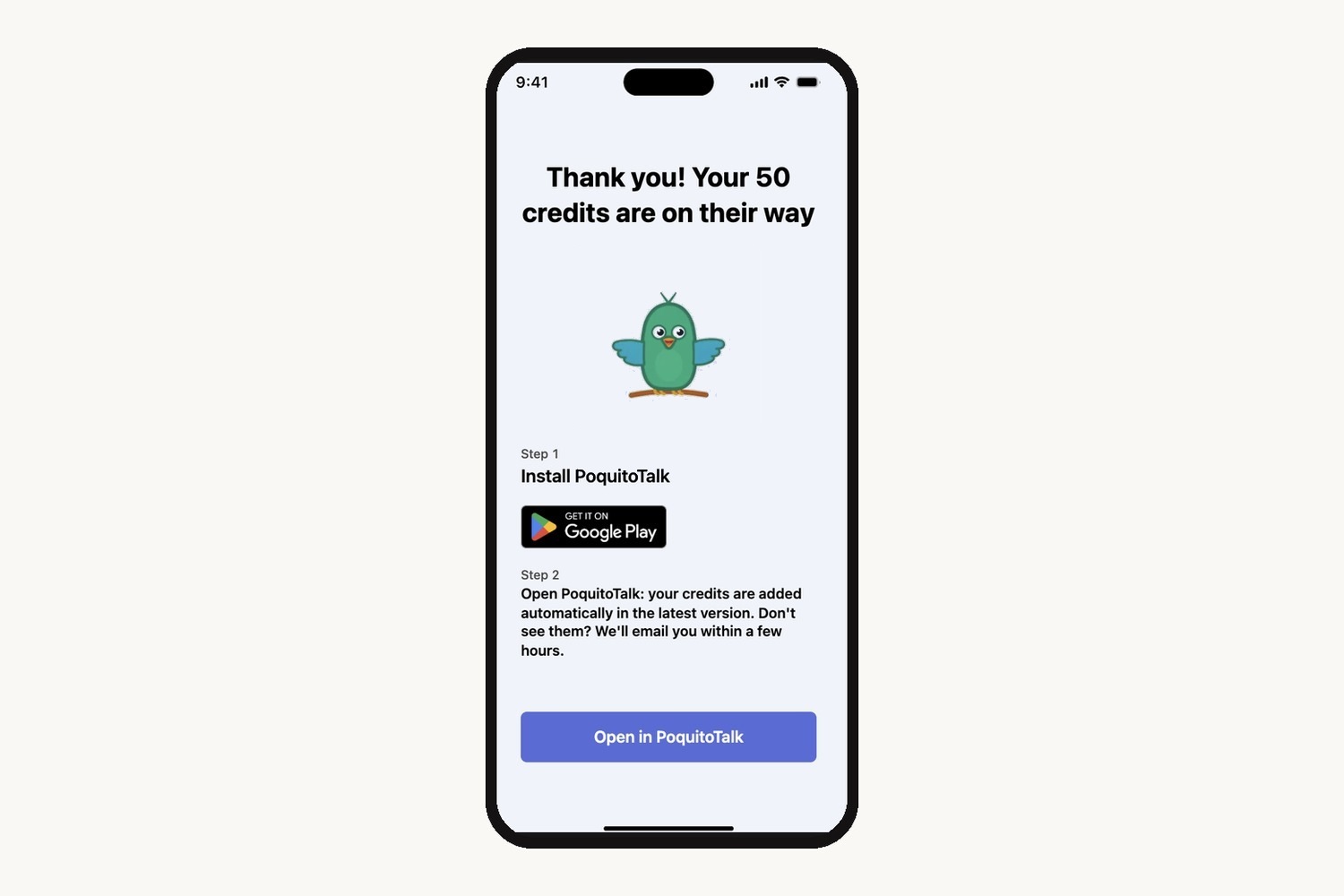
3. Web purchases arrive in the app (1:05).
The funnel's thank-you page links into the app. PoquitoTalk handles that link with RevenueCat Web Purchase Redemption (parseAsWebPurchaseRedemption and redeemWebPurchase), finds the credits purchase in the customer's non-subscription transactions by its Stripe product, and adds the 50 credits once per transaction, so a link opened twice doesn't pay out twice. A guard makes sure a credits purchase never unlocks Pro: Pro comes only from a subscription or a pass.
4. Why the funnel matters. A payment on its own isn't enough: if nothing links the web purchase to the app, the buyer pays and then has nothing to open. In a RevenueCat funnel, the purchase becomes something the app can redeem, so a tourist who pays on the web lands in the app with their credits ready. That's why every web purchase goes through the funnel. We also connected RevenueCat to the Layers SDK, so revenue can be tied back to the posts that brought people in. All of this is live in v1.5.10, approved on Google Play on September 29, with working in-app purchases and web redemption.
Built with the island (0:16)
Before building anything, I asked the island's community forum what is hardest to explain in Spanish (0:18). The answers shaped the app: "Most of my calls are not repairs, but medical" became the medical and pharmacy phrases. Providers join the directory in two ways (0:24): a free sign-up portal, or we simply message them on WhatsApp and they reply, often by voice. We messaged six of the islands' Hope Spot certified boat captains this way, and five replied. For people who can't sign up online, I go and talk to them in person. The directory now lists 287 local businesses and providers, and nine signed up themselves through our website, from a water taxi and tour operator to a welder, an electrician and an A/C repairer.
Growing it with Layers (1:11)
Layers runs our growth loop: it makes a clip every day from our brand and app screens, posts it, and measures each post against our own median (1:27). Its honest verdict on our 805-view breakout was inconclusive (1:30), and it was right. Our small, promising signal came from useful posts: a cash-tips video and a bar skit that ends with a cheat sheet people save (1:31). The full loop, the SDK and our data, with screenshots: poquitotalk.hero-apps.com/growth-loop.html.
Built in public (1:38)
60 days, 60+ posts on X, two HackerNoon articles, and one page that collects it all: poquitotalk.hero-apps.com/build-in-public.html (1:53). Replies changed the app, from the paywall button color to the 2-way voice link.
How it's built
- App: React Native with Expo and TypeScript, live on Google Play (
com.heroapps.poquitotalk). - Speech to text: ElevenLabs Scribe, with Groq Whisper and OpenAI Whisper as fallbacks, and a cleaner for stutters and repeated words.
- Translation: a hand-written map of about 85 common island phrases first, then MyMemory, our own server and Google Translate, followed by a Panama polishing layer that swaps textbook words for island ones and fixes the Spanish ¿ and ¡ marks.
- Voices: ElevenLabs (eleven_multilingual_v2), Diego and Sofia; 152 phrase clips bundled for offline use.
- 2-way voice link: a small web page and PHP endpoint on our own server; the app checks for replies every 2.5 seconds.
- Directory: MongoDB Atlas, with a bundled copy that works offline.
- Payments and growth: RevenueCat (Google Play subscriptions, Web Funnel with Stripe, Web Purchase Redemption) and the Layers SDK.
What we learned
- Voice comes first here. A communication tool for this community needs audio at its center, in both directions.
- Design for the person who didn't choose the app. The worker on the other end installs nothing and pays nothing. That decision shaped everything else.
- Listen to your own output. When the app said "fontanero" or "dolor estomacal", which nobody says in Bocas, we changed the phrases and re-recorded both voices.
What's next
- Reach the 60+ remaining Hope Spot certified boat captains and build the region's first searchable captain directory.
- Replies spoken in a voice that matches the person who sent them (built, shipping in v1.5.11).
- QR codes where tourists already are: cards at hotel receptions and stickers on water taxis that open the web funnel, each with its own campaign tag, so we can see which hotel or boat brings buyers.
- iPhone: the waitlist is open on our website.
More detail, one page per award
- Funnel Vision: poquitotalk.hero-apps.com/funnel.html
- Peace Prize: poquitotalk.hero-apps.com/peace.html
- Growth Loop (Layers): poquitotalk.hero-apps.com/growth-loop.html
- #BuildInPublic: poquitotalk.hero-apps.com/build-in-public.html
Built With
- elevenlabs
- expo.io
- google-play
- layers
- mongodb-atlas
- node.js
- php
- react-native
- revenuecat
- stripe
- tailwind-css
- typescript

Log in or sign up for Devpost to join the conversation.