Inspiration
The original idea came during a visit to Mexico a week prior to the Hackathon. Many cities and road's in-between locations lack critical infrastructure such as traffic lights. Throughout the trip the only way to travel across the street was to correctly time going in-between cars. A particular T-Interception on a way back to the city lacked any lights or signs and was extremely dangerous. Many of these cities lacked the funds to add this sort of infrastructure so the idea to create a cost-efficient and transportable traffic sign arose. Teammates experiences near their homes inspired the addition the pedestrian light. Varies neighborhoods have been seen to have crosswalks and pedestrian crossing signs, however cars fail to yield at these signs, posing a major risk to the community.
What it does
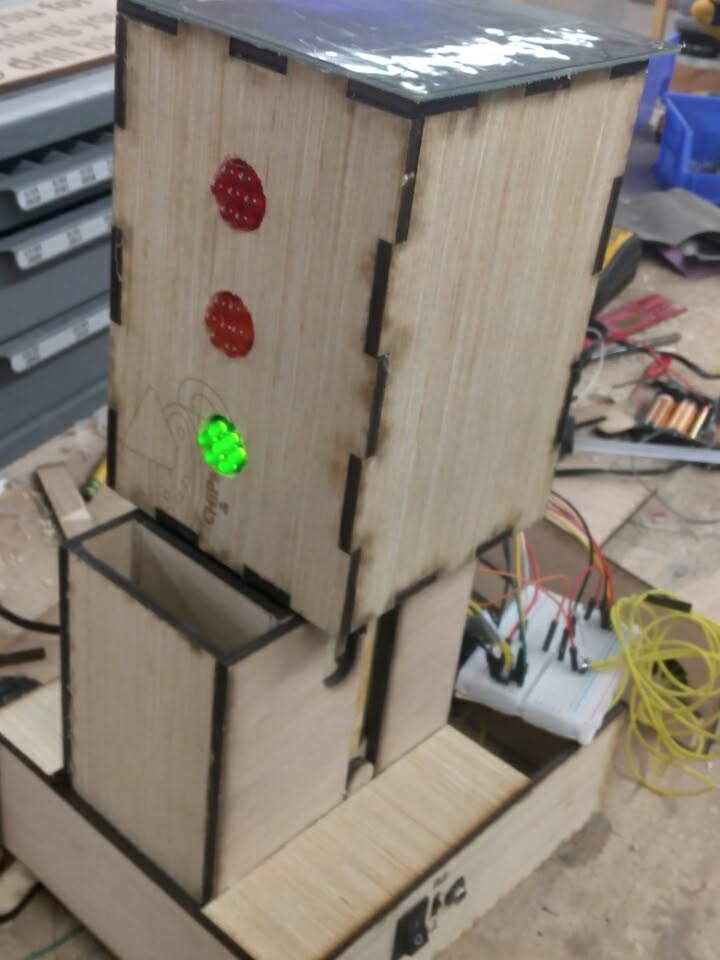
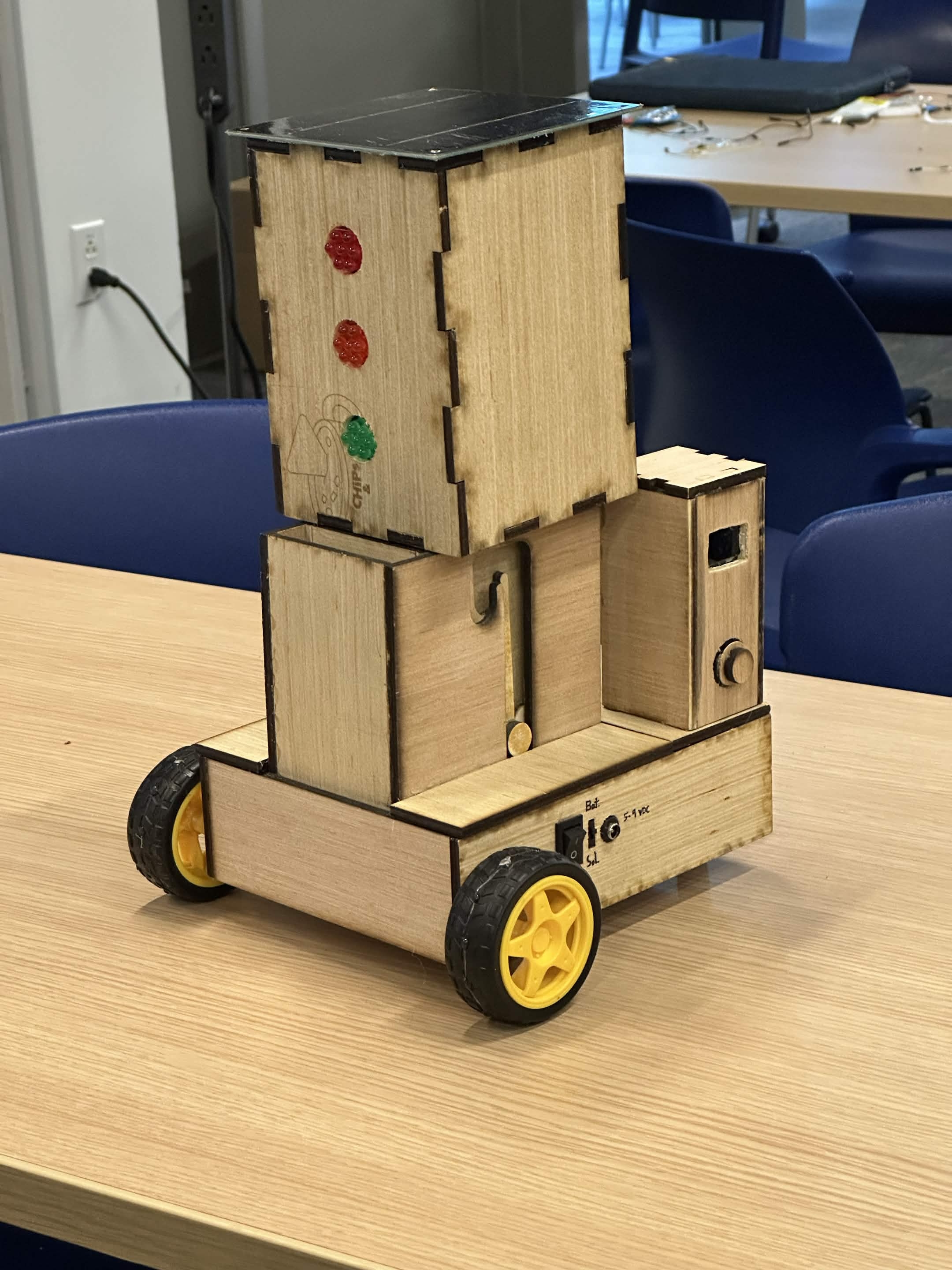
Our design consists of a transportable and compactable traffic and pedestrian sign lights. Near the base a button is provided for people to press to activate the pedestrian lights. The build runs off of a battery located in the base of the street light. The main pole that holds the traffic light has been redesigned into three sections that are each compactable into each other. This pole is designed to be easily compressible as well as easy to set up, the materials are intended to be light enough for a person being capable of lifting. Wheels are attached at the back of the base as well as handles at the front to easily move and transport the entire structure.
How we built it
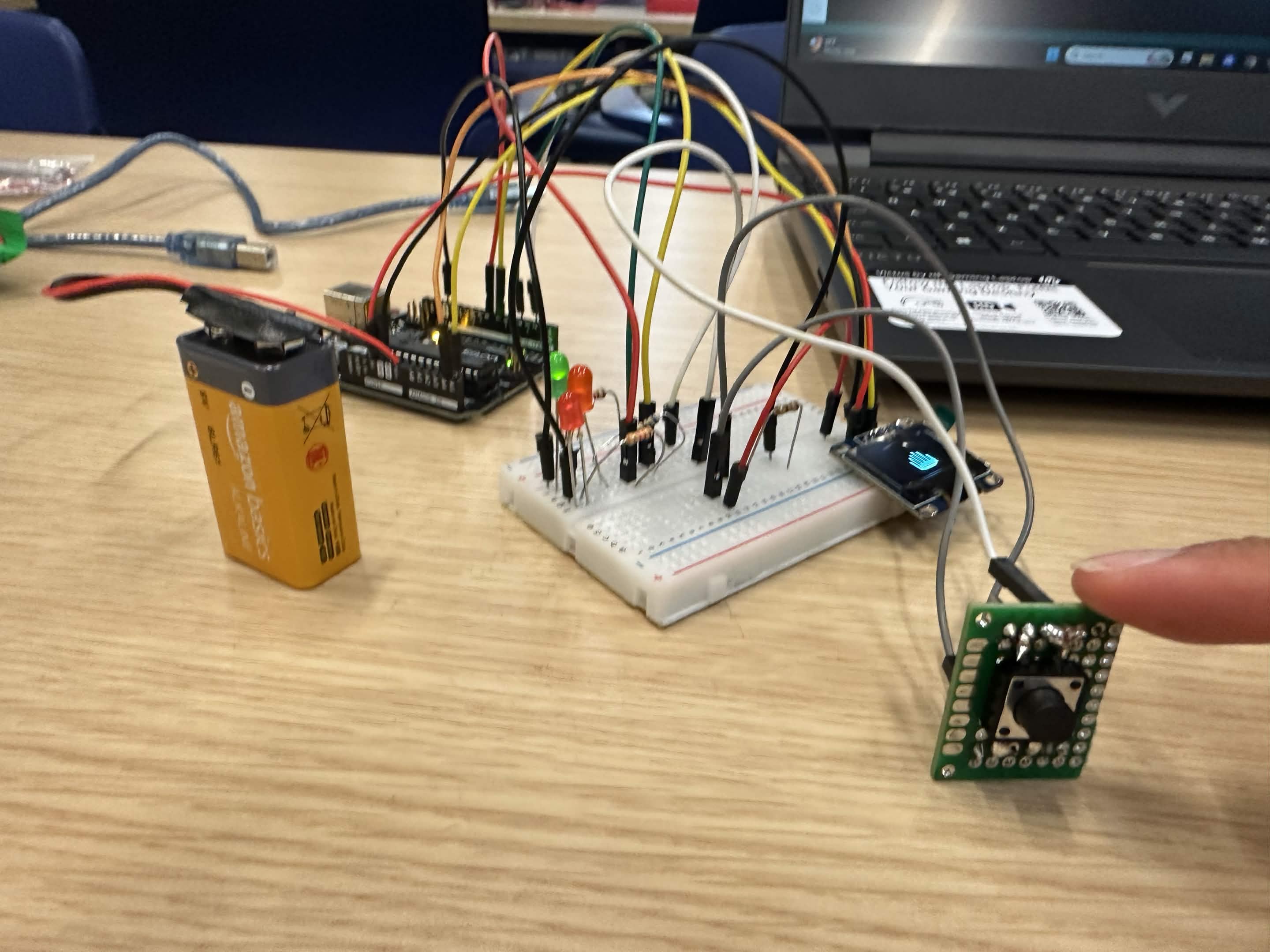
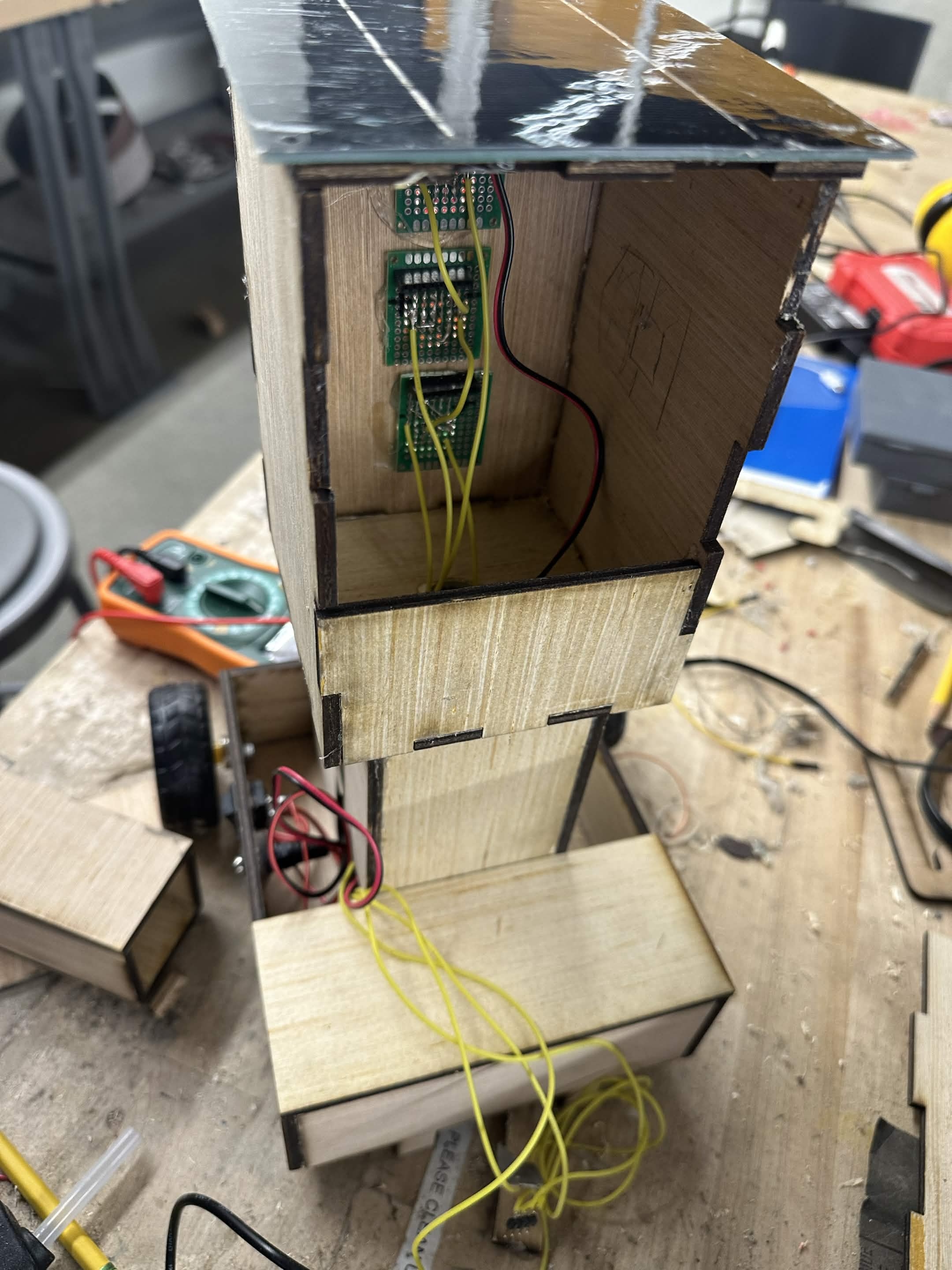
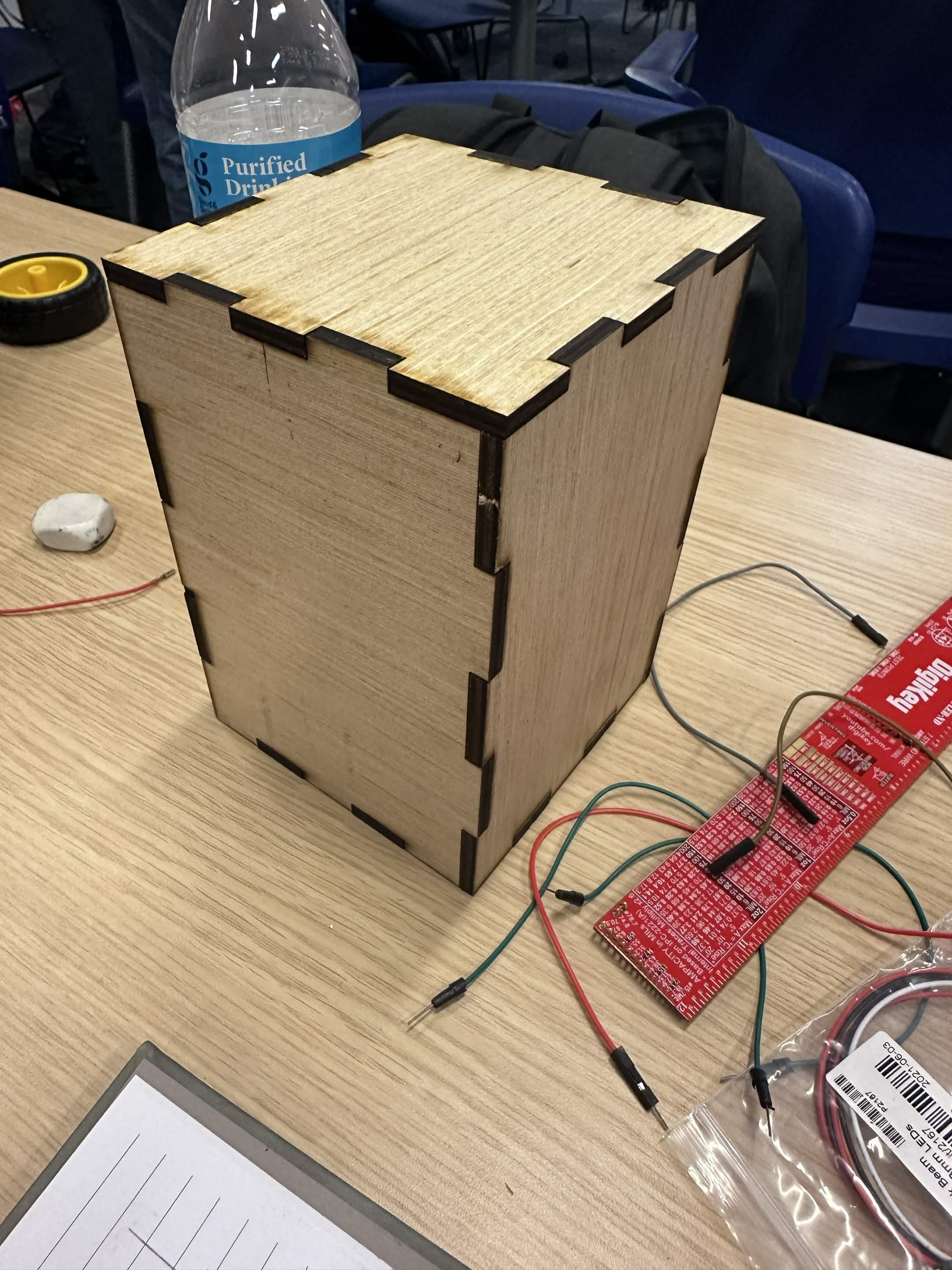
The wooden parts were designed in Autodesk Inventor and were materialized by the wooden laser cutters in the UCLA maker's space. Wires and components were soldered to various solderful breadboards before being hot glued to the wooden components. The microcontroller we opted for was the Arduino Uno and the code for the program was written in Arduino IDE.
Challenges we ran into
Originally our plan was to have solar panels be the main source of energy with the battery being the backup. However, due to time limitations, we were not able to set up the solar panel to be the main source of energy and have a battery as a back up. Another issue was the solar panel may not have had enough power draw to properly power all the components. Several issues arrived while coding the program such as OLED screen display issues, functions getting called automatically, and the button not responding. After some debugging however, the bugs were fixed. Another issue that arose was the design for the poles originally being designed as squares as it prevented the desired method of expanding to become taller. This issue was resolved by redesigning the main poles to be rectangles to hold the traffic light.
Accomplishments that we're proud of
A major accomplishment was creating the pedestrian display. Many hours were spend coding the display and making it do things like display images and countdown was a huge accomplishment. Another major achievement was creating the compressible structure for the pole. It took a lot of time to get the dimensions right.
What we learned
We learned how to create a custom display upon an OLED screen, how to use the laser printer, and knowledge on using the Arduino uno. It was a valuable experience where we each got to hone in a field we know best, learn more about that field, and combine our strengths to make the final design.
What's next for Pop-up Streetlight
Solar panels, as mentioned before, would be a great addition to increase the sustainability of the pop-up street light. Adding other features such as a buzzer to indicate when to walk would be nice additions as well.

Log in or sign up for Devpost to join the conversation.