Inspiration
iPhone Duo folds. We wanted a game where the fold isn't a gimmick button — it is the controller, and it means the same thing in your hand as on screen. A pop-up book is the one object everyone already knows how to "fold-play".
What it does
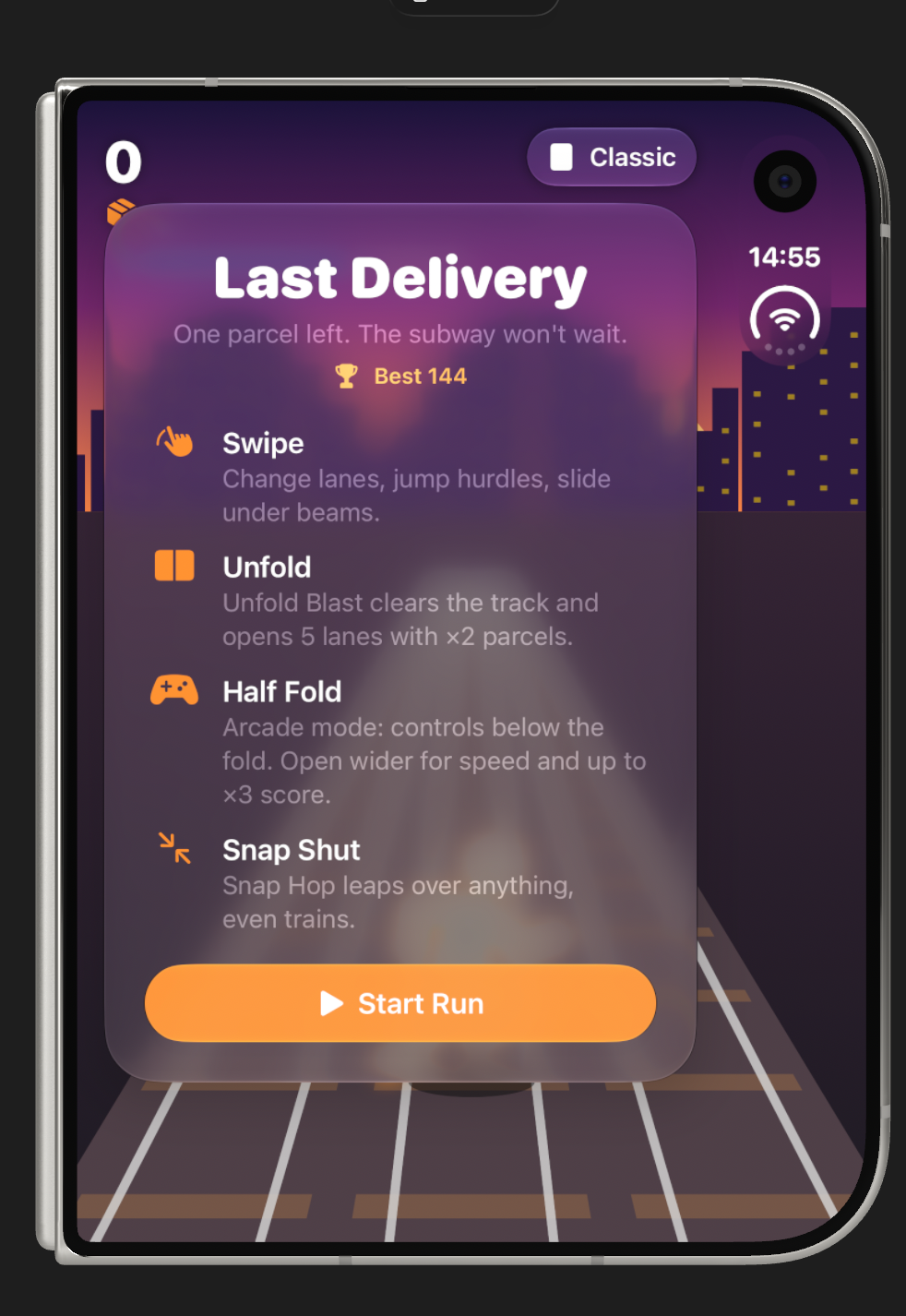
Pop-Up Post is an endless runner inside a pop-up book. A paper courier runs down the book's spine carrying the last letter. Swipe to change lanes; fold the phone and the paper pop-ups lie down (flatten fences and trains in your way), open it flat and they stand back up (raise paper bridges over holes in the page). Close the phone and the page turns — the outer display shows the book's cover.
How we built it
- SwiftUI + RealityKit on the iOS 27.1 SDK, built entirely in Bitrig
onHingeChange→DeviceHinge.angle, smoothed, mapped to pop-up height:height = 1 − fold, wherefold = (180° − angle) / (180° − 115°)- Outer display (closed) vs inner display (open) drive pause / cover / resume
- Pure, UI-free rules module + a headless simulator with an autopilot "contract" test, so difficulty tuning (spacing, spawn distance, hinge swing time between open↔fold obstacles) is checked in seconds, not by hand
- Paper art generated in code (Core Graphics textures on unlit materials)
Challenges we ran into
We built it three times.
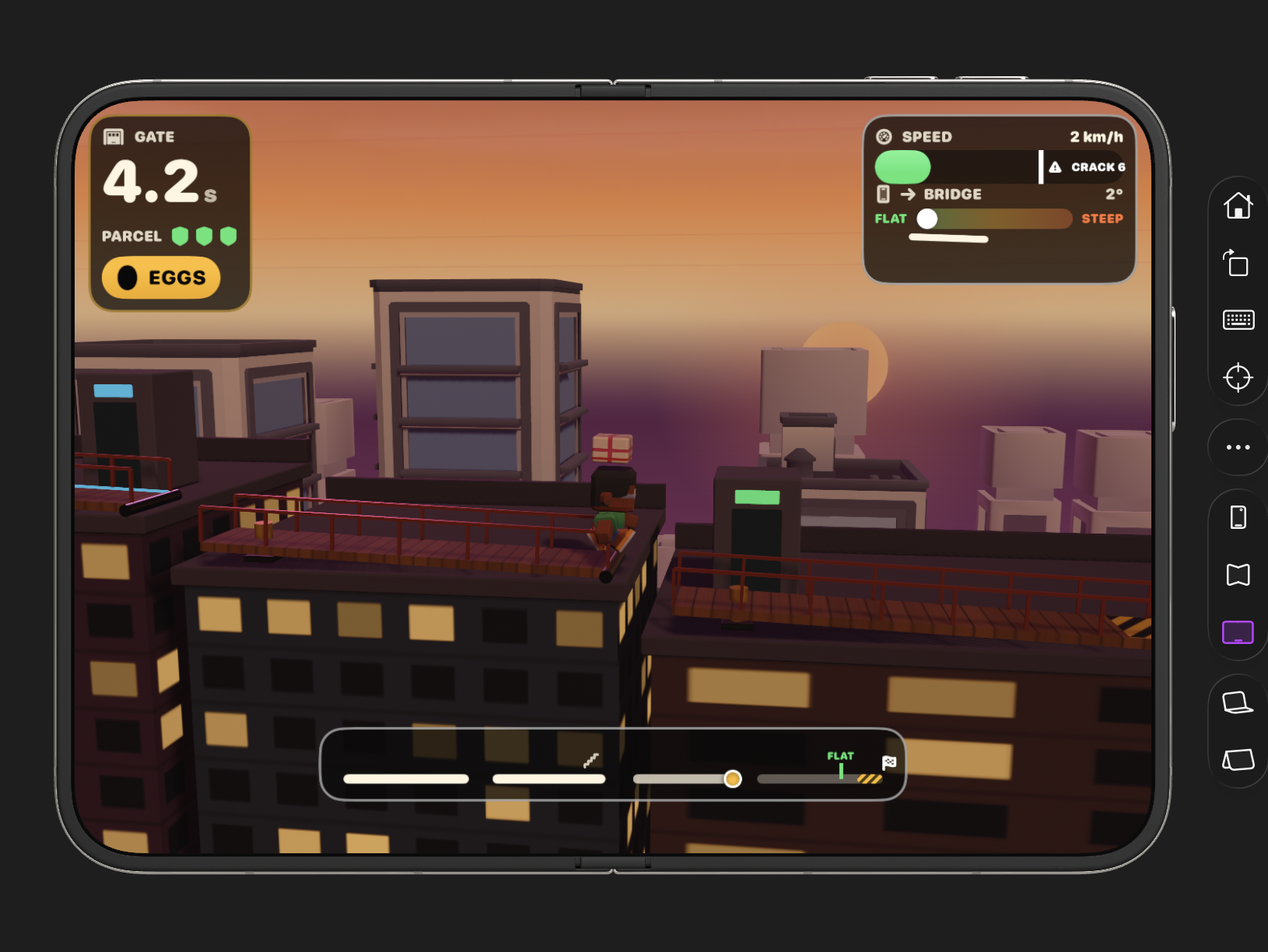
- v1 "The Last Delivery": folding tilted a bridge — steep = fast, flat = safe landing for a fragile cake.
- v2: multi-bridge route, jumps, cargo types, and closing the phone in a stairwell to tunnel through the outer display, in a 3D RealityKit city.
- Playtesting v2 exposed the problem: the hinge was an abstract throttle, the screen and the bridge tilted at once ("double tilt"), and the resting half-open grip was always optimal — so there was really one decision. We threw the mechanic out and asked "what object does folding already mean something for?" → a pop-up book.
Also: the simulator reports hinge angle sparsely, so we dead-reckon between samples for smooth motion, and we had to guarantee the game never asks for open→folded faster than a human hand can swing the hinge.
Accomplishments we're proud of
The fold reads in one second at a booth, with no tutorial text: fold and the walls fall, open and the bridge rises.
What we learned
Apple's guidance holds up: use the hinge angle for interaction and effects, and use size classes / reserved regions for layout. The best hardware mechanic maps onto a physical metaphor people already have.
What's next
Hand-authored spreads that each need a specific angle, page-turn chapters on the outer display, and a final letter addressed to the player.

Log in or sign up for Devpost to join the conversation.