-
-
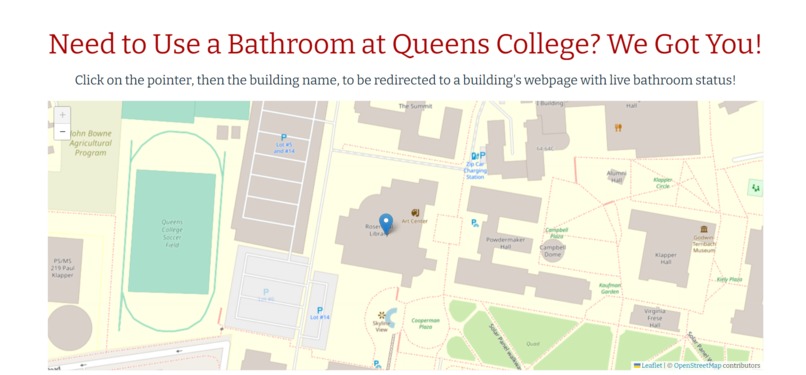
Landing Page of the website
-
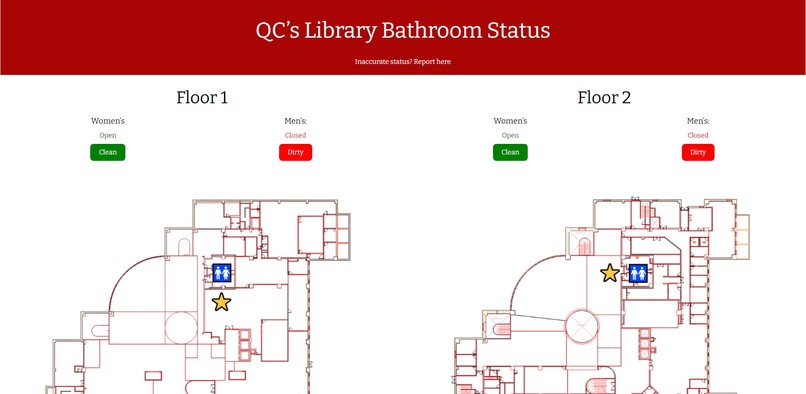
Building specific page displaying all bathrooms (there are six total for the library, scroll to see)
-

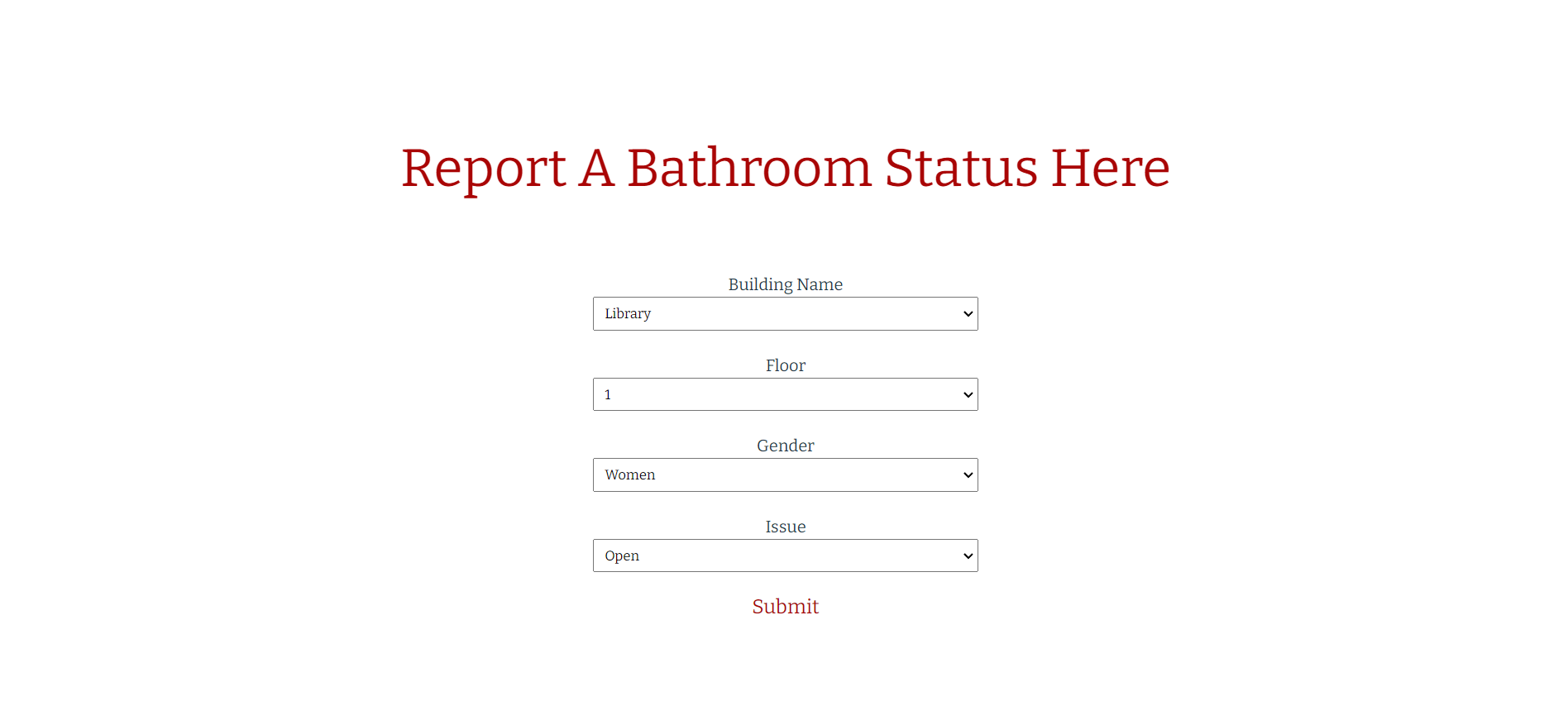
Report Bathroom Status Form
-

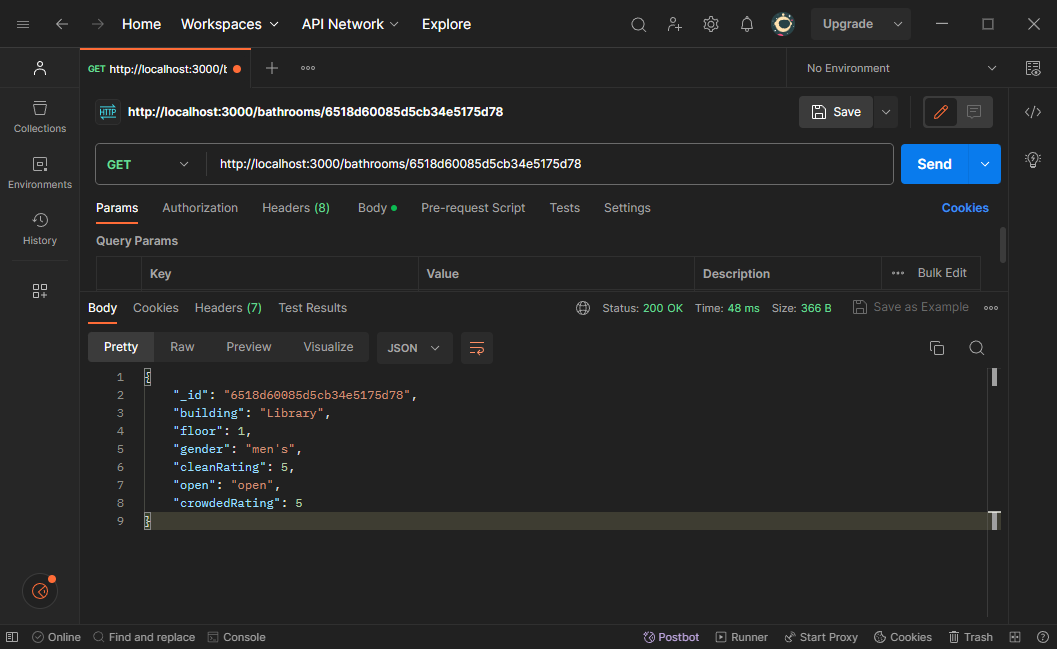
POSTMAN testing GET function on the server

Inspiration
The inspiration for Poopy Maps came from the general apprehension we can all relate to when it comes to using public-facing restrooms. We wanted the students at our university to have the ability to monitor the status of the restroom nearest them in real-time, and decide where to go on campus, before they end up finding themselves in a poopy situation.
What it does
Poopy Maps allows users to select any building of Queens College to see the current status of that building's bathrooms. The status would be updated live with parameters checking for cleanliness, openness and crowdedness. Users would be able to interact with the website using a report form to report status changes (such as the bathroom being dirty or closed). At least, that was the plan.
How we built it
We built it using React.js for the frontend and Node.js for the backend, with MongoDB as the database. We all got together to brainstorm and code on discord, and we continued to use discord as a way to communicate. We had many branches on GitHub as a way to track individual changes before merging to main. The team members frequently voice chatted with each other and reported new commits to keep each other updated.
Challenges we ran into
The backend had trouble learning how to properly use MongoDB, and we ran out of time to connect the the front and back end together. This was our team's first hackathon, and most members were online, so we struggled on organization and did not plan out what to do properly. This led to inefficiency.
Accomplishments that we're proud of
We're proud of having learned a lot during this short period of time, and having been able to code something, even if it's incomplete. Many of us were learning databases or languages for the first time or relearning them, and we made tremendous progress in a brief period. For some of us, this was our first Hackathon, so we were proud to have participated and worked on a team to build this. We'd like to specifically highlight Paige Chan, Kenneth Jordan and Prithibi Paul for their contributions. Most of the working code is theirs.
What we learned
We learned the importance of communication both within and between different teams/departments (we split into frontend and backend groups). We learned a lot more about version control through Github, database management with MongoDB Atlas, and React. We also learned how important it is to plan ahead and properly organize a project.
What's next for Poopy Maps
We would like to continue working on it by connecting the backend to the frontend, including more buildings beyond the library, and scaling it into becoming a project Queens College benefits from.


Log in or sign up for Devpost to join the conversation.