-
-
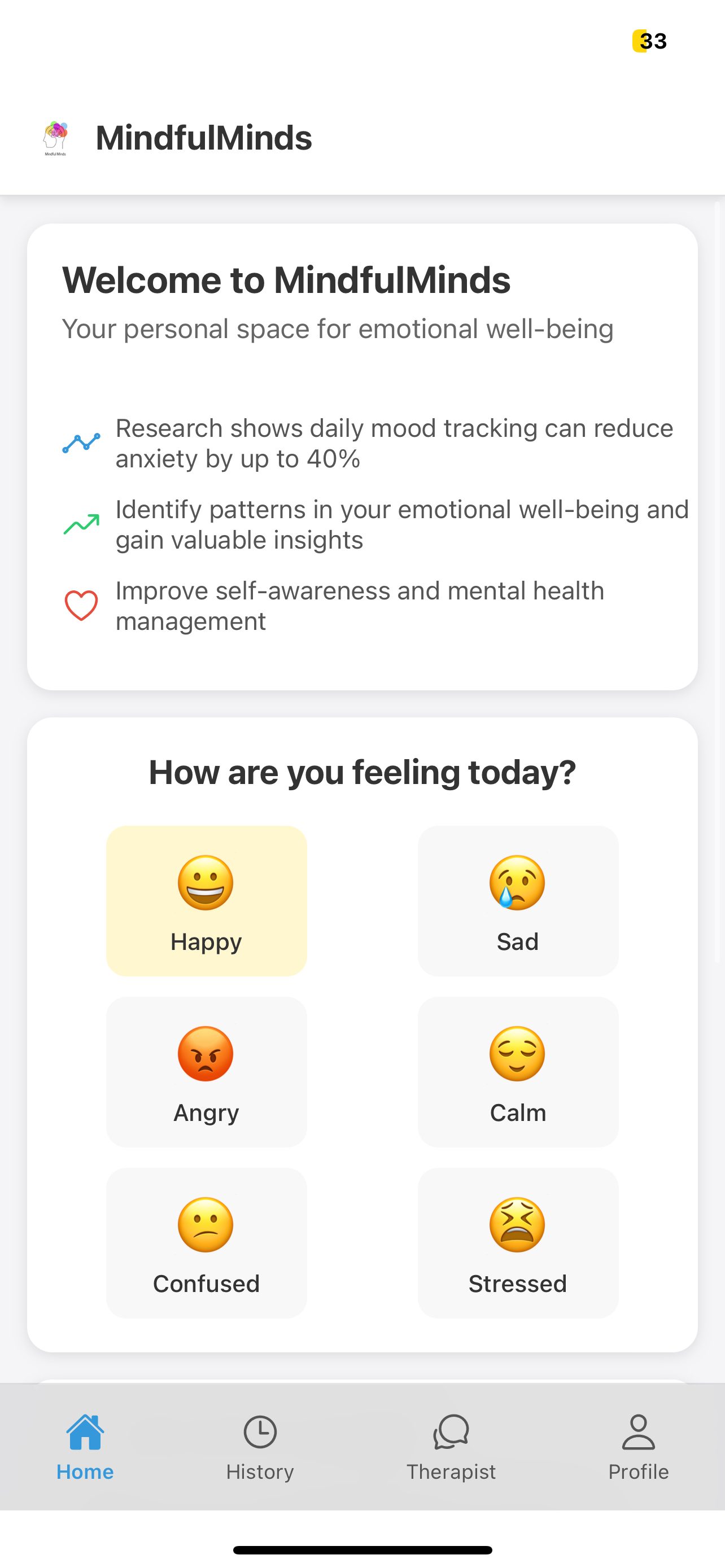
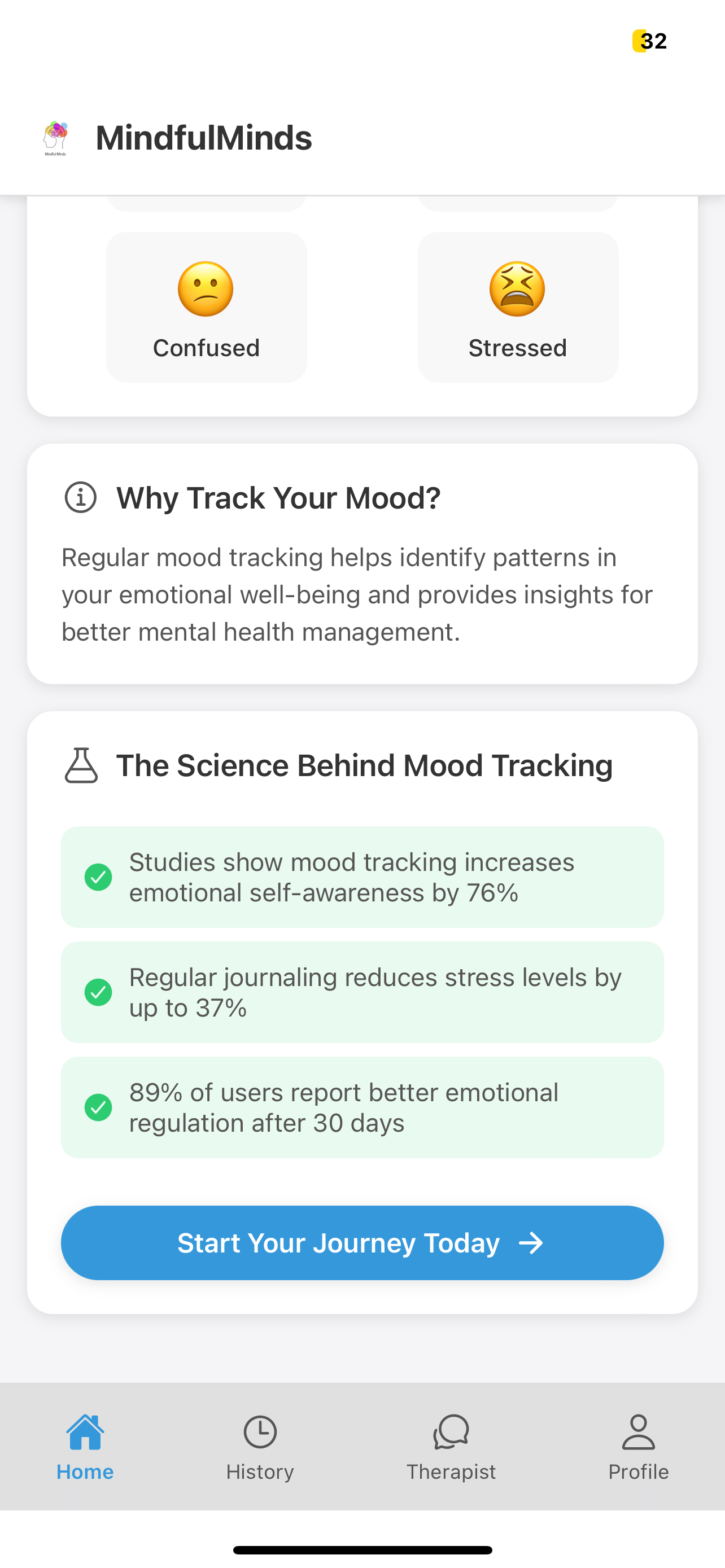
Front page
-
Front page
-
App logo
-
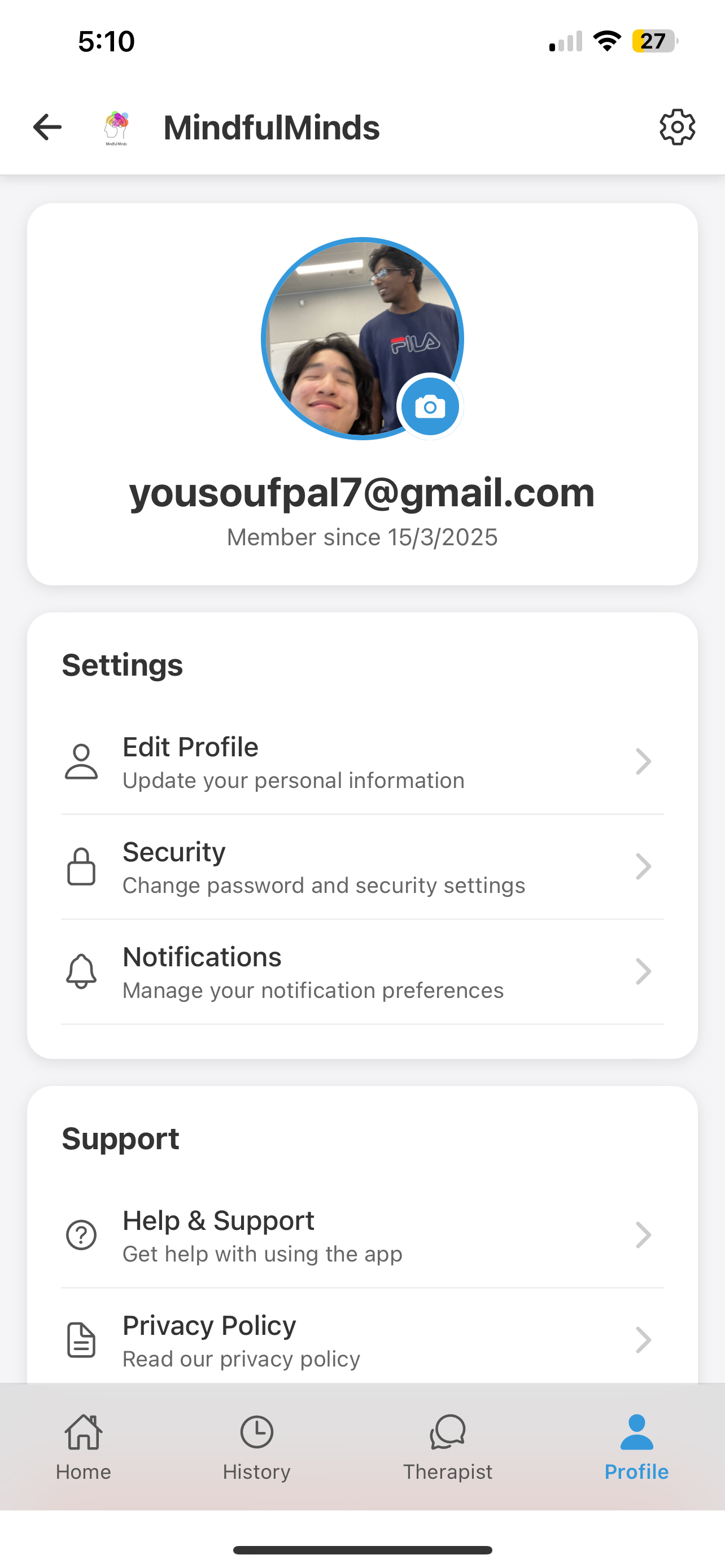
Profile page
-
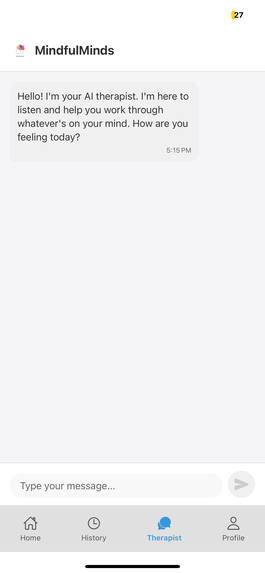
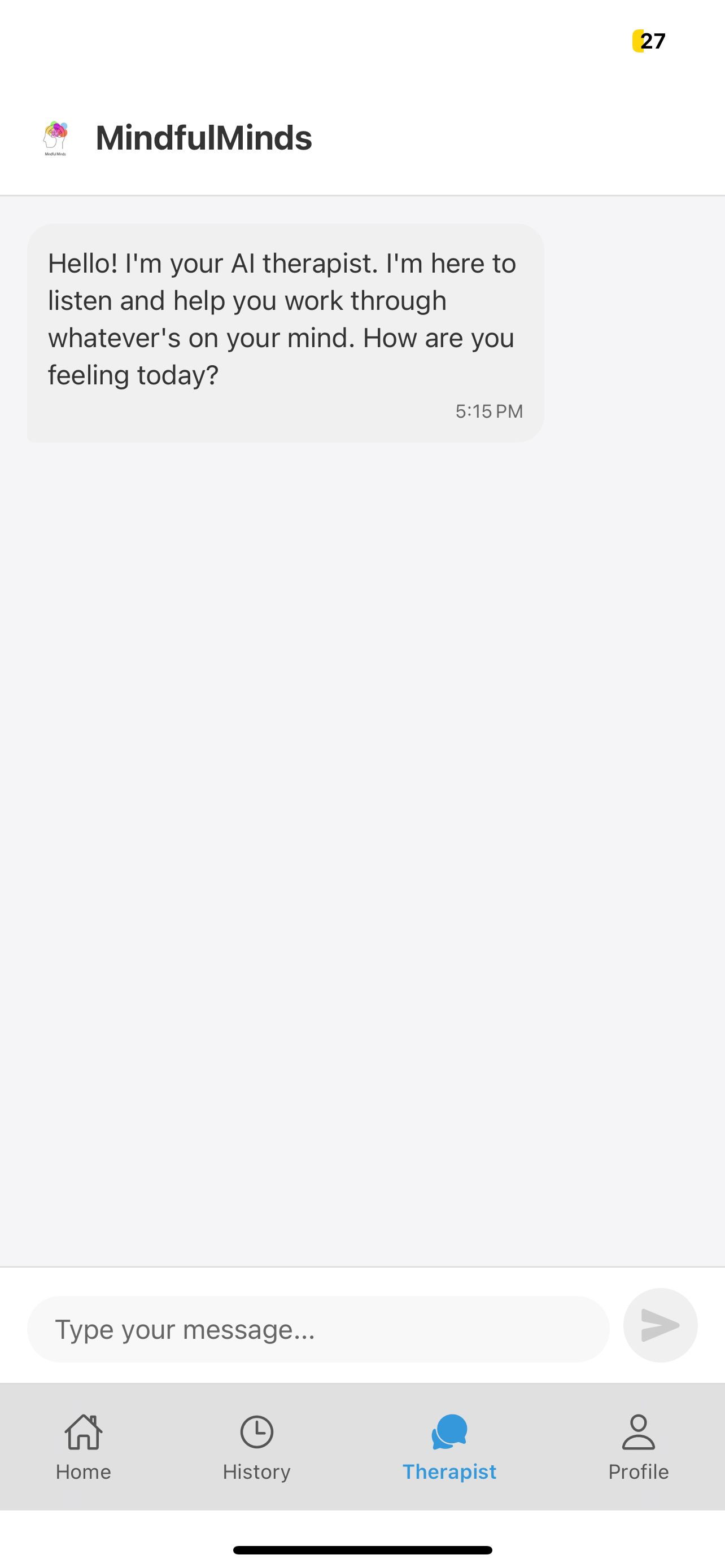
AI therapist page
Inspiration
Mental health is a growing concern, with 1 in 5 Australians experiencing mental health issues each year (AIHW.gov.au). Yet, accessing support remains a challenge due to financial barriers in therapy and the overwhelming nature of existing wellness resources. While many turn to mental health apps, most provide generic advice that fails to address individual needs, leaving users feeling unsupported and frustrated.
Inspired by the need for accessible and personalized mental well-being solutions, we created Mindful Minds, an AI powered app that empowers users to improve their well-being in simple and manageable ways.
Many studies have determined the relationship between mood and how it affects behaviour, and we want to introduce the ability to log how one is feeling, as according to Better Health Victoria, being able to understand your mood helps you manage them and feel better faster. This is where Mindful Minds comes in.
What it does
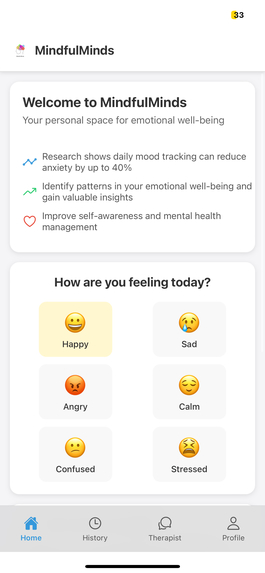
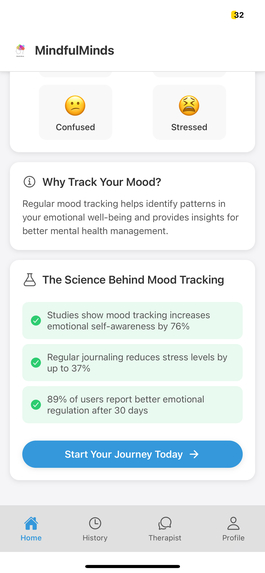
Mindful Minds makes it easy for users to track their emotions and get simple, helpful suggestions to improve their mood. Here’s what it does: Logging Your Mood: Users can choose how they’re feeling from a set of options like Happy, Tired, or Sad, and they also have the option to describe their mood in their own words.
Personalised Suggestions: Based on the mood input, the app’s AI suggests one small action the user can take to feel better, whether it’s a quick activity, a mindset shift, or a simple reminder.
Tracking Your Emotions: Each mood entry is stored and categorised, allowing users to be able to see how their mood has been over a certain period of time.
Mood History & Insights: Users can revisit past entries to reflect on their emotions and recognise patterns in how their mood changes.
By offering personalised support and mood tracking, Mindful Minds helps users stay more in tune with their emotions and take small steps towards improving their well-being.
How we built it
Mindful Minds was developed by our team of 5, driven by a shared passion for supporting mental well-being and creating a tool that assists users in navigating and logging their emotions more effectively. Recognising the challenges many individuals face in managing stress and anxiety, we set out to design an accessible and intuitive solution that provides real-time emotional support and personalized guidance. The app is built using React Native with TypeScript, integrating the OpenAPI chatbot to provide users with emotional support and coping strategies for stress and anxiety. We have implemented custom commands within the chatbot to offer personalised tips and activity recommendations based on users' emotions and challenges. Our codebase features a streamlined and intuitive frontend, designed with multiple screens and modular components to ensure a smooth and engaging user experience.
Challenges we ran into
Ideation & Pivoting: On the first night of the hackathon, we settled on an initial concept and began building upon it. However, after consulting with a mentor, we realised that our idea lacked the depth and uniqueness we wanted to showcase. This led us to pivoting our concept mid-way through the hackathon, shifting our focus to a more interactive and personalised mood-support application. This change required us to rework plans we had already started implementing, forcing us to quickly adapt, rethink our approach, and modify features we had already begun developing.
AI-Driven User Journal: Another significant challenge we encountered was refining the user journal feature, where the AI suggests ways for users to improve their mood in different capacities. Ensuring that the AI-generated recommendations were meaningful, personalised, and contextually appropriate proved to be more complex than anticipated. We had to iterate on our prompts, fine-tune responses, and balance structured guidance with the flexibility to adapt to various user inputs.
Accomplishments that we're proud of
Teamwork makes the dreamwork. "[We] think, team first. It allows [us] to succeed, it allows [our] team to succeed." - Lebron James
The main thing we are glad to have accomplished is that we have been able to integrate different types of AI and predictive technology in allowing one to be able to improve on people's mood and understand their feelings better.
What we learned
Throughout the hackathon, we gained invaluable hands-on experience that significantly expanded our technical skills. We learned to use Flask to build our robust backend, creating APIs that power the app’s functionality, while also mastering React Native for designing a responsive, user-friendly mobile interface. The real breakthrough for us was integrating these two worlds—combining the backend and frontend seamlessly. This integration taught us how to establish effective communication between the server and client, ensuring that data flows smoothly and the overall user experience remains intuitive and engaging. Overall, the project was a steep learning curve that not only deepened our understanding of full-stack development but also showed us the importance of adaptability and collaboration in a tight deadline. This hackathon has been a rich learning experience for us, and we're excited to apply these lessons to future projects.
What's next for Mindful Minds
We have a lot of exciting ideas for updating Mindful Minds and taking it to the next level in order to boost people’s mental wellness:
Spotify Integration: We want to integrate Spotify to create personalised playlists that match a user's mood. By leveraging artificial intelligence, the app could analyse mood inputs and generate music selections designed to soothe or energise the listener. This integration would provide an immersive experience that not only tracks your mood but also actively helps improve it through the power of music.
Achievement System & Daily Streaks: To boost engagement and encourage consistent usage, we plan to implement an achievement system where users earn rewards for tracking their moods and taking positive actions, such as meeting a certain goal of staying positive for a period of time. This could include daily streaks that reward regular app use with badges, points, or unlockable content. These gamified elements are designed to motivate users, build healthy habits, and celebrate personal growth over time.
Built-In Wellness Tools: We’re also considering the addition of integrated wellness tools directly within the app. These might include guided meditation sessions, breathing exercises, or interactive journaling features that help users manage stress and anxiety in real time. By offering a suite of built-in tools, Mindful Minds can become a one-stop platform for both tracking and actively improving mental well-being. Overall, our future plans are focused on creating a richer, more personalised experience that not only records your mood but also actively contributes to your overall mental health.
Built With
- openapi
- python
- react-native
- typescript


Log in or sign up for Devpost to join the conversation.