Inspiration
I've been lifting for years, and the one thing that always killed my consistency was tracking protein. Every app I tried made me search endless databases or scan barcodes that never worked on home-cooked meals. I'd give up after a week. I kept thinking — I can take a photo of my food in one second, why can't an app just figure out the macros from that? So I built the thing I wished existed.
What it does
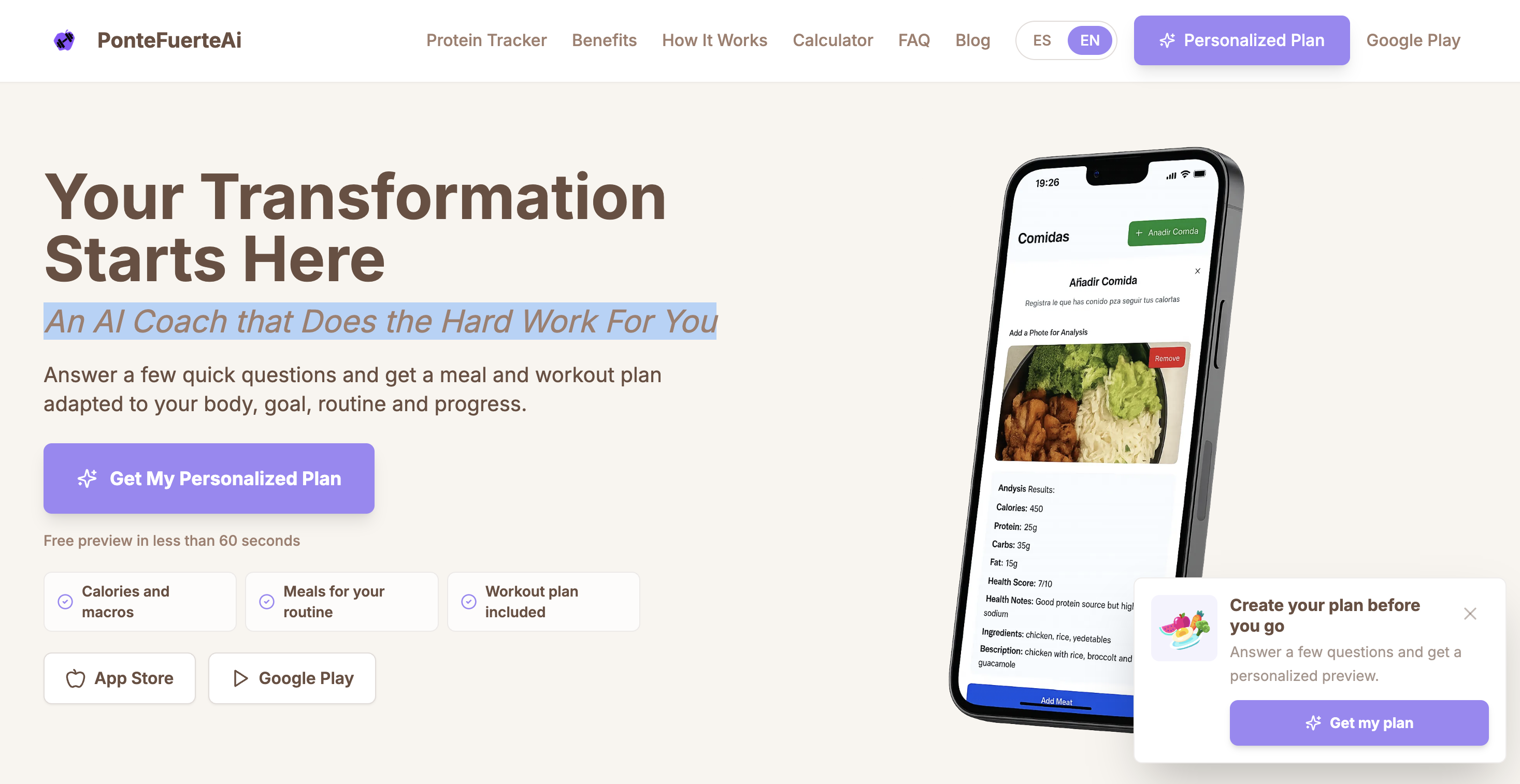
PonteFuerteAI is an AI protein and calorie tracker that logs your macros from a single photo. You snap a picture of your meal and the AI instantly identifies the food and calculates protein, calories, carbs, and fats — no barcode, no manual entry. On top of nutrition tracking, it also generates personalized workout plans based on your body, experience level, and goals, so your diet and training live in one place.
How I built it
The app is built with React Native and Expo for cross-platform iOS deployment, with a Supabase backend handling auth, user data, and the food logging database. The core of the app is the AI vision pipeline that processes meal photos and returns structured macro data. For monetization I integrated RevenueCat to manage subscriptions and Superwall for the paywall flow. The workout generation uses an LLM to build routines tailored to each user's profile and progression.
Challenges I ran into
The hardest part was getting the AI food recognition accurate enough to be trustworthy — early versions would confidently log a chicken breast as salmon, and nothing kills user trust faster than wrong data. Getting portion size estimation right from a 2D photo was especially tricky. On the business side, handling international payments and tax compliance across different markets turned out to be a rabbit hole of its own, especially once real users from Latin America started subscribing.
Accomplishments that I'm proud of
Getting a real AI vision pipeline working end-to-end as a solo developer is something I'm genuinely proud of. But the thing that means the most is having real paying users across the US, Spain, and Latin America who use the app daily — including people who told me it's the first tracking app that actually stuck for them. Going from an idea to a product people pay for, built entirely on my own, feels like the real win.
What I learned
I learned that the technical build is maybe half the battle — the rest is onboarding, trust, and understanding your users. A user in Colombia has different needs and expectations than one in the US, and small things like language and clarity in the first 30 seconds make or break retention. I also learned a lot about how AI models behave in production versus in a demo, and how much work goes into making them reliable enough for real people.
What's next for Pontefuerte Protein Tracker
Next up is making the food recognition even more accurate and expanding the database of recognized dishes, especially regional foods that generic trackers miss. I'm also working on a fully localized Spanish experience for the Latin American market, tighter integration between the nutrition and workout sides of the app, and smarter progress insights that tell you not just what you ate, but what to adjust to hit your goals faster.
Built With
- next
- react-native
- supabase

Log in or sign up for Devpost to join the conversation.