-
-
-
-
-
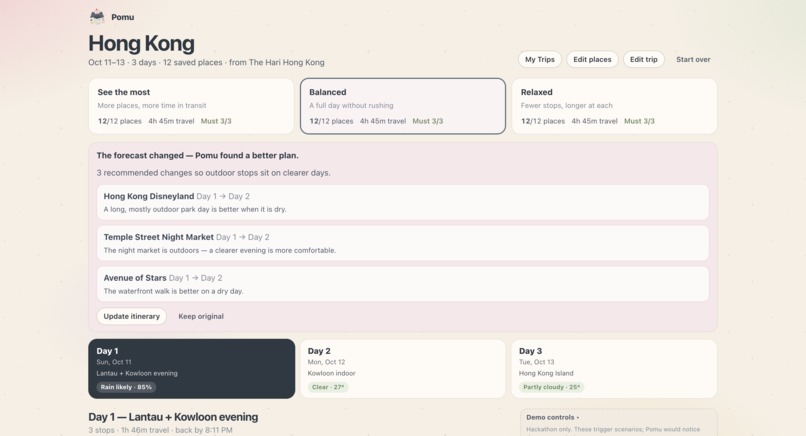
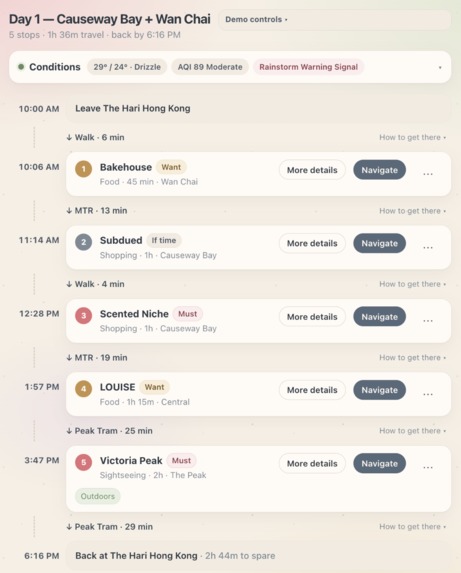
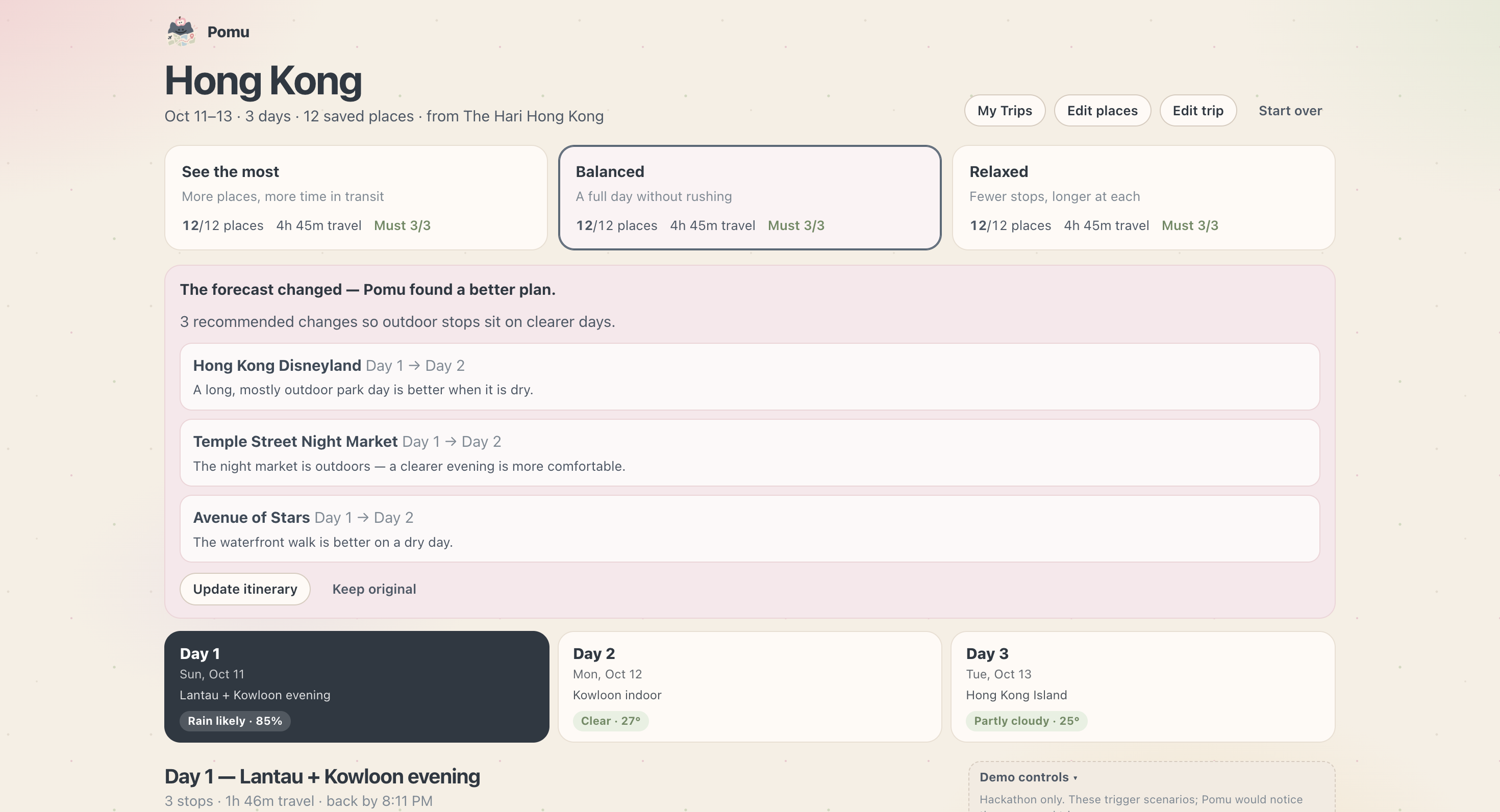
Pomu adapts the route around the forecast, moving weather-sensitive stops to better days while keeping the trip realistic.
About the Project
Inspiration
Most navigation tools are great once you already know where you're going. But when we travel, the harder part often comes before that: figuring out how to navigate all of the places we want to visit.
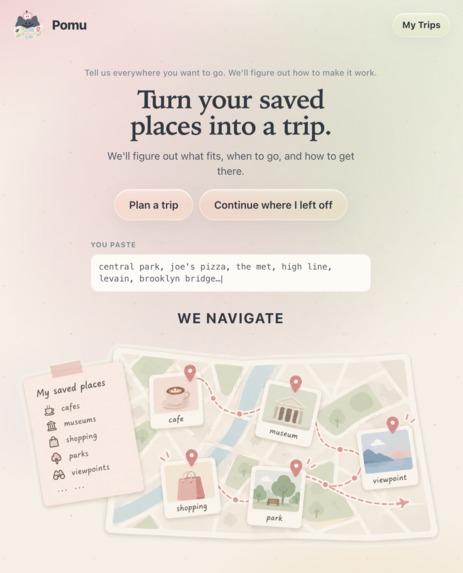
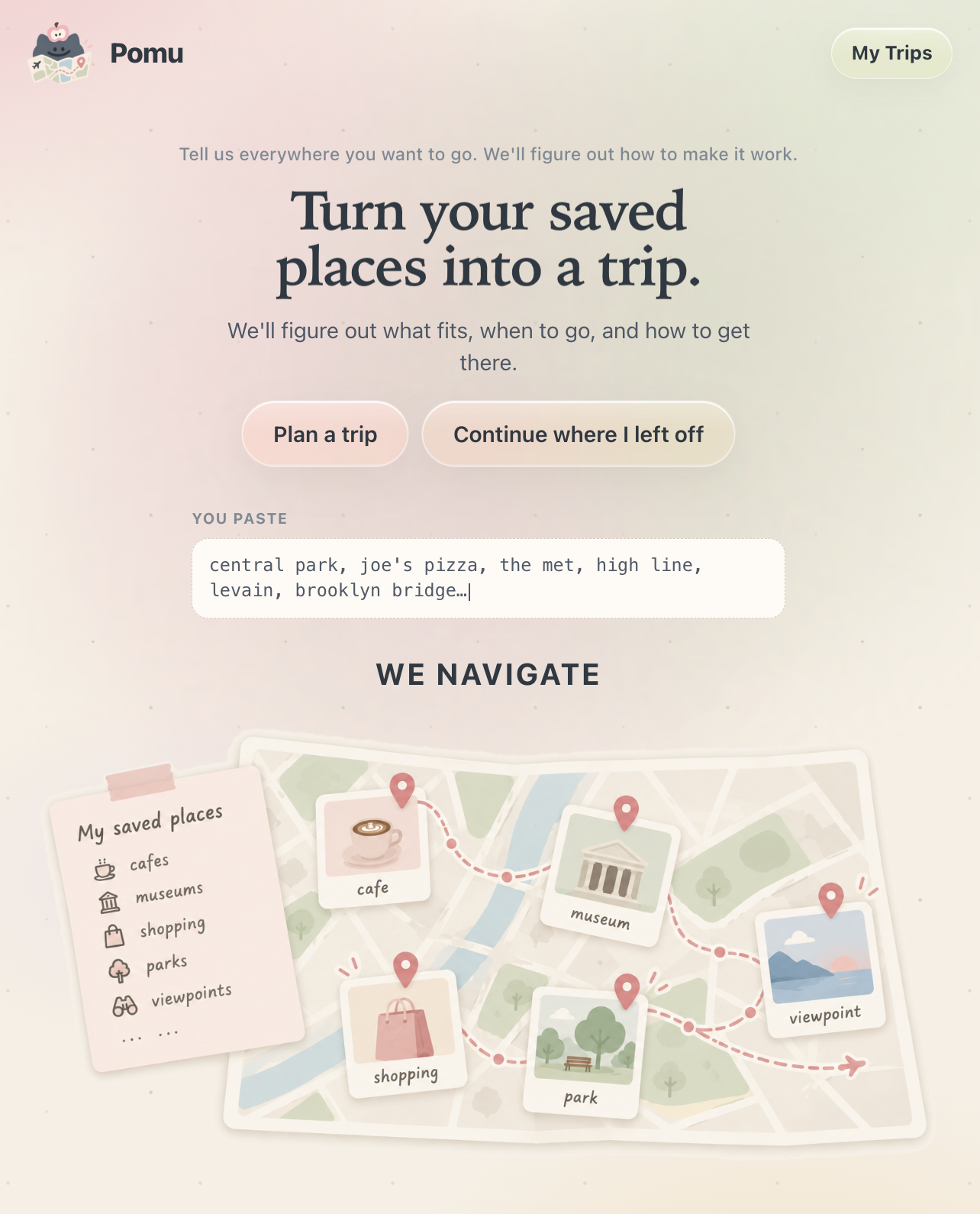
We save restaurants, shops, landmarks, and activities from TikTok, Instagram, recommendations, and Google Maps. By the time a trip comes around, we may have dozens of saved places, but we still have to determine which ones are near each other, what realistically fits into each day, when we should visit them, and how to get between them.
We built Pomu to bridge the gap between saving places and actually experiencing them. Instead of only navigating from point A to point B, Pomu helps users navigate an entire trip.
What It Does
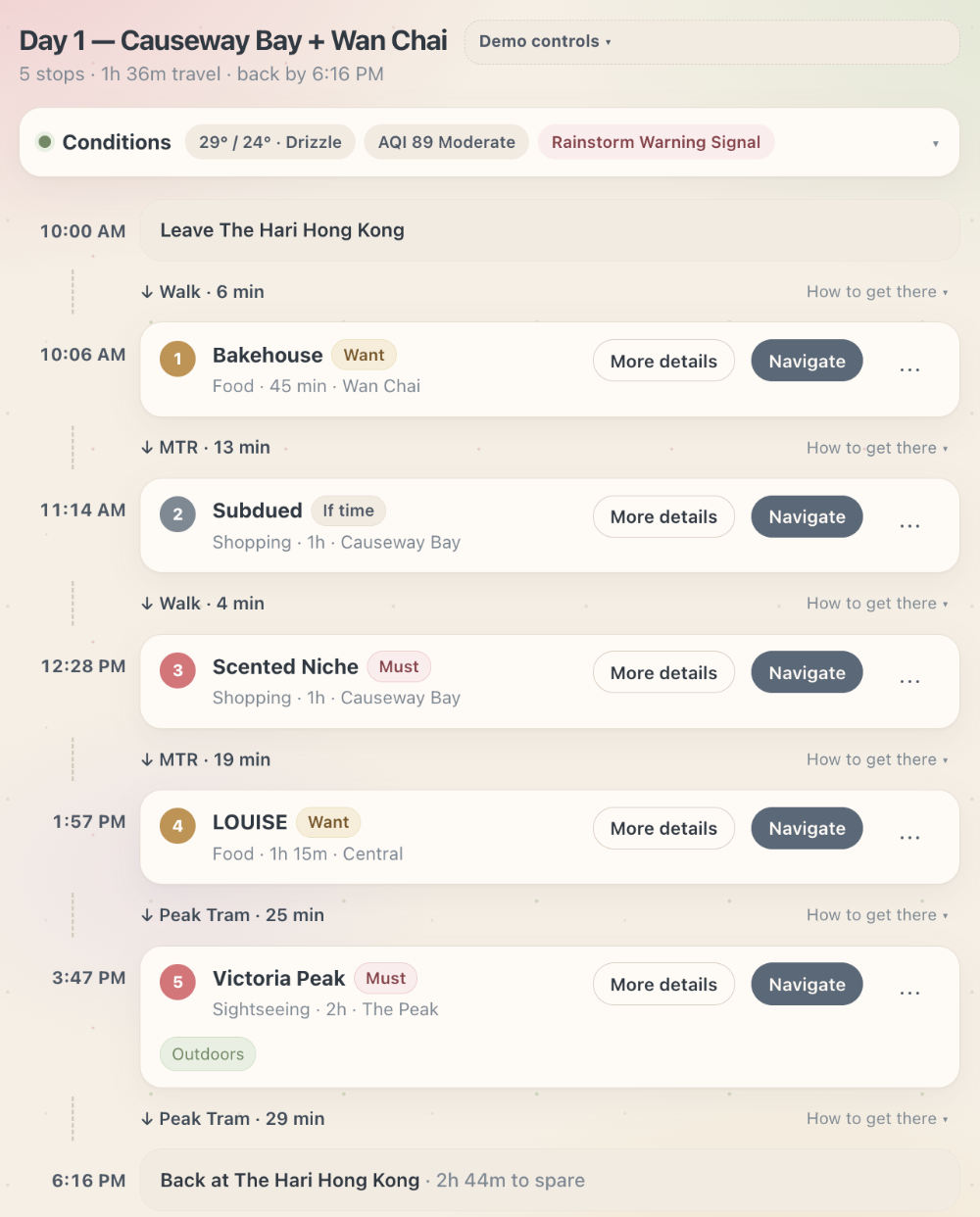
Pomu turns a collection of saved places into a realistic multi-day itinerary. Users add the places they want to visit and specify their priorities and travel preferences. Pomu then considers factors such as location, travel time, visit duration, time constraints, priorities, and weather to determine a realistic way to move through those destinations.
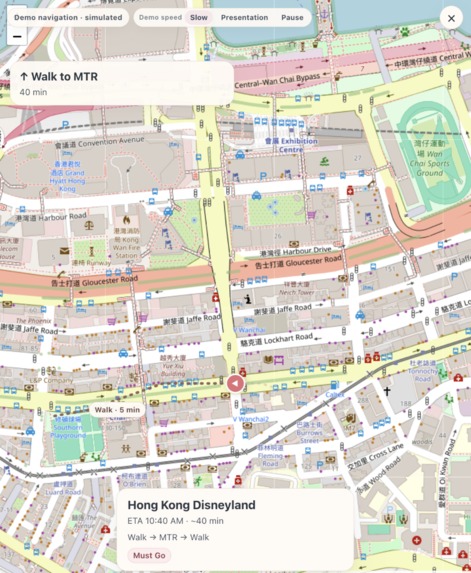
Once the trip begins, Pomu helps the traveler navigate from one stop to the next. More importantly, the itinerary isn't treated as a static schedule. Real trips rarely go exactly according to plan.
If something changes—for example, the traveler is running an hour late—Pomu can reevaluate the remaining journey and reorganize stops while considering priorities and time constraints. A time-sensitive destination might stay on the current day while a more flexible destination moves to another day.
Our goal was to address a larger navigation question: not just "How do I get there?" but "How do I navigate everything I want to experience?"
How We Built It
We built Pomu as an interactive web prototype using React, TypeScript, and Vite, with Cursor helping us rapidly prototype, debug, and iterate on the application.
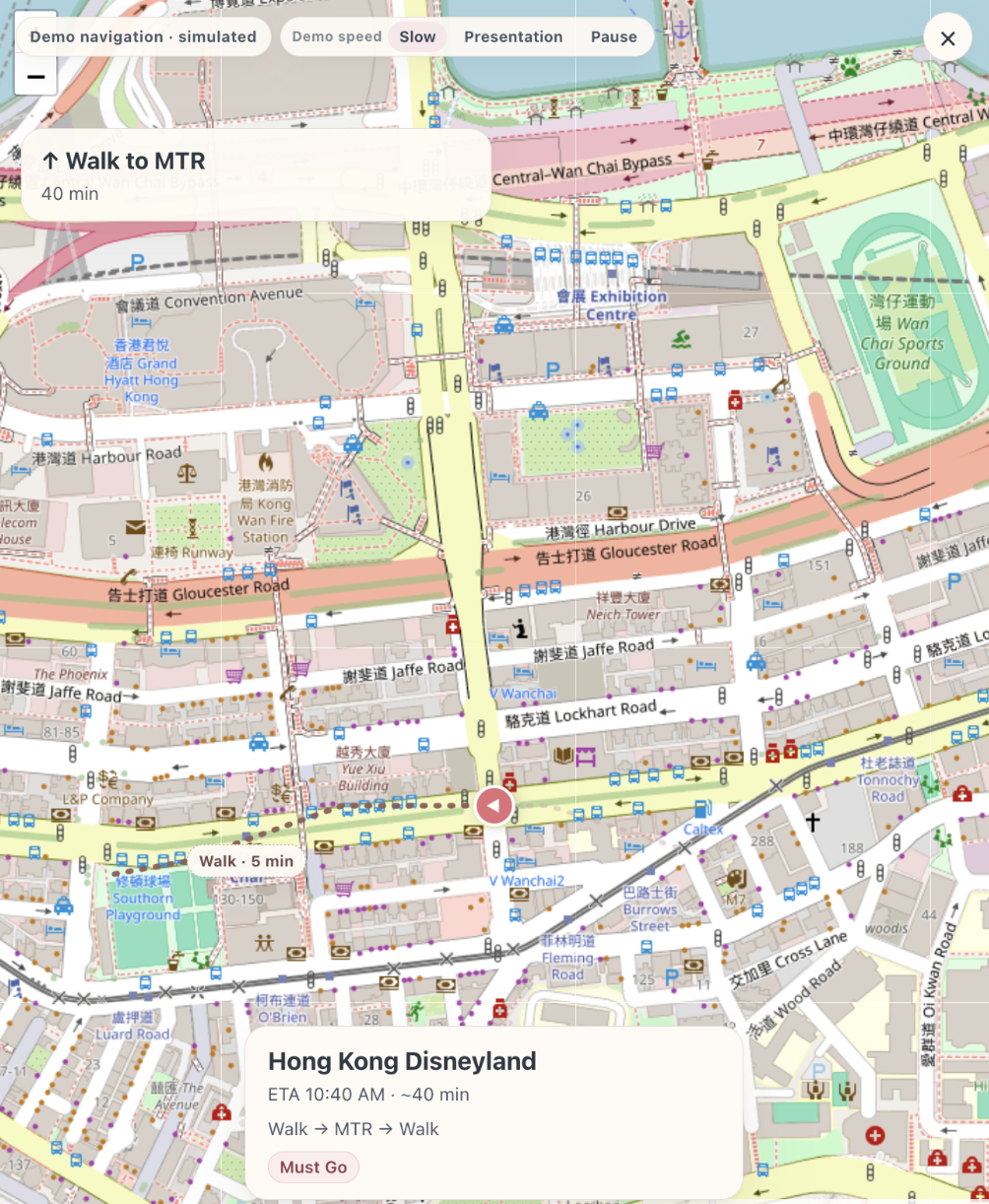
We created systems for organizing destinations into multi-day itineraries, representing user priorities and trip constraints, displaying weather-aware recommendations, and simulating navigation between destinations. We also built a replanning experience that demonstrates how Pomu can adapt the journey when a traveler falls behind schedule.
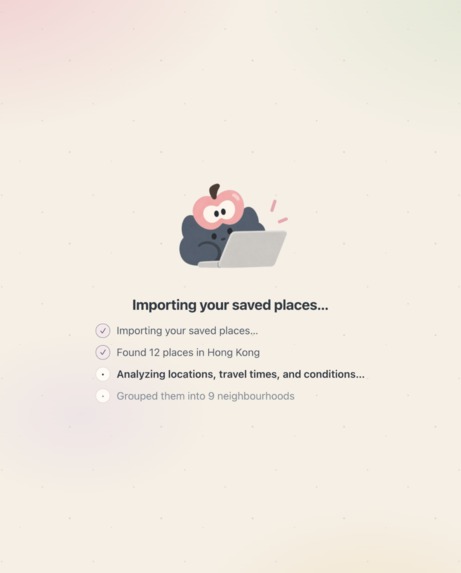
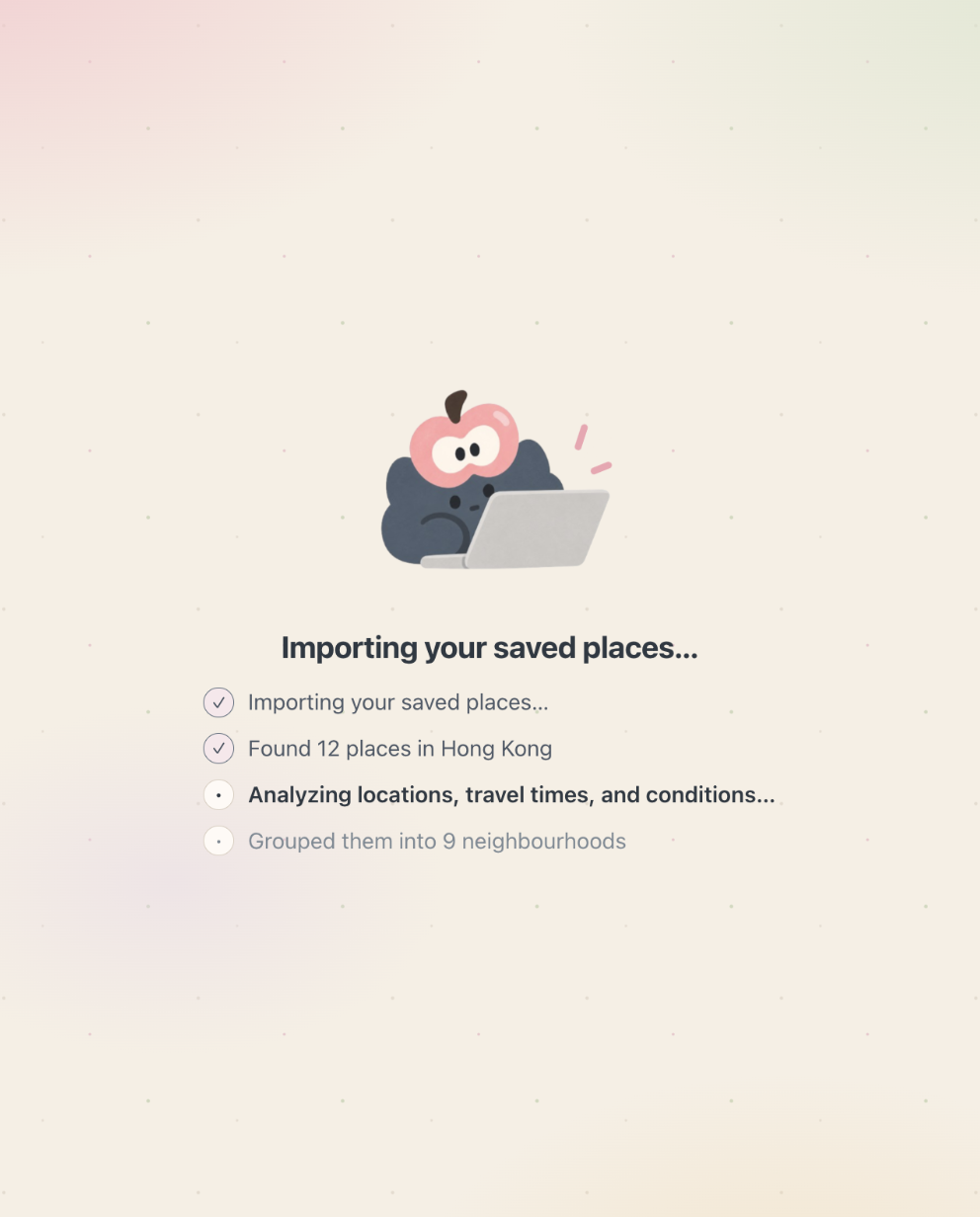
For our hackathon demo, we created a controlled Hong Kong trip scenario so we could focus on building and polishing the complete experience—from importing saved places, to planning the journey, navigating between destinations, and adapting when circumstances change.
Challenges We Faced
One of our biggest challenges was realizing that navigating an entire trip is much more complicated than simply finding the shortest route between a set of points.
A destination might only make sense at night, an outdoor attraction might be better on a clear day, one activity might take several hours, and certain places may be much more important to the traveler than others. We had to think about navigation as a combination of space, time, priorities, and changing conditions.
Another challenge was deciding how much we could realistically build within a single weekend. Features such as real-time GPS navigation, live transportation data, and fully generalized itinerary optimization would require significantly more infrastructure. We therefore focused on creating a functional prototype that demonstrates the complete navigation experience while using simulated data for some navigation and environmental changes.
What We Learned
This was our first hackathon, and one of our biggest lessons was the importance of scope and prioritization. We started with a broad travel-planning idea but gradually focused on the part we found most interesting: helping someone navigate an entire journey and adapt when reality doesn't match the original plan.
We also learned how important UX is when building with AI. Generating an itinerary is only part of the problem. Users need to understand why destinations were scheduled a certain way, what changed when their plan was updated, and what they should do next.
What's Next
We would like to expand Pomu beyond the prototype by integrating live mapping, transit, weather, and location data, generalizing the itinerary optimization system to more destinations, and allowing travelers to continuously replan their journey based on real-world conditions.
Ultimately, we want Pomu to turn the messy collection of places people save before a trip into something they can actually navigate and experience.
Built With
- css
- cursor
- html
- javascript
- procreate
- react
- typescript
- vite

Log in or sign up for Devpost to join the conversation.