-
-
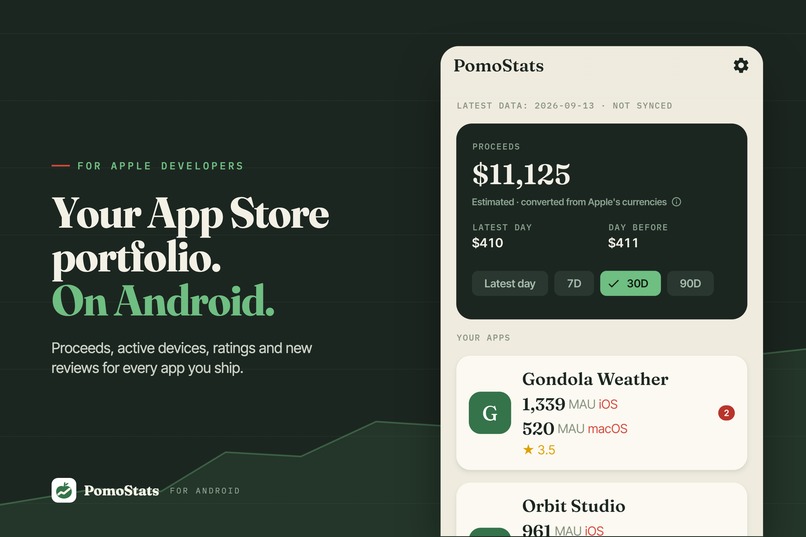
See proceeds, active devices, ratings and new reviews for every App Store app you ship, from one Android home screen.
-
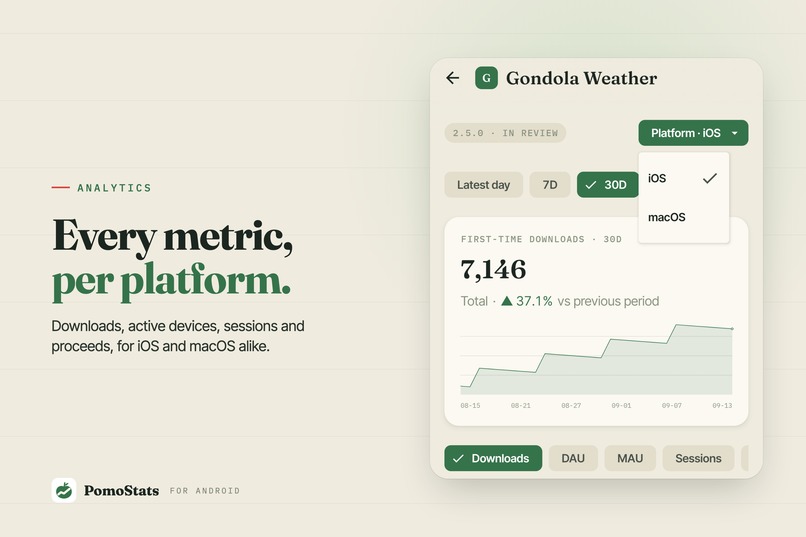
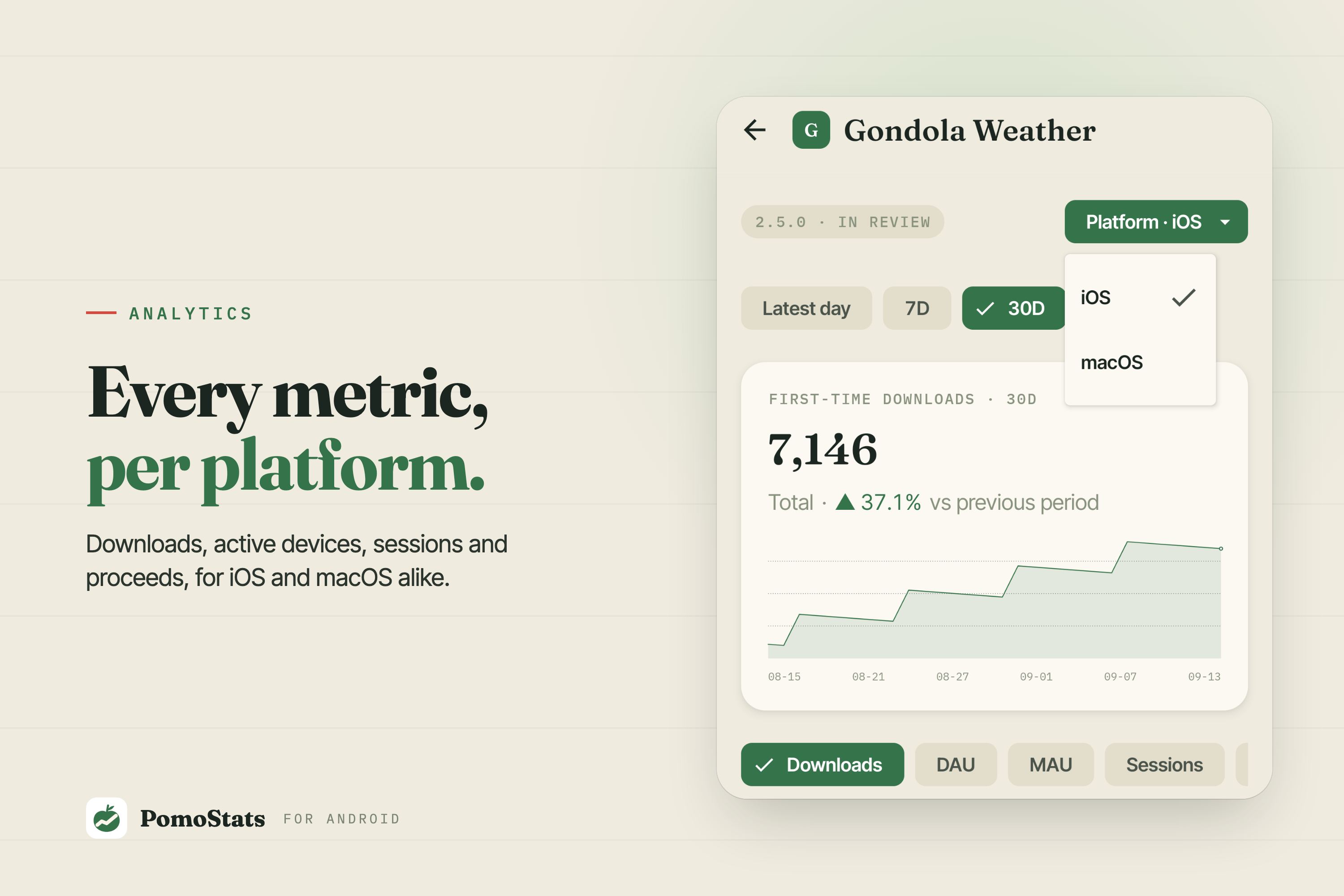
Per-app analytics for iApple platforms: downloads, active devices, sessions and proceeds over 7, 30 or 90 days.
-
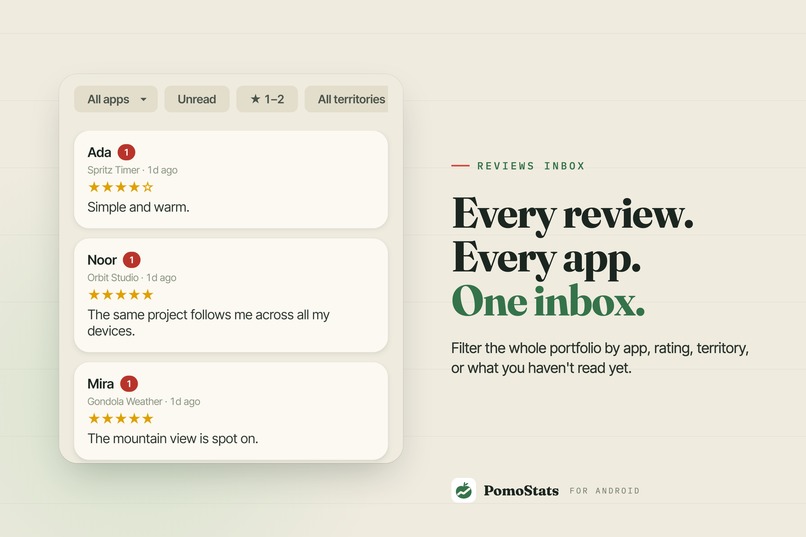
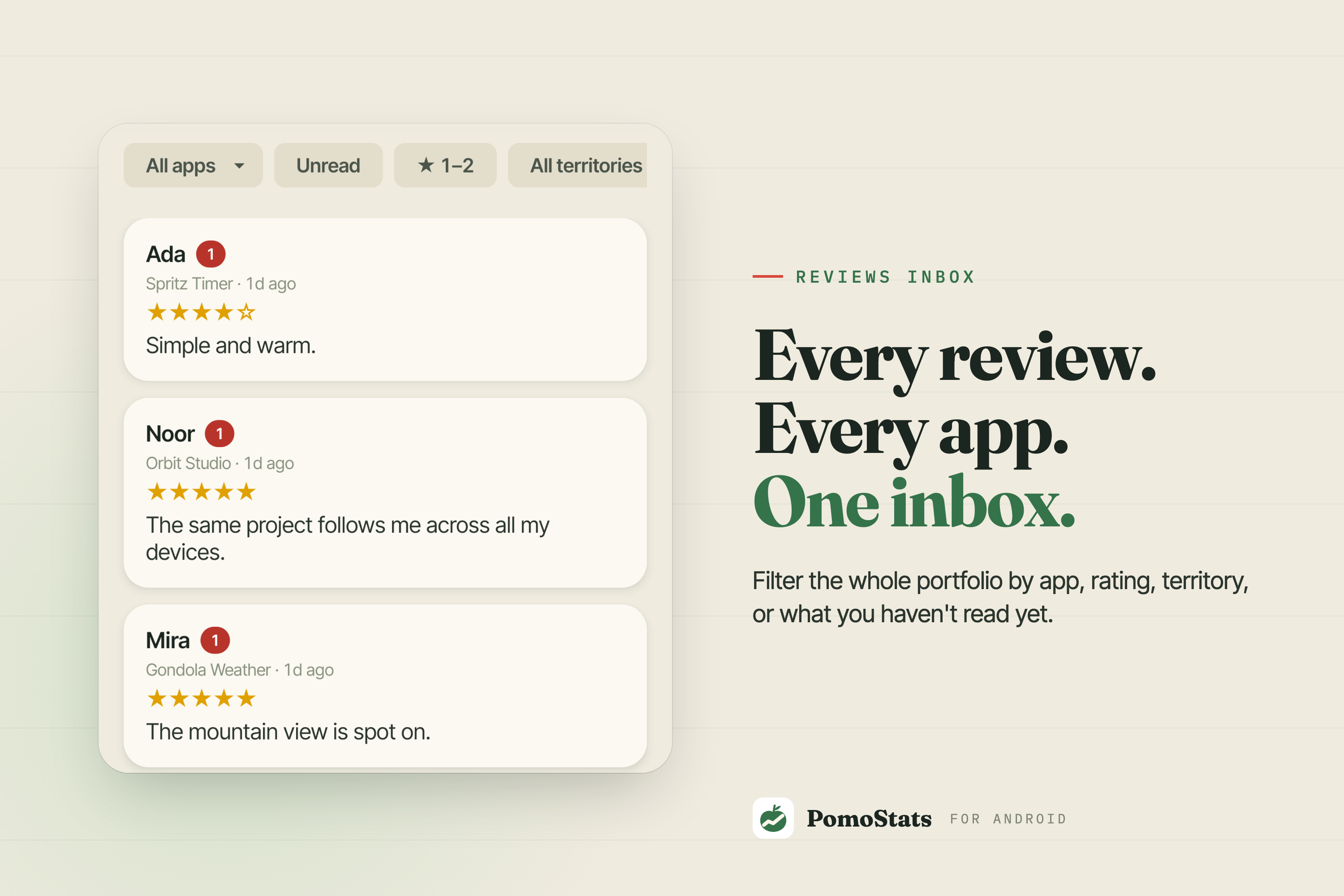
Every review from every app in one inbox, filterable by app, rating, territory and unread status.
-
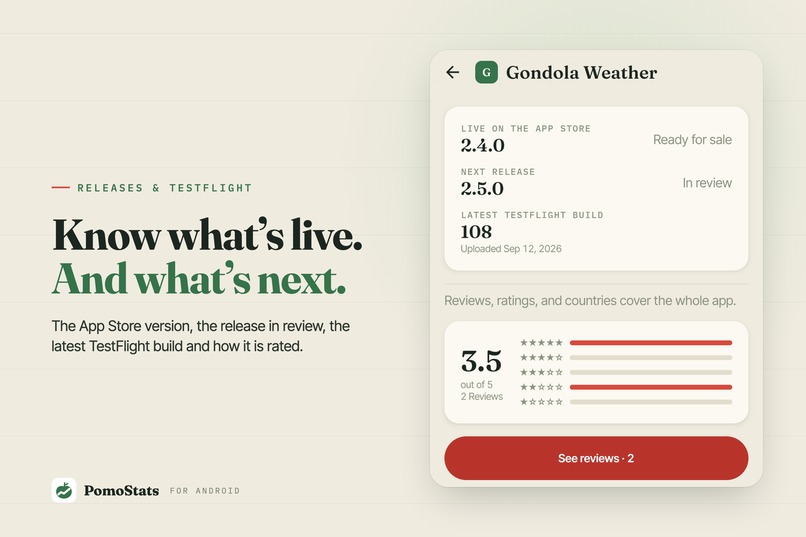
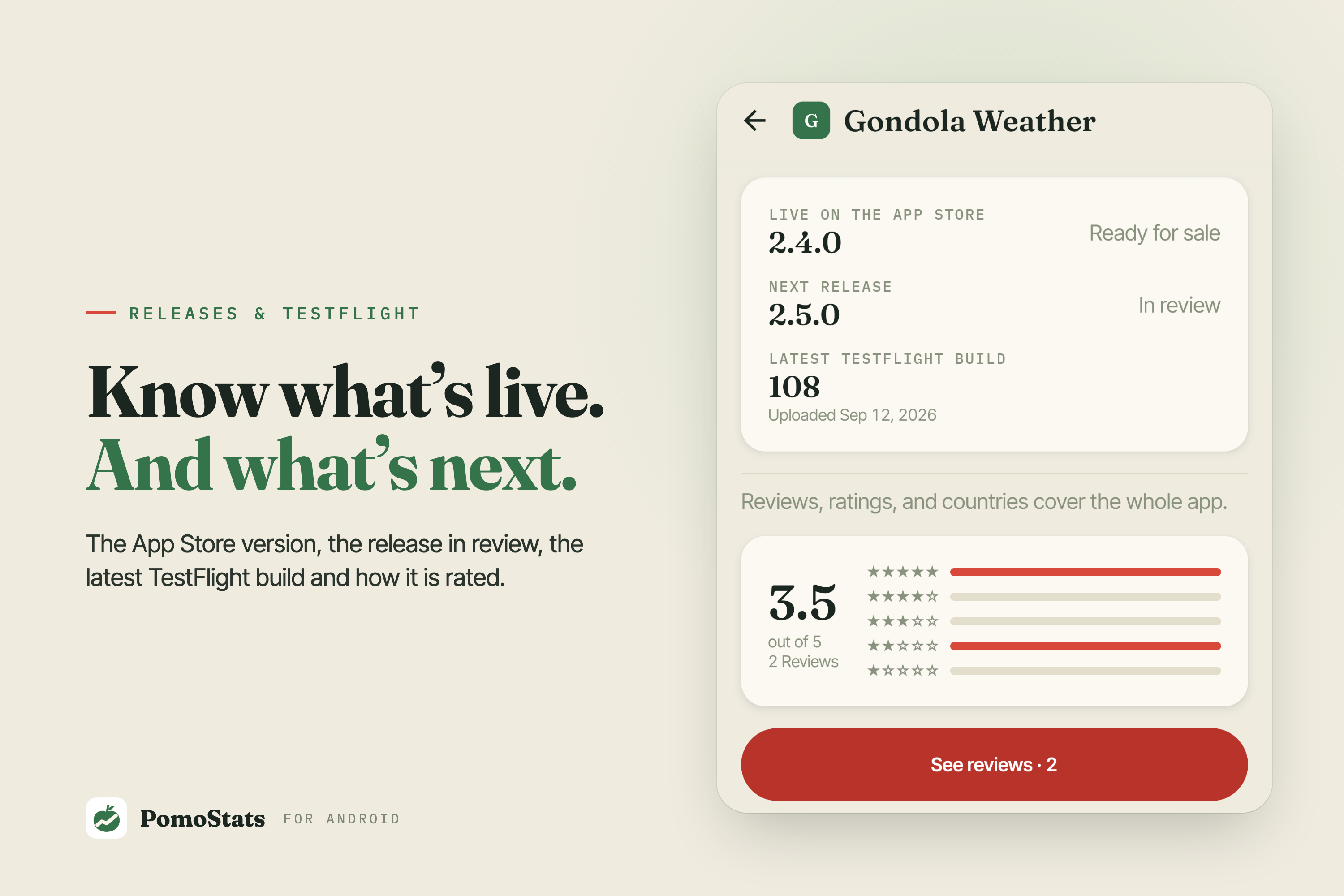
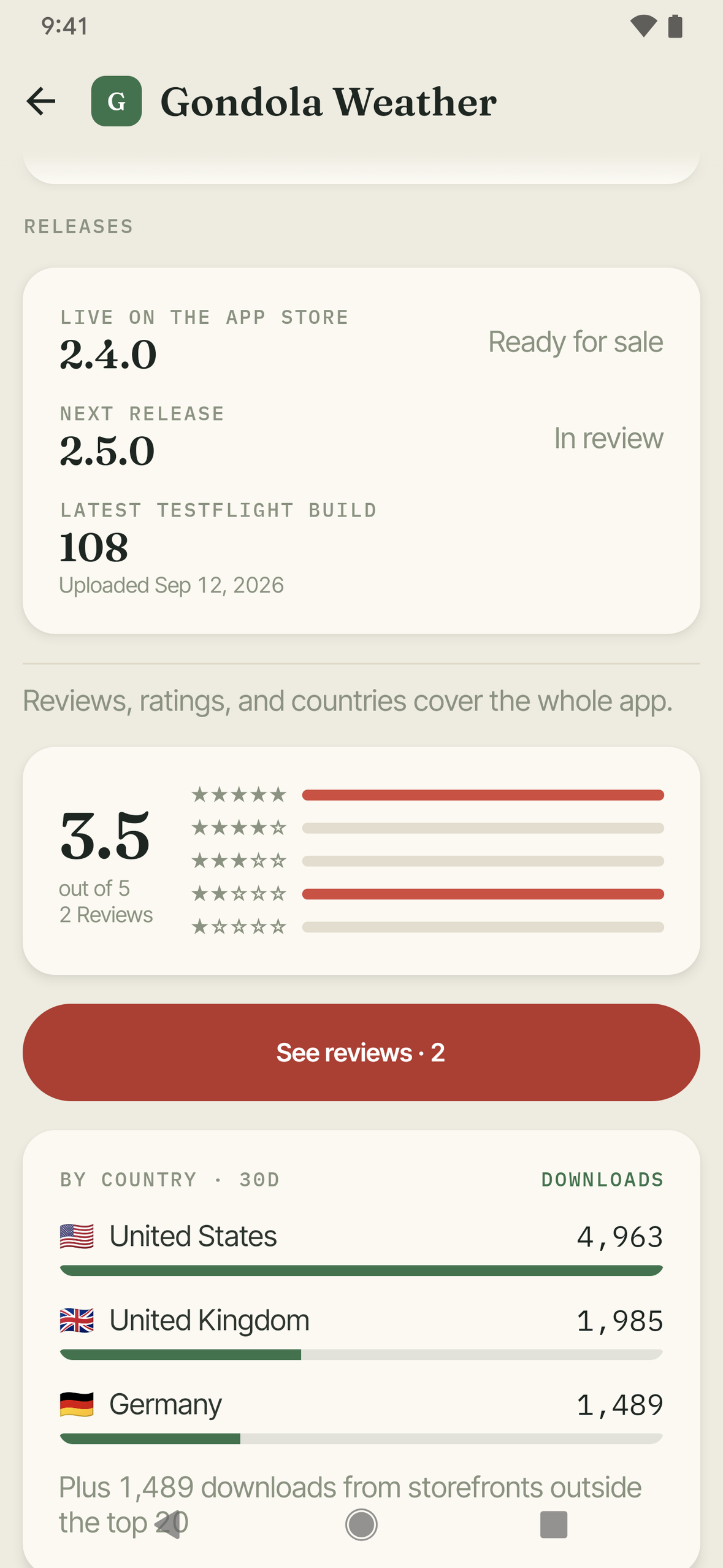
Track the live App Store version, the release in review, the latest TestFlight build and the rating breakdown.
-
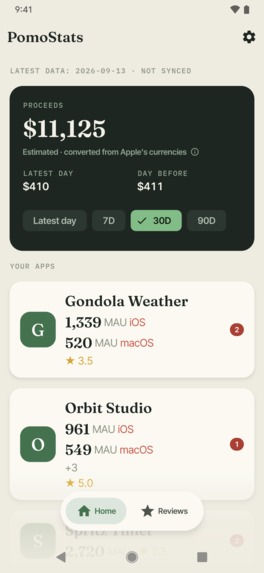
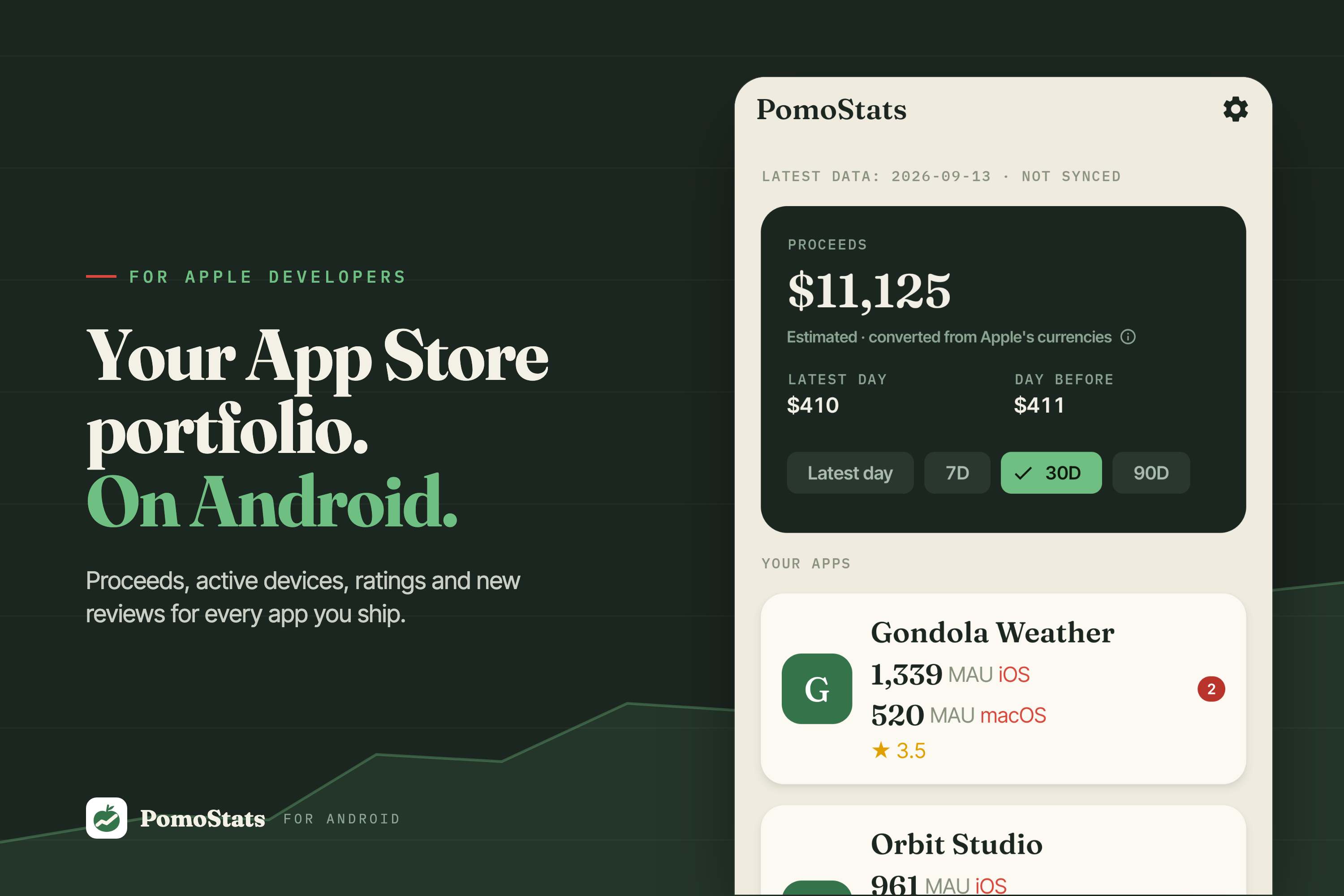
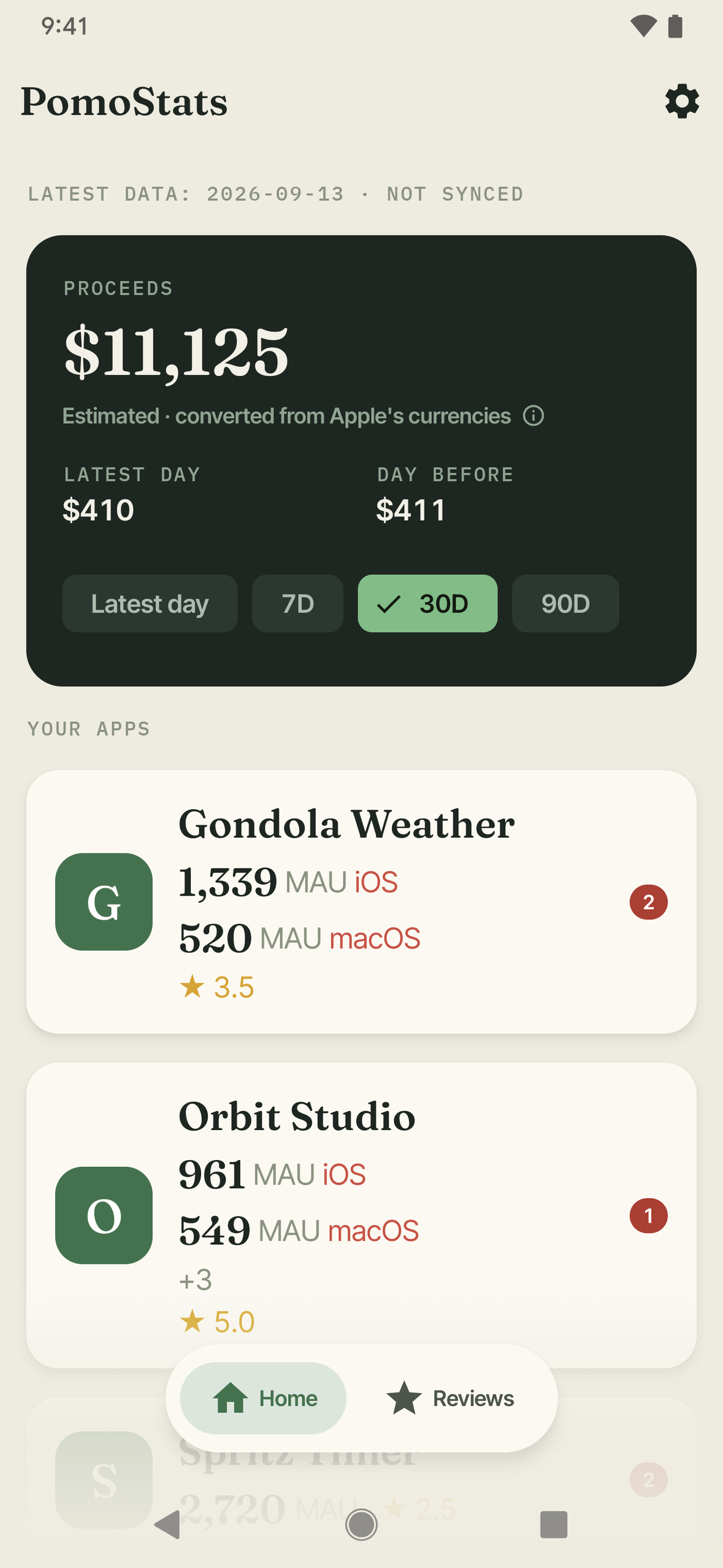
Home: portfolio proceeds and every app's active devices and rating.
-
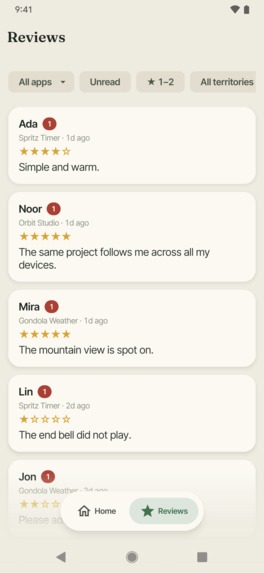
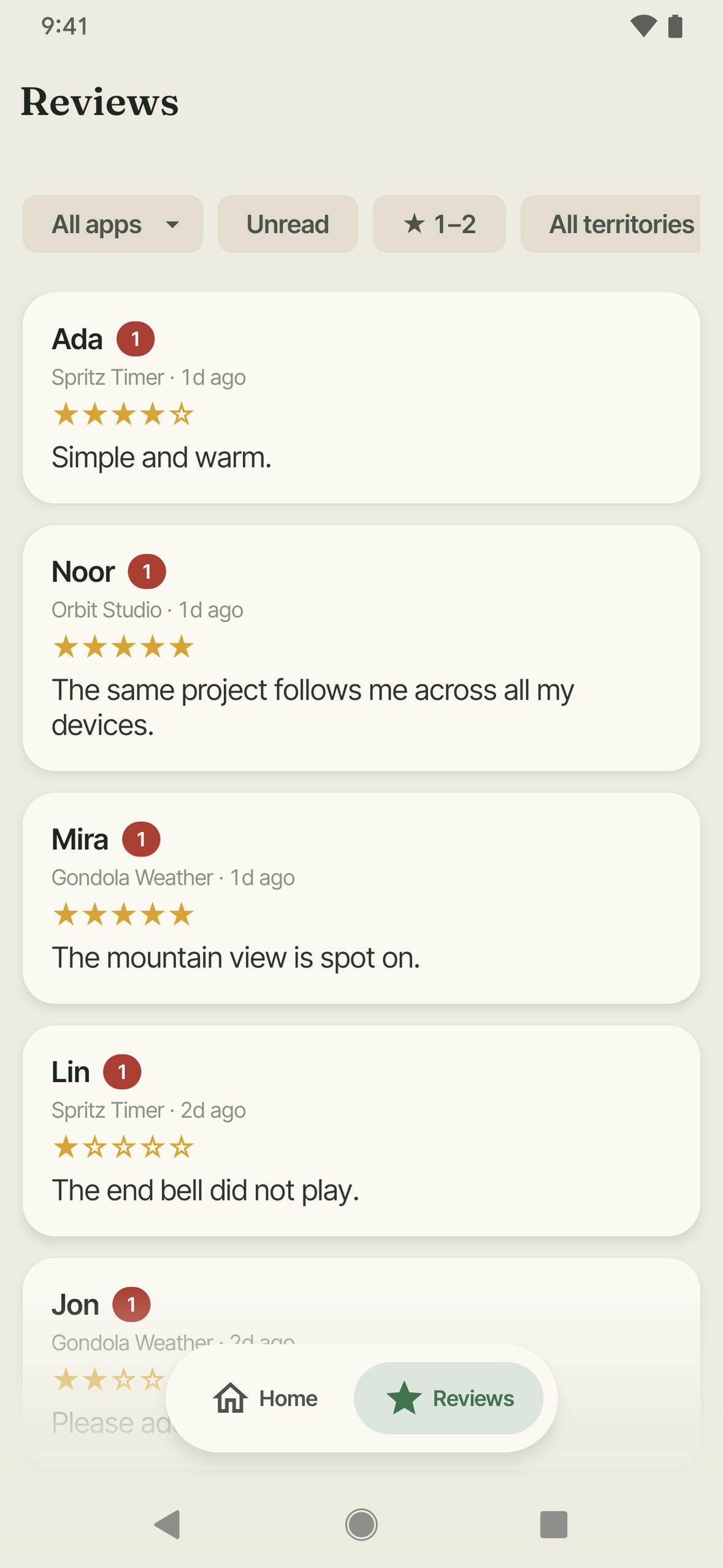
Reviews inbox across the whole portfolio, with app, unread, rating and territory filters.
-
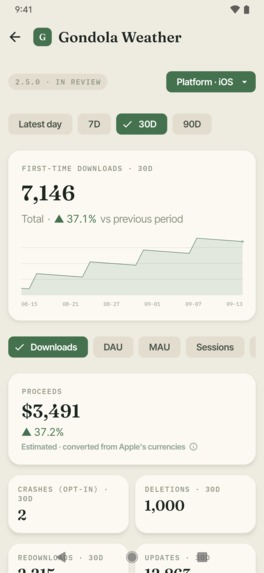
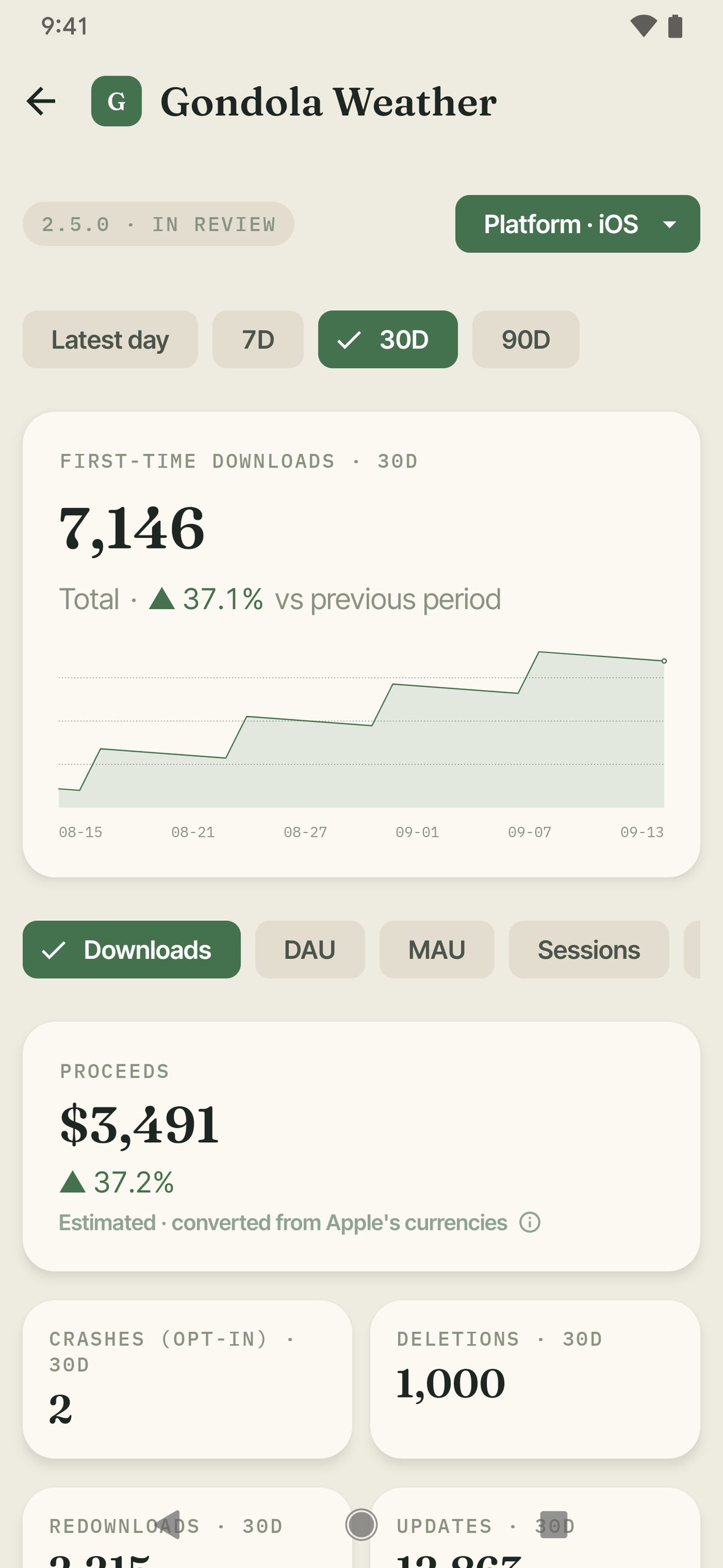
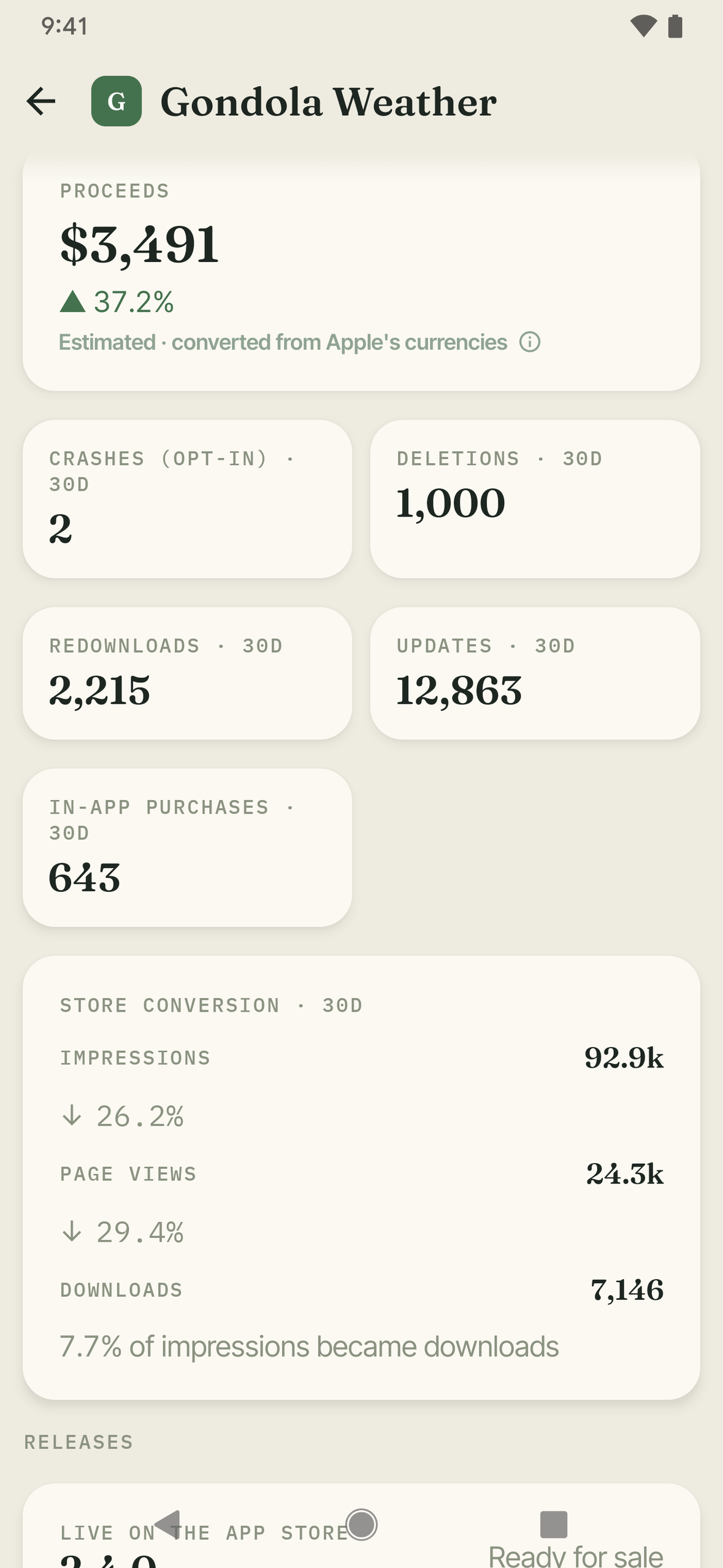
App detail: first-time downloads over 30 days, with range, platform and metric switches.
-
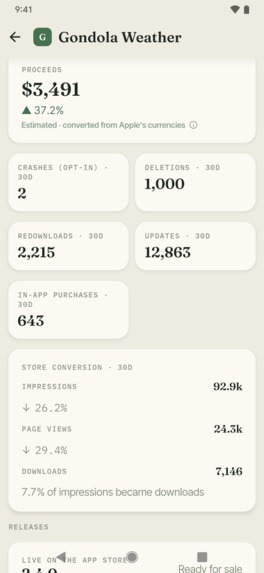
App detail: first-time downloads over 30 days, with range, platform and metric switches.
-
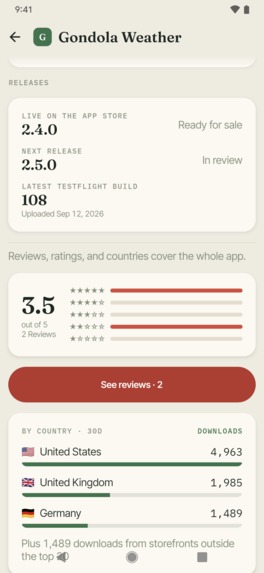
Releases and TestFlight, rating breakdown and downloads by country for a single app
I build apps also for Apple's platforms, but I use Android as my daily driver. App Store Connect (I'll call it ASC in the rest of the story, for brevity) makes it very difficult to access data on the go: the "trusted browser" is never trusted forever; you need to wait to get the SMS for the OTP code, and navigating ASC is complicated. So, I can boost (or drop :) ) my morale for a new user review only when opening my Mac for work or when I can reach my iPad or my iPhone.
What PomoStats does
PomoStats gives a panoramic view of the entire app portfolio with all the metrics that I think are useful to follow: downloads, proceeds, active devices, MAU, DAU, ratings, and movement over time.
The home screen is the "command center" to quickly check how the apps are doing:
- there's a list of all the Apps, with a quick peek at the rating and the MAU, for a quick glance without opening the details;
- there's a list of the reviews of all the apps, so it's possible to quickly view everything from the same place;
- there's a recap of the proceeds grouped by the latest day, 7, 30, or 90 days, to know how the business is going.
Each app opens into details, showing interactive charts and information about downloads, sessions, active devices, crashes, sales, territories, conversion, proceeds, and ratings.
Anyone can explore the complete product through a built-in fictional sample portfolio of apps, so a user can get a sense of what to expect without signing in immediately with the ASC API key.
Note: The attached screenshots and the video show data from the fictional sample portfolio of apps mentioned above. This demo mode was also useful and essential for the Google Play Store review team, so they can review the app's functionality.
Privacy by architecture
PomoStats has no account or backend. The App Store Connect private key is encrypted with Android Keystore, excluded from backup, and used only for direct requests from the device to Apple.
Monetization that follows portfolio value
The free tier supports only one app. The premium plan, offered with a yearly subscription or a lifetime purchase, removes this limit and gives access to all the apps belonging to the ASC account.
The core product is still useful before purchase for hobbyists or developers with only one published app, while the upgrade scales with professional needs.
How it was built and challenges
PomoStats uses Kotlin Multiplatform and Compose Multiplatform, and currently it's only available on Android, but it's already ready for a possible future expansion on iOS as well.
The difficult part of the project was turning Apple's irregular asynchronous reports into something that can easily be read in a mobile app. Another challenge was designing the onboarding flow to provide a great user experience, because the sign-in requires a lot of information retrievable from different parts of the ASC console. Moreover, ASC statistics are not available immediately, but you need to make a request, and data will be available after some days - this required a careful design of the user experience to not have a completely useless app before the stats are available.
What's next
Next comes learning from real developers: which statistics make sense to show, if data are missing, if data are unnecessary to show, and whether annual or lifetime ownership best matches this niche. If there's enough traction, I will consider making an iOS client since the codebase is already with Kotlin Multiplatform and Compose Multiplatform.
Fun facts
Pomo means Apple in the Venetian dialect, the region where I'm from. The name is a reference to remember my hometown, and it's a perfect fun name for this kinda app.
Built With
- android
- app-store-connect
- compose-multiplatform
- kotlin
- kotlin-multiplatform
- revenuecat
