-
-
Clickbook-1
-
Clickbook-2
-
Clickbook-3
-
Clickbook-4
-
Clickbook-5
-
Clickbook-6
-
Clickbook-6
-
pomogochi-1
-
pomogochi-2
-
pomogochi-3
-
pomogochi-4
-
pomogochi-5
Inspiration
When building AI productivity tools, developers face two massive hurdles:
- The "Cloud Tax": Scaling an AI app usually means burning through capital for API calls.
- The Retention Dilemma: Traditional productivity tools are rigid and boring, leading to high user churn rates.
We asked ourselves: "How can we build a highly profitable AI platform with $0 server costs, while creating an experience so engaging that users interact with it every single day?"
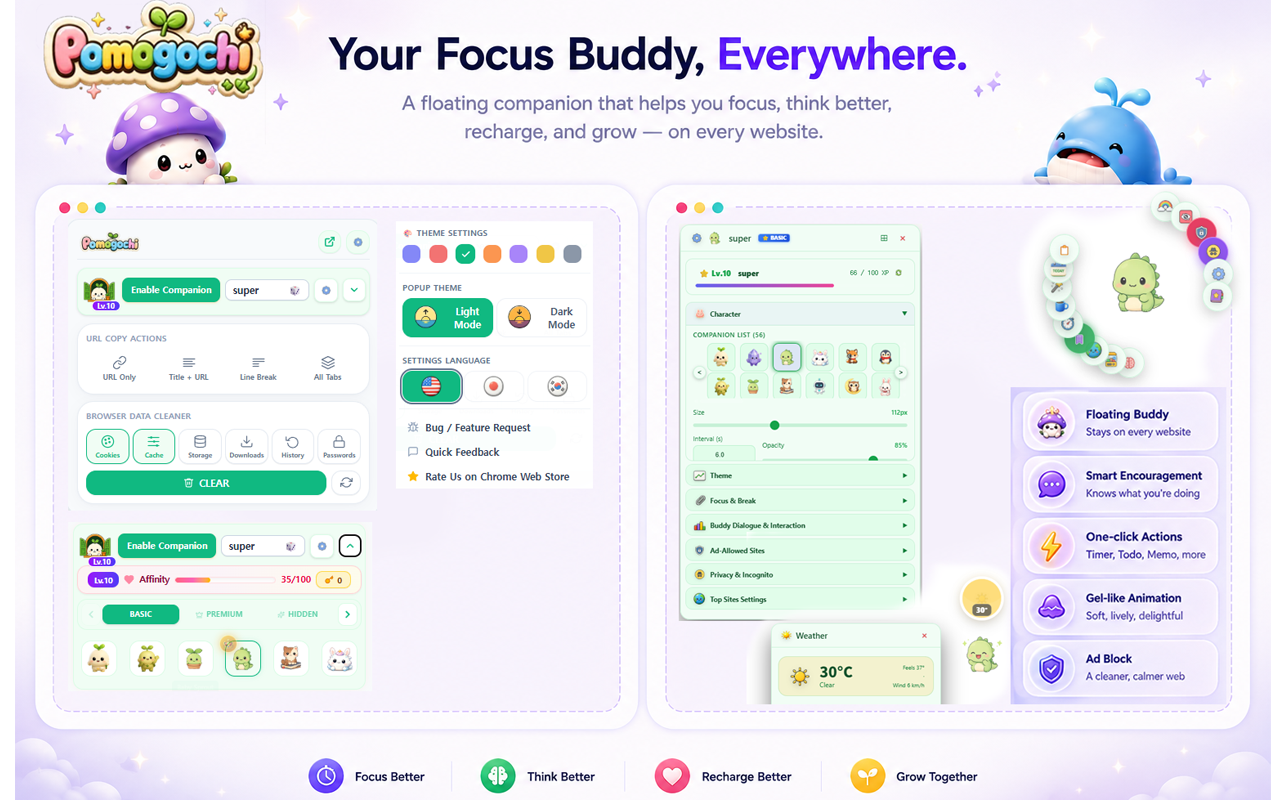
The answer was to build a dual-product ecosystem. We created ClickBook AI as our zero-cost on-device AI R&D core, and Pomogochi as our highly engaging, gamified desktop pet metaverse to serve as the commercial frontend.
What it does
Our project is an interconnected AI ecosystem:
1. The Brain: ClickBook AI (R&D Core)
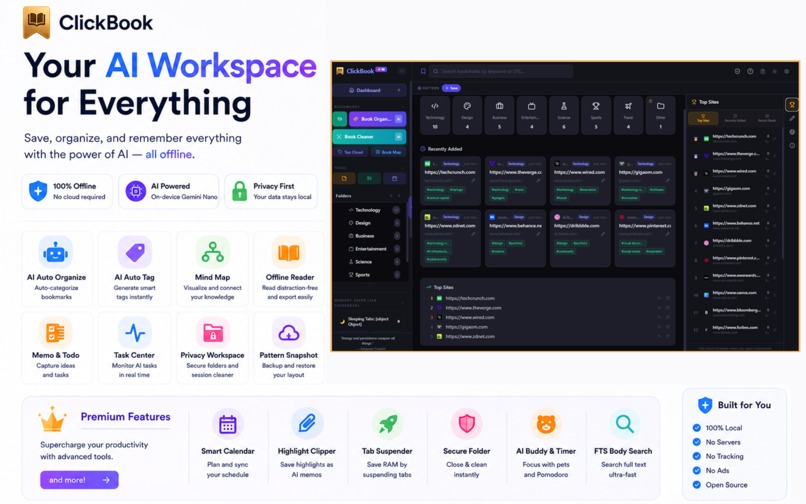
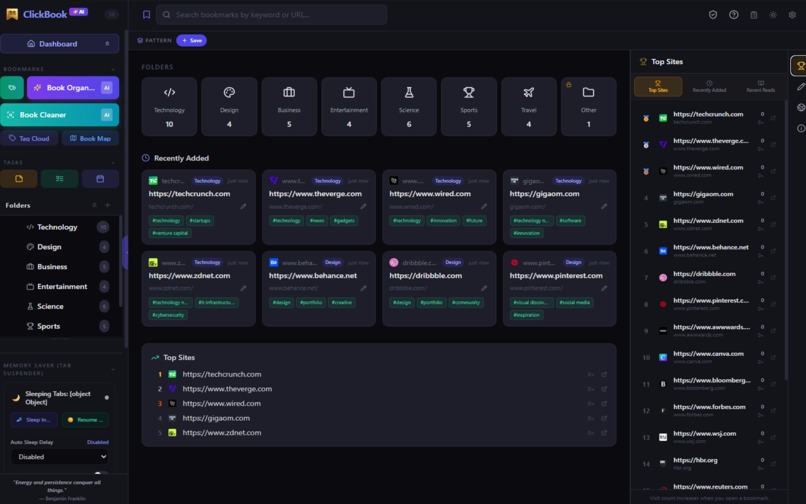
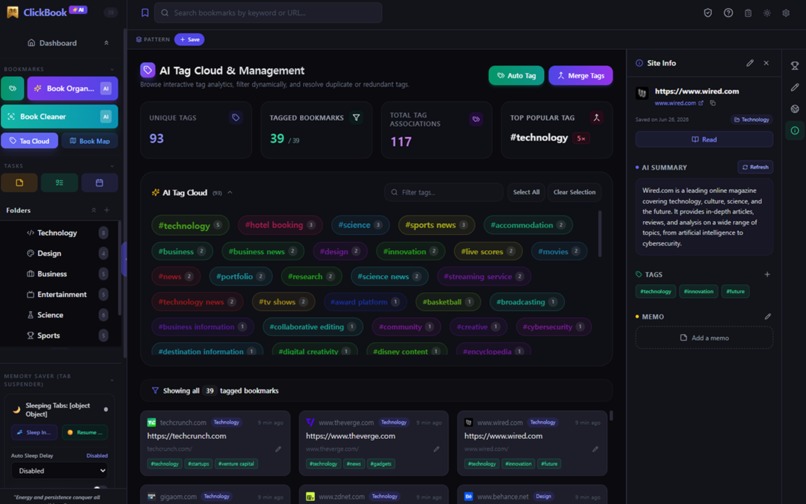
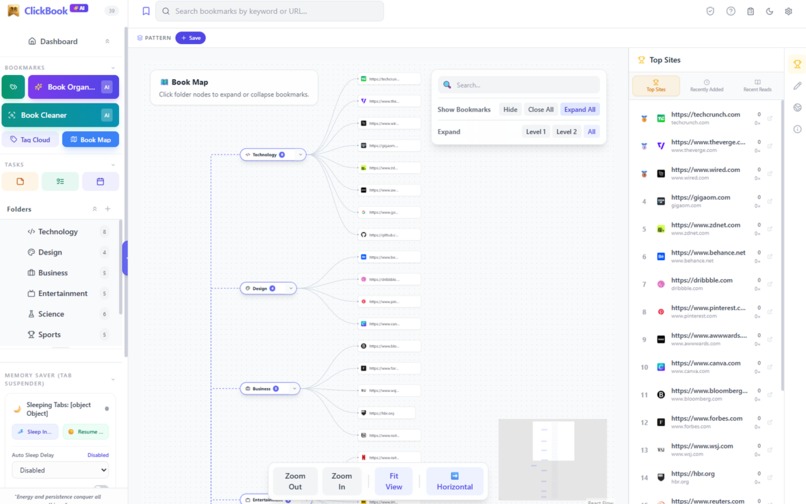
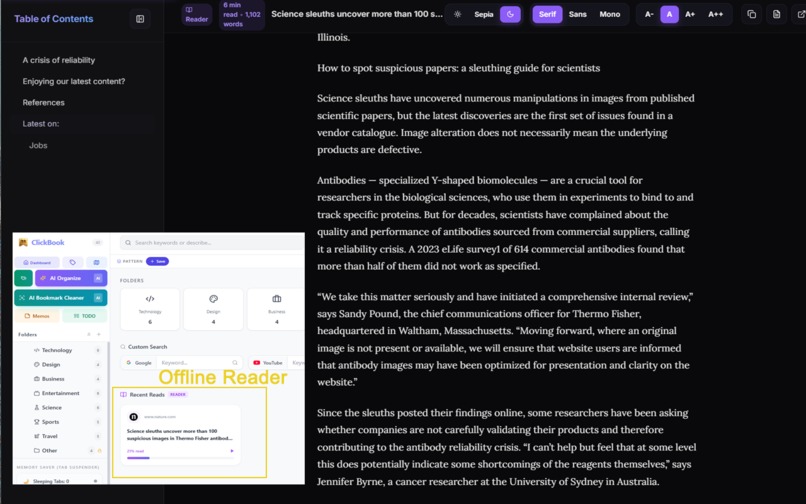
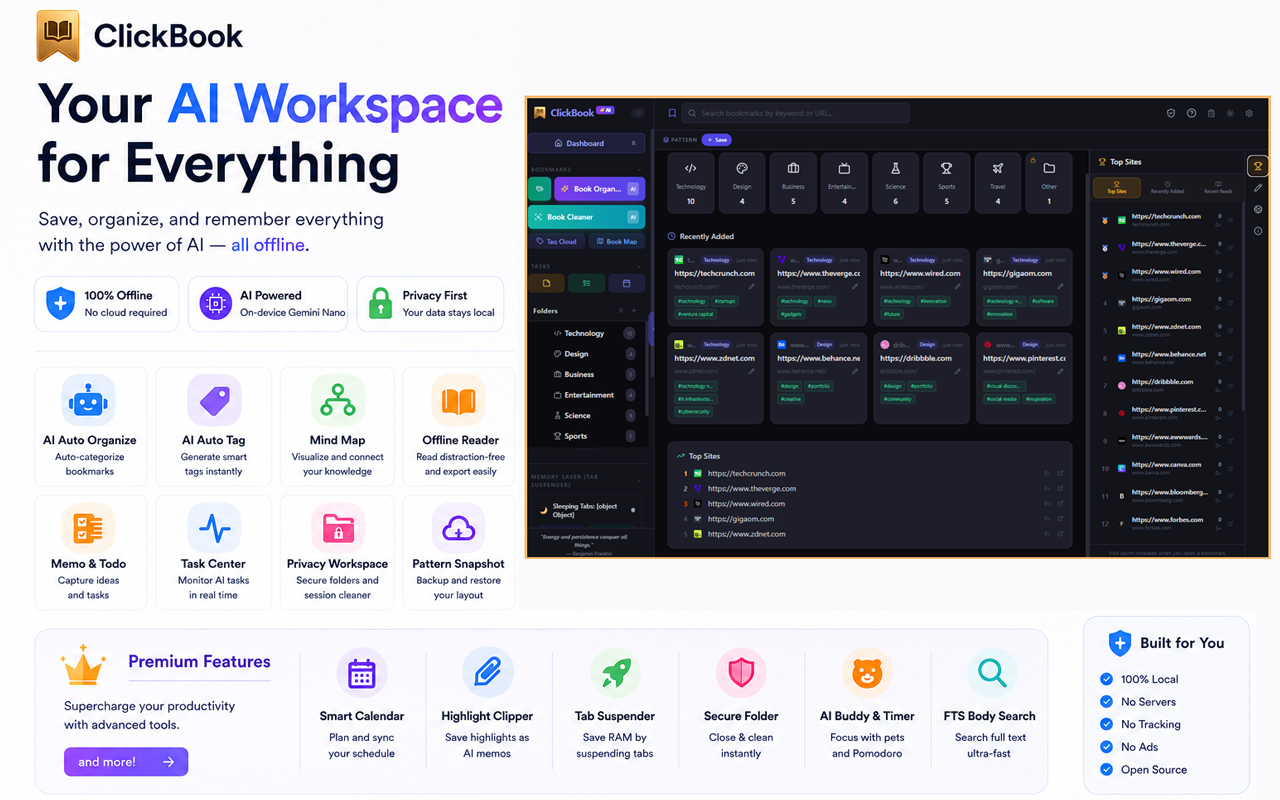
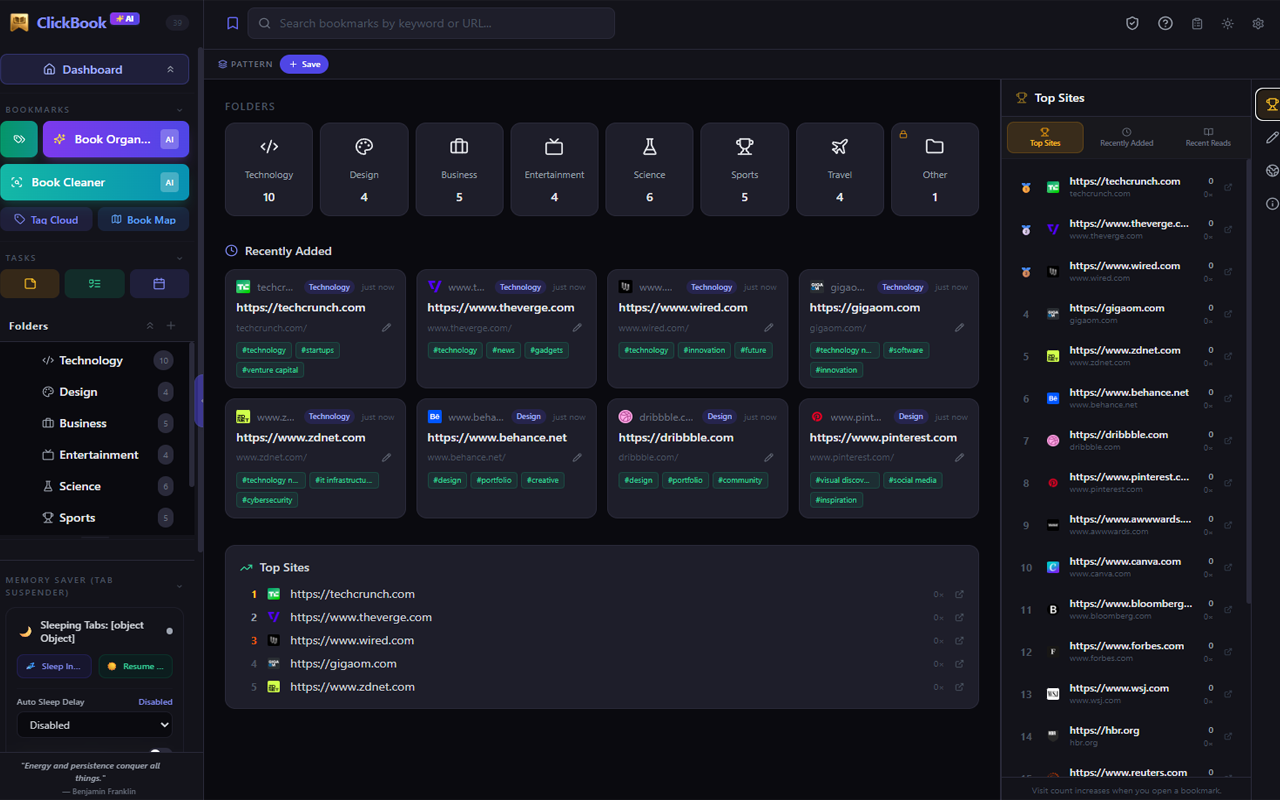
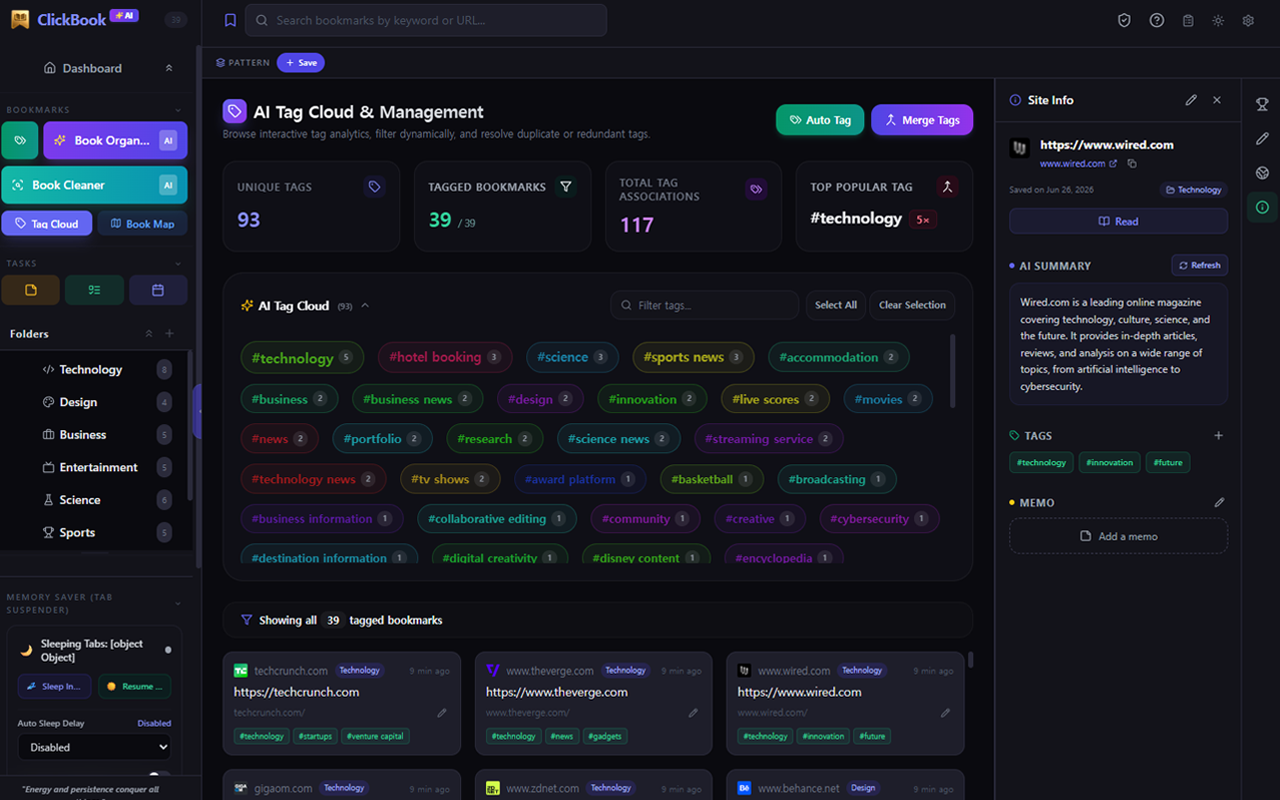
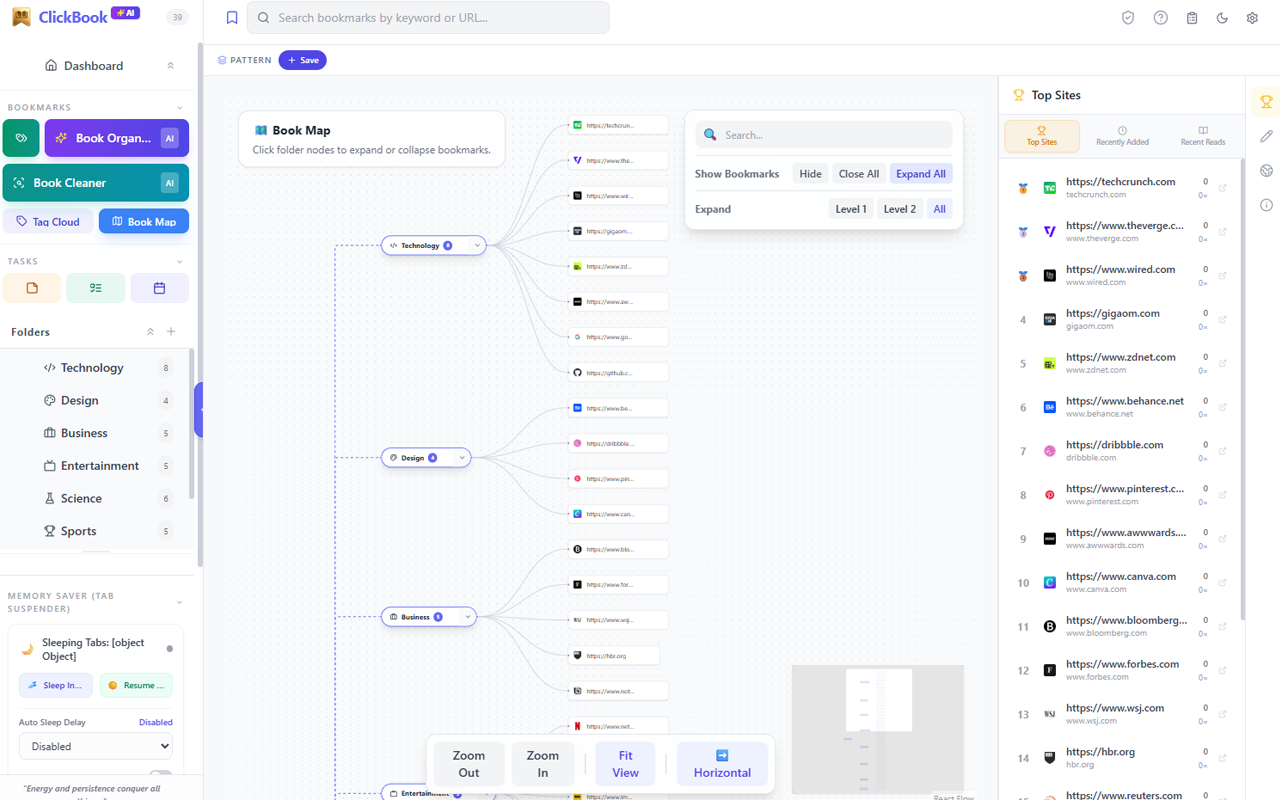
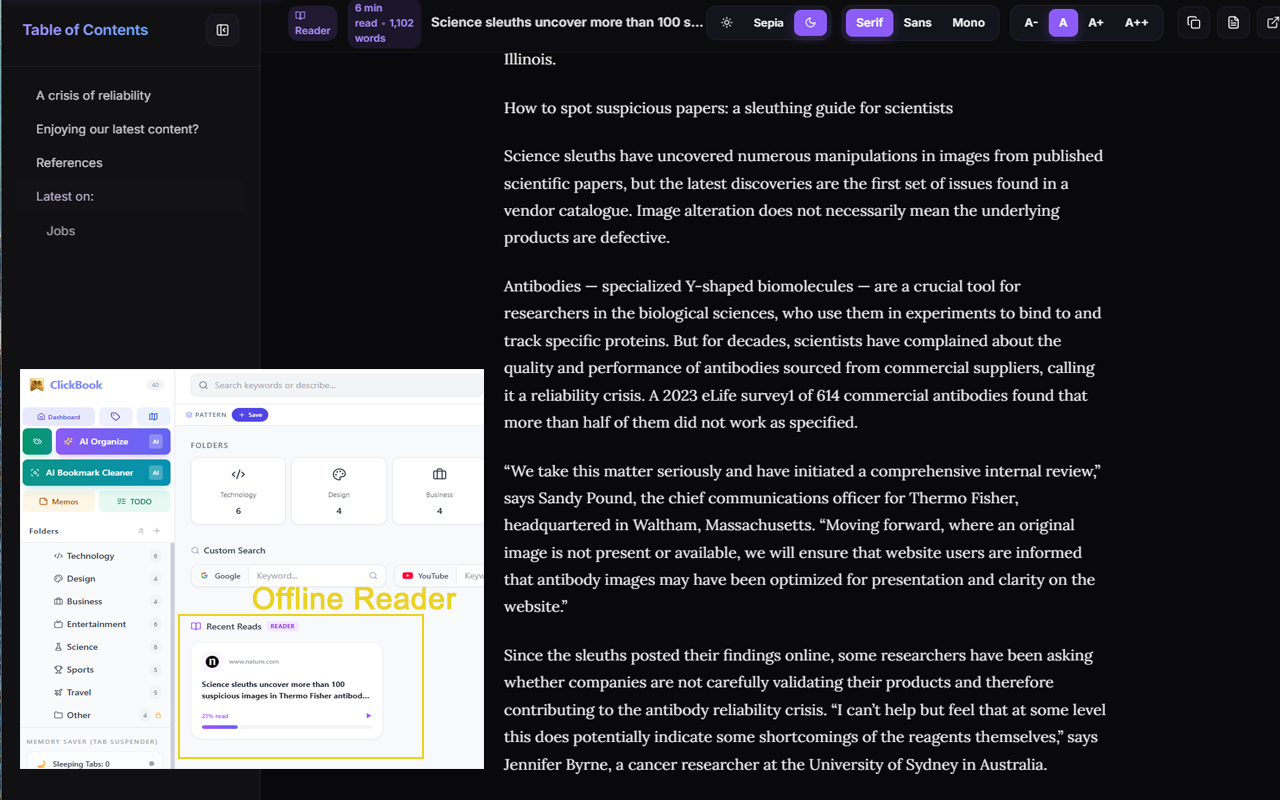
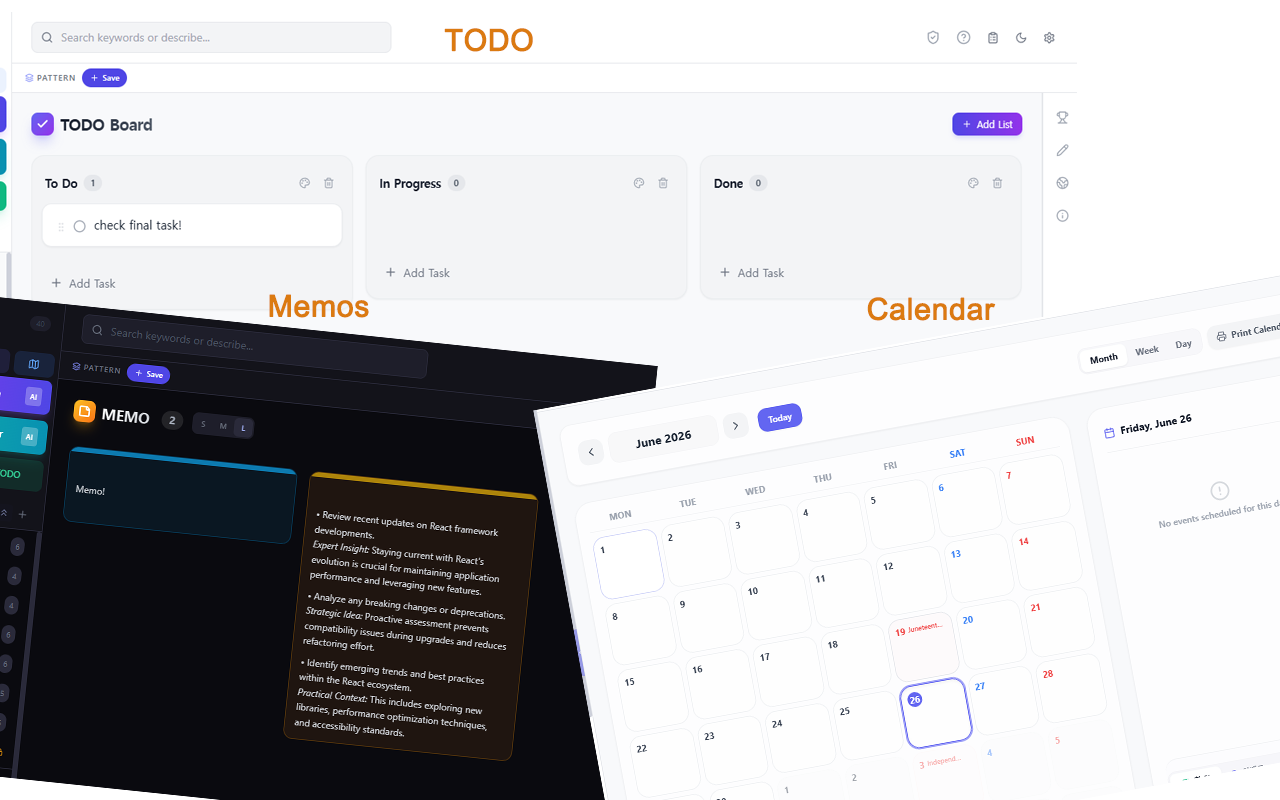
ClickBook is an offline-first bookmark and knowledge management tool. It utilizes Chrome's built-in Gemini Nano (window.ai.languageModel) to analyze URLs, auto-categorize tabs, and generate tags directly on the user's device.
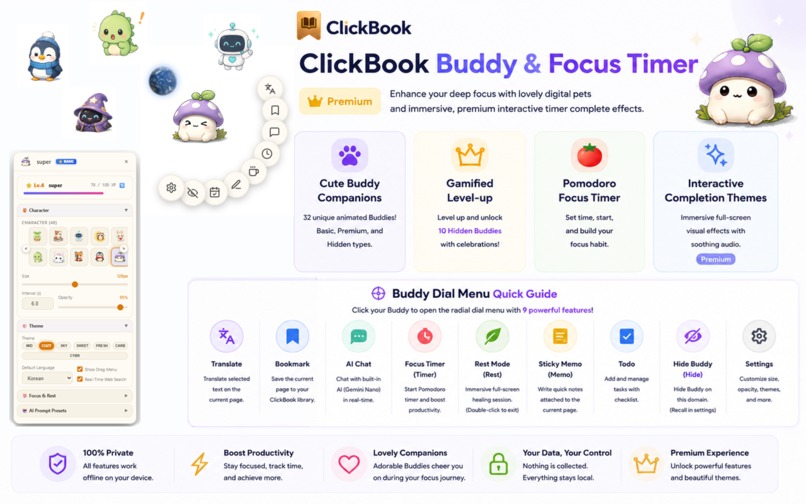
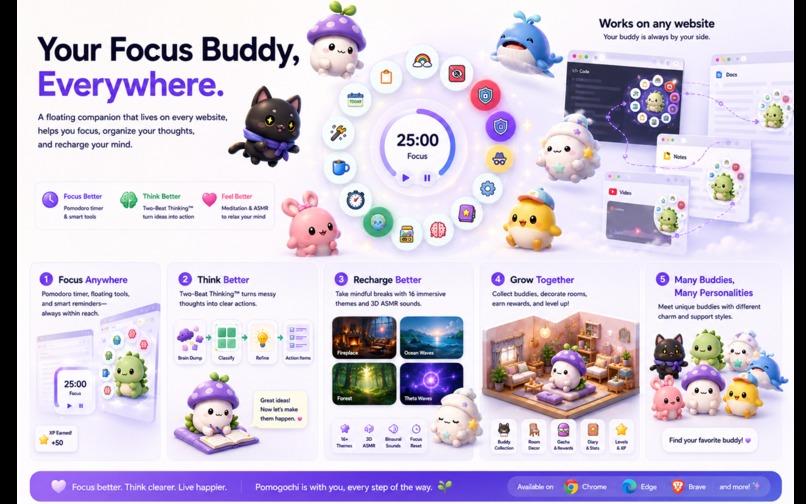
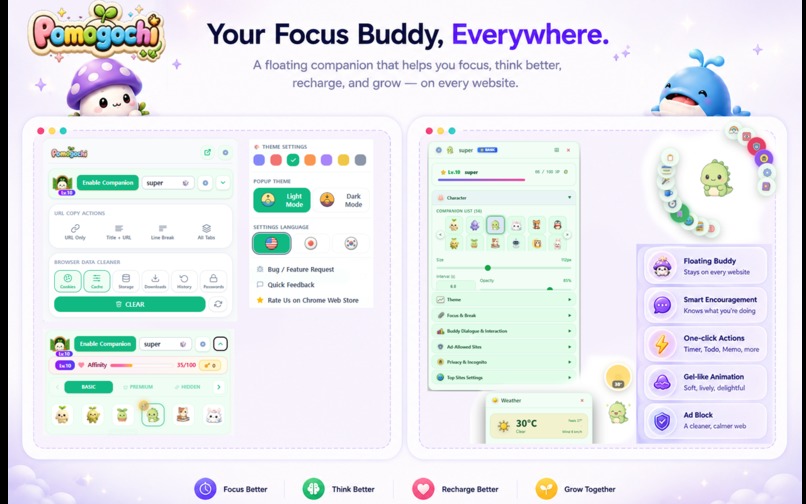
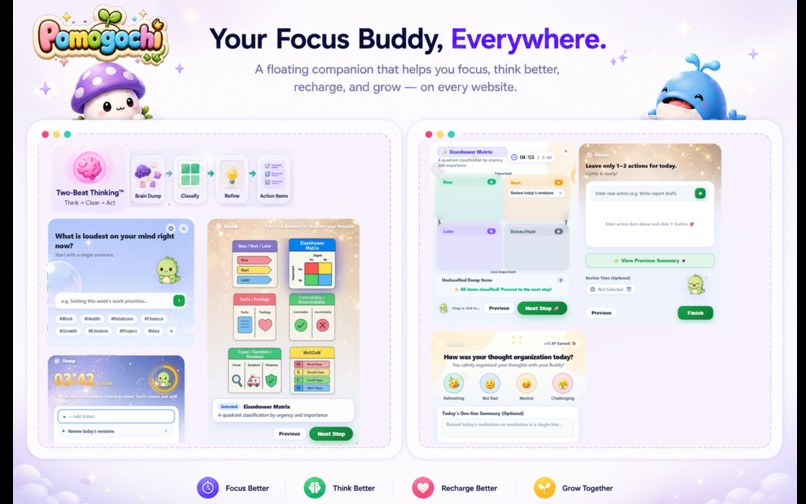
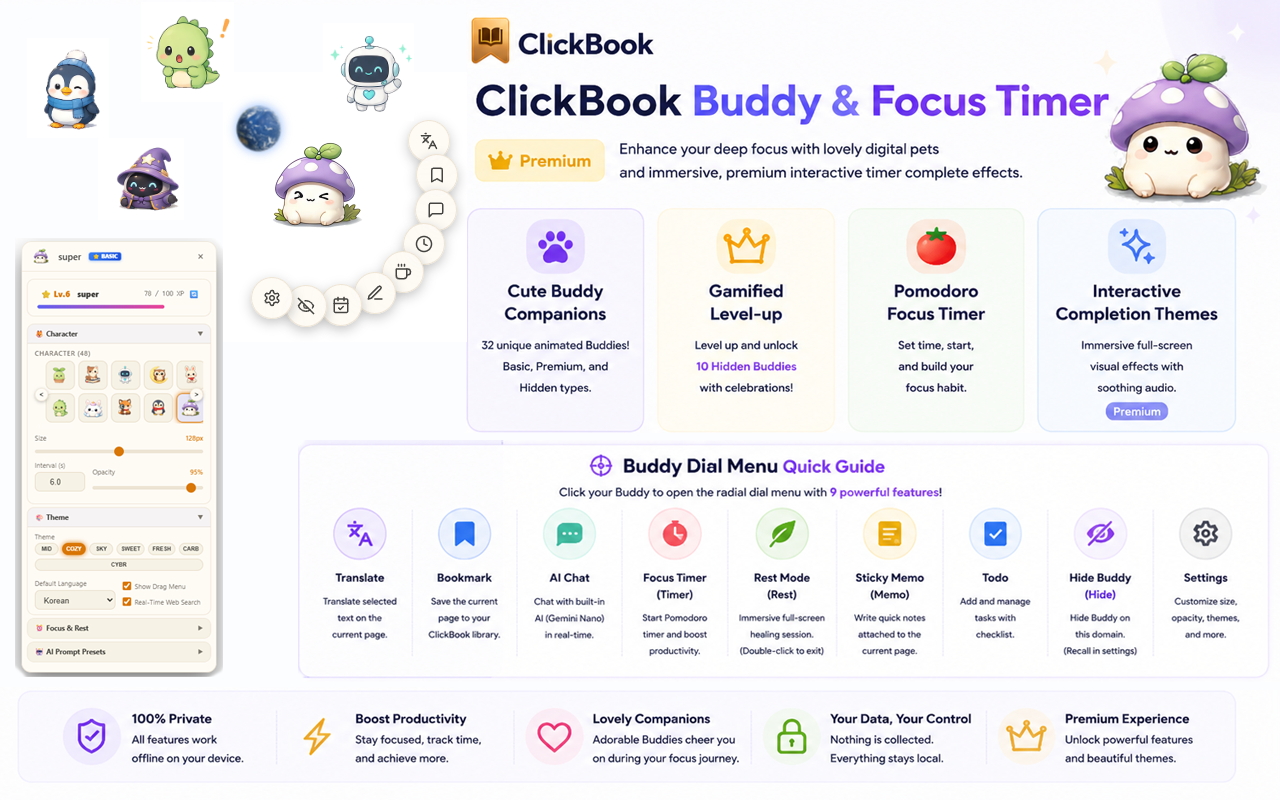
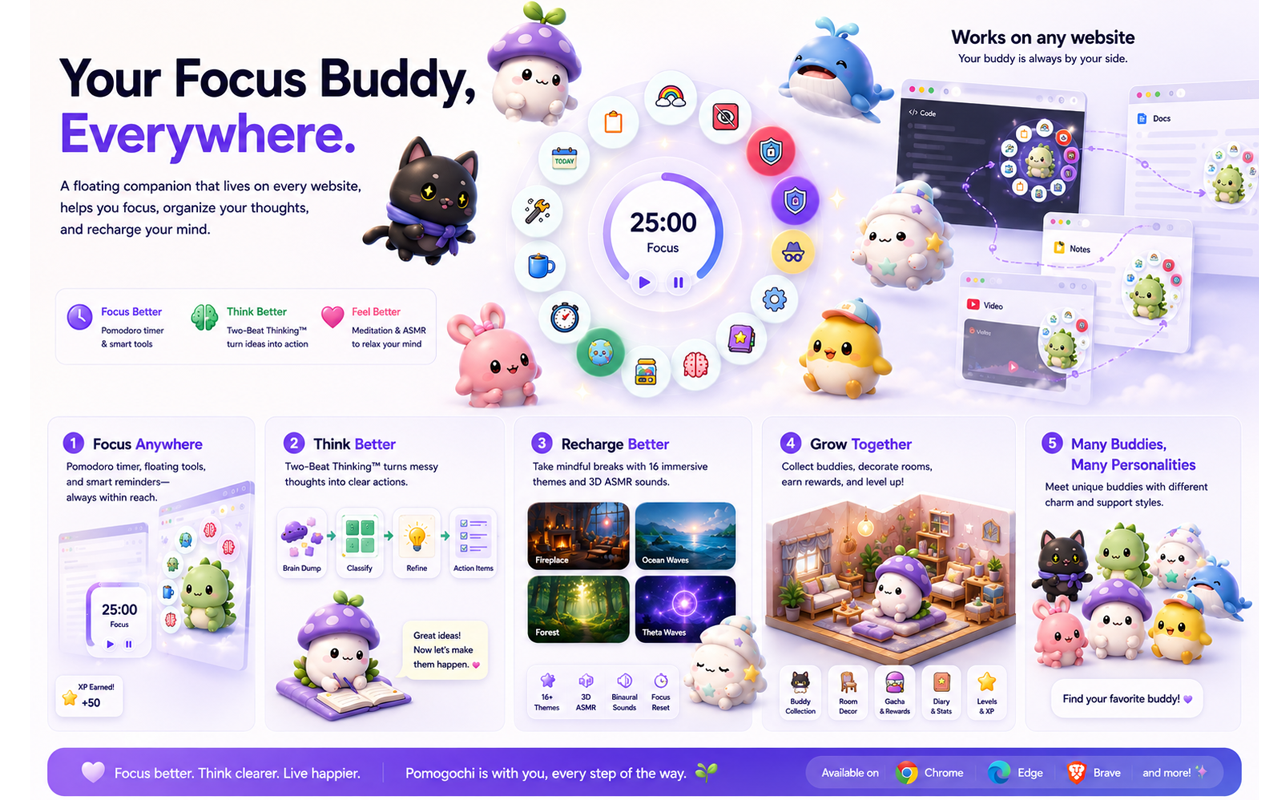
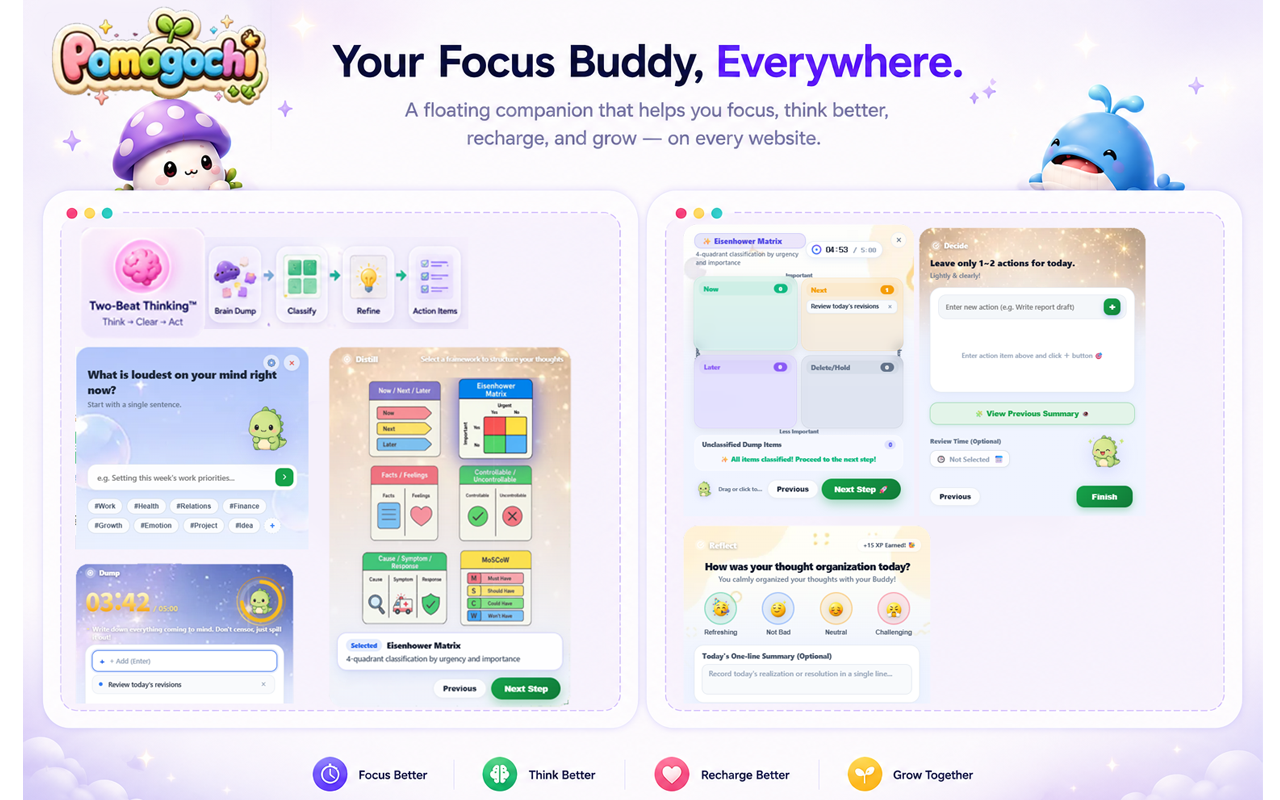
2. The Face: Pomogochi (Gamified Metaverse) Pomogochi takes the robust local AI logic and packages it into a mainstream desktop pet metaverse. It introduces our proprietary Two-Beat Thinking™ framework:
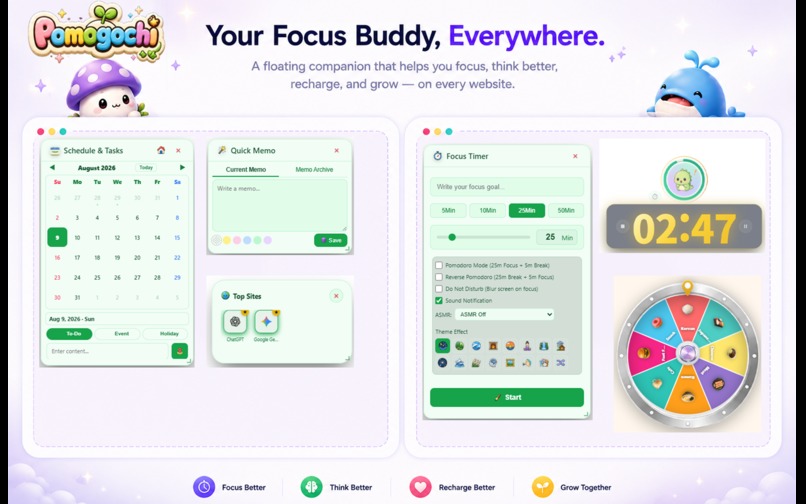
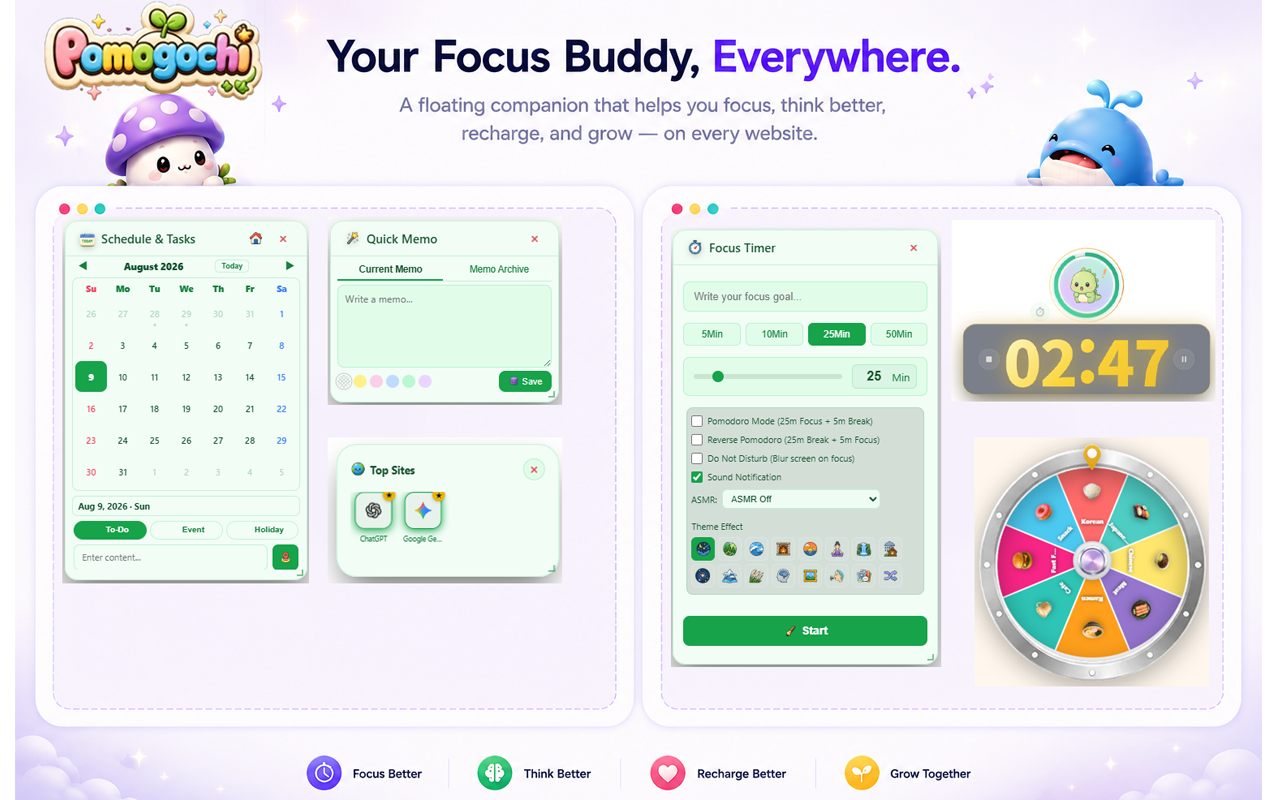
- First Beat (Focusing & Brain Dump): Users focus using a Pomodoro dial while a cute 3D Buddy cheers them on, dumping ideas without constraints.
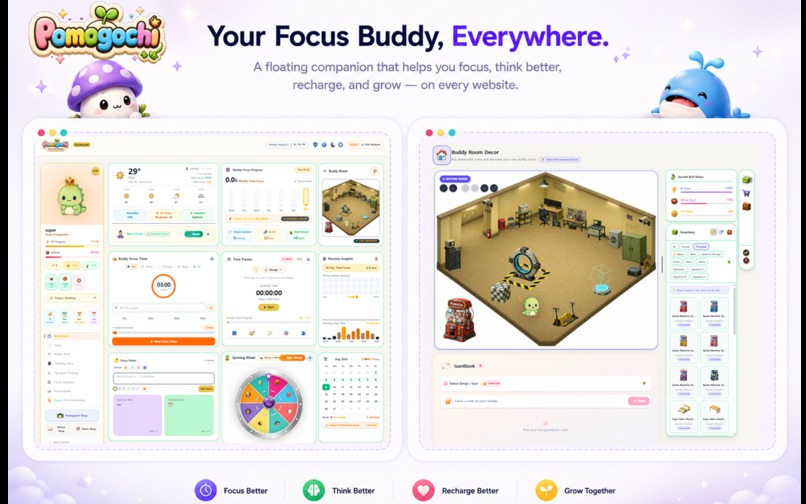
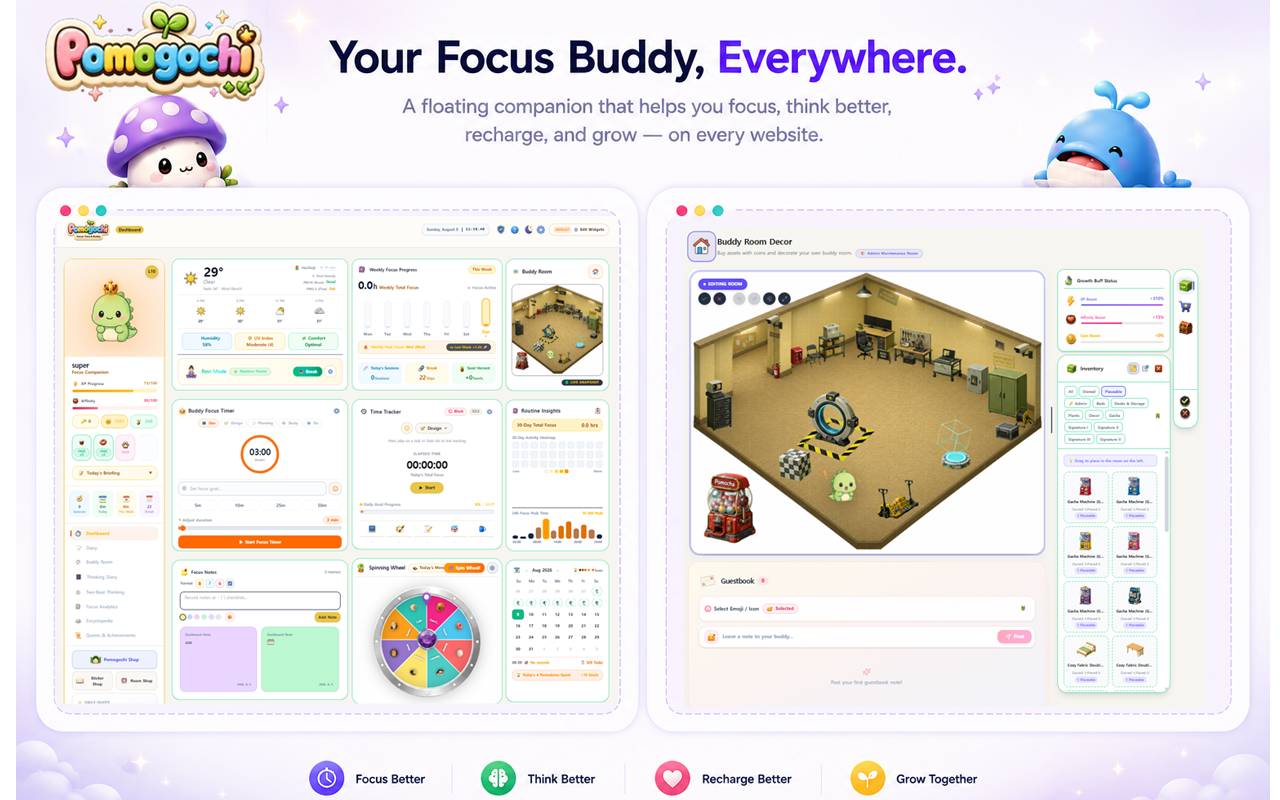
- Second Beat (Rest & Structuring): Ideas are refined into actionable tasks. Users then "rest" by using earned points to decorate their 3D Buddy Room or listen to 16-channel meditation ASMR.
How we built it
We engineered both platforms as Manifest V3 Chrome Extensions.
- Frontend: Built with React 18, TypeScript, Vite, and Tailwind CSS. We implemented a sleek UI with global i18n support for 9 languages.
- On-Device AI: We tapped into Chrome's experimental Gemini Nano (
window.ai) to run inference locally, ensuring 100% privacy. - Shadow DOM & Jelly Physics: To allow the Buddy to float on any website without CSS conflicts, we isolated the rendering via Shadow DOM and built custom spring-physics for "squish" interactions.
- AdBlock Engine: Implemented
declarativeNetRequestto intercept and block ads at the browser level.
Challenges we ran into
- AI Concurrency Limits: Gemini Nano crashes if bombarded with simultaneous requests. We solved this by architecting a custom Task Control Center in ClickBook that enforces a strict 1-concurrent AI task limit with real-time UI progress bars.
- Manifest V3 Service Worker Sleeping: Background scripts in MV3 unload after 30 seconds of inactivity. We built robust state-recovery mechanisms so timers and background tagging wouldn't die mid-session.
- Context-Aware Dialogues: Making the desktop pet react dynamically to the user's current webpage (e.g., cheering on GitHub, scolding on YouTube) required optimized DOM scraping that wouldn't slow down browser performance.
Accomplishments that we're proud of
- Zero-Infra Scaling Model: We proved we can run a massive knowledge-processing pipeline and an interactive AI pet without a single cloud server. From a business perspective, our cost scaling equation is: $$\text{Total AI Inference Cost}=\lim_{Users\to\infty}(Users\times\$0)=\$0$$
- The 3D Asset Ecosystem: We successfully integrated over 1,100 3D Pomo Icons and 20+ distinct Buddy characters into a lightweight Chrome Extension without bloating performance.
- Seamless Product-Led Growth (PLG): We built a bridge where the hardcore utility of ClickBook funnels perfectly into the retention-heavy monetization model of Pomogochi.
What we learned
We learned that On-Device AI is the key to unlocking the true Metaverse. Cloud-based NPCs cost too much to maintain. By shifting the computational load to the user's browser, highly interactive AI companions are now commercially viable for indie developers. Furthermore, wrapping complex AI utilities in gamified "pet" mechanics drastically lowers the barrier to entry for everyday users.
What's next for Pomogochi (powered by ClickBook AI Core)
Our current Chrome extensions are just the foundation. Our ultimate vision is to launch Pomogochi as a standalone, cross-platform Mobile App Brand.
We are expanding this ecosystem into a full Character IP-driven Mobile Metaverse. Users will raise their Pomogochi buddies on their phones, sync their Two-Beat Thinking™ data, and interact in a broader social space. By monetizing through cosmetic microtransactions (IAP) and premium subscriptions (Pomogochi+), we aim to dominate the mobile productivity market with an incredibly high-margin, zero-API-cost business model.
Built With
- chrome
- chrome-storage
- css3
- declarative-net-request
- gamification
- gemini-nano
- html5
- i18n
- javascript
- manifest-v3
- on-device-ai
- prompt-api
- react
- shadow-dom
- tailwind-css
- tiptap
- typescript
- vite
- window-ai

Log in or sign up for Devpost to join the conversation.