-
-
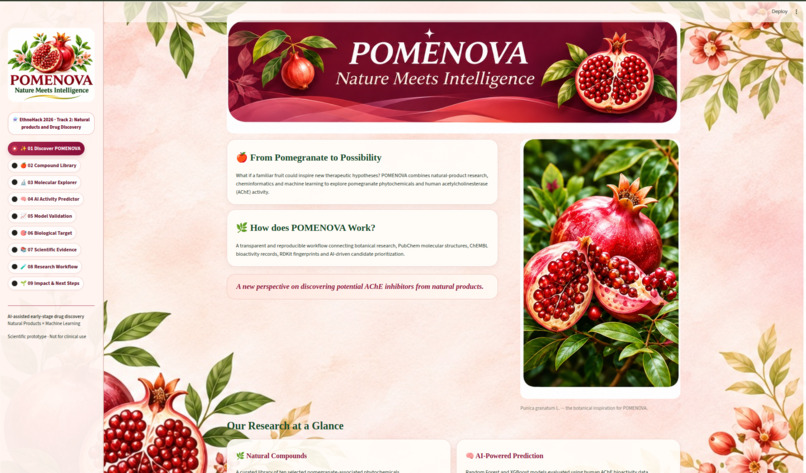
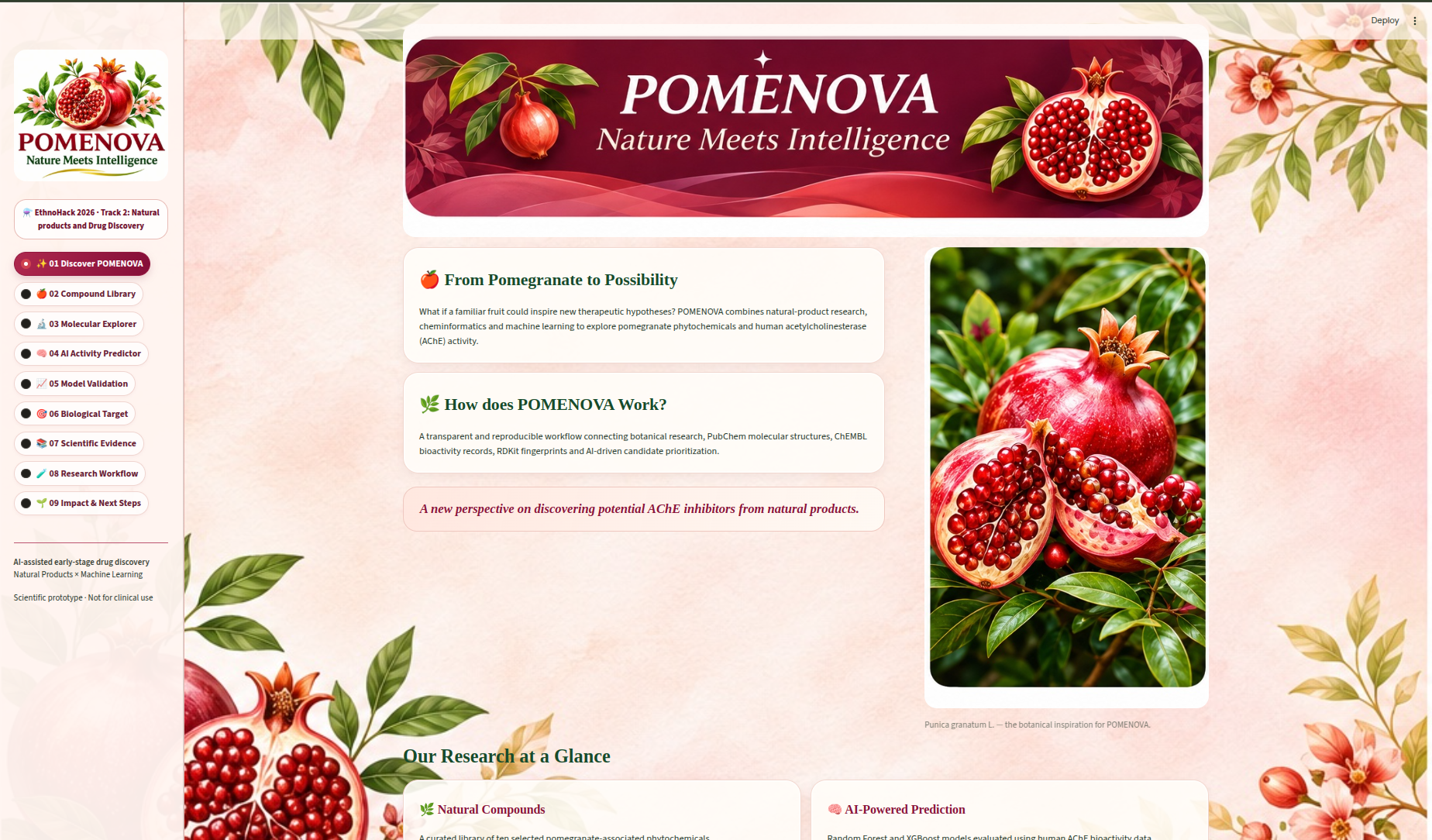
POMENOVA: Where nature meets AI to explore pomegranate compounds for Alzheimer's disease research.
-
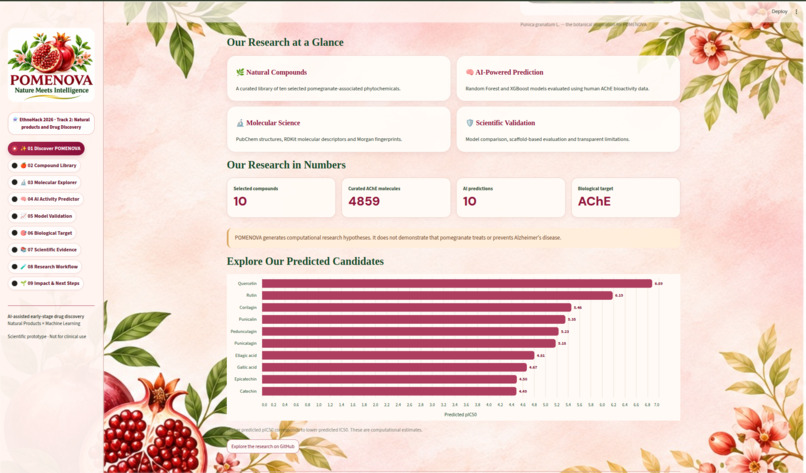
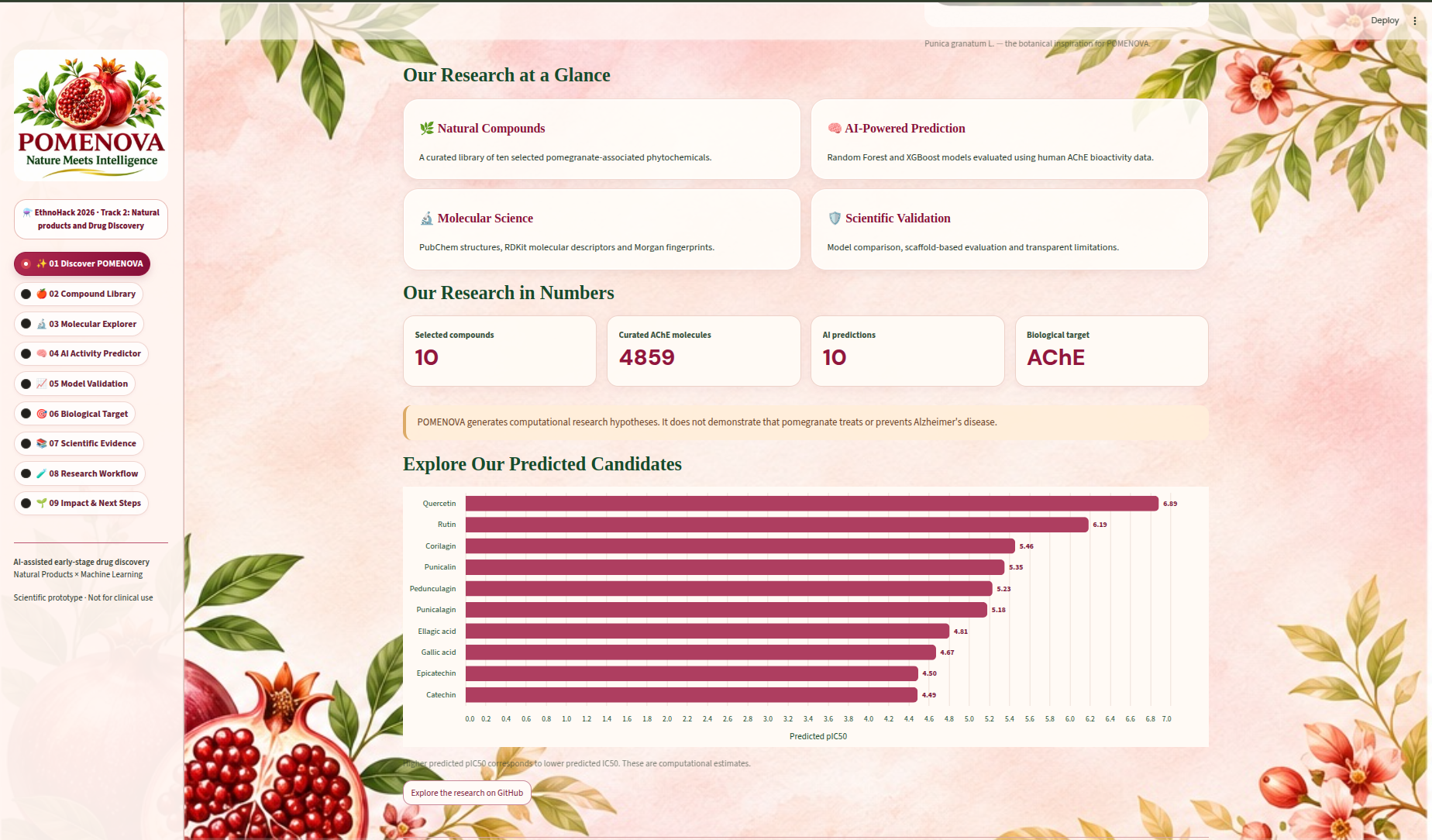
10 natural compounds, 4,859 curated AChE molecules, and AI-powered predictions for early-stage drug discovery.
-
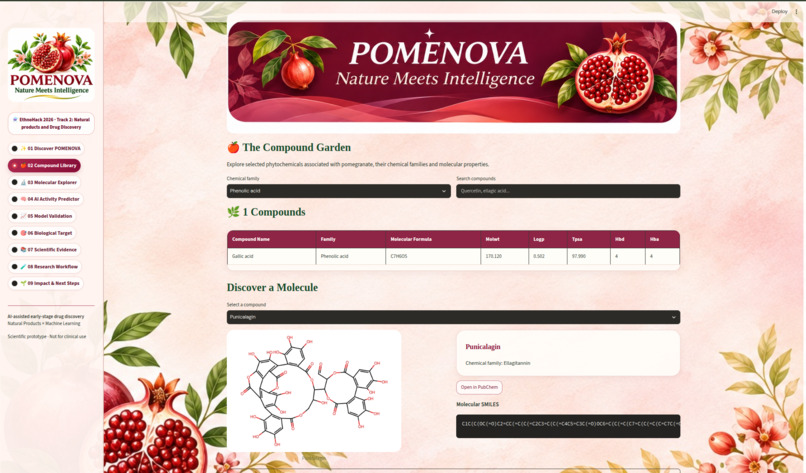
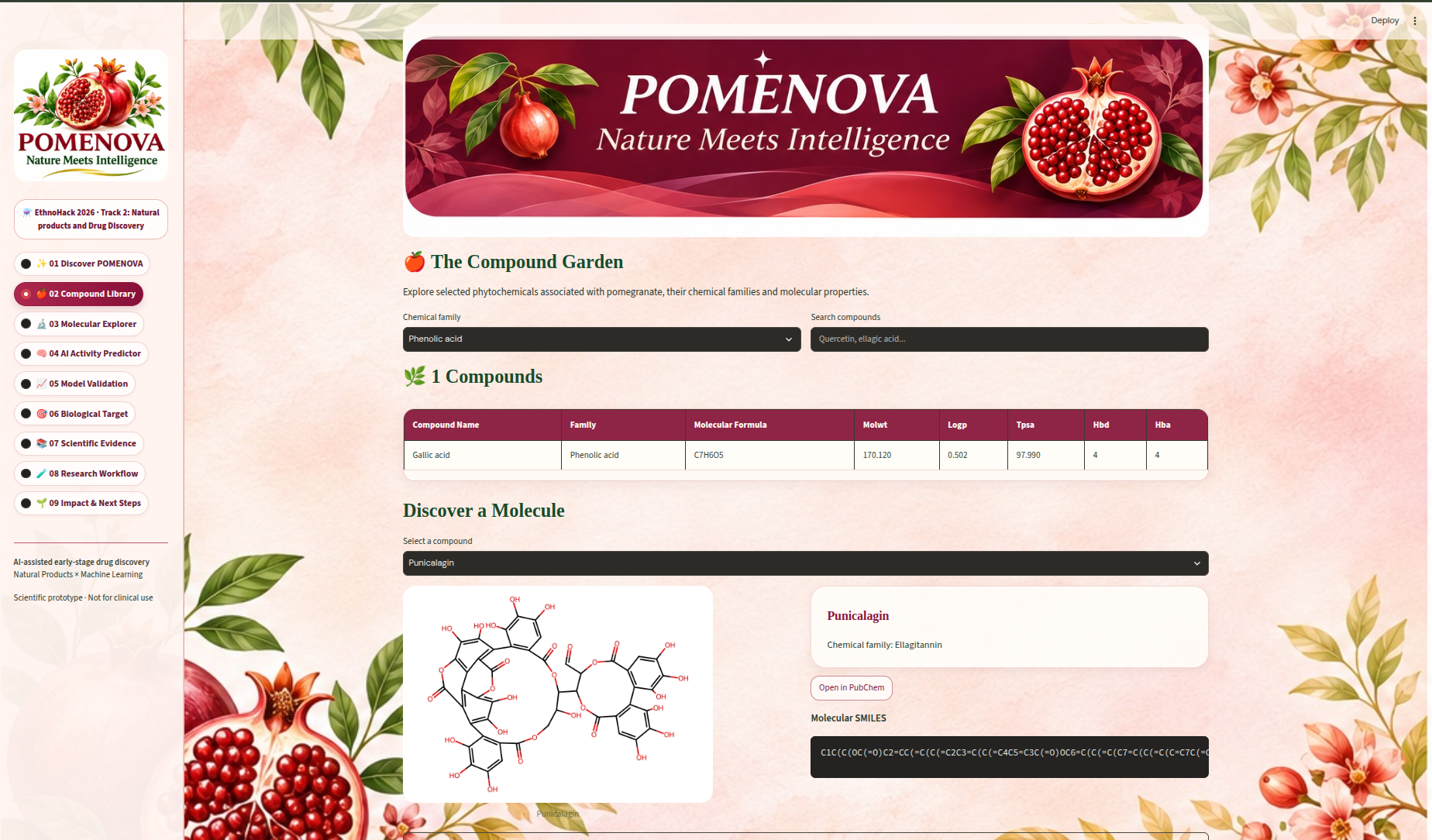
Explore 10 pomegranate-associated compounds, their chemical families, molecular formulas, and properties.
-
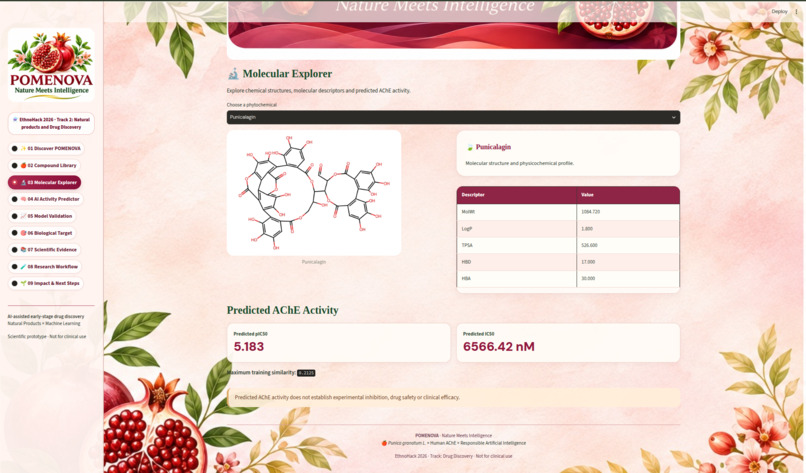
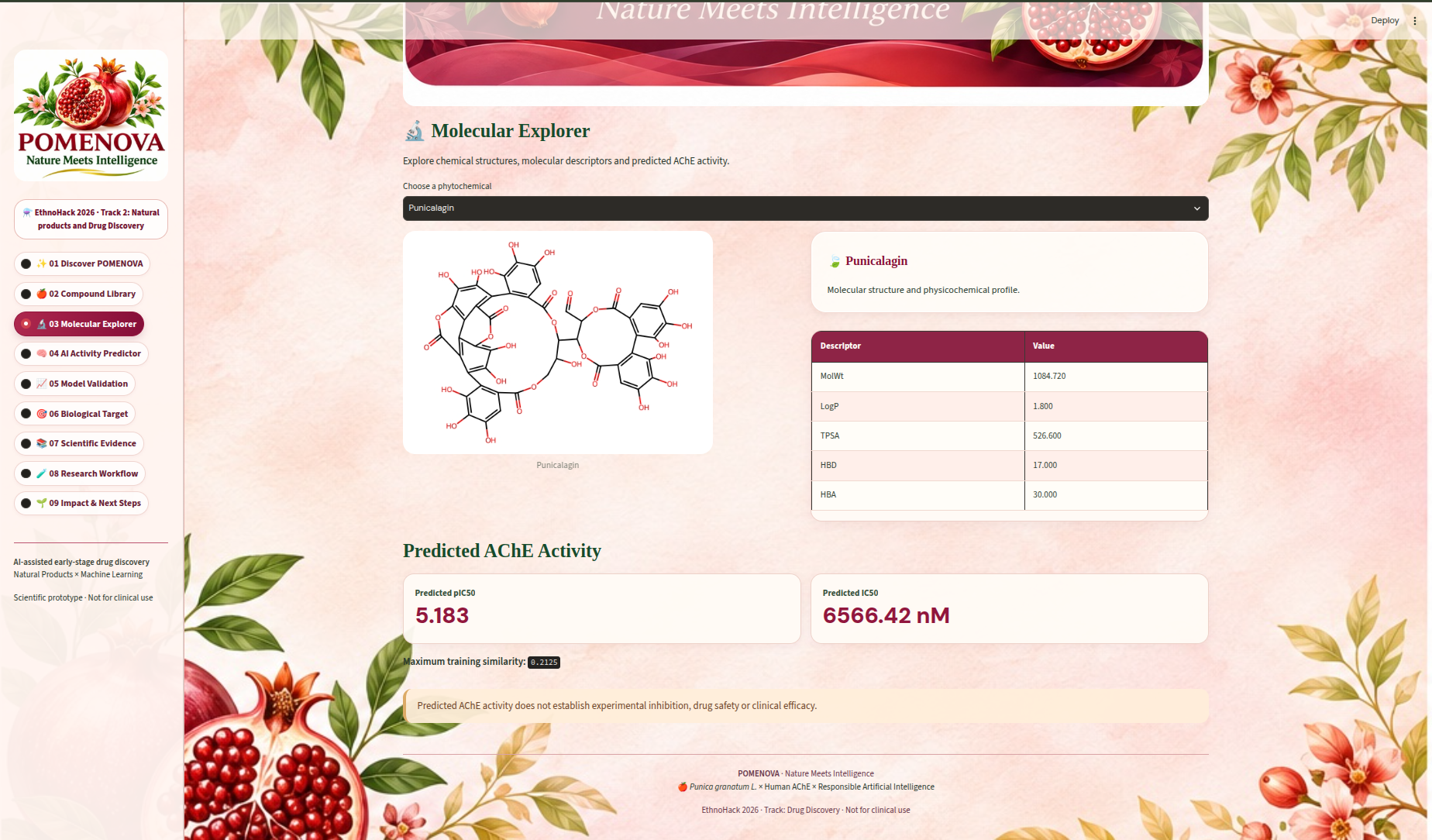
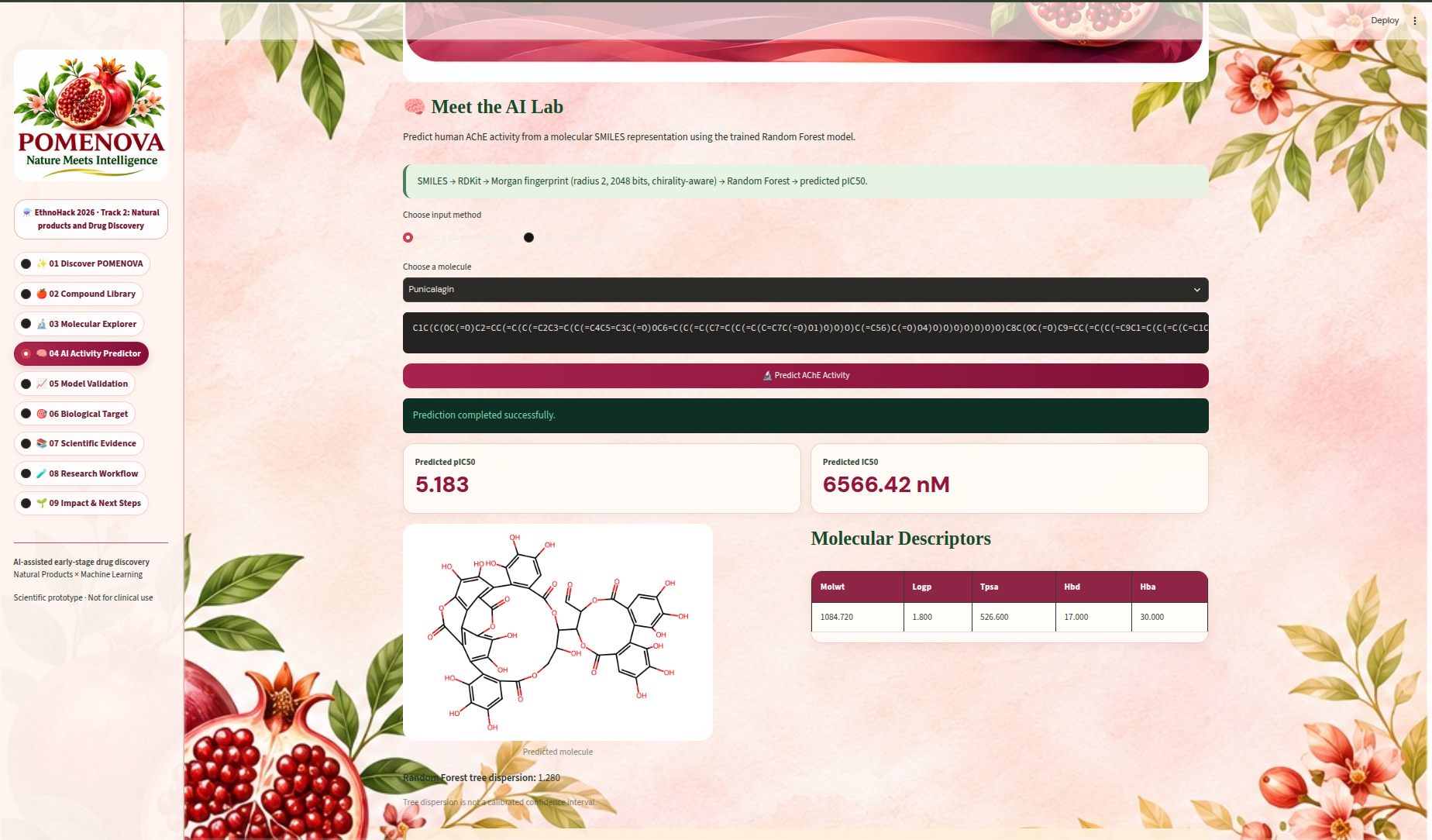
Explore molecular structures, RDKit descriptors, and predicted acetylcholinesterase inhibitory activity.
-
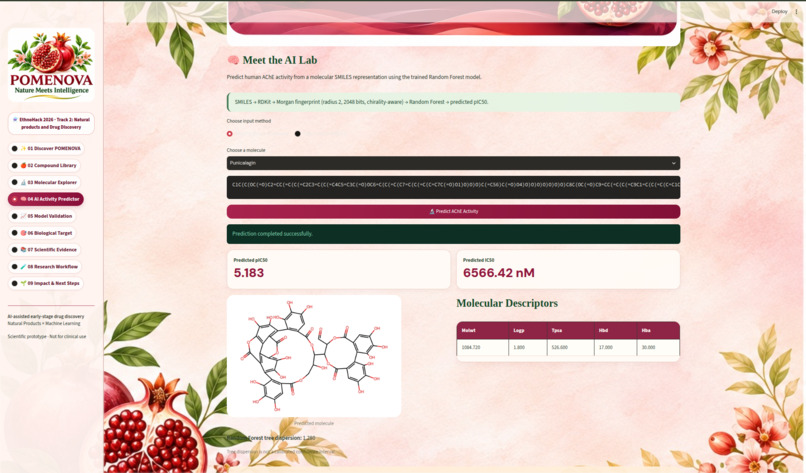
From SMILES to predictions: our Random Forest model estimates AChE activity using molecular fingerprints.
-
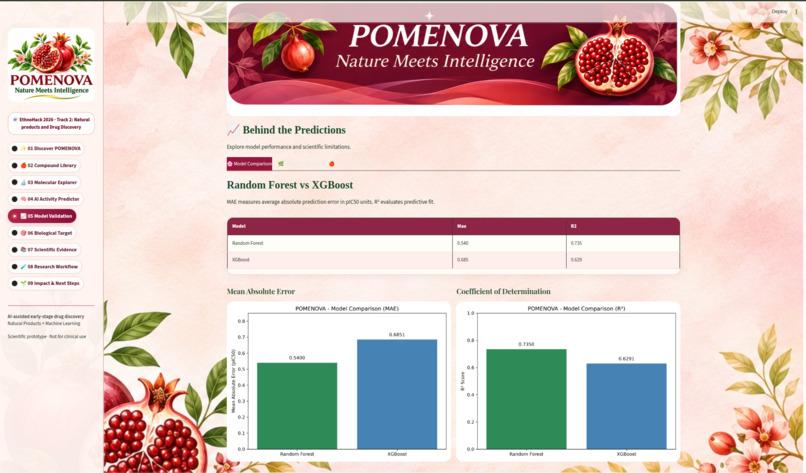
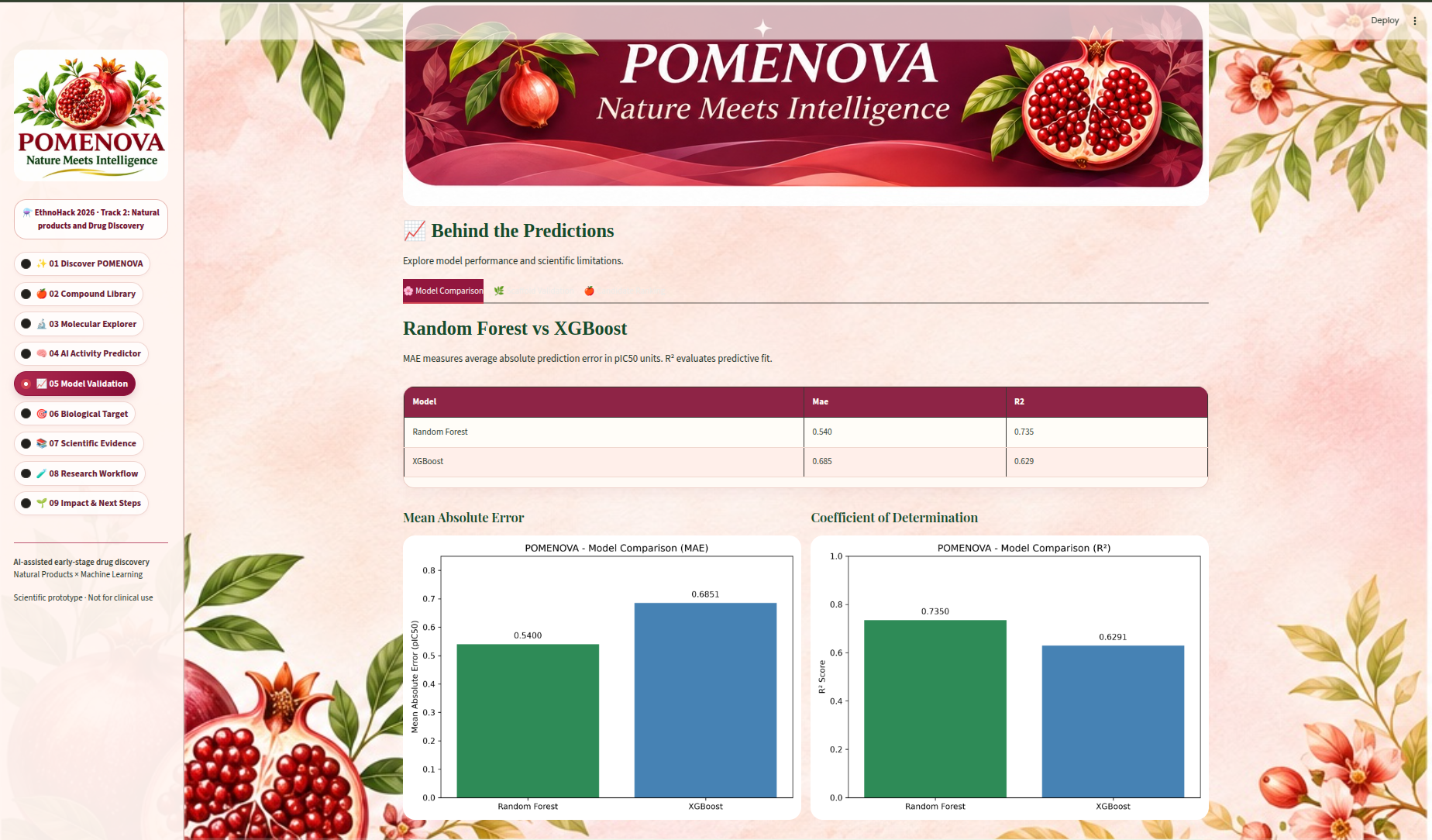
Random Forest vs. XGBoost: comparing predictive performance using MAE and R² on human AChE bioactivity data.
-
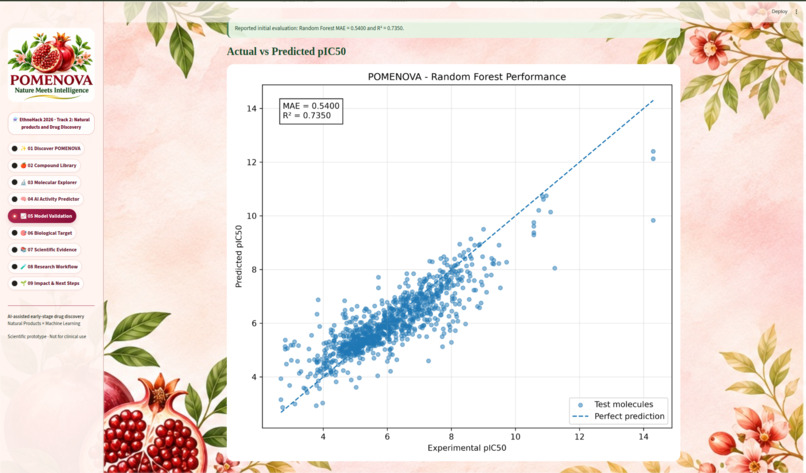
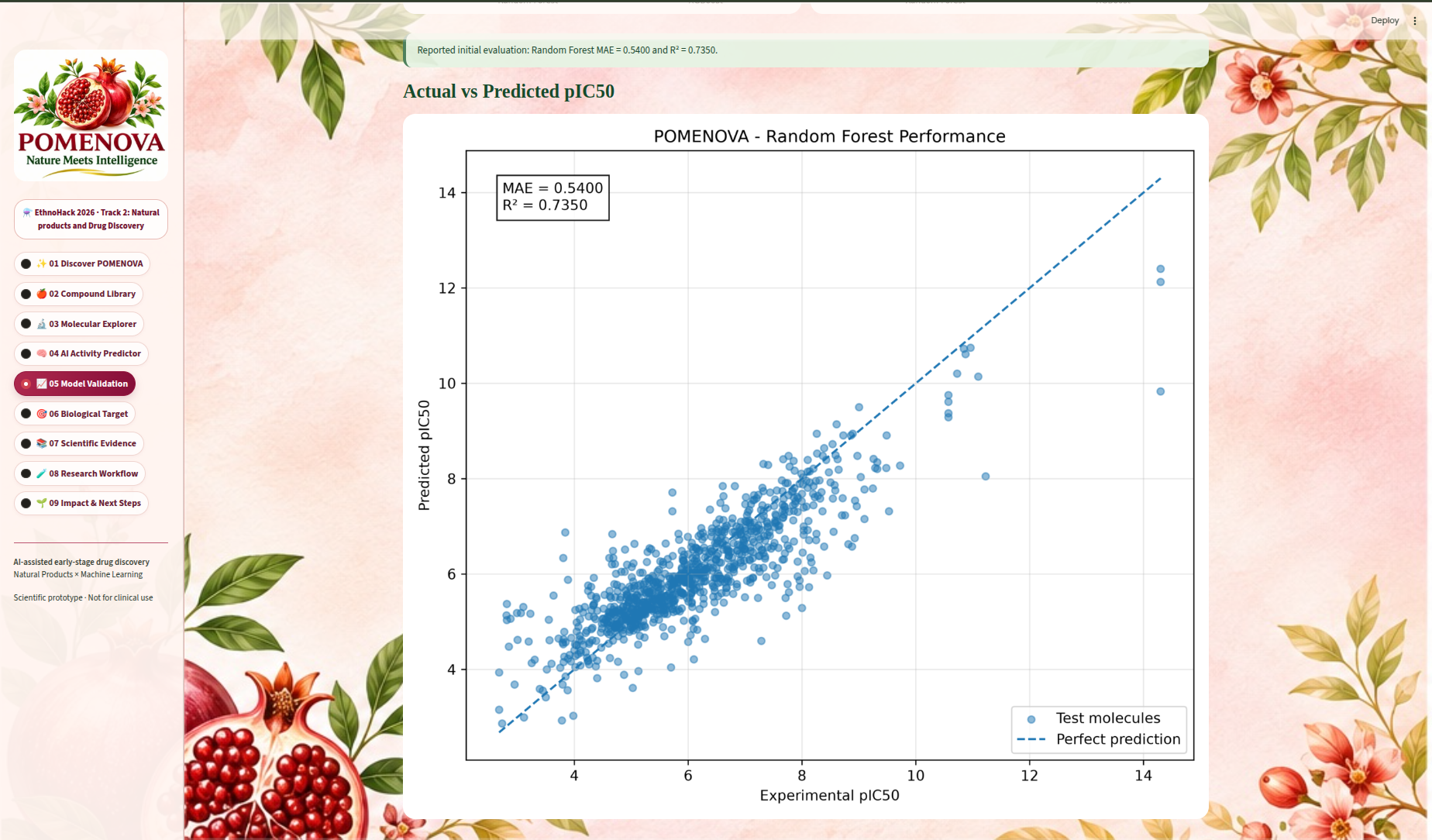
Experimental vs. predicted pIC50 values reveal model performance, prediction errors, and remaining limitations.
-
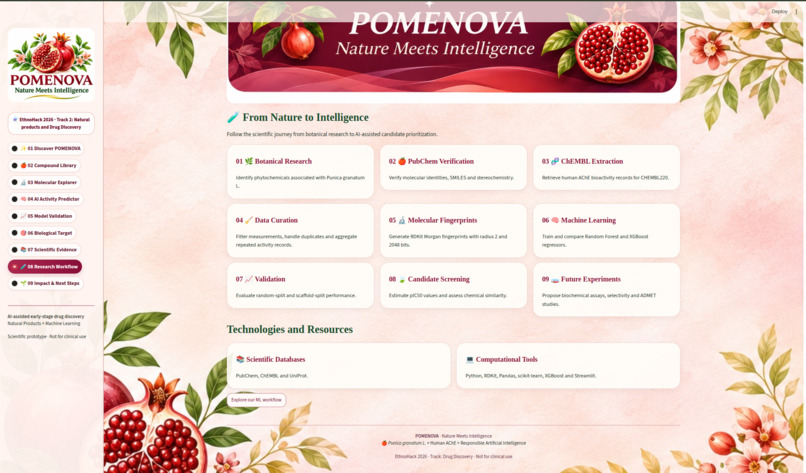
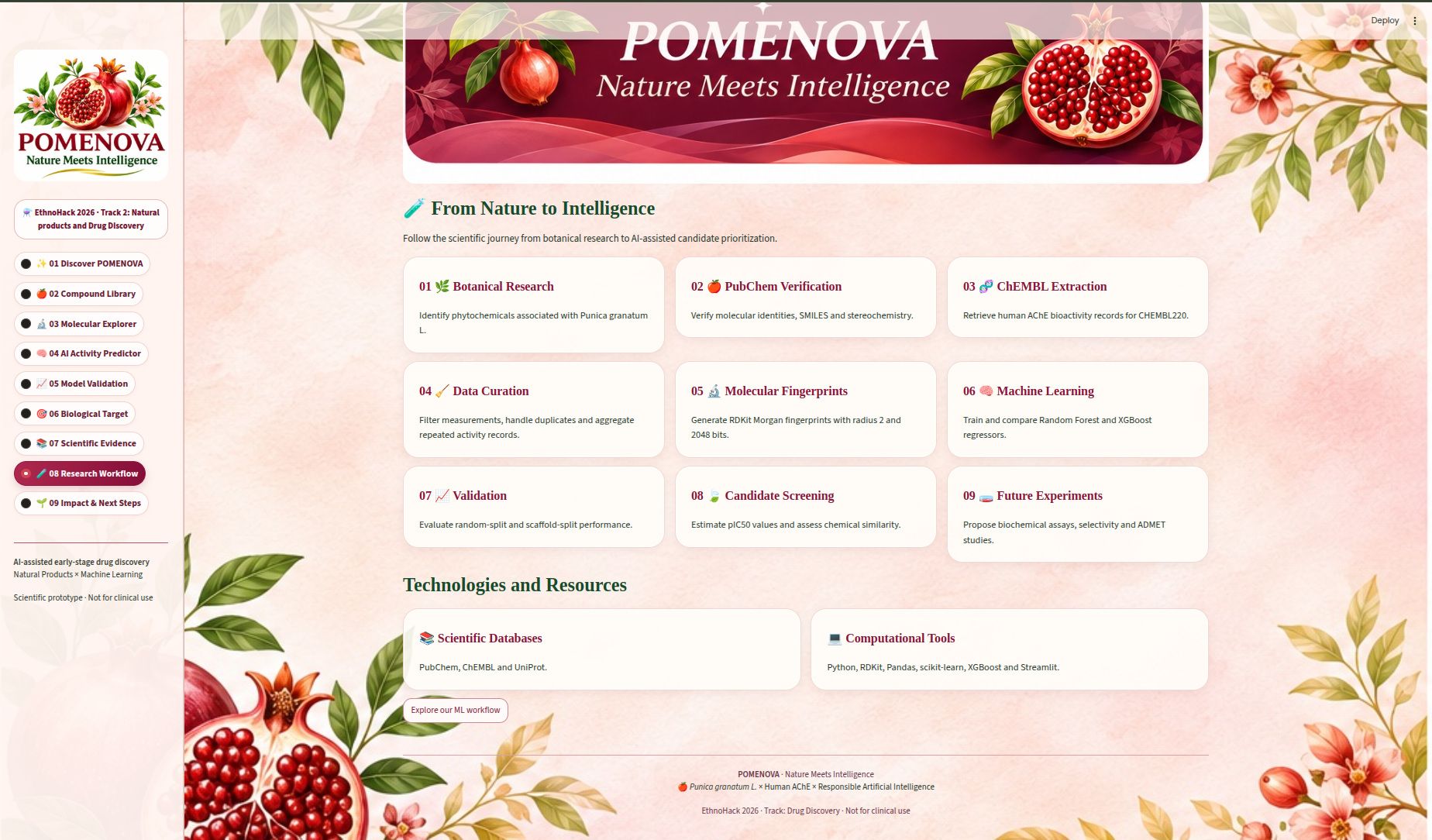
From botanical research to PubChem, ChEMBL, RDKit, machine learning, validation, and candidate prioritization.
Inspiration
What if something as familiar as a pomegranate could inspire a new direction in Alzheimer's research? That was the question that started POMENOVA. When we first began thinking about our EthnoHack project, we wanted to explore something that connected nature, biotechnology, and artificial intelligence. We were fascinated by the idea that plants we see in everyday life contain complex molecules that scientists are still studying. We eventually chose the pomegranate, Punica granatum, a fruit that has been part of Mediterranean culture for generations and is known for its rich diversity of natural compounds. But we didn't want to simply talk about the health benefits of a fruit. We wanted to go further and ask whether some of its molecules could be interesting candidates for computational investigation in Alzheimer's research. That curiosity became POMENOVA — Nature Meets Intelligence. Our goal was never to suggest that pomegranate could cure Alzheimer's disease. We wanted to use real scientific data and machine learning to explore the potential of its compounds, understand their molecular properties, and see what computational methods could tell us about their possible interaction with an important biological target.
What it does
POMENOVA is a computational drug discovery project that combines natural compounds, molecular chemistry, machine learning, and an interactive web application. We decided to focus on (acetylcholinesterase (AChE)), an enzyme responsible for breaking down acetylcholine, a neurotransmitter involved in memory and learning. Inhibiting this enzyme is already an established approach used in the symptomatic treatment of Alzheimer's disease. This made AChE an interesting target for our investigation. We selected several compounds associated with pomegranate, including punicalagin, punicalin, corilagin, pedunculagin, ellagic acid, gallic acid, caffeic acid, catechin, and epicatechin. Our idea was to study these molecules from a computational perspective. We examined their chemical structures, calculated their physicochemical properties, and used molecular fingerprints to represent their structural features. We then developed machine learning models trained on experimental bioactivity data to estimate inhibitory activity, expressed as pIC50. To make our work easier to explore, we brought the different parts of the project together in a Streamlit web application, where molecular information, predictions, and scientific visualizations can be presented in an interactive way. POMENOVA is not a tool that can confirm whether a molecule will work as a medicine. It is a research prototype designed to explore possibilities and help identify questions worth investigating further.
How we built it
Building POMENOVA was a learning experience from the beginning. We had to connect several areas that are usually studied separately, including biochemistry, cheminformatics, data analysis, machine learning, and web development.
Starting with real scientific data
Our first major step was finding reliable experimental data. We used the ChEMBL 37 database and focused on human acetylcholinesterase, identified by the target CHEMBL220. We extracted IC50 measurements expressed in nanomolar units, keeping positive values with an exact equality relation. This gave us an initial dataset containing 7,826 experimental measurements associated with 6,287 unique molecules. Working with this dataset helped us understand how experimental bioactivity information is organized and why preparing data properly is so important before training a model. At the same time, we assembled a separate collection of pomegranate-associated compounds and worked with their molecular identifiers and chemical structures, using resources such as PubChem for reference.
Understanding the molecules
Once we had our molecular data, we used RDKit to calculate properties that could help us better understand the compounds. These included molecular weight, LogP, topological polar surface area, and the numbers of hydrogen-bond donors and acceptors. We also generated 2,048-bit Morgan fingerprints, which allow molecular structures to be represented numerically so that machine learning algorithms can process them. This was one of the most interesting parts of the project because we were able to move from chemical structures to numerical information that a computer could analyze. We also learned that these properties alone are not enough to determine whether a molecule can cross the blood–brain barrier or behave safely in the human body.
Teaching the model to recognize patterns
The next step was machine learning. We converted the experimental IC50 measurements into pIC50 values using the relationship: pIC50 = 9 − log10(IC50 in nM) We then used Python and scikit-learn to build regression models, starting with a Random Forest baseline. Our objective was to investigate whether the molecular fingerprints contained enough information for a model to learn useful relationships between chemical structure and inhibitory activity. We divided the data into training and testing sets and evaluated the predictions using Mean Absolute Error (MAE) and the coefficient of determination (R²). One important lesson was that a model producing predictions does not necessarily mean those predictions are reliable. We had to examine the results critically and think about how the quality of our data could affect the model's performance.
Bringing everything into an application
We didn't want our project to remain a collection of Python notebooks, CSV files, and graphs. We wanted to create something that could bring our work together and make it easier for others to understand. That's why we developed a Streamlit application to present molecular information, computational results, and visualizations in one place. The application represents the connection between the scientific and technical sides of POMENOVA. It helps turn the results of our computational workflow into something that can be explored without needing to run every Python script manually. Throughout the project, we worked mainly with Python, RDKit, pandas, NumPy, scikit-learn, Matplotlib, ChEMBL, PubChem, Streamlit, Google Colab, and GitHub.
Challenges we ran into
One thing we quickly discovered was that working with real scientific data is very different from working with a perfectly prepared dataset in a tutorial. Our first challenge was understanding the experimental measurements we extracted from ChEMBL. We noticed that some molecules appeared several times in the database, with different reported IC50 values. At first, this seemed confusing. After investigating further, we understood that measurements can come from different experiments and assay conditions. We examined repeated measurements and their variability because we wanted to understand what our data actually represented before relying on it. Another challenge came from the molecules themselves. Natural compounds can have complicated structures, and preparing those structures for machine learning required us to learn how molecular descriptors and fingerprints work. The machine learning stage was also challenging. Our initial Random Forest model showed limited predictive performance, which forced us to think beyond simply running an algorithm and obtaining a result. We had to ask ourselves whether the data were suitable, whether our molecular representations were informative enough, and how much confidence we could reasonably place in the predictions. Finally, integrating the scientific workflow into an interactive application required us to connect several technical components while working within the limited time of the hackathon. There were moments when things didn't work as expected, but each problem helped us understand the project better.
Accomplishments that we're proud of
What makes us proud of POMENOVA is not just the final application, but everything we learned and built along the way. We started with a question about a familiar plant and gradually turned it into a computational research project. We learned how to retrieve and analyze thousands of experimental measurements from ChEMBL, prepare molecular datasets, calculate chemical descriptors, generate molecular fingerprints, and develop machine learning models for bioactivity prediction. We also investigated the variability of experimental measurements instead of treating the dataset as automatically reliable. Seeing our scientific work come together in a Streamlit application was an especially rewarding moment because it made the project feel like something more complete than separate experiments and scripts. We are also proud that POMENOVA brought together different skills and perspectives. It required us to think like researchers, programmers, and problem-solvers at the same time. Most importantly, we managed to build a project that explores a scientific question without pretending to have already found the answer.
What we learned
Before working on POMENOVA, we knew that artificial intelligence could be useful in drug discovery. But this project helped us understand what that actually means in practice. We learned that machine learning begins long before model training. Finding the right data, understanding experimental measurements, preparing molecular structures, and choosing meaningful features are all essential parts of the process. We also discovered how much information can be represented in a molecular structure and how tools like RDKit make it possible to analyze that information computationally. One of our biggest lessons came from evaluating our models. We realized that obtaining a prediction is easy compared with demonstrating that the prediction is trustworthy. We learned to question our results, recognize the limitations of our methods, and avoid making conclusions that the evidence cannot support. Beyond the technical side, POMENOVA taught us how to collaborate across different areas of expertise, organize our work, and turn an ambitious idea into something concrete within a short period. It also reminded us why we are interested in biotechnology in the first place: there is still so much to explore, and even a simple question can lead to an exciting scientific investigation.
What's next for POMENOVA
We see POMENOVA as the beginning of a larger journey rather than a finished project. Our first priority would be to improve the reliability of our machine learning models. We would like to investigate additional algorithms, expand our molecular representations, improve validation strategies, and better understand the chemical space in which our predictions can be trusted. We also want to explore more natural compounds, both from pomegranate and from other plants with interesting chemical profiles. Another important direction would be to investigate ADMET properties, especially factors related to absorption, toxicity, and the ability of compounds to reach the central nervous system. We are interested in exploring molecular docking as an additional computational method to investigate possible interactions between selected compounds and acetylcholinesterase. However, we recognize that computational predictions and docking results cannot replace experimental evidence. Any promising candidates would eventually need to be evaluated through appropriate laboratory studies. On the technical side, we would like to continue improving the Streamlit application, making it more interactive, easier to navigate, and more useful for exploring molecular information and model results. Our long-term ambition is to develop POMENOVA into a more comprehensive platform for exploring natural compounds through computational methods.
Our vision
When we started this project, we were simply curious about what we could learn from a pomegranate. That curiosity led us to explore scientific databases, chemical structures, machine learning algorithms, and the challenges of early-stage drug discovery. We haven't discovered a treatment for Alzheimer's disease, and that was never something we could realistically promise in a hackathon. But we have built a starting point for asking meaningful scientific questions and investigating them with modern computational tools. For us, that is what POMENOVA represents: the meeting point between the natural world and the technologies that help us understand it. POMENOVA — Nature Meets Intelligence.

