-
-
Pomelo Logo
-
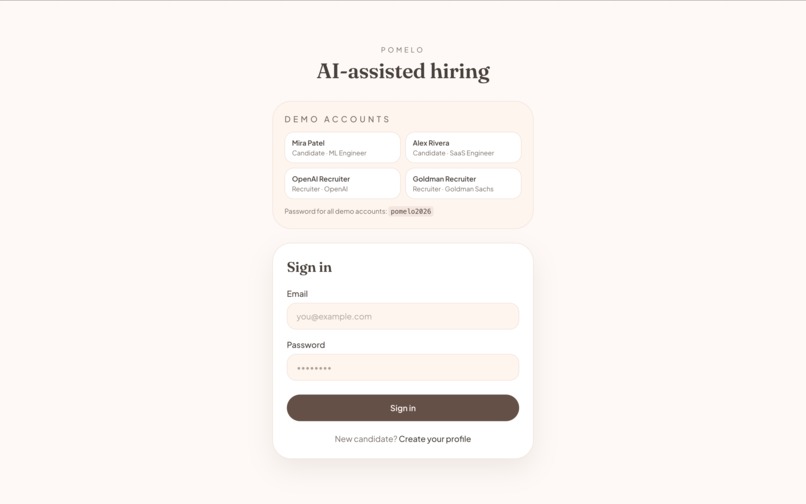
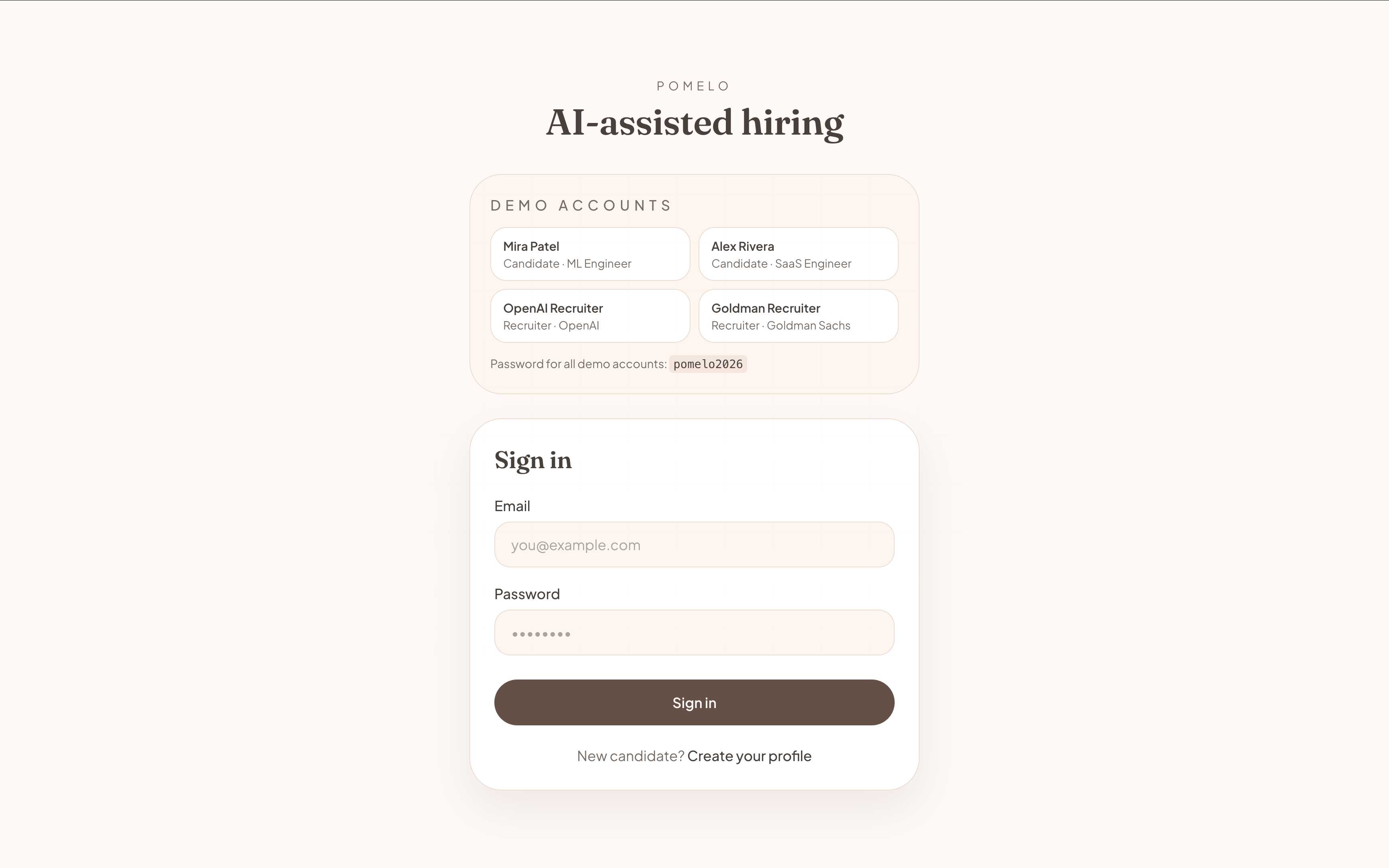
Authentication Page
-
Swipe!!!
-
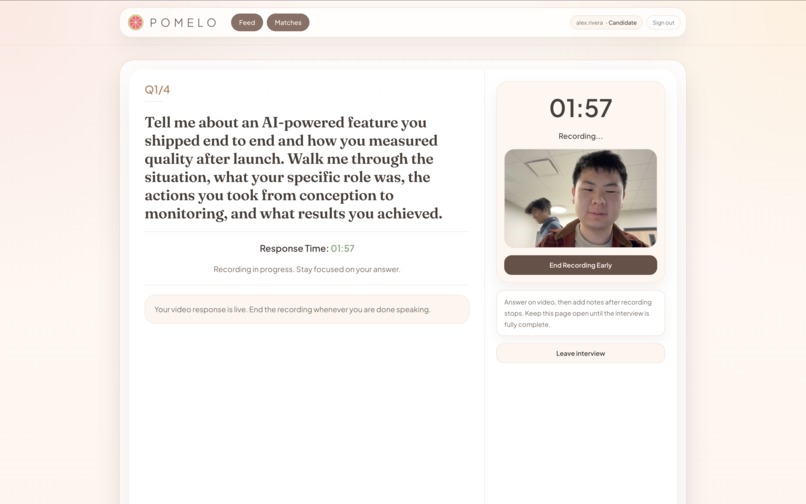
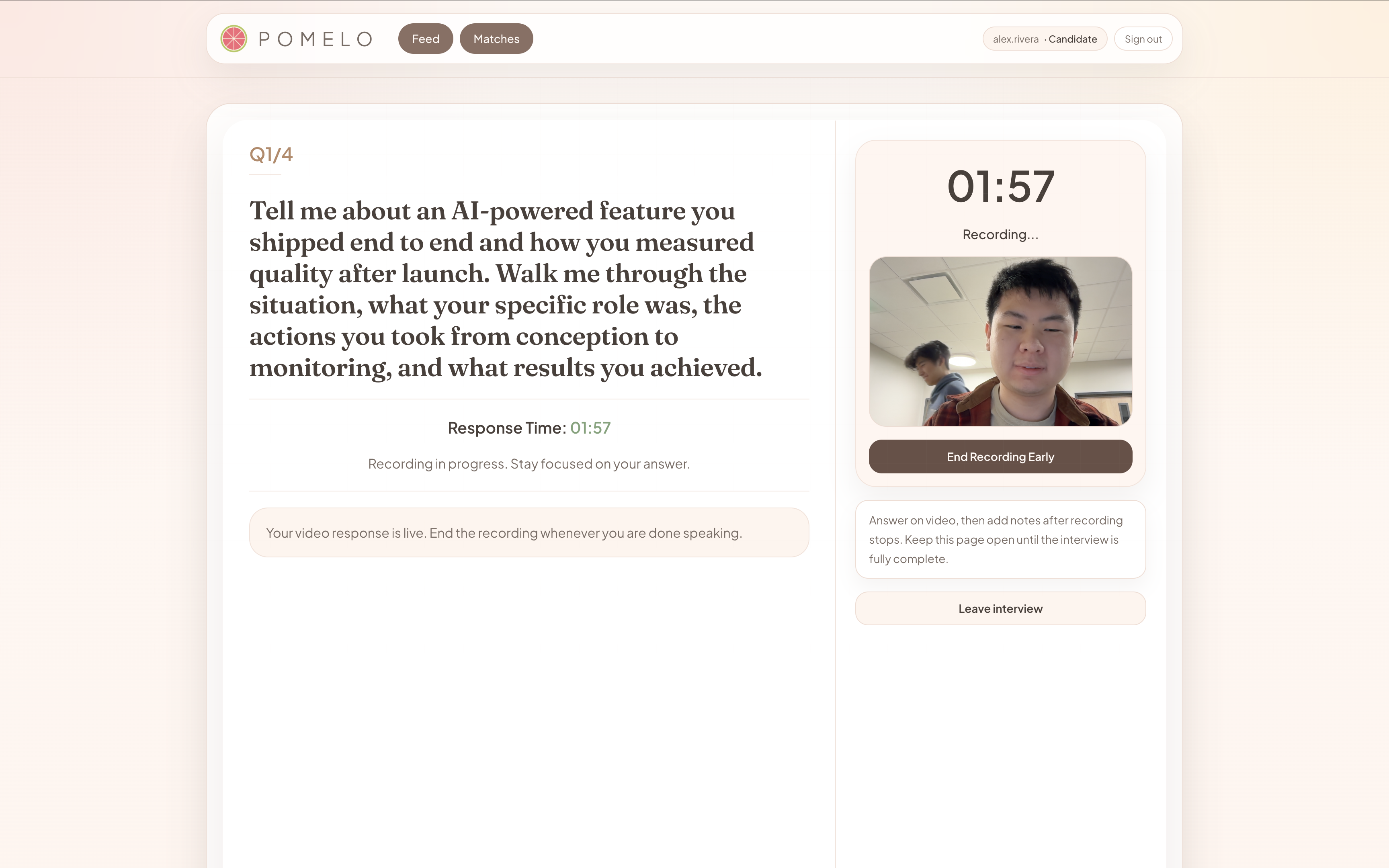
Interview in Progress
-
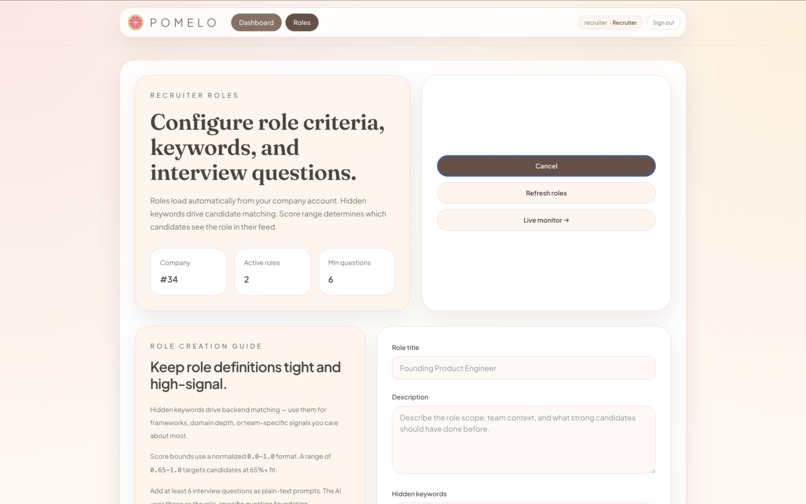
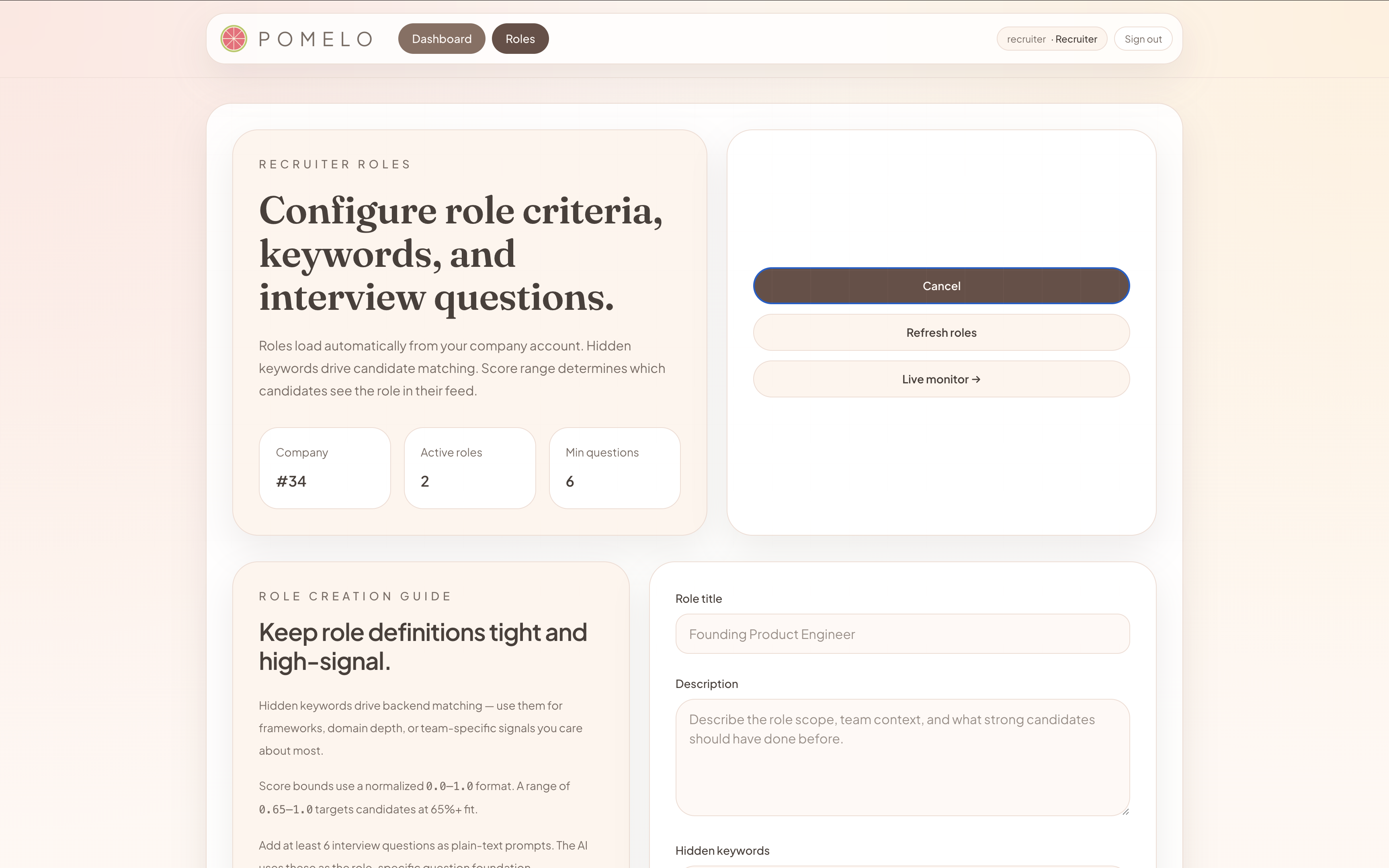
Recruiter Screen
-
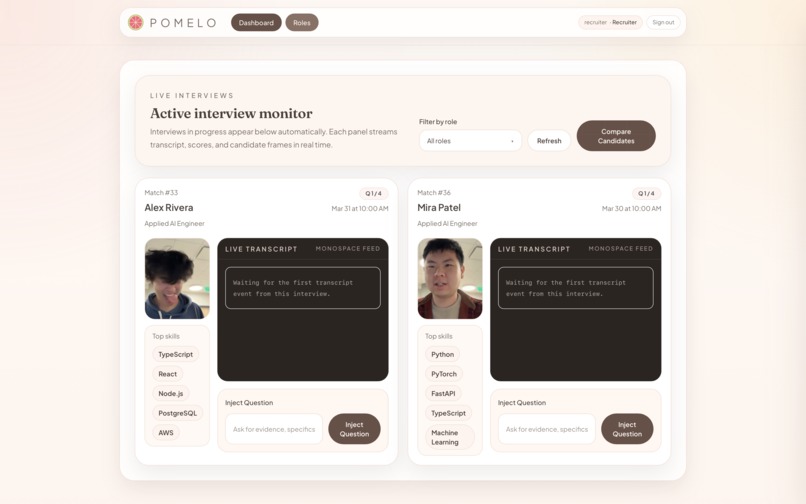
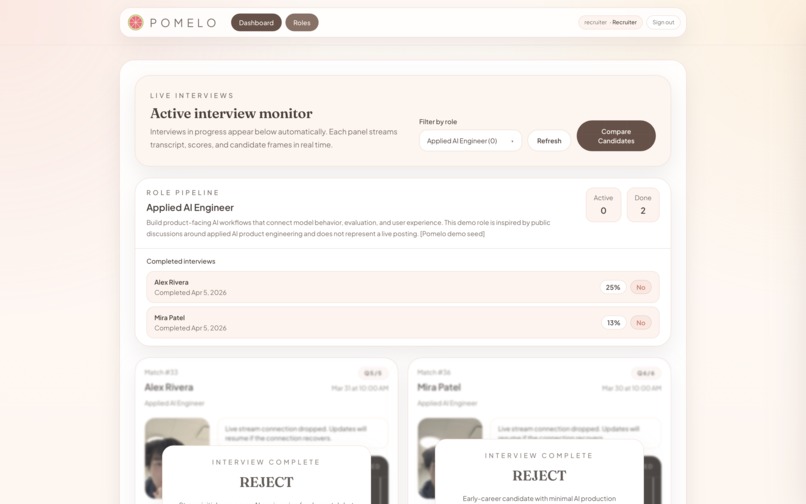
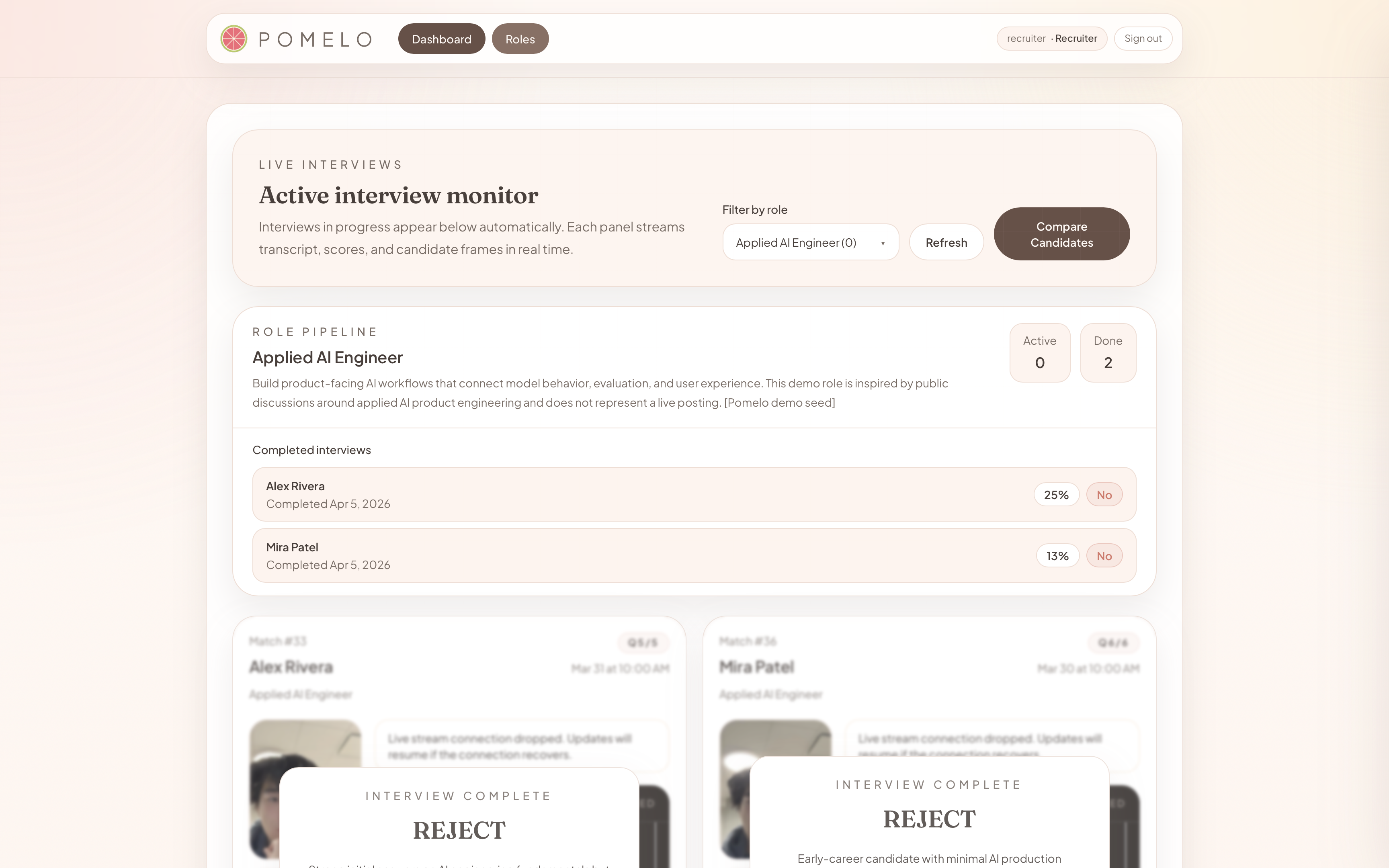
Recruiter Monitoring Overview
-
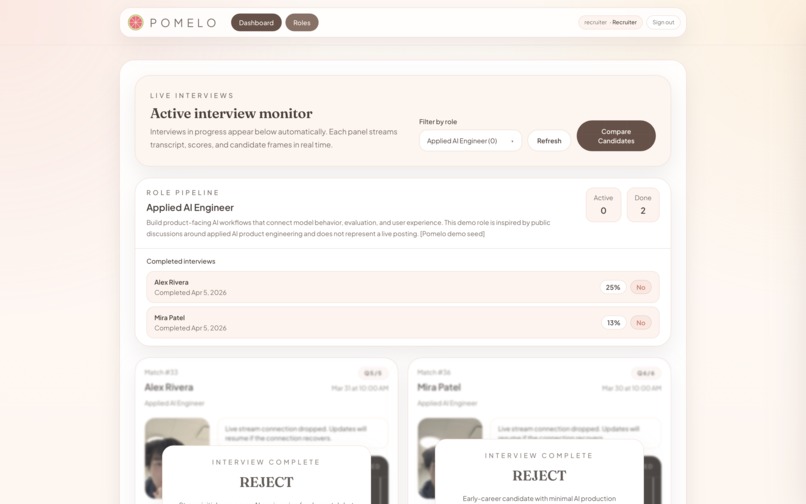
Very Qualified Candidates
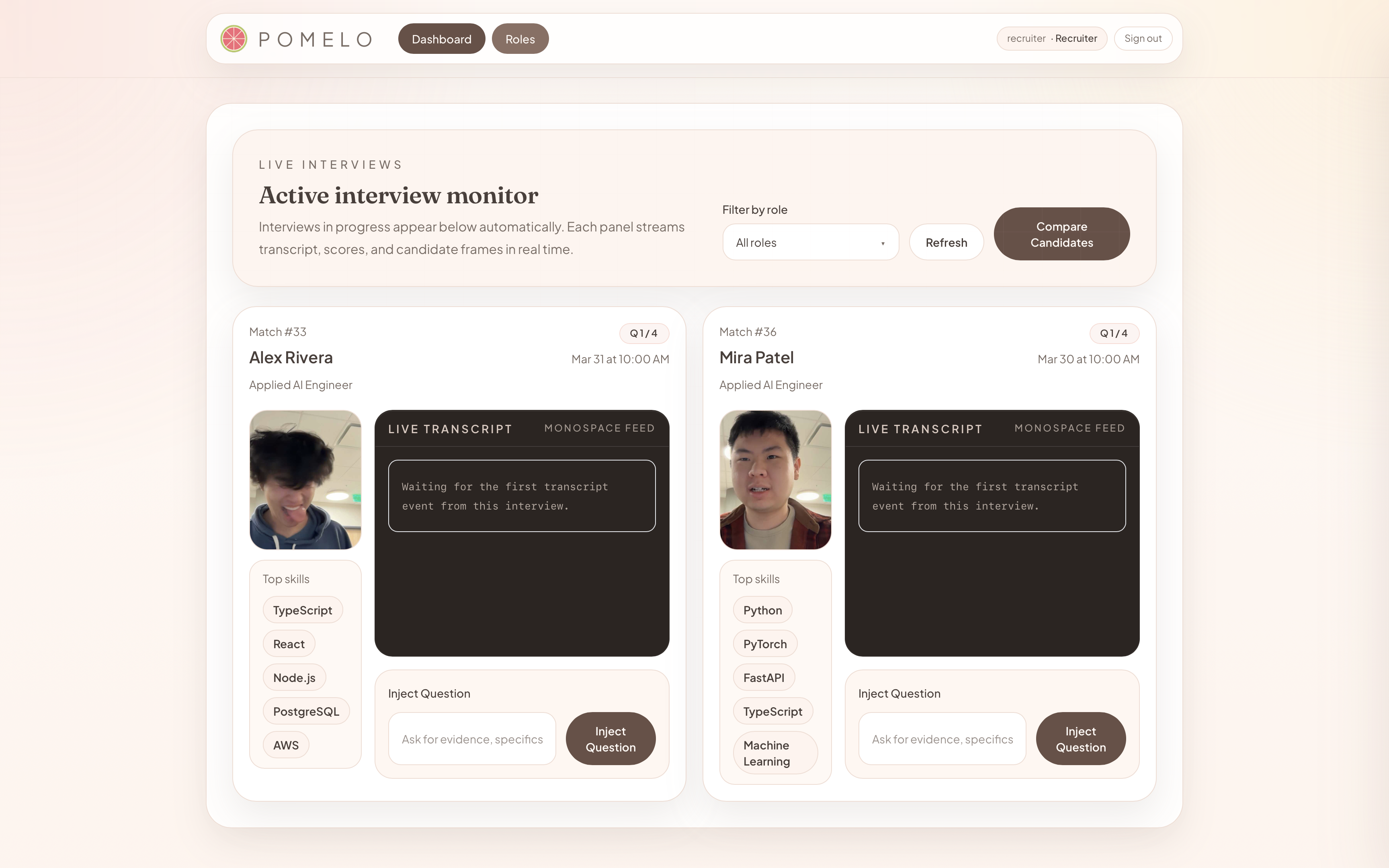
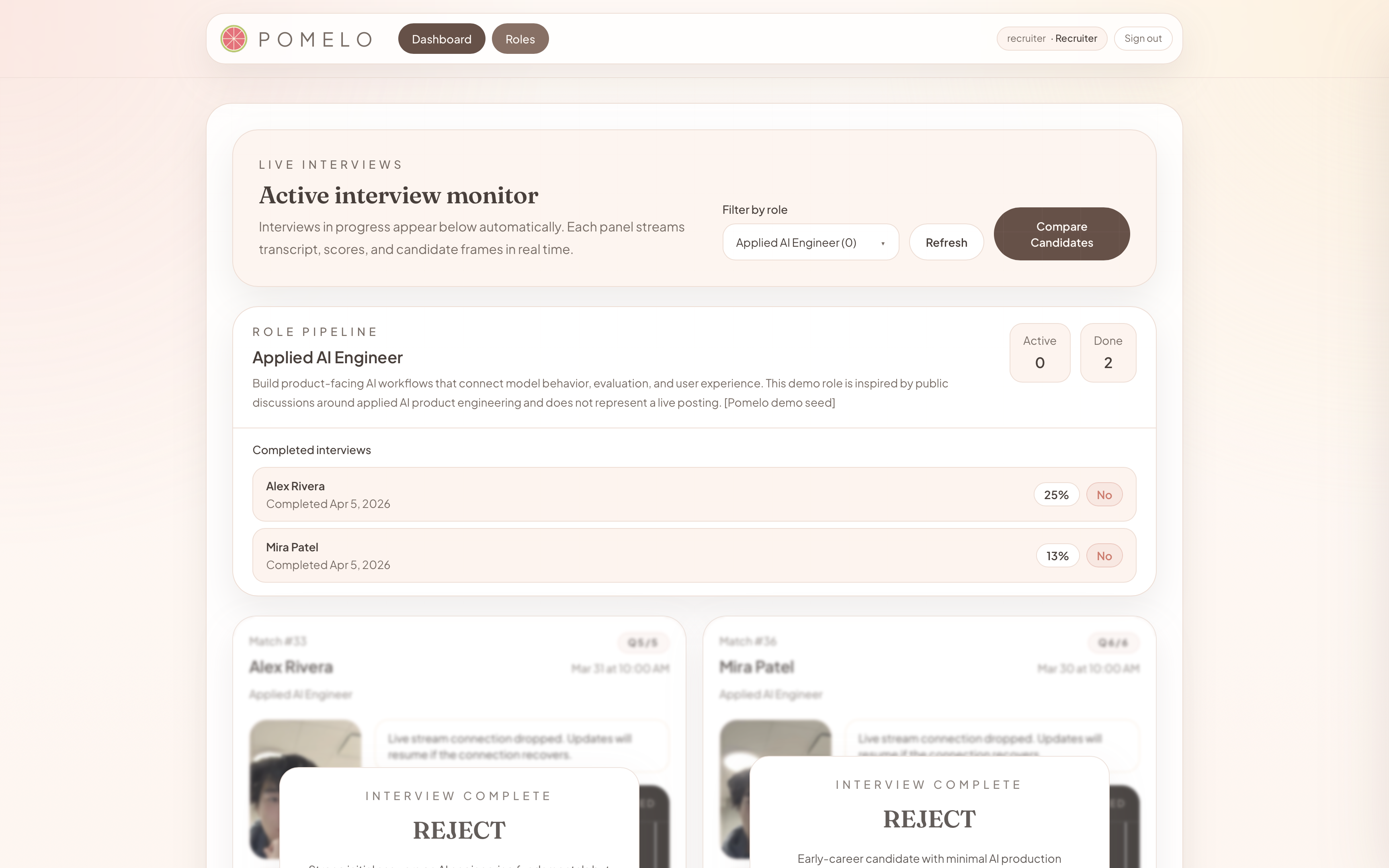
About the Project
Inspired by a Real Problem
As freshmen, we saw firsthand how frustrating and low-signal hiring can be for both candidates and recruiters. Candidates send out tons of applications with little feedback or real fit, while recruiters sift through overcrowded applicant pools and can still miss strong talent. We also experienced AI interview systems that felt rigid, impersonal, and low-value, which pushed us to rethink what an AI-assisted hiring experience should actually look and feel like.
What We Built
Pomelo is an AI-native hiring workflow platform that streamlines the process from candidate discovery to final hiring decision. It combines matching, structured interviewing, live recruiter observability, and candidate comparison into one cohesive, high-signal workflow instead of scattering those steps across disconnected tools. The name Pomelo is inspired by its symbolism of prosperity and good fortune in Chinese culture, which reflects our vision of helping both candidates and recruiters.
What Makes It Innovative
Instead of using AI for just one isolated step, Pomelo applies it across the entire funnel in a structured, human-in-the-loop way:
- Mutual-intent matching to reduce spam and focus attention
- AI-assisted interviewing to create a more consistent and role-aware process
- Live recruiter observability so recruiters can monitor interviews in real time
- Candidate comparison to make decisions more explainable and evidence-based
How It Works
- Candidates upload resumes, receive a curated role feed, express interest through limited swipes, and complete structured interviews.
- Recruiters define roles, set score ranges and hidden keywords, review interested candidates, monitor interviews live, inject follow-up questions, and compare finalists side by side.
- The result is a hiring flow that is more intentional, more transparent, and much higher-signal than the traditional application funnel.
Technical Challenge
We built a full-stack, real-time, event-driven system with:
- React, TypeScript, Vite, FastAPI
- WebSockets for candidate interview sessions
- Server-Sent Events (SSE) for recruiter-side live monitoring
- Vector-based role matching with cosine similarity to rank candidate-role fit
- AI workflows for resume scoring, keyword screening, interview evaluation, follow-up generation, summarization, and comparison support
This required coordinating real-time communication, structured AI outputs, role-aware workflows, authenticated multi-user state, and embedding-based matching across both candidate and recruiter experiences.
Why It Matters
Pomelo reduces application spam, surfaces higher-signal matches, and saves time for both candidates and recruiters. By combining structured evaluation, mutual-intent discovery, and explainable AI-assisted decision support, it makes hiring more efficient, more transparent, and more human-in-the-loop. It also helps reduce inconsistency and interviewer bias by making interviews more role-aware, standardized, and evidence-based.
What We Learned
We learned that strong AI products are not built by simply calling a model and displaying the output. Real impact comes from combining AI with reliable systems design, thoughtful UX, and clear human control points. In our case, that meant building around real-time infrastructure, structured workflows, explainable outputs, recruiter observability, and high-signal matching so the product feels trustworthy. We also learned that for AI to be useful in a high-stakes setting like hiring, it has to increase signal, reduce ambiguity, and support better human decisions rather than trying to replace them.
Built With
- css
- fastapi
- python
- react
- sql
- sqlmodel
- supabase
- tailwind
- typescript
- vite
- websockets


Log in or sign up for Devpost to join the conversation.