-
-
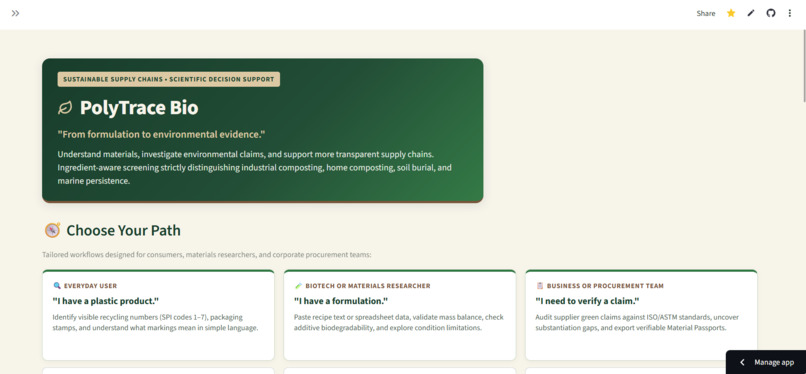
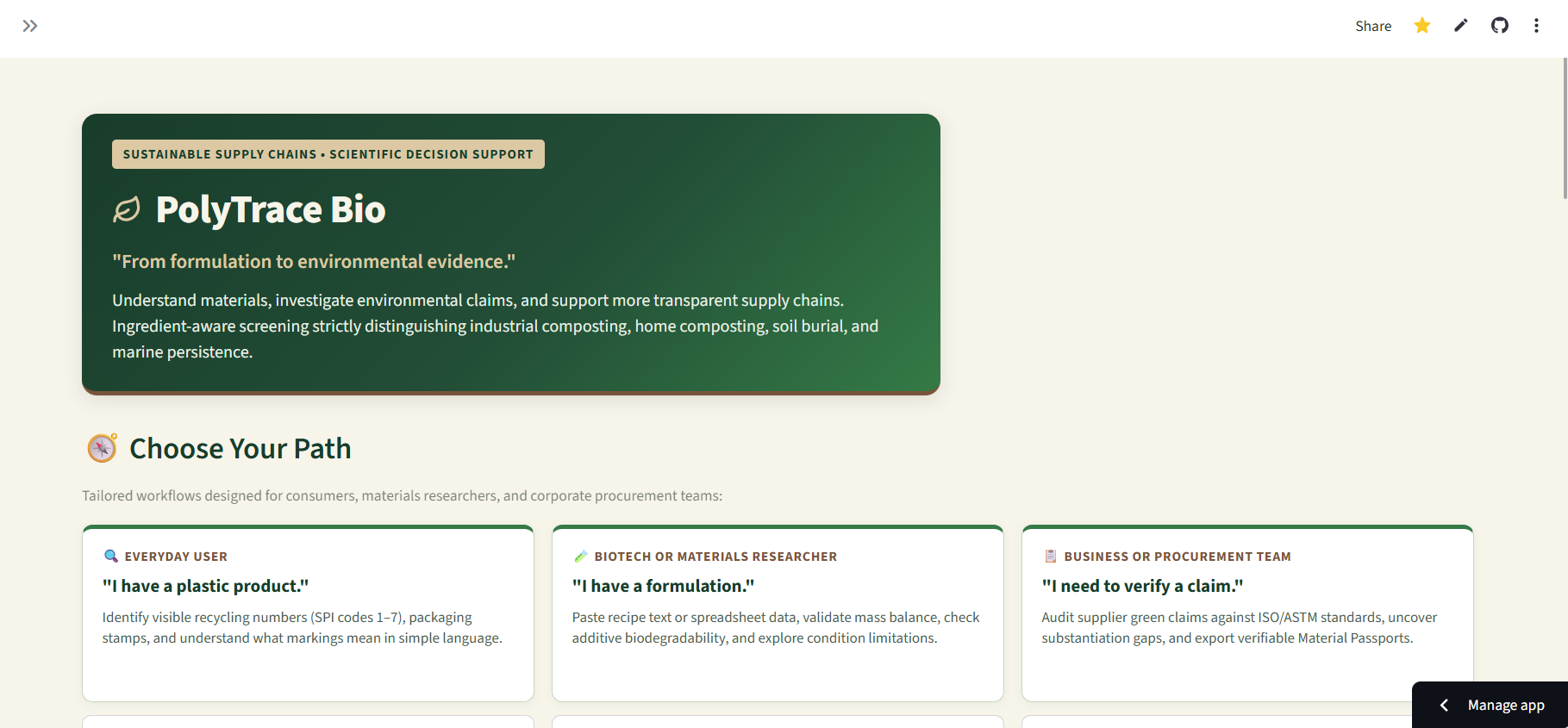
Website home page
-
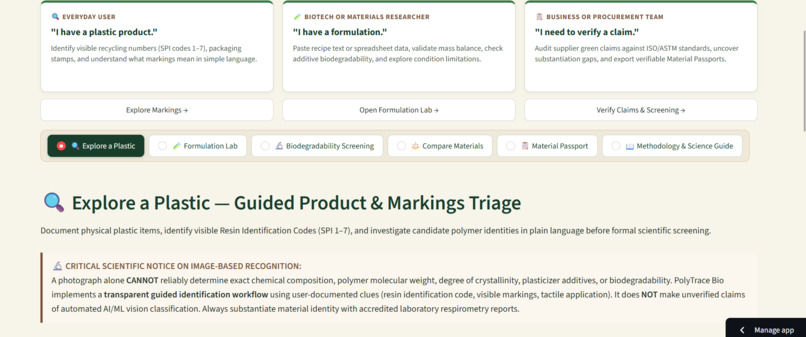
navigation bar for different users -Everyday user/ Biotech or material scientist/ Buisness or procurement team
-
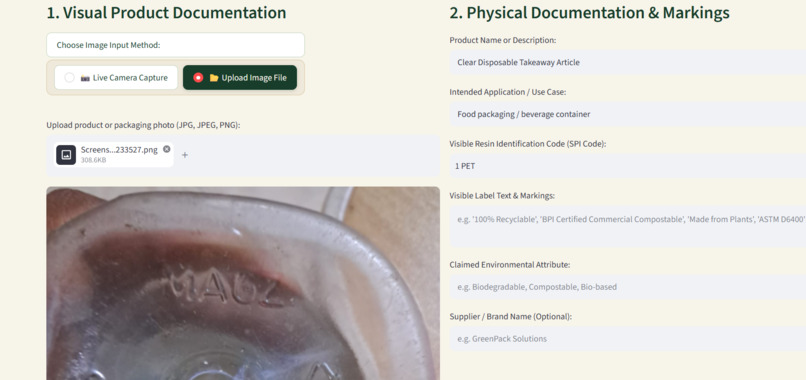
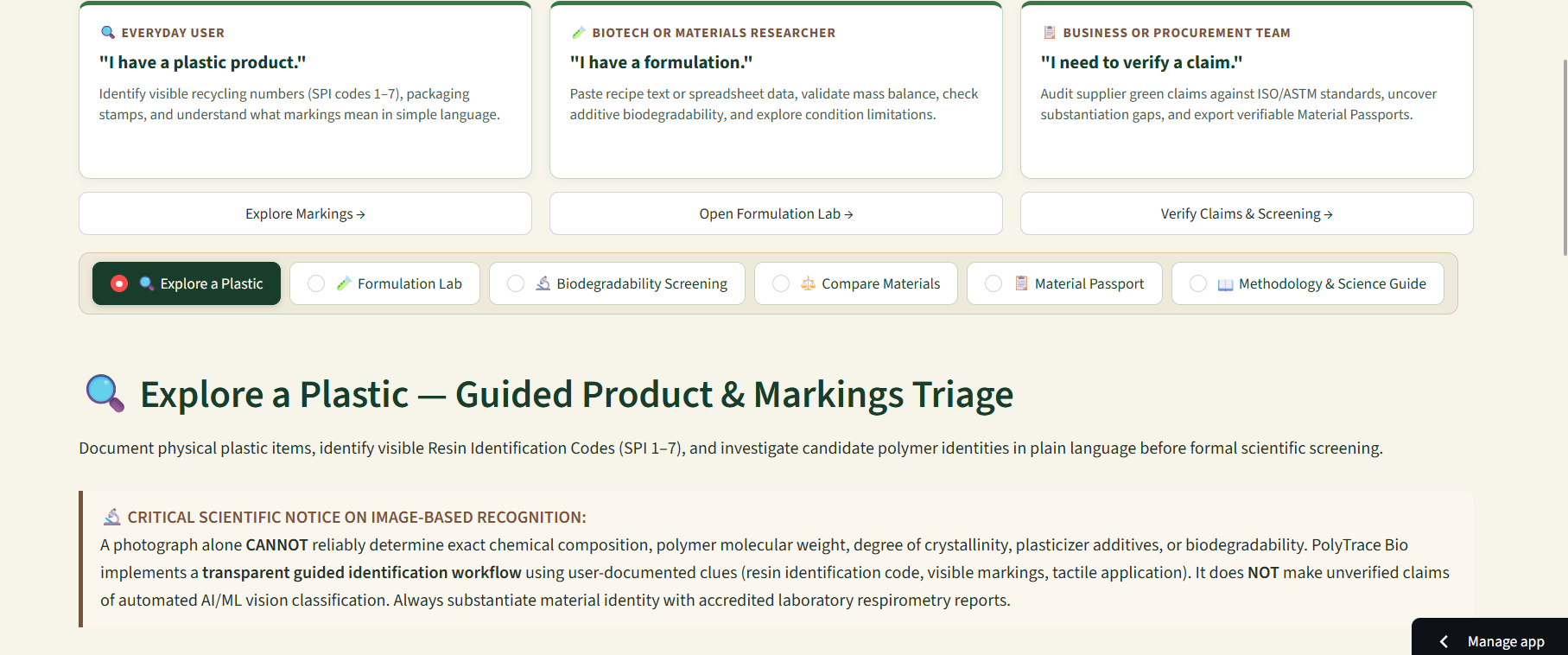
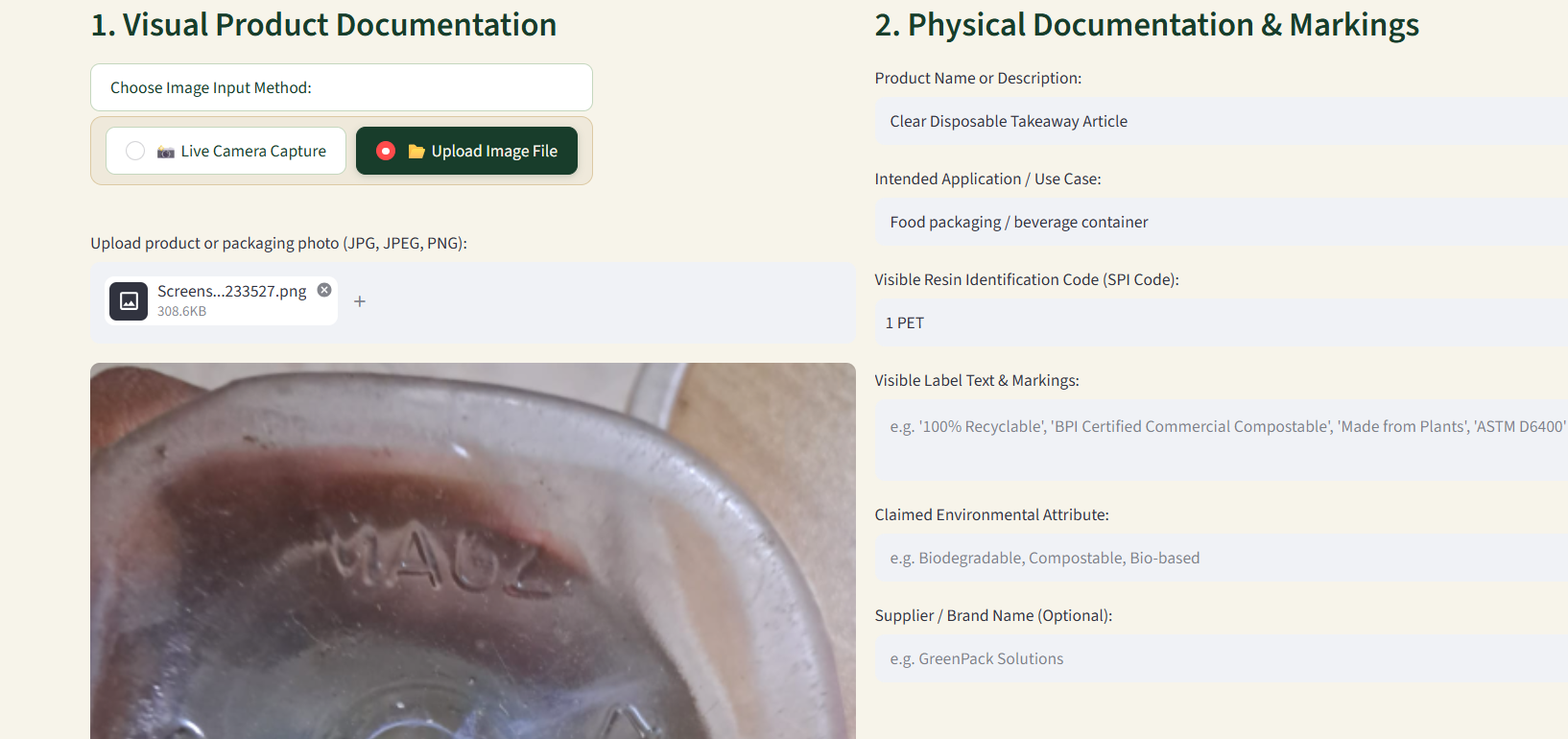
Dropping a image of a bottom of a plastic bottle by everyday user
-
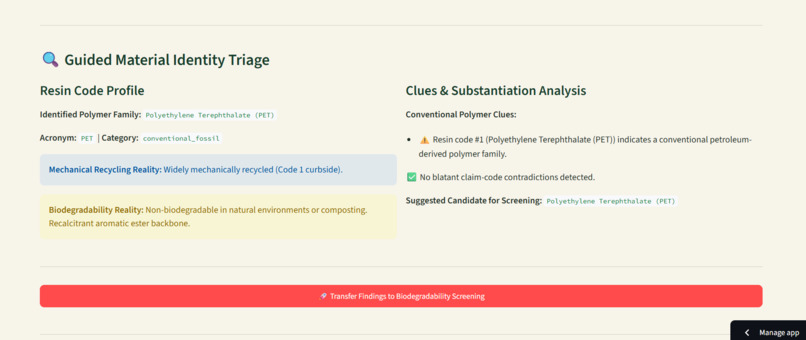
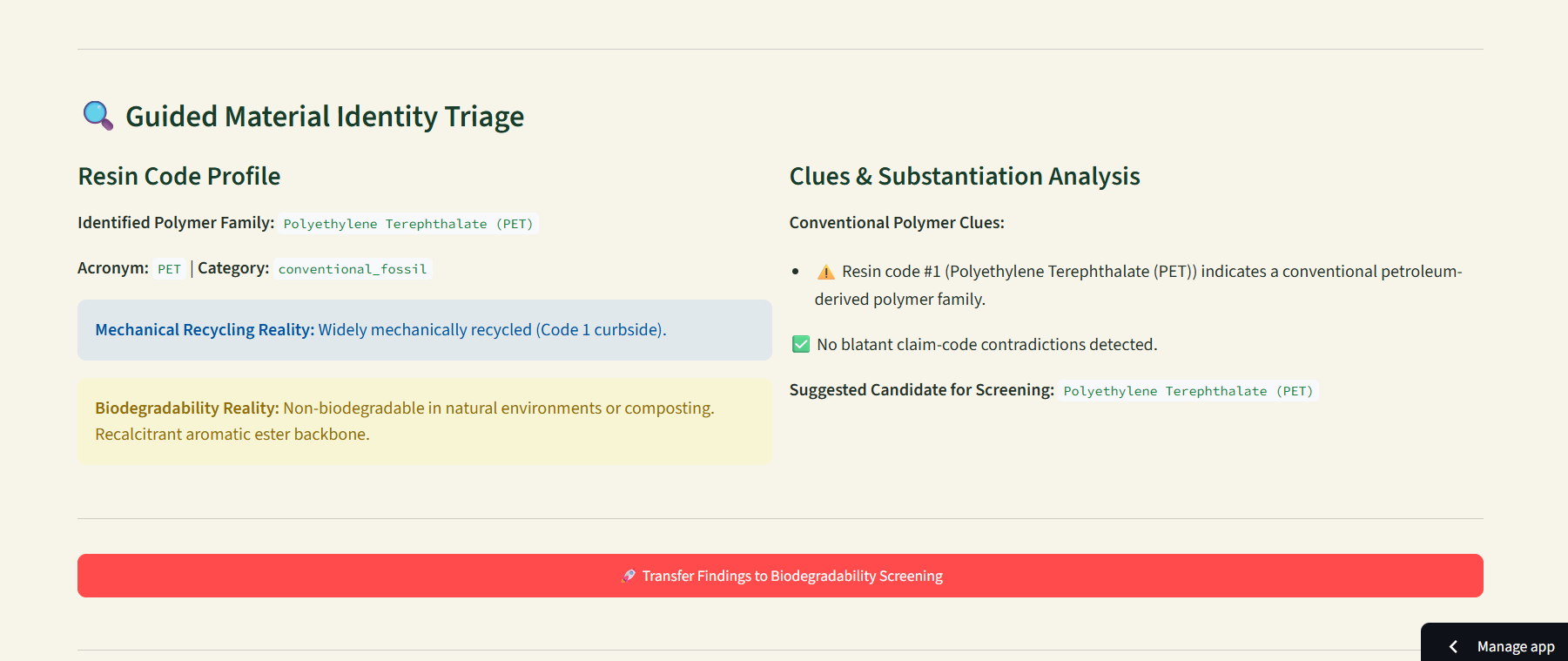
Guided material identification
-
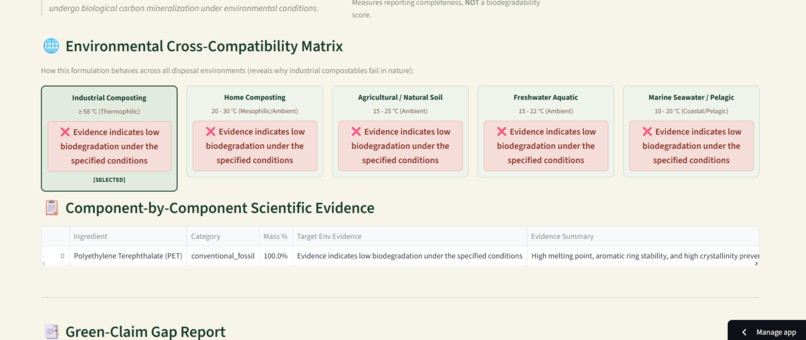
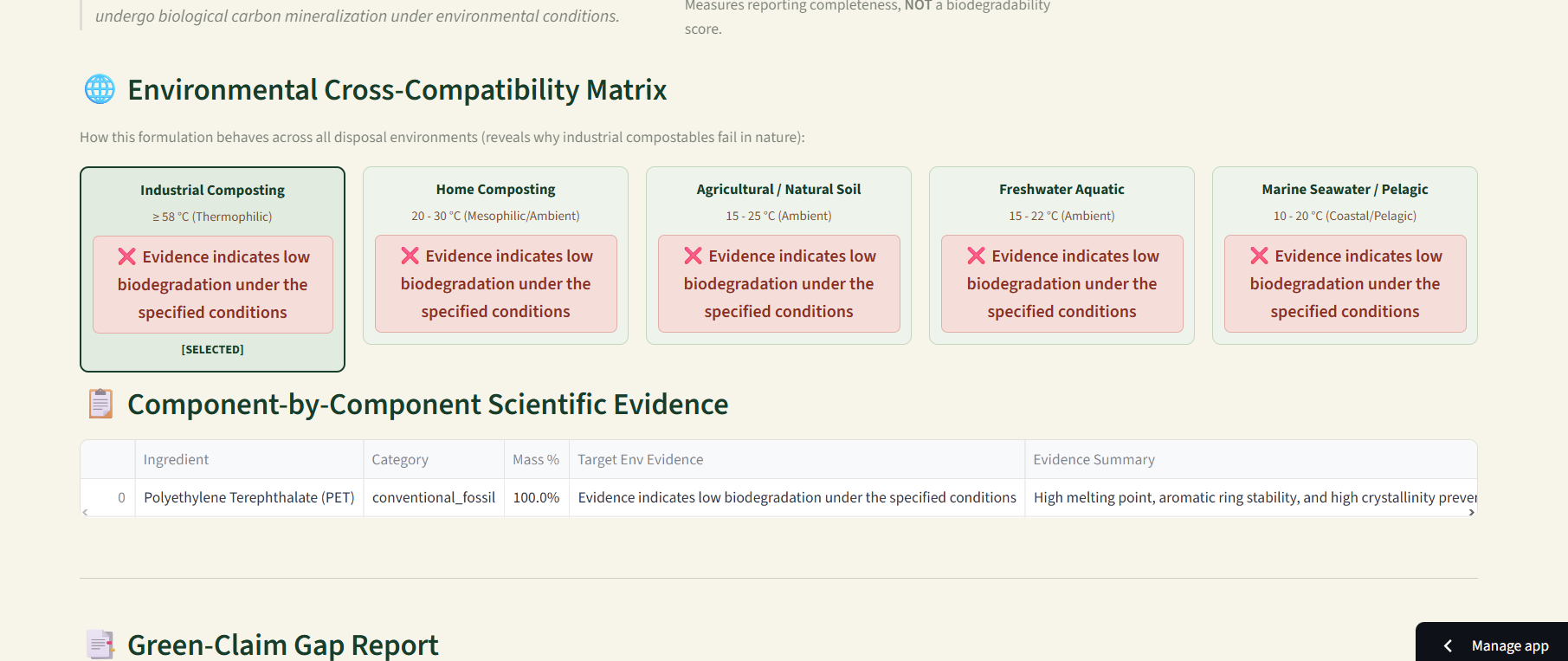
Biodegradability screening results
-
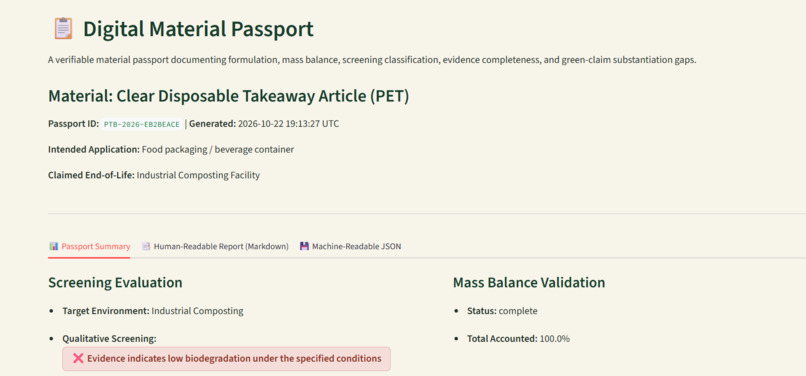
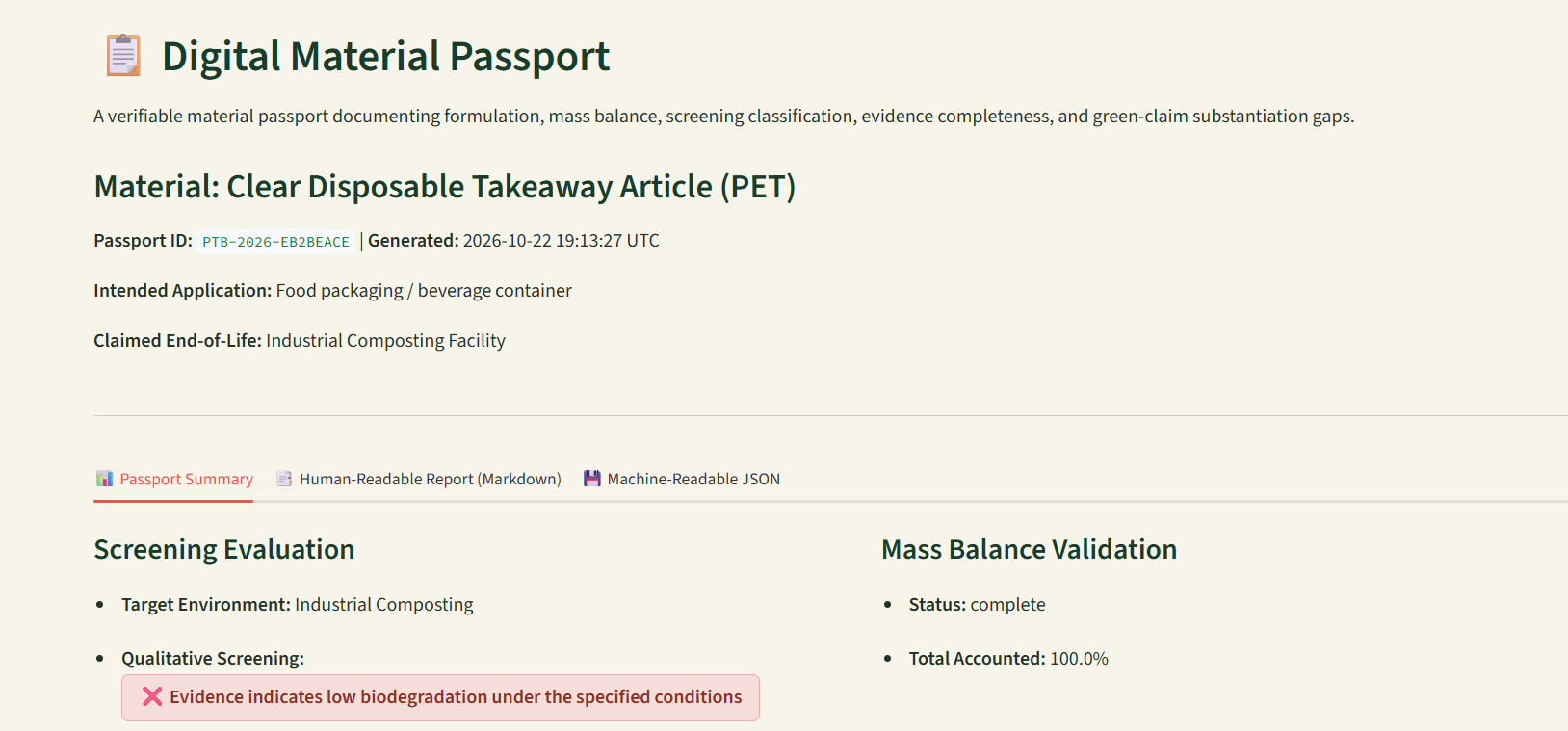
Custom material passport generation
Inspiration## PolyTrace Bio — From Formulation to Environmental Evidence
The inspiration
As a biotechnology student, I've become interested in the materials we use every day and what happens to them after we throw them away. We hear a lot about biodegradable plastics, compostable packaging and eco-friendly alternatives, but it isn't always easy to understand what those claims actually mean.
A material can be made from biological sources without necessarily breaking down in every environment. Something designed for industrial composting may not behave the same way in home compost, soil, freshwater or the ocean. The ingredients mixed into a material can also affect its properties and its end-of-life behaviour.
I wanted to explore a simple question: Can we make it easier to connect what's inside a material with the evidence behind its environmental claims?
That question led me to PolyTrace Bio.
What it does
PolyTrace Bio is an early-stage screening tool designed to support more transparent and informed decisions about plastics, bioplastics and sustainable material sourcing.
The idea is to bring material information, formulation ingredients, environmental conditions and supporting evidence into one workspace. Instead of treating a product's green label as the whole story, the tool aims to help users investigate what a material contains, what is known about it, and what still needs to be verified.
The project is designed around three kinds of users:
- Everyday users who want to understand plastic markings and environmental claims in simpler language.
- Biotechnology and materials researchers who want to examine formulations, ingredients and possible evidence gaps.
- Businesses and procurement teams who need to look more carefully at supplier claims before making material choices.
An important part of the idea is distinguishing between different end-of-life conditions, including industrial composting, home composting, soil, freshwater and marine environments. These should not be treated as interchangeable.
How I built it
I built the project as a Streamlit application using Python. I used AI-assisted development tools to help me get started, organise the application and work through implementation problems while learning how the different parts fit together.
The application includes a material-screening workflow, a formulation-focused workspace, material comparison and material-passport concepts, alongside an interface designed to make the information easier to navigate.
I also worked on structuring material information and evidence references so that the project could grow beyond a simple list of plastic types. The goal is to make the reasoning behind a screening result more transparent, rather than presenting an unsupported answer as a scientific fact.
Challenges and what I learned
One of my biggest challenges was turning a broad sustainability problem into something that could actually be demonstrated as a working application. I had to work through Python errors, application setup and interface issues while trying to make the result understandable to people with different levels of scientific knowledge.
Another challenge was the science itself. Terms such as bio-based, biodegradable and compostable are often used together, even though they do not mean the same thing. I learned that a responsible material-screening tool needs to communicate uncertainty and evidence gaps, not just produce a confident-looking result.
I also learned that building a useful tool is about more than getting the code to run. The information has to be understandable, the assumptions need to be clear, and the limitations must be visible.
PolyTrace Bio is an early-stage project, not a replacement for laboratory biodegradation testing or independent product certification. Its purpose is to explore how material information and scientific evidence could be brought together to support better questions and more transparent supply-chain decisions.
What's next?
My next goal is to expand the reference library and improve the coverage of biopolymers, including seaweed-derived materials such as alginate and agar, gelatin-based films, PLA and mixed formulations. I also want to strengthen the connection between each screening result, the research supporting it and the environmental conditions under which the evidence applies.
I started this project as a way to explore a problem at the intersection of biotechnology and sustainability. I hope PolyTrace Bio can grow into a tool that helps people ask better questions before accepting a material's environmental claims at face value.
The goal is not to label every material as good or bad. It is to make the evidence behind that decision easier to see.
Polytrace bio
Built With
- ai-assisted
- bioplastics
- biotechnology
- chain
- circular
- economy
- environmental
- materials
- python
- research
- science
- scientific
- streamlit
- supply
- sustainability
