
Inspiration
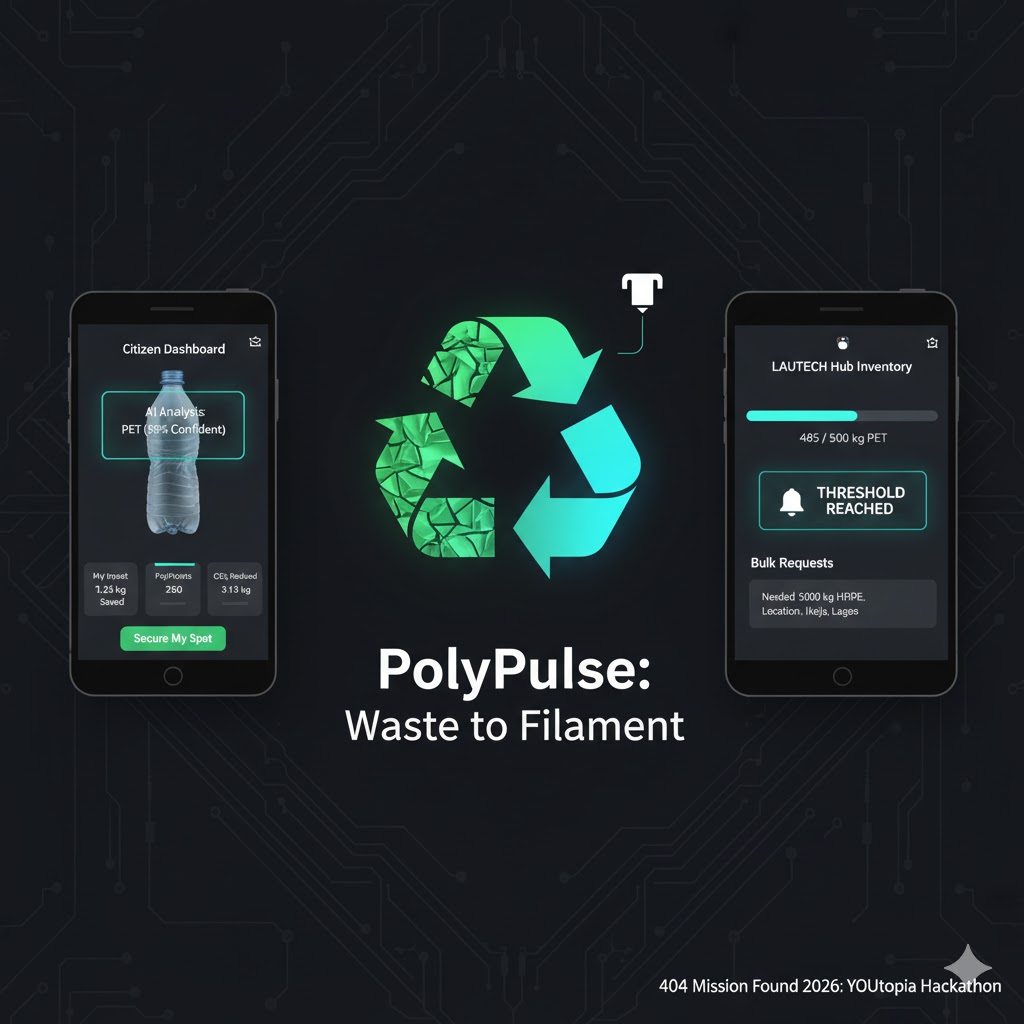
The vision for PolyPulse was born from a paradox: our landfills are overflowing with plastic waste, yet industries struggle to find reliable, high-quality recycled material. We looked at the theme "YOUtopia: Design the future you want" and realized a true utopia is a world where "waste" no longer exists. PolyPulse transforms the linear "take-make-dispose" model into a self-sustaining circular loop where every plastic bottle is a digital asset waiting to be reclaimed.
What it does
PolyPulse is a role-based circular economy marketplace that connects three key players into a seamless recycling pipeline:
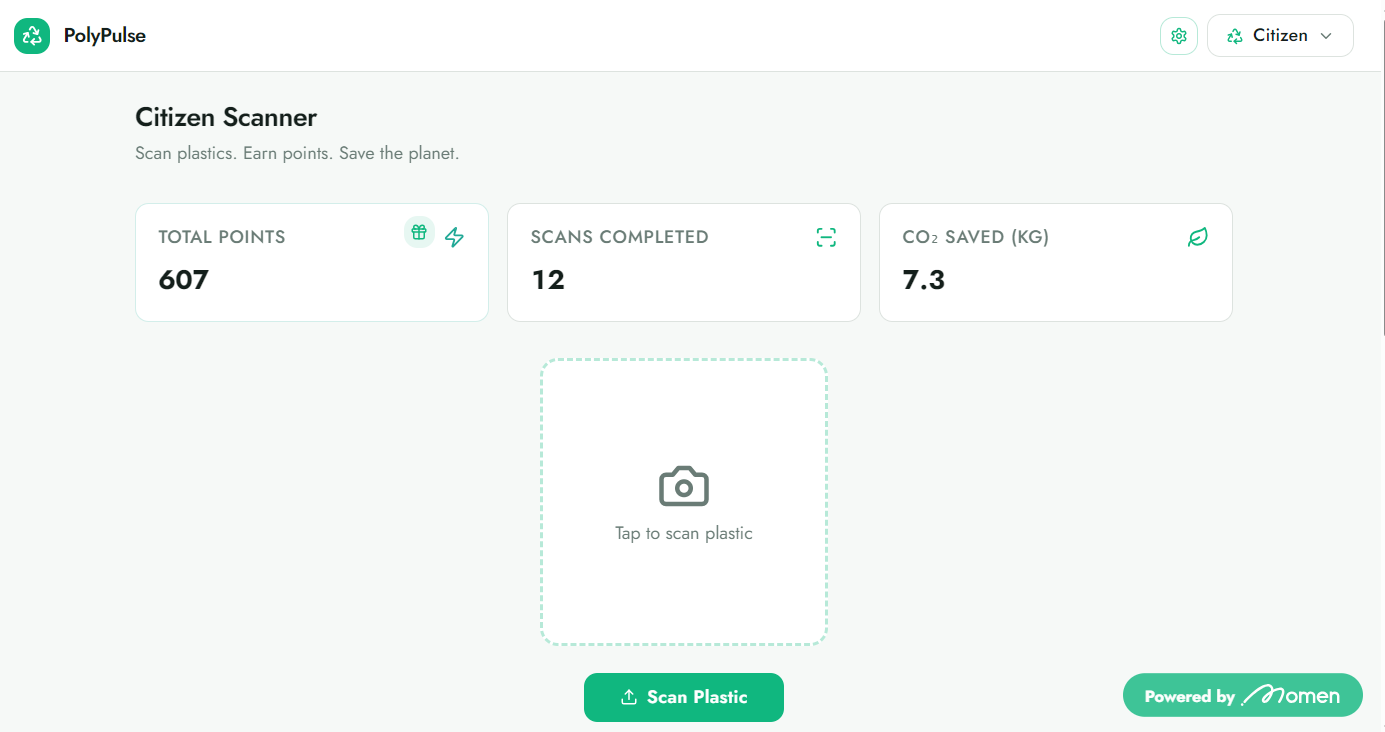
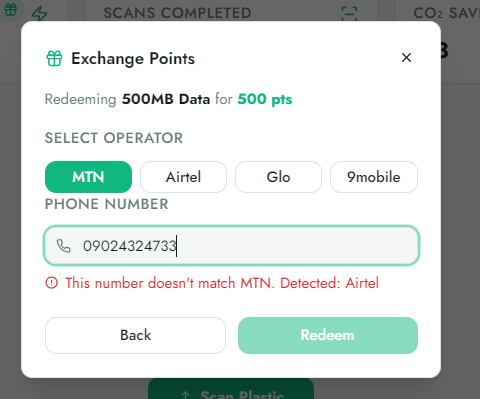
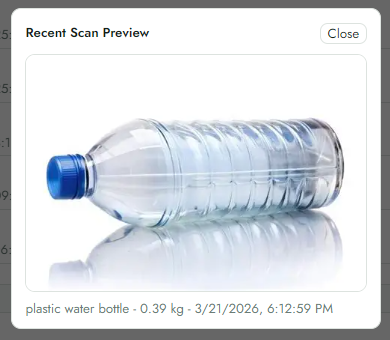
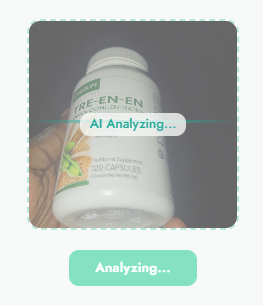
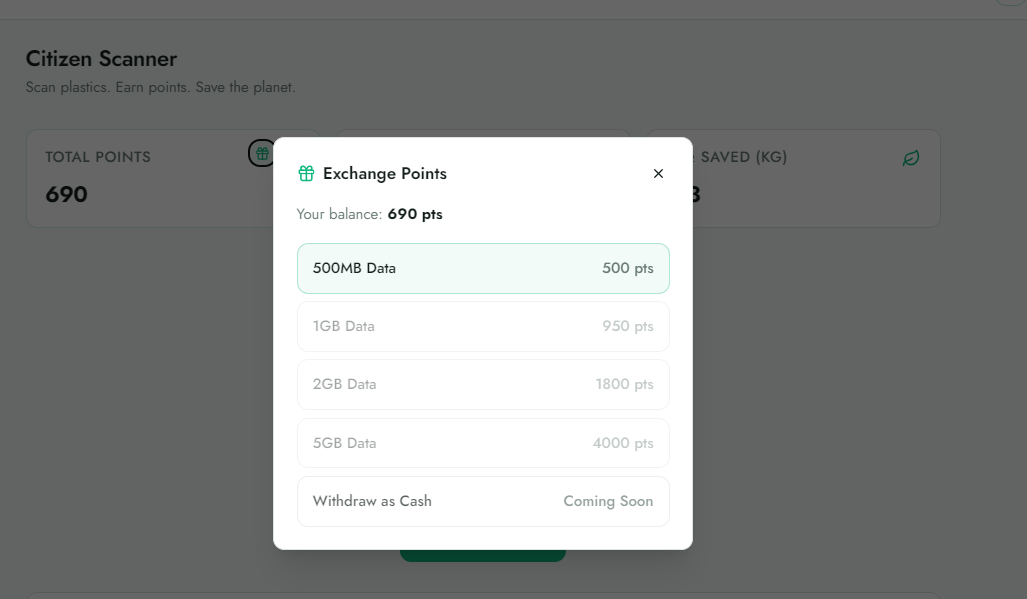
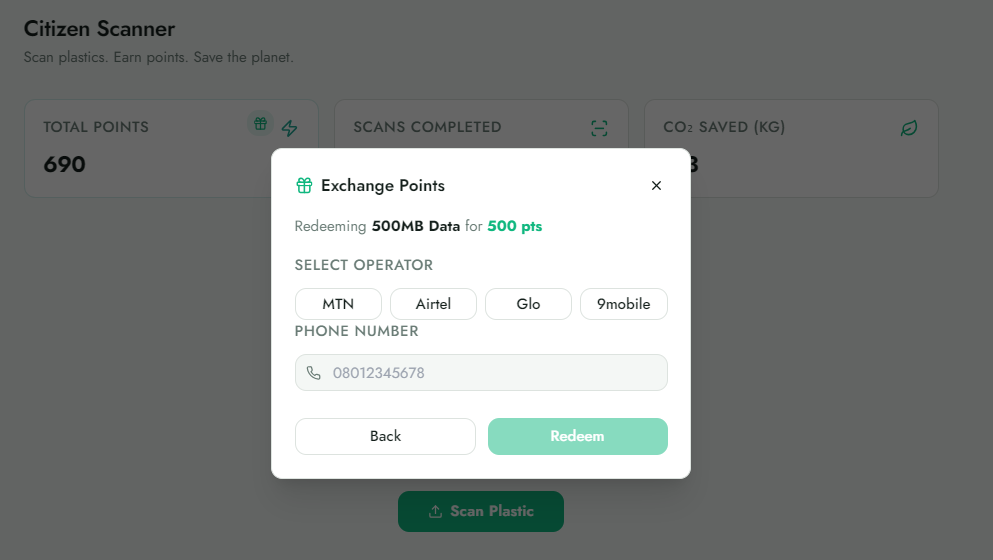
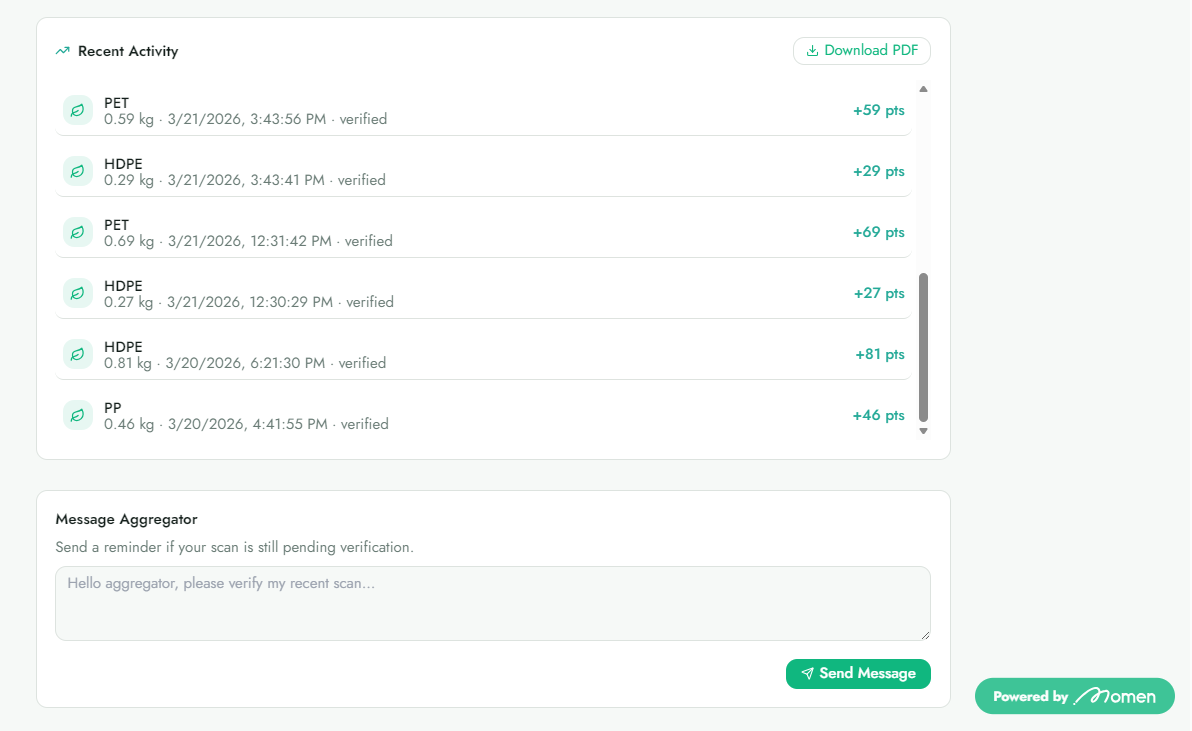
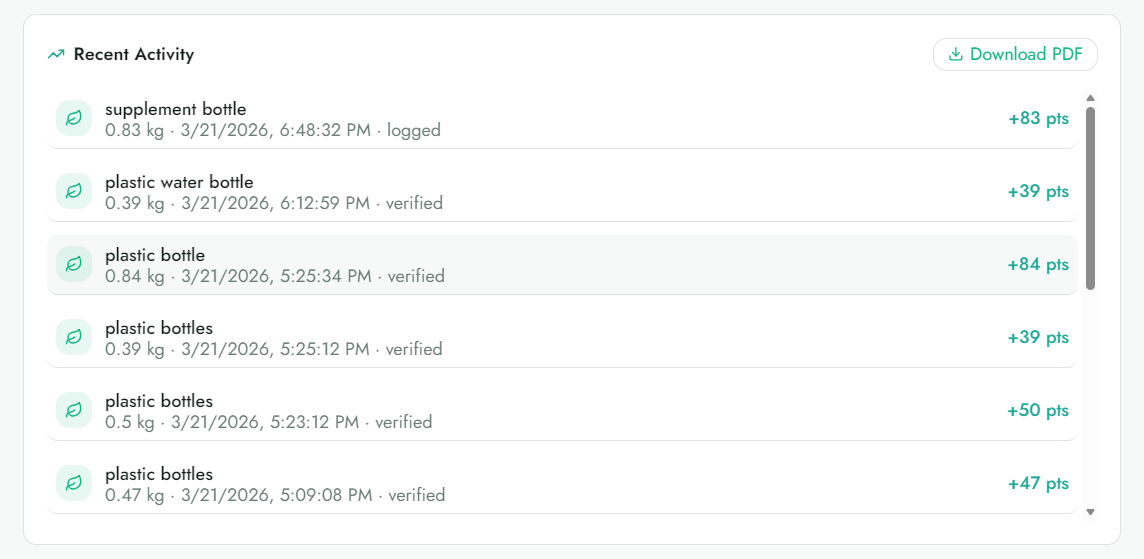
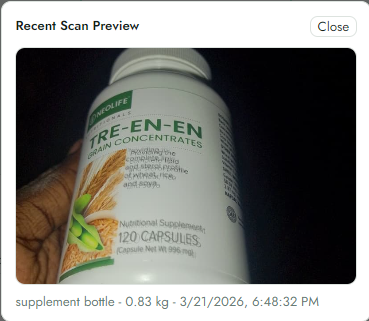
- For Citizens: An AI-powered scanner identifies plastic types using Featherless.ai, rewarding users with points redeemable for data bundles.
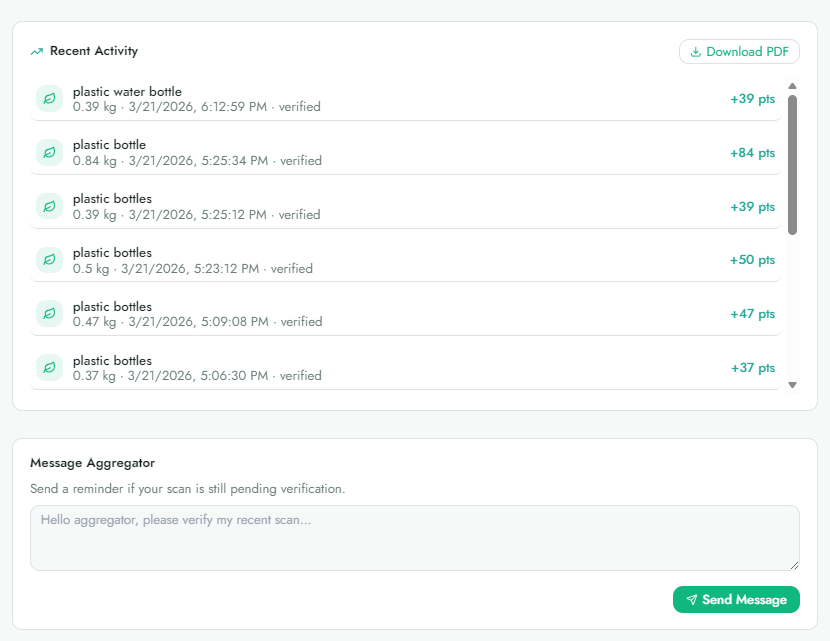
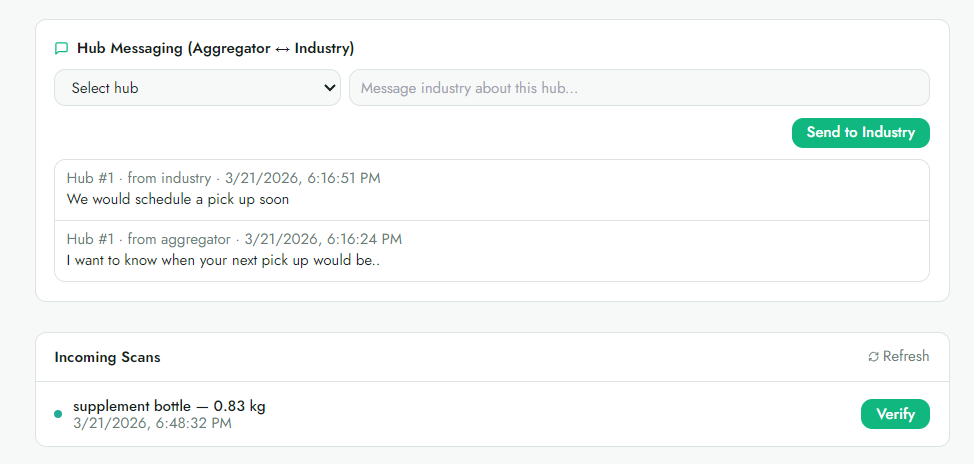
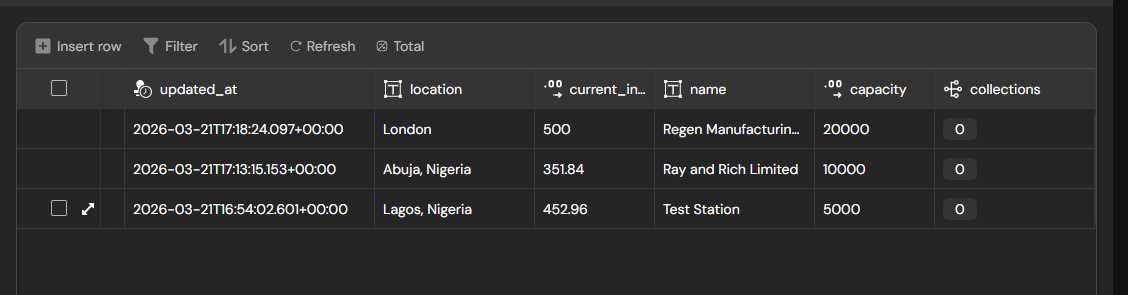
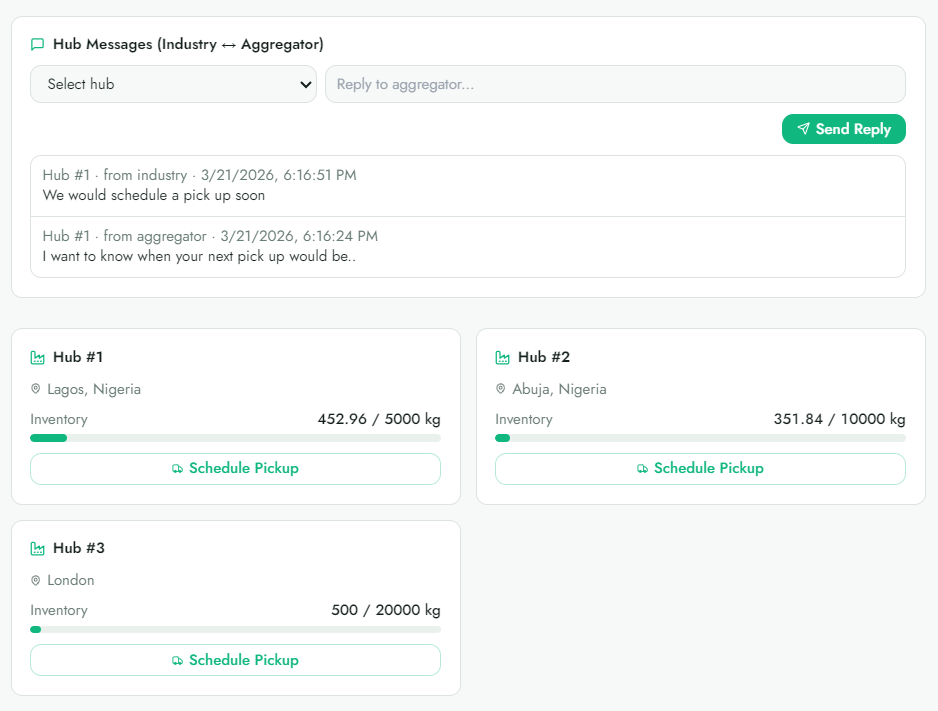
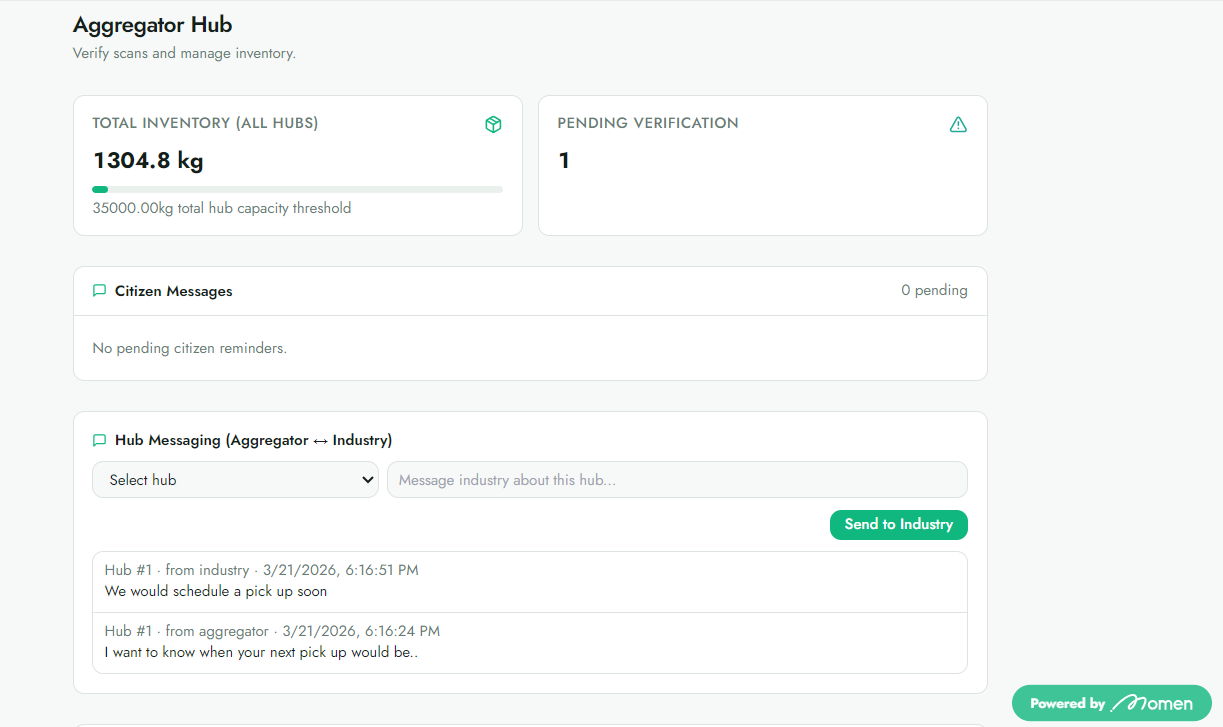
- For Aggregators: A logistical hub to verify citizen scans, manage inventory, and coordinate with industrial hubs through two-way messaging.
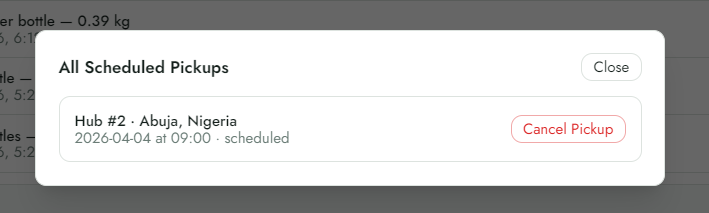
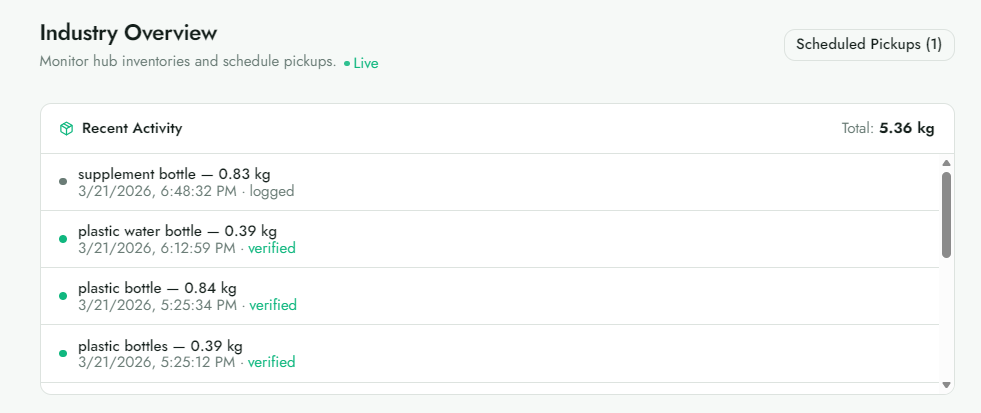
- For Industry: A sourcing portal with a live pickup board and real-time "Red Alert" supply signals when hub inventories hit critical thresholds.
How we built it
We utilized a "Modern Stack for High-Impact" architecture designed for rapid scaling and real-time performance:
- Frontend: Built with React 18, TypeScript, and Tailwind CSS, utilizing the Jost font for a clean, eco-centric design.
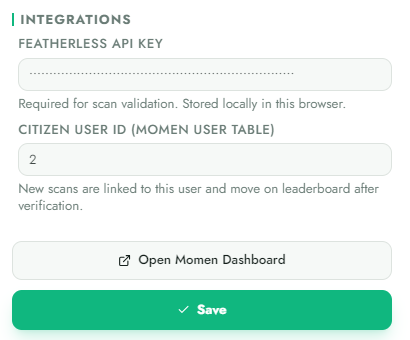
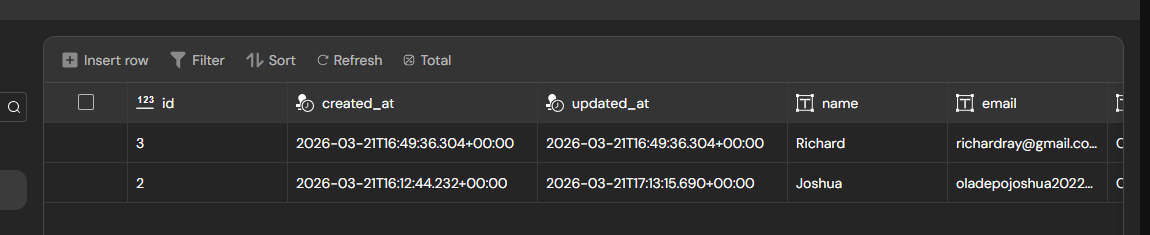
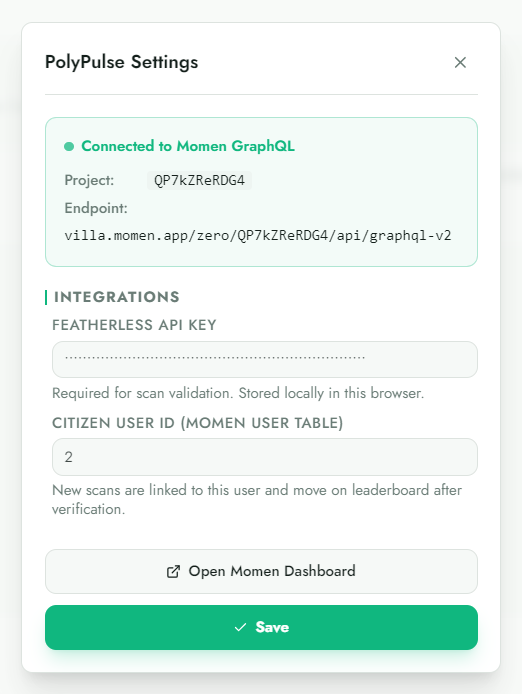
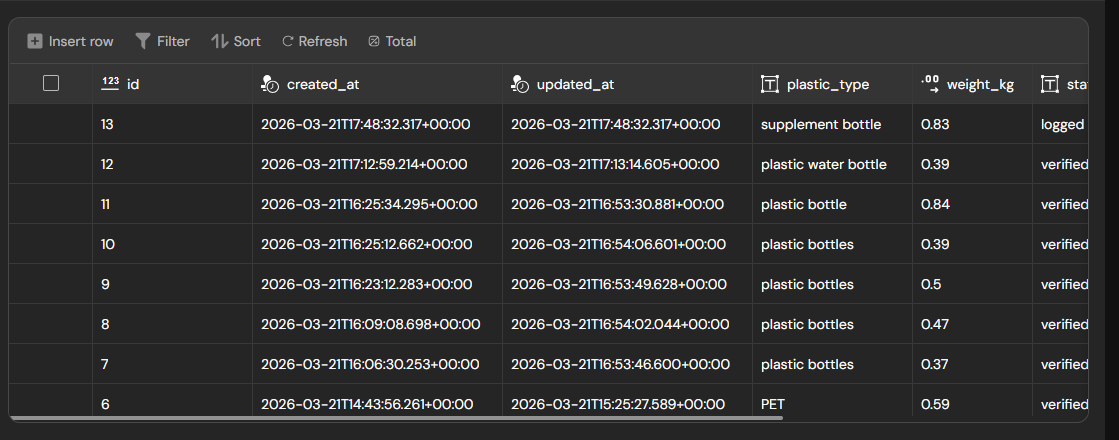
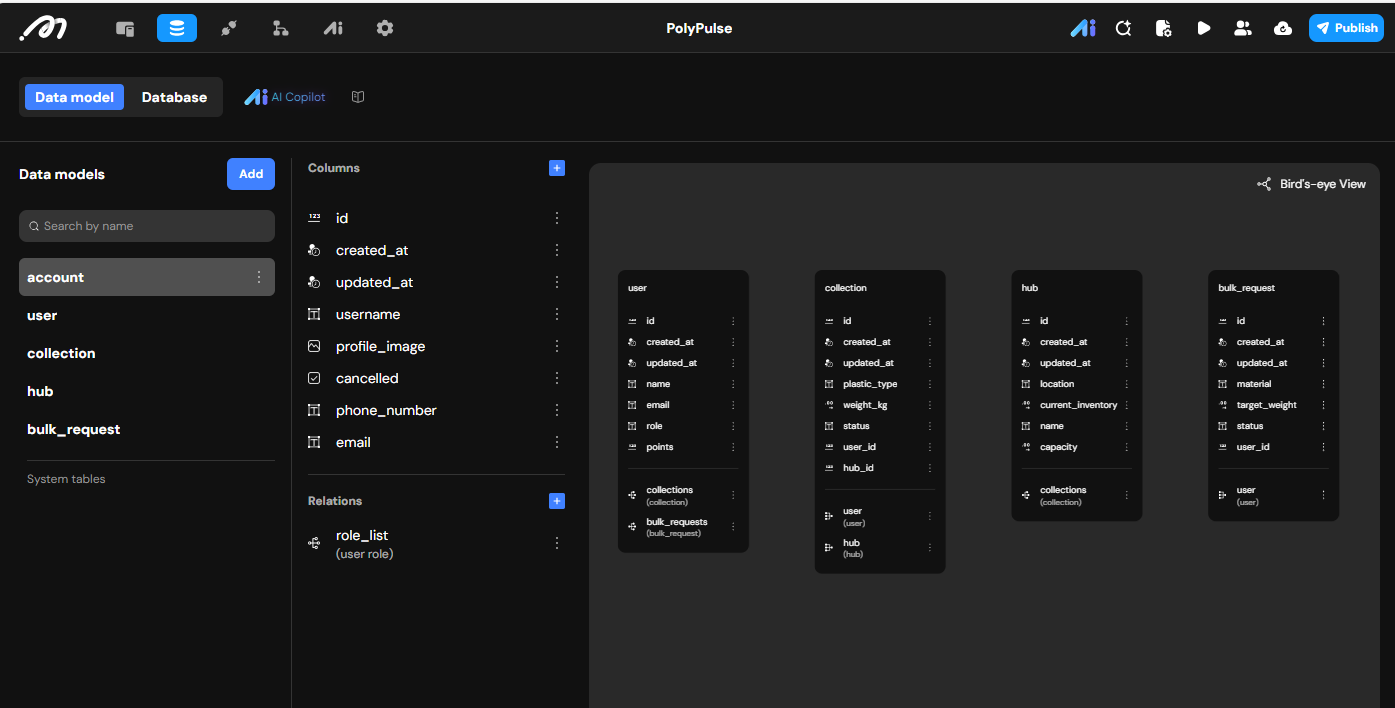
- Backend & Database: Powered by Momen.app, utilizing a GraphQL API for data and WebSockets for real-time subscriptions.
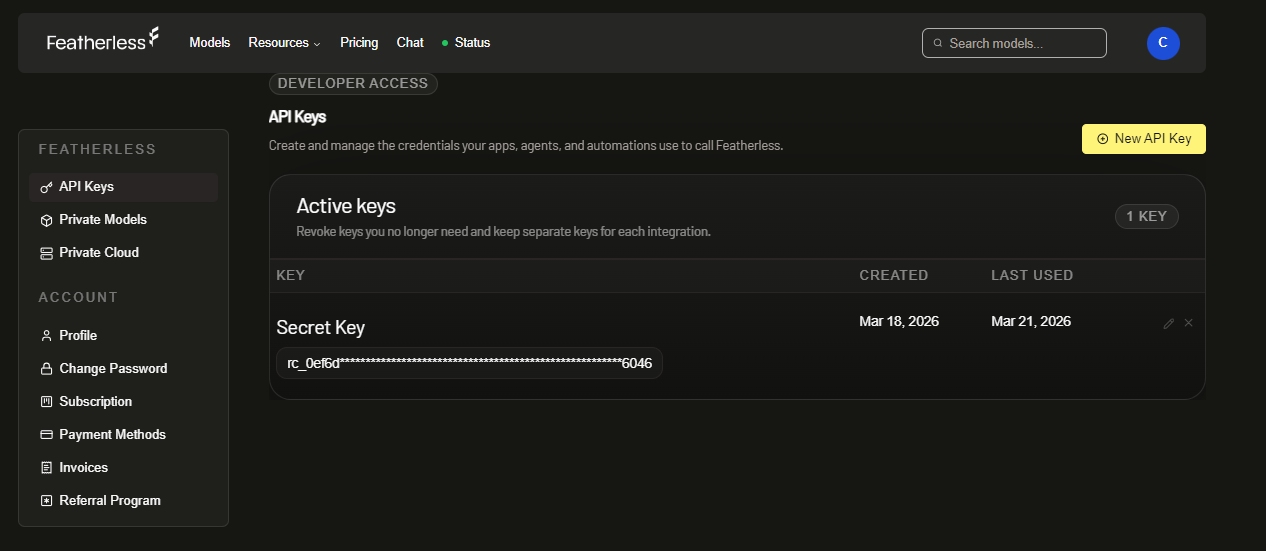
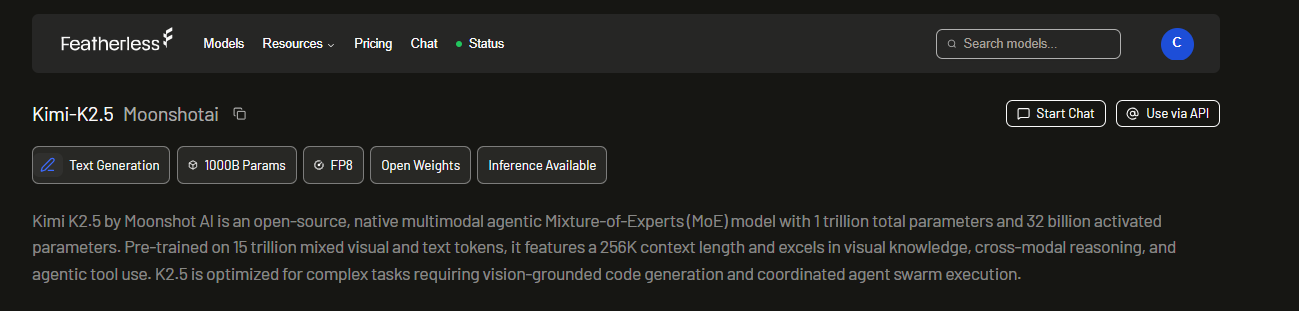
- AI Integration: Integrated Featherless.ai (specifically the
moonshotai/Kimi-K2.5model) to provide real-time plastic identification and validation guardrails. - Logic: Implemented a Verification Chain where an aggregator's confirmation simultaneously increments hub inventory and user rewards via atomic Momen mutations.
Challenges we ran into
- The Logistics Gap: Moving small quantities is inefficient. We solved this by implementing the Aggregator Hub Model, which incentivizes community collection to meet industrial shipping thresholds.
- Real-Time Consistency: Maintaining synchronization across three distinct dashboards was complex. We overcame this by implementing GraphQL Subscriptions, ensuring the "Verify" action acts as a single source of truth for all roles.
Accomplishments that we're proud of
- Live AI Validation: Successfully implemented a vision-ai gatekeeper that ensures only valid plastic is logged, preventing system abuse.
- "Red Alert" System: The automated threshold system that notifies industry buyers the moment community inventory is ready for pickup.
- High-Fidelity Prototyping: Moving from concept to a fully functional environment with real-time data flow in under 48 hours.
What we learned
- Systems Thinking: Sustainability requires better logistics. Making recycling profitable for the "middleman" aggregator is the key to mass adoption.
- Data-Driven Design: Prioritizing technical architecture and real-time metrics over simple UI features leads to a more impactful product.
- Practical AI: AI is most effective when used for practical verification. Using vision models for plastic identification is the best way to ensure material quality.
What's next for PolyPulse
- Hardware Integration: Partnering with hardware like Precious Plastic to allow hubs to process waste into filament locally.
- Regional Scaling: Piloting a "Campus-to-Credit" model at LAUTECH to turn the university community into a self-sustaining PolyPulse hub.
- Expanded Rewards: Partnering with local vendors to turn "PolyPoints" into diverse real-world currency and discounts.
Built With
- apollo-client
- date-fns
- featherless-ai-api
- graphql
- graphql-subscriptions-(subscriptions-transport-ws)
- localstorage
- lucide-react
- momen.app
- react-18
- recharts
- shadcn/ui
- sonner
- tailwind-css
- typescript
- vite
- websocket

Log in or sign up for Devpost to join the conversation.