The problem
AI has made it easier to think, write, learn, and build—but it has also scattered our attention.
A report draft may begin in one AI conversation, lecture notes in another, and a personal project in a third. The result is a growing pile of tabs, half-finished ideas, repeated commitments, and no clear answer to a simple question:
What should I focus on next?
Most productivity tools force everything into one giant task list. But work, learning, and personal life require different contexts.
The solution
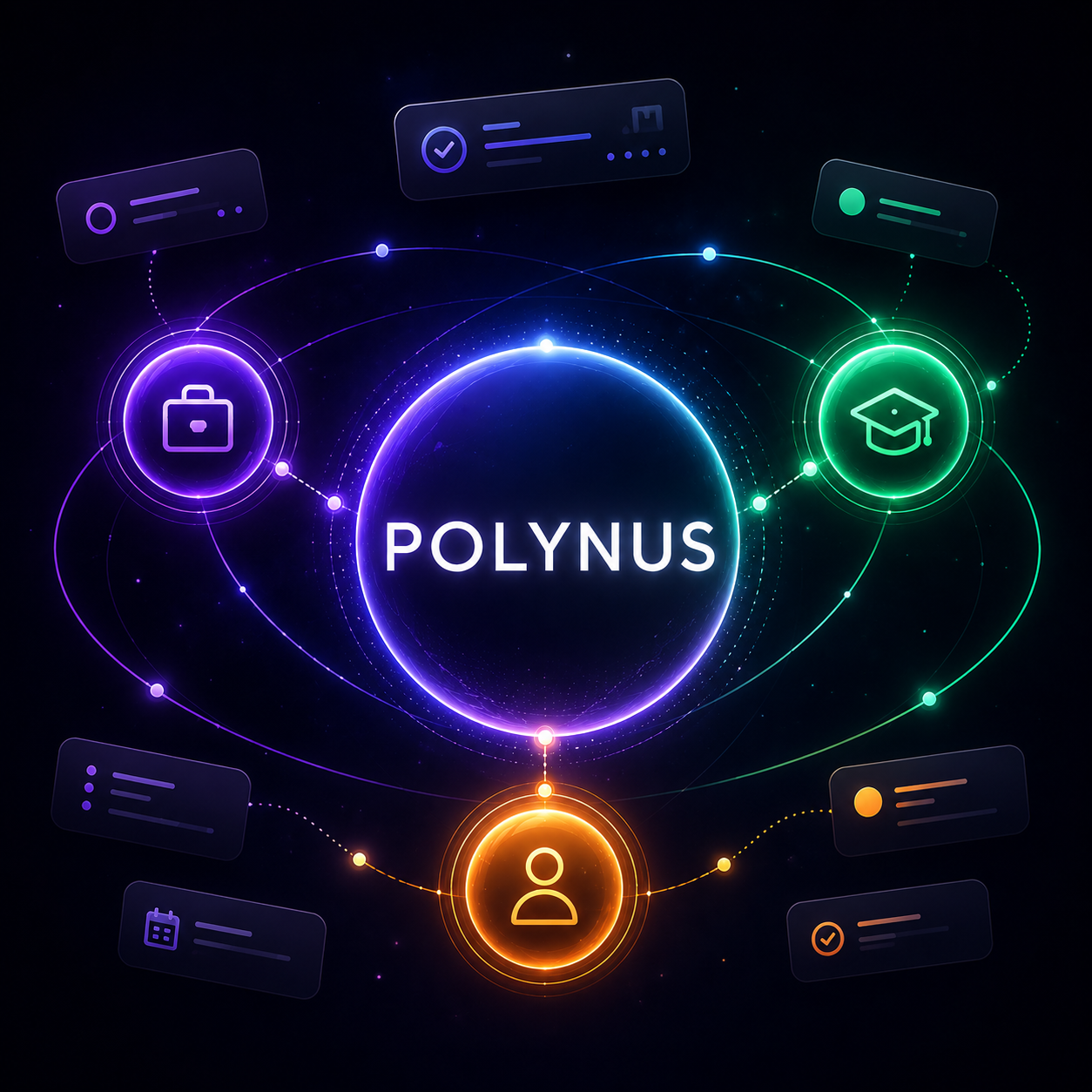
Polynus is a daily command center for people balancing three modes of life:
- Professional — work priorities and commitments
- Academic — learning, research, and study tasks
- Personal — side projects and life admin
It organizes approved AI-work context into the mode it belongs to, surfaces pending tasks, makes AI time visible, removes repeated task noise, and helps the user identify a focused next move.
Rather than asking people to abandon the tools they already use, Polynus creates a calmer operating layer above them.
What Polynus does today
- Supports secure sign-in through Supabase and Google OAuth
- Lets users connect and view AI-context sources in the product flow
- Demonstrates imported/demo AI context being converted into pending tasks
- Categorizes tasks into Professional, Academic, and Personal modes
- Shows a Daily Command Center with priorities, focus plan, mode summaries, time visibility, and a recommendation
- Detects and removes duplicate task entries in the dashboard experience
- Provides a polished landing page that explains the product, user value, trust principles, and roadmap
How we built it
Polynus is a full-stack Next.js application built with React and TypeScript.
- Frontend: Next.js, React, responsive dashboard and landing page
- Authentication and data: Supabase, with Google OAuth
- Deployment: Vercel
- AI-assisted product workflow: OpenAI Codex helped us build and refine UI components, routing, Supabase authentication helpers, dashboard logic, production TypeScript fixes, and the final product narrative.
The interface was designed as an original visual system: a dark, calm command-center experience with three distinct mode colors—violet for Professional, green for Academic, and orange for Personal.
A note on privacy and current scope
Polynus is designed around user permission and clear boundaries. The Build Week MVP uses approved/imported or demo AI-work context; it does not claim to scrape private consumer conversation histories from ChatGPT, Gemini, or Claude.
This is intentional. The next product phase will add opt-in integrations for Gmail, Outlook, Calendar, Drive, and other approved sources, with users controlling what Polynus can access.
What’s next
Now — Build Week MVP
- Mode-aware daily command center
- AI-context task extraction flow
- Task categorization, priorities, and recommendations
Next — Connected context
- Gmail and Outlook
- Calendar and Drive
- More user-approved imports and integrations
Later — Helpful assistance
- Execute smaller tasks
- Smarter follow-up suggestions
- Proactive but privacy-respecting automations
Polynus is not trying to make people do more. It is trying to help them make space for what matters.
Built With
- codex
- next.js
- oauth
- openai
- react
- supabase
- typescript


Log in or sign up for Devpost to join the conversation.