Inspiration
Lost five thousand dollars learning prediction markets the hard way. Built trading bots on Polymarket, got liquidated on the first try, then realized something fundamental: there's no way to practice without risking real money. There's no platform with real prices. And there's definitely no social competition to make it stick. That's when it hit. Prediction markets are exploding in 2025, but everyone learns by burning money. Polymarket has 580 million users globally. Around forty million active traders every month. Two and a half billion dollars in annual volume. Yet there's still no paper trading platform that matters. No one uses real prices. No way to compete with friends. Nothing that feels like Bloomberg for crypto. Here's the thing about Bloomberg. They make seven billion dollars a year from three hundred twenty thousand users. That's twenty-four thousand dollars per user per year. Why? Because Bloomberg isn't just data. It's a habit. You check your messages, you see the markets, you place a trade. You switch platforms? You lose access to everyone. The network becomes the product. We wanted to build that for prediction markets.
What it does
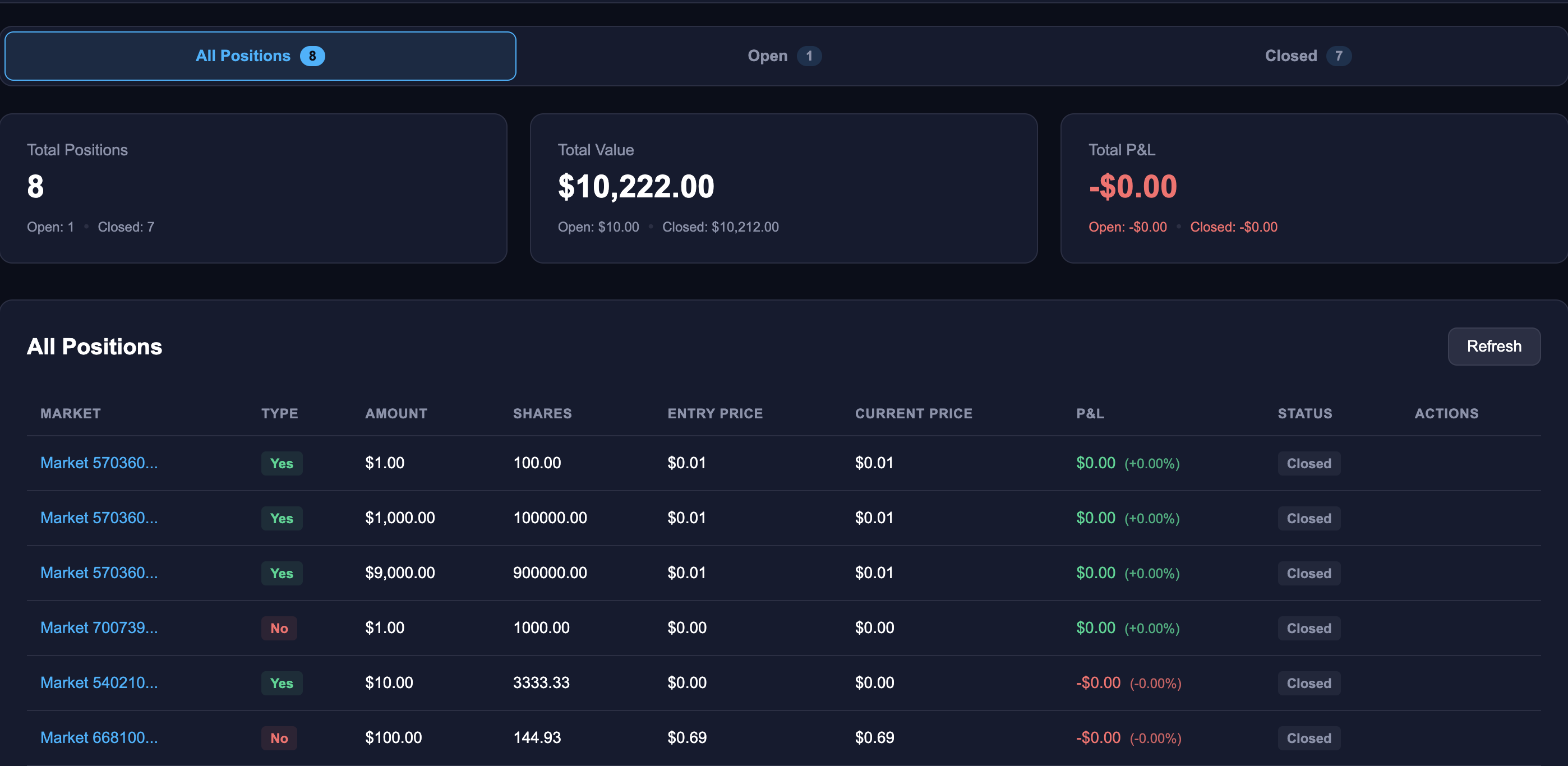
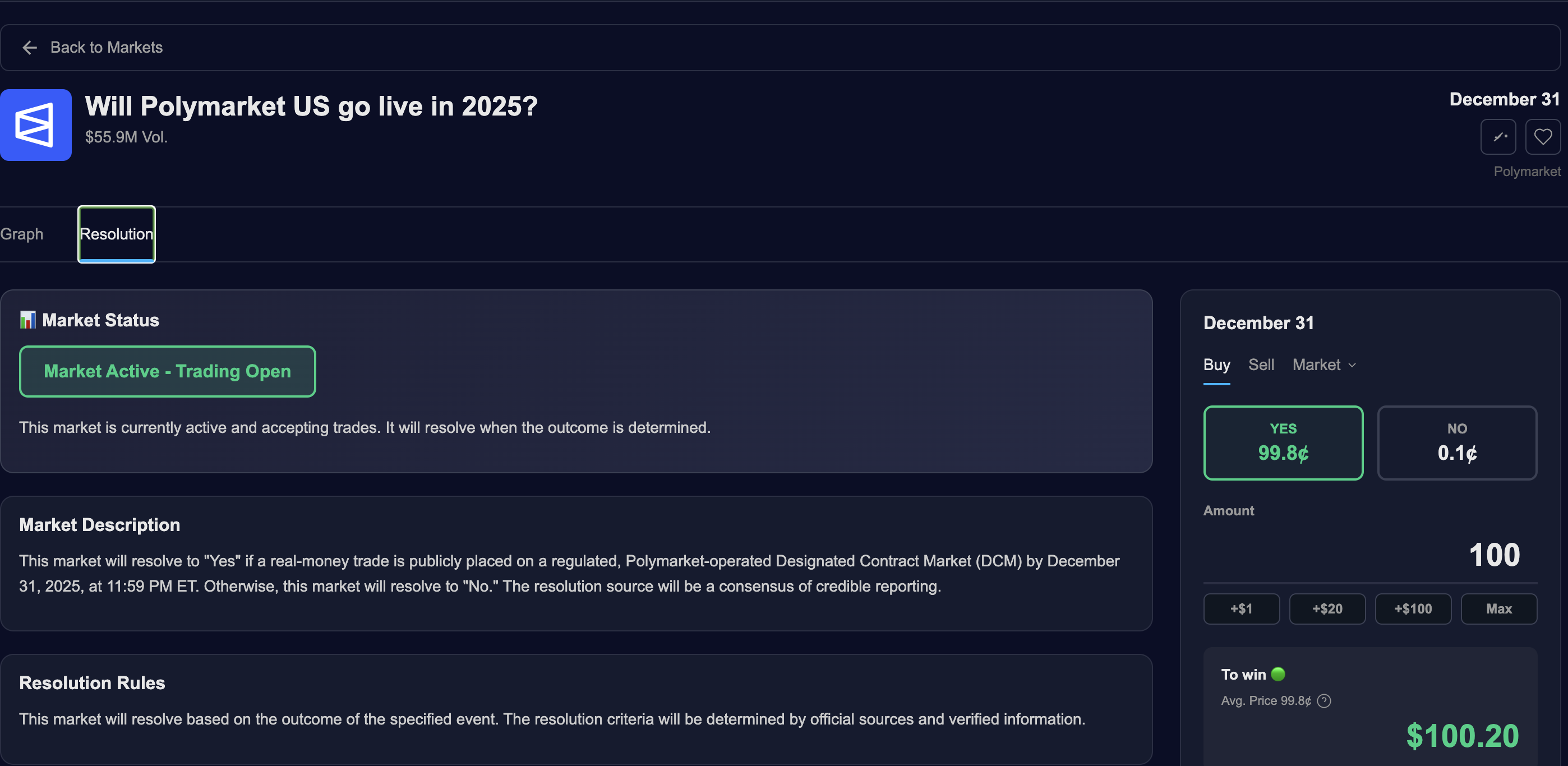
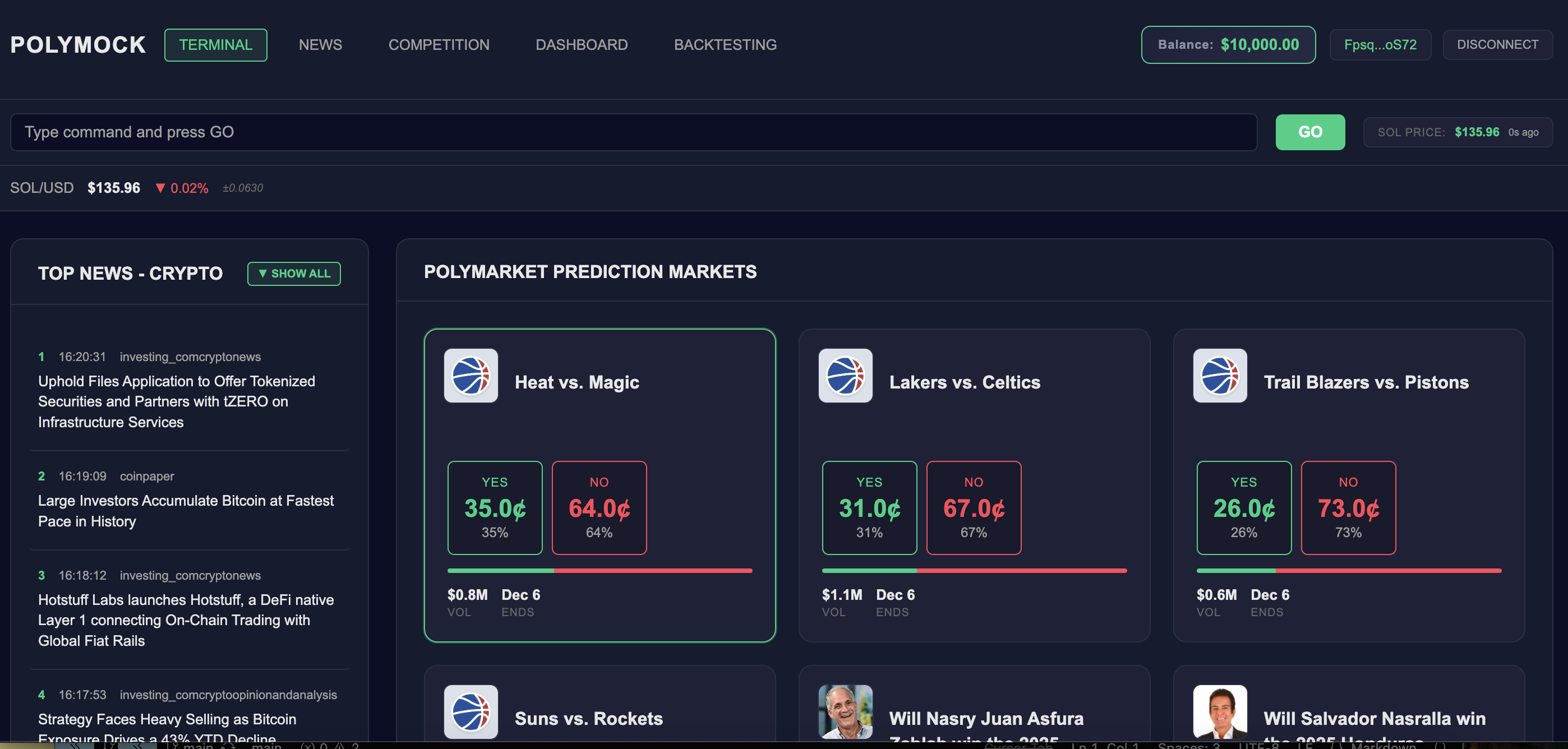
PolyMock is a paper trading platform for prediction markets. You sign up, get ten thousand dollars in paper trading balance, and start trading. No real money spent. No gas fees. Just you and the markets. The key difference is that prices are real. They come directly from Polymarket's API, so you're trading at the exact same prices as everyone else. That means you're actually learning something useful instead of practicing with fake numbers. You can see your portfolio track in real time, watch your wins and losses calculate as prices move, and invite friends to trade alongside you. It's competitive, but it's focused on the core thing : can you predict outcomes better than others? Real prices, zero friction. Once your friends are on PolyMock, you've got a reason to check back.
How we built it
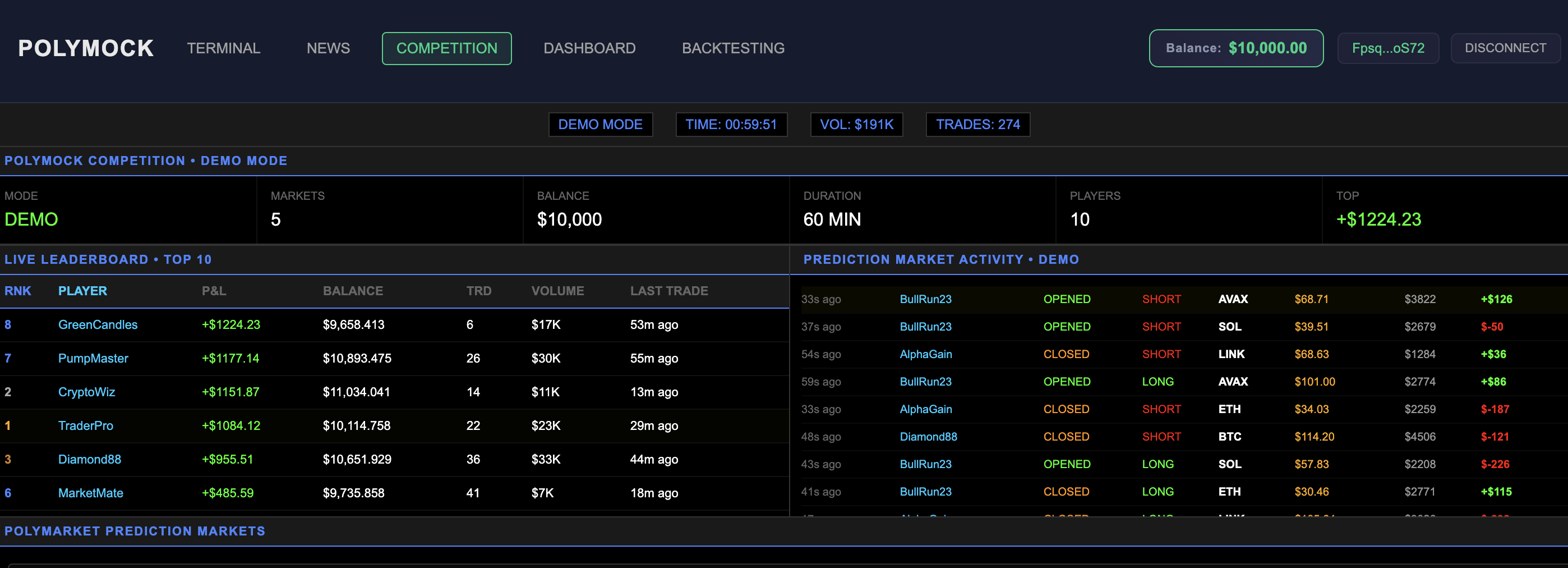
We integrated Polymarket's API to fetch all available prediction markets in real time. The frontend is a React application that replicates Polymarket's exact UI design using real-time data visualization. The paper trading engine tracks your virtual portfolio in real time, calculating your profit and loss as prices move. We built a system that ranks users by their returns and win rate. For fast order execution without any gas fees, we used MagicBlock's Ephemeral Rollups to handle high-frequency trades with instant settlement.
Challenges we ran into
Managing PDA accounts for each user was a bit tricky. Every user needs their own derived account to hold their paper trading balance and position data, but deriving these accounts consistently across frontend and backend while keeping them synchronized was a constant debugging challenge. We had to carefully manage account ownership, rent exemption, and account closure logic to avoid state inconsistencies. Calculating accurate backtesting metrics turned out to be the biggest technical problem. We needed to compute not just profit and loss, but also win rate, return on investment, Sharpe ratio, maximum drawdown, and trading frequency. Doing this efficiently without recalculating everything from scratch on every single trade required careful optimization of our data structures. Handling edge cases like what happens when a market resolves while a user is holding a position or how to calculate partial fills at different price points took longer than we expected.
Accomplishments that we're proud of
We built a fully functional paper trading platform that integrates with live market data in just a few weeks. The UI matches Polymarket's design closely enough that users feel immediately comfortable trading. You sign up, get your balance, and start trading with zero friction. That's what matters. We also managed to integrate real Pyth prices instead of using mock data. It means PolyMock is actually useful for learning, not just a game. Users aren't practicing with fake numbers; they're practicing with real prices.
What we learned
When you genuinely believe in what you're building, you go all in. We were obsessed with PolyMock from day one. Obsessed with getting the UI right, obsessed with making sure prices were accurate, obsessed with the details that don't matter until they do. That obsession is what pushed us through the hard technical challenges instead of shipping something half baked. This is what hackathons should be. Pick something you actually love. Then go all in on it ;-)
What's next for PolyMock
Right now we're focused on getting users and gathering feedback. We want to build a sustainable business model with a small resolution fee on profits plus performance based copy trading fees. We want to build streaks so users form daily habits. Hit your daily streak and unlock premium features. We plan to add dynamic personas that evolve weekly based on your trading behavior. You become The Whale Watcher or The Sniper and your profile becomes shareable. We're also planning to launch Smart Groups where users can join communities like Analysts Group, Crypto Degens, and compete with each other. We're also thinking about narrative tracking. Instead of just picking random markets, users subscribe to narrative threads about AI or politics or crypto regulation, and only see markets related to that narrative. We'd deploy an AI agent that fetches news and surfaces bet recommendations aligned with each narrative. That makes trading feel less random. Long term, we see PolyMock as the default place where everyone in crypto practices prediction markets. But first, we need users. Real users who tell us what's working and what isn't. That's the focus right now.
Built With
- magicblock
- rust
- typescript
- vite

Log in or sign up for Devpost to join the conversation.