Inspiration
The initial idea came from an old Adam Neely video where he describes the recording and monitoring setup that their band has. In the video he mentions that they started out with recording every rehearsal with a couple of phones, because the more phones are recording, the better the sound quality. So I tried that with my band and the results were surprisingly positive - we finally had an inexpensive way to hear everything that we played. What wasn't positive was gathering all the recordings from each phone, importing them into a DAW, aligning them and exporting a single mix. I knew i could automate that that process.
What it does
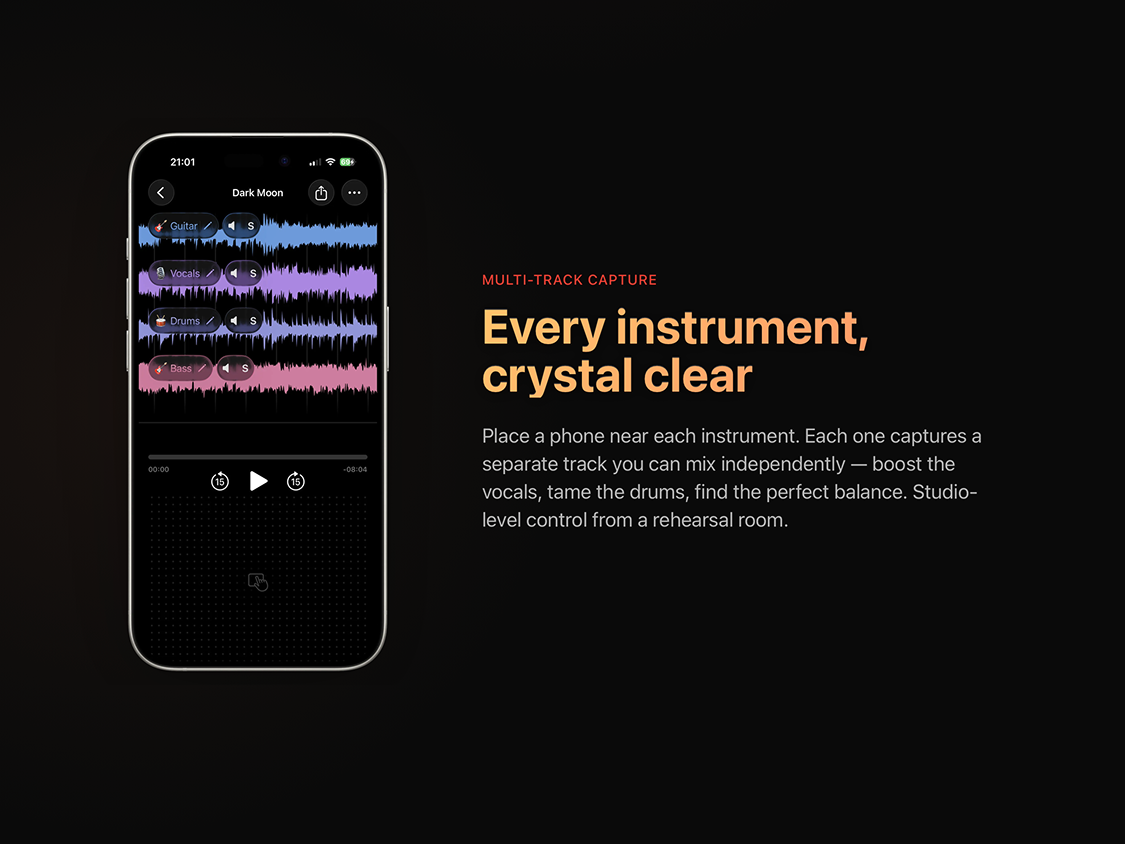
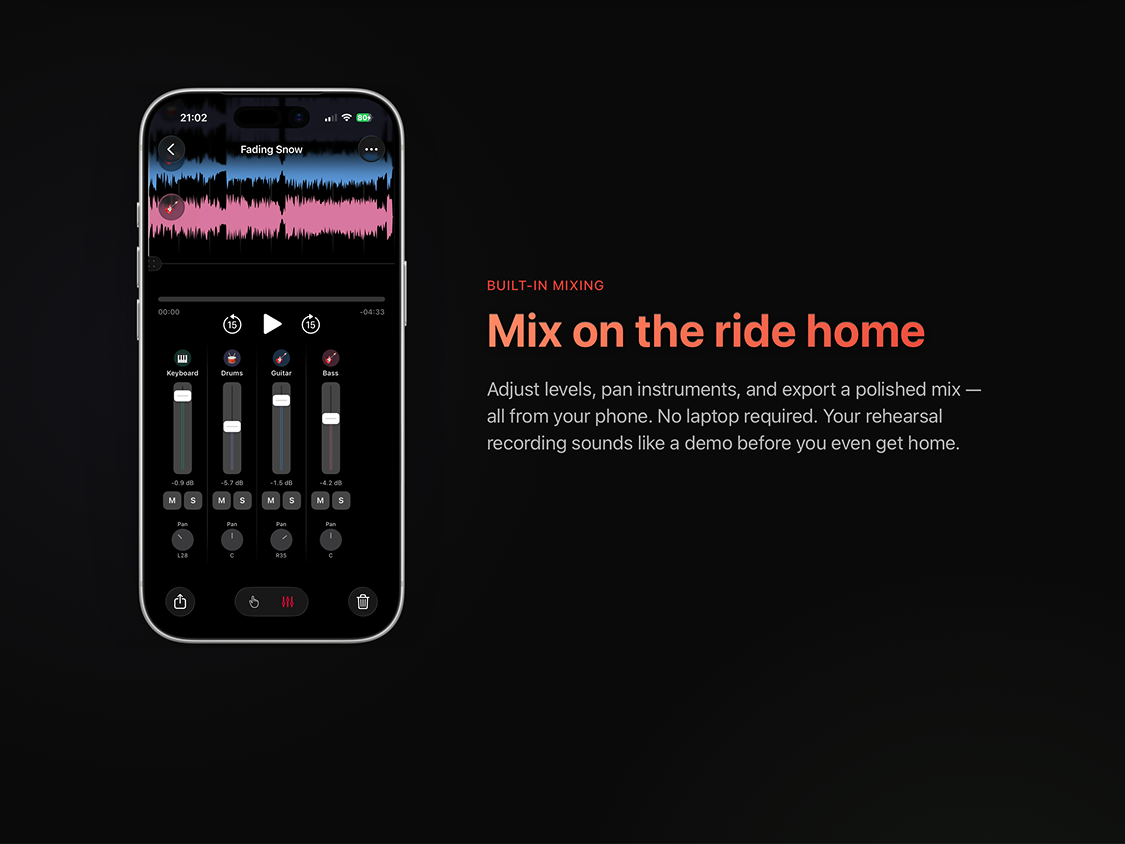
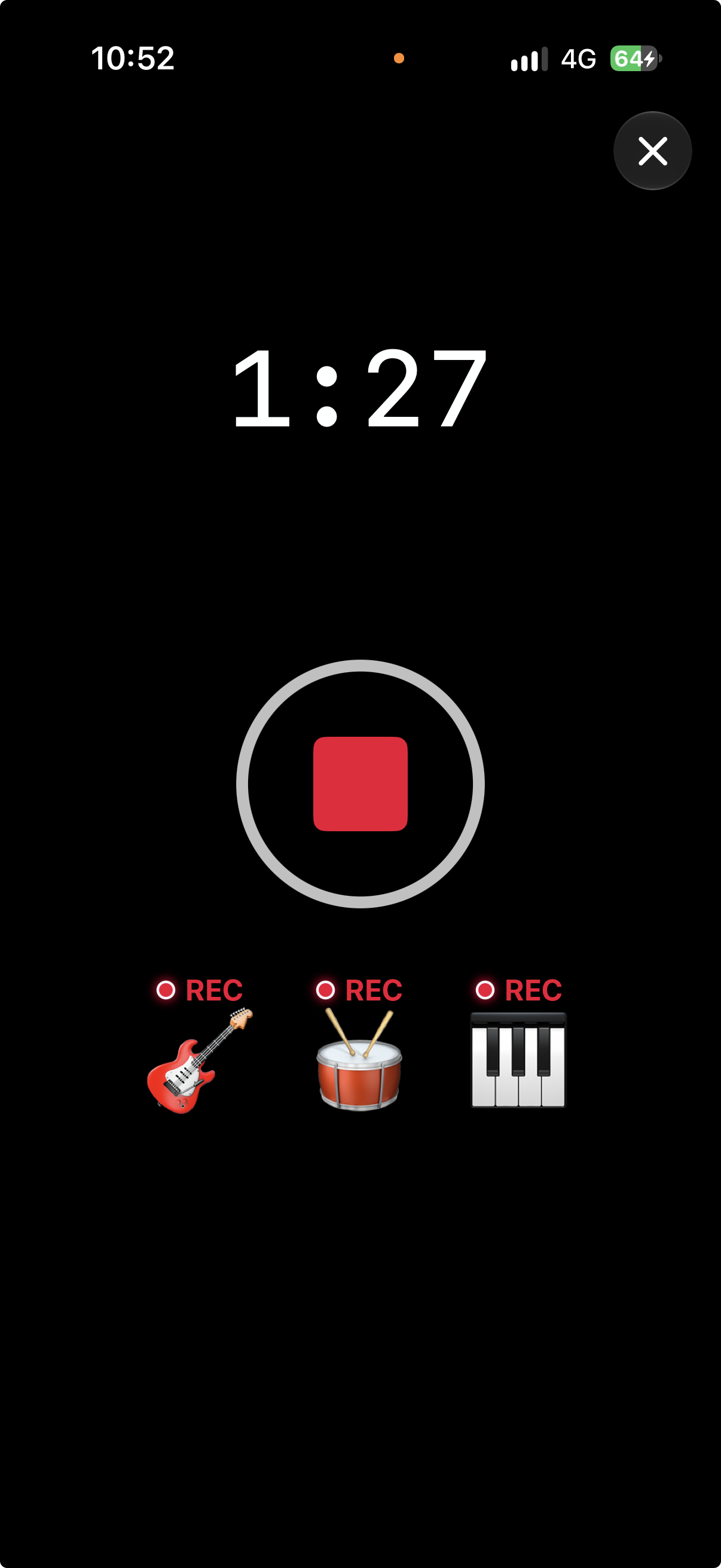
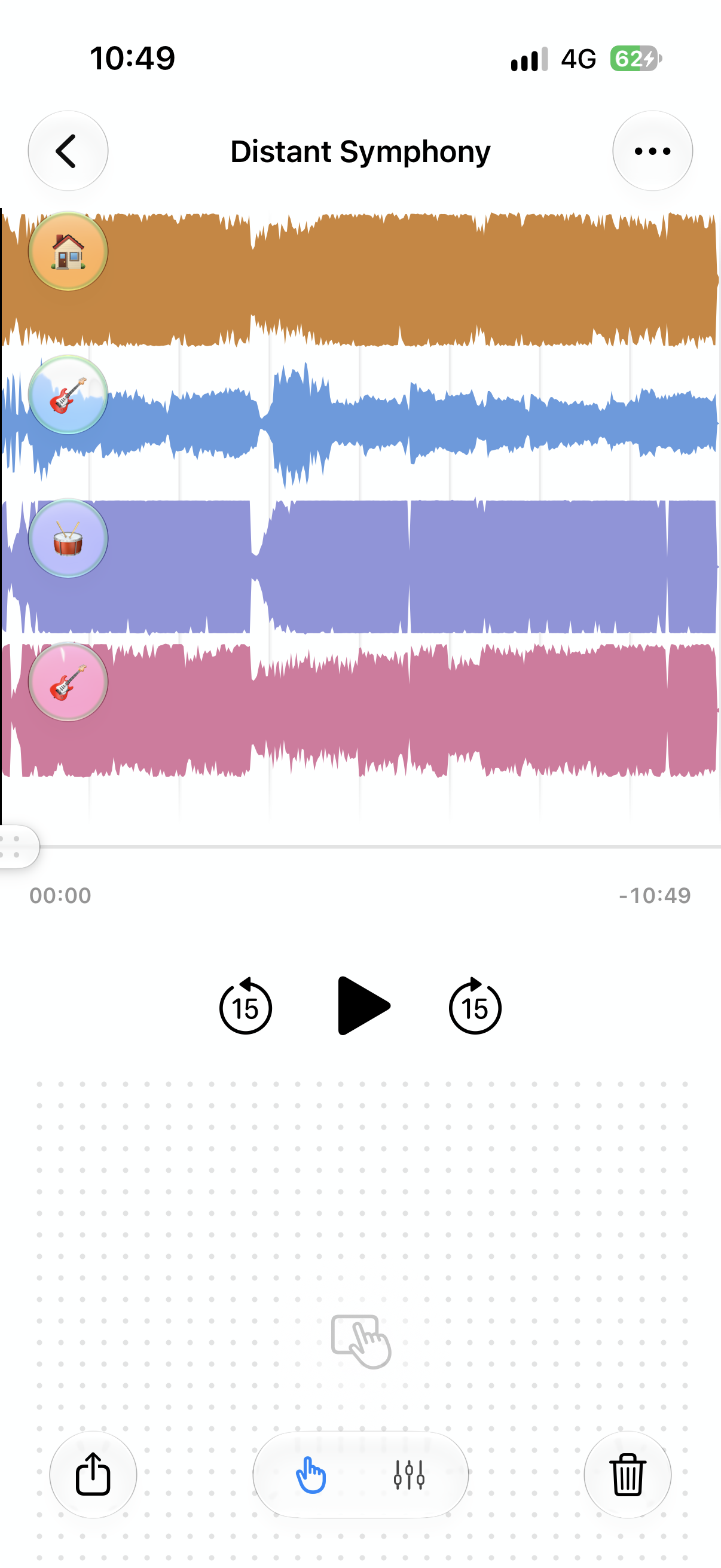
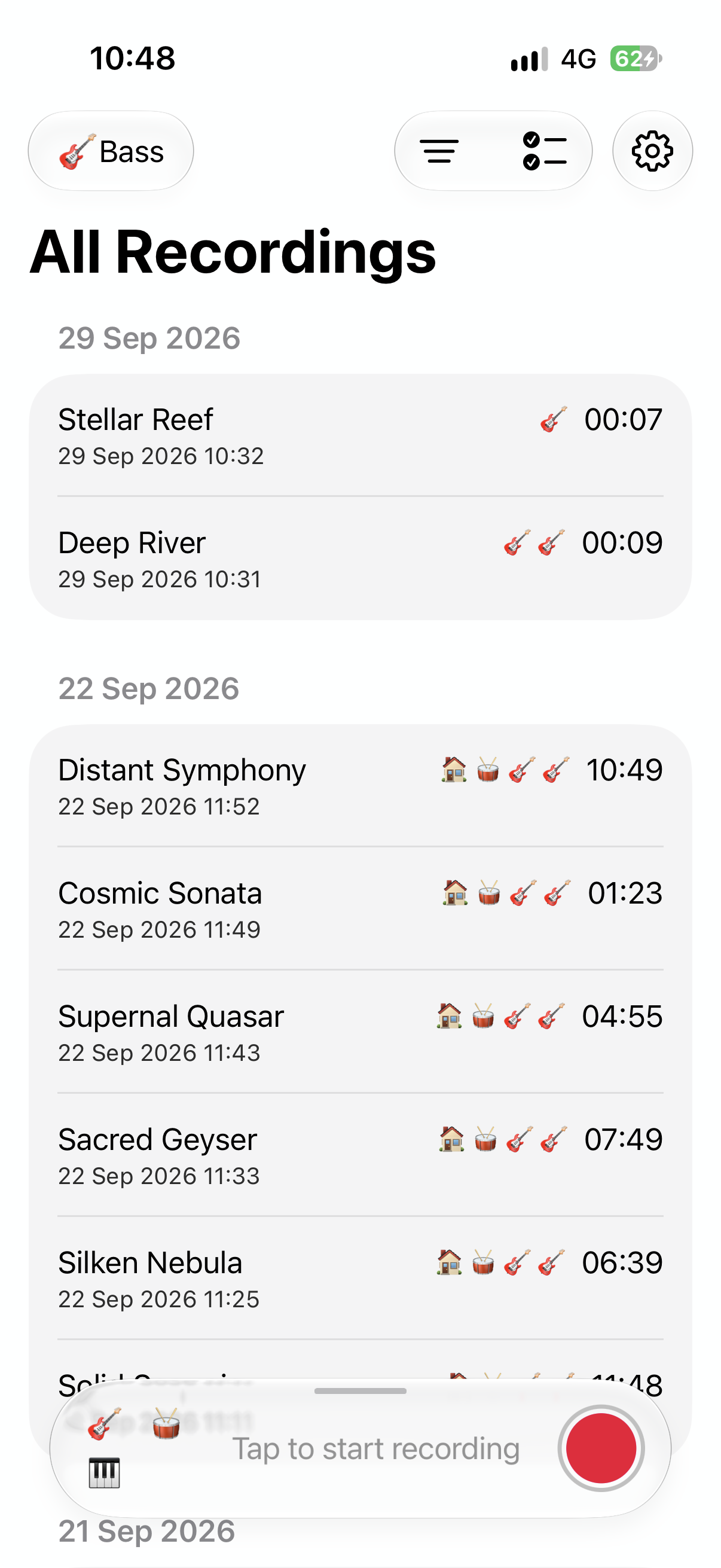
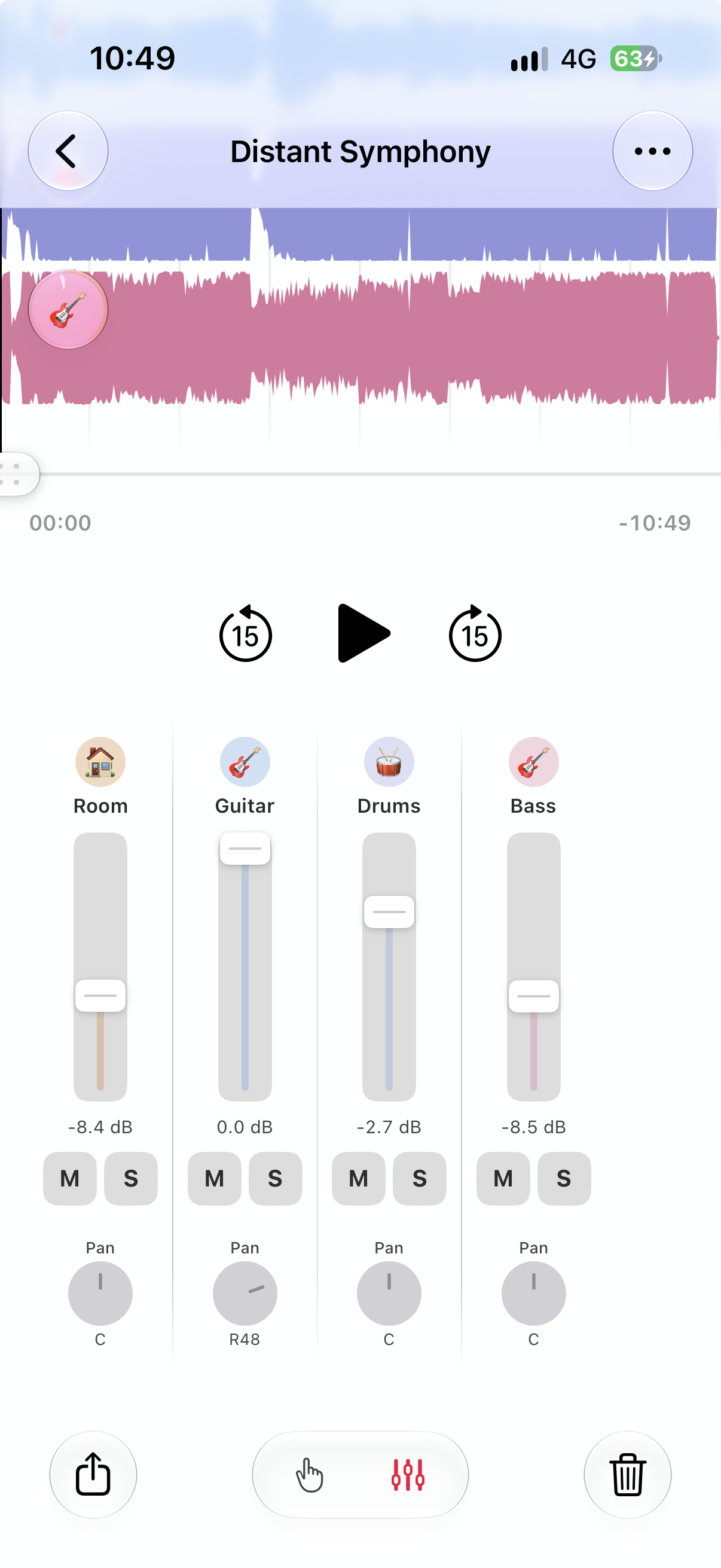
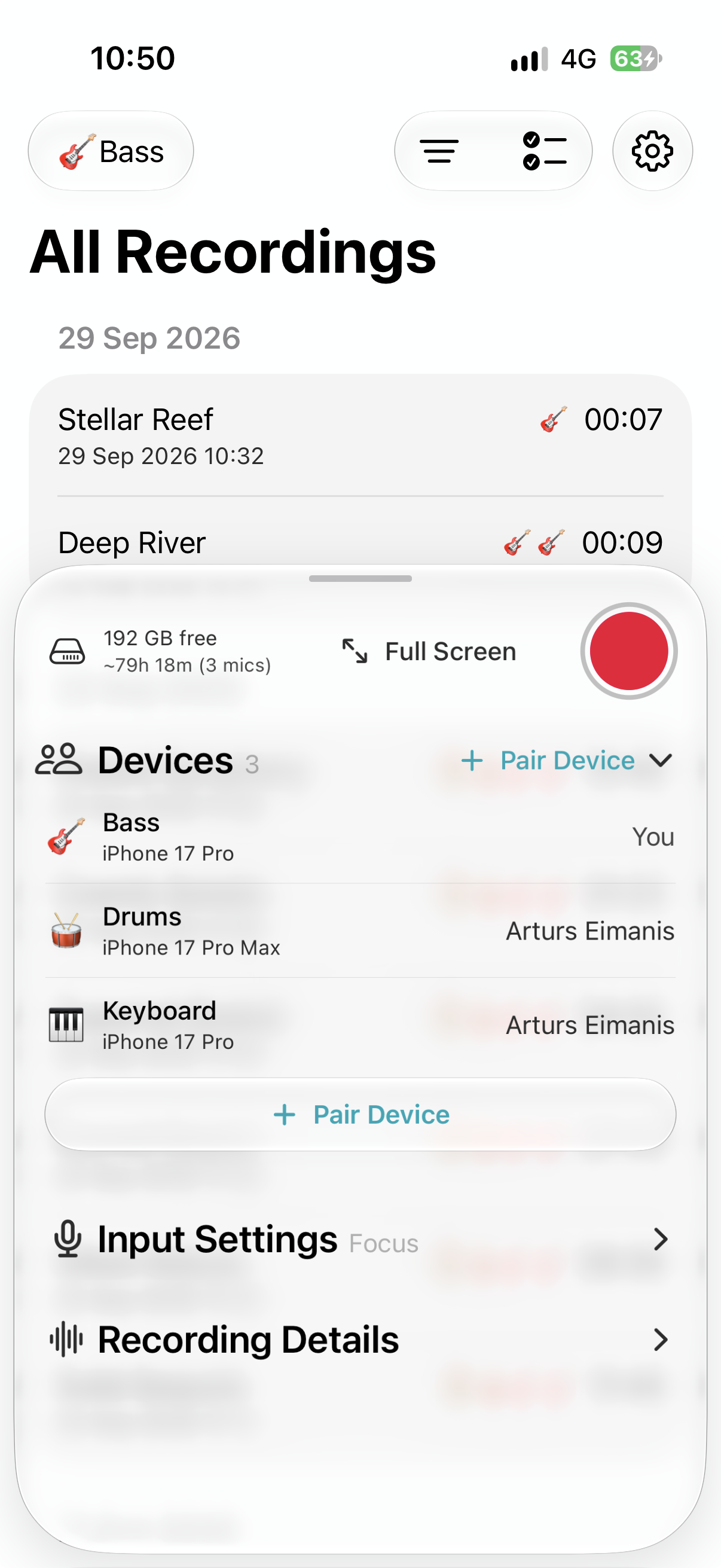
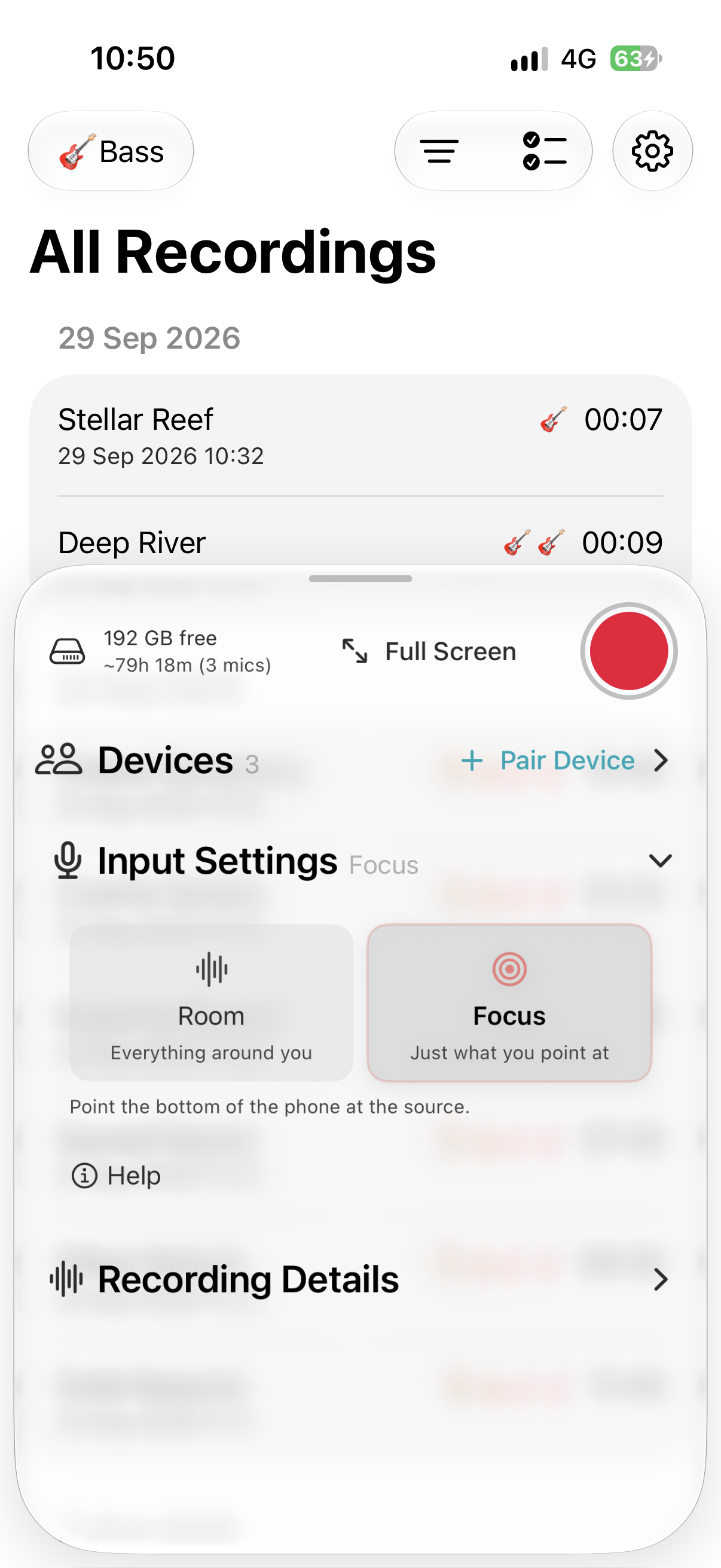
It's Voice Memos on steroids - instead of a single phone recording the room, it can be 8+ phones recording at the same time, each phone placed right in front of a sound source. After the recording every participant has every individual track and they can even make a personalized mix. Does the drummer don't care what the guitarist is doing, but needs to lock in with the bass? Turn down the guitar and turn up drums and bass. Or simply mute or solo specific tracks to listen to specific details.
How we built it
We did it phase by phase, trying to decrease the manual work of exchanging the tracks, aligning them and exporting a mix by hand each time. We used the app during every rehearsal and looked for things that weren't working or could be improved. Every rehearsal we had some new changes to test out and with every new version there was less and less manual work required to have a good-sounding mix from a rehearsal.
Challenges we ran into
The first challenge to overcome was implementing a peer to peer network and a communication framework, so that each band member wouldn't have to remember to start the recording on their device. One tap to start or stop the recording on all connected devices. This communication framework also solved the problem of exchanging the recordings between phones - no more chasing band members for the files on their phone. I still had to manually align all the tracks in a DAW afterwards, but this already saved me significant amount of time.
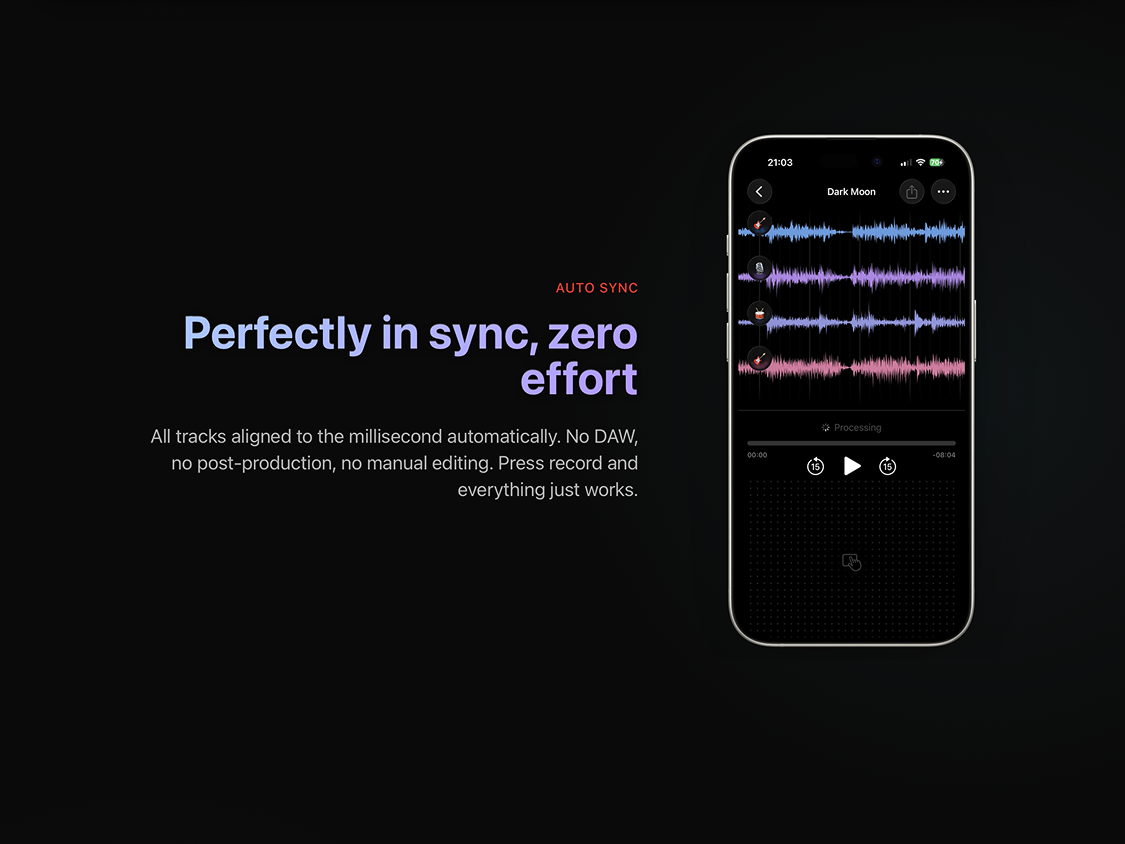
The next big challenge was implementing automatic time alignment, so the app syncs up all the recordings automatically. Once we got that working somewhat reliably, the app started to feel like magic - Just one tap to start a recording, one tap to end it and you have a multi-track recording where you can hear every instrument crystal clear. It often replaces Spotify for me - listening to your own music has never been this easy!
Accomplishments that we're proud of
First of all we are most proud of going from an idea to a working and published product. It took a long time, but we're finally releasing it publicly. A lot of ideas never get out of the prototype phase, but we're so happy that we have taken this idea so far.
Secondly, we are really proud about the video shoot that we did to get promotional materials for the app. We had 3 bands of different genres perform for 20 minutes each and we recorded the audio with PolyMic and filmed everything. The videos turned out great and everyone was super excited to participate in the shoot. We'll start posting the content on the polymic.app instagram account soon.
What we learned
We've learned so much about audio engineering, recording, room acoustics, iPhone microphone array, digital signal processing and peer to peer networking. Everyone in the team was already a musician, so we thought we knew a lot about recording, but we realize we've just touched the tip of the iceberg now - there's still so much to learn and improve.
What's next for PolyMic
Now comes the hard part - building a product is easy, getting people to use it is not. So that's what we'll do now - try to get the word out, get people to use it, collect feedback and improve the product. Our goal is for PolyMic to be the place where band members collaborate to create new music and we have a few features in mind which will help our own bands create new music faster and we hope our users will also find those features useful.

Log in or sign up for Devpost to join the conversation.