-
-

App Logo
-
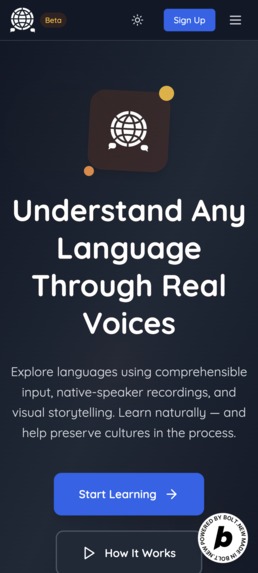
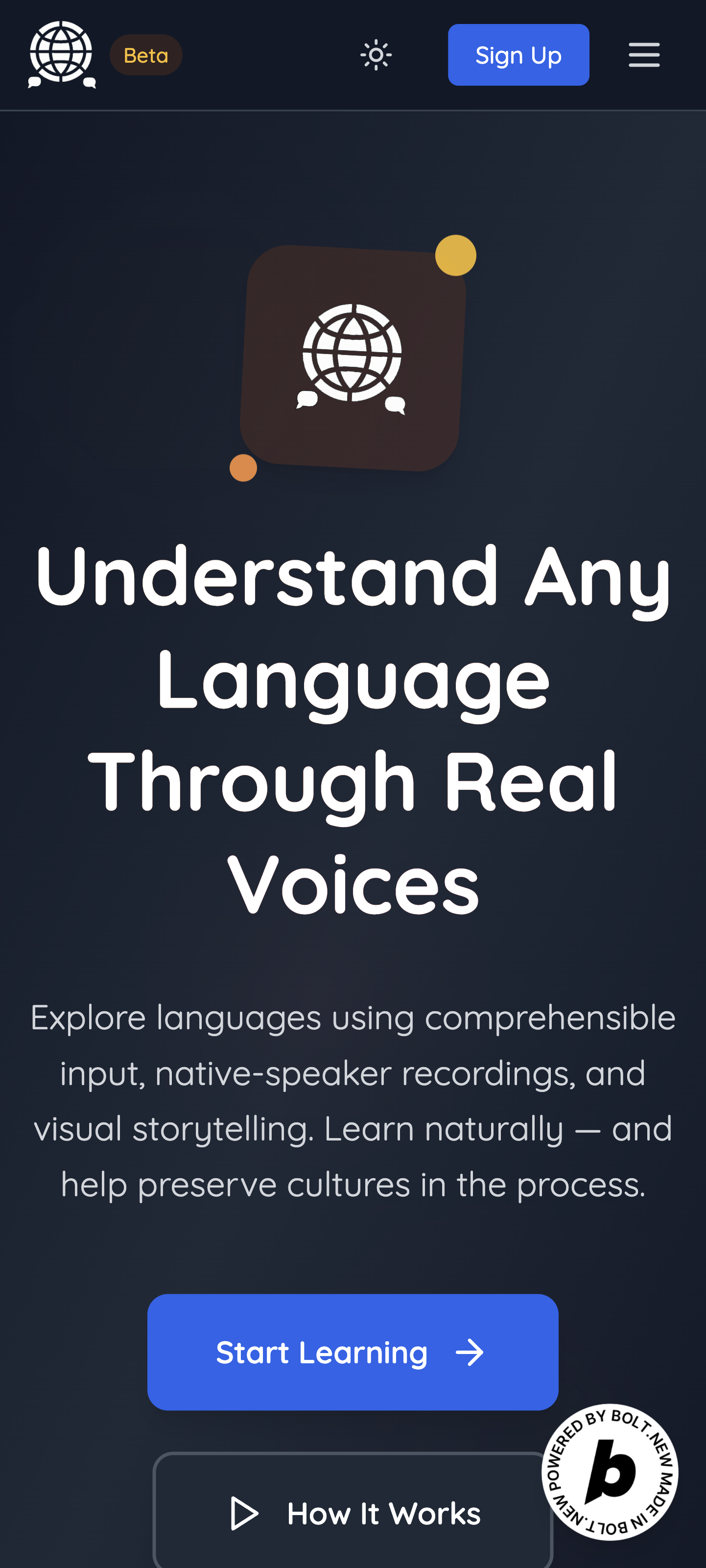
Landing Page
Inspiration
I’ve always loved learning languages. I currently speak three and I’m learning three more. But as much as I enjoy learning, I’ve also wanted to teach and share my Ghanaian languages: Ga and Twi. That’s when I realized how difficult it is to find good resources, especially for less widely spoken languages.
While learning Swahili, I found it nearly impossible to locate comprehensible input ie natural, understandable language content designed for learners. This gap, especially for African and other under-resourced languages, sparked the idea for Polylogue.
What it does
Polylogue is a crowdsourced archive where native speakers can record and translate texts in their languages. These recordings help language learners get real exposure to native speech and structure, while also preserving endangered and underrepresented languages.
The platform allows users to:
Browse and listen to recordings in various languages
Contribute by translating and recording short passages
Track their contributions and connect with a community of learners and native speakers
How we built it
Polylogue is built using:
Supabase for authentication, database, and storage
React + TypeScript for the front-end
PostgreSQL with Row-Level Security for user-specific data access
Internationalization (i18n) support for a multilingual UI with Lingo.dev
We designed the system to support contributions from multiple users, structured content by difficulty and theme, and built a moderation system to ensure quality and trustworthiness.
Challenges we ran into
Finding the right structure for languages, dialects, and variants was complex
Ensuring a smooth experience for both contributors and learners required balancing UX with functionality
Managing user-generated content at scale, especially with audio recordings, presented technical and moderation challenges
Supporting languages with limited written standards or orthographies
Accomplishments that we're proud of
Created a platform that’s already being used to record and translate real content in underrepresented languages
Designed an interface that’s simple enough for new users, but powerful enough to grow with the community
Developed a system that supports language preservation, education, and cultural pride simultaneously
What we learned
Community-driven projects require thoughtful systems for trust and quality
Language is deeply personal and cultural—supporting it means listening to the people who speak it
There’s a real hunger for language learning tools that go beyond textbooks and reach into real-life usage
What's next for Polylogue
Launching support for regional and dialectal variants more formally
Adding visual storytelling features to improve comprehensible input quality
Building better tools for educators and community moderators
Expanding to include more languages
Partnering with language communities and schools to drive real-world use
Built With
- lingo.dev
- react
- supabase
- typescript

Log in or sign up for Devpost to join the conversation.