Inspiration
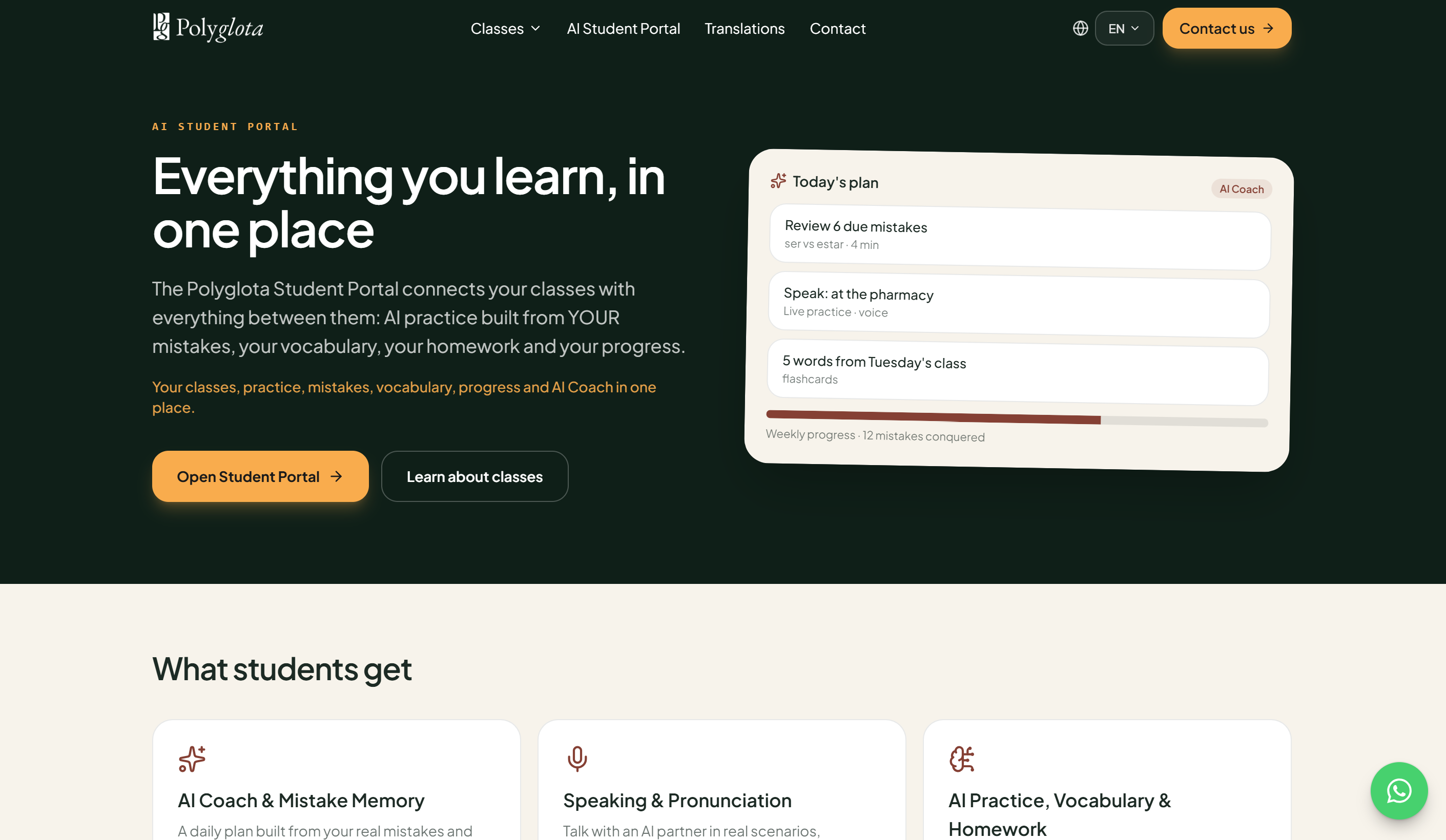
Learning a language is rarely blocked by a lack of content. The real problem is fragmentation. Learners switch between lessons, flashcards, translators, tutors, notes, homework, and AI chats that do not share memory. Teachers spend valuable time rebuilding context, preparing exercises, correcting recurring mistakes, and managing administrative work. Polyglota was built to connect those pieces into one AI-native learning and teaching system. Existing AI tools answer questions. They rarely remember the learner. We wanted AI that continuously improves every future learning decision.
What it does
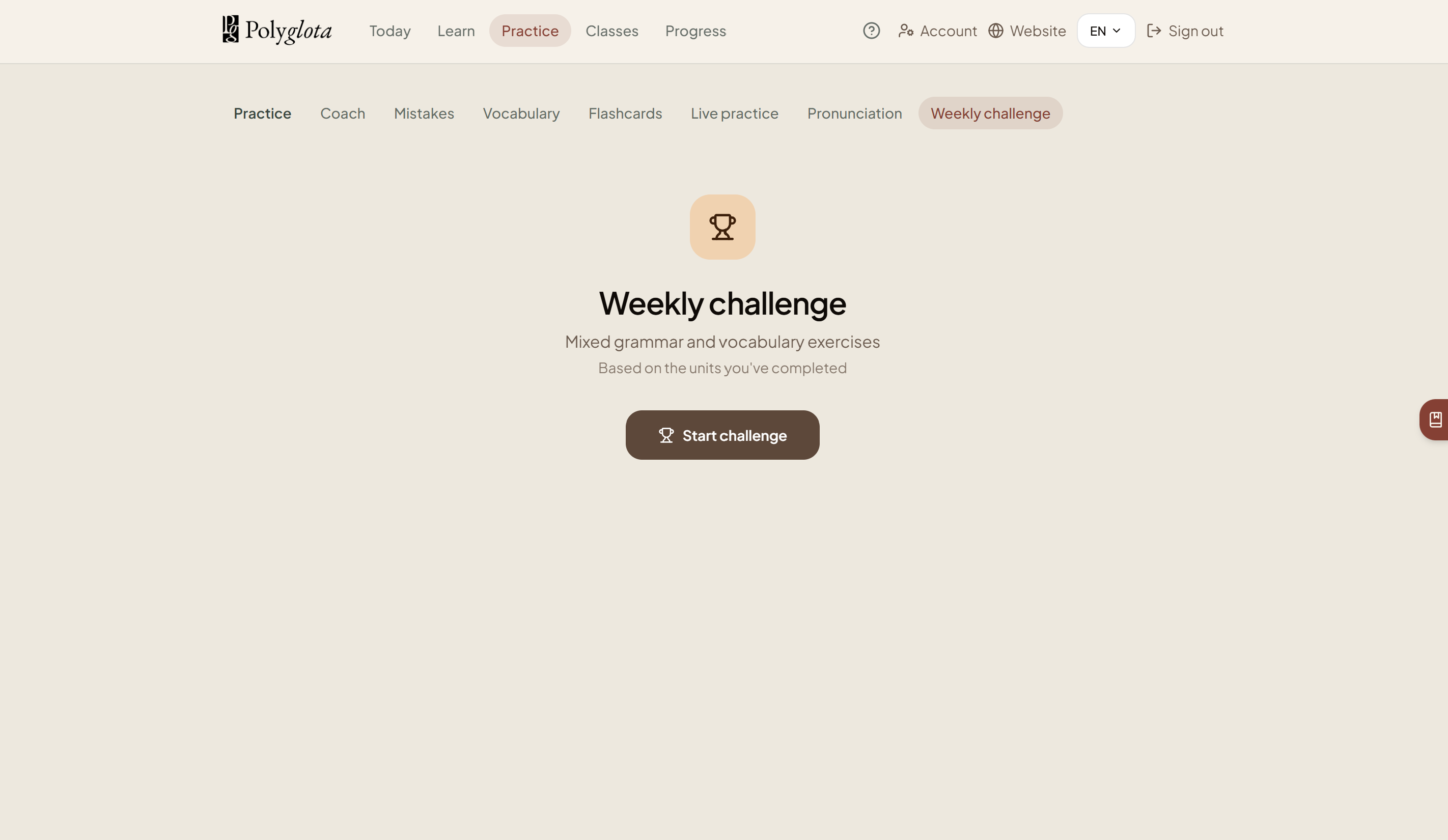
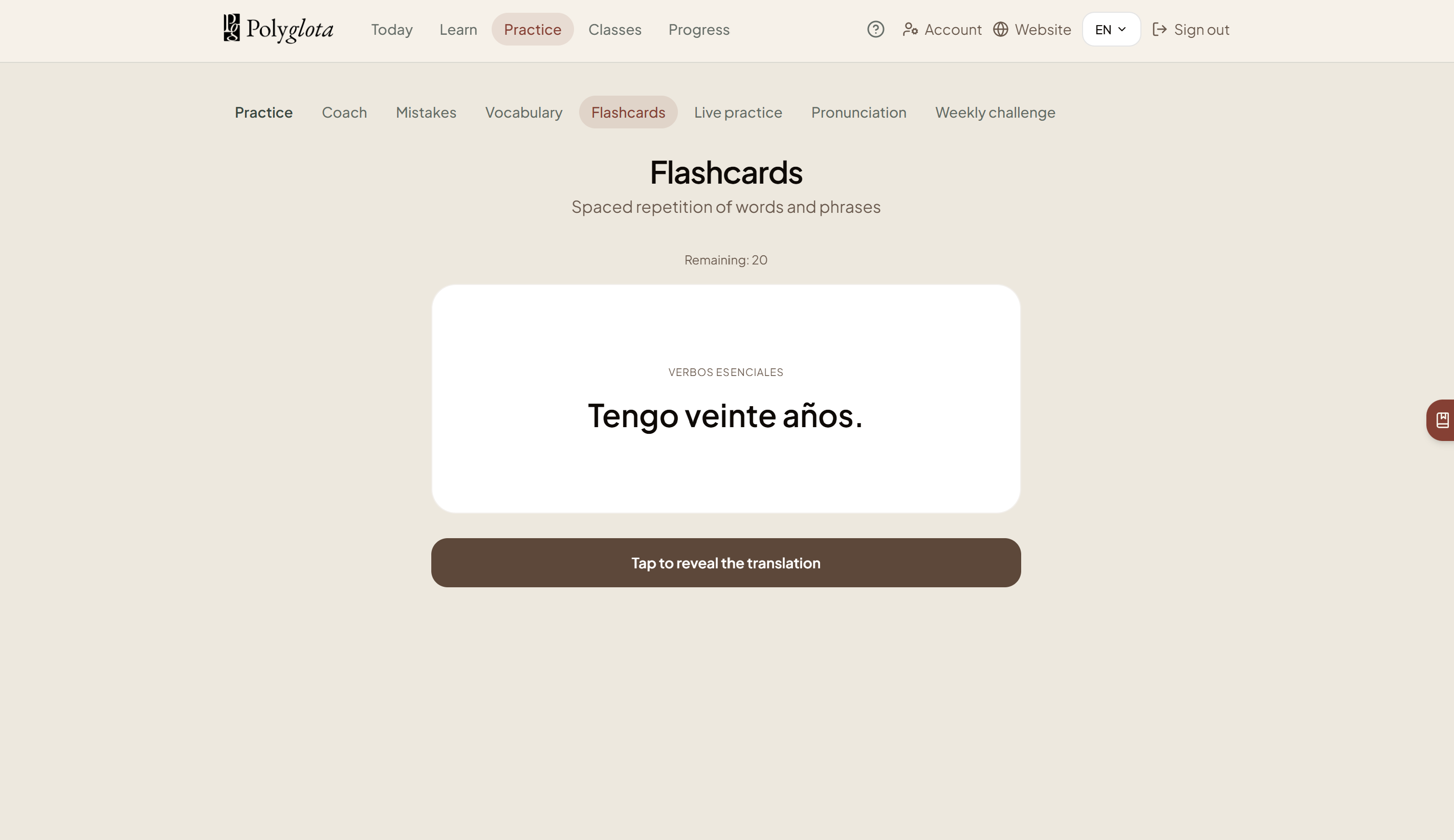
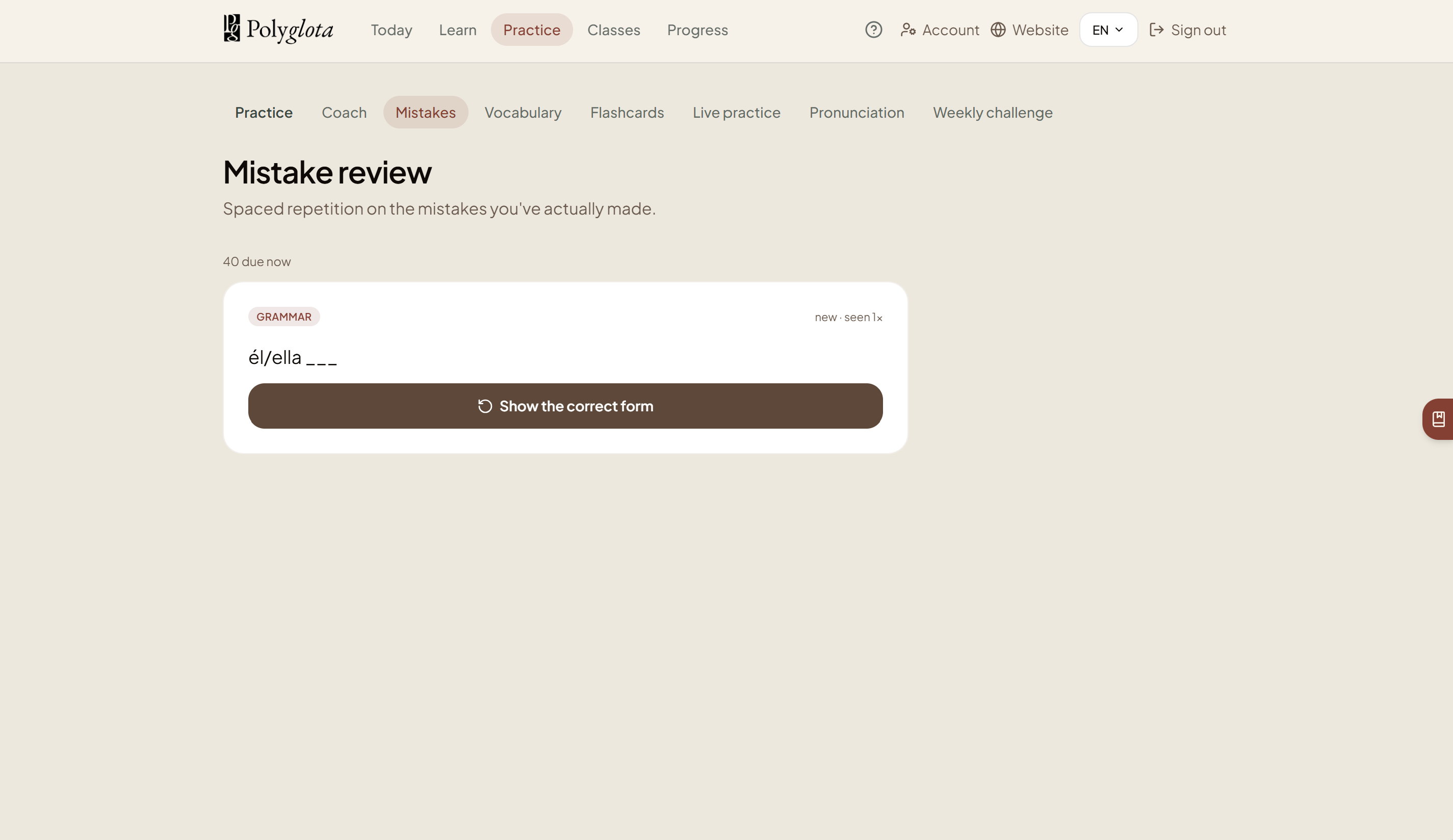
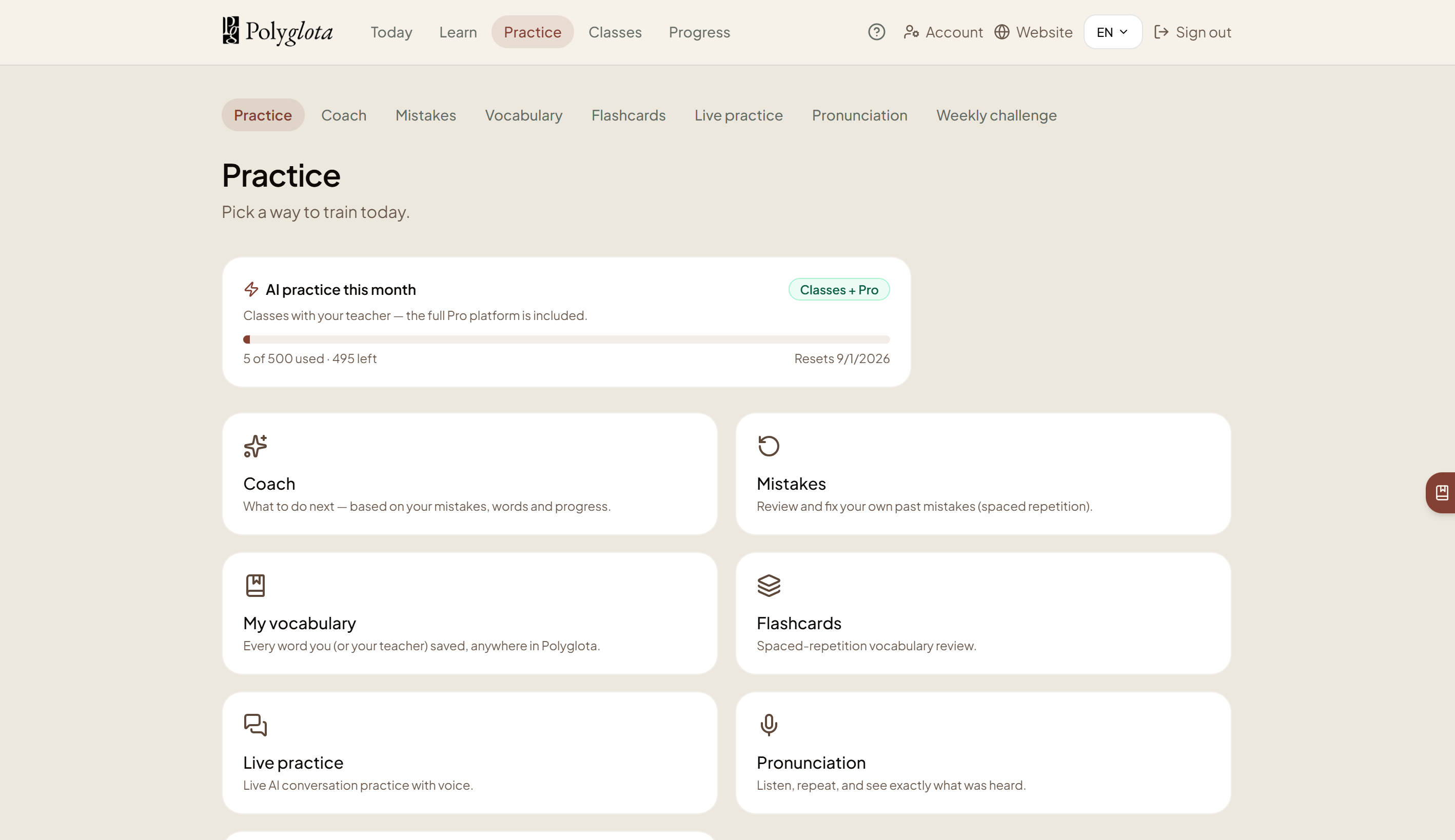
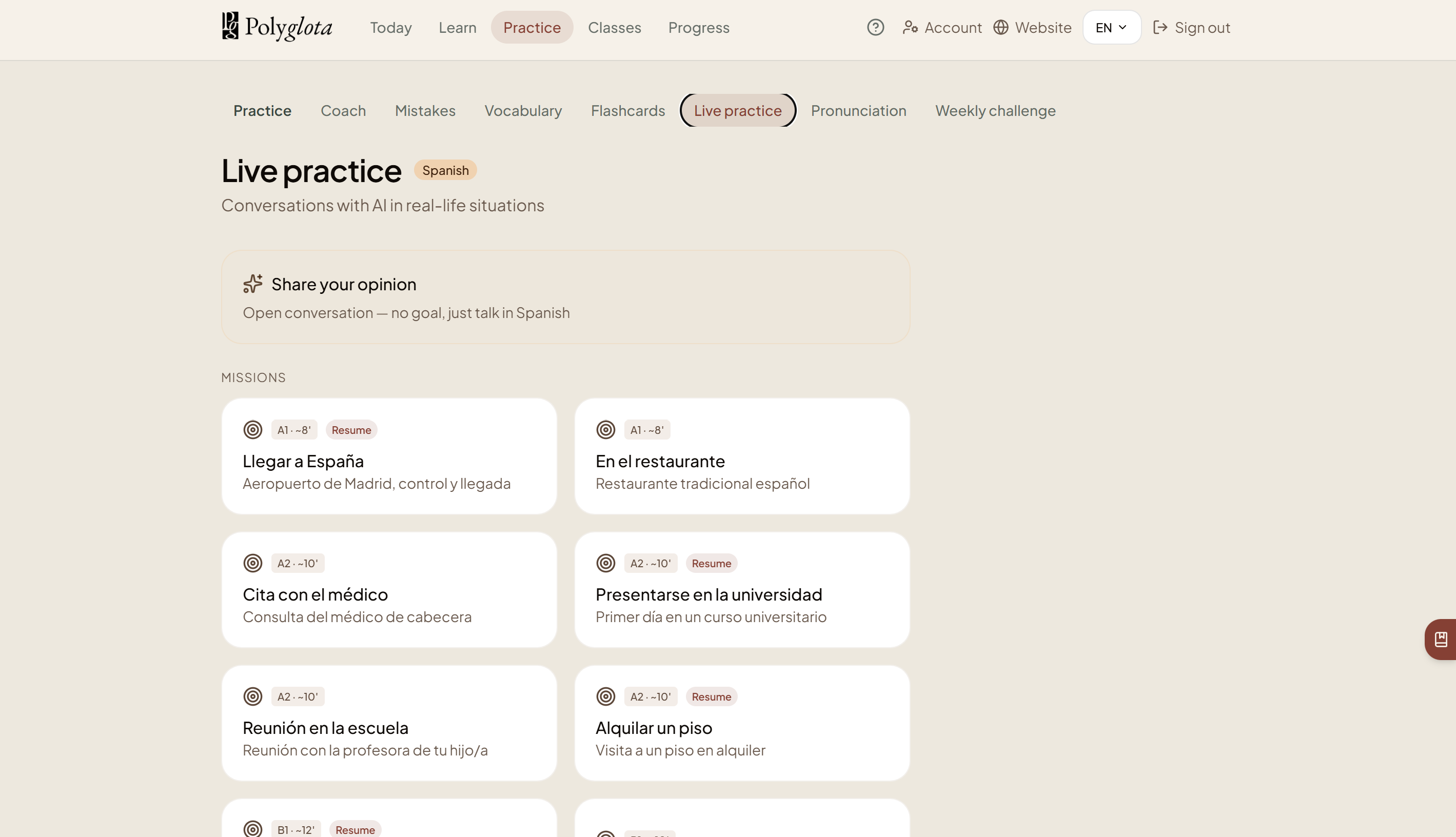
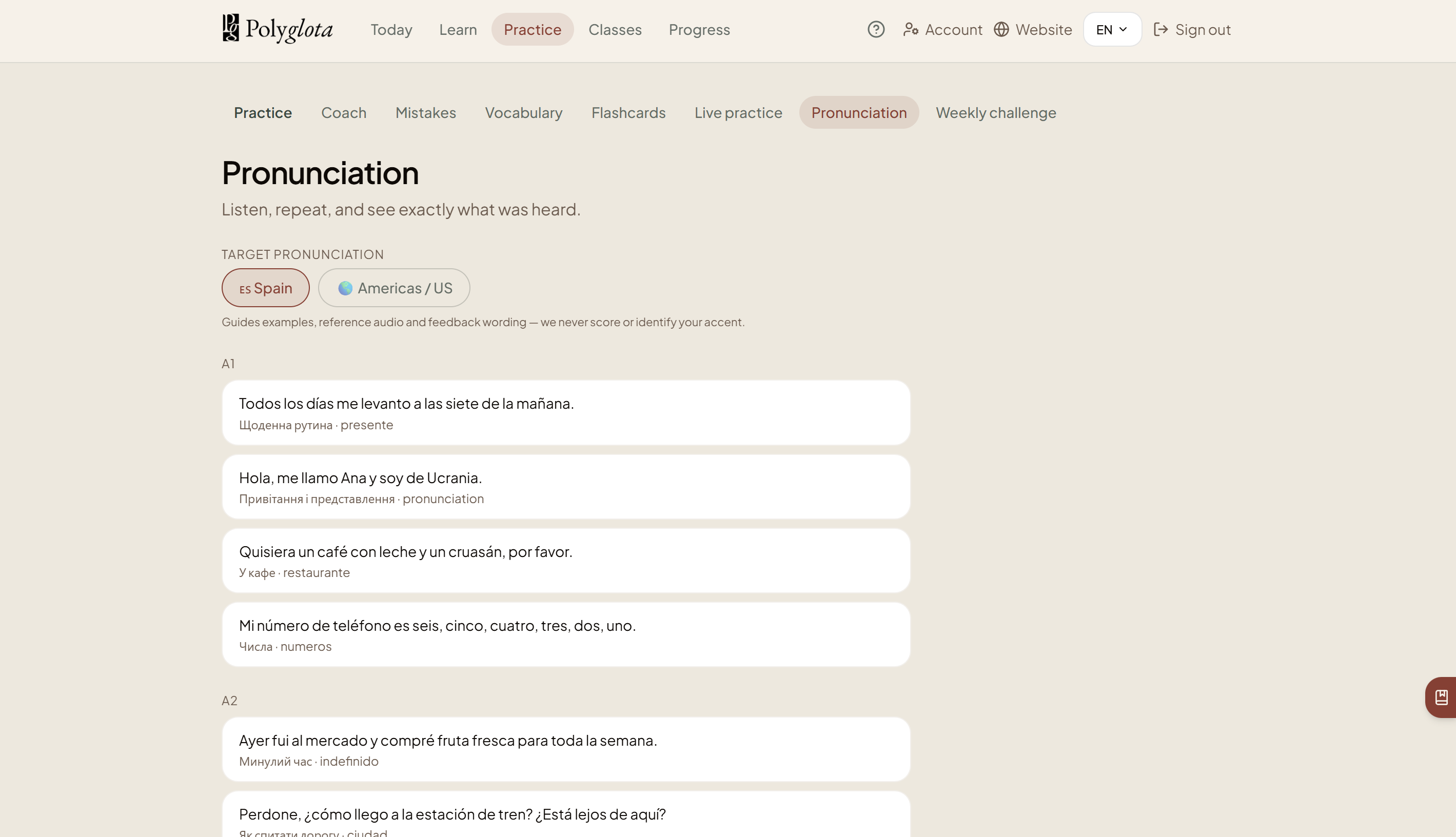
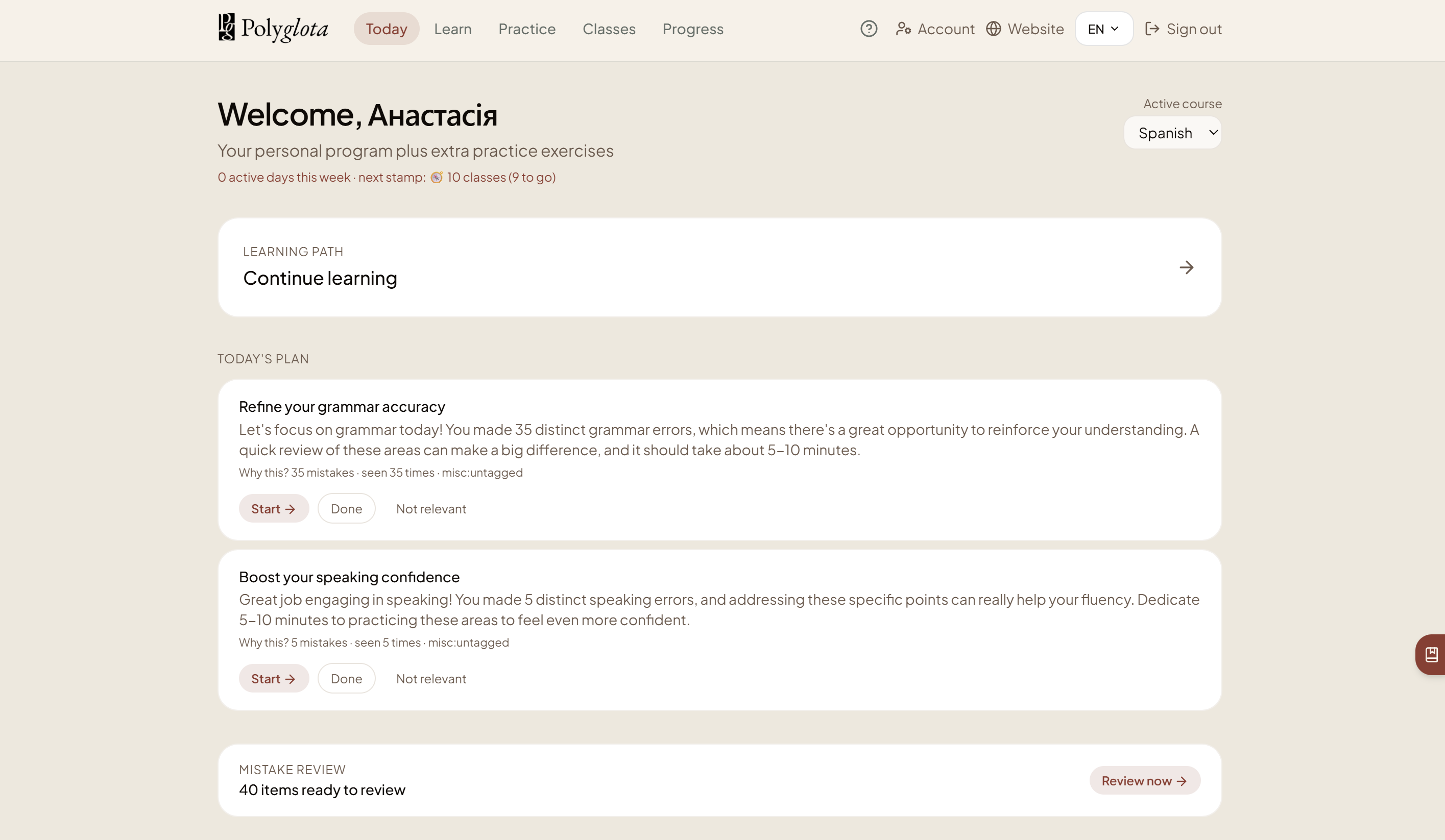
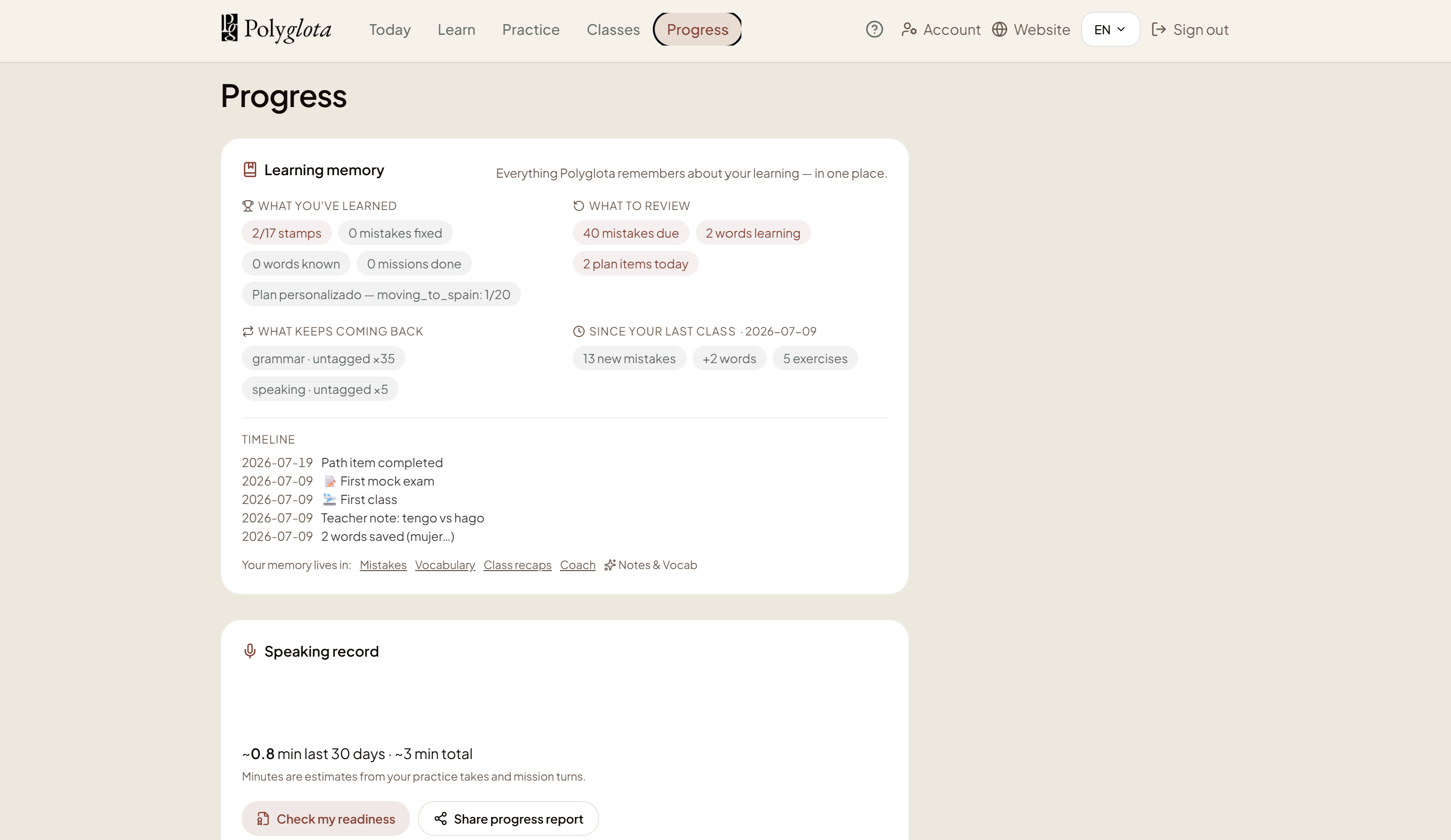
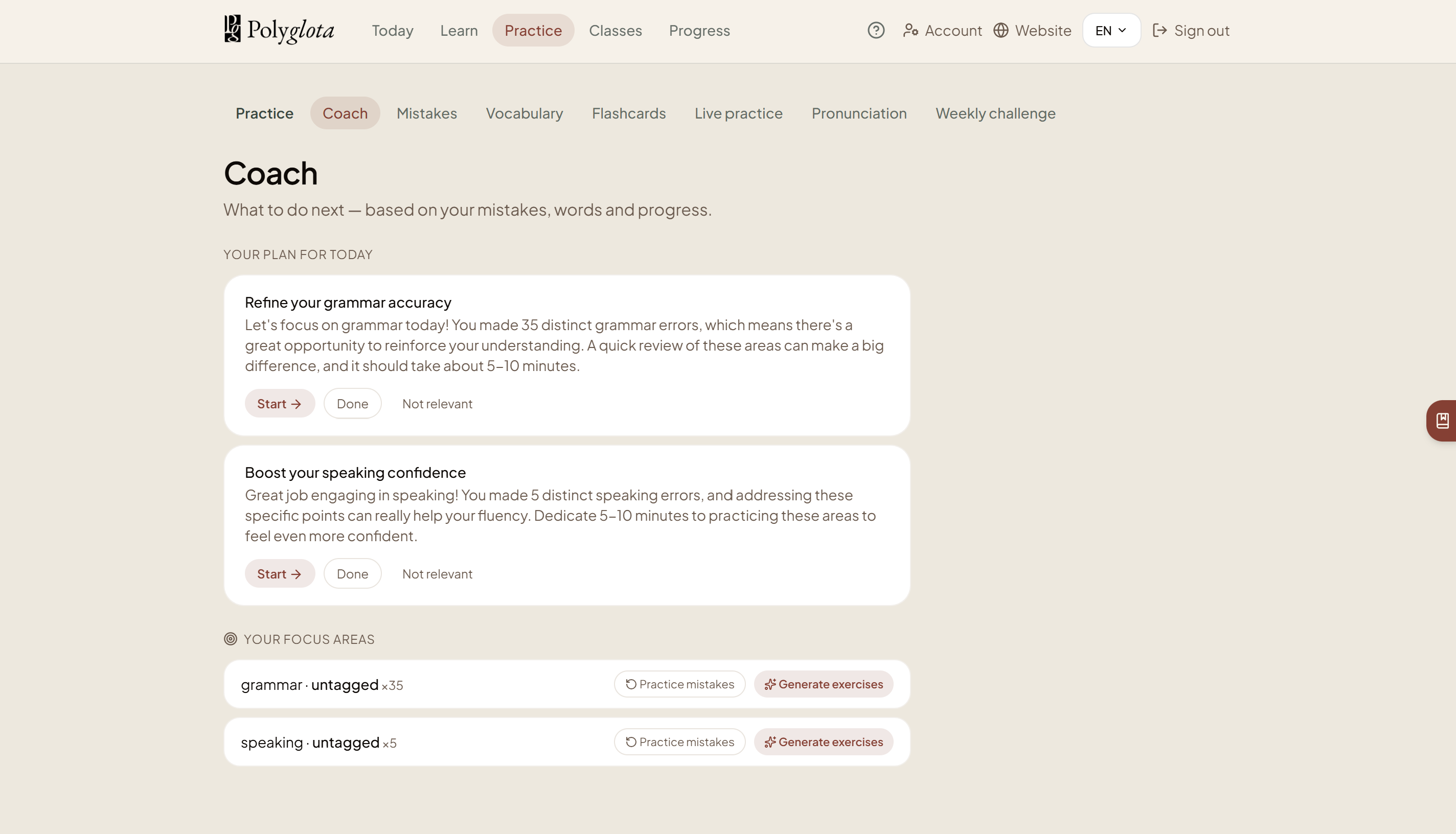
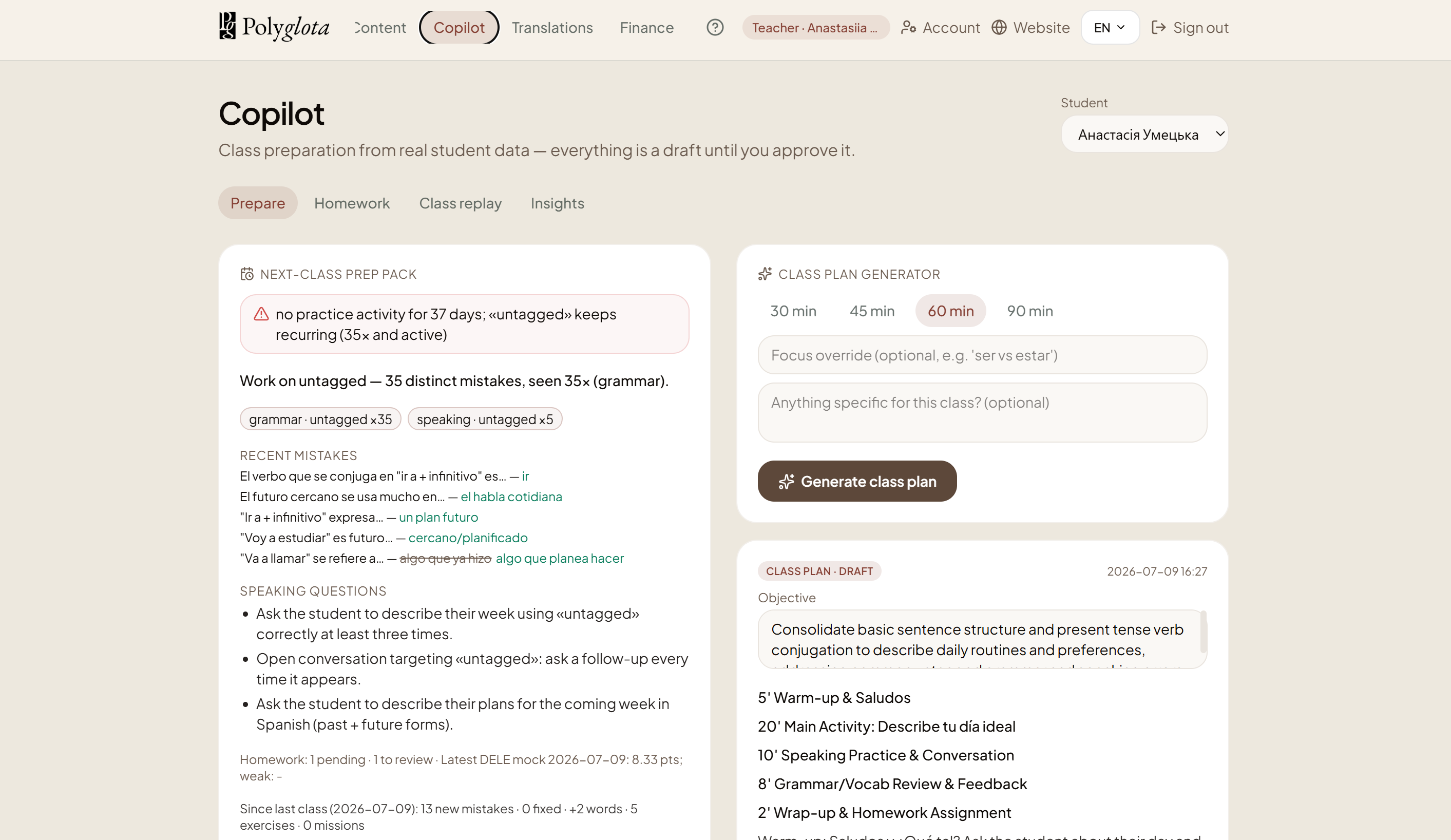
Every learner interaction becomes new information for the system. Every lesson, conversation, pronunciation attempt, mistake, correction, and teacher interaction becomes part of the learner's long-term learning memory. Gemini analyzes that history to generate explanations, recommend practice, prioritize weaknesses, adapt future lessons, estimate exam readiness, and prepare teachers before every class.
How we built it
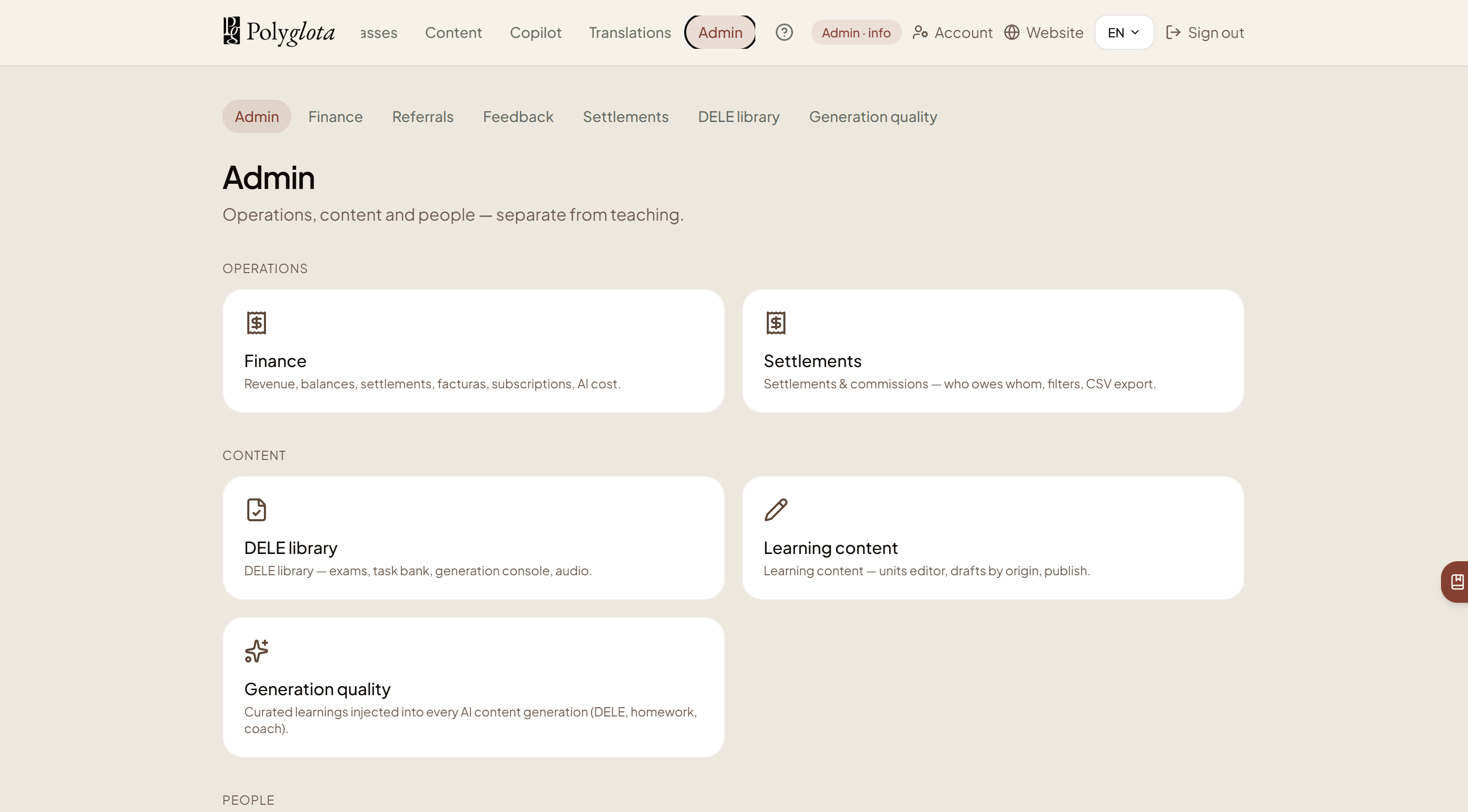
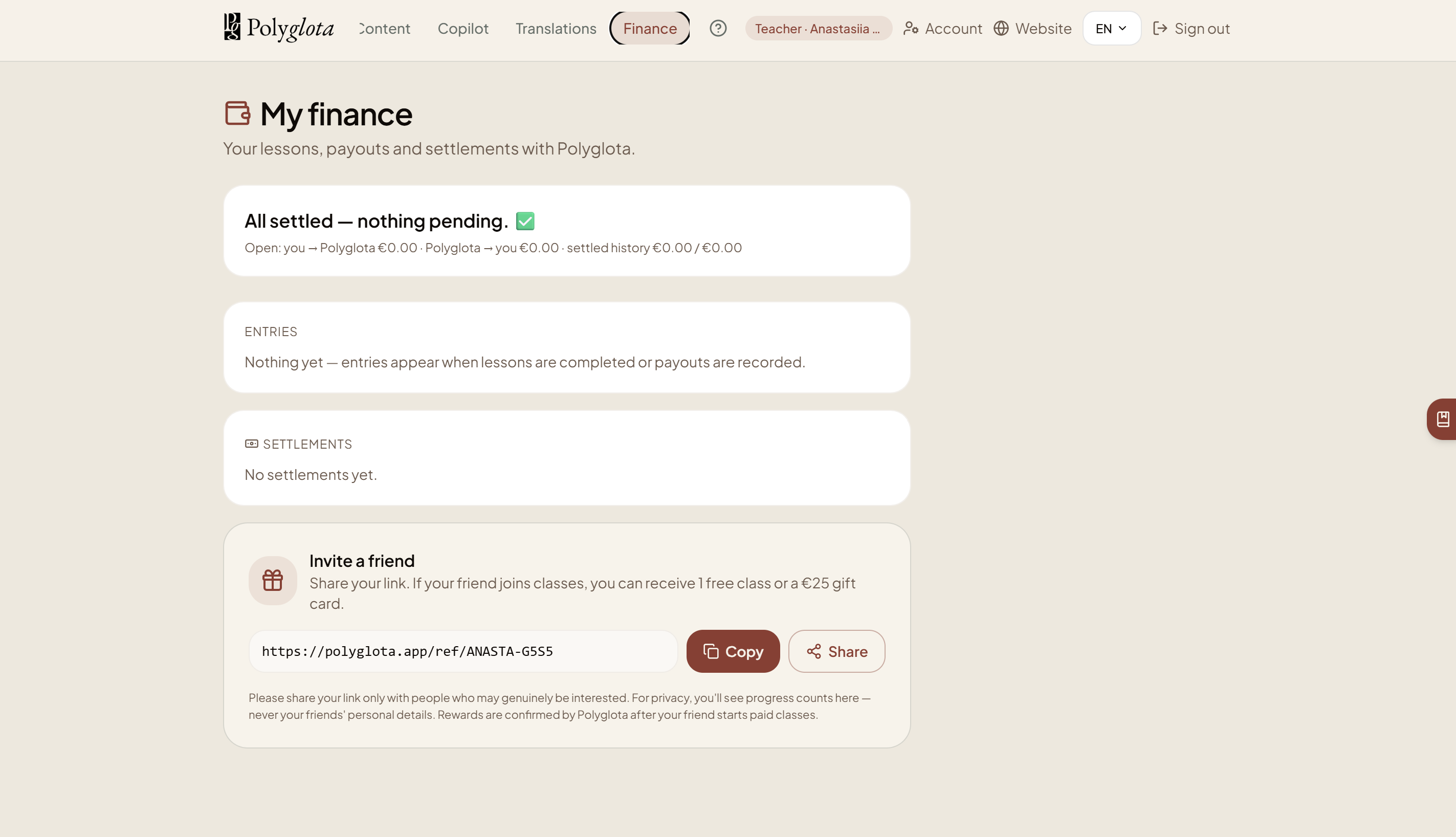
Polyglota was designed so students, teachers, learning content, AI workflows, payments, and analytics operate inside one application. Gemini powers the adaptive layer between these components, while Google Cloud provides the production infrastructure supporting AI operations, and monitoring
Challenges we ran into
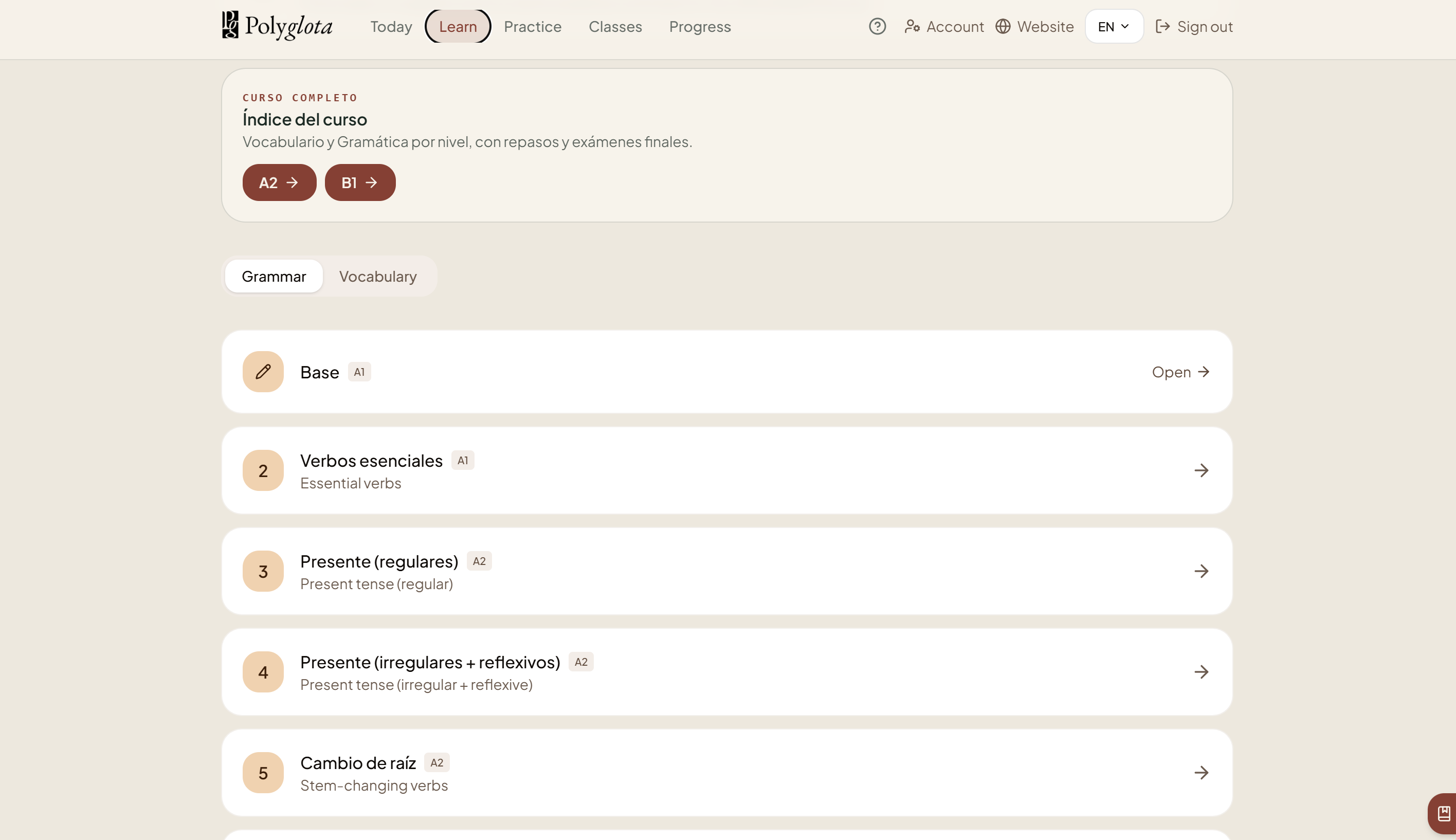
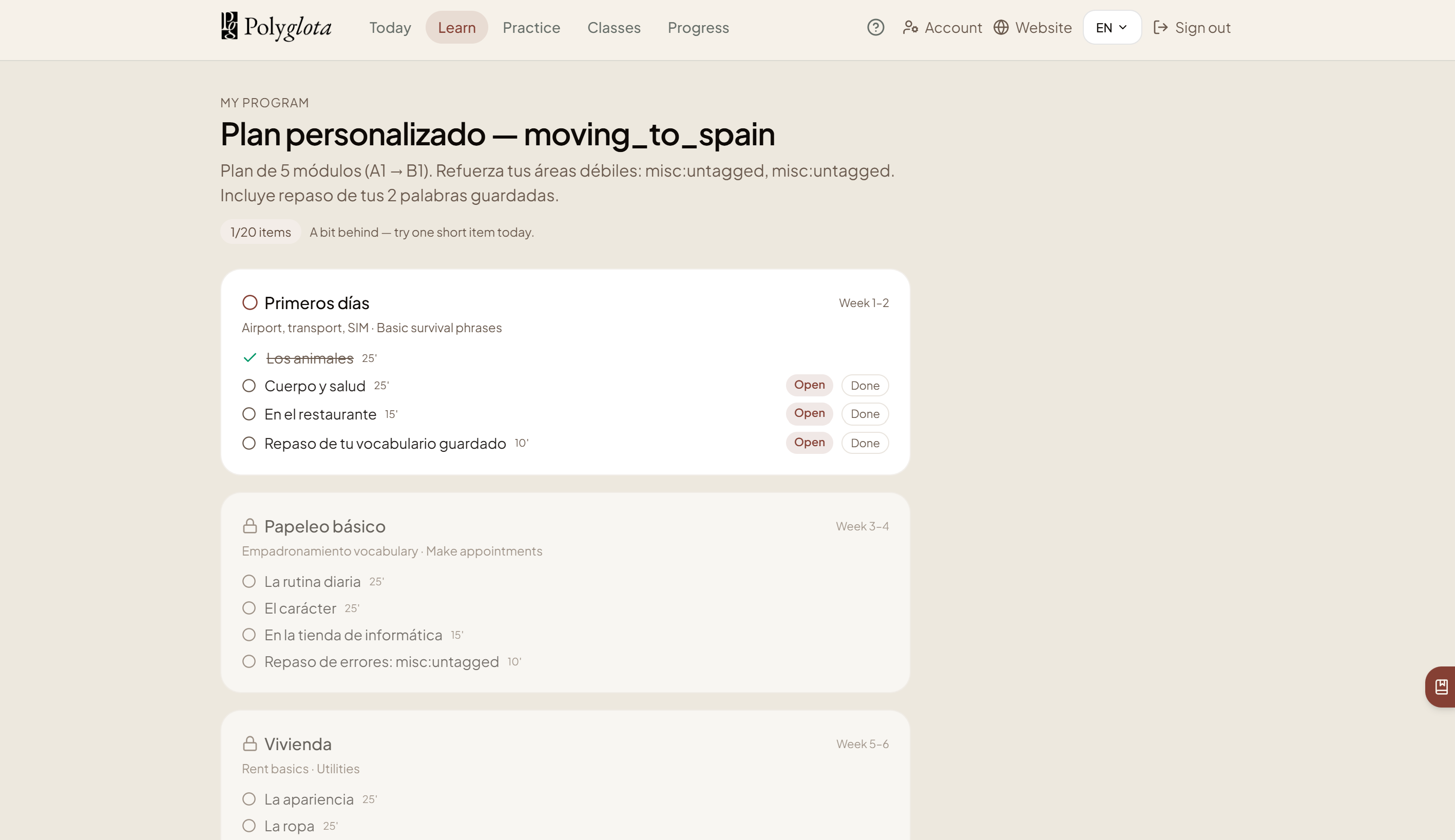
One of our technical challenges was preserving educational quality while transforming traditional course materials into AI-ready structured learning content. We built validation pipelines and teacher review workflows to ensure Gemini could generate personalized learning without compromising the original pedagogy.
What we learned
Building an AI-native education platform taught us that intelligence is not generated by a single conversation. It emerges from memory, structure, continuous feedback, and trusted collaboration between AI and teachers. Useful intelligence depends on reliable structure, permissions, memory, provenance, and feedback loops. We learned to separate machine-gradable activities from open human expression, to preserve teacher control, and to verify AI-generated or AI-transformed learning content against source material. We also learned that visual fidelity and educational fidelity are separate quality dimensions: a lesson can be technically valid yet still fail the teacher's intended pedagogy if sections, tables, practice groups, or readings are flattened.
What's next for Polyglota
Our vision is to become the AI operating system for language education. Instead of isolated lessons and disconnected AI tools, Polyglota creates a continuous learning relationship where every interaction improves future learning. Students receive personalized guidance, teachers gain intelligent support, and schools operate on one adaptive platform powered by Gemini. The long-term opportunity is a multilingual platform where AI expands access to quality instruction while creating more productive, sustainable work for human educators and service providers.
Built With
- ai-agents
- edtech
- gemini
- gemini-api
- generative-ai
- google-cloud
- google-oauth
- language-learning
- learning-analytics
- multilingual
- personalized-learning
- postgresql
- pwa
- react
- rls
- speech-synthesis
- stripe
- stripe-connect
- supabase
- tailwind-css
- teacher-tools
- typescript
- vite
- webhooks

Log in or sign up for Devpost to join the conversation.