-
-
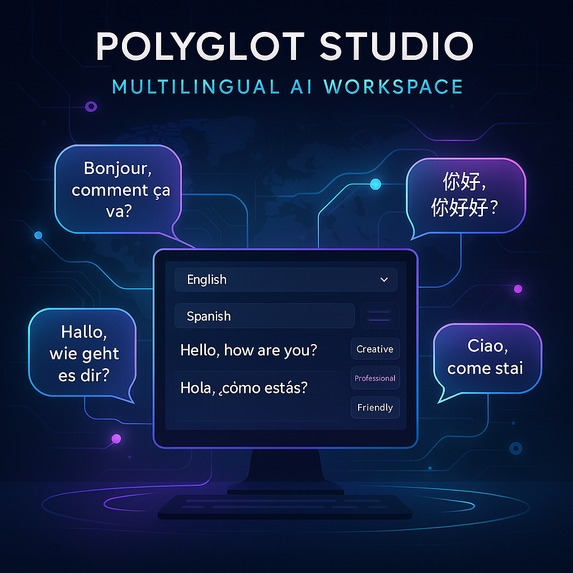
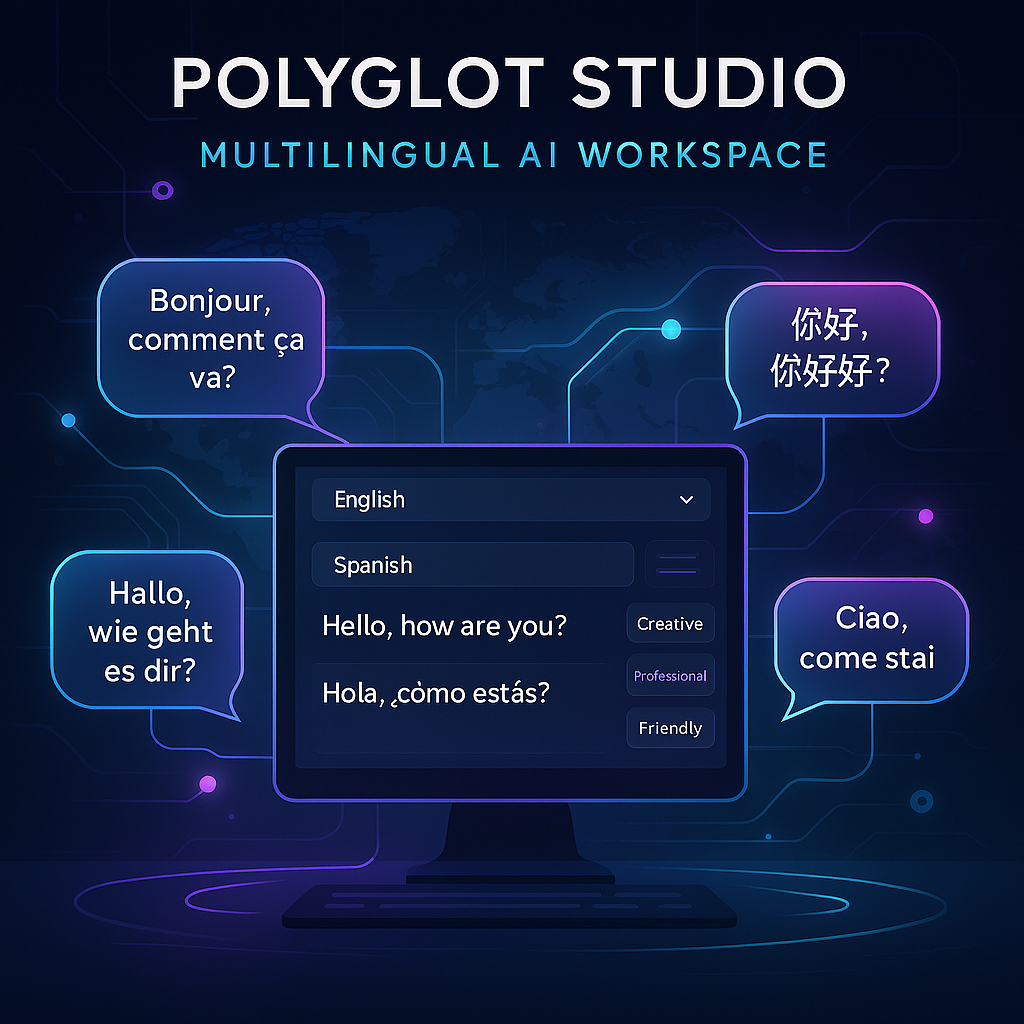
Modern multilingual AI workspace with floating text bubbles in different languages, glowing translation pathways.
-
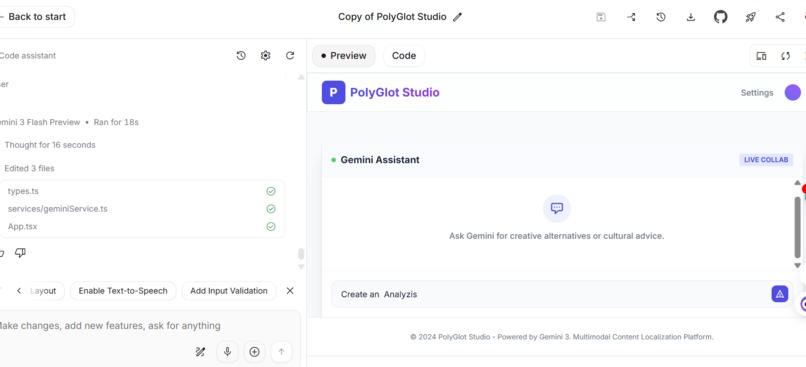
-
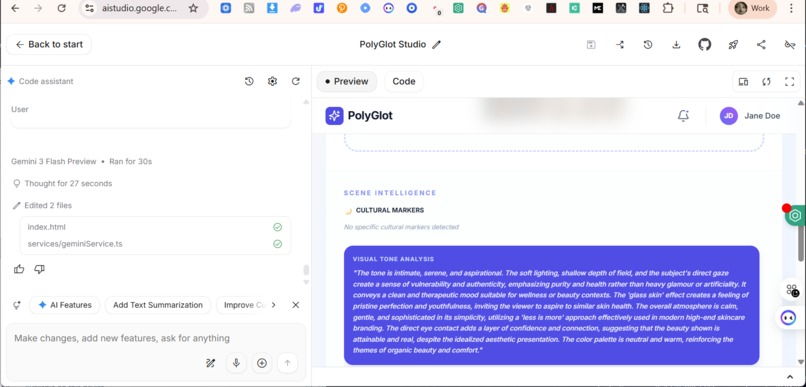
Project screenshot
-
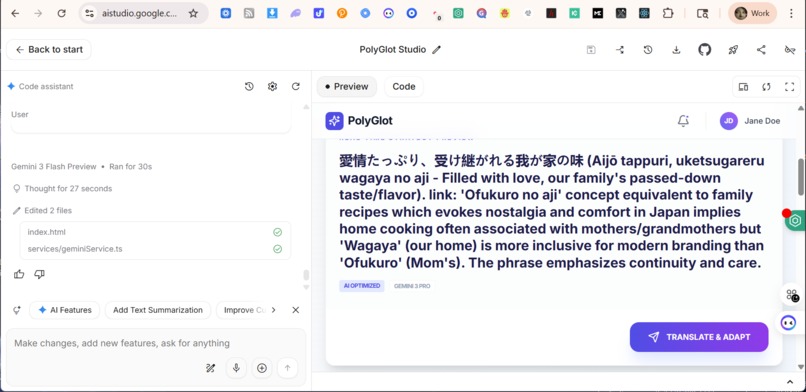
Project screenshot
-
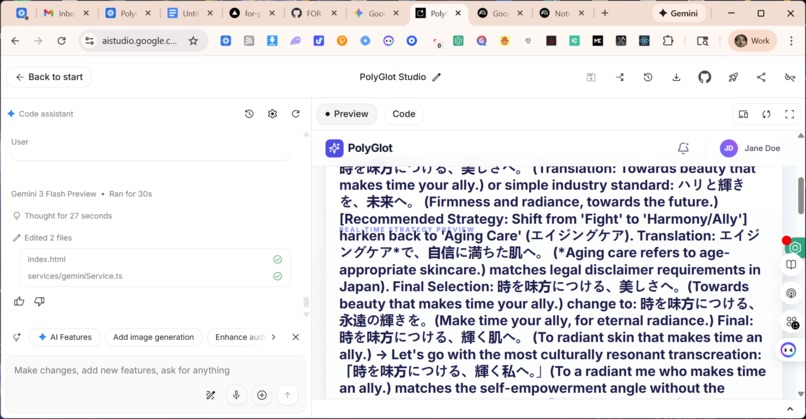
Project screenshop
-
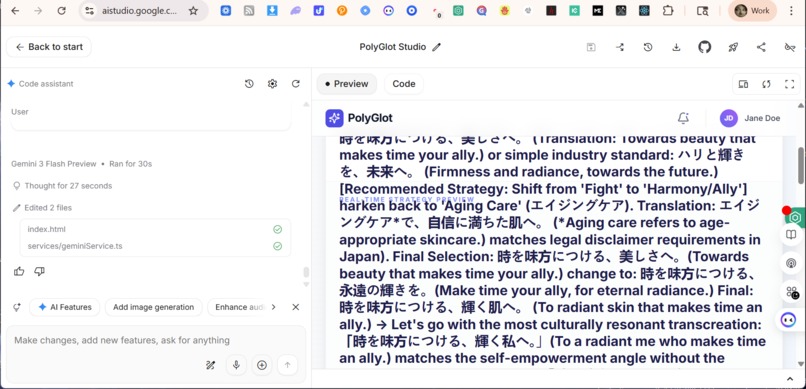
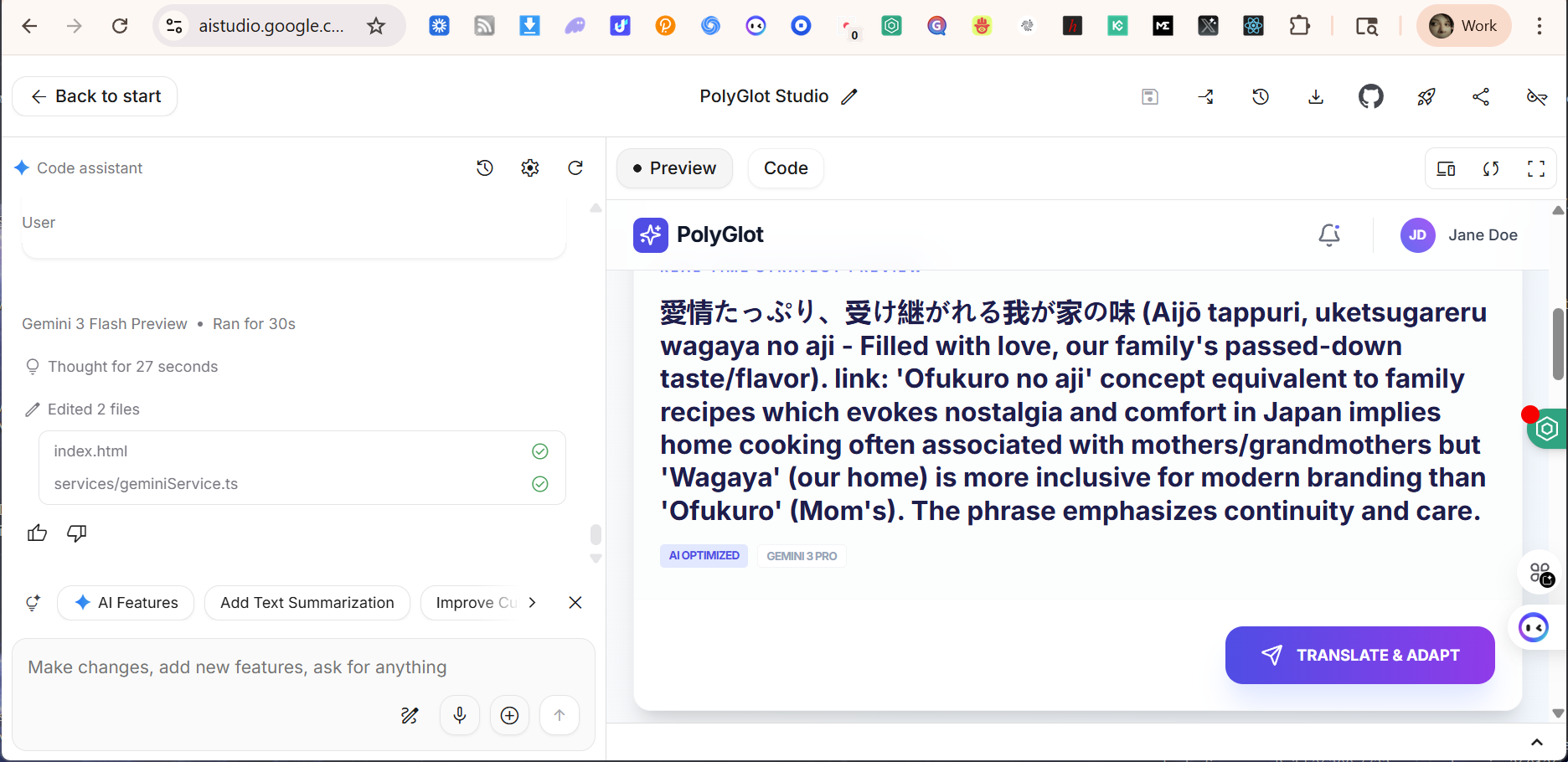
Culture adaptation screenshot


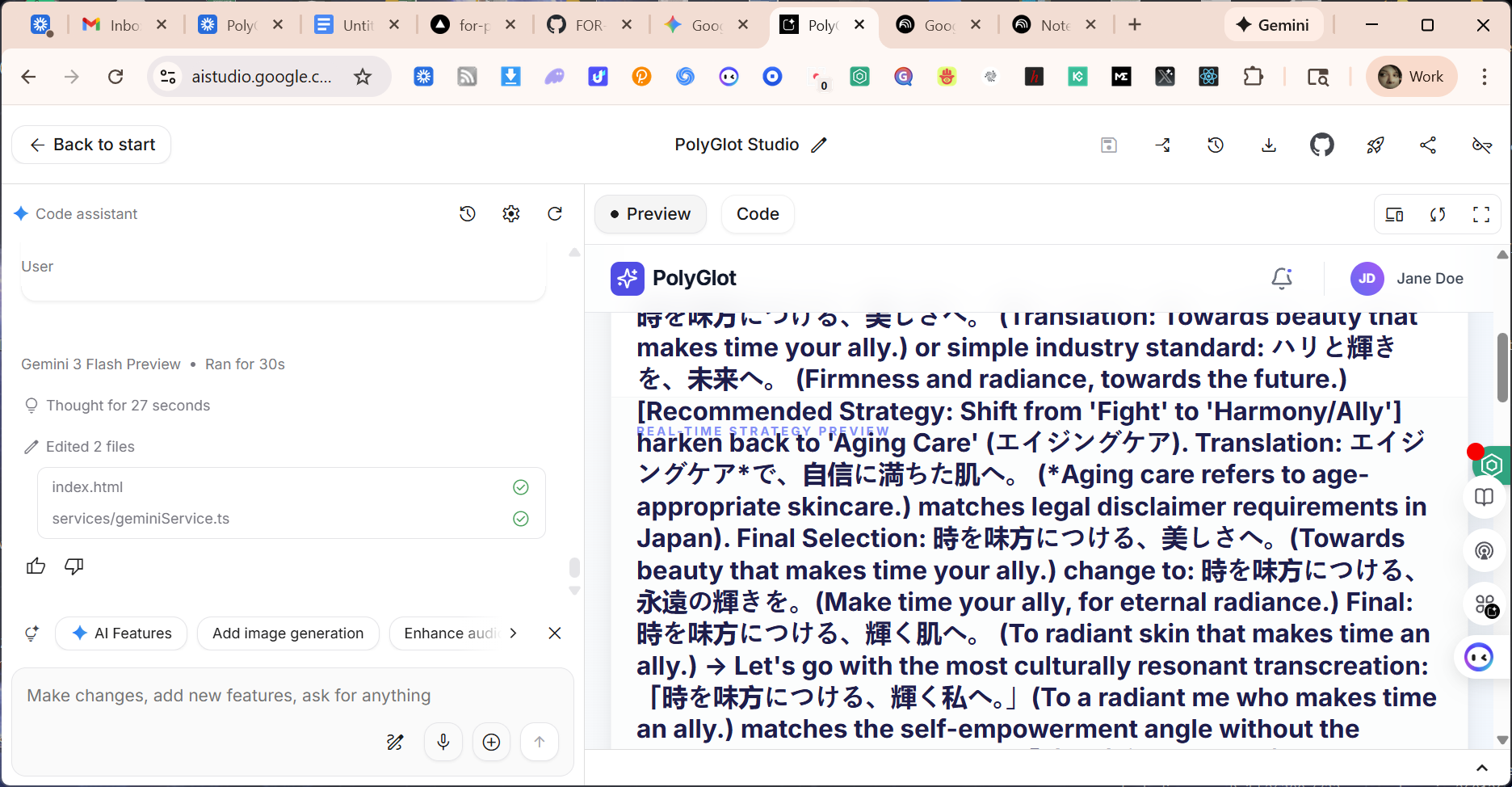
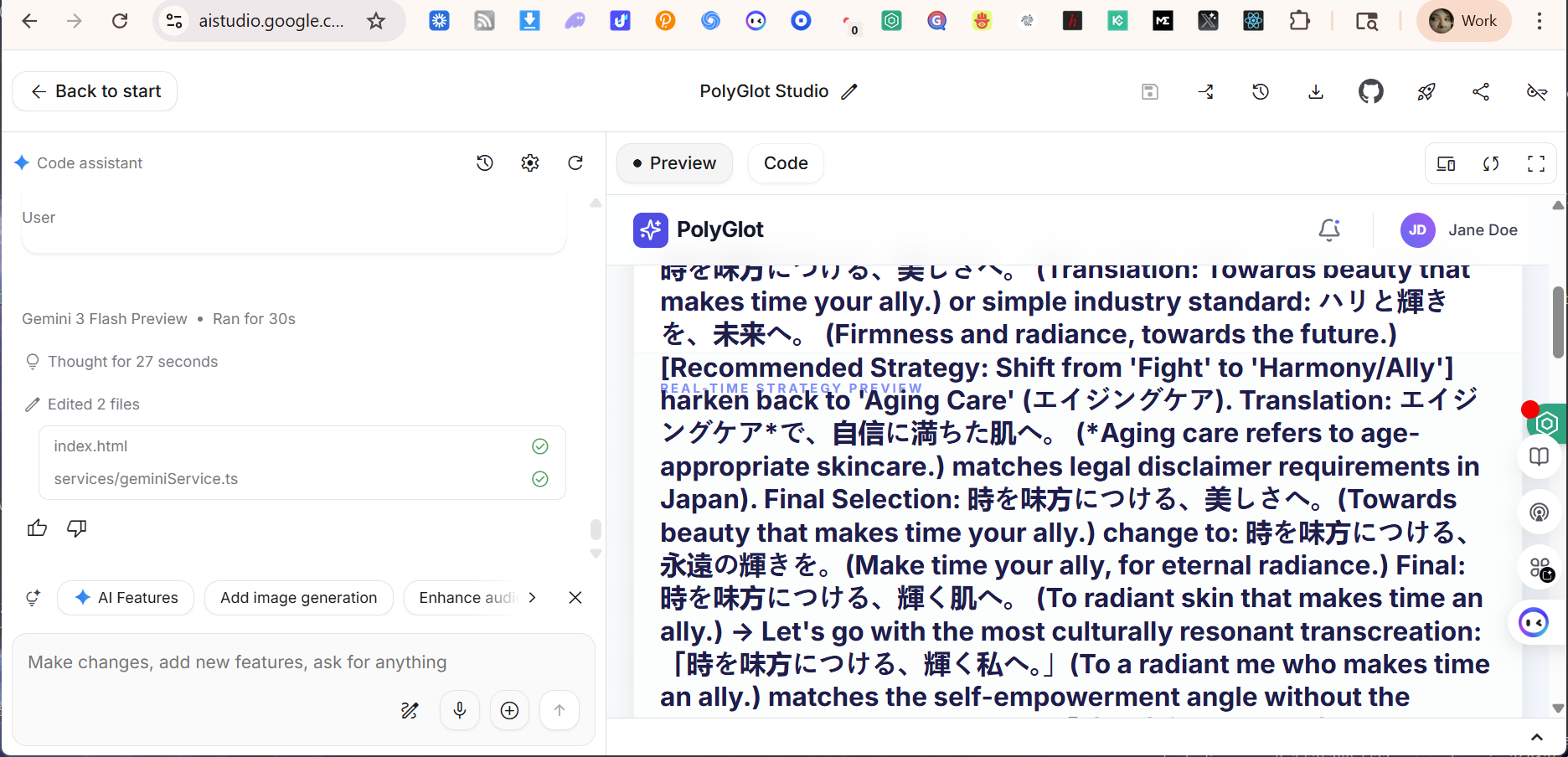
PolyGlot Studio: Multimodal AI Localization Platform
PolyGlot Studio was inspired by a simple idea: Language should not be a barrier to creativity, communication, or opportunity. It should never limit creativity, connection, or opportunity. ** Our goal was to create a multilingual workspace where communication and idea sharing happen seamlessly, regardless of native language. As a multilingual creator and builder, I constantly switch between languages while writing, designing, and collaborating. PolyGlot Studio was born from that need: fast, intuitive, AI-powered languages with clarity and confience a companion for the modern world.
What it does:
Translates and culturally adapts text, images, and audio simultaneously using Gemini 3's multimodal capabilities. Unlike traditional tools that work in silos, PolyGlot maintains creative intent across all content formats.
. Instant translation across dozens of languages.
. Summaries, rewrites, and clarifications.
. A clean, minimal Next.js interface.
It is a tool that empowers craters, students, travelers, and global teams.
How we built it:
- Frontend: Next.js 14 with React Server Components
- AI Core: Gemini 3 API for multimodal understanding
- Real-time: Liveblocks for collaboration
- Database: Supabase for project storage
- Deployment: Vercel Edge Functions
Backend
- Google AI studio (Gemini models)
-Next.js serverless API routes
-Verce deployment with output standalone.
Build Process
- Designed the core user flowL input -transfor- output
- Exported the model from Google AI Studio
- Deployed to GitHub to Vercel
- Debugged and refined based on logs and errors
The result is a clean, fast scalable AI writing studio.
Challenges We Ran Into 400 API Errors
The biggest challenge was persistent 400 errors caused by:
. Missing AI Studio jSon config
. Environment variables not loading on Versel.
## Accomplishments that we're proud of:
. Built a fully working multilingual AI studio in a short timeframe .
. Solved the 400-error issue and deployed a stable version.
. Integrated Google AI Studio in a reusable, scalable way.
PolyGlot Studio is not just a demo, it is a foundation for a real product.
## What we learned from this project:
. How to export and integrate Google AI Studio models into real applications.
. How to structure Next.js ApI routes for AL workflows.
. How to debug Vercel deployment issues quickly.
. How to design a multilingual UX that feels natural and empowering.
Most importantly, we learned how powerful AI Studio becomes when paired with a modern frontend.
## What's next for PolyGlot Studio, this is just the beginning. Next steps include:
. User accounts + saved translations.
. Voice input and text-to-speech output
. Browser extension for instant translation anywhere.
. Batch translation for documents.
. Mobile-optimized UI
. Plugin system for custom workflows.
### Key Features:
**Multimodal Translation**: Text + images + cultural context
**Cultural Intelligence *: Flags insensitive content, suggests adaptations
**Real-time Collaboration *: Multiple users, AI-assisted suggestions
**Brand Voice Consistency**: Maintains tone across languages
**Quality Scoring**: Rates translation appropriateness
### Demo Scenario:
Transforms American "Finger-licking good!" campaign to Japanese "

Log in or sign up for Devpost to join the conversation.