-
-
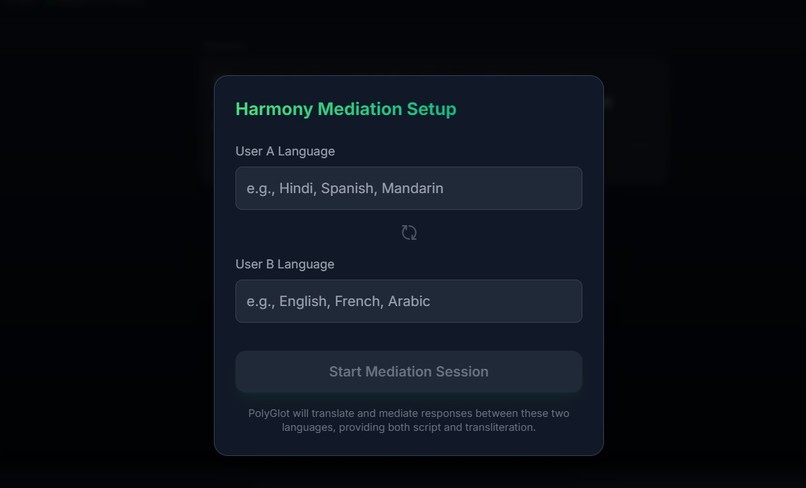
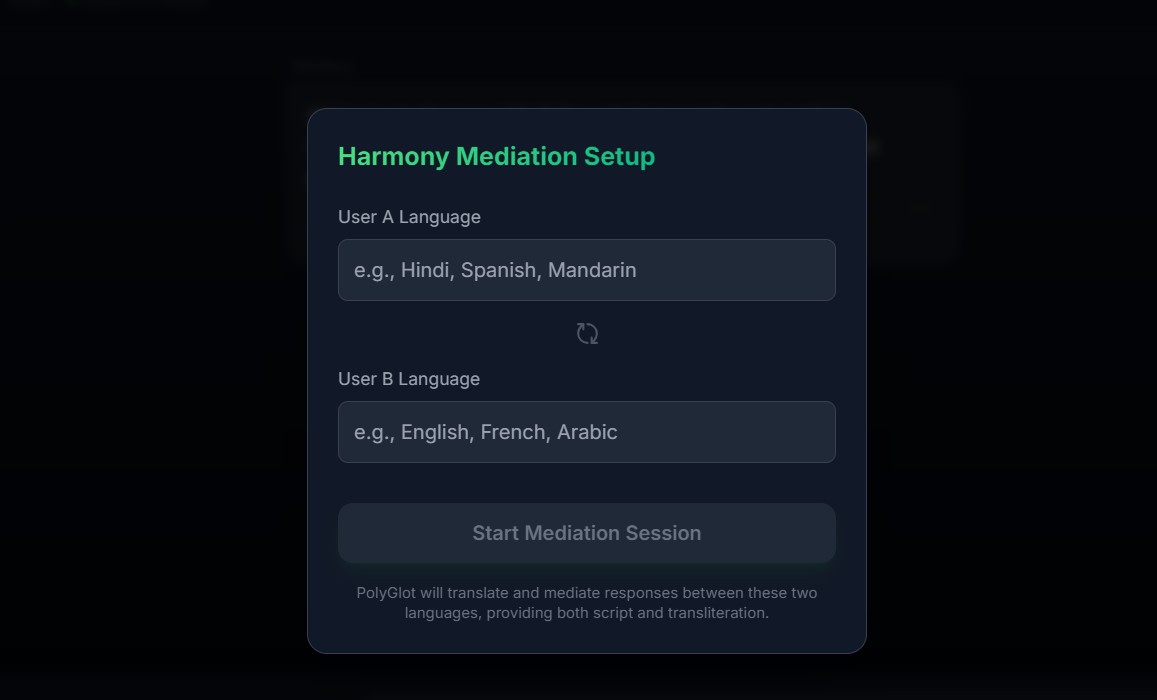
The actual working of Harmony mediation Set up
-
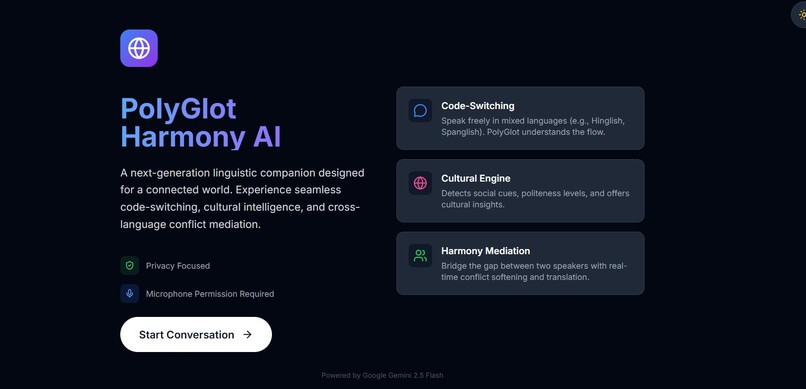
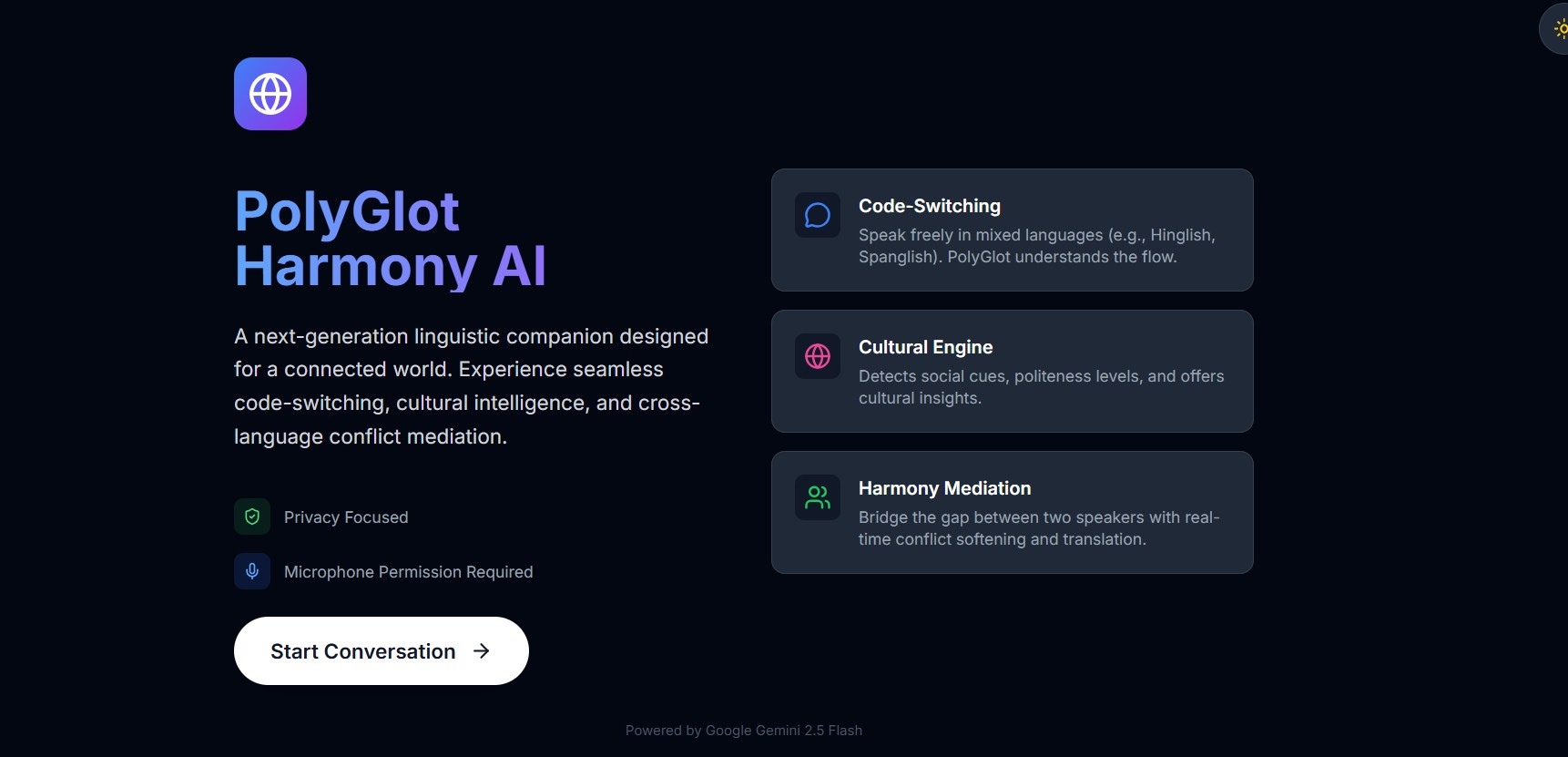
Home Page that contains, The three potential features, Code switching, Cultural engine & harmony Mediation
-
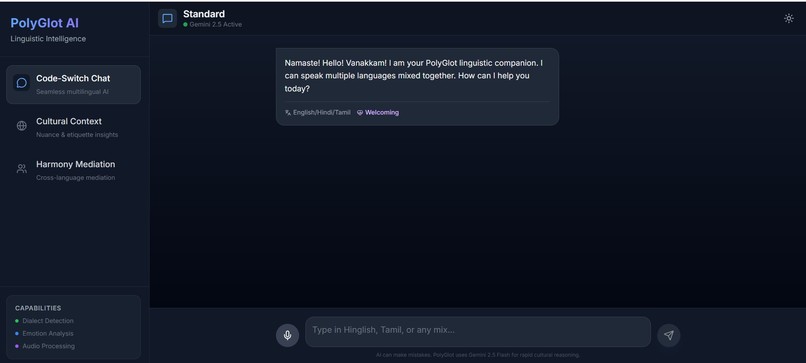
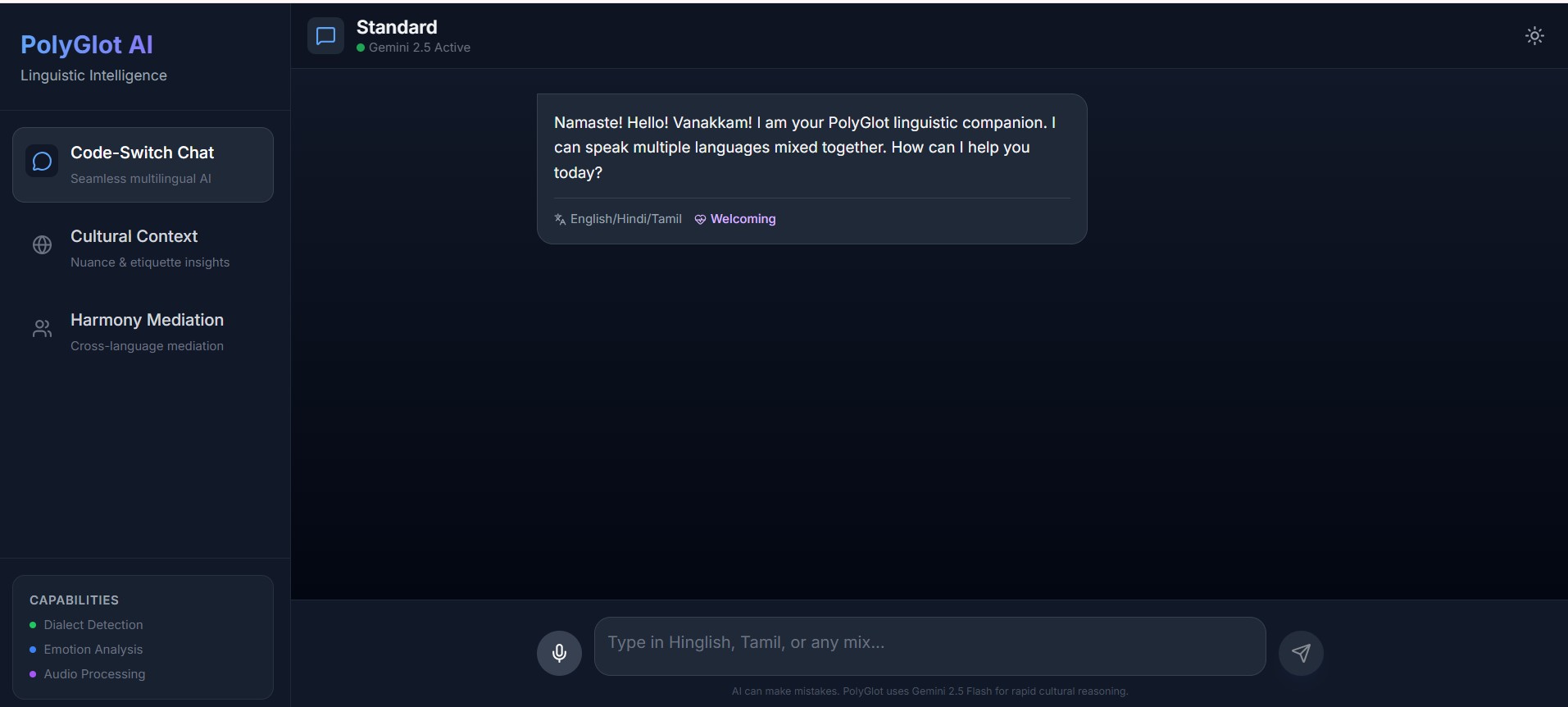
Demo of Cultural code switching feature
-
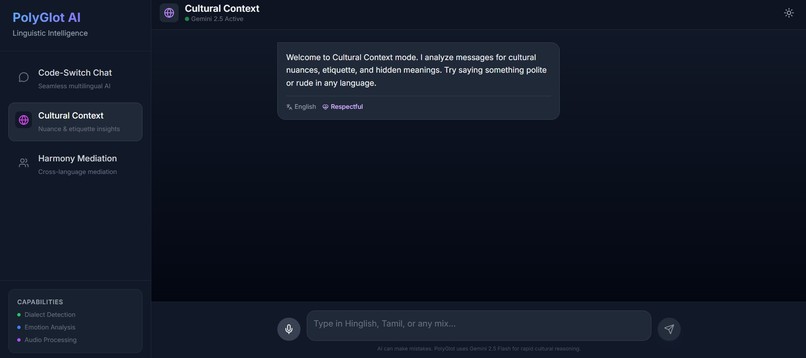
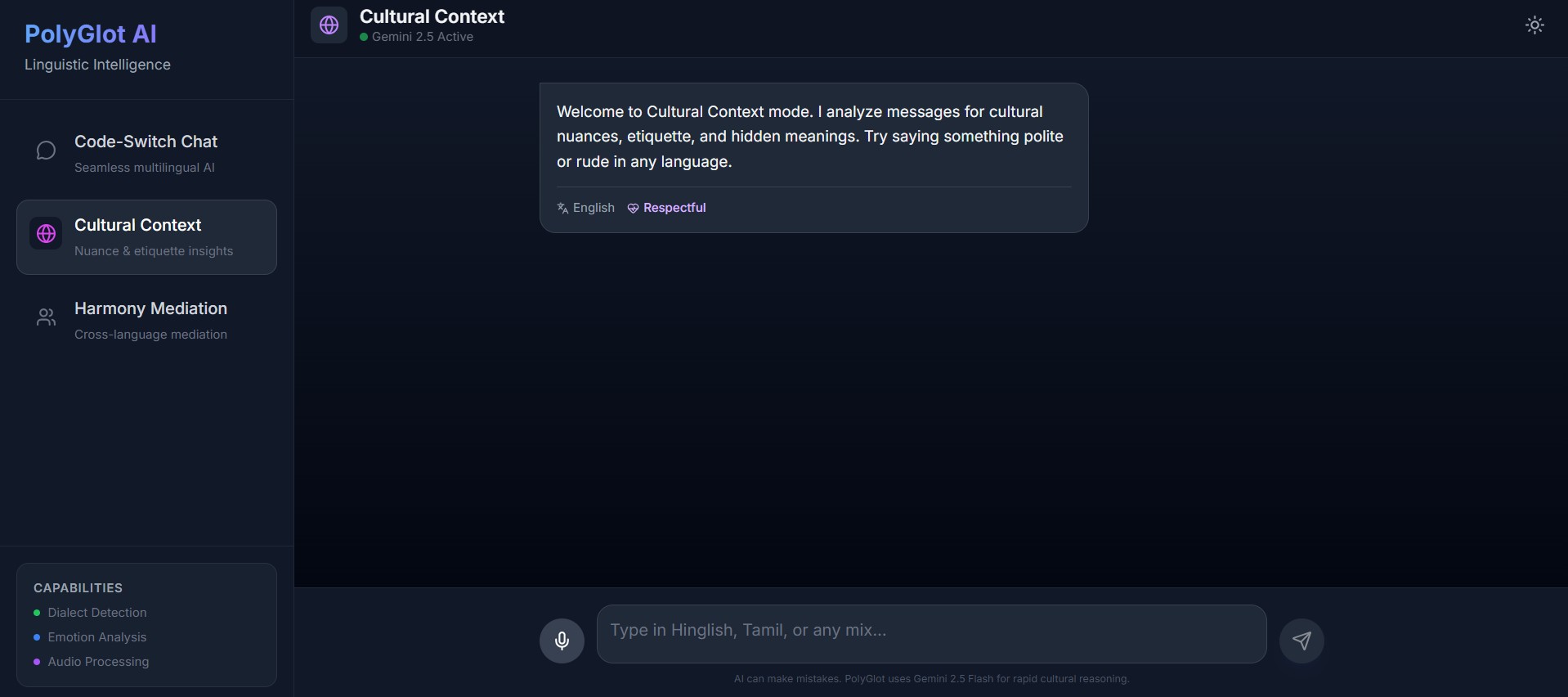
Demo of Cultural Context
Inspiration
Polyglot Harmony AI Bot
As international master’s students, we constantly navigate conversations across cultures, accents, and languages. Even when we speak English well, expressing ourselves authentically can be difficult. We think in mixed languages, we translate ideas mid-thought, and sometimes we lose confidence because English doesn’t carry the emotional clarity of our native tongues.
The idea for Polyglot Harmony AI Bot came directly from those lived experiences. It was born from late-night project meetings, misunderstandings caused by language barriers, and moments where we wished technology could bridge our communication boundaries.
Bringing this project to life — in a real, practical interface designed for people who need multilingual support without friction.
What it does
Polyglot Harmony AI Bot is built around three primary tools, each clearly visible in the left sidebar of the interface:
Code Switching chat
This is the heart of the chatbot. As shown in the screenshot, users can type freely in Hinglish, Tanglish, mixed English–Hindi–Tamil, or any combination of languages. The bot instantly understands the blended input and responds in a naturally mixed style. No interruptions. No lost meaning. No forced “proper English.” Just smooth, culturally aware communication. Helps the user speak freely in mixed languages, As polyglot understands the flow and grasps faster than you can imagine.
Cultural Engine
Behind every language is culture - gestures, idioms, tones, and expressions that don’t translate word-for-word. This tool helps the bot stay contextually aware of the user’s background and adapt its responses accordingly. Whether someone is from South India, Latin America, the Middle East, or Europe, the bot adjusts tone, politeness, references, and communication style. Detects social cues, Politeness levels & offers cultural insights
Harmony Mediation
Visible directly in your first screenshot, the Harmony Mediation Setup allows two individuals to choose:
- User A Language
- User B Language
Once the user clicks Start Mediation Session, the bot becomes a real-time bridge between the two languages. This feature was designed for students working in multicultural teams, communicating with non-English-speaking family members abroad, or helping peers who struggle with English fluency. The mediation feels natural — almost like having a multilingual human interpreter, but faster and more accessible. Acts as a bridge between two speakers with real-time conflicts, softening & translating.
How we built it
Integrated advanced multilingual capabilities using a Google API Key, enabling real-time language detection and translation. Built a clean UI with: A language selection modal (as in the screenshot) Sidebar navigation for the three tools Chat bubbles styled for smooth AI-to-user flow Implemented a microphone permission handler triggered after the “Start Conversation” action. Focused on delivering a minimal, professional interface that reflects the needs of multilingual users. Ensured the system supports rapid code-switching without losing context.
Challenges we ran into
- Keeping the flow natural when switching languages multiple times in the same sentence.
- Aligning translation accuracy with cultural nuance — not just literal words.
- Creating a consistent UI experience across all three tools.
- Handling browser microphone prompts in a non-disruptive way.
- Ensuring the bot remains engaging even when switching between very different languages (e.g., Tamil ↔ English).
Accomplishments that we're proud of
- Built a working mediation platform that looks and feels like a polished AI product.
- Achieved smooth mixed-language understanding based on real student communication patterns.
- Designed an interface that genuinely reflects the needs of international users.
- Created a tool that helps people express themselves fully — not just in “correct English,” but in their own voice.
- Brought to life the concept shown in the screenshots: clean visuals, responsive behavior, and accessible design.
What we learned
- True multilingual communication is emotional, not just technical.
- Code-switching is a natural human behavior that AI must adapt to, not restrict.
- Cultural context matters as much as vocabulary.
- UI simplicity is essential for globally diverse users.
- Working with API-driven language models requires careful handling of latency and translation quality.
What's next for Polyglot Harmony AI Bot
- Real-time voice-to-voice mediation between two speakers.
- A mobile version for day-to-day conversational support.
- Dialect-specific tuning (e.g., Nigerian English, Caribbean English, Arablish).
- Group mediation mode where every participant sees responses in their preferred language.
- Emotional tone adjustment to make replies sound more human and empathetic.
Built With
- gemini
- render
- typescript


Log in or sign up for Devpost to join the conversation.