-
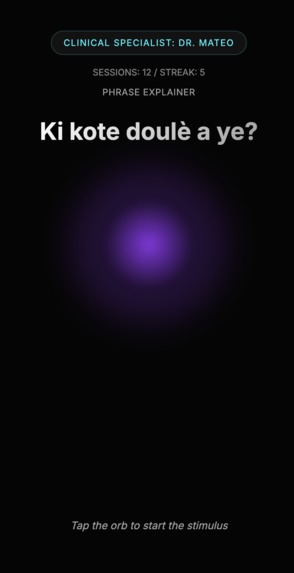
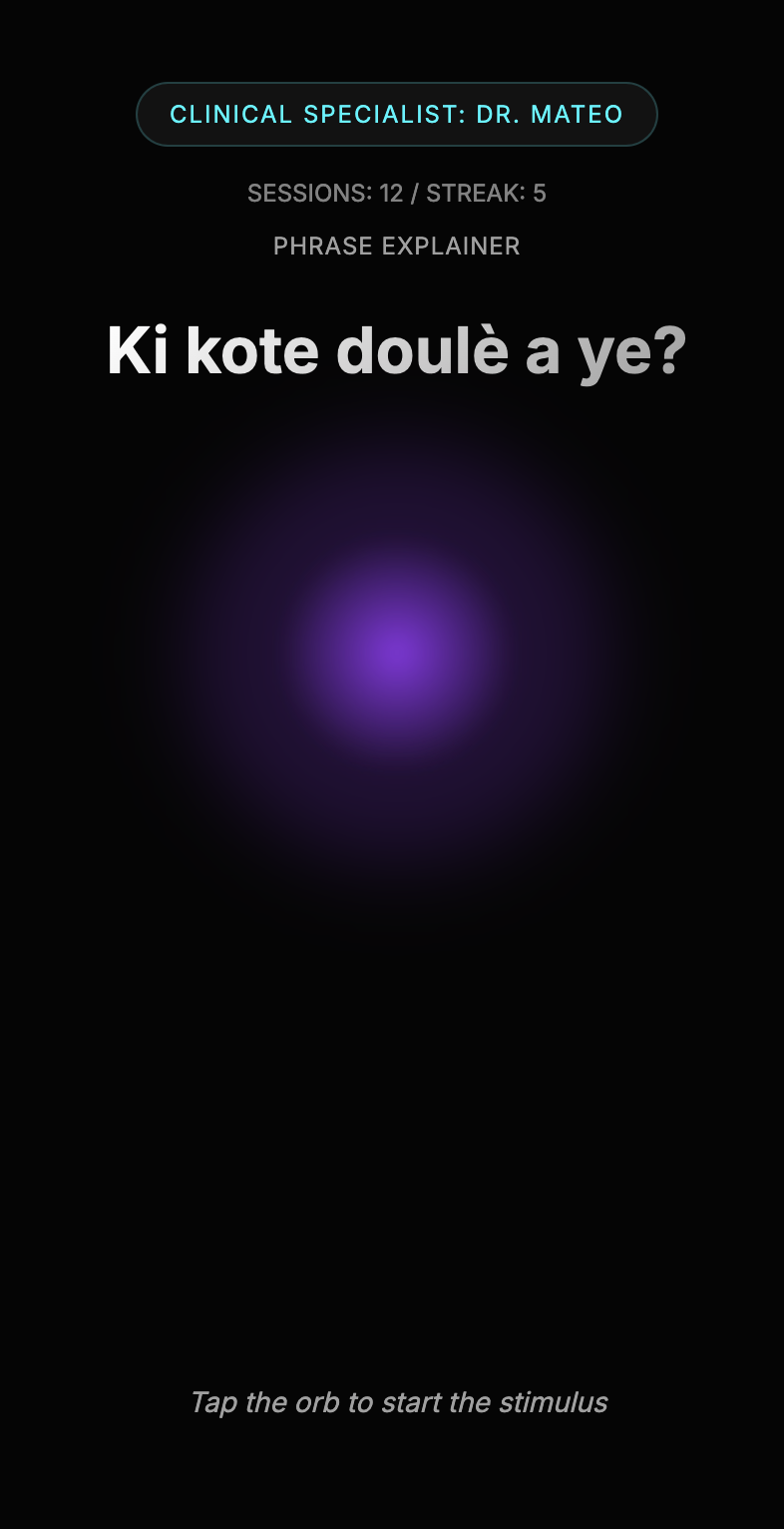
The Echo orb turns Haitian Creole phrases into interactive learning experiences with AI pronunciation and healthcare guidance.
Inspiration
I was inspired by the challenges Haitian Creole speakers face when navigating language barriers, especially in high-stakes conversations like healthcare. While AI language tools have improved significantly for widely spoken languages, many under-resourced languages still lack accurate speech recognition, pronunciation support, and culturally relevant explanations.
I wanted to explore how AI could help people not just translate words, but communicate with more confidence, clarity, and understanding.
What it does
Polyflow Echo is an AI-powered language and healthcare communication coach for Haitian Creole speakers.
For this hackathon, I built two core experiences:
AI Speech Practice with Echo: Users practice speaking Haitian Creole phrases, receive speech transcription, and get AI-powered feedback to improve pronunciation and confidence.
AI Medical Phrase Explainer: Users can explore healthcare phrases like “Rezilta MRI ou nòmal” and receive:
- When healthcare workers use the phrase
- A plain English explanation
- A patient-friendly breakdown
- Common follow-up phrases in Haitian Creole and English
Together, these features help bridge communication gaps between patients, providers, and language learners.
How I built it
I built Polyflow Echo by combining speech recognition, retrieval, and large language models into a lightweight web application.
The speech practice workflow uses AI transcription to understand spoken Haitian Creole and generate feedback. The Medical Phrase Explainer uses Tavily to retrieve relevant medical context and an LLM to summarize information into clear, accessible explanations.
I focused on building a fast prototype that demonstrates how AI can support real conversations in languages that are often overlooked.
Challenges I ran into
One of the biggest challenges was working with limited Haitian Creole AI resources. Existing speech and language models are generally optimized for high-resource languages, making accurate transcription, pronunciation feedback, and natural language generation more difficult.
Another challenge was designing AI explanations for healthcare contexts while keeping the experience educational and communication-focused rather than providing medical advice.
Accomplishments that I'm proud of
I built a working end-to-end prototype that connects speech recognition, AI reasoning, and healthcare communication support in a single experience.
I am especially proud that Polyflow Echo demonstrates how AI can be adapted for communities that are often underserved by existing language technology.
What I learned
I learned that building AI for under-resourced languages requires more than simply applying existing models. It requires thoughtful evaluation, better datasets, and systems that understand cultural and conversational context.
This project reinforced my belief that AI should expand access to technology, not just improve experiences for languages that already have strong support.
What's next for Polyflow Echo
Polyflow Echo is the next step in my ongoing effort to build better AI infrastructure for Haitian Creole. Before this hackathon, I developed a data pipeline to collect, clean, normalize, and evaluate Haitian Creole text and speech data, creating the foundation needed for more accurate language technology.
Moving forward, I plan to use these datasets to improve speech recognition, pronunciation feedback, and healthcare communication tools through stronger evaluation methods and custom models tailored for Haitian Creole.
My goal is to build AI systems that are not just translated into under-resourced languages, but truly understand and support the people who speak them.
Built With
- next.js
- openai
- react
- restapi
- speechapi
- typescript

Log in or sign up for Devpost to join the conversation.