Inspiration
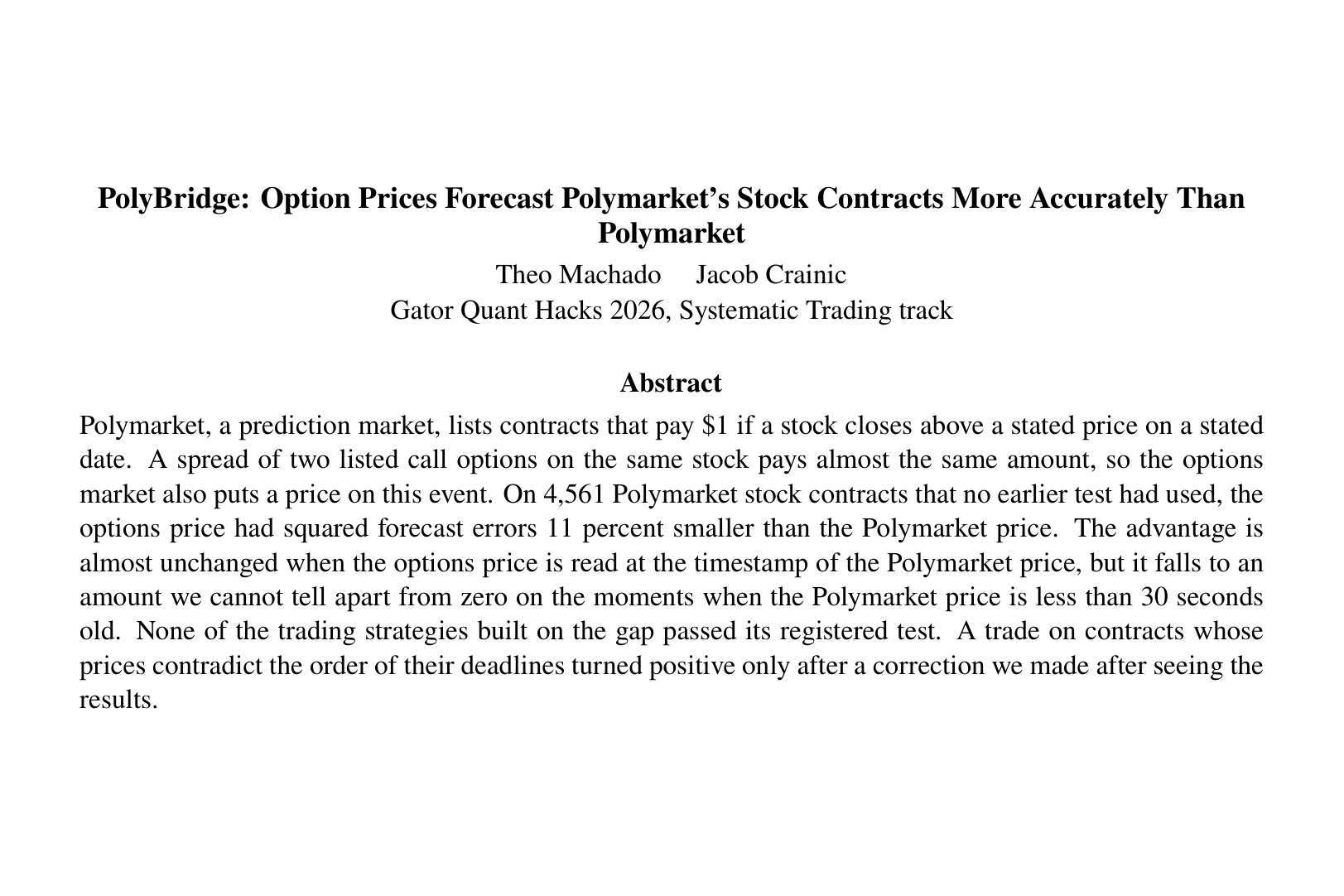
Polymarket now lists contracts that pay \$1 if a stock closes above a stated price on a stated date. Listed options on the same stock price the same event, so two markets quote one probability. We wanted to know which of the two forecasts better, because a market maker who quotes these contracts, or a fund that reads them as a signal, needs to know which price to trust.
What it does
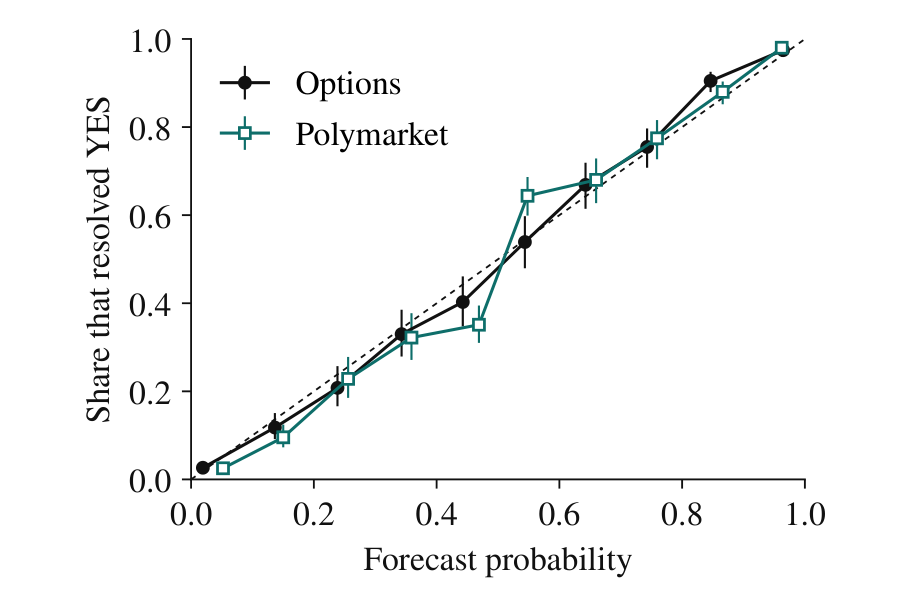
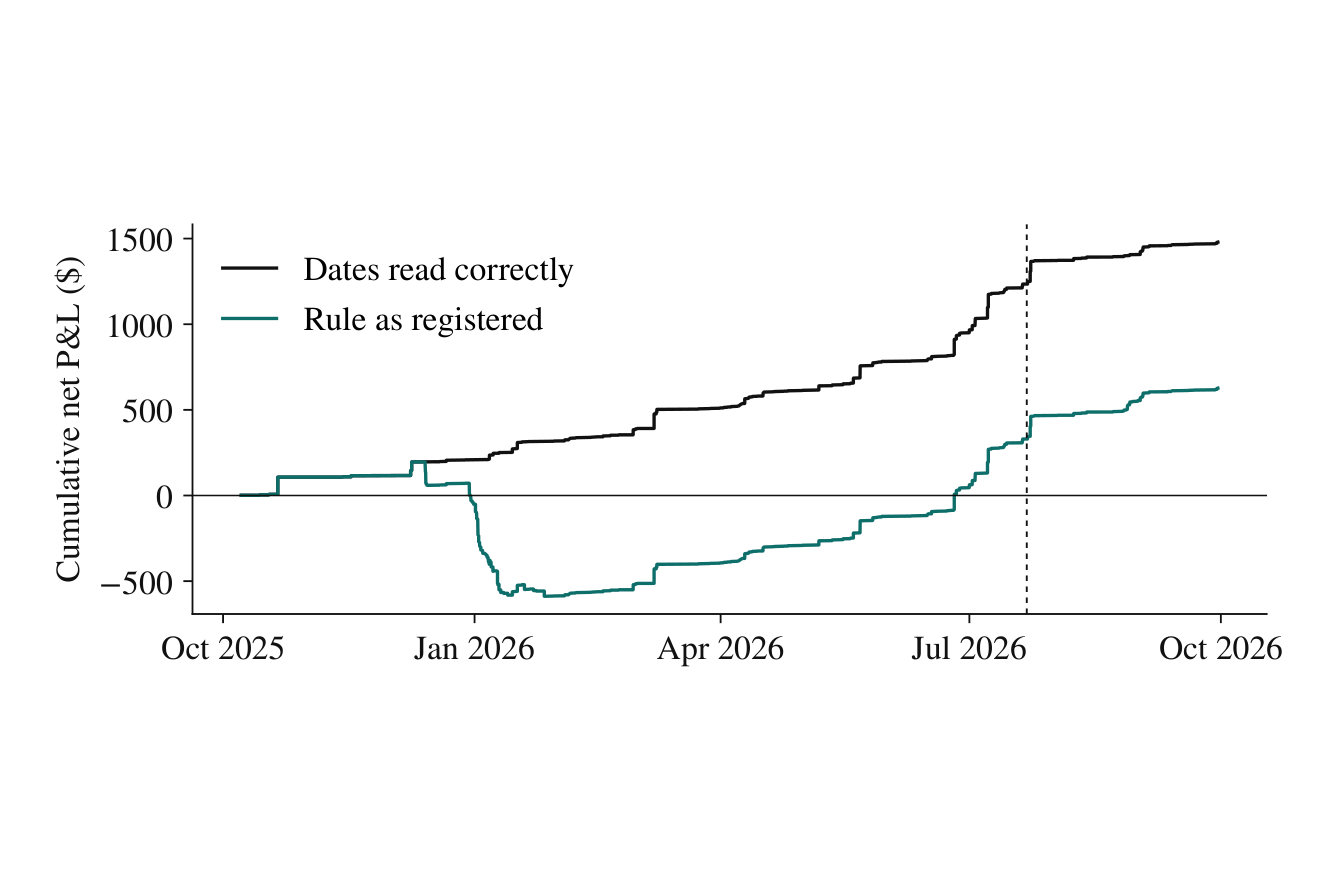
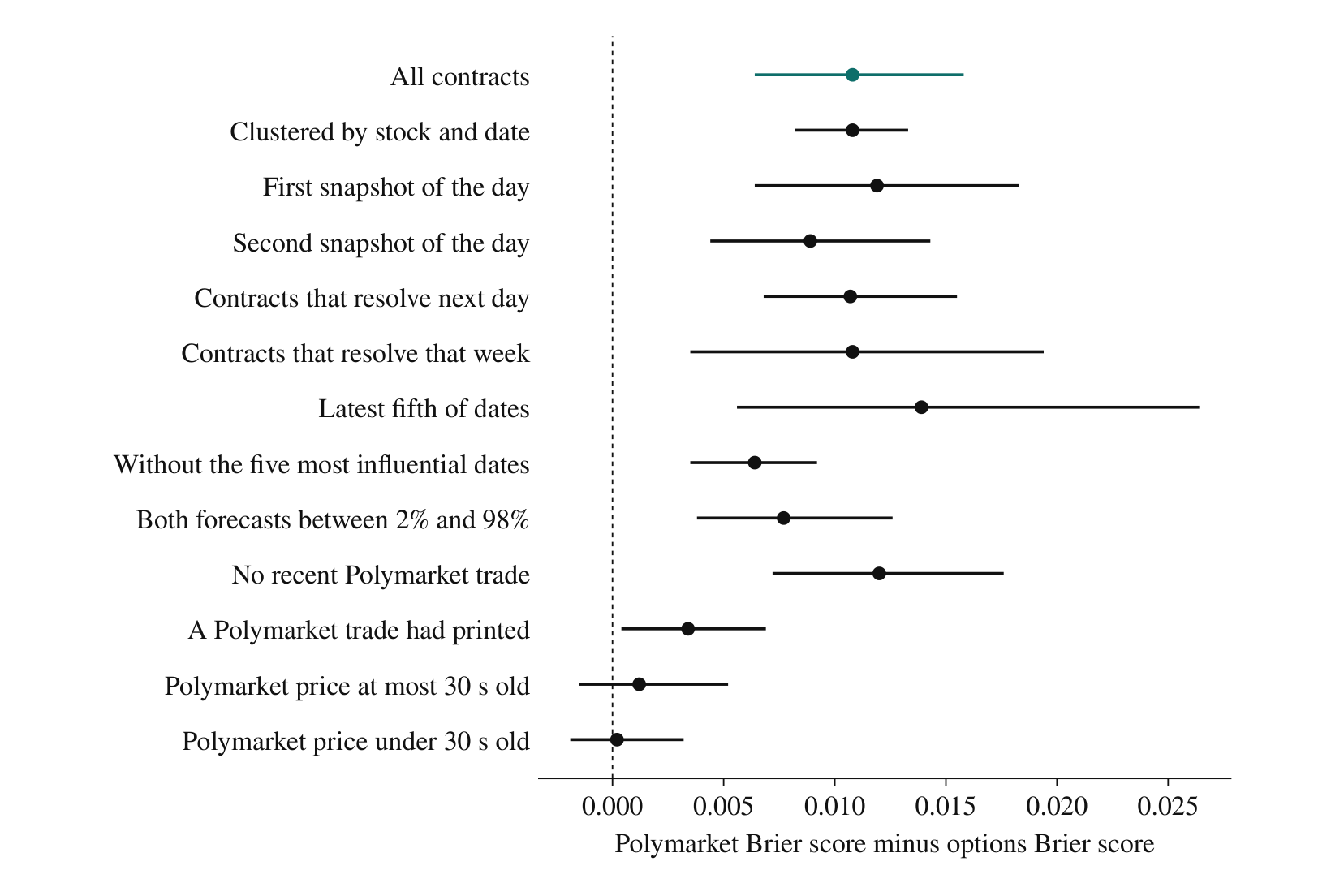
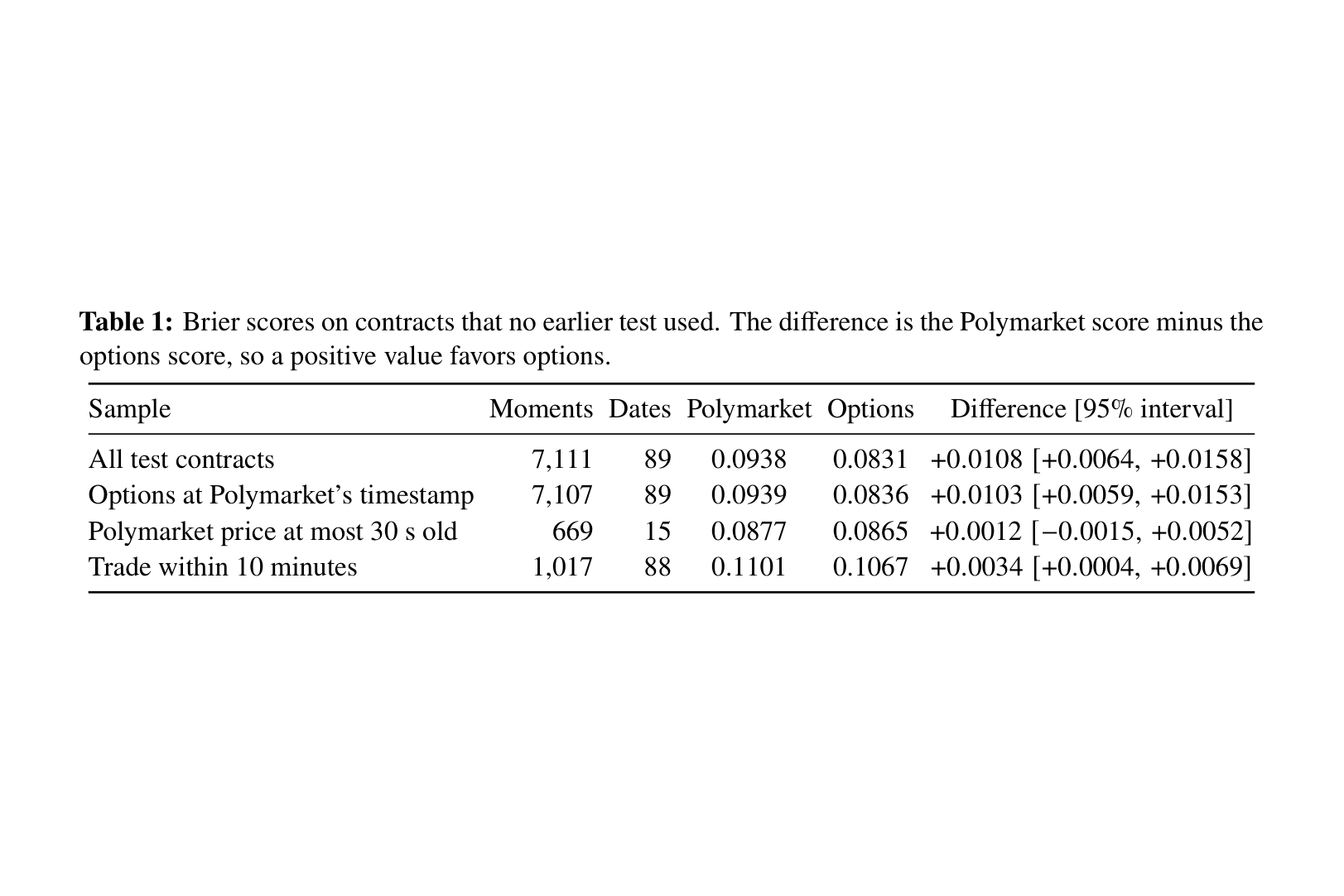
PolyBridge compares the two prices, tests trading ideas built on the gap with rules written before the data, and runs a trading system that acts on a signal only after it passes such a test. The options probability comes from a call spread around the contract's strike: $$\hat p_{\mathrm{opt}} = e^{rT}\,\frac{C(K_1) - C(K_2)}{K_2 - K_1}, \qquad \mathrm{Brier} = \frac{1}{N}\sum_{i=1}^{N} (p_i - y_i)^2$$ On 4,561 Polymarket stock contracts that no earlier test had used, the options price had squared forecast errors 11 percent smaller than the Polymarket price (Brier difference +0.0108, 95% interval +0.0064 to +0.0158). Measuring the options price at the exact timestamp of the Polymarket price leaves the gap at +0.0103, and it survives one moment per contract, equal weight per stock and date, and resampling whole calendar months.
How we built it
- Research pipeline (Python): every test has a method and a frozen contract list committed to git before any price or outcome was fetched, runs once, and reports date-clustered bootstrap intervals. Option quotes come from Massive, prediction-market data from Polymarket and Kalshi.
- Live engine (C++20 with pybind11 and simdjson): one C++ call parses each Polymarket websocket message, updates the order book and makes the trading decision in a median 3.4 microseconds on the live feed, excluding network time.
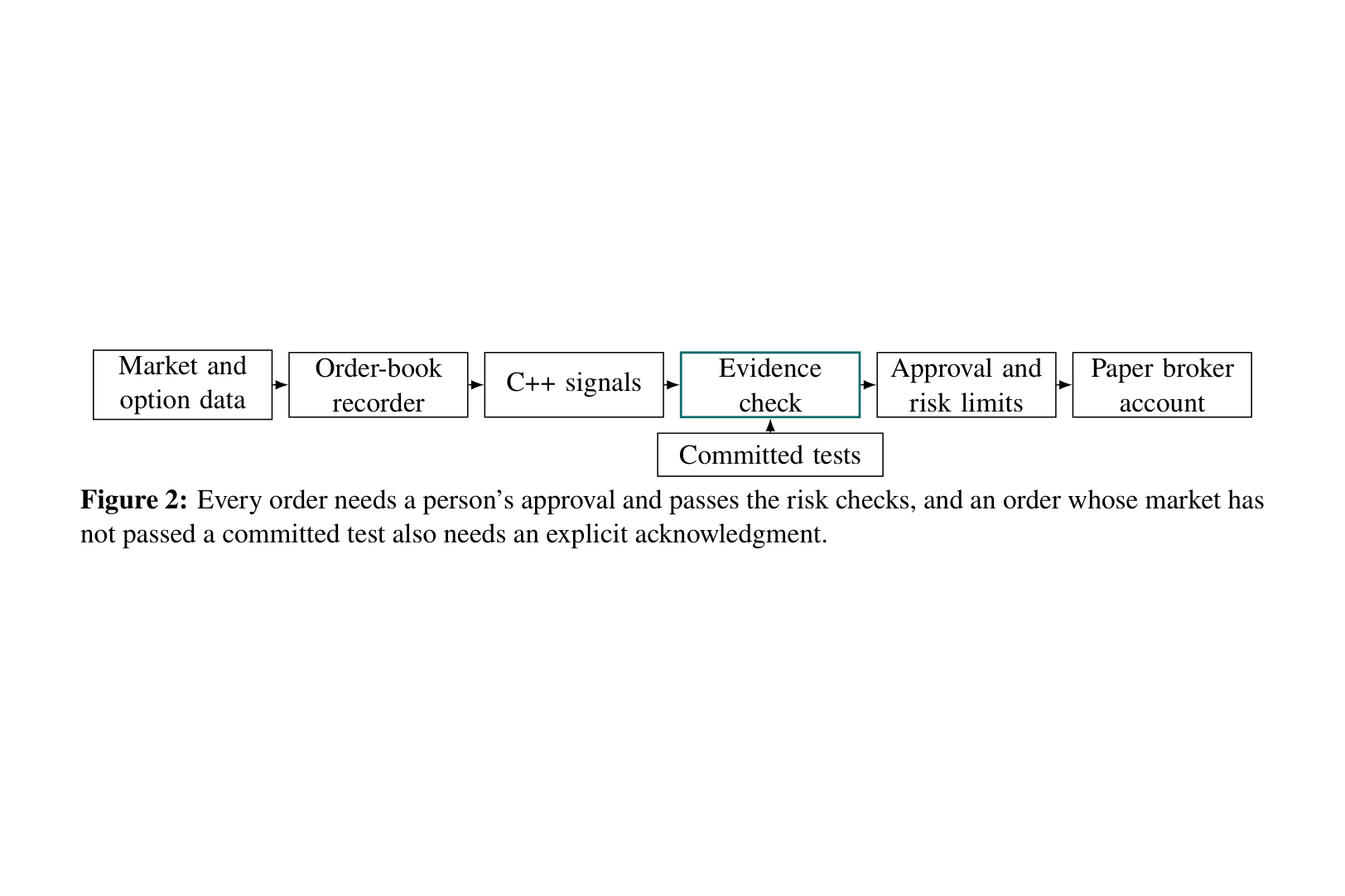
- Trading system (FastAPI and Next.js): each signal carries a label saying whether it passed a committed test, every order needs a person's approval, and the trading library blocks orders with stale quotes, wide spreads, thin books or broken position, exposure and loss limits. Orders route to a simulated broker or a Webull paper account.

Log in or sign up for Devpost to join the conversation.