-
-
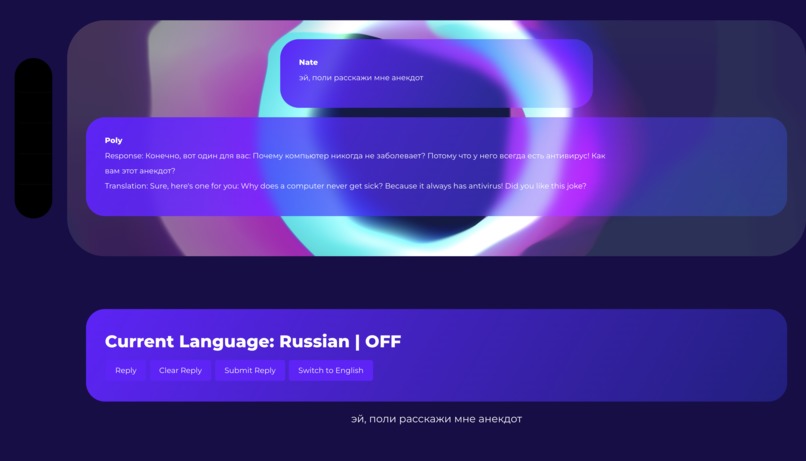
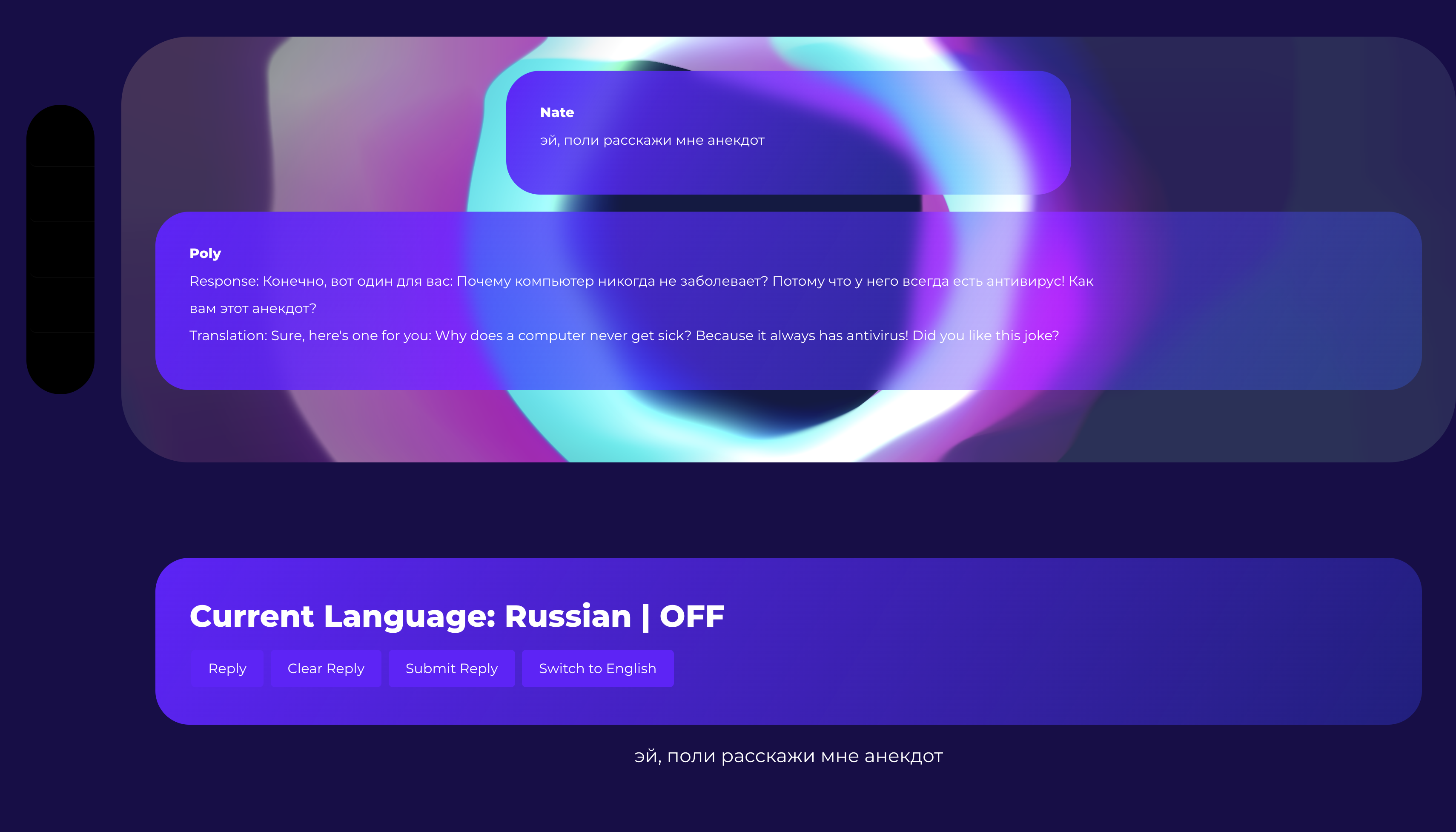
Poly Interaction Screen
-
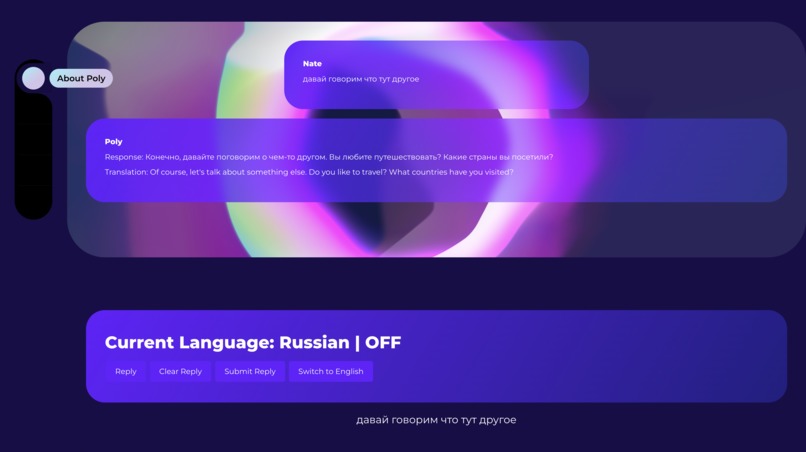
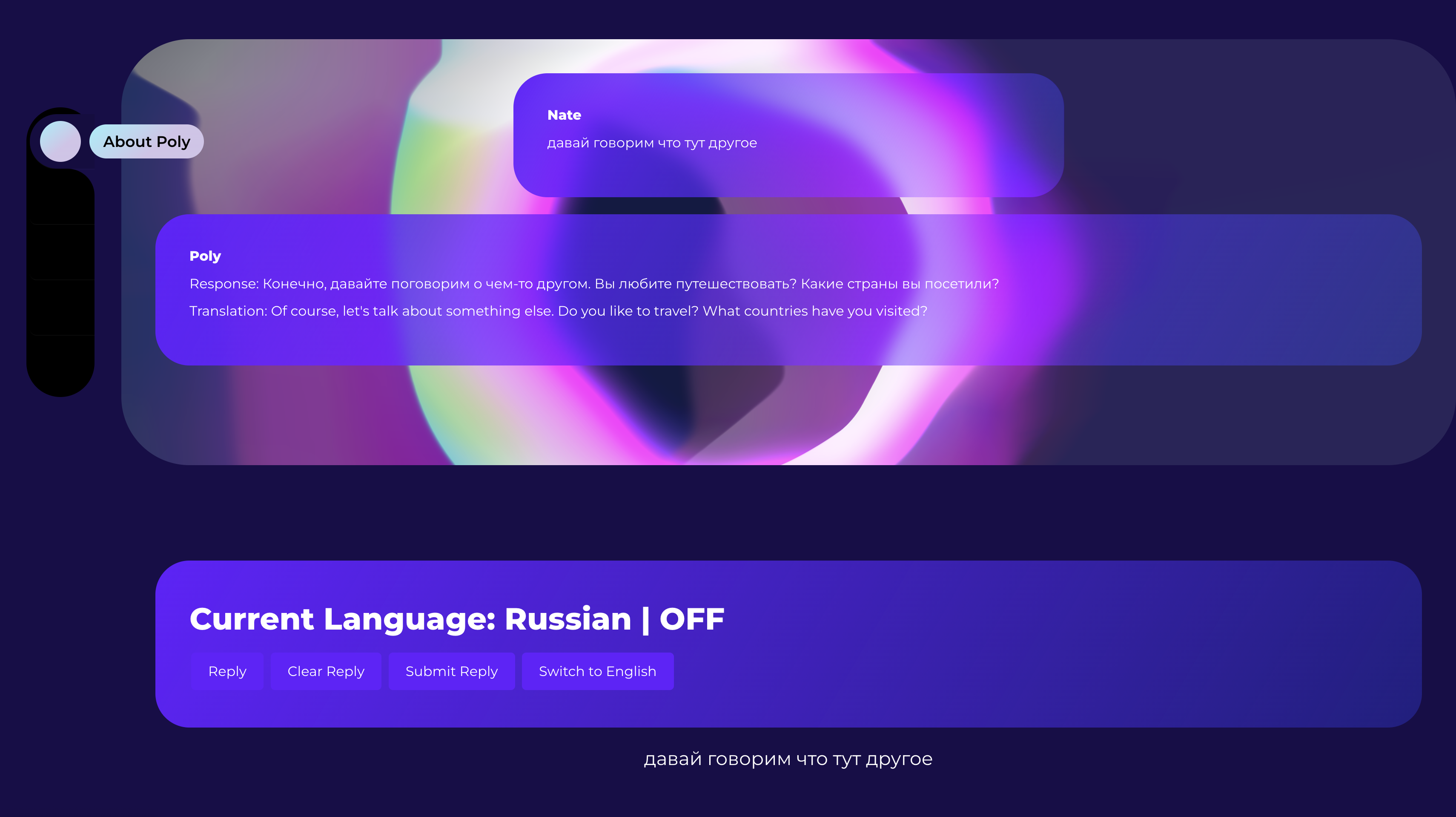
Poly Option Menu
Inspiration
My journey into language learning began with a burning desire to master the Russian language. Fueled by curiosity and passion, I immersed myself in every available learning method. I tried online courses, self-study, and even personal tutors. However, none of these approaches felt quite right. They were either too expensive, too rigid, or simply ineffective.
Everything changed last summer when I visited Estonia. Immersed in a new environment, I stumbled upon a profound idea. This was the idea of comprehensible input when learning a language. Comprehensible input is a process where you learn through exposure to language just beyond your current level of understanding. During my four weeks in Estonia, I absorbed more Russian than I had in months of traditional study. This experience ignited a new passion within me: to create a tool that could replicate this immersive, effective learning experience for anyone, anywhere.
What it does
Poly is an AI language partner that uses advanced AI to interact with users just like a real person, making language learning both engaging and personalized. It starts with words you know and gradually expands your vocabulary through comprehensible input. Poly is designed to provide a seamless, immersive language learning experience, accessible anytime and anywhere.
How we built it
The creation of Poly involved several key steps:
- Web Module for User Text Transcription: Developed a web module to capture real-time text input from users.
- Structured Prompts: Packaged the user input with carefully crafted prompts designed to guide the learning process.
- Session-Preserved Context: Implemented a system to preserve session context, which is then sent to OpenAI to generate meaningful responses.
- Text-to-Speech Conversion: Utilized OpenAI’s text-to-speech API to give a voice to the AI, making interactions more natural and engaging.
- Detailed Feedback Loop: Utilized databases to maintain a running list of words the user has learned, encountered, and mastered to ensure the user is being pushed just beyond their limits.
Challenges we ran into
Building Poly was not without its hurdles:
- Maintaining Context: One of the significant challenges was maintaining conversational context within the character limits imposed by OpenAI. I had to develop strategies to condense and preserve essential information efficiently.
- Prompt Engineering: Crafting effective prompts required extensive research and experimentation. Learning how to structure inputs to guide the AI towards producing helpful, relevant outputs was challenging.
- Solo Development: As a one-man team, I faced numerous technical and logistical challenges. Each obstacle required me to acquire new skills and knowledge, often through trial and error. I would have of course loved to have other teammates but on short notice, it was hard to find people who share the same passion for languages that I do.
Accomplishments that we're proud of
Despite the challenges, I am proud of creating a functional and engaging AI language partner that effectively mimics the immersive experience of comprehensible input. Developing Poly has been a testament to my perseverance and passion for language learning.
What we learned
Through this project, I've gained valuable insights into AI, natural language processing, and the intricacies of effective language acquisition. I learned the importance of context preservation in conversations, the nuances of prompt engineering, and the beauty that comes with collaboration. (Even if they are your competitors >:)!
What's next for Poly
My vision for Poly extends beyond the hackathon. I am committed to refining its capabilities and expanding its features to make language learning even more accessible and effective. Future developments may include adding support for more languages, enhancing the AI’s conversational abilities, and incorporating user feedback to continuously improve the learning experience. Regardless of the outcome of this hackathon, I am glad I worked on this project. At the very least, I will be using it.
Built With
- css3
- html5
- ispeech-text-to-speech
- javascript
- openai
- speechrecognition


Log in or sign up for Devpost to join the conversation.