-
-
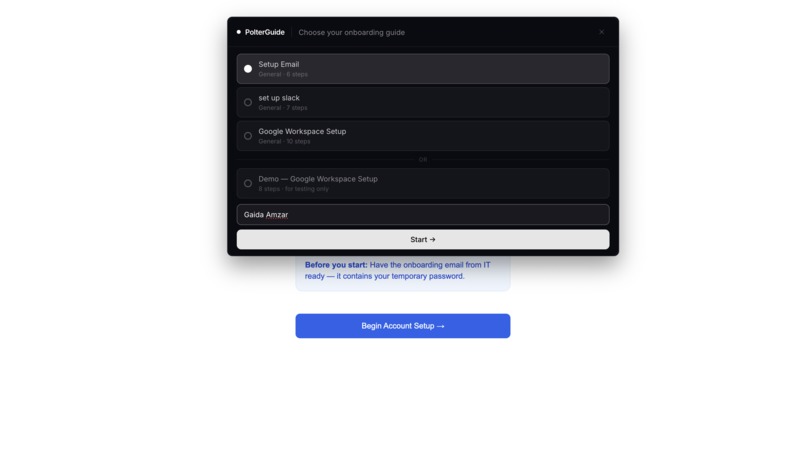
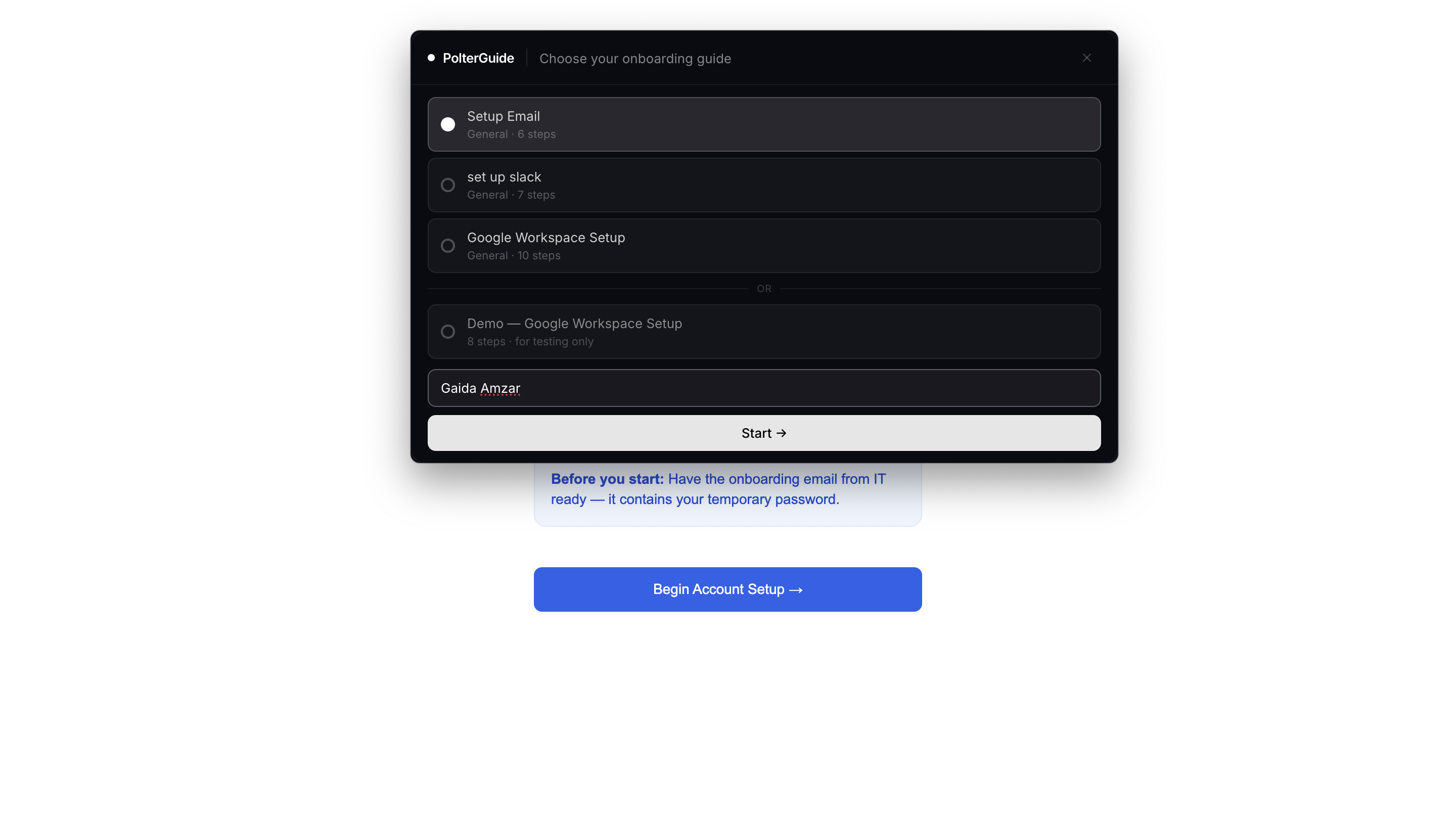
Choose onboarding task to do
-
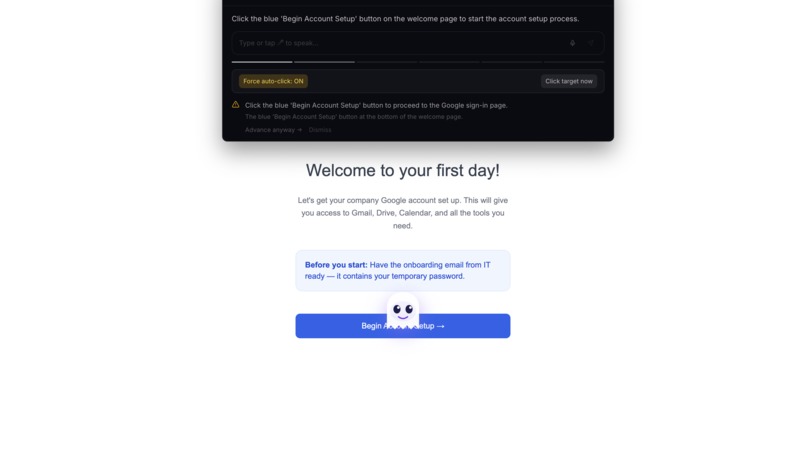
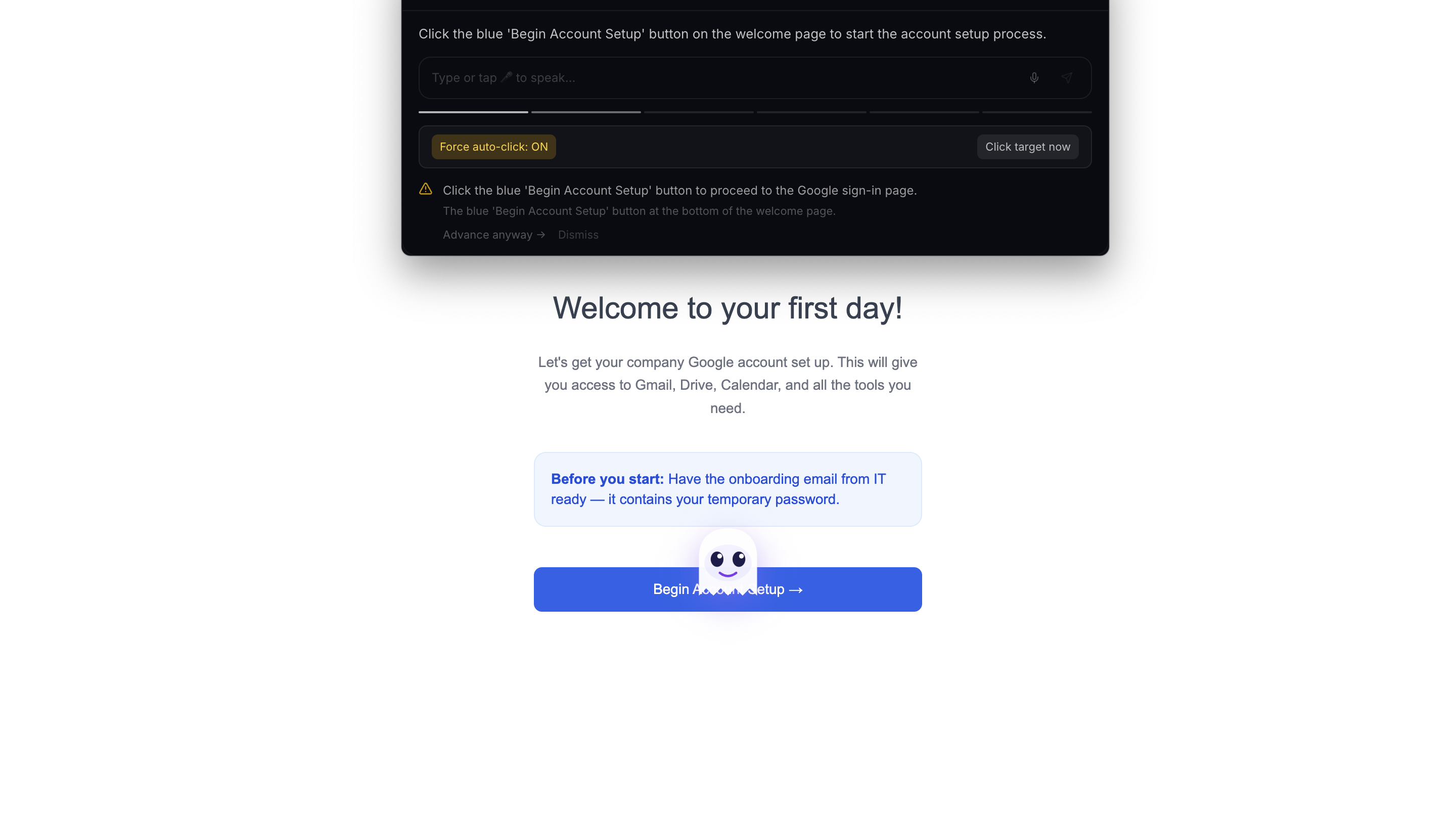
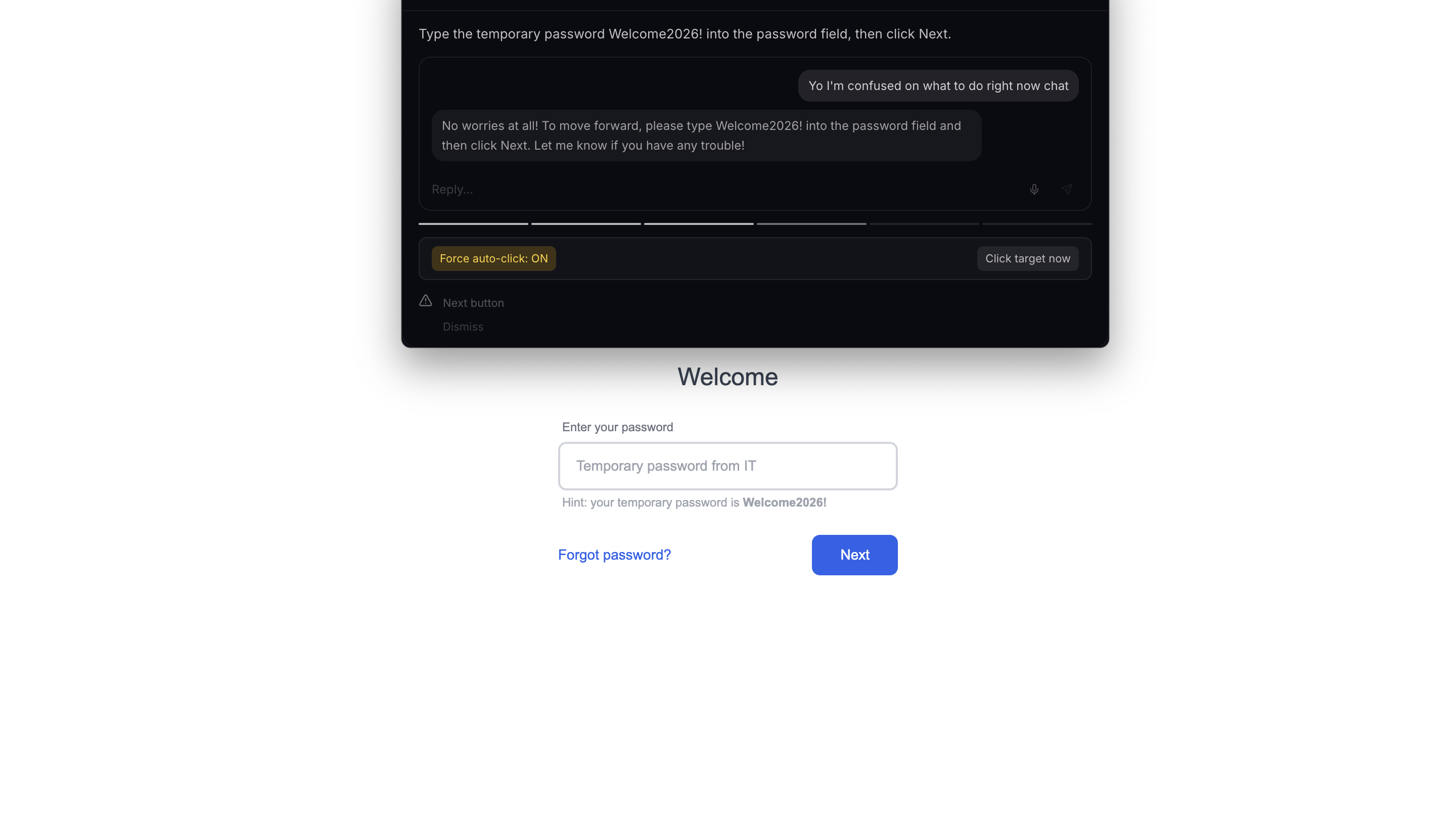
AI takes you through the steps
-
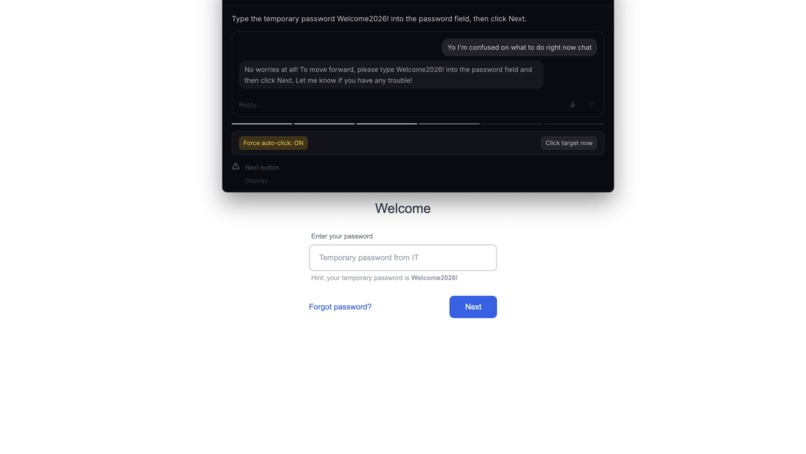
User can ask the AI questions about the task if they are confused
-
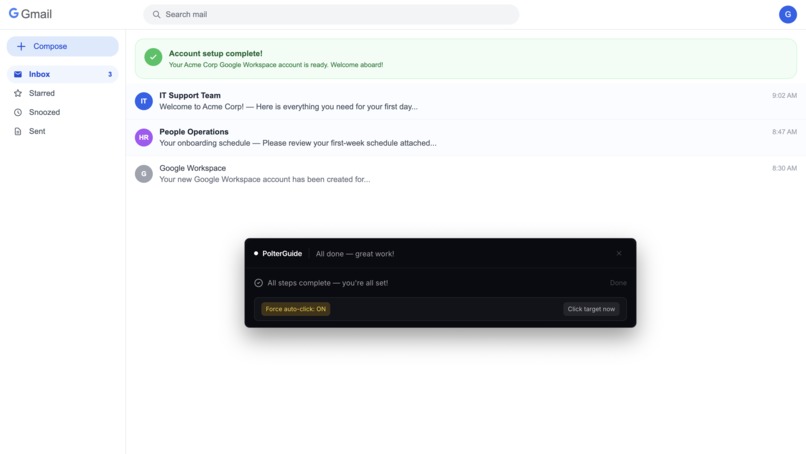
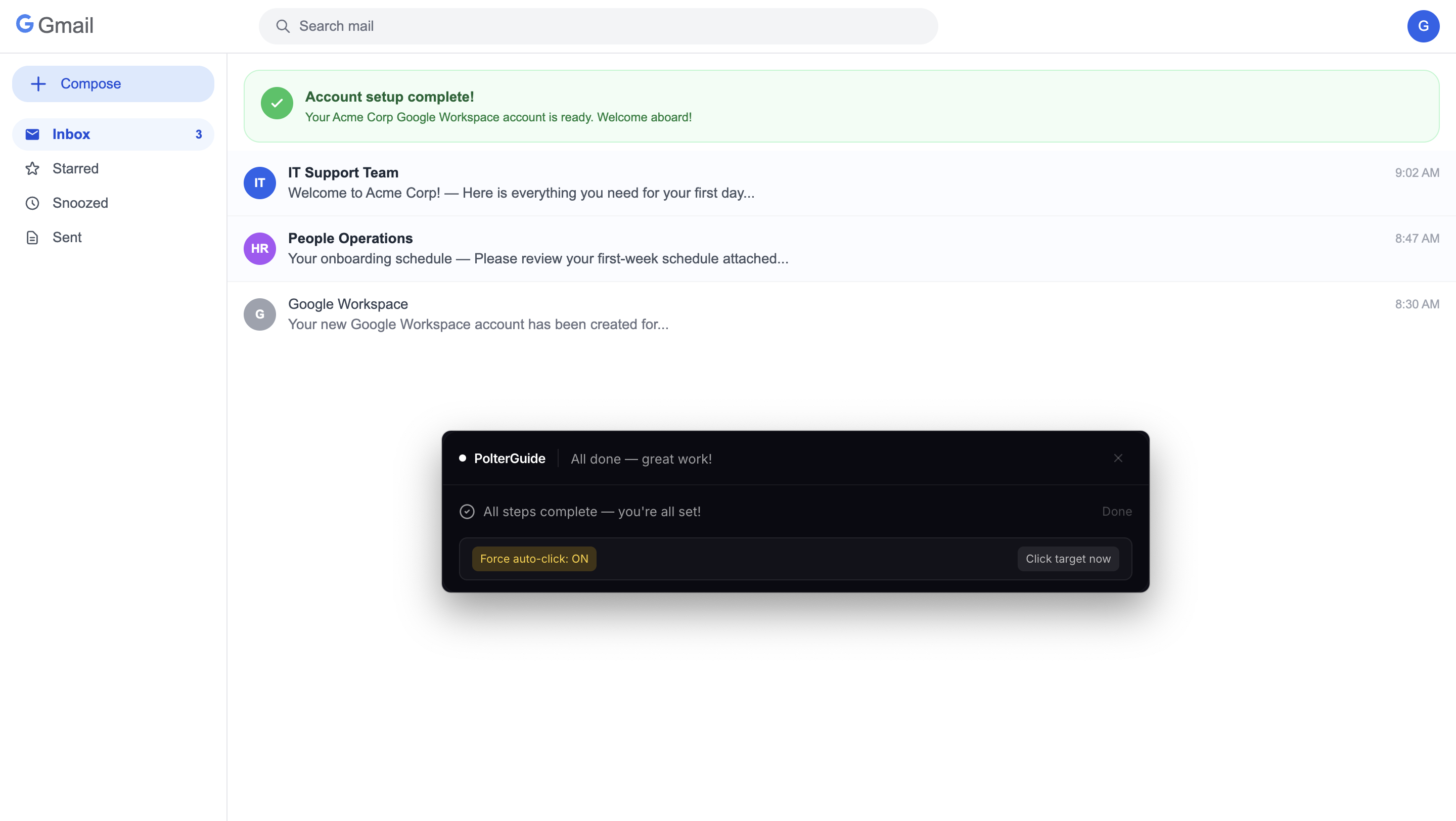
Finished Task
-
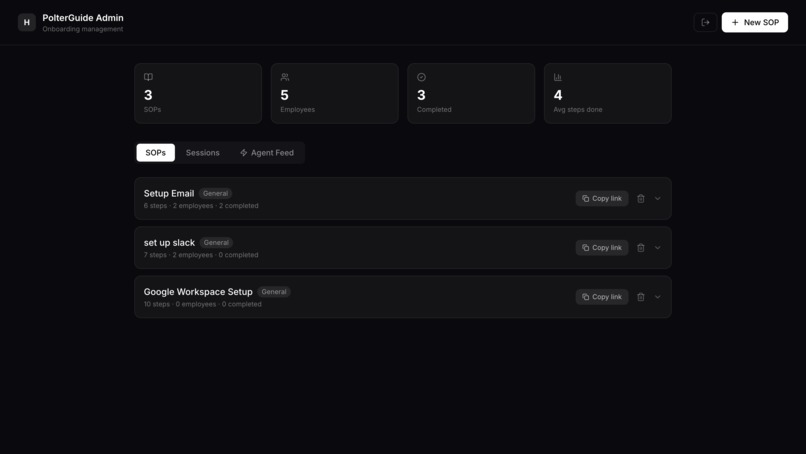
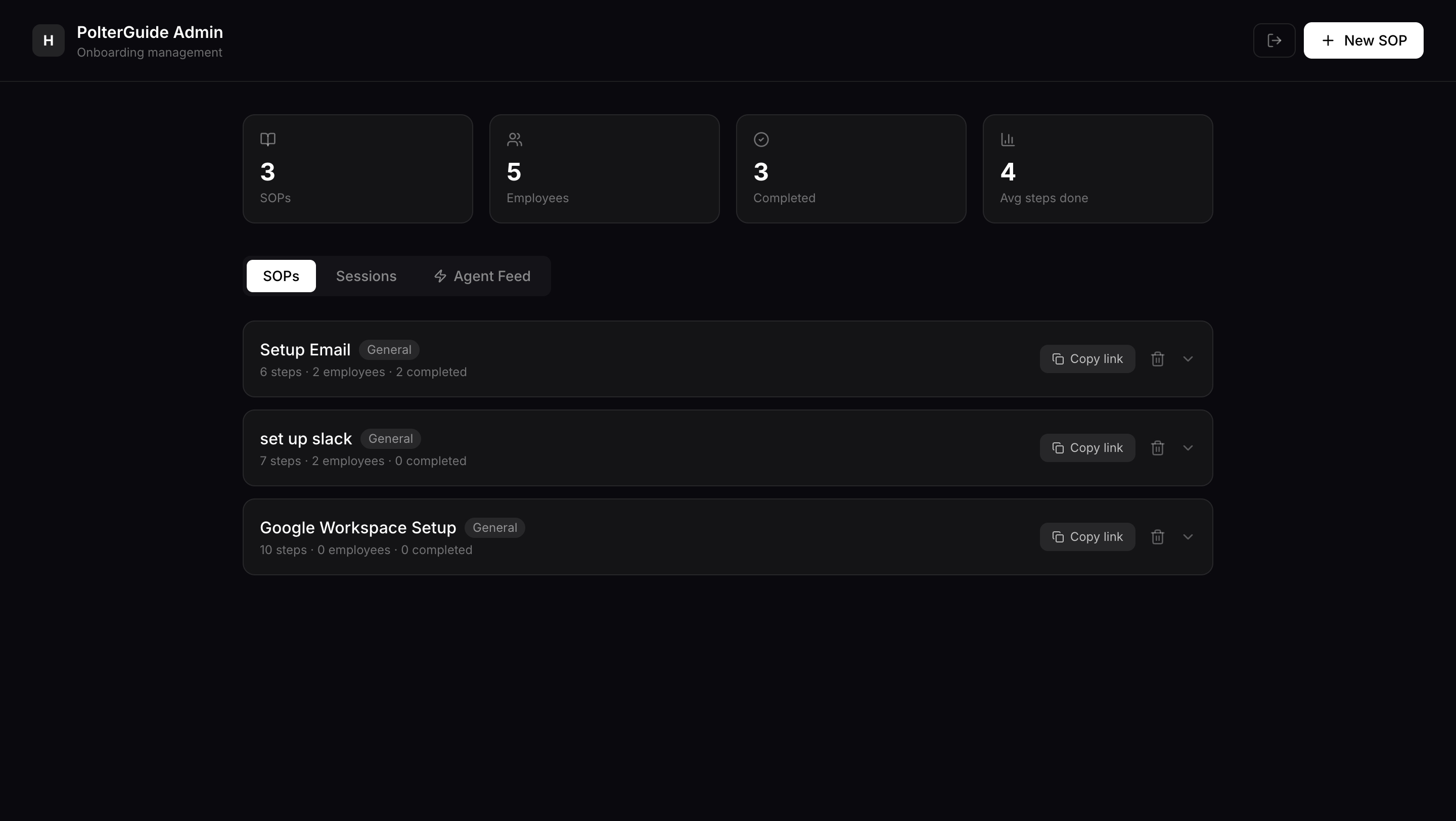
Admin: Manage onboarding tasks
-
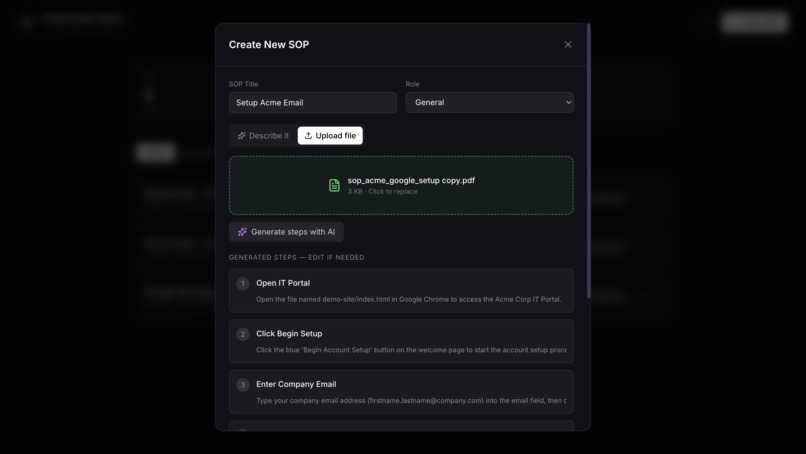
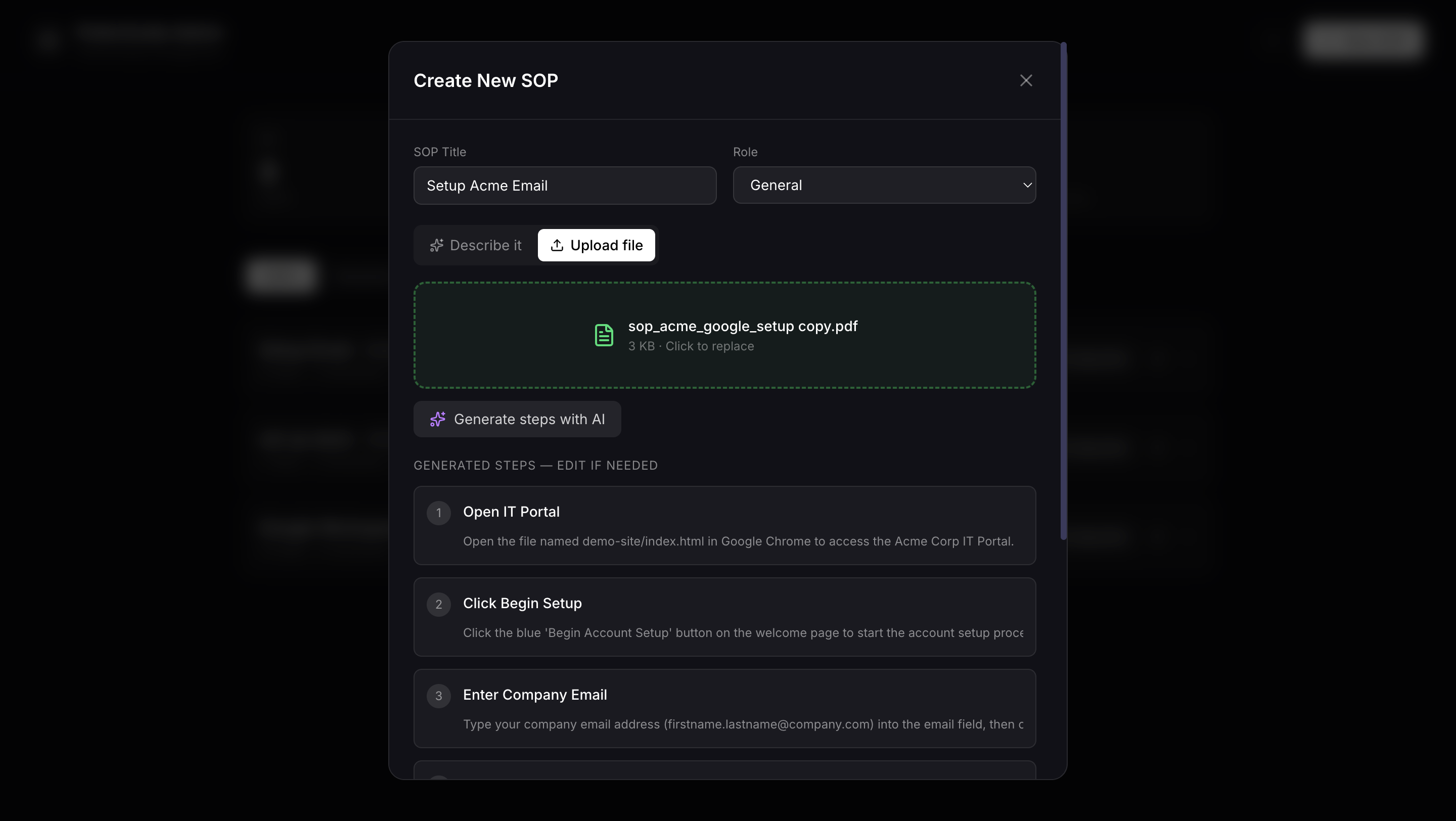
Admin: Create the steps to guide user
PolterGuide — Zero Training. Instant Proficiency.
Modern B2B SaaS dashboards look like spaceship control panels. Companies bleed up to 30% of new users to onboarding friction. Customer Success Managers burn half their week playing human GPS on Zoom. Static PDFs get ignored. Great software shouldn't come with homework.
So we built PolterGuide.
What it does
PolterGuide is an Electron desktop app that acts as an agentic AI co-pilot, running as a transparent overlay on top of any application. It replaces manual tutorials with a Ghost Cursor — an AI-controlled cursor that physically navigates the UI and executes actions in real time, driven by a simple voice command or chat message.
Administrators upload their existing help documents (PDFs) to the dashboard. That's it. PolterGuide's AI parses the text and instantly generates a live, deployable onboarding flow. No re-writing docs. No recording tutorials. No Zoom calls. Less reading. More doing.
Users can also chat directly with the co-pilot mid-task — asking questions in plain language and getting spoken, contextual answers without ever leaving the app.
How we built it
The frontend is built with React 19, Vite, and Tailwind CSS v4, with Framer Motion driving the Ghost Cursor animations and the Web Speech API handling voice input. This runs inside an Electron desktop layer that renders a transparent cross-window overlay on top of any app.
The backend is Python 3 and FastAPI, using WebSockets for sub-100ms real-time step streaming. PyPDF and Pillow handle document parsing, with state routed through Firebase. ElevenLabs provides spoken voice responses.
The AI layer is built on the Fetch.ai uAgents framework, with four agents running in parallel. The Knowledge Agent uses dense vector embeddings to retrieve the right workflow from uploaded PDFs. The Vision Agent uses Google GenAI to parse the DOM and extract precise target coordinates to drive the Ghost Cursor. The Context Agent maintains task state across steps. The Completion Agent synthesizes the final instructions and streams them back.
Challenges
Bridging the asynchronous event loops of Fetch.ai's agents with a synchronous React frontend required building a highly resilient WebSocket layer from scratch. Getting the Vision Agent to consistently map visual UI elements to exact numerical coordinates was the other major hurdle — it took heavy prompt engineering and retry logic to make cursor movements reliably accurate.
What we're proud of
Watching the Ghost Cursor autonomously navigate a complex dashboard — driven entirely by a parsed PDF and a single voice command — was a genuine breakthrough moment. We also managed to make an incredibly complex multi-agent backend feel completely invisible to the end user.
What's next
We're building toward proactive intervention — letting the Vision Agent detect rage-clicking and offer help before the user even asks. Beyond that, we want to ship a lightweight embeddable SDK so any SaaS product can drop PolterGuide into their own app natively, without requiring a desktop install. We're also expanding the live AI conversation layer so users can ask follow-up questions mid-task and get real-time spoken answers — making the co-pilot feel less like a tool and more like a teammate.
Built With
- electron
- fastapi
- fetch.ai
- firebase
- google-genai
- python
- react-19
- tailwind-css
- uagents
- vite
- websockets


Log in or sign up for Devpost to join the conversation.