-
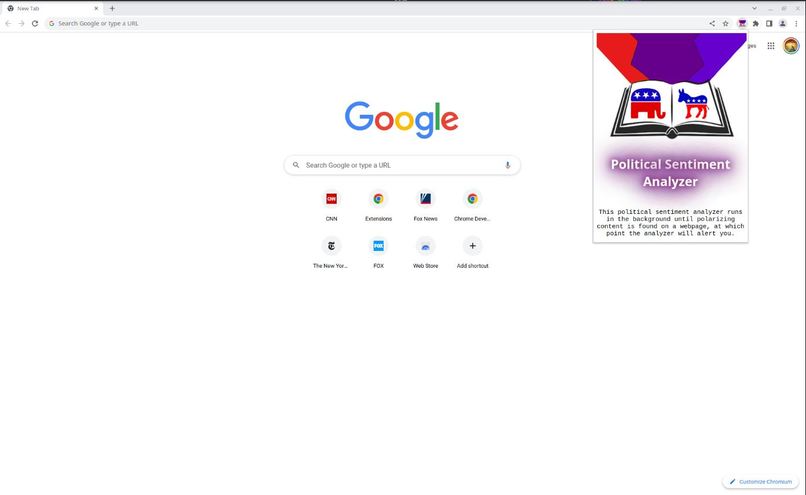
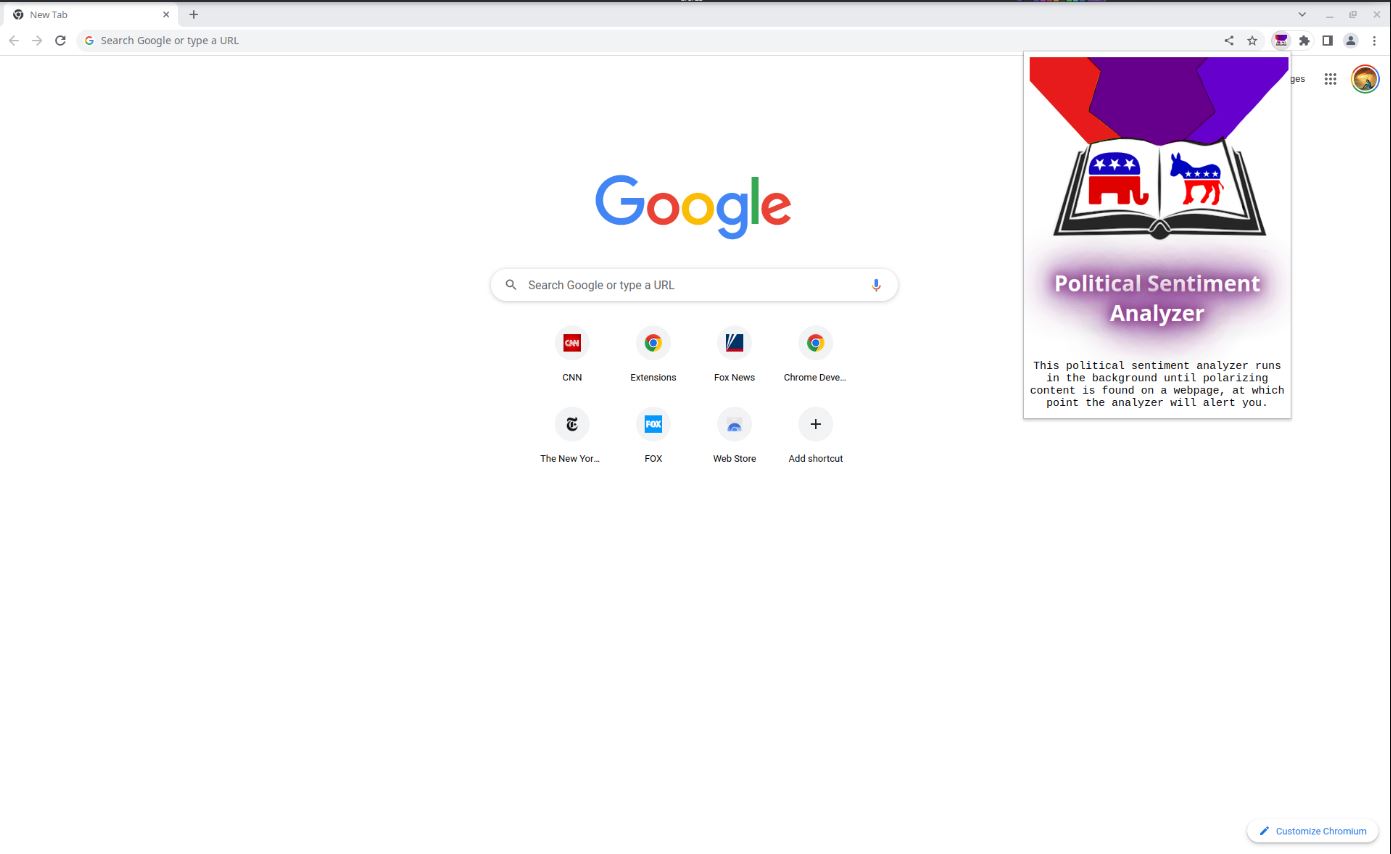
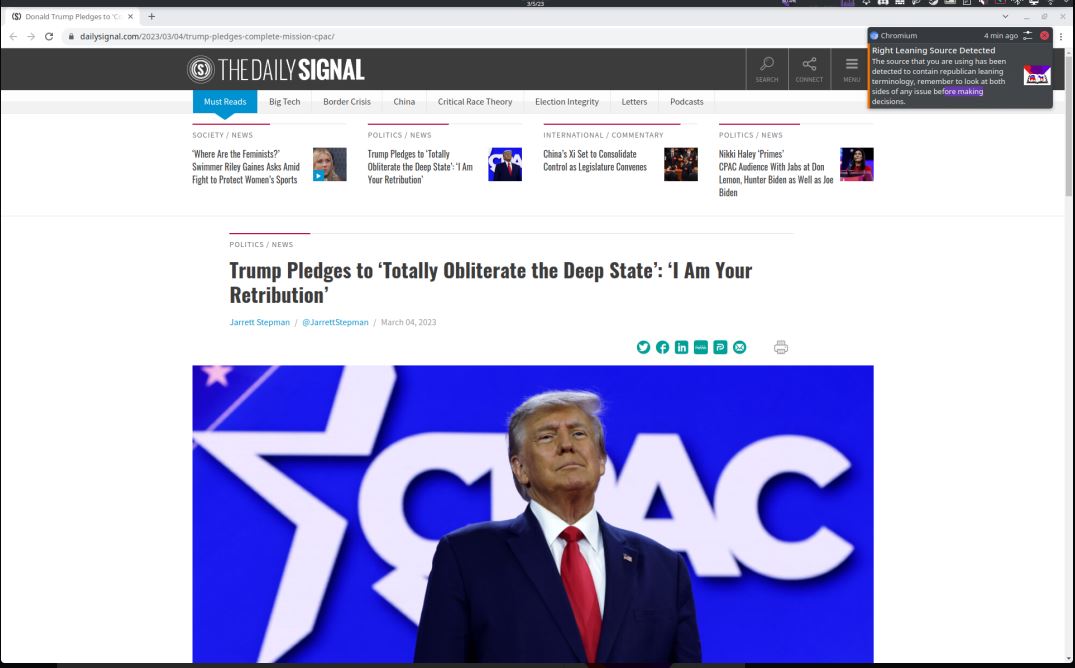
This is the pop up for the Chrome extension
-
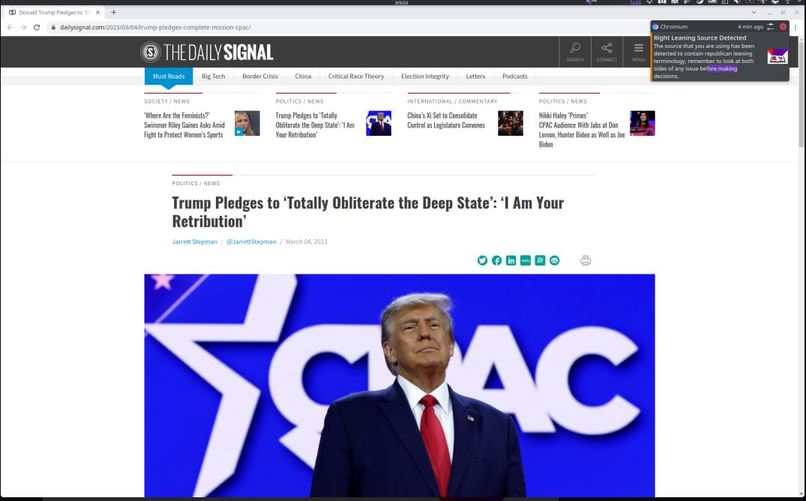
The pop-up detects if the source has a political bias
-
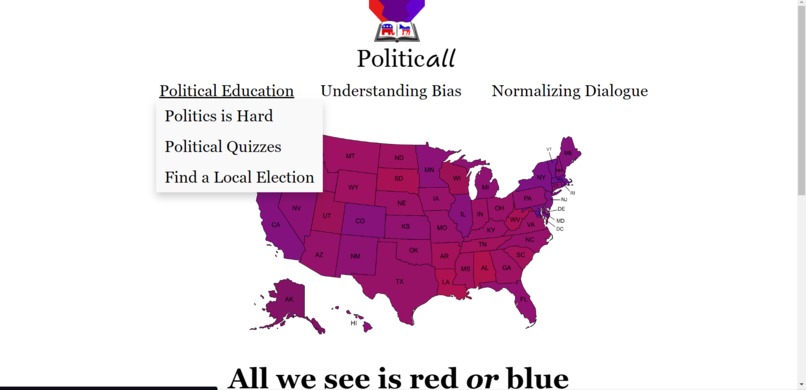
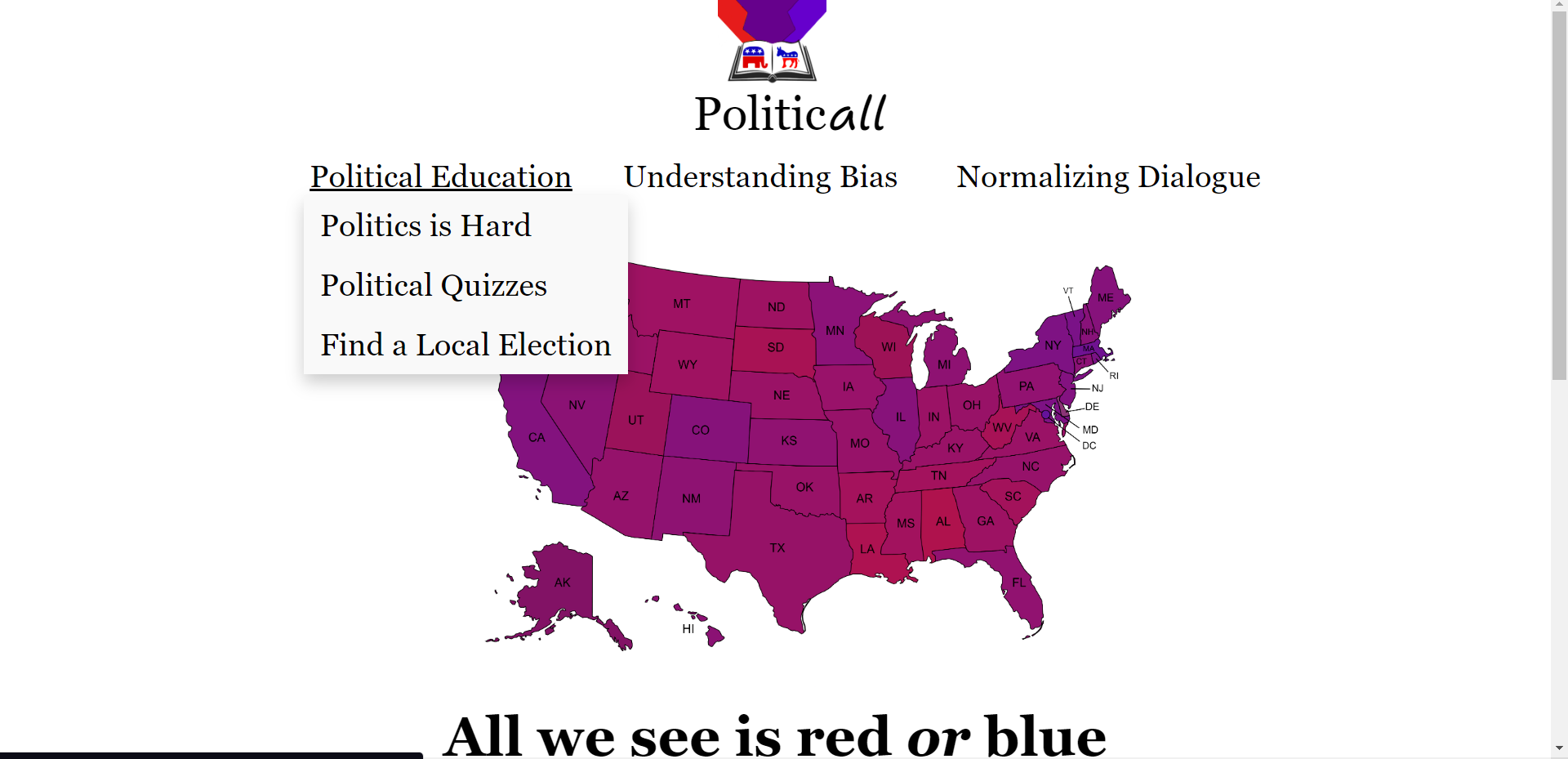
This part of the website showing the political composition of each state along with a drop-down menu for easy navigation
We are in General Track
Source for data used to train the model : https://www.kaggle.com/datasets/timospinde/mbic-a-media-bias-annotation-dataset
Inspiration
Political bias is omnipresent in our daily lives. People acknowledge that it is a problem, but there haven't been many proposed solutions. Introducing politicall: the website/tool which allows you to better explore your political views, understand bias in your daily internet usage (using a free chrome extension which utilizes the power of deep learning!), and even meet new people to open a political dialogue. We think that these simple steps will make you a more informed and productive citizen and we can't wait for you to try our project out!
What it does
The chrome extension uses web scraping in order to take the first paragraph of a news website. It then sends it to a deep learning model in order to predict whether the statement has a liberal or a conservative bias. This will then be sent back to the user to confirm if the source is ultimately liberal or conservative. This helps the user understand which sources are bias. The website offers resources to learn more about one's own political leanings, displays upcoming local elections from a user-entered location, displays the political leanings of major media sites, displays events to discuss politics within the local community, and includes an embedded form to find someone to talk to about politics.
How we built it
The chrome extension was built using the chrome extension framework (in JavaScript/HTML/CSS). The Deep Learning model was built using Google's BERT Model in Python. We trained the model on a kaggle data set that had data classified based on if a sentence originated from a conservative or liberal source. BERT was able to be trained on this data to be able to detect conservative vs. liberal sources. The website was built using vanilla HTML/CSS/JavaScript.
Challenges we ran into
There were various challenges that we ran into. One challenge we faced was exporting the BERT model to JavaScript. That was never fully fixed. Another challenge was that our team had almost no experience with design, so it was a learning experience.
Accomplishments that we're proud of
The model was successfully trained and able to detect whether a source was liberal or conservative at a high percentage (unfortunately it still did not work in JavaScript). We are also proud of the website as it is easy to navigate and looks neat and professional.
What we learned
We learned about various fields we did not have experience in such as machine learning, front end design, and Chrome Extension development. One of our members learned the basics of css, html, and how to use git push and pull.
What's next for Politicall
What would be next would be to hopefully fully integrate the AI. Also, make it a non-profit so it can reach as many people as possible.

Log in or sign up for Devpost to join the conversation.