-
-
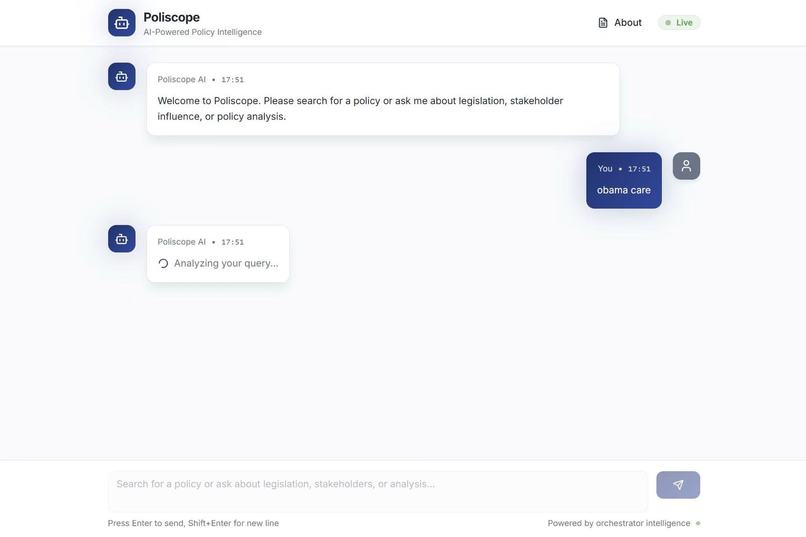
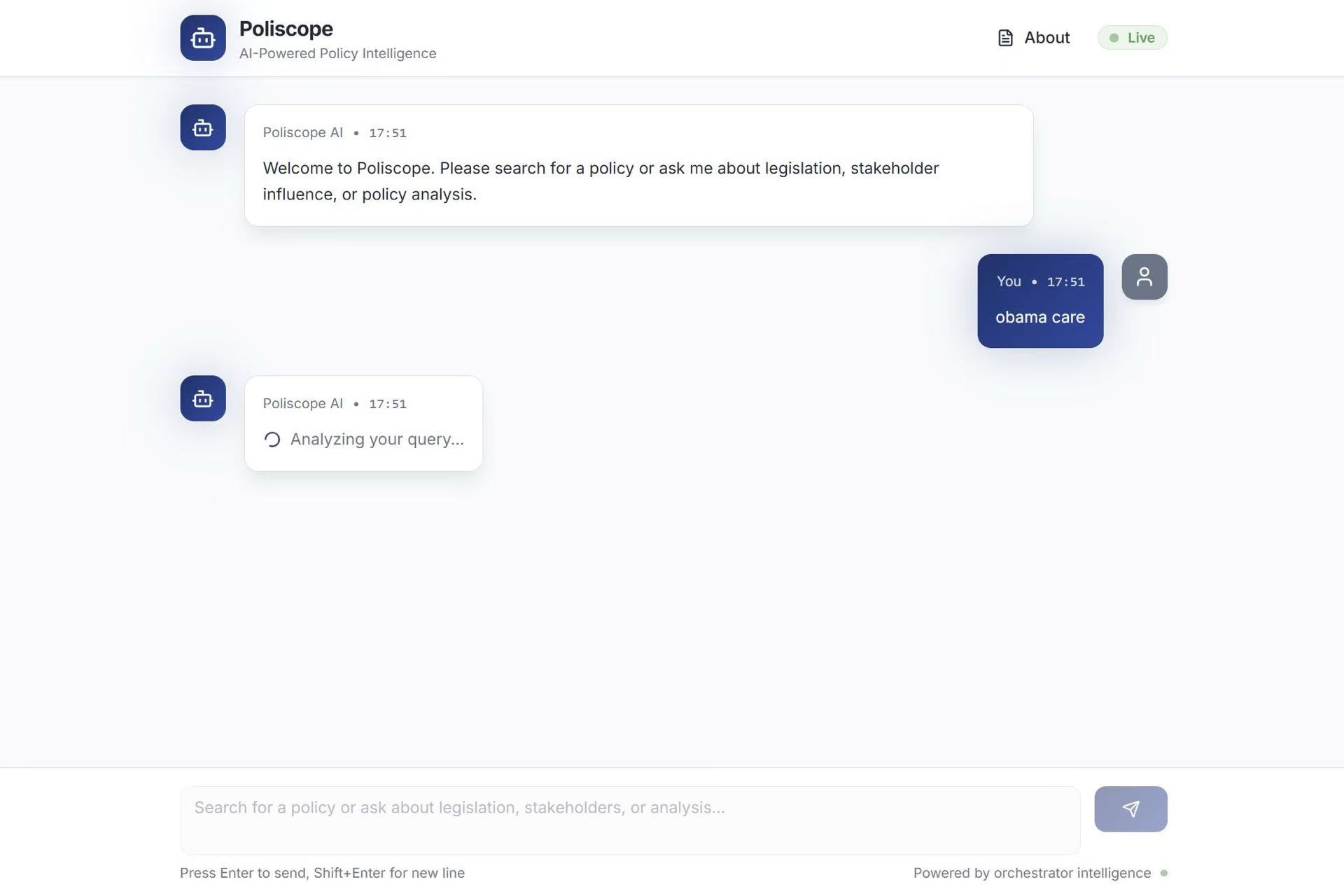
chat example
-
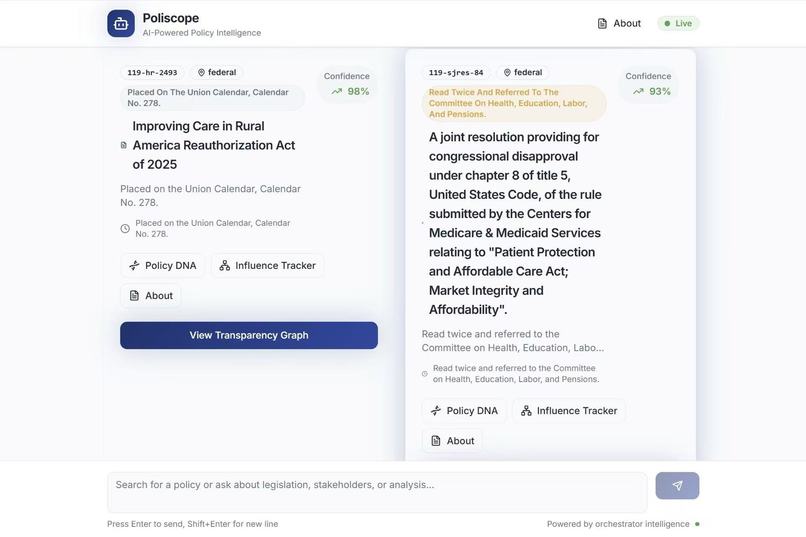
data example
-
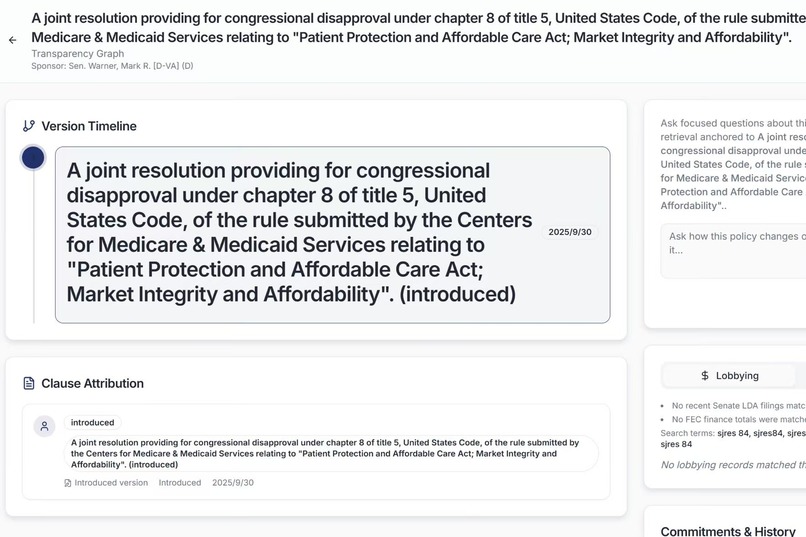
analysis example
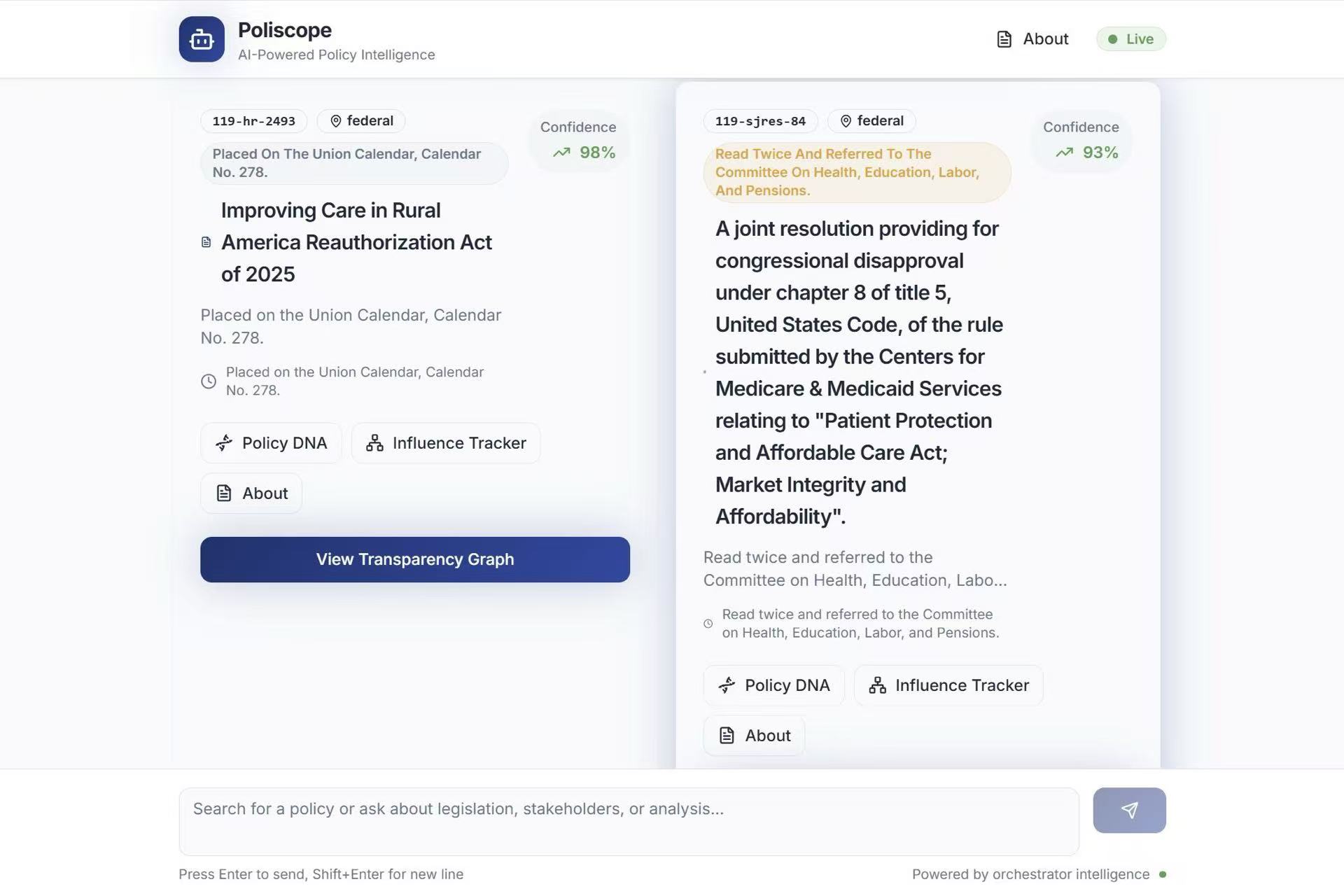
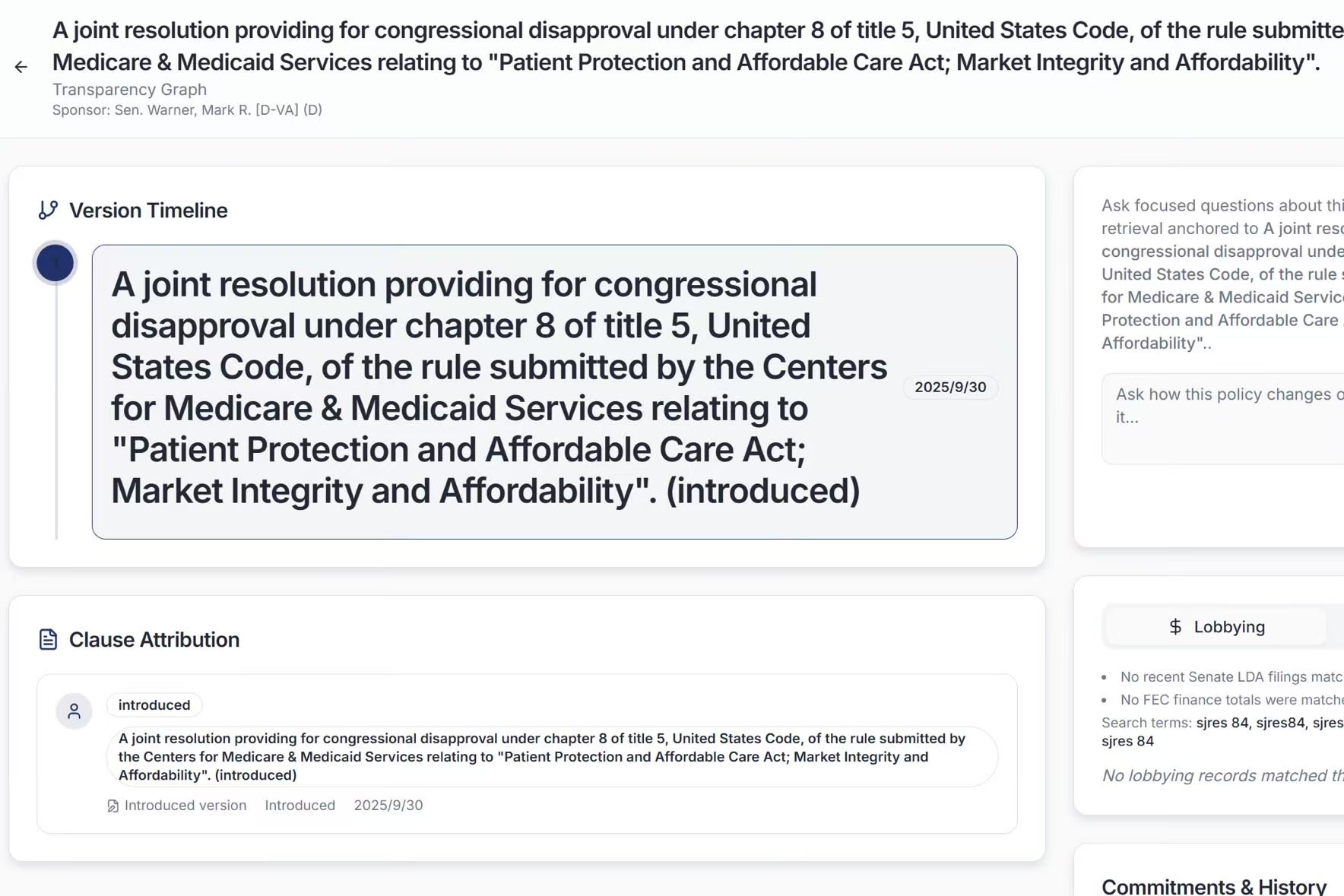
Inspiration
We've all heard that saying, "Laws are made in dark rooms." It’s a belief that whole sections of legislation can materialize overnight, buried deep within a thousand-page bill. A few signatures later, and an entire policy can change, often quietly and out of the public eye.
That fact is what drove us to build Poliscope. We think of it as an x-ray machine for democracy. Ask it about a law, and it doesn't just give you a summary. We designed it to reconstruct the full story, showing you each version of a bill, every edit, who sponsored it, and how funding or lobbying efforts are woven into its history.
For reporters, we built it to be a verification engine. For citizens, we hope it marks the end of political opacity. And for policy makers, it serves as an accountability mirror, reflecting credible public data instead of just opinion.
We’re launching it here, near the Massachusetts State House, a place that has a long history of experimenting with transparent government. We believe a strong democracy shouldn't need whistleblowers to be transparent; it just needs better tools. That’s our goal with Poliscope: to make the pathways of power traceable.
How we built it
From the start, we were determined to build Poliscope as a transparent window into how policies evolve. Our first team principle was that every single claim had to be verifiable. With that foundation, we built an AI system that feels conversational but is firmly rooted in reliable, institutional data.
At its core, Poliscope runs on what's called a retrieval-augmented generation (RAG) pipeline. We built it using LangChain and LangGraph and deployed it on Google Cloud Run. When someone asks a question, our system fetches records from trusted sources like Congress.gov, GovInfo, and the FEC, plus lobbying data from the Senate. We store all this in a Cloud SQL database that we enhanced with pgvector to make searches smarter.
We tested everything with real bills, tracing their changes and connections. Every piece of the architecture was built with one mission in mind: to make power traceable and to make democracy feel visible.
Challenges
The most stubborn problems were related to CORS and network routing. It was tricky because our backend and frontend were built on different frameworks but needed to work together seamlessly on the same server; there was collaborative debugging involved in getting it right.
Accomplishments
When we started Poliscope, we knew we were chasing something ambitious. We weren’t just building a tool; we were trying to prove that technology could help make governance more honest.
There were moments, especially when datasets didn’t align or APIs broke, when we weren’t sure it would all come together. But seeing our system take a messy, thousand-page bill and turn it into a clear, understandable story—that made all the long hours worth it. I’ll never forget the first time we watched the AI trace a real bill’s amendment trail and saw those connections light up on our graph. We actually high-fived.
We’re proud that Poliscope isn’t just technically sound; it means something to us. It’s our small statement that data and democracy can work together. And personally, I’m most proud of how our team of five, from completely different disciplines, merged our skills and our shared belief in this idea into a single, working purpose. For 36 hours, we felt like we were custodians of the simple idea that democracy deserves to be seen.
What we learned We learned that clarity is much harder to build than complexity. Creating a tool that is genuinely transparent, in both its design and its function, requires a lot of discipline and the humility to frequently say, "We don't know the answer yet."
On the technical side, we figured out how to keep language models truthful, how to align disparate APIs, and how to structure the chaos of the legislative process. But the bigger lesson was about responsibility. Building Poliscope forced us to think deeply about trust—not just between code and servers, but between people and the information they use to make decisions.
We realized that technology for the public good isn’t about flashy features. It’s about earning quiet credibility. Every choice we made, from an API call to a graph connection to a button on the screen, carried a certain weight. We were constantly asking ourselves: are we helping people see more clearly, or are we just adding to the noise?


Log in or sign up for Devpost to join the conversation.