Inspiration
We were inspired by a simple problem: most people do not ignore politics because they do not care, they ignore it because it feels abstract, exhausting, and disconnected from daily life. People are not waking up wondering about legislative procedure, they are wondering why their rent went up, why groceries cost more, or what a policy change means for their future. We wanted to build something that starts with those real-life questions and makes politics feel relevant, understandable, and personal.
What it does
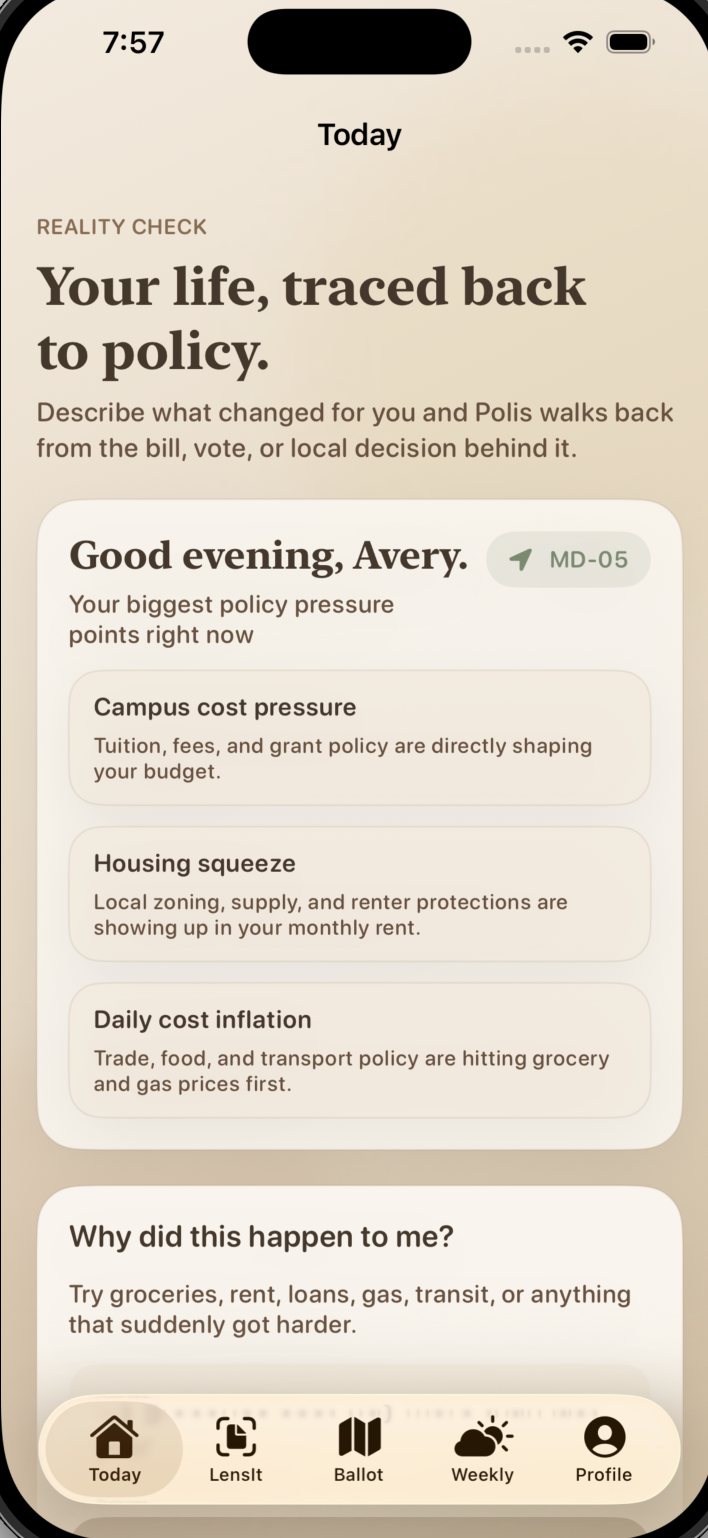
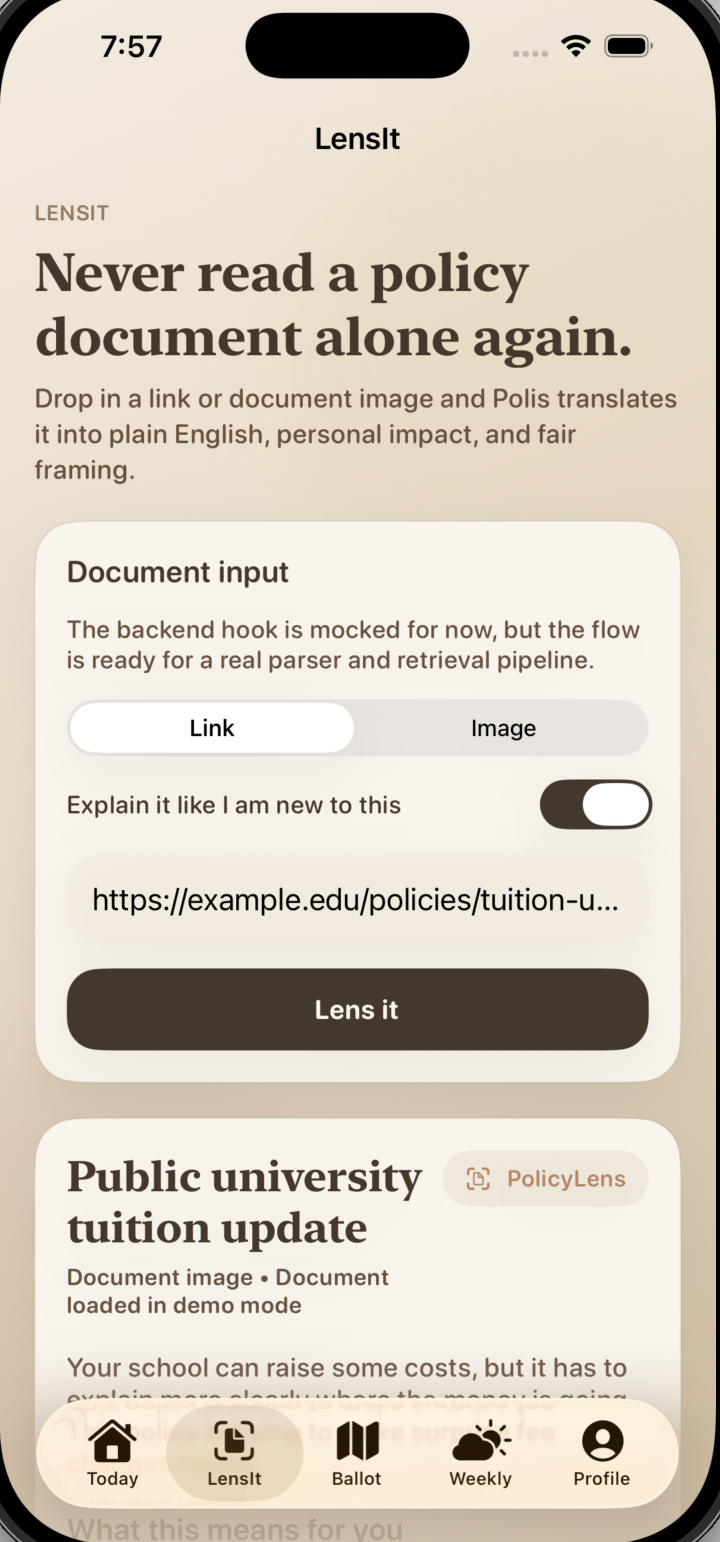
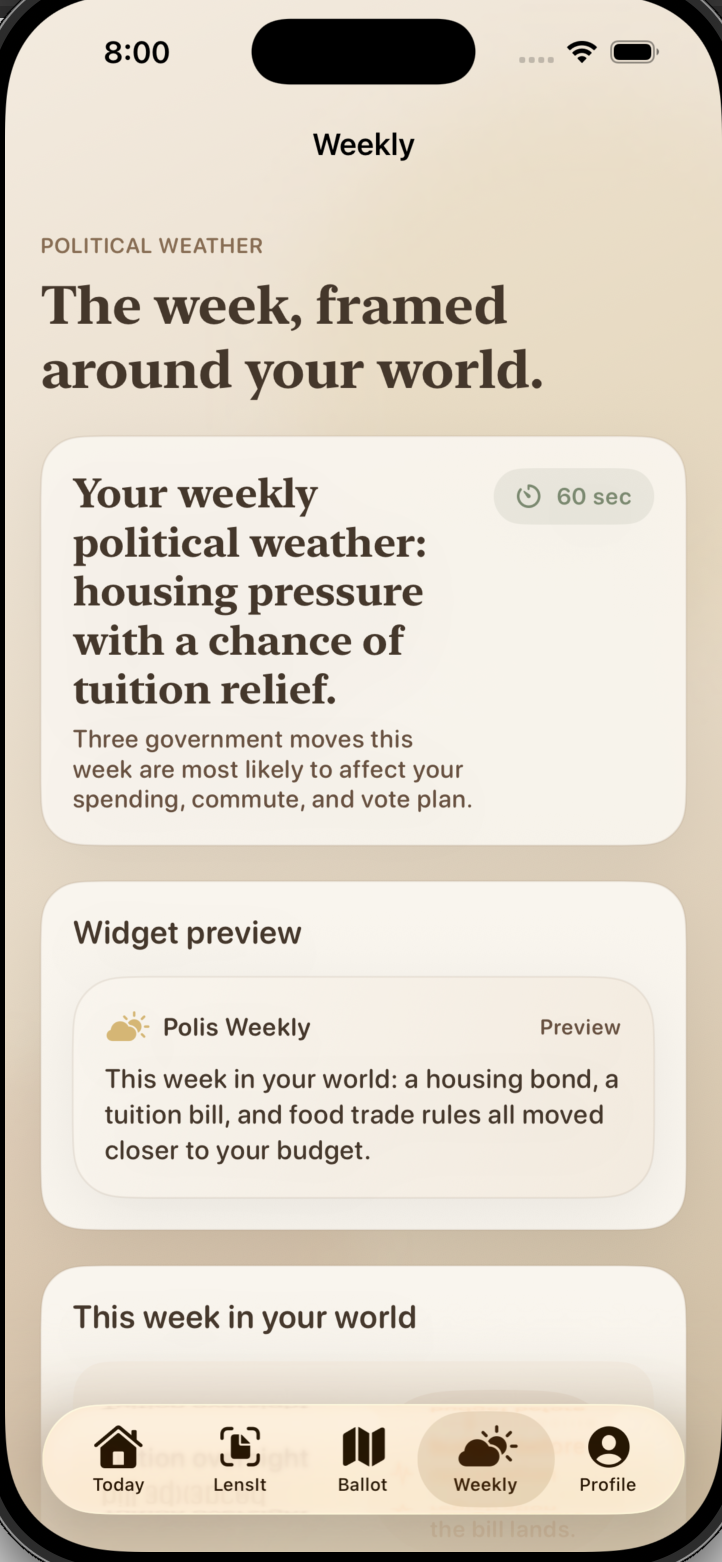
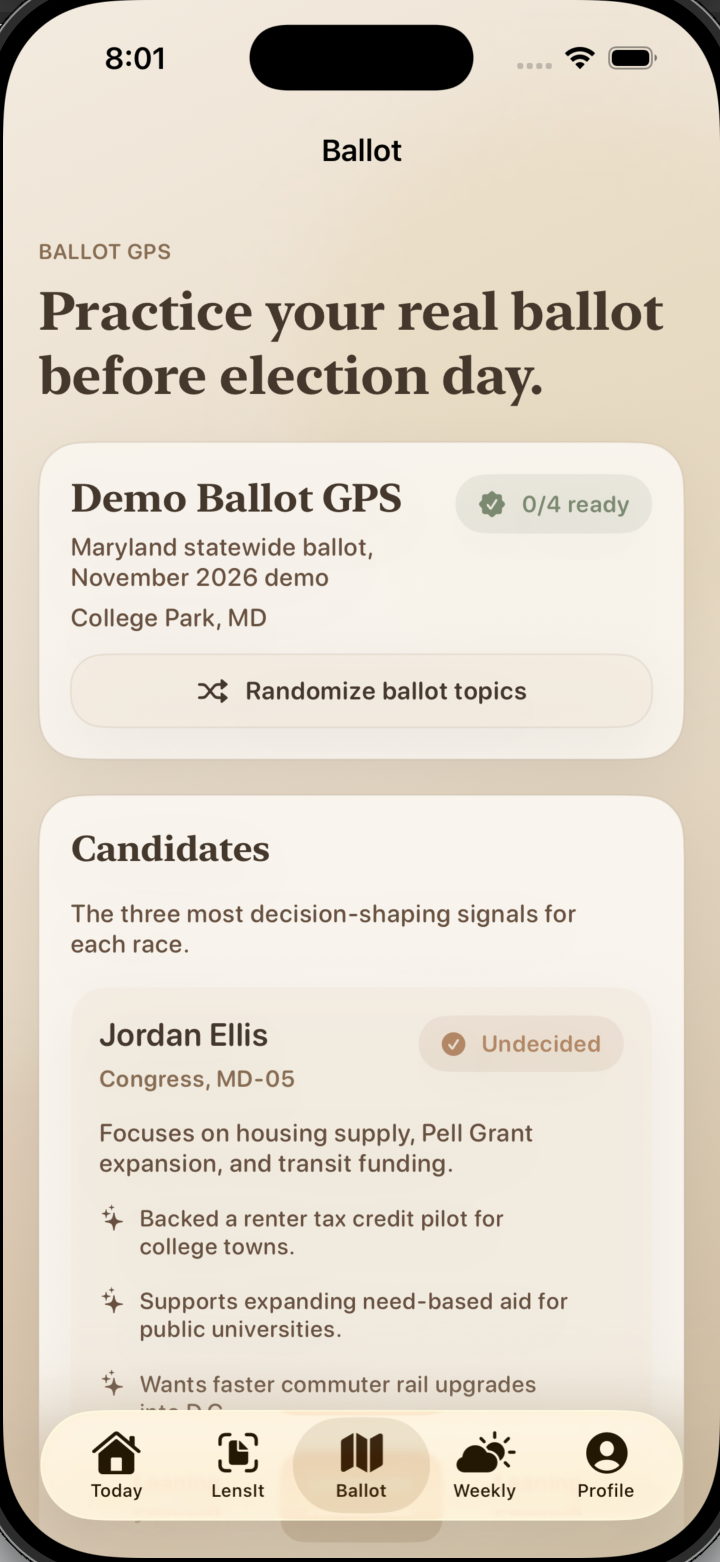
Polis is an iOS app that explains politics through your life, not the news. Users can describe a real-life problem like rising grocery costs, rent increases, or student loan changes, and Polis turns that into a plain-English explanation of the policy decisions, votes, and tradeoffs behind it. The app also includes LensIt for simplifying confusing policy documents, Ballot GPS for making ballots easier to understand, and a weekly political weather report that highlights the issues most likely to affect the user next.
How we built it
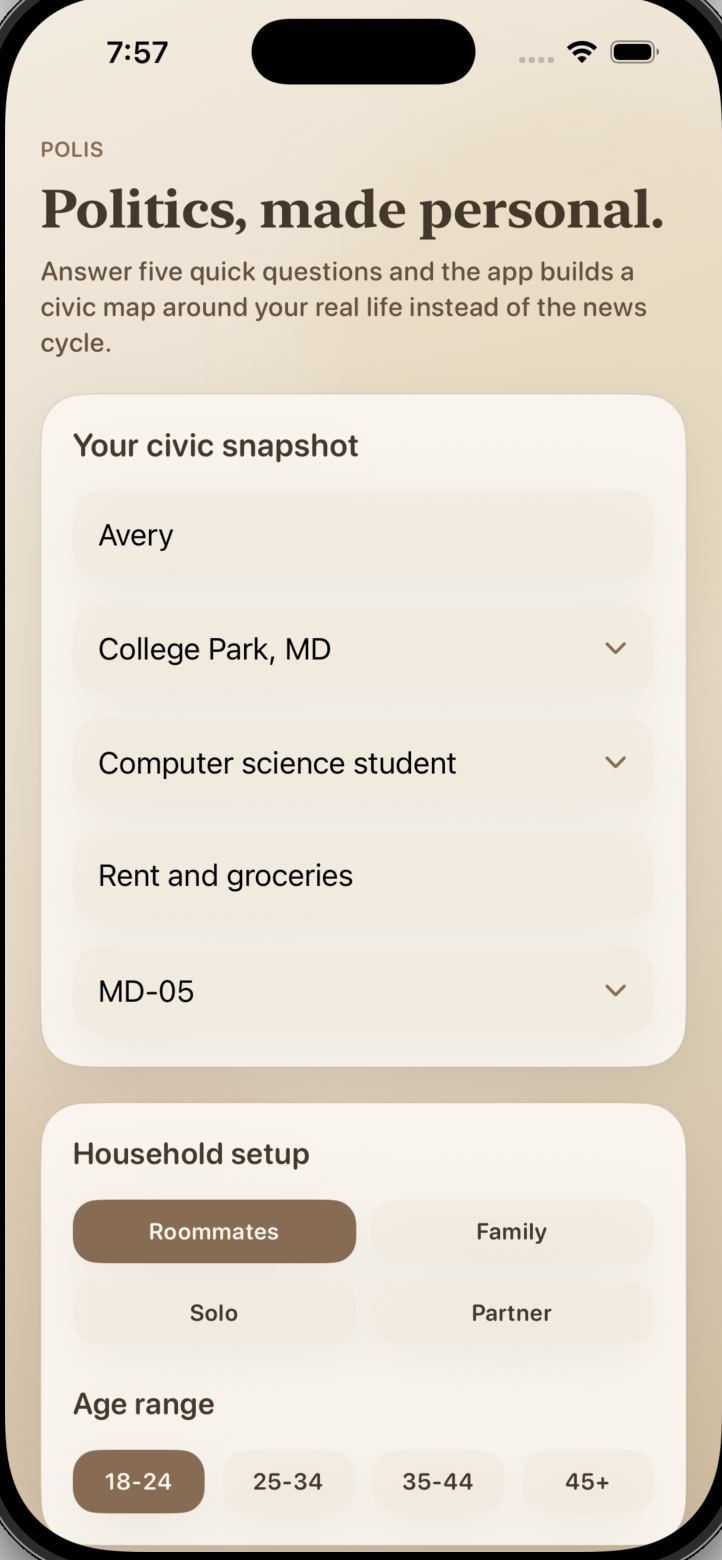
We built Polis as a native iOS app in Swift using SwiftUI and Xcode. The prototype uses a clean MVVM-style structure with reusable UI components, a shared app view model, structured civic data models, and a mock service layer that lets the full product experience run end to end without needing a finished backend yet. We also designed a custom beige and brown visual theme to make the experience feel warm, grounded, and different from the typical loud, stressful political product.
Challenges we ran into
One of the biggest challenges was balancing ambition with hackathon scope. Polis touches personalization, civic education, document summarization, ballot understanding, and political neutrality, so the product surface is much bigger than a typical single-feature app. Another major challenge was figuring out how to present policy in a way that feels accurate and fair without overwhelming users or making the experience feel like another news feed.
Accomplishments that we're proud of
We are proud that we turned a big idea into a working iOS prototype that can actually be opened, run, and demoed. Instead of stopping at mockups, we built the onboarding flow, the personalized event analysis experience, LensIt, Ballot GPS, the weekly briefing screen, and a cohesive design system that makes the whole app feel like one product. We are also proud of the core framing itself: shifting politics from something abstract and partisan into something practical, personal, and understandable.
What we learned
We learned that civic technology becomes much more approachable when it starts with the user’s real life instead of with institutions. We also learned how important product framing is: the same policy information feels much more engaging when it is tied to rent, tuition, groceries, or an upcoming vote. On the technical side, we learned the value of building a modular prototype first, because it lets us validate the product experience now while keeping the codebase ready for real APIs and AI-powered backend services later.
What's next for Polis
Next, we want to connect Polis to real legislative, representative, and ballot data so the app can move from a strong prototype to a live civic companion. We also want to build the LensIt share extension for policy links and PDFs, add real source citations for every claim, and ship a widget-based political weather report with personalized notifications. Longer term, we see Polis becoming a trusted daily tool that helps people understand not just what is happening in politics, but what it means for them.

Log in or sign up for Devpost to join the conversation.