-
-
PolicySync
About the Project
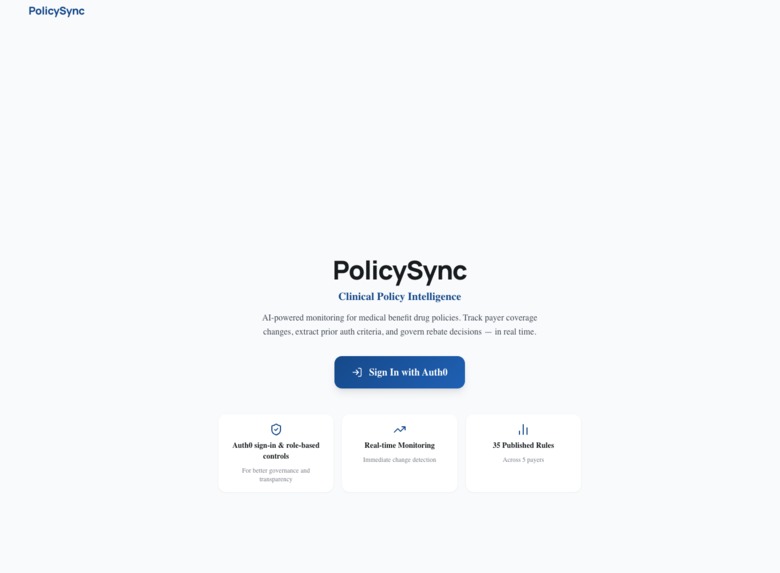
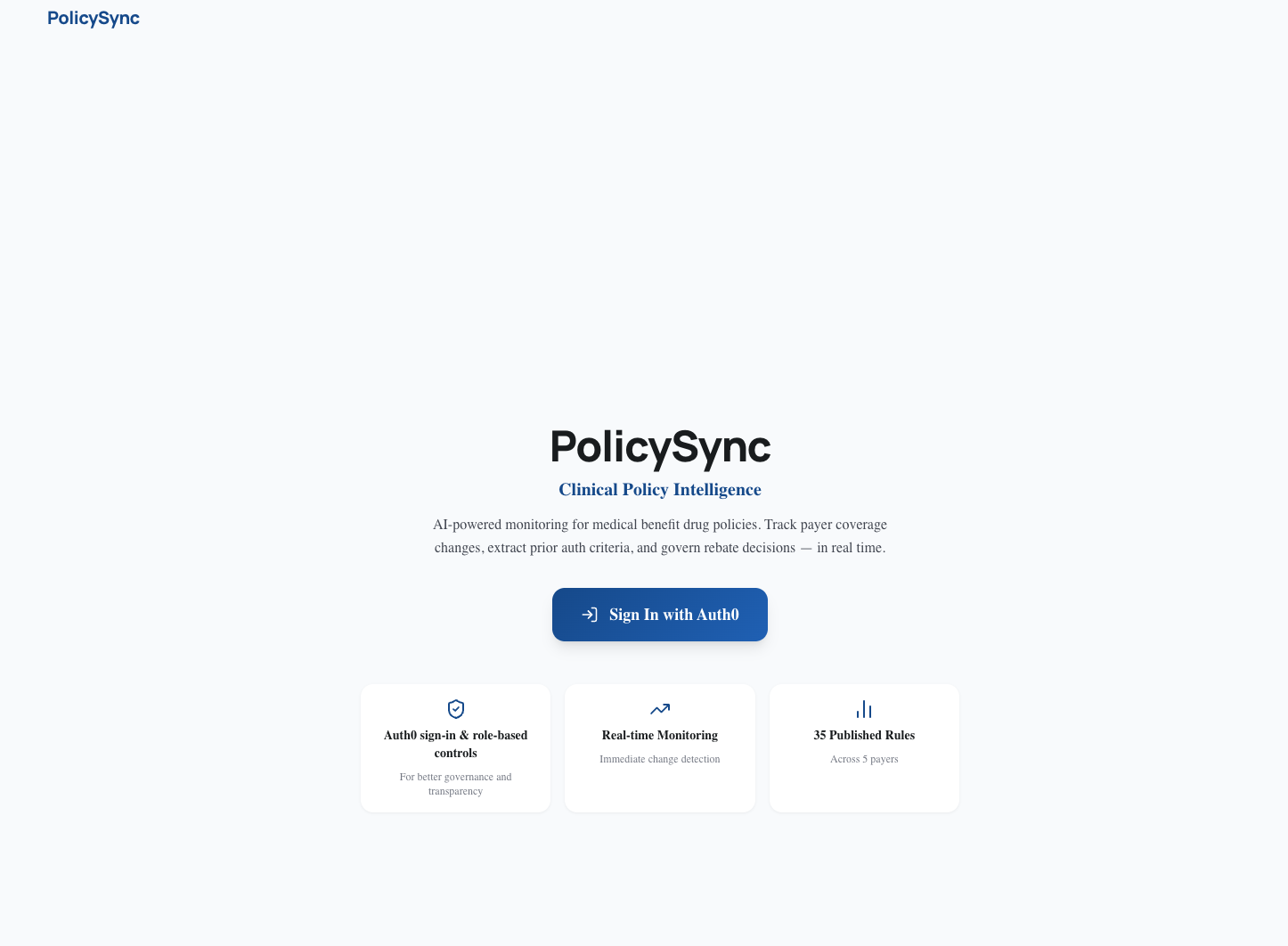
PolicySync was inspired by a real pain point in healthcare operations: policy intelligence is still largely manual. Teams spend hours reading long payer PDFs, comparing policy language across insurers, and trying not to miss small changes that can impact access, compliance, and contracting decisions. We wanted to turn that process from document-hunting into decision-ready intelligence.
How We Built It
We built PolicySync as an end-to-end AI workflow, not just a chatbot on top of documents.
- Frontend + API: Next.js (App Router) with TypeScript
- Authentication + Roles: Auth0-based access control
- Database + Vector Search + Storage: Supabase (Postgres + pgvector + Storage)
- Ingestion + Extraction Service: FastAPI + LangGraph pipeline
- AI Stack: Groq/Cerebras-powered extraction and answer synthesis with embedding-based retrieval
Core Flow
- Ingest policy artifacts from payer sources
- Detect updates using content hashing
- Extract and chunk policy text into structured data
- Route documents to payer-specific extraction logic
- Evaluate extraction quality
- Send extraction output through a human review gate
- Publish approved rules to power search, Q&A, comparison, and change log features
Challenges We Faced
1. Payer document heterogeneity
Different payers organize policies in very different formats, so a one-size-fits-all parser was unreliable. We addressed this with payer-aware extraction paths and fallback logic.
2. Trust and governance
In healthcare workflows, full automation without oversight is risky. We implemented a human-in-the-loop review stage and audit logging so AI supports decisions without removing accountability.
3. Reliability under constraints
We had to handle rate limits, provider fallbacks, and retrieval quality under hackathon timelines while keeping the product demo-stable.
What We Learned
This project taught us that successful AI systems depend on workflow design as much as model quality. The biggest gains came from combining:
- better retrieval (contextual chunking + HyDE-style query expansion),
- human review and governance,
- and clean separation between draft and published intelligence.
We also learned how to coordinate a full-stack, multi-service architecture under time pressure, from auth and infra to extraction pipelines and product UX.
Built With
- auth0
- beautiful-soup
- cerebras-api
- fastapi
- groq
- hugging-face-inference-api
- langgraph
- next.js-16
- next.js-api-routes
- pdfplumber
- pgvector
- python
- python-docx
- railway
- react-19
- sentence-transformers
- sql
- supabase-postgresql
- supabase-storage
- tailwind-css
- typescript
- vercel

Log in or sign up for Devpost to join the conversation.