-
-
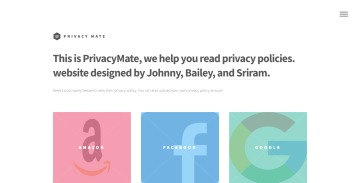
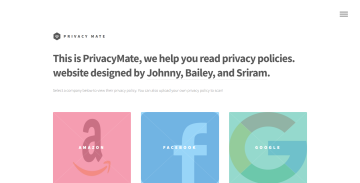
Home page part 1
-
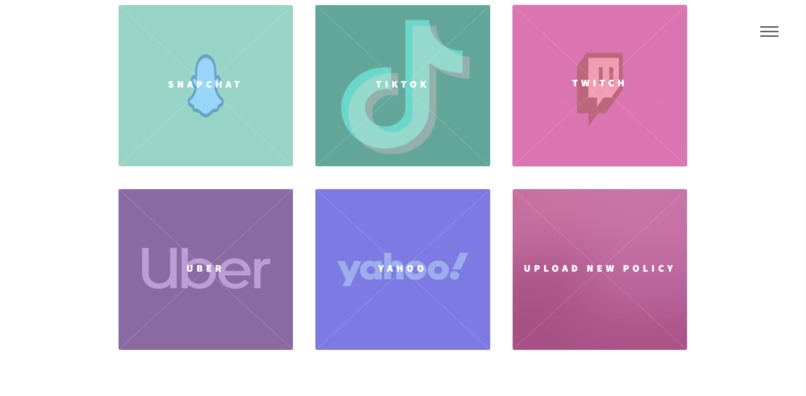
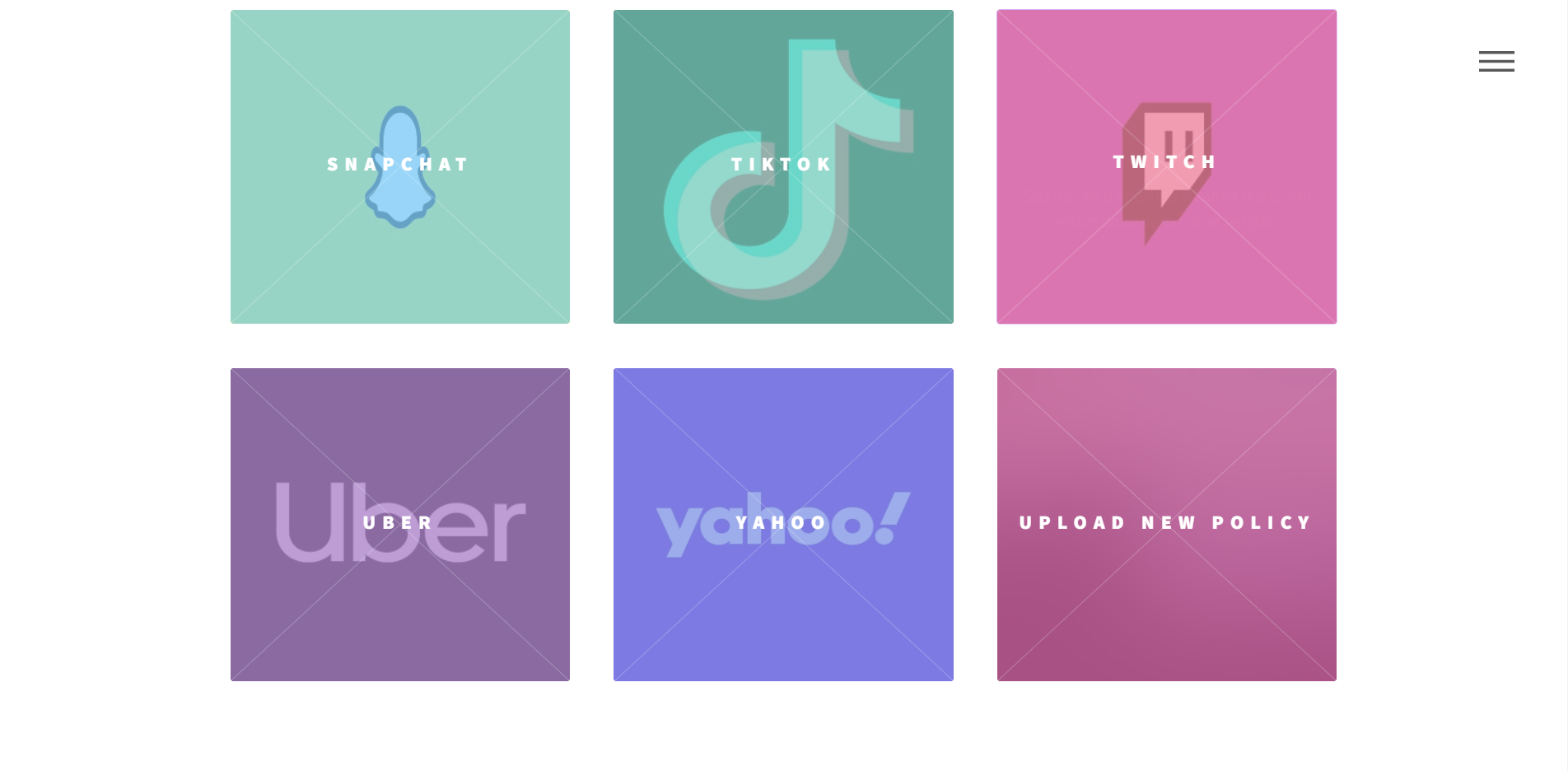
Home page part 2
-
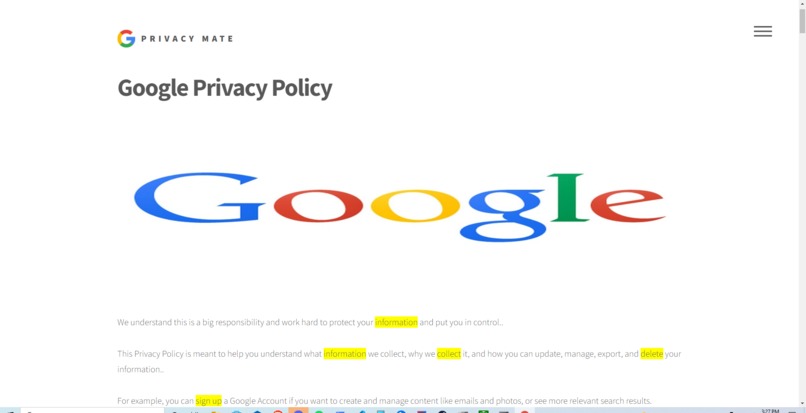
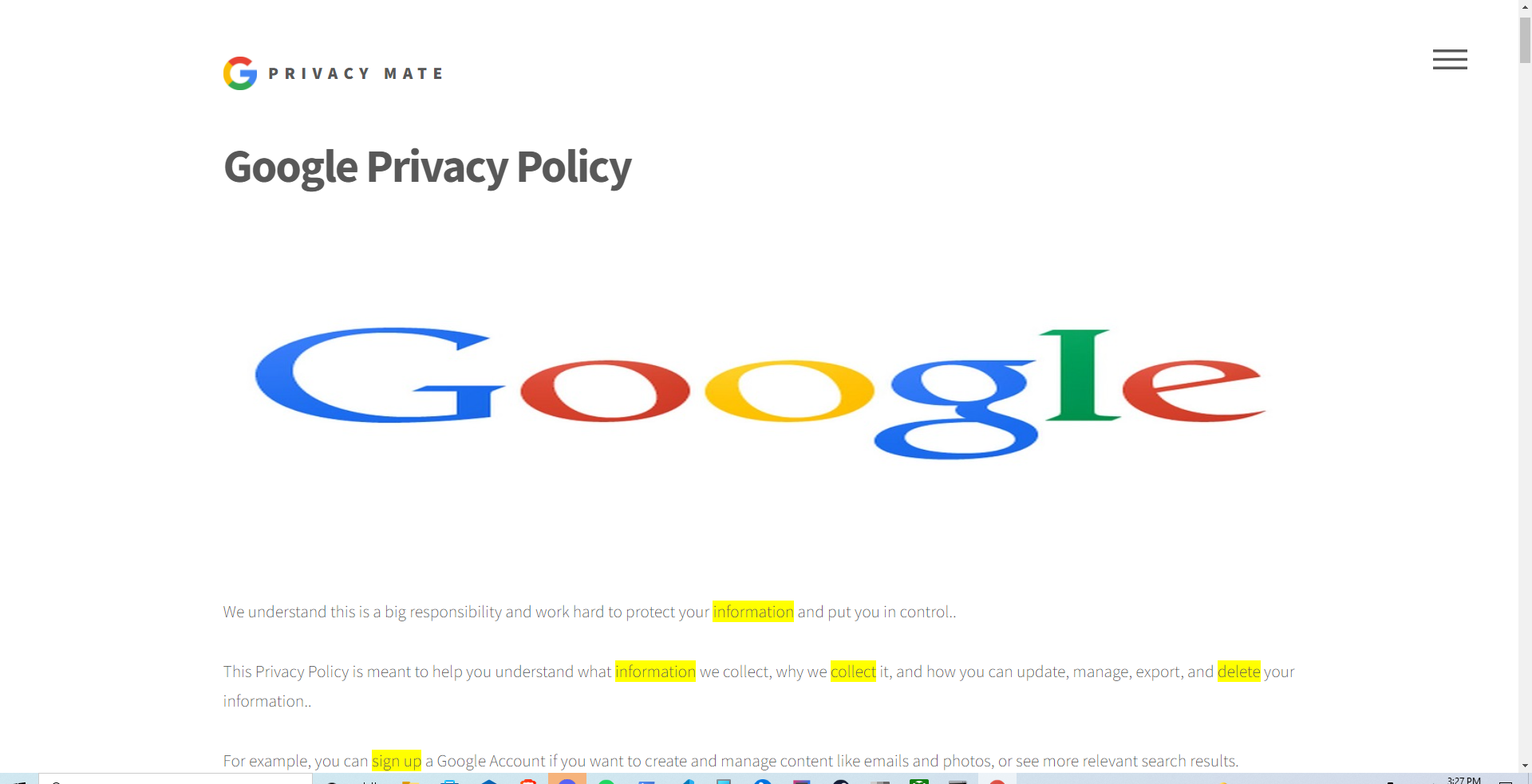
Example shortened policy page part 1
-
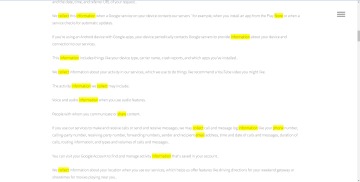
Example shortened policy page part 2
-

Example upload your own policy page

Inspiration
Whenever we use new websites or apps we often don't know how our data will be used. The answer is in the Privacy Policy, but no one has the time to read a massive document with intentionally hard-to-read filler. Our mission is to increase digital privacy literacy in everyday people. Our website PolicyMate will help fix this problem and increase literacy by shortening these hard-to-read privacy policies.
What it does
PolicyMate helps everyday people by removing the needless information in privacy policies while also highlighting the important remaining information. It breaks long Privacy Policies down into a shortlist of sentences that have all the relevant privacy information one would want to know. This drastically cuts the time for a user to understand how their data is being used which leads to higher digital privacy literacy.
Our site currently has 11 of the most common websites that users frequent as quick to access highlighted policies. All a user has to do to view these policies is go to the homepage of our website and click that companies logo. If a user has a company that is not on the 11 most common list, they have the option to upload their own privacy policy to have highlighted and shortened. This easy access, as well as easy uploading, allows our users to have a condensed and easy-to-read privacy policy in no time.
How we built it
We used node.js along with HTML and CSS to create our website's front end. For our back end, we utilized Python and KeyBERT a word processing library to help us break down privacy policies. We used a known set of trigger words in privacy policies as well as our own set of artificially generated keywords from our own engine and keyBert.
Challenges we ran into
We ran into a lot of problems throughout our journey as most of us have never used these technologies before. From teaching ourselves KeyBERT's word-processing as well as our Node.js front end we had to spend a lot of time overcoming the hurdle of learning these technologies. We had a lot of word processing issues with our privacy policies that had to be resolved, we changed web frameworks during the hack, and we also had issues implementing Node.js with our python engine that had to be overcome. We learned a lot along the way and are very happy with the knowledge that we gained over these 24 hours.
Accomplishments that we're proud of
We are proud of the policy shortener engine that we have created. This technology can shorten and highlight any privacy policy document that is given based on commonly known trigger words as well as our own artificial intelligence-generated trigger words.
What we learned
We learned how to work efficiently and quickly under a short deadline. We also learned how machine learning is applicable in the realm of digital privacy. During this hack, we taught ourselves new technologies such as Node.js and KeyBERT.
What's next for PolicyMate
The next steps for PolicyMate are simple, but will greatly increase usability. First, we will get our website hosted on a cloud service like Google Cloud so users around the country can access and start to learn from our product. Then, the next major step will be to create a browser extension for Google Chrome. This extension will make it easier than ever to understand how your data is being used as it will show you the highlighted privacy policy for whatever web page you are currently on. This convenience will greatly increase users' digital privacy as it makes it as easy as possible to get their digital privacy information. Lastly, we hope to expand PolicyMate into more languages and more browsers as we progress.


Log in or sign up for Devpost to join the conversation.